

Search results for using data
E-books are now distributed via VitalSource
VitalSource offer a more seamless way to access the ebook, and add some great new features including text-to-voice. You own your ebook for life, it is simply hosted on the vendor website, working much like Kindle and Nook. Click here to see more detailed information on this process.
Library E-Books
We are signed up with aggregators who resell networkable e-book editions of our titles to academic libraries. These editions, priced at par with simultaneous hardcover editions of our titles, are not available direct from Stylus.
These aggregators offer a variety of plans to libraries, such as simultaneous access by multiple library patrons, and access to portions of titles at a fraction of list price under what is commonly referred to as a "patron-driven demand" model.
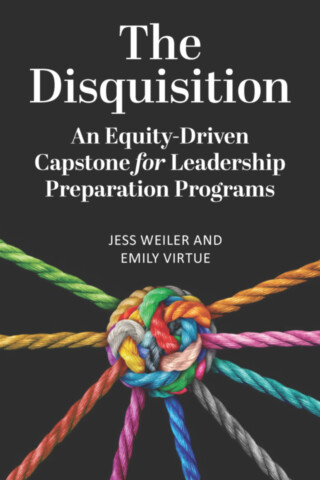
The Disquisition: An Equity-Driven Capstone for Leadership Preparation Programs provides a thoughtful, detailed example of a capstone process and paper (The Disquisition) that employs improvement science, critical theory, and critical praxis to prepare educational leaders to disrupt inequity within their organizations. The chapters in this book represent 12 years of collaborative learning among experienced, respected, and award-winning leadership preparation faculty presently at or formerly from Western Carolina University (WCU). It integrates multiple sources of data from research, student feedback, faculty experiences, capstone committee member input, learnings from the Carnegie Project on the Education Doctorate (CPED), and program evaluation data examining the achievement of student learning outcomes. Following foundational chapters that describe the origin and evolution of the disquisition at WCU and its focus on social justice, faculty present six chapters—each one clearly detailing a primary component of the disquisition process and paper including the problem of practice; a causal analysis; identifying the improvement initiative; designing the improvement initiative; evaluating the improvement initiative and reporting results; and implications, recommendations, and leadership lessons learned. Each of these chapters includes a brief introduction to the component; expectations for students as practitioners (leading the work); expectations for students as scholars (evaluating and writing about the work); an excerpt from the disquisition paper outline relevant to the component; example figures, tables, or text from completed disquisition papers; and scholarly resources for scholar-practitioners. The final chapter of the book presents the process for convening a disquisition committee, a description of the IRB process, and the expectations for defending the disquisition at both the proposal defense and the final defense meeting. Although this book is written as a guide for students engaging in the disquisition process and writing the disquisition paper, it serves as a strong model for leadership preparation programs and university administrators who seek to build or refine their capstone (and program) in ways that ensure students are prepared to lead justice-driven transformation across their organizations.Perfect for courses such as: Dissertation-in-Practice Writing; Academic Writing for the Scholar Practitioner; Capstone-Independent Study; Capstone-Student Learning Community; Improvement Science: Data Collection, Analysis & Reporting; Improvement Science: Data Presentation; The Role of the Scholar-Practitioner as Educational Leader
More
BUY THE BUNDLE AND SAVE!BOOK:Scaffolding the Language of Power: An Apprenticeship in Doctoral Level Writingoffers an accessible, practical, hands-on guide to developing the skills needed to successfully write a doctoral dissertation or thesis. This textbook-workbook hybrid can be used both as a program/course text and as a supplement for individual doctoral students in education and related social science and humanities fields.The book is built on three main ideas. First, writing is fundamentally connected to issues of social justice. Doctoral-level writing is part of the “language of power” in academia, which builds on the linguistic patterns of the dominant culture and serves as a gatekeeping mechanism. Second, writing is genre-based. This means that doctoral level writing is a particular way of using language, or a specific genre, with distinct rules and structures that can be taught. And third, writing can be scaffolded. Approaching writing as a pedagogical act that supports readers’ understanding through purposeful scaffolding is not just a way to successfully complete a doctoral dissertation—it is a way to make academic writing more accessible in general.WORKBOOK:The workbook is a supplement to the textbook featuring accompanying activities that are scaffolded and carefully sequenced to help students identify key ideas and generate text that can be used to build out the elements of each major dissertation task (e.g., problem statement, literature review, and so on).This supplemental workbook contains all the activities from the textbook in expanded form so that students can engage more fully with warm-ups, free-writes, analysis of mentor texts and examples, graphic organizers, and guided writing exercises. These activities are also accompanied with additional free-write prompts as well as bonus discussion questions for extended sense-making.Individual chapters include:1. Introduction: A Three-Pronged Approach to Writing at the Doctoral Level.2. The Rules: Writing as a Pedagogical Act.3. The Rest of the Rules of the Language of Power.4. The Problem Statement..5. The Literature Review.6. The Theoretical Framework.7. The Methodology Chapter.8. The Findings Chapter.9. The Discussion and RecommendationsThis book and workbook combo is appropriate for any course on academic writing in EdD or PhD programs. It is also useful for courses that teach how to write a problem statement, literature review, and/or theoretical framework. Additional courses include: Qualitative Research; Qualitative Practicum/pilot study courses; and Dissertation seminar and support courses.
More
E-books are now distributed via VitalSource
VitalSource offer a more seamless way to access the ebook, and add some great new features including text-to-voice. You own your ebook for life, it is simply hosted on the vendor website, working much like Kindle and Nook. Click here to see more detailed information on this process.
Library E-Books
We are signed up with aggregators who resell networkable e-book editions of our titles to academic libraries. These editions, priced at par with simultaneous hardcover editions of our titles, are not available direct from Stylus.
These aggregators offer a variety of plans to libraries, such as simultaneous access by multiple library patrons, and access to portions of titles at a fraction of list price under what is commonly referred to as a "patron-driven demand" model.
African American males are confronted with formidable barriers in their pursuit of quality education, resulting in stark disparities in academic performance, economic opportunities, and social outcomes. Despite numerous educational initiatives striving for parity, African American males persistently bear the brunt of the highest rates of suspensions, expulsions, and dropout rates, surpassing all other demographic groups. Educational environments often fail to acknowledge and integrate the cultural and social needs of Black males, viewing them as "problems" rather than recognizing their immense potential for academic and leadership success. The prevalence of negative stereotypes in media, particularly in video games, exacerbates societal biases, portraying African American males as inherently violent and criminal. These representations contribute to implicit biases that affect perceptions and treatment in real-life scenarios. The systemic issues within the education system, coupled with socioeconomic factors, result in African American males being underrepresented in advanced placement and gifted education programs. This underrepresentation limits their opportunities for higher education and professional advancement. Confronting these challenges necessitates a comprehensive approach that encompasses the creation of inclusive educational environments, the eradication of systemic racism, and the promotion of positive representations of African American males in media. By acknowledging and fostering the potential of Black males, society can strive to reduce disparities and cultivate a more equitable and just education system that recognizes and celebrates their academic and professional achievements.African American Males and Video Games explores the perspectives of four African American male college students aged 18 to 21 on the impact of video games on their academic growth and development. The participants, all maintaining a GPA of 3.0 or higher, shared their experiences with teachers, video games, and coping mechanisms. This qualitative approach allowed for a rich understanding of the participant's experiences and the role of video games in their academic and mental well-being.Video games emerged as a significant coping tool for the participants, providing a mental escape from academic and social pressures. The games allowed them to engage in competitive and creative activities, fostering a sense of accomplishment and reducing stress. For example, games like NBA 2K21 and Forza Horizon 4 enabled them to explore alter egos and interests in a virtual space, offering entertainment and a sense of community.African American Males and Video Games is a critical text for exploring alternatives in providing a quality education experience for young African American males. It is vital reading for educators in all areas of higher education, and a valuable teaching tool in Colleges of Education.Professor Rudolf Inderst interviewed Kenneth Jones for a New Books Network podcast. Listen at: https://newbooksnetwork.com/african-american-males-and-video-gamesPerfect for courses such as: Educational Psychology; Sociology of Education; African American Studies; Media Studies; Game Design; Youth Development; Digital Literacy; Cultural Studies; Educational Technology; Social Psychology; Gender Studies
More
E-books are now distributed via VitalSource
VitalSource offer a more seamless way to access the ebook, and add some great new features including text-to-voice. You own your ebook for life, it is simply hosted on the vendor website, working much like Kindle and Nook. Click here to see more detailed information on this process.
Transdisciplinary Feedback in Higher Education: Feedback Practices to Promote Student Success Across the Disciplines in Higher Education covers a group of faculty at a small, public, comprehensive, Hispanic-serving university in west Texas who made a commitment to study effective feedback strategies and implement them in their courses across fourteen different disciplines. The faculty joined a learning community to discuss and implement high impact practices using ten feedback tools and strategies outlined by Riordan (2021). Twenty-two faculty share their unique experiences using effective feedback methodologies in over forty case studies with students in programs spanning across developmental education, biology, English, nursing, psychology, criminal justice, accounting, communication, history, political science, natural resource management, STEM, teacher education, and counseling. These case studies illustrate how each of the Riordan feedback strategies is effectively implemented, showcasing the resulting two-way exchange between the instructors and students in undergraduate and graduate courses. Drawing on their in-depth experiences, through these real world examples of feedback in higher education courses that have had a positive impact on students, authors Dr. Jeanne Qvarnstrom and Dr. Alicia M. Trotman provide insights into how meaningful feedback is framed and implemented in each discipline, using a customized approach to feedback to help readers identify the key feedback skills that are unique to each subject. Transdisciplinary Feedback in Higher Education: Feedback Practices to Promote Student Success Across the Disciplines in Higher Education is written primarily for faculty who know that feedback is important, but who also recognize that some types of feedback will be disregarded by the student. The purpose is to provide real world examples of feedback in higher education courses that have had a positive impact on students. Organized into three sections, in Part I of Transdisciplinary Feedback in Higher Education: Feedback Practices to Promote Student Success Across the Disciplines in Higher Education the authors explore instructor orientation to feedback, Part II highlights student orientation to feedback, and Part III illustrates the authors teaching the disciplinary tools as aligned with feedback strategies. While the tools and practices remain consistent, the implementation methods vary contextually to best meet the needs of the students in mastering the concepts of the disciplines. The reader gains a greater understanding of the ten feedback tools and practices from a transdisciplinary perspective. Each chapter ends with reflective questions for the reader and a reference list for future study. Effective feedback in higher education is a popular topic, but in Transdisciplinary Feedback in Higher Education: Feedback Practices to Promote Student Success Across the Disciplines in Higher Education, addresses a gap in research and offers examples from higher education. Transdisciplinary Feedback in Higher Education: Feedback Practices to Promote Student Success Across the Disciplines in Higher Education is dedicated to college and university instructors in various disciplines who recognize the power of feedback and want to learn more about effective forms of it. The book is well suited for faculty professional development initiatives, professional learning communities, and graduate programs in higher education and teacher education, making it an appropriate resource for both individual instructors and course adoption.
More
E-books are now distributed via VitalSource
VitalSource offer a more seamless way to access the ebook, and add some great new features including text-to-voice. You own your ebook for life, it is simply hosted on the vendor website, working much like Kindle and Nook. Click here to see more detailed information on this process.
Library E-Books
We are signed up with aggregators who resell networkable e-book editions of our titles to academic libraries. These editions, priced at par with simultaneous hardcover editions of our titles, are not available direct from Stylus.
These aggregators offer a variety of plans to libraries, such as simultaneous access by multiple library patrons, and access to portions of titles at a fraction of list price under what is commonly referred to as a "patron-driven demand" model.
This volume brings together leading scholars and practitioners to address the theory and practice of African-centered education. The contributors provide (1) perspectives on the history, methods, successes and challenges of African-centered education, (2) discussions of the efforts that are being made to counter the miseducation of Black children, and (3) prescriptions for—and analyses of—the way forward for Black children and Black communities. The authors argue that Black children need an education that moves them toward leading and taking agency within their own communities. They address several areas that capture the essence of what African-centered education is, how it works, and why it is a critical imperative at this moment. Those areas include historical analyses of African-centered education; parental perspectives; strategies for working with Black children; African-centered culture, science and STEM; culturally responsive curriculum and instruction; and culturally responsive resources for teachers and school leaders.
More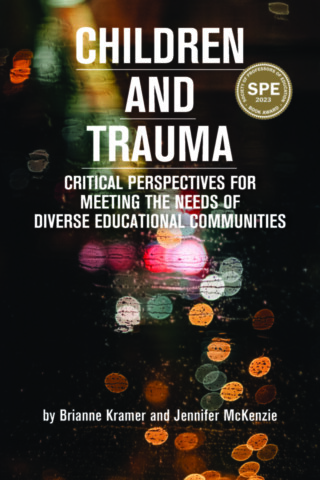
E-books are now distributed via VitalSource
VitalSource offer a more seamless way to access the ebook, and add some great new features including text-to-voice. You own your ebook for life, it is simply hosted on the vendor website, working much like Kindle and Nook. Click here to see more detailed information on this process.
Library E-Books
We are signed up with aggregators who resell networkable e-book editions of our titles to academic libraries. These editions, priced at par with simultaneous hardcover editions of our titles, are not available direct from Stylus.
These aggregators offer a variety of plans to libraries, such as simultaneous access by multiple library patrons, and access to portions of titles at a fraction of list price under what is commonly referred to as a "patron-driven demand" model.
According to the American Psychological Association (APA, 2015), trauma is an emotional response to a terrible event, which can lead to difficulties with emotional regulation, social relationships, and the development of physical symptoms. Traumatic experiences may include physical or sexual abuse, neglect, experiencing or witnessing violence, war, suicides, and disasters. Because of the prevalence of students with traumatic experiences in K-12 schools, development and use of trauma-informed practices (TIP) is currently increasing in educational spaces across the United States as educators and others who work with children become more aware of how socio-emotional development and exposure to trauma places children on a pathway through adulthood. Because of growth in these areas, it is important for educators and others who work with children to have a resource to consult. Children and Trauma: Critical Perspectives for Meeting the Needs of Diverse Educational Communities provides teachers, administrators, and others involved in education with an understanding of trauma-informed practices and explains how they can be used in the classroom. Additionally, school districts could utilize this text to implement professional development, particularly if they are considering creating a districtwide trauma-informed system.Perfect for courses such as: Trauma-Informed Educational Practice | Psychology | Educational Psychology | Foundations of Education | Pedagogy | Methods of Emotional or Behavioral Disorders | Teaching Methods | Diversity in Education | Social Work | Human Development
More
E-books are now distributed via VitalSource
VitalSource offer a more seamless way to access the ebook, and add some great new features including text-to-voice. You own your ebook for life, it is simply hosted on the vendor website, working much like Kindle and Nook. Click here to see more detailed information on this process.
Library E-Books
We are signed up with aggregators who resell networkable e-book editions of our titles to academic libraries. These editions, priced at par with simultaneous hardcover editions of our titles, are not available direct from Stylus.
These aggregators offer a variety of plans to libraries, such as simultaneous access by multiple library patrons, and access to portions of titles at a fraction of list price under what is commonly referred to as a "patron-driven demand" model.
At a time when many individuals and institutions are reexamining their histories to better understand their tangled roots of racism and oppression, Reckoning: Kalamazoo College Uncovers Its Racial and Colonial Past tells the story of how American ideas about colonialism and race shaped Kalamazoo College, a progressive liberal arts institution in the Midwest. Beginning with its founding in 1833 during the era of Indian Removal, the book follows the development of the college through the Civil War, the long period of racial entrenchment that followed Reconstruction, minstrel shows performed on campus in the 1950s during the rise of the Civil Rights movement, Black student activism in the wake of Martin Luther King’s assassination, the quest for multiculturalism in the 1990s, and the recent activism of a changing student body. This close look at the colonial and racial history of one institution reveals academia’s investment in White supremacy and the permutations and contradictions of race and racism in higher education. Though the details are unique to Kalamazoo, other predominantly White colleges and universities would have similar historical trajectories, for in the end our institutional histories reflect the history of the United States. By examining the ways in which a progressive, midwestern college has absorbed, resisted, and perpetuated American systems of colonialism and racism, the book challenges higher education to use this moment to make the deep, structural changes necessary to eliminate disparities in experiences and outcomes among students of color and their White peers. Reckoning is a volume that can be used in a variety of courses that deal with topics such as History of Education, Social Justice in Higher Education, and more.Perfect for courses such as: Pursuing Diversity, Inclusion, Justice, and Equity │ Education and Cultural Studies │ Exploring Whiteness │ Inquiry in Postsecondary Education │ Proseminar in Adult and Higher Education │ Education and Social Struggle in the U.S., WWII – Present │ Equity, Diversity, and Inclusion in Student Affairs │Diversity and Inclusion in Higher Education │ History of American Education │ Diversity in Higher Education
More
E-books are now distributed via VitalSource
VitalSource offer a more seamless way to access the ebook, and add some great new features including text-to-voice. You own your ebook for life, it is simply hosted on the vendor website, working much like Kindle and Nook. Click here to see more detailed information on this process.
Teaching that aims to be inclusive of marginalized communities is under attack in the United States, evidenced, for example, in widespread school book banning efforts, prohibition of Advanced Placement African American history, and a general tenor of fear among educators across the K-12 and higher education spectrum. This fear originates from a variety of pedagogical attempts at teaching content or utilizing practices that do anything other than valorize the dominant narrative and status quo in the United States. Classroom teachers and college instructors ask what can be done to uphold the practices they know to support students from all backgrounds to experience educational success and inclusion that won’t capture the ire of parent groups, school boards, or educational commissions bent on squelching such critical efforts. Against the Current: Inclusive Multicultural Education Practices for Contentious Times addresses these issues by providing examples from K-12 and higher education classrooms where educators’ practices offer a path forward. Each chapter in the book presents an example of ways educators practice multicultural inclusivity and offers insights on how to do so even in hostile environments. Chapters in Part 1 of the book offer re-framings of flashpoint issues, including such topics as anti-Muslim racism and fugitive pedagogical practices. While the chapters in Part 1 offer a grounding in ways educators might rethink the work at hand, the chapters in Part 2 offer innovative tools or practices that educators across grade levels--including higher education--can use, including frameworks for cultivating deep listening when confronting emotionally charged topics in the classroom and curriculum materials for family and community engagement. Finally, Part 3 of the book offers case studies of this work in action, including examples at the individual teacher or instructor level, the classroom level, and the schoolwide level. The volume includes a guide for readers with discussion and reflection questions, extension activities, and additional resources for each chapter. Against the Current is critical reading in a variety of settings. It can be used in professional development programs to better equip teachers. College and university libraries will want it in their collections. As a teaching textbook, its content will apply to a large number of classes in multicultural education, inclusive teaching and learning, and other courses, thus equipping preservice teachers with valuable tools as they prepare to enter schools.Perfect for courses such as: Introduction to Education; Educational Equity; Foundations of Education; Multicultural Education; Social Justice and Education; Teacher Education; Teaching Methods; Educational Practice; Educational Studies
More
BUY THE BUNDLE AND SAVE! Implementation Science: A Playbook for Instructional Leaders + Implementation Science: A Companion Workbook to Implementation Science Playbook: Implementation Science: A Playbook for Instructional Leaders offers a practical approach to driving sustainable, impactful change in educational settings. Grounded in research-to-practice methodology, this essential guide is designed for district and school instructional leaders committed to elevating student outcomes through strategic, evidence-informed decisions. Dr. Carlson draws on decades of experience in teaching, leadership, curriculum development, and literacy research to deliver a step-by-step framework that empowers leaders to effectively plan, implement, monitor, and assess initiatives. In clear, accessible language, Implementation Science demystifies the core principles of implementation and bridges concepts to turnaround. It offers actionable strategies and tools for tackling complex challenges in today’s educational landscape. From curriculum selection to fostering an engaged, capable team, this playbook navigates the nuances of change management, helping leaders make data-driven decisions that stick. Each chapter culminates with key takeaways and questions for reflection, supporting instructional leaders in aligning their work with broader district goals. Workbook: Implementation Science: A Companion Workbook to Implementation Science is aligned to the three components of Implementation Science, Enabling Context, Effective Practices, and Effective Implementation, is a hands-on resource designed to help educators, instructional leaders, and district teams bring implementation science principles to life in real-world educational settings. The workbook provides structured tools, practical strategies, and real-world examples to bridge theory to practice, ensuring successful, sustainable, and equity-centered improvements in teaching and learning. Leaders will be able to plan, implement, monitor, and assess their chosen intervention. By the end of this workbook, leaders will have a complete strategic plan with all supports to finally reach their intended outcomes. This bundled option empowers educators and leadership teams to create cohesive plans, collaborate effectively, and ensure their efforts lead to measurable improvements in student outcomes. Perfect for courses in: Foundations of Implementation Science in Education; Instructional Leadership and School Improvement; Curriculum Design, Adoption, and Implementation; Data-Driven Decision Making for Educational Leaders; Systems Change and Continuous Improvement; Strategic Planning for K-12 Educational Initiatives; Evidence-Based Practices in Teaching and Learning; Educational Change Management and Policy Implementation; School Leadership and Organizational Effectiveness; Professional Development and Coaching for Educators.
More
E-books are now distributed via VitalSource
VitalSource offer a more seamless way to access the ebook, and add some great new features including text-to-voice. You own your ebook for life, it is simply hosted on the vendor website, working much like Kindle and Nook. Click here to see more detailed information on this process.
Teaching in PreK-12 classrooms requires not only pedagogical knowledge and field-related skill, but also creativity, flexibility, and responsiveness. Teachers, as lifelong learners and as leaders in education, must make sense of curricula, policies, research, and evidence in order to guide and shape their practices in unique and diverse contexts. How teachers make use of these “best practice” guides varies — there is no one-size-fits-all program or method that can be picked up and applied without classroom teachers’ localized and reflective contextualization. Designed for use by preservice teachers, experienced educators, mentors and coaches, school leaders, and teacher preparation faculty, Recognizing “Best Practices” as Locally Situated calls teachers into their power to disrupt, transform, and lead towards change in PreK-12 schools. This volume makes visible the critical work teachers engage in daily as they evaluate, interpret, implement, and assess the impact of particular strategies, resources, and approaches in their classrooms. Teachers must iterate on their teaching practice in cycles of continuous learning and reflection toward educational equity and social justice. Recognizing “Best Practices” as Locally Situated celebrates the voices, power, and pedagogical practices of teachers across a variety of content areas and settings, ranging from early childhood to adolescence and from transnational contexts, including multilingual classrooms in the U.S., Lebanon, and Ukraine, along with teacher preparation programs in the U.S. and Europe. Through vignettes, analysis, reflective prompts, lesson plans, resources, and activities, the authors make clear that teachers are agentic, innovative, and adaptive practitioners who translate evidence-based “best practices” into context-specific, responsive, and learner-centered pedagogical moves that build upon the assets of their students to support learning. They invite readers into their (trans)local worlds as readers’ shape and reconfigure their own (trans)local classrooms, schools, and educational ecosystems. Recognizing “Best Practices” as Locally Situated aims to bring together the voices of practitioners across K-12 education to examine their situated and expert testing, adaptation, and refusal of “best practices” within their classrooms and communities. The authors explore a best practice, as housed in this partially archived version of the U.S. Department of Education's Best Practices Clearinghouse or as explicitly named in research or practitioner literature. They explain the ways they have tested, accepted, rejected, modified, or otherwise adapted and contextualized that “best practice” within their own teaching context and with equity, inclusion, diversity, belonging, and social justice in mind. Recognizing “Best Practices” as Locally Situated provides an important overview and critique of currently circulating “best practices” for both novice and experienced educators. It provides classroom-tested pedagogical modes and resources with methodologies for engaging critically with “evidence,” including through generation of new evidence and knowledge bases situated within particular communities, times, places, and policy contexts. As part of Dr. Linsay DeMartino and Dr. Lisa Fetman's book series Demystifying Social Justice Education: Moving from Trendy to Transformative Equity and Justice Practices in Schools, this book aligns through its focus on equity and justice and the dismantling of taken-for-granted or “trendy” practices and policies in education. The collection of texts draws upon the lived experiences of educators, education researchers, community program leaders, and students and families to provide new evidence and as contributions to the literature centering around what is possible in equitable, responsive, belonging, and socially-just education.Perfect for courses such as: Introduction to Curriculum, Instruction, and Assessment in Diverse Classrooms; Introduction to Educating For Equity And Social Justice; Cultivating Culturally Responsive Classrooms; Critically Reflective Teaching; Adolescent Identities, Literacies, and Communities; Integrated Content and Language Learning (TESOL/TEFL/Bilingual Ed); Literacy Methods in Multilingual Classrooms; Resisting and Transforming the Purpose of Education: Education for Freedom; Professional Development and Leadership; Inquiry-Based Professional Learning; Introduction to Teacher Leadership And School Improvement
More