

Search results for using data

E-books are now distributed via VitalSource
VitalSource offer a more seamless way to access the ebook, and add some great new features including text-to-voice. You own your ebook for life, it is simply hosted on the vendor website, working much like Kindle and Nook. Click here to see more detailed information on this process.
Teaching Through Generational Traumas offers a powerful and timely exploration of what it means to teach, learn, and thrive in higher education while navigating the weight of generational wounds. Written by historian and educator Detrice L. Roberts, this book blends personal reflection, scholarly research, and experience-based classroom practice to uncover how trauma, identity, and resilience shape today’s student experience. At its core, this book challenges the idea that education is only about transmitting knowledge. Instead, Roberts presents the classroom as a space of transformation where students must be equipped not only with intellectual tools but also the social and emotional skills necessary to face the complexities of modern life. Drawing on frameworks including Social and Emotional Learning (SEL), the VARK learning model, and culturally relevant pedagogy, Roberts simultaneously offers instructors and students pathways to recognize identity, manage emotions, and build meaningful and productive connections between past and present. Being able to differentiate instruction relies on our understanding of the types of learners that we have in our classroom and exploring the factors associated with why students are disconnected academically. These very factors can then be addressed and used to enhance student experiences and ability to learn through learner-defined curriculum development. Teaching Through Generational Traumas moves through layered themes reflecting Roberts’s dual perspective as both teacher and learner. Part I situates the conversation historically, acknowledging how generational traumas rooted in slavery, segregation, and systemic racism, continue to impact Black students in higher education. Part II explores the lived experience of respectability politics, dissociation, and the subtle pressures students face to perform identities that do not always align with their authentic selves. Part III shifts to pedagogical innovation, highlighting Roberts’s seven classroom practices: Socratic questioning, storytelling, critical pedagogy, SEL, opening rituals, culturally relevant teaching, and digital humanities. Each practice is illustrated through vivid classroom narratives, emphasizing how teaching strategies can nurture critical thinking while affirming student identity. In the final section, Roberts invites students, educators, and readers alike to consider methods of perpetual growth that extend beyond the classroom. She frames education not as a temporary pursuit, but as a lifelong journey of reflection, resilience, and meaning-making. The book closes with an Ode to the HBCU, honoring the historic and ongoing role of Historically Black Colleges and Universities as sites of cultural affirmation, intergenerational pride, and transformative education. Teaching Through Generational Traumas is a call to reimagine what education can be when it is rooted in empathy, awareness, and liberation. It speaks directly to faculty, administrators, and students at HBCUs and beyond, while also offering insights for those interested in the intersections of history, identity, and pedagogy. By weaving together scholarship, lived experience, and practical strategies, Roberts demonstrates how we can confront the challenges of dissociation, respectability, and trauma, and instead cultivate spaces where students and instructors learn, heal, and transform together. Perfect for courses such as: Foundations of Education; Teaching and Learning in Higher Education; Culturally Relevant Pedagogy / Multicultural Education; Trauma-Informed Teaching Practices; Educational Leadership & Policy Studies; Sociology of Education / Education and Society
More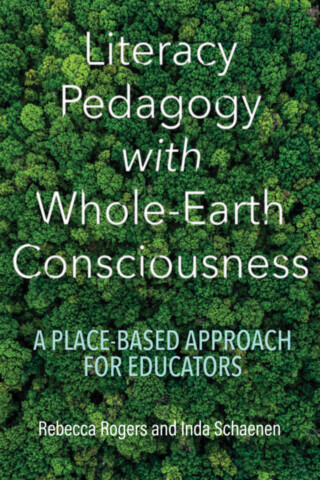
E-books are now distributed via VitalSource
VitalSource offer a more seamless way to access the ebook, and add some great new features including text-to-voice. You own your ebook for life, it is simply hosted on the vendor website, working much like Kindle and Nook. Click here to see more detailed information on this process.
Thanks to Literacy Pedagogy with Whole-Earth Consciousness, teachers of novice readers no longer have to separate structured reading instruction from meaningful, engaging, age-appropriate content. In clear language and with multiple examples drawn directly from practice – including case studies, vignettes, discourse analyses, text sets, samples of curriculum, and more – this book shows how literacy pedagogy can be merged with science-based concepts, understandings, and practices. Readers will draw inspiration from seeing how earth-conscious literacy pedagogy unfolds in multiple educational contexts: an afterschool program, a virtual literacy tutorial, a 3-week school enrichment program, and a graduate-level literacy course. The authors showcase how place-based approaches to literacy instruction can empower students and teachers alike as readers while also dramatically deepening their relationships with the environment. Uniquely, Literacy Pedagogy with Whole-Earth Consciousness merges together teacher action research, discourse analysis, literacy teacher education, and eco-justice pedagogies. What results is a timely, conceptually rich guide to an experiential and evidence-based approach to literacy teaching and learning. Literacy Pedagogy with Whole-Earth Consciousness can be a central adopted text in undergraduate and graduate classrooms: with student reading scores seemingly stuck or worsening, what’s urgently needed are innovative, thoughtful, authentic approaches to teaching literacy comprehensively at the earliest and intermediate stages, especially in classes preparing teachers for service or extending the repertoires of in-service teachers at the graduate level. It will also be a useful adopted text in graduate classes that explore discourse analysis and teacher action research. Because the book will include examples of critically oriented discourse analysis within an action research framework, Literacy Pedagogy with Whole-Earth Consciousness will appeal to fellow critical literacy researchers, as well as scholars and practitioners of discourse analysis. The book will extend approaches to critical discourse studies in educational 4 settings by engaging eco-linguistics as a pedagogical and research tool. For this reason, literacy clinic directors and their affiliated faculty will also be interested readers. The authors write with clarity for the ever-growing number of homeschooling families, microschools, and indeed any caregivers of young children who are interested in merging research-based developmental literacy with environmental content in age-appropriate ways. The authors made the decision to jump into the kind of work that would foreground relationships, seek continuities, embrace non-linear patterns of change, and adhere to a basic ecological principle of favoring diversity over monoculture. Through a two-year inquiry across multiple contexts, they have worked to envision and construct a conceptual and practical trellis that will support the fruits of comprehensive literacy development – phonics, comprehension, fluency, writing, spelling, curiosity, and joy – while remaining grounded in place-based content and care. Along the way, they have engaged in reflexive research, documenting, analyzing, synthesizing, and reflecting on their practice across multiple learning ecologies. Perfect for courses such as: Foundations of Teaching Literacy; Teaching Reading and Writing in School and Community Settings; Theory and Practice of Literacy Tutoring; Science Literacy
More
E-books are now distributed via VitalSource
VitalSource offer a more seamless way to access the ebook, and add some great new features including text-to-voice. You own your ebook for life, it is simply hosted on the vendor website, working much like Kindle and Nook. Click here to see more detailed information on this process.
Transformative Inquiry: Integrating Action Research and Systems Thinking explores how two dynamic methodologies—action research and systems thinking—can be combined to address complex challenges in education, healthcare, organizational leadership, and public policy. Grounded in participatory, iterative processes, both approaches emphasize collaboration, reflection, and systemic improvement. Together, they provide a flexible yet rigorous framework for change.This edited volume brings together scholars and practitioners to examine the historical foundations, theoretical intersections, and applied integration of action research and systems thinking. Chapters include conceptual models and case studies drawn from K–12 schools, higher education, health professions education, digital learning environments, and leadership development. Contributors demonstrate how these frameworks support root-cause analysis, stakeholder engagement, and adaptive interventions that move beyond surface-level solutions.Each chapter illustrates how reflective cycles of inquiry, when combined with systems thinking tools such as feedback loops and mental models, can uncover persistent barriers and guide meaningful, context-sensitive change. Topics include digital equity, culturally responsive pedagogy, instructional redesign, performance improvement, and professional learning.Transformative Inquiry will be of interest to scholars, educators, researchers, and practitioners seeking tools for leading improvement in complex systems. It supports graduate and doctoral-level courses in research methods, systems change, and leadership, as well as professional learning in schools, universities, and organizations.
More
E-books are now distributed via VitalSource
VitalSource offer a more seamless way to access the ebook, and add some great new features including text-to-voice. You own your ebook for life, it is simply hosted on the vendor website, working much like Kindle and Nook. Click here to see more detailed information on this process.
Recipes of Motherhood: Families, Communities, and the Power of Food Narratives delves into the powerful connections between food, culture, and motherhood within the demanding context of higher education. This thought-provoking volume, edited by Mila Zhu and Sarah Morrison, brings together diverse voices of academic mothers who share how food practices shape, sustain, and empower their lives as they navigate the complex terrain of career, family, and cultural identity. Drawing from personal narratives, case studies, and interdisciplinary research, Recipes of Motherhood illuminates the ways in which food serves as more than sustenance; it becomes a source of resilience, a tool for community-building, and a means of preserving cultural heritage. The academic mothers in this volume reveal how food acts as a metaphor and medium for navigating life’s challenges, allowing them to bridge their personal and professional identities. From adapting family recipes to sharing meals that create community, each story uncovers the unique strategies academic mothers use to sustain themselves and those around them in an environment that can often feel isolating. Grounded in feminist theory, food studies, and cultural memory, this book highlights how food stories are deeply intertwined with questions of gender, tradition, and self-identity. Chapters explore themes such as the symbolic role of food in cultural heritage, food as a form of resistance to institutional expectations, and culinary traditions as a way to build solidarity among women in academia. Through these narratives, Recipes of Motherhood provides a nuanced understanding of how food can act as both a grounding force and a form of empowerment in academic mothers’ lives. With its interdisciplinary approach, the book appeals not only to scholars in cultural studies, food studies, and gender studies but also to students, educators, and anyone interested in the transformative power of food. Readers will find in these pages a rich tapestry of stories that inspire, educate, and challenge traditional ideas about motherhood and academia. Perfect for academic courses and personal reading alike, the volume offers insight into how food serves as a vital element in the journey of academic mothers, helping them navigate the intersections of personal identity, professional resilience, and cultural expression. This volume invites readers to savor the complexities of academic motherhood through the lens of food and to consider how everyday acts of cooking and sharing meals can hold deep significance in our lives and our communities. Whether you are a mother, an educator, or simply someone interested in the stories that food can tell, Recipes of Motherhood is a captivating exploration of how culinary practices shape our relationships, our work, and our sense of self. Join us in celebrating the resilience, creativity, and heritage of academic mothers whose food stories nourish not only their families but also the broader academic community.Perfect for courses such as: Gender Studies / Women’s Studies – Motherhood and Identity; Food Studies – Cultural Narratives in Food Practices; Education Studies – Women in Academia: Challenges and Resilience; Sociology – Family and Society: Gender Roles and Cultural Heritage; Anthropology – Food, Culture, and Identity; Cultural Studies – Folklore, Tradition, and Modern Identities; Parenting and Family Studies – Motherhood and Work-Life Balance; Interdisciplinary Studies – Food as Narrative and Social Practice; Feminist Theory – Intersectionality of Motherhood, Career, and Culture; Psychology of Women – Resilience and Identity in Motherhood
More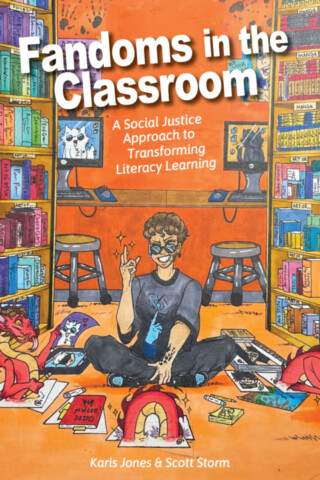
E-books are now distributed via VitalSource
VitalSource offer a more seamless way to access the ebook, and add some great new features including text-to-voice. You own your ebook for life, it is simply hosted on the vendor website, working much like Kindle and Nook. Click here to see more detailed information on this process.
Library E-Books
We are signed up with aggregators who resell networkable e-book editions of our titles to academic libraries. These editions, priced at par with simultaneous hardcover editions of our titles, are not available direct from Stylus.
These aggregators offer a variety of plans to libraries, such as simultaneous access by multiple library patrons, and access to portions of titles at a fraction of list price under what is commonly referred to as a "patron-driven demand" model.
What is a fandom, and why do fandoms matter for school? Fandoms are passionate communities dedicated to appreciating and engaging with texts of interest (movies, TV shows, books, bands, brands, sports teams, etc.) via personally and communally meaningful literacy practices. It is increasingly obvious that scripted literacy curricula and standardized tests fall short of meeting meaningful literacy goals and create culturally destructive learning spaces. Fandoms in the Classroom provides an alternative for educators looking to center passion in their classrooms, individualizing their literacy curricula by building from youth’s interests. The book describes how educators in a wide range of secondary learning contexts can build curricula around students’ already-present fandom interests to support literacy growth. This text supports educators in a range of learning contexts with step-by-step processes for building learning spaces that support navigation of fandom and disciplinary literacies, with a particular focus on common obstacles and roadblocks that teachers have shared with us. It addresses how classrooms doing critical fandom work can address social justice issues across both fandom and disciplinary communities. This book covers relevant topics such as:Why Fandoms? We introduce readers to the concept of fandoms and how engaging students’ experiences in fandoms is not an extra or add-on but instead crucial to flipping the script on literacy learning.Bring Your Fandom to Class: Critically Putting Communities in Conversation. The book discusses how to shift ideas of literacy learning contexts from teacher-centric instruction to a community learning model.Fostering Engagement & Choosing Texts Together: Teachers are often nervous about teaching what they don’t know. The text provides strategies for making learning ecologies and having kids fill it with their own interests, describing specific step-by-step discussion routines that can support youth’s engagement with critical tools on texts of their choice.Building Culturally Responsive Assessments Engaging Youth-Centric Audiences: the book describes how educators can design more expansive literacy assessments with examples of culturally responsive objectives and tasks. The authors include a range of fandom genres and audiences that they have seen in their own work.Transforming Your Current Curriculum in Conversation with Fandoms: Supporting educators interested in expanding literature units in conversation with fandom texts, the text describes how to design units that put various discourse communities in conversation without deadening or co-opting youth interests.Interdisciplinary Applications: there is a discussion about specific examples of how educators the authors have supported in various contexts have applied this kind of work. It includes a focus on cross-disciplinary literacy, with cases highlighting applications for math, science, social studies and music disciplinary learning.Fandoms in the Classroom is a step-by-step guide for literacy instructors struggling to engage their students in meaningful learning. It is essential reading.Perfect for courses such as: Foundations of Literacy; Disciplinary Literacy; Literacy Across the Curriculum; Children's or Young Adult Literature; Writing in the Classroom; Digital Media Literacy; New and Digital Literacies; Teaching Diverse Learners; Theory to Practice; Language, Literacy and Culture; Literacy Policy and Practice; Foundations of Literacy Education; Popular Culture in Literacy Classrooms; History of Literacy Practices; Reading and Language Arts; Critical Theory
More