
Search results for using data
E-books are now distributed via VitalSource
VitalSource offer a more seamless way to access the ebook, and add some great new features including text-to-voice. You own your ebook for life, it is simply hosted on the vendor website, working much like Kindle and Nook. Click here to see more detailed information on this process.
Library E-Books
We are signed up with aggregators who resell networkable e-book editions of our titles to academic libraries. These editions, priced at par with simultaneous hardcover editions of our titles, are not available direct from Stylus.
These aggregators offer a variety of plans to libraries, such as simultaneous access by multiple library patrons, and access to portions of titles at a fraction of list price under what is commonly referred to as a "patron-driven demand" model.
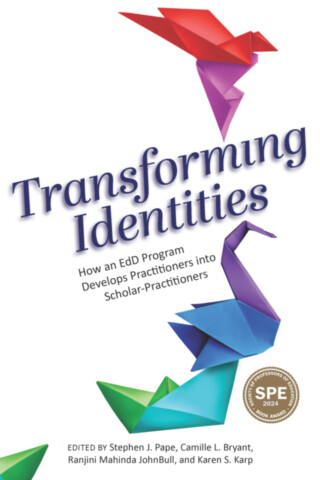
Transforming Identities is the story of one doctoral program that was developed to transform the individuals who participated in the program personally and professionally, leading to improved ways of working within their professional practice. The book details the components of the program believed to have contributed to students' transformed personal and professional identities. The description of the program serves as a frame for 14 individual, compelling stories of transformation. These stories include identities experienced during the program, programmatic components that were mechanisms for change, and the impact of these alums' transformation on their professional organizations. In the final chapter, the editors look across the alums' stories of transformation to inform those who are developing/redeveloping doctor of education programs. Mechanisms of change highlighted by these former students include courses, communities of practice, advisers, and comprehensive examination. The book also synthesizes alums' descriptions of the phases of their transformation, what it means to be a scholar-practitioner, and what meaningful contributions “look like” within their professional contexts. The Johns Hopkins University (JHU) Doctor of Education (EdD) program was created with the expressed programmatic outcome of developing leaders who possess the knowledge, skills, and dispositions to rigorously examine educational problems of practice with stakeholders within their context of professional practice. Transforming Identities frames this discussion of identity transformation from an improvement science perspective as depicted by Bryk et al. (2015) (see also Author et al., 2022). Using this framework for the Applied Dissertation, the program supported its scholar-practitioners to partner with their colleagues in educational institutions and to independently take on the challenges and opportunities they encountered in their work within their context of professional practice. The initial chapters in the book provide an overview of the EdD program, to frame the remaining chapters in which graduates from the program describe their inspirational stories of transformation. They describe the ways in which the program components, including their dissertation, transformed their identity as well as their work within their context of professional practice. These stories present the ways in which these change agents within their organizations have served as insiders who, with greater knowledge and access to knowledge, were able to become the bridge between research and practice, and practice and research and thereby change their organizations from the inside. These stories of transformation highlight how their skills and insights accurately identify the variability in the contexts in which their problem of practice is situated, the variability in the successes of interventions within similar contexts, and the most appropriate way to move the organization forward toward improved outcomes. Each chapter tells the author’s story of transformation from practitioner to scholar-practitioner through the dissertation study and beyond.
More
E-books are now distributed via VitalSource
VitalSource offer a more seamless way to access the ebook, and add some great new features including text-to-voice. You own your ebook for life, it is simply hosted on the vendor website, working much like Kindle and Nook. Click here to see more detailed information on this process.
Learning to See School Systems: Power, Practice, and Improvement in Public Education is a volume dedicated to the goal of improving school systems. In 1513, Niccolò Machiavelli wrote The Prince to help rulers understand the realities of power. Five hundred years later, Dr. Michael R. L. Odell — educator, researcher, and amused observer of Texas school systems — offers a modern reflection for those who lead the nation’s classrooms and districts. Learning to See School Systems is both satire and system map: a handbook for anyone attempting to lead improvement in institutions designed to resist it gracefully. Across twelve chapters, it reveals how public education mirrors the politics of Florence—ambition, reform, accountability, and fortune disguised as data. Each chapter blends humor with hard truth: board relations as diplomacy, improvement plans as rituals, dashboards as illusion, crises as curriculum. Beneath the wit lies a serious purpose—to help educators see their districts as living systems, governed by patterns that Improvement Science now names but Machiavelli already understood. For teachers, principals, superintendents, and school board members alike, Learning to See School Systems is a mirror of modern schooling—ironic, affectionate, and uncomfortably accurate. Read it for laughter. Keep it for survival. Share it with anyone about to lead their first staff meeting. “He who governs schools must learn to rule hearts that believe themselves ungoverned.” — from Learning to See School SystemsPerfect for courses such as: School Improvement and Reform; School Policy; Organizational Leadership and Change
More
This workbook is a supplement to the textbook Scaffolding the Language of Power: An Apprenticeship in Doctoral-Level Writing. One of the features of the textbook is accompanying activities that are scaffolded and carefully sequenced to help students identify key ideas and generate text that can be used to build out the elements of each major dissertation task (e.g., problem statement, literature review, and so on). However, these are mainly offered in abbreviated form due to space limitations.This supplemental workbook contains all the activities from the textbook in expanded form so that students can engage more fully with warm-ups, free-writes, analyses of mentor texts and examples, graphic organizers, and guided writing exercises. These activities are also accompanied with additional free-write prompts as well as bonus discussion questions for extended sense-making.Individual chapters include:1. Introduction: A Three-Pronged Approach to Writing at the Doctoral Level. This chapter provides discussion questions that help students make meaning of the three key ideas of the three main ideas that inform the book: critical perspectives on language, systemic functional linguistics, and sociocultural theory/scaffolding. Additional free-writing prompts are included that help students make personal connections to these ideas from their past and present experiences.2. The Rules: Writing as a Pedagogical Act. This chapter provides discussion questions and personal connection prompts for the first “rule” of the Language of Power framework: doctoral writing is organized and scaffolded. Exercises are then provided for readers to practice five different organization and scaffolding strategies, including headings/chunking, road maps, topic sentences, signal phrases, and transitions/connectors.3. The Rest of the Rules of the Language of Power. This chapter explores the remaining five rules of the “Language of Power” framework. Discussion questions and personal connection prompts are provided for each rule. Exercises are provided that help students practice key skills, including making well-reasoned arguments, identifying and using compelling evidence, writing with specificity and detail, synthesizing information, and developing original voice.4. The Problem Statement. This chapter provides discussion questions regarding the problem statement and its purposes: to explain the problem, convince the reader that the issue is indeed a problem, and describe how the proposed study will begin to address that problem. Exercises are provided that help students articulate the particular problem that will be driving their study, with graphic organizers that break down each part of the problem statement, including the problem summary, the problem background, the rationale of the study, and the purpose statement. Writing activities are also provided that help students take the text generated from these organizers, craft them into problem statement sections, and edit them.5. The Literature Review. This chapter provides discussion questions and personal connection prompts relating to the purposes and processes of the literature review. Activities and tools are provided for article analysis and pre-writing, as well as exercises in which readers analyze exemplars for writing moves. Graphic organizers and writing exercises are provided to help students create an overall schema for their literature review, identify and articulate gaps in the literature, build out levels of claims, and select and summarize exemplars.6. The Theoretical Framework. This chapter provides discussion questions and personal connection prompts regarding the theoretical foundation of the dissertation and its purposes. Graphic organizers and writing exercises are provided to help students craft a rationale for using the framework, define their theories or perspectives, provide a background of the theory or theories, and discuss the key concepts of the framework.7. The Methodology Chapter. This chapter provides activities that help students think through and describe their research design in clear and detailed terms. Exercises and graphic organizers are provided that help readers generate a description of their their methodology, participants and setting, data sources and procedures, analysis methods, trustworthiness, and positionality. Additional exercises are offered to help students map connections between their methodology, theoretical framework, and study purpose to ensure a coherent design.8. The Findings Chapter. This chapter provides warm-ups and discussion questions for building out the “results” chapter of the dissertation. Activities and exercises help readers create an overarching organizational structure for their findings, anchor them with major assertions, support those claims with compelling evidence, and provide analytic explanation. Additional activities are provided to help students reflect on the ways that they purposefully scaffold their readers’ understanding throughout the chapter and the ways that they meet the trustworthiness criteria they created for themselves in the previous chapter.9. The Discussion and Recommendations Chapter. This chapter provides discussion prompts to help students think through the purposes of the discussion and recommendations sections of the dissertation and begin generating text for both. Activities and graphic organizers support students to develop conclusions based on the findings, connect their findings and conclusions to extant literature, generate theoretical readings of their findings and conclusions, and draw out recommendations for addressing the initial problem they identified in the first chapter. Final exercises help students generate main take-aways and contributions, which they will use to develop their dissertation conclusion and abstract.CLICK HERE TO BUY THE BOOK/WORKBOOK BUNDLE AND SAVE!
More
E-books are now distributed via VitalSource
VitalSource offer a more seamless way to access the ebook, and add some great new features including text-to-voice. You own your ebook for life, it is simply hosted on the vendor website, working much like Kindle and Nook. Click here to see more detailed information on this process.
Let's face it: studying Special Education Law is difficult and can be quite tedious. If it were not a part of the requirements for most advanced administrative degrees in education, many students would prefer to skip the course. However, skipping the study of Special Education Law would be quite detrimental to the anticipated and actual experience not only of principals, but also of many other central office administrators, and especially Superintendents. Mistakes in Special Education Law not only lead to shortchanging students and failing to meet their needs, but the same mistakes can be quite costly to school districts in lawsuits, sanctions, and personnel issues. Case Studies for Special Education Law: One Foot in the Real World, the Other Grounded in the Law gives actual case studies that discuss the issues in special education today. It is a great resource and textbook addition for university courses, and would be outstanding for school district personnel to use for professional development. For each case study, the book follows the Issue, Rule, Application, and Conclusion (IRAC) format: Clearly identify the ISSUE associated with the case. What did the school do? What are the parents alleging? What are the parents asking for? Determine the relevant RULE: what part of special education law most impacts this case? Who else is involved in the case? Is it clear cut for either side? ANALYSIS or APPLICATION: as an outside observer, what did the school do right? Do the parents have an actionable case? Did it go to hearing? Was due process involved? Were advocates involved? CONCLUSION: was a settlement arrived at through mediation? If not, what was the next step? Did the parents hire an attorney? What lessons were learned? How can this be applied to administrative practice? Case Studies for Special Education Law is an essential book for two audiences: graduate-level special education law courses to use as discussions as they cover particular aspects of special education law, so that they can see how the law plays out in real life, and school district special education administrators to use in training their special education teachers and other administrators in professional development every year.Perfect for courses such as: Special Education Law; School Law; Introduction to Special Education; Introduction to Emotional and Behavioral Disorders; Introduction to Students with Intense Intervention Needs; Special Education Administration; Theory and Practice in Early Childhood Special Education; Advanced Studies in Emotional and Behavioral Disorders
More
E-books are now distributed via VitalSource
VitalSource offer a more seamless way to access the ebook, and add some great new features including text-to-voice. You own your ebook for life, it is simply hosted on the vendor website, working much like Kindle and Nook. Click here to see more detailed information on this process.
From Academic Mochilas to Reflejos Brillantes: Latina/o/x Students and their Quest for Educational Excellence was written to continue elevating the notion that education is a pathway forward for individual, family, community, and societal transformation. Anchored around two primary metaphors — the mirror and the mochila (backpack) — this book aims to engage educators, leaders, students, families, community members, and policymakers to consider how the mirror and the mochila can be used as tools to transform educational practice, pedagogy, and policy for Latina/o/x/e students across the K-12, community college, and university systems. Dr. Rodriguez begins From Academic Mochilas to Reflejos Brillantes with his own educational journey, discussing the challenges and opportunities that shaped his pathway through education and on to higher education. He discusses the intellectual foundations of reflejos as a result of research conducted in a predominantly Latina/o/x student high school in California. The remainder of From Academic Mochilas to Reflejos Brillantes focuses on strategies to build Reflejos Brillantes, beginning with affirmation-based pedagogies resulting in reflejos valiosos (worthy reflections). Then, in Chapter Four, Dr. Rodriguez explains the intellectual foundations of the academic mochila, which helps test the institutional espejo (mirror) and introduces how we can arrive at refjejos llenos (full reflections). Dr. Rodriguez believes all forms of education should strive to serve as an espejo to the students they serve. While Latinas/os/xs continue to grow as a demographic, there are deep-seated inequalities that must be understood within a historical context, and recognition must be paid to how far we actually need to go in order to advance our community in education and society. Education, even with its various challenges, has the potential to move our communities toward equity and justice. This progress will not happen by accident, and we must intentionally create the conditions that move us toward a more hopeful future. We must fight for the espejos that make sense for us. From Academic Mochilas to Reflejos Brillantes explores what this looks like. In order to build institutional espejos that reflect Latina/o/x student brilliance back to them, educators, researchers, and policy makers must be willing to recognize the gifts, skills, knowledge, and experiences that students already bring in their mochilas. This recognition of existing brilliance allows us to build on and contribute to it, but the first step in education is to recognize that the mochila exists, using education as a vehicle. The mochila is conceptualized from two key sources — the experiences of Latina/o/x high schools students and situated within the additive conceptual frameworks in education created by mostly Chicana/o/x and Latina/o/x scholars in the field of education. Throughout From Academic Mochilas to Reflejos Brillantes, Dr. Rodriguez speaks directly to all Latina/o/x students about seven essential steps to achieve reflejos victoriosos (victorious reflections), and finally, Dr. Rodriguez closes the book with a call to action by proposing a 12-point framework that can be used to advance Latina/o/x education in the U.S., or what he frames as reflejos futuros (future reflections). This framework aims to advance the conversation locally and nationally to advance education for and with the Latina/o/community, and to build Reflejos Brillantes into the collective future. From Academic Mochilas to Reflejos Brillantes aims to celebrate and facilitate Latina/o/x student success.Perfect for courses such as: Introduction to Education; Issues in Latina/o/x Education; Introduction to Ethnic Studies; Chicana/o/x Education; Diversity and Equity in Education; Urban Education; Introduction to Teaching; Critical Pedagogy; Education in a Diverse Society; Sociology of Education; Social Context of Education; Social and Cultural Foundations of Education; Educational Leadership
More
E-books are now distributed via VitalSource
VitalSource offer a more seamless way to access the ebook, and add some great new features including text-to-voice. You own your ebook for life, it is simply hosted on the vendor website, working much like Kindle and Nook. Click here to see more detailed information on this process.
Library E-Books
We are signed up with aggregators who resell networkable e-book editions of our titles to academic libraries. These editions, priced at par with simultaneous hardcover editions of our titles, are not available direct from Stylus.
These aggregators offer a variety of plans to libraries, such as simultaneous access by multiple library patrons, and access to portions of titles at a fraction of list price under what is commonly referred to as a "patron-driven demand" model.
Improvement Science in Education: A Primer, second edition, is the first and introductory volume in the Myers Education Press series, Improvement Science in Education and Beyond. It provides a comprehensive overview of improvement science as a framework to guide continuous improvement and reconceptualizes improvement by centering equity and justice as the purpose of improvement. The Primer is designed to introduce improvement science, a methodology with origins in manufacturing, engineering and healthcare, to educational audiences. The book first explores the philosophical and methodological foundations of improvement science, juxtaposing it with traditional forms of research so that clear distinctions can be drawn. Chapters in the latter half of the book introduce the principles of improvement, give guidance and tools for operationalizing the principles in practice, and conclude with questions to ensure you are improving with equity in mind. Constantly reminding readers to think about who is involved and impacted, the Primer makes improvement science accessible to novices and adds critical dimensions for experienced practitioners to consider. In the second edition of this best-selling book, Brandi Hinnant-Crawford, a nationally recognized authority in the methodology, has added valuable new content that updates the literature and enhances the focus of the volume by asking even more who questions: who benefits, who bears the burden, whose priorities and values are reflected, and who is heard when decisions are made. Improvement for equity requires more than profound knowledge and subject matter knowledge—it requires criticality. Improvement science is rapidly becoming the signature methodology for accomplishing continuous improvement in universities, public school districts, and professional development programs. Its goal is to create better learning environments.Perfect for courses such as: Educational Research; School Improvement; and Program Evaluation
More
E-books are now distributed via VitalSource
VitalSource offer a more seamless way to access the ebook, and add some great new features including text-to-voice. You own your ebook for life, it is simply hosted on the vendor website, working much like Kindle and Nook. Click here to see more detailed information on this process.
Library E-Books
We are signed up with aggregators who resell networkable e-book editions of our titles to academic libraries. These editions, priced at par with simultaneous hardcover editions of our titles, are not available direct from Stylus.
These aggregators offer a variety of plans to libraries, such as simultaneous access by multiple library patrons, and access to portions of titles at a fraction of list price under what is commonly referred to as a "patron-driven demand" model.
Using details from California’s unique, diverse social and political history makes the potentially dry foundations course into a very personal and dynamic topic for students to wrap their minds around. The book is a critical analysis of the evolution of educational policies that frame teachers’ and students’ roles and responsibilities in the historical and contemporary context of public education and thoroughly covers topics such as school segregation; the political structure of the state; bilingual education, school funding, NCLB, school choice, how policies arise and how they are legislated. Perfect for courses such as:Educational Foundations | Social Foundations of Education | Introduction to Teaching Multicultural Education | Curriculum and Instruction
More
E-books are now distributed via VitalSource
VitalSource offer a more seamless way to access the ebook, and add some great new features including text-to-voice. You own your ebook for life, it is simply hosted on the vendor website, working much like Kindle and Nook. Click here to see more detailed information on this process.
Library E-Books
We are signed up with aggregators who resell networkable e-book editions of our titles to academic libraries. These editions, priced at par with simultaneous hardcover editions of our titles, are not available direct from Stylus.
These aggregators offer a variety of plans to libraries, such as simultaneous access by multiple library patrons, and access to portions of titles at a fraction of list price under what is commonly referred to as a "patron-driven demand" model.
The Improvement Science Dissertation in Practice provides a narrative and illustration about the purpose and features comprising the Dissertation in Practice and how this culminating experience is well suited to using Improvement Science as a signature methodology for preparing professional practitioners. This methodology, when combined with the Dissertation in Practice experience in EdD programs, reinforces practitioner learning about and skills for leadership and change. As a guide, the book is an extremely valuable resource that supports faculty, students, and practitioners in the application of Improvement Science to pressing educational problems in a structured, disciplined way.CPED Initiative Fireside Chat with Jill Perry: https://vimeo.com/508666806To learn more about Improvement Science and see our full list of books in this area, please click through to the Myers Education Press Improvement Science website. Perfect for courses such as: Educational Leadership, Research Methods, The Dissertation Process, Dissertation Writing and Research, and Thesis and Dissertation
More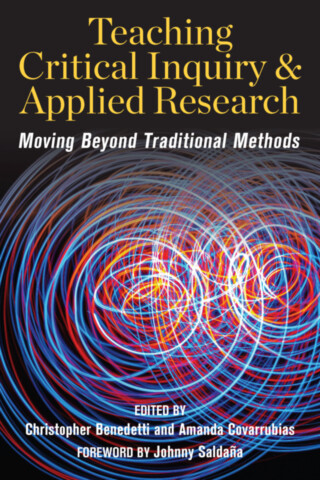
E-books are now distributed via VitalSource
VitalSource offer a more seamless way to access the ebook, and add some great new features including text-to-voice. You own your ebook for life, it is simply hosted on the vendor website, working much like Kindle and Nook. Click here to see more detailed information on this process.
Library E-Books
We are signed up with aggregators who resell networkable e-book editions of our titles to academic libraries. These editions, priced at par with simultaneous hardcover editions of our titles, are not available direct from Stylus.
These aggregators offer a variety of plans to libraries, such as simultaneous access by multiple library patrons, and access to portions of titles at a fraction of list price under what is commonly referred to as a "patron-driven demand" model.
A key distinction between an education doctorate, or Ed.D., and other doctorates in the field of education is the development of scholar practitioners armed with knowledge and skills to successfully lead change in their profession. Critical inquiry is one such skill, increasingly taught in many Ed.D. programs in some form of applied research methodology. Teaching Critical Inquiry and Applied Research: Moving Beyond Traditional Methods gathers insights from Ed.D. faculty regarding how the teaching of applied research occurs to develop scholar practitioners prepared to bring change to their respective professional fields. The 13 chapters provide a broad coverage of related topics, which includes advocacy and leadership through research, innovative features of methods courses, and methodology-focused program redesign. Each chapter includes strategies and recommendations for others interested in implementing something similar in their courses and programs. This book also captures student voices, in the form of vignettes written by students within each chapter, to illustrate the powerful impact of learning related to critical inquiry and applied research. Teaching Critical Inquiry and Applied Research is an excellent text for classrooms devoted to critical research, critical pedagogy, and other courses.
More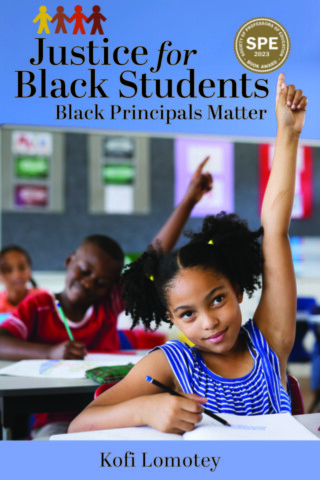
E-books are now distributed via VitalSource
VitalSource offer a more seamless way to access the ebook, and add some great new features including text-to-voice. You own your ebook for life, it is simply hosted on the vendor website, working much like Kindle and Nook. Click here to see more detailed information on this process.
Library E-Books
We are signed up with aggregators who resell networkable e-book editions of our titles to academic libraries. These editions, priced at par with simultaneous hardcover editions of our titles, are not available direct from Stylus.
These aggregators offer a variety of plans to libraries, such as simultaneous access by multiple library patrons, and access to portions of titles at a fraction of list price under what is commonly referred to as a "patron-driven demand" model.
In Justice for Black Students: Black Principals Matter, Kofi Lomotey begins with a two-pronged premise: (1) Black students do not receive a quality education in US public (or private) schools, and (2) Black principals, like Black teachers, can make a positive impact on the academic and overall success of Black students. Through the chronicling of his own work over 50 years—as a practitioner and an academic—Lomotey puts forth this argument with a focus on Black principals. In this book, he positions his 1993 coining of the term ethno-humanism—a role identity which he attributes to successful Black principals—as a fundamental/critical component of the leadership of these principals. In reprinting three of his earlier articles and sharing new information (including a review of the literature on Black male principals), he provides a broad-based description of this role identity and then links it to the more recent concepts of culturally responsive/culturally relevant teaching/pedagogy and culturally responsive/culturally relevant school leadership, before describing the implications for Black students of his own work and of other research that has been conducted on Black principals. This volume is essential reading for all educators interested in seeing a significant improvement in the academic and overall success of Black students. Preservice teachers, practitioners, and administrators will find enormous value in the book’s message.Perfect for courses such as: Introduction to Education │ Leadership for Equity and Social Justice in Education │ Black Education │ Multicultural Education │ School Leadership │ Culturally Responsive Leadership
More