

Social Justice & Equity

E-books are now distributed via VitalSource
VitalSource offer a more seamless way to access the ebook, and add some great new features including text-to-voice. You own your ebook for life, it is simply hosted on the vendor website, working much like Kindle and Nook. Click here to see more detailed information on this process.
In this moment of heightened political repression, racial retrenchment, and global anti-Blackness, the urgency of confronting anti-Blackness within, through, and across communities of color has never been greater. As book bans spread, Critical Race Theory (CRT) is vilified, and diversity, equity, and inclusion (DEI) initiatives are dismantled, we must reckon with the reality that anti-Blackness is not an aberration, but an organizing logic of racial formation and global white supremacy. This edited volume brings together scholars, educators, and community organizers to interrogate the ways anti-Blackness is perpetuated within / through / across Latinx and Asian American communities—and the complex, often contradictory practices of complicity, resistance, and solidarity that emerge in response. Drawing on interdisciplinary perspectives from disciplines / professions like education, ethnic studies, sociology, psychology, cultural studies, social work, and gender studies, Asian and Latinx Anti-Blackness in Schools and Communities: Complicated Stories of Complicity and Resistance refuses simplistic narratives that position non-Black communities of color solely as victims or solely as perpetrators. Instead, contributors adopt a both/and framework, naming the ways Latinx and Asian communities have benefited from proximity to whiteness (as it relates to anti-Blackness) while also highlighting the histories, ruptures, and refusals that open / reveal possibilities for coalition and collective liberation. Organized into three sections—Anti-Blackness With/In, Through, and Among Latinx & Asian Communities, Geographies and Spaces; Anti-Blackness in Latinx & Asian Teaching, Pedagogy, and Curriculum; and Anti-Blackness and the Precarity of Racial Categories—the chapters combine empirical research, conceptual essays, narrative, and autoethnographies. Together, they explore topics such as racial formation, racial hierarchy, racial triangulation, the intersections of Blackness, the policing of language and accent, and the lived experiences of multiracial individuals navigating contested racial boundaries. The book situates these discussions within the shifting demographic and political landscape of the United States, where the 2020 Census revealed a decline in the white population alongside an increase in racial diversity, and where Kamala Harris’s historic tenure as the first Black and Asian American Vice President (and presidential candidate) illuminated both the promise of representation and the persistence of racial hierarchy. These contexts underscore a central question animating the volume: How do Latinx and Asian communities—within schools, neighborhoods, and transnational networks—navigate the tensions between inclusion and erasure of Blackness in the broader racial imaginary? Ultimately, this volume is both critique and invitation. It challenges readers to: confront how anti-Blackness is reproduced in everyday practices and institutional structures; to reckon with the privileges and harms tied to racialized positioning; and to imagine relational, historical, and spatial practices of accountability within / through / and among Latinx and Asian communities. By centering the voices of scholars and storytellers committed to racial justice, Asian and Latinx Anti-Blackness in Schools and Communities offers not only a sharper understanding of racial dynamics beyond the Black–white binary, the impact of the binary, but also concrete pathways toward dismantling anti-Blackness and building enduring, justice-oriented solidarity.
More
E-books are now distributed via VitalSource
VitalSource offer a more seamless way to access the ebook, and add some great new features including text-to-voice. You own your ebook for life, it is simply hosted on the vendor website, working much like Kindle and Nook. Click here to see more detailed information on this process.
Reclaiming Space: Critical Conversations about Black Education to Spark Transformative Change invites readers on a journey to reimagine educational spaces that truly embrace diversity and inclusion. Along with contributing authors, Dr. Marks draws upon her personal experiences as a student and educator to explore systematic barriers that have hindered and marginalized Black voices and perspectives. With the spirit of Sankofa and the power of ‘reimagining and dreaming,’ Dr. Marks and her colleagues provide compelling narratives and research-based strategies that challenge traditional norms within educational spaces and empower stakeholders to actively participate in cultivating environments where Black educators and students can truly thrive. Reclaiming Space is not simply a call to action, it is an insistence on enacting culturally responsive and sustaining transformational change in educational spaces. Reclaiming Space acknowledges the ways in which Black youth and educators alike have been disenfranchised in educational spaces, from the silent push out of Black educators, diminishing the presence of Black educators in classrooms across the nation, to the plethora of harms caused to Black youth in K-12 spaces (including, but not limited to, the achievement gap, discipline gap, and disproportionate special education referrals). What we have seen since the Brown v. Board of Education decision is the marginalization of Black youth and educators in addition to the elimination of Black excellence in schools. As such, Reclaiming Space seeks to create a counter narrative to push back on deficit perspectives and ideologies in regards to the ways in which we view and interact with our Black students and educators. This volume works to illuminate the Black community and inspire all to consider the ways in which we can work to center Black excellence, and uplift Black youth and educators alike to reclaim space within the American educational system. Reclaiming Space will be separated into three sections, which will revolve around themes of disrupting harmful systems of practice, centering Black excellence and affirming Black culture, and supporting Black educators. Chapters for each of the three sections will be compiled of submitted manuscripts based on the questions listed above. In this way, this book volume seeks to work as a counter narrative to deficit viewpoints and perspectives, but also an act of itself in ‘reclaiming space.’ Reclaiming Space is intended to inspire others to center and/or affirm Black excellence in meaningful ways that work to better support our Black students and teachers. The text most strongly works for K-12 educators and administrators, faculty in higher education, and community members. The topics within Reclaiming Space are of interest to both those who are within the field of education and those who are not, as the issues stemming from harmful educational practices goes on to permeate spaces beyond. Having strong voices and experiences with disrupting these harmful practices from different perspectives and vantage points will hopefully not only better inform readers, but spark interest and hope as we move forward to dream about an educational system that is truly grounded in equitable access and opportunities for all.Perfect for courses such as: Introduction to Black Studies; Teaching for Diversity and Social Justice; Critical Thinking and Contemporary Social problem (sociology); Race and Ethnic Relations; Race and Ethnic Dynamics in the United States; Black Experiences in the United States; Cultural Diversity in US Schools; Sociology of Education; Sociocultural Foundations in Education; Classroom Management and Differentiated Instruction
More
E-books are now distributed via VitalSource
VitalSource offer a more seamless way to access the ebook, and add some great new features including text-to-voice. You own your ebook for life, it is simply hosted on the vendor website, working much like Kindle and Nook. Click here to see more detailed information on this process.
Teacher education, preparation, and professional development form the bedrock of what occurs in U.S. classrooms. Nonetheless, we are facing a teacher crisis on multiple fronts: teacher employment and retention are diminishing as the profession becomes increasingly deprofessionalized. Simultaneously, the majority of U.S. teachers are white, receiving teacher education from predominantly white institutions (PWIs), and are ill-equipped to teach effectively and responsively in our increasingly diverse classrooms. Since the standards movement took hold in the 1990s and gained momentum after the No Child Left Behind Act of 2002, education for pre- and in-service teachers has resembled a game of whack-a-mole in which postsecondary educators, academic coaches, school leaders, and professional development companies have formulated teacher education to respond to evolving policy mandates, student performance metrics, support for and rejection of DEI initiatives, and a constant flow of scholarship touting “best practices.” As a result, teacher education that pushes boundaries and the status quo must instead emphasize transformation, liberation, equity, and authentic learning for all students. In Moving from Limited to Liberated Teacher Education, we present nuanced approaches to transforming the education of pre- and in-service teachers, thus impacting PreK-12 at large. The enclosed chapters explore social justice instructional coaching, linguistically responsive academic coaching, transforming student and teacher assessment, preparing justice-oriented content-area teachers, teacher candidate identity and social justice mindset development, transformative action research in teacher preparation, critical professional development for justice, and transformative teacher mentorship. Educators are doing great work that pushes the limits of what is considered “best practices,” be it through advocating for authentic project-based curriculum and assessment over standardized assessments, restorative justice over punitive classroom management, culturally and linguistically responsive teaching over standards-based lesson planning, or instructional coaching that liberates teacher creativity and emphasizes mental health over performance and results. Moving from Limited to Liberated Teacher Education celebrates such practices and provides a roadmap for readers to enact them. Innovative and creative methodologies and practices that educators, educational leaders, and teacher preparation faculty can use right away are the primary focus of Moving from Limited to Liberated Teacher Education. As former or current PreK-12 practitioners, teacher educators, and/or education scholars, editors and contributors tailored the book for a broad educational audience. The editors and contributors provide practicing teachers, pre-service and practicing educational leaders (and mentors and coaches), and teacher educators entry points for transforming the PreK-20+ landscape in favor of liberatory, transformative practices in schools across grade levels, content areas, school types, and geographic regions. This book is ideal for teacher and leadership preparation programs and PreK-12 professional development, guiding readers through theoretical and empirical discussions supported by hands-on applications, and concluding with interactive features like case studies, extension activities, and discussion prompts.Perfect for courses such as: Introduction to Cultivating Culturally Responsive Schools; Introduction to Diversity, Equity, and Inclusion in Schools; Introduction to Supportive School Communities; Introduction To School Improvement; Instructional Coaching for Equity and Justice; Introduction to Transformative Professional Development and Professional Learning Communities; Instructional Leadership for Social Justice; Foundations of Social Justice School Leadership; Foundations of Transformative Leadership
More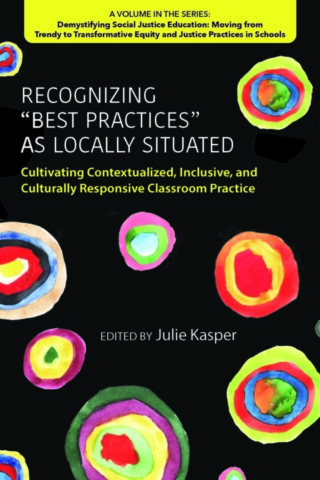
E-books are now distributed via VitalSource
VitalSource offer a more seamless way to access the ebook, and add some great new features including text-to-voice. You own your ebook for life, it is simply hosted on the vendor website, working much like Kindle and Nook. Click here to see more detailed information on this process.
Teaching in PreK-12 classrooms requires not only pedagogical knowledge and field-related skill, but also creativity, flexibility, and responsiveness. Teachers, as lifelong learners and as leaders in education, must make sense of curricula, policies, research, and evidence in order to guide and shape their practices in unique and diverse contexts. How teachers make use of these “best practice” guides varies — there is no one-size-fits-all program or method that can be picked up and applied without classroom teachers’ localized and reflective contextualization. Designed for use by preservice teachers, experienced educators, mentors and coaches, school leaders, and teacher preparation faculty, Recognizing “Best Practices” as Locally Situated calls teachers into their power to disrupt, transform, and lead towards change in PreK-12 schools. This volume makes visible the critical work teachers engage in daily as they evaluate, interpret, implement, and assess the impact of particular strategies, resources, and approaches in their classrooms. Teachers must iterate on their teaching practice in cycles of continuous learning and reflection toward educational equity and social justice. Recognizing “Best Practices” as Locally Situated celebrates the voices, power, and pedagogical practices of teachers across a variety of content areas and settings, ranging from early childhood to adolescence and from transnational contexts, including multilingual classrooms in the U.S., Lebanon, and Ukraine, along with teacher preparation programs in the U.S. and Europe. Through vignettes, analysis, reflective prompts, lesson plans, resources, and activities, the authors make clear that teachers are agentic, innovative, and adaptive practitioners who translate evidence-based “best practices” into context-specific, responsive, and learner-centered pedagogical moves that build upon the assets of their students to support learning. They invite readers into their (trans)local worlds as readers’ shape and reconfigure their own (trans)local classrooms, schools, and educational ecosystems. Recognizing “Best Practices” as Locally Situated aims to bring together the voices of practitioners across K-12 education to examine their situated and expert testing, adaptation, and refusal of “best practices” within their classrooms and communities. The authors explore a best practice, as housed in this partially archived version of the U.S. Department of Education's Best Practices Clearinghouse or as explicitly named in research or practitioner literature. They explain the ways they have tested, accepted, rejected, modified, or otherwise adapted and contextualized that “best practice” within their own teaching context and with equity, inclusion, diversity, belonging, and social justice in mind. Recognizing “Best Practices” as Locally Situated provides an important overview and critique of currently circulating “best practices” for both novice and experienced educators. It provides classroom-tested pedagogical modes and resources with methodologies for engaging critically with “evidence,” including through generation of new evidence and knowledge bases situated within particular communities, times, places, and policy contexts. As part of Dr. Linsay DeMartino and Dr. Lisa Fetman's book series Demystifying Social Justice Education: Moving from Trendy to Transformative Equity and Justice Practices in Schools, this book aligns through its focus on equity and justice and the dismantling of taken-for-granted or “trendy” practices and policies in education. The collection of texts draws upon the lived experiences of educators, education researchers, community program leaders, and students and families to provide new evidence and as contributions to the literature centering around what is possible in equitable, responsive, belonging, and socially-just education.Perfect for courses such as: Introduction to Curriculum, Instruction, and Assessment in Diverse Classrooms; Introduction to Educating For Equity And Social Justice; Cultivating Culturally Responsive Classrooms; Critically Reflective Teaching; Adolescent Identities, Literacies, and Communities; Integrated Content and Language Learning (TESOL/TEFL/Bilingual Ed); Literacy Methods in Multilingual Classrooms; Resisting and Transforming the Purpose of Education: Education for Freedom; Professional Development and Leadership; Inquiry-Based Professional Learning; Introduction to Teacher Leadership And School Improvement
More
E-books are now distributed via VitalSource
VitalSource offer a more seamless way to access the ebook, and add some great new features including text-to-voice. You own your ebook for life, it is simply hosted on the vendor website, working much like Kindle and Nook. Click here to see more detailed information on this process.
From Academic Mochilas to Reflejos Brillantes: Latina/o/x Students and their Quest for Educational Excellence was written to continue elevating the notion that education is a pathway forward for individual, family, community, and societal transformation. Anchored around two primary metaphors — the mirror and the mochila (backpack) — this book aims to engage educators, leaders, students, families, community members, and policymakers to consider how the mirror and the mochila can be used as tools to transform educational practice, pedagogy, and policy for Latina/o/x/e students across the K-12, community college, and university systems. Dr. Rodriguez begins From Academic Mochilas to Reflejos Brillantes with his own educational journey, discussing the challenges and opportunities that shaped his pathway through education and on to higher education. He discusses the intellectual foundations of reflejos as a result of research conducted in a predominantly Latina/o/x student high school in California. The remainder of From Academic Mochilas to Reflejos Brillantes focuses on strategies to build Reflejos Brillantes, beginning with affirmation-based pedagogies resulting in reflejos valiosos (worthy reflections). Then, in Chapter Four, Dr. Rodriguez explains the intellectual foundations of the academic mochila, which helps test the institutional espejo (mirror) and introduces how we can arrive at refjejos llenos (full reflections). Dr. Rodriguez believes all forms of education should strive to serve as an espejo to the students they serve. While Latinas/os/xs continue to grow as a demographic, there are deep-seated inequalities that must be understood within a historical context, and recognition must be paid to how far we actually need to go in order to advance our community in education and society. Education, even with its various challenges, has the potential to move our communities toward equity and justice. This progress will not happen by accident, and we must intentionally create the conditions that move us toward a more hopeful future. We must fight for the espejos that make sense for us. From Academic Mochilas to Reflejos Brillantes explores what this looks like. In order to build institutional espejos that reflect Latina/o/x student brilliance back to them, educators, researchers, and policy makers must be willing to recognize the gifts, skills, knowledge, and experiences that students already bring in their mochilas. This recognition of existing brilliance allows us to build on and contribute to it, but the first step in education is to recognize that the mochila exists, using education as a vehicle. The mochila is conceptualized from two key sources — the experiences of Latina/o/x high schools students and situated within the additive conceptual frameworks in education created by mostly Chicana/o/x and Latina/o/x scholars in the field of education. Throughout From Academic Mochilas to Reflejos Brillantes, Dr. Rodriguez speaks directly to all Latina/o/x students about seven essential steps to achieve reflejos victoriosos (victorious reflections), and finally, Dr. Rodriguez closes the book with a call to action by proposing a 12-point framework that can be used to advance Latina/o/x education in the U.S., or what he frames as reflejos futuros (future reflections). This framework aims to advance the conversation locally and nationally to advance education for and with the Latina/o/community, and to build Reflejos Brillantes into the collective future. From Academic Mochilas to Reflejos Brillantes aims to celebrate and facilitate Latina/o/x student success.Perfect for courses such as: Introduction to Education; Issues in Latina/o/x Education; Introduction to Ethnic Studies; Chicana/o/x Education; Diversity and Equity in Education; Urban Education; Introduction to Teaching; Critical Pedagogy; Education in a Diverse Society; Sociology of Education; Social Context of Education; Social and Cultural Foundations of Education; Educational Leadership
More
E-books are now distributed via VitalSource
VitalSource offer a more seamless way to access the ebook, and add some great new features including text-to-voice. You own your ebook for life, it is simply hosted on the vendor website, working much like Kindle and Nook. Click here to see more detailed information on this process.
For decades, schools have invited families to get involved, to volunteer, to attend conferences, and to support school events. While well-intentioned, these traditional approaches to family engagement often reinforce deficit-based assumptions, privileging dominant cultural norms and overlooking the intellectual, cultural, and social wealth that families bring to education.Moving From Involvement to Equitable Community Collaboration challenges this status quo, offering a transformative vision in which families, educators, and communities become co-creators of educational systems. This collection centers equity in education by arguing that this cannot be achieved without shifting from models of parent involvement, partnership, and engagement toward authentic, collaborative practices that redistribute power and center the lived experiences of marginalized families. Drawing on research, Moving From Involvement to Equitable Community Collaboration demonstrates how schools can shift from seeing families as simply clients or supporters to recognizing them as leaders, cultural brokers, and advocates for systemic change. At its heart, equitable community collaboration reimagines the relationships between schools, families, and communities. It asks educators to foster reciprocal relationships, shared leadership, and collective responsibility, where families’ voices shape decision-making and reform. Through compelling examples, ranging from Latinx families codeveloping district policies to multilingual parents co-designing curricula with educators, this collection illustrates how collaboration rooted in trust and authentic care can transform schools into sites of justice, belonging, and flourishing for all students. Each chapter of Moving From Involvement to Equitable Community Collaboration weaves together scholarship, case studies, and practical tools to guide PreK–12 educators, leaders, and preservice teachers in embedding equitable collaboration into their daily practice. The book is organized into three dynamic sections: Conceptual Foundations introduces transformative frameworks for equitable collaboration, including relational power (“power with”), cultural brokering, and community cultural wealth. Taking the Next Steps offers practical strategies for building structures that sustain shared leadership, such as family advisory councils, co-designed curricula, and community-rooted partnerships. Interactive Features engages readers through reflective prompts, case studies, and curated resources that encourage self-reflection, dialogue, and application. By centering collective strengths rather than individual deficits, Moving From Involvement to Equitable Community Collaboration pushes back against competitive, individualistic models of education. It calls on schools to cultivate shared advocacy, mutual accountability, and structures that honor the expertise and leadership of the families that they serve. Importantly, Moving From Involvement to Equitable Community Collaboration frames this work as inherently sociopolitical, requiring schools to confront historic and current inequities, challenge hierarchies, and sustain practices that redistribute power over time. Written for educators, leaders, scholars, and community partners, Moving From Involvement to Equitable Community Collaboration provides both a critical lens and a practical roadmap for building reciprocal relationships that are culturally responsive, justice-oriented, and transformative. When working together, schools, families, and communities have the power to reimagine education, not in isolation, but in collaboration. This book shows how to take that essential step. Given our space, place, and time as we emerge from a worldwide pandemic, educational inequities that were always present have surfaced and were noticed by the masses and mainstream media. Coupled with unfounded claims leading to the removal of equity and justice programming in schools, it is of the utmost importance to sustain the momentum for socially-just educational practices. The purpose of Moving From Involvement to Equitable Community Collaboration is to demystify educational trends and provide alternative transformative educational practices to enhance the work of authentic social justice education in schools. This book series of collections will juxtapose trendy educational adoptions, which can result in more unintentional harm than good, with more authentic equity and justice models that serve all students across PreK-12 schools. Perfect for courses such as: Introduction to Social Justice in Education; Community Engagement; Introduction to Educating For Equity And Social Justice; Introduction to Cultivating Culturally Responsive Classrooms; Foundations Of Culturally And Linguistically Responsive Practice; Introduction to Diversity, Equity, and Inclusion in Schools; Principles of Professional Collaboration In Education; Introduction to Supportive Classroom Communities; Introduction To School Improvement, Introduction to Teacher Leadership And School Improvement; Principles of Teaching Diverse Learners; Introduction to Multiculturalism in Education
More
E-books are now distributed via VitalSource
VitalSource offer a more seamless way to access the ebook, and add some great new features including text-to-voice. You own your ebook for life, it is simply hosted on the vendor website, working much like Kindle and Nook. Click here to see more detailed information on this process.
Teaching that aims to be inclusive of marginalized communities is under attack in the United States, evidenced, for example, in widespread school book banning efforts, prohibition of Advanced Placement African American history, and a general tenor of fear among educators across the K-12 and higher education spectrum. This fear originates from a variety of pedagogical attempts at teaching content or utilizing practices that do anything other than valorize the dominant narrative and status quo in the United States. Classroom teachers and college instructors ask what can be done to uphold the practices they know to support students from all backgrounds to experience educational success and inclusion that won’t capture the ire of parent groups, school boards, or educational commissions bent on squelching such critical efforts. Against the Current: Inclusive Multicultural Education Practices for Contentious Times addresses these issues by providing examples from K-12 and higher education classrooms where educators’ practices offer a path forward. Each chapter in the book presents an example of ways educators practice multicultural inclusivity and offers insights on how to do so even in hostile environments. Chapters in Part 1 of the book offer re-framings of flashpoint issues, including such topics as anti-Muslim racism and fugitive pedagogical practices. While the chapters in Part 1 offer a grounding in ways educators might rethink the work at hand, the chapters in Part 2 offer innovative tools or practices that educators across grade levels--including higher education--can use, including frameworks for cultivating deep listening when confronting emotionally charged topics in the classroom and curriculum materials for family and community engagement. Finally, Part 3 of the book offers case studies of this work in action, including examples at the individual teacher or instructor level, the classroom level, and the schoolwide level. The volume includes a guide for readers with discussion and reflection questions, extension activities, and additional resources for each chapter. Against the Current is critical reading in a variety of settings. It can be used in professional development programs to better equip teachers. College and university libraries will want it in their collections. As a teaching textbook, its content will apply to a large number of classes in multicultural education, inclusive teaching and learning, and other courses, thus equipping preservice teachers with valuable tools as they prepare to enter schools.Perfect for courses such as: Introduction to Education; Educational Equity; Foundations of Education; Multicultural Education; Social Justice and Education; Teacher Education; Teaching Methods; Educational Practice; Educational Studies
More
E-books are now distributed via VitalSource
VitalSource offer a more seamless way to access the ebook, and add some great new features including text-to-voice. You own your ebook for life, it is simply hosted on the vendor website, working much like Kindle and Nook. Click here to see more detailed information on this process.
Mistakes We Have Made: Implications for Social Justice Educators, second edition, continues the conversation started in the first edition. Dr. Bre Evans-Santiago has once again collected a variety of voices from authors with a wealth of experience teaching in K-12 schools and utilizing culturally relevant practices. This new edition is current with social justice research and strategies, while connecting the audience through personal vignettes in each chapter. The context is organized into three themes: Inclusive Classrooms, Curriculum Implementation, and Professionalism. Reflection questions are provided at the end of each chapter, which will guide the practitioners to self-reflect and plan next steps accordingly. The e-book provides links to videos, strategies, articles, and other supplemental materials to make this text a "one-stop-shop." Mistakes We Have Made speaks to several audiences, from pre-service teachers to any practitioner that needs a new perspective on teaching with a social justice lens. This text can be used in a variety of college courses, professional development workshops, or as a gift for new teachers.Perfect for courses such as: Social Justice for Educators | Diverse Perspectives for Educational Leaders | Diversity and Multiculturalism | Sociocultural Foundations in Education | Issues in Education | Elementary Teacher Foundations | Sociology of Education
More
E-books are now distributed via VitalSource
VitalSource offer a more seamless way to access the ebook, and add some great new features including text-to-voice. You own your ebook for life, it is simply hosted on the vendor website, working much like Kindle and Nook. Click here to see more detailed information on this process.
How do we create lasting systemic change in institutions designed to reproduce the status quo? Some might answer this question with responses related to mission, vision, resource allocation and investment, and talent. However, the path to creating sustainable changes in educational institutions is often obstructed by policy, institutional inertia, and ingrained systemic barriers. Work is sometimes reduced to a checkbox exercise aimed at compliance, rather than genuine transformation, leading to benefits only for groups traditionally supported by the established structures. For those striving for change, a sense of powerlessness can dominate, as structural constraints limit their agency and dilute their impact. Recognizing these realities, there can be no simple recipe or single formula that guarantees lasting change, particularly transformational change that shifts paradigms in ways that advance equity and inclusion. Instead of a formula, Systems Transformation for Equity in Education: Principles for Organizational Change introduces 6 key principles of organizational change. In order to engage in complex systems transformation for equity, we must: 1. know the contexts that surround systems change; 2. develop cohesive project plans and find appropriate funding for these plans; 3. understand the centrality of leadership; 4. work collectively towards equity through relationality, respect, and mutuality; 5. reflect upon success and challenges; and 6. ensure the institutionalization of systems transformation. The book is structured first to provide a broad overview of each principle, then to illustrate each using a case study of program change. Chapter One focuses on the principle of knowing the complex contexts that surround systems change. In this chapter, the book introduces the origins, objectives, complexities, diverse stakeholders and outcomes of the case study as well as contextual factors that should be considered in launching systems transformation. Chapter Two focuses on ensuring alignment in the design, development and enactment of transformative projects, including establishing an initial vision, using data to inform decision making and finding appropriate funding sources. Chapter Three focuses on the principle that Leadership matters in systems transformation for equity. This chapter highlights the importance of identifying a leadership team, providing clear team members’ roles, and dividing tasks wisely. Chapter Four focuses on cultivating consensus and moving forward collectively in diverse stakeholder groups with competing priorities. Chapter Five focuses on the importance of reflecting upon success to expand the impact of systems transformation, adapting programs to stay responsive to changing contexts, and on navigating unanticipated challenges to initiative-based work. Chapter Six focuses on expanding impact and identifying ways to ensure the institutionalization of systems transformation. It addresses some key factors such as documenting and communicating the successes and challenges of the project, disseminating evaluation findings; creating a plan for when the grant funding ends, accessing new funding; identifying continuing and new stakeholders; developing ongoing products; developing collective language; and ensuring institutional buy-in. The final chapter tells the story of lessons learned from this process and what has happened to the focal program in the 2 years following the end of the grant funding, particularly given changing socio-political contexts.Perfect for courses such as: Principles of Organizational Change; Equity and Organizational Change; Foundations of Organization Change; Educational Leadership; Race, Equity, and Leading Educational Change; Education Policy Implementation
More
E-books are now distributed via VitalSource
VitalSource offer a more seamless way to access the ebook, and add some great new features including text-to-voice. You own your ebook for life, it is simply hosted on the vendor website, working much like Kindle and Nook. Click here to see more detailed information on this process.
We STILL be lovin’ Black children.Not sometimes.Not conditionally.Not when it is convenient.We loved them in the past.We love them now.We will love them in the future. In this expanded second edition, We Still Be Lovin’ Black Children: African Diaspora Literacy, A Divine Ancestral Charge, leading scholars, educators, and community leaders deepen the call to center African Diaspora Literacy as a foundation for healing, identity, and collective thriving. Across classrooms, homes, and communities in the United States, Africa, and the Caribbean, contributors offer practical strategies, critical questions, cultural frameworks, and affirming activities that protect Black children’s spirits while nurturing their brilliance. At a time when Black histories are distorted, erased, or politicized, this book insists on truth-telling rooted in love. Grounded in African Indigenous Knowledge, Adinkra principles, intergenerational wisdom, and Pro-Black educational practices, authors demonstrate how literacy about the African diaspora is essential.This edition includes new chapters, updated chapters, expanded global perspectives, new resources for families and educators, and timely guidance for confronting anti-Blackness in schools, media, and public discourse.To love Black children is to teach them who they are.To teach them who they are is to protect their souls and spirits.To protect their souls and spirits is to secure our collective future.This is a love book.This is a liberation book.This is an urgent book.Perfect for courses such as: Foundations of Education; Black Education; African Studies; African American Studies; Introduction to Early Childhood Education;
More