
Curriculum

E-books are now distributed via VitalSource
VitalSource offer a more seamless way to access the ebook, and add some great new features including text-to-voice. You own your ebook for life, it is simply hosted on the vendor website, working much like Kindle and Nook. Click here to see more detailed information on this process.
Teaching that aims to be inclusive of marginalized communities is under attack in the United States, evidenced, for example, in widespread school book banning efforts, prohibition of Advanced Placement African American history, and a general tenor of fear among educators across the K-12 and higher education spectrum. This fear originates from a variety of pedagogical attempts at teaching content or utilizing practices that do anything other than valorize the dominant narrative and status quo in the United States. Classroom teachers and college instructors ask what can be done to uphold the practices they know to support students from all backgrounds to experience educational success and inclusion that won’t capture the ire of parent groups, school boards, or educational commissions bent on squelching such critical efforts. Against the Current: Inclusive Multicultural Education Practices for Contentious Times addresses these issues by providing examples from K-12 and higher education classrooms where educators’ practices offer a path forward. Each chapter in the book presents an example of ways educators practice multicultural inclusivity and offers insights on how to do so even in hostile environments. Chapters in Part 1 of the book offer re-framings of flashpoint issues, including such topics as anti-Muslim racism and fugitive pedagogical practices. While the chapters in Part 1 offer a grounding in ways educators might rethink the work at hand, the chapters in Part 2 offer innovative tools or practices that educators across grade levels--including higher education--can use, including frameworks for cultivating deep listening when confronting emotionally charged topics in the classroom and curriculum materials for family and community engagement. Finally, Part 3 of the book offers case studies of this work in action, including examples at the individual teacher or instructor level, the classroom level, and the schoolwide level. The volume includes a guide for readers with discussion and reflection questions, extension activities, and additional resources for each chapter. Against the Current is critical reading in a variety of settings. It can be used in professional development programs to better equip teachers. College and university libraries will want it in their collections. As a teaching textbook, its content will apply to a large number of classes in multicultural education, inclusive teaching and learning, and other courses, thus equipping preservice teachers with valuable tools as they prepare to enter schools.Perfect for courses such as: Introduction to Education; Educational Equity; Foundations of Education; Multicultural Education; Social Justice and Education; Teacher Education; Teaching Methods; Educational Practice; Educational Studies
More
E-books are now distributed via VitalSource
VitalSource offer a more seamless way to access the ebook, and add some great new features including text-to-voice. You own your ebook for life, it is simply hosted on the vendor website, working much like Kindle and Nook. Click here to see more detailed information on this process.
Mistakes We Have Made: Implications for Social Justice Educators, second edition, continues the conversation started in the first edition. Dr. Bre Evans-Santiago has once again collected a variety of voices from authors with a wealth of experience teaching in K-12 schools and utilizing culturally relevant practices. This new edition is current with social justice research and strategies, while connecting the audience through personal vignettes in each chapter. The context is organized into three themes: Inclusive Classrooms, Curriculum Implementation, and Professionalism. Reflection questions are provided at the end of each chapter, which will guide the practitioners to self-reflect and plan next steps accordingly. The e-book provides links to videos, strategies, articles, and other supplemental materials to make this text a "one-stop-shop." Mistakes We Have Made speaks to several audiences, from pre-service teachers to any practitioner that needs a new perspective on teaching with a social justice lens. This text can be used in a variety of college courses, professional development workshops, or as a gift for new teachers.Perfect for courses such as: Social Justice for Educators | Diverse Perspectives for Educational Leaders | Diversity and Multiculturalism | Sociocultural Foundations in Education | Issues in Education | Elementary Teacher Foundations | Sociology of Education
More
E-books are now distributed via VitalSource
VitalSource offer a more seamless way to access the ebook, and add some great new features including text-to-voice. You own your ebook for life, it is simply hosted on the vendor website, working much like Kindle and Nook. Click here to see more detailed information on this process.
Translating Words, Creating Worlds: Poetry Inside Out as Critical Literacy and Translanguaging Pedagogy in K-12 Classrooms is a timely and inspiring guide to bringing critical literacy, translanguaging, and student voice into today’s classrooms. Grounded in the innovative Poetry Inside Out (PIO) program developed at the Center for the Art of Translation, this volume demonstrates how poetry translation can transform language learning into a powerful act of collaboration, creativity, and cultural exploration. Across diverse K–12 settings, students engage with poems from around the world—written in languages such as Vietnamese, Spanish, and Albanian—and work together to translate them into English. Specifically, they first work in pairs to create a “Phrase-by-Phrase” translation, akin to a rough draft. Then, in groups of four, students meld and refine their drafts, developing a “Make it Flow” translation that the entire group agrees to. Through discussion, interpretation, performance, and revision, students do far more than learn vocabulary or grammar: they analyze meaning, wrestle with complex social and political themes, and develop sophisticated literacy practices rooted in authentic communication. Written by classroom teachers, school leaders, and literacy practitioners, Translating Words, Creating Worlds offers vivid, real-world examples of PIO in action across elementary, middle, and high school classrooms. The book provides practical, accessible strategies for educators seeking to create culturally sustaining, language-rich learning environments that honor and leverage students’ linguistic and cultural assets. At a moment when educators are searching for meaningful ways to support multilingual learners and foster inclusive classrooms, this volume delivers both inspiration and actionable pedagogy. Readers will discover how collaborative poetry translation can deepen students’ engagement with language, strengthen critical thinking, and cultivate empathy, dialogue, and intellectual curiosity. An essential resource for teachers, teacher educators, and TESOL/ESL professionals, Translating Words, Creating Worlds is ideal for courses in second language acquisition, literacy, multilingual education, and culturally responsive teaching.Perfect for courses such as: Literacy Education; Methods in ELA/Humanities; Educating Multilingual Children and Youth; Foundations of Bilingual Education; Bilingual Education Theory and Practices; Curriculum and Lesson Planning (Middle/Secondary and/or Elementary); Culture, Language, and Education
More
E-books are now distributed via VitalSource
VitalSource offer a more seamless way to access the ebook, and add some great new features including text-to-voice. You own your ebook for life, it is simply hosted on the vendor website, working much like Kindle and Nook. Click here to see more detailed information on this process.
John Dewey (1859–1952), one of the most prominent American intellectuals for the first half of the twentieth century, is considered by many to be the father of public education, advocating for the concept that the purpose of public education was to develop an informed citizenry that prepared them for active participation in public life. He was highly regarded for his lectures on the power of pedagogy, best documented in his seminal volume, Democracy and Education, a book that remains as relevant today as when it first published more than 100 years ago. He was famous for other lectures as well. Among them are the Bridgewater Lectures of 1922, represented here for the first time as a freestanding volume. Dewey gave these lectures at the Bridgewater Normal School in Bridgewater, MA, an institution founded by Horace Mann. The lectures touch on three themes: Social Purposes in Education Individuality in Education The Classroom Teacher They appear as full-length speeches, unaltered from their original form. Additionally, the volume contains three interpretive essays by recognized experts in the philosophy and pedagogy of Dewey: The Course and Its Occurrences Individuality, Sociality, and Temporality: Reflections on Dewey’s Bridgewater Lectures of 1922 Dewey’s Bridgewater Lectures and the Emergence of the Aesthetic in His Later Works This is a book that all Dewey scholars will want to have in their library. In addition, the themes in the volume make it an appropriate adoption for such classes as History of Education, Philosophy of Education and other foundation courses.
More
E-books are now distributed via VitalSource
VitalSource offer a more seamless way to access the ebook, and add some great new features including text-to-voice. You own your ebook for life, it is simply hosted on the vendor website, working much like Kindle and Nook. Click here to see more detailed information on this process.
Multi-Tiered Systems of Support (MTSS) is an important addition to a long list of initiatives designed to ensure educational equity for all students. Veteran educators will recognize many MTSS strategies as practices they already use, while others may feel uncertain or overwhelmed by yet another framework. This book bridges that gap—grounding MTSS in authentic classroom experience and practical wisdom.Through vivid, real-life stories, the authors illuminate both the complexity and the humanity of school-based work. Drawing on decades of experience—as a classroom teacher and as a school counselor/psychologist—their narratives span from 1982 to the present day, including insights from K–12 settings and university teaching. Each chapter presents a compelling case study highlighting student and classroom engagement across grade levels. These stories invite reflection and dialogue around research-based best practices and educational theory, with each chapter concluding in a transparent explanation of the authors’ professional thinking.Readers will trace the evolution of educational practice over time—from an era when Culturally Responsive Pedagogy was rarely discussed to today’s emphasis on inclusive, socially-constructed learning environments. The book chronicles the profession’s broader shift from behaviorism to social constructivism and demonstrates how that journey informs effective MTSS implementation.The case studies illustrate how culturally responsive practices, data-informed decision making, and authentic relationships with students create the conditions where academic growth, positive behavior, and social-emotional wellness intersect. Universal (Tier I), Targeted (Tier II), and Intensive (Tier III) supports—across academics, behavior, and social-emotional learning—are woven seamlessly throughout.Ideal as an introduction to both the theory and practical application of MTSS, this book offers clarity, compassion, and hard-earned insight. It is designed to spark meaningful discussion in teacher preparation programs, professional learning communities, school buildings, and district leadership teams.Perfect for courses such as: Positive Behavior Supports; Role and Function of a School Psychologist: Positive Behavior Supports (Practicum); Crisis, Trauma Response, and Interventions; Academic Assessment & Intervention; Community, Family, and School Collaboration; Curriculum and Inquiry in Public Schools; Fundamentals of Teaching; Access to Learning in a Pluralistic Society; Teaching Emergent Bilingual Students and Students with Disabilities
More
E-books are now distributed via VitalSource
VitalSource offer a more seamless way to access the ebook, and add some great new features including text-to-voice. You own your ebook for life, it is simply hosted on the vendor website, working much like Kindle and Nook. Click here to see more detailed information on this process.
Attaining a Just Future: Disability Studies Examines Curriculum and Transition for Students Labeled with Intellectual Disability is a critical volume in the area of Disability Studies in Education that investigates current trends in curricular access for 14- to 21-year-old students with intellectual disabilities (ID), offering revelatory insights into how students with ID are understood and taught in U.S. schools. By analyzing the state of curricular access for students with ID through a myriad of perspectives, this book reveals that ideological barriers, educational policies, and neoliberal priorities substantially contribute to ongoing segregation and unequal outcomes for people with ID in U.S. schools and society. It examines how commonly used school curricular practices play a role in sustaining segregation and negative outcomes experienced by people with ID labels. The book centers the experiences of six young adults with ID labels, who, along with their families, were qualitatively interviewed with the goal of understanding the complexities of curriculum access and future planning from a first-person perspective. In addition, professionals who work with young adults with ID labels were also interviewed, including transition program directors, teachers, child study team members, administrators, a curriculum specialist, a transition advocate and a state-level employee. A mixed-methods survey was disseminated, which received 77 responses from teachers, administrators, and transition specialists regarding their usage and understanding of curriculum for their students. Finally, an analysis of publicly available documents from the websites of five commonly used published curricula targeted to students with significant disabilities was conducted. The first chapter in the book offers the readers information about the six students centered in this project and then provides contextual policy frameworks, a review of literature, and an overview of the intersectional theoretical approach that guides the analysis throughout the book. Chapter two considers the role that the Least Restrictive Environment policy plays in concretizing tracking in alignment to curricular opportunities for students with ID. Chapter three digs into the kinds of content curricular publishing companies target to high school and transition-aged students with ID, professional beliefs about curriculum for students with ID, and the learning goals students and families have for themselves. Chapter four unpacks the concept of “independence” within special education and how it becomes a justification for funneling students away from academic learning. Chapter five evaluates both segregative and inclusive practices found in 18-21 transition program planning, curricula and programming. Finally, chapter six highlights best-practices, advocacy tactics, and teaching approaches that can lead to improved outcomes for young adults with ID labels. This book reveals that the curricular choices made on behalf of many young adults with ID are often not aligned with their desires and are often based upon ideologies about intellectual functioning itself, rather than being based on the individual interests, cultural backgrounds, potential, skills, or ambitions of the young person. Ultimately, the book offers educators, administrators, advocates, disabled people, and families tools and ways of thinking that can lead to more just and inclusive futures for transition-aged students with ID labels.Perfect for courses such as: Foundations of Inclusive Education; Foundations in Curriculum Studies; Special Education and Educational Leadership; Inclusion and Educational Leadership; Special Education Law and Policy; Pedagogy in Secondary Inclusive Education; Disability Studies in Education; Foundations and Philosophies in Inclusive Education; Issues, Policies, and Trends in Inclusive Education; Inclusive Methods for Middle and Secondary Schools
More
E-books are now distributed via VitalSource
VitalSource offer a more seamless way to access the ebook, and add some great new features including text-to-voice. You own your ebook for life, it is simply hosted on the vendor website, working much like Kindle and Nook. Click here to see more detailed information on this process.
Books and stories can inspire, create empathy, and be cathartic outlets. They expand our understanding of the lived experience as one of the most important conduits for how we spread knowledge and participate in shared humanity. Building on the work of Rudine Sims Bishop, Battle of the Bans: Narratives of Reading and Engaging with Banned Books explores how challenged and banned books act as windows, mirrors, and sliding doors. In the United States and globally, the twenty-first century is seeing renewed efforts at banning books in a variety of forms, including parental controls, book burning, curricular erasure and epistemicide, and social media banning. These efforts have the potential of silencing particular stories, histories, and perspectives. Book banning targets and has deleterious impacts on particular communities, including but not restricted to people of color, LGBTQ+, religious and cultural minorities, and people with different abilities. This edited collection counteracts the narrative that books are dangerous, centering a celebration of how stories shape lives. Educators, families, and individuals present a range of perspectives on how particular banned books have changed their lived experience and view of the world. Contributors discuss children’s literature, young adult literature, fiction, and nonfiction texts. The book is comprised of three parts. In the Context section, contributors explore lessons and/or situations for how banned books have, can, or should be used. In the Introspection section, contributors provide narratives about how banned books shaped a sense of self. In the Action section, contributors detail steps taken in response to book bans, providing strategies for countering censorship and erasure in classrooms, schools, and libraries. Battle of the Bans creates hope and conversation in an era of political divisiveness. It inspires readers to reflect on their own experiences with books, creates dialogue, and provides pathways to challenge book banning, ensuring access to stories, histories, and perspectives.The book will appeal to a wide range of audiences, including academics, librarians, classroom teachers, parents, and readers who understand the value of books and literature.Perfect for courses such as: Multicultural Literature; Honors Seminar/Special Topics: Book Banning; Curriculum Theory in Education; History of Reading; Contemporary Social Issues; Introduction to American Studies; Introduction to Policy Studies; Qualitative Research Methods; Narrative Research Methods; and Essay Writing
More
E-books are now distributed via VitalSource
VitalSource offer a more seamless way to access the ebook, and add some great new features including text-to-voice. You own your ebook for life, it is simply hosted on the vendor website, working much like Kindle and Nook. Click here to see more detailed information on this process.
Transformative Inquiry: Integrating Action Research and Systems Thinking explores how two dynamic methodologies—action research and systems thinking—can be combined to address complex challenges in education, healthcare, organizational leadership, and public policy. Grounded in participatory, iterative processes, both approaches emphasize collaboration, reflection, and systemic improvement. Together, they provide a flexible yet rigorous framework for change.This edited volume brings together scholars and practitioners to examine the historical foundations, theoretical intersections, and applied integration of action research and systems thinking. Chapters include conceptual models and case studies drawn from K–12 schools, higher education, health professions education, digital learning environments, and leadership development. Contributors demonstrate how these frameworks support root-cause analysis, stakeholder engagement, and adaptive interventions that move beyond surface-level solutions.Each chapter illustrates how reflective cycles of inquiry, when combined with systems thinking tools such as feedback loops and mental models, can uncover persistent barriers and guide meaningful, context-sensitive change. Topics include digital equity, culturally responsive pedagogy, instructional redesign, performance improvement, and professional learning.Transformative Inquiry will be of interest to scholars, educators, researchers, and practitioners seeking tools for leading improvement in complex systems. It supports graduate and doctoral-level courses in research methods, systems change, and leadership, as well as professional learning in schools, universities, and organizations.
More
E-books are now distributed via VitalSource
VitalSource offer a more seamless way to access the ebook, and add some great new features including text-to-voice. You own your ebook for life, it is simply hosted on the vendor website, working much like Kindle and Nook. Click here to see more detailed information on this process.
An exponentially increasing number of students experience traumatic events in their daily lives. To address this phenomenon, Beginning Within: Marking a New Journey Toward Equity in Trauma-Informed Education Practices delves into the profound impact of adverse childhood experiences (ACEs). It brings together extensive research, thoughtful contemplations, and innovative ideas that shed light on some of the lesser-explored aspects of trauma-informed practices in education. Authors in the book have developed chapters around three guiding models for systemic change: John Kotter’s (1996/2012) Eight-Step Model for Organizational Change; Fallot and Harris’ (2001) Five Guiding Principles of Trauma-Informed Practice; and Smith, et al.'s (2017) five-level Building Equity Taxonomy.The chapters reflect the growth, grief, and galvanizing challenges that have shaped and continue to shape our understanding of equality, safety, and organizational change around trauma-informed educational practices. Hear from authors, experts, and leaders in the education field who are leading the way in systemic change, ranging from the work in Missouri after the shooting of Michael Brown in Ferguson, to university professors and classroom teachers seeking ways to use the past as guideposts toward a new journey of equity in trauma-informed practices, with each step paved by three research-supported tenets for creating a climate of trauma-informed practices, as offered by the editors of the book:The journey to equity begins with a deep dive into each stakeholder's internal beliefs about self-care.Self-care must be a priority, otherwise, caring for students comes at the lasting cost of secondary traumatic stress (STS) and teacher burnout.A sense of well-being must extend beyond the school building and into the community. Whether the reader is a pre-service teacher, a current teacher, an aspiring or current administrator, or an educator preparation faculty member, ideas are shared that can be implemented within a variety of schools, programs, or academic organizations.Perfect for courses such as: Trauma-Informed Education; Trauma-Informed Teaching; Foundations of Trauma-Informed Education; Trauma-Informed Practices and Pedagogy; Trauma-Informed Practices and Resilience; Trauma-Informed Classroom Teachers; Introduction to Becoming a Trauma-Informed Educator; Trauma-Sensitive Learning Environments; Foundations of Trauma-Informed Practices and Wellness
More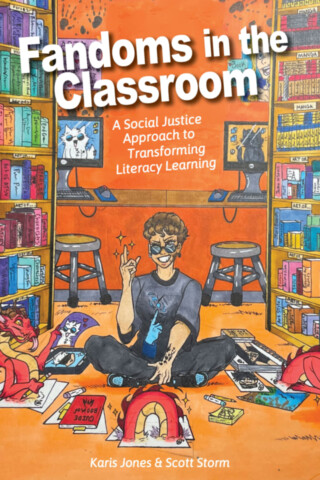
E-books are now distributed via VitalSource
VitalSource offer a more seamless way to access the ebook, and add some great new features including text-to-voice. You own your ebook for life, it is simply hosted on the vendor website, working much like Kindle and Nook. Click here to see more detailed information on this process.
Library E-Books
We are signed up with aggregators who resell networkable e-book editions of our titles to academic libraries. These editions, priced at par with simultaneous hardcover editions of our titles, are not available direct from Stylus.
These aggregators offer a variety of plans to libraries, such as simultaneous access by multiple library patrons, and access to portions of titles at a fraction of list price under what is commonly referred to as a "patron-driven demand" model.
What is a fandom, and why do fandoms matter for school? Fandoms are passionate communities dedicated to appreciating and engaging with texts of interest (movies, TV shows, books, bands, brands, sports teams, etc.) via personally and communally meaningful literacy practices. It is increasingly obvious that scripted literacy curricula and standardized tests fall short of meeting meaningful literacy goals and create culturally destructive learning spaces. Fandoms in the Classroom provides an alternative for educators looking to center passion in their classrooms, individualizing their literacy curricula by building from youth’s interests. The book describes how educators in a wide range of secondary learning contexts can build curricula around students’ already-present fandom interests to support literacy growth. This text supports educators in a range of learning contexts with step-by-step processes for building learning spaces that support navigation of fandom and disciplinary literacies, with a particular focus on common obstacles and roadblocks that teachers have shared with us. It addresses how classrooms doing critical fandom work can address social justice issues across both fandom and disciplinary communities. This book covers relevant topics such as:Why Fandoms? We introduce readers to the concept of fandoms and how engaging students’ experiences in fandoms is not an extra or add-on but instead crucial to flipping the script on literacy learning.Bring Your Fandom to Class: Critically Putting Communities in Conversation. The book discusses how to shift ideas of literacy learning contexts from teacher-centric instruction to a community learning model.Fostering Engagement & Choosing Texts Together: Teachers are often nervous about teaching what they don’t know. The text provides strategies for making learning ecologies and having kids fill it with their own interests, describing specific step-by-step discussion routines that can support youth’s engagement with critical tools on texts of their choice.Building Culturally Responsive Assessments Engaging Youth-Centric Audiences: the book describes how educators can design more expansive literacy assessments with examples of culturally responsive objectives and tasks. The authors include a range of fandom genres and audiences that they have seen in their own work.Transforming Your Current Curriculum in Conversation with Fandoms: Supporting educators interested in expanding literature units in conversation with fandom texts, the text describes how to design units that put various discourse communities in conversation without deadening or co-opting youth interests.Interdisciplinary Applications: there is a discussion about specific examples of how educators the authors have supported in various contexts have applied this kind of work. It includes a focus on cross-disciplinary literacy, with cases highlighting applications for math, science, social studies and music disciplinary learning.Fandoms in the Classroom is a step-by-step guide for literacy instructors struggling to engage their students in meaningful learning. It is essential reading.Perfect for courses such as: Foundations of Literacy; Disciplinary Literacy; Literacy Across the Curriculum; Children's or Young Adult Literature; Writing in the Classroom; Digital Media Literacy; New and Digital Literacies; Teaching Diverse Learners; Theory to Practice; Language, Literacy and Culture; Literacy Policy and Practice; Foundations of Literacy Education; Popular Culture in Literacy Classrooms; History of Literacy Practices; Reading and Language Arts; Critical Theory
More