
Professional Development

E-books are now distributed via VitalSource
VitalSource offer a more seamless way to access the ebook, and add some great new features including text-to-voice. You own your ebook for life, it is simply hosted on the vendor website, working much like Kindle and Nook. Click here to see more detailed information on this process.
As rural schools across the United States face ongoing teacher shortages, shifting community needs, and increasing demands on educators, the challenge of preparing and sustaining a strong local teacher workforce has become more urgent than ever. In Powering Teacher Apprenticeships: Case Studies on Rural Implementation and System Design, Katie Anderson-Pence presents a compelling and practical exploration of how teacher apprenticeship programs can transform educator preparation in rural communities. Drawing from real-world partnerships and implementation stories, this book examines how rural districts, universities, educators, and community organizations are working together to design apprenticeship pathways that are responsive to local needs and grounded in the strengths of rural places. Through detailed case studies, Anderson-Pence demonstrates that successful teacher apprenticeship programs are not built on one-size-fits-all models, but on collaborative systems that honor community culture, invest in relationships, and support aspiring educators throughout their development. The book highlights the essential components of effective rural apprenticeship systems, including strong mentor preparation, authentic clinical practice, coordinated support structures, braided funding strategies, and partnerships that align university preparation with district priorities. Readers gain insight into how rural schools are leveraging apprenticeship not only as a workforce solution, but as a long-term strategy for cultivating educators who are deeply connected to their communities and prepared for the intellectual, cultural, and emotional realities of teaching in rural settings. At the heart of Powering Teacher Apprenticeships is the idea that thoughtful system design matters. Anderson-Pence illustrates how sustainable apprenticeship pathways emerge when institutions and communities work together to create coherent, flexible, and human-centered models of teacher preparation. The book also offers practical guidance for policymakers and state leaders seeking to strengthen rural educator pipelines through supportive licensing structures, accessible funding models, and policies aligned with apprenticeship learning. For teacher educators, district leaders, and community stakeholders, this volume provides both inspiration and actionable strategies for developing apprenticeship programs that are immersive, relational, and rooted in place. Combining research, lived experience, and practical implementation insights, Powering Teacher Apprenticeships offers a hopeful and forward-looking vision for rural education—one in which communities are empowered to grow their own educators, strengthen local schools, and build sustainable systems that nurture both talent and belonging for generations to come. It is a powerful volume that will guide school administrators as well as preservice teachers, graduate students and faculty at Colleges of Education.Perfect for courses such as: Clinical Practice in Teacher Education; Place-Based Education and Community Engagement; Rural Schools and Community Partnerships; Education Policy: Teacher Workforce and Certification; Policy and Practice in Teacher Preparation Reform; Models of Teacher Apprenticeship and Mentorship; Issues and Innovations in Rural Schooling; Designing Sustainable Educator Pipelines
More
E-books are now distributed via VitalSource
VitalSource offer a more seamless way to access the ebook, and add some great new features including text-to-voice. You own your ebook for life, it is simply hosted on the vendor website, working much like Kindle and Nook. Click here to see more detailed information on this process.
Hidden in Plain Sight: Women in Educational Leadership is an essential resource that examines the experiences, challenges, and achievements of women leading in higher education. Written for current and aspiring women academic leaders, it provides the tools, insights, and support needed to navigate this complex terrain successfully. Hidden in Plain Sight addresses a striking paradox: while many accomplished women hold academic leadership positions, they often remain invisible within their own institutions. Despite occupying roles of authority, women leaders frequently find themselves overlooked, unrecognized, and unheard. This contradiction exposes the gap between institutional claims that leadership is gender-neutral and the reality women face daily in academic settings. Drawing on demographic data, statistical trends, and evidence-based practices, this textbook offers practical guidance grounded in real experience. Readers will find case studies, personal anecdotes, and actionable strategies for advancing in academic leadership while maintaining personal integrity and well-being. The book explores various leadership approaches and identifies common pitfalls, equipping readers with knowledge to navigate challenges effectively. Hidden in Plain Sight serves as both mirror and map—reflecting the realities women leaders experience while charting pathways forward. It empowers current leaders to advocate for themselves and their institutions while inspiring the next generation to pursue academic leadership with eyes wide open and strategies firmly in hand. This is the guidebook for women determined to lead authentically, effectively, and sustainably in higher education. The book is written about and for women in leadership positions, and for women interested in educational leadership within the academy. It will also be of interest to college, university and public libraries; individuals including scholars in the discipline; and it can serve as a critical textbook in a variety of Leadership classes in undergraduate and graduate programs.Perfect for courses such as: Women and Leadership; Higher Education Administration; Gender Studies in Education; Educational Leadership and Policy; Sociology of Higher Education; Feminist Theory and Practice; Women's Studies Capstone Seminar; Organizational Behavior in Education; Diversity and Inclusion in Higher Education; Professional Development for Graduate Students
More
E-books are now distributed via VitalSource
VitalSource offer a more seamless way to access the ebook, and add some great new features including text-to-voice. You own your ebook for life, it is simply hosted on the vendor website, working much like Kindle and Nook. Click here to see more detailed information on this process.
For any educator, administrator, or school leader who is committed to promoting student success, Unreached: What Every Educator Wants to Know About Engaging Families for Equity and Student Achievement is an indispensable resource. The premise of the book is grounded in the research that confirms that student achievement is closely tied to effective family partnerships, yet for many educators, identifying how to engage families as partners can feel overwhelming and nebulous. As a result, there is often a disconnect between schools and families that leads to families feeling excluded from the type of meaningful partnership efforts that can support student achievement. Unreached tackles this challenge by offering a clear roadmap for overcoming these barriers and cultivating trust between families and schools. One of the standout features of this volume is its focus on relevant, real-world applications designed to help districts and schools implement a sustainable approach that can support clear and meaningful gains for students.Trice Moore presents a series of practices, tips and a process for addressing the barriers that often prevent families from participating in their student’s education as partners. Drawing on research and practical scenarios, the book highlights the importance of viewing partnerships with families as a tool for advancing educational equity and offers insights on ways effective partnerships can play a pivotal role in promoting success for all students. At the heart of the book is a compelling overview of some of the systemic inequities and barriers that often exist in schools and how educators and school leaders can play a role in either perpetuating or dismantling those systems.Written by a leading voice in the field of family outreach and engagement, the book delves into the power of meaningful connections and offers four specific partnership recommendations and five authentic leadership practices to transform how schools partner with families to support student success. Unreached is not just a theoretical guide; it is a practical, hands-on resource filled with actionable strategies for educators, school teams and education leaders. Readers will learn how to earn trust with families, share responsibility and balance expectations respectfully across and beyond cultural differences within an environment where all parties feel valued and heard.The book also includes tools for developing family engagement plans, assessing your partnership approach and a recommendation summary for school teams. This workbook provides a thoughtful examination of the challenges linked to family engagement and a variety of tools for overcoming those challenges. It is an essential guide for educators seeking to bridge the gap between families and schools in ways that can help create an inclusive, equitable, and high-achieving environment for students. With a blend of practical scenarios, tools, tips and actionable insights, Unreached is a must-read for anyone interested in making gains in student achievement through culturally responsive family and community partnerships.Perfect for courses such as: Introduction, Intermediate, and Advanced courses in Family and Community Engagement, Leadership
More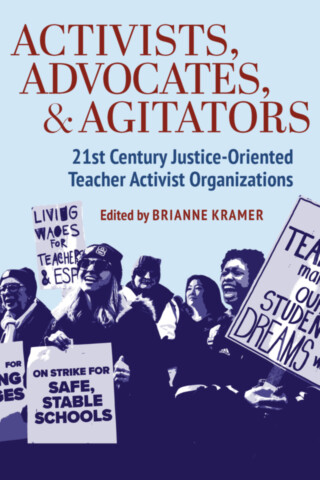
E-books are now distributed via VitalSource
VitalSource offer a more seamless way to access the ebook, and add some great new features including text-to-voice. You own your ebook for life, it is simply hosted on the vendor website, working much like Kindle and Nook. Click here to see more detailed information on this process.
Library E-Books
We are signed up with aggregators who resell networkable e-book editions of our titles to academic libraries. These editions, priced at par with simultaneous hardcover editions of our titles, are not available direct from Stylus.
These aggregators offer a variety of plans to libraries, such as simultaneous access by multiple library patrons, and access to portions of titles at a fraction of list price under what is commonly referred to as a "patron-driven demand" model.
In recent years, the field of education has been fraught with a variety of different challenges. A multi-year pandemic, book banning, and legislative efforts seeking to ban Critical Race Theory and LGBTQ positive curriculum have had negative effects on K-12 education, leaving many educators feeling the progress made in several states and communities before and during the 2018 teacher walkouts and strikes was now gone. Teacher morale is sitting at a historic low point, with teachers leaving the profession in droves. Education as an institution is at a crucial tipping point, and changes focused on equity and reducing the neoliberal hold on reform need to be implemented in order to keep schools as democratic spaces. The way this vision can be realized is through activism and existing social movement organizations that use both traditional and netroots practices. The purpose of Activists, Advocates, and Agitators is to provide readers with a history and analysis of 21st century teacher activism in K-12 schools to better understand the effectiveness of organizing and activism. Additionally, the text will introduce readers to present-day activist groups whose work is positively changing education and schools and the ways in which some teachers are working within their communities to assist in their specific needs.Activists, Advocates, and Agitators is the perfect book to instruct preservice teachers about the conditions that they will face in their classrooms, arming them with valuable strategies to help them to achieve their academic goals. Perfect for courses such as: Social Foundations of Education; Foundations of Education; Education Policy; Educational Leadership; Teacher Leadership; Sociology of Education; Politics of Education; and Democratic Education
More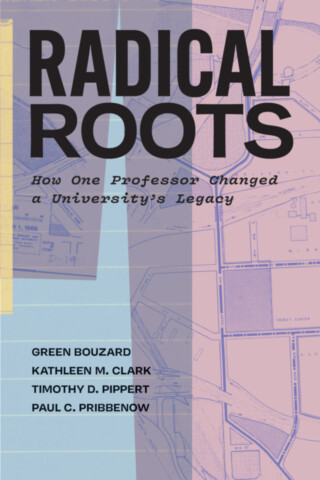
E-books are now distributed via VitalSource
VitalSource offer a more seamless way to access the ebook, and add some great new features including text-to-voice. You own your ebook for life, it is simply hosted on the vendor website, working much like Kindle and Nook. Click here to see more detailed information on this process.
Library E-Books
We are signed up with aggregators who resell networkable e-book editions of our titles to academic libraries. These editions, priced at par with simultaneous hardcover editions of our titles, are not available direct from Stylus.
These aggregators offer a variety of plans to libraries, such as simultaneous access by multiple library patrons, and access to portions of titles at a fraction of list price under what is commonly referred to as a "patron-driven demand" model.
Radical Roots: How One Professor Changed a University's Legacy tells the story of Joel Torstenson, a sociology professor at Augsburg University in Minneapolis, Minnesota. In the 1960s, Torstenson challenged his university to embrace its urban setting and to design its curricular, co-curricular, and community engagement programs to advance its mission of “Education for service.” The compelling story of Torstenson’s legacy at Augsburg over the past 60 years offers lessons for colleges and universities across the country committed to democratic engagement in their work at the intersections of mission and place. Augsburg University's saga as an urban settlement has not always been embraced by the university. Though location and place are central to the university’s identity, it is not sufficient to explain the integrative power of the university’s character. For that purpose, it is critical that place be understood through the lens of Augsburg’s academic mission and work. This integrated view of place and mission required a new way of imagining the university’s core work of educating students. The purpose of this book is two-fold. The first is to document and celebrate the legacy of Professor Joel Torstenson, and to understand the impact of this legacy’s inception, evolution, and current manifestations and impact at Augsburg and in the wider world. Professor Torstenson cared deeply about the public purpose of higher education, and Torstenson’s model for what this public purpose might look like prompted massive transformation in Augsburg University’s trajectory. The resulting experiments in education and commitment to the city flowered into a legacy that has spurred Augsburg University to create an innovative model for 21st Century education. This model has impacted everything from student learning and community life, to teaching and curricular structure, to the public mission of the institution and its presence in the city and world. Torstenson’s creative—and even radical—work in the 1960s and '70s has been carried through the decades by continued innovation in teaching and learning based in experiential education, and a commitment to place and community building. This legacy has simultaneously advanced the public purpose and mission of the University. Secondly, this book shares what are some of the lessons learned from fifty years of innovation following Torstenson’s vision, with the hope that these lessons might serve the broader community of colleges, universities, faculty, staff, and students engaged in similar pursuits. Augsburg’s innovative experiential education, place-based community engagement, and public and anchor institution work has been and will continue to be a model for other institutions. We believe that Torstenson’s legacy, and the lessons learned through the years of its evolution, has lessons to teach and models to follow for our sibling institutions across the United States. The volume includes discussion prompts and questions after each section. There is also a companion website (www.augsburg.edu/radicalroots) that includes additional resources related to the volume's themes.Perfect for course such as: Higher Education and Democracy in the United States; Principles of Experiential Education; Place Matters: Higher Education and Community Engagement; Universities as Anchor Institutions in their Communities; Introduction to Citizen Professionalism: Leading in the 21st Century; Public Work, Social Responsibility, and Vocation in a World of Extremes; Accompaniment: Developing Democratic Skills and Fostering Healing with Communities; Curricular Innovations in Higher Education; and Principles of Higher Education Pedagogy
More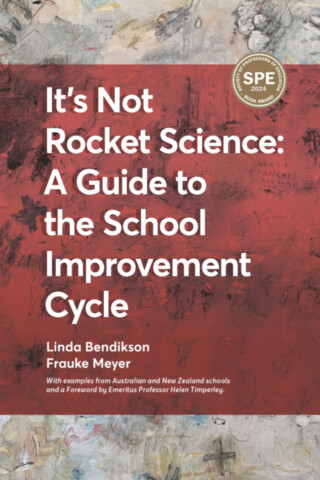
E-books are now distributed via VitalSource
VitalSource offer a more seamless way to access the ebook, and add some great new features including text-to-voice. You own your ebook for life, it is simply hosted on the vendor website, working much like Kindle and Nook. Click here to see more detailed information on this process.
Library E-Books
We are signed up with aggregators who resell networkable e-book editions of our titles to academic libraries. These editions, priced at par with simultaneous hardcover editions of our titles, are not available direct from Stylus.
These aggregators offer a variety of plans to libraries, such as simultaneous access by multiple library patrons, and access to portions of titles at a fraction of list price under what is commonly referred to as a "patron-driven demand" model.
It's Not Rocket Science - A Guide to the School Improvement Cycle: With Examples From New Zealand and Australian Schools presents an easy-to-read, practical guide to effectively leading school improvement. It walks leaders through each step of ‘The School Improvement Cycle’ developed by Bendikson and Meyer, providing case studies, examples, and helpful tools from primary and secondary schools for the implementation of each step. The book will support school leaders in implementing improvement cycles without making the classic mistakes of failing to develop measures of improvement and test change actions before scaling up. Schools and system leaders will benefit greatly from this practical guide, in which Bendikson and Meyer demonstrate that implementing improvement cycles is not a difficult process. While the book uses examples from Australian and New Zealand schools, the lessons that the book teaches can be applied to school leaders everywhere. The authors show how to make the complex work of improving student learning and outcomes at least somewhat simpler. They do this by describing and illustrating improvement steps that they have found to work in practice, providing examples from their work in schools to show the application of these ideas. If implemented properly, the cycles become “self-propelling,” thus reducing the cognitive load involved in planning how to improve. A range of evidence from international research and the authors’ own research and development work in schools explains the cycle and illustrate it. The book is entitled It’s Not Rocket Science because this is the common reaction from leaders once they understand the improvement cycle process. The book is perfect for a variety of courses in Education Leadership, Professional Development, and any other curriculum devoted to improving schools and student performance.Perfect for courses such as: Educational Leadership, Professional Development
More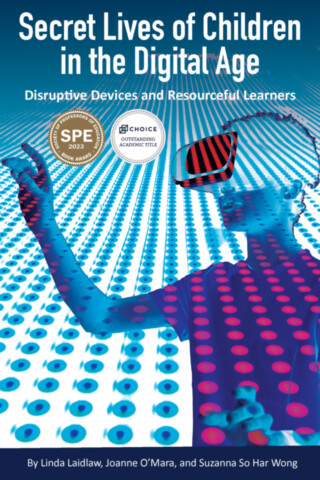
E-books are now distributed via VitalSource
VitalSource offer a more seamless way to access the ebook, and add some great new features including text-to-voice. You own your ebook for life, it is simply hosted on the vendor website, working much like Kindle and Nook. Click here to see more detailed information on this process.
Library E-Books
We are signed up with aggregators who resell networkable e-book editions of our titles to academic libraries. These editions, priced at par with simultaneous hardcover editions of our titles, are not available direct from Stylus.
These aggregators offer a variety of plans to libraries, such as simultaneous access by multiple library patrons, and access to portions of titles at a fraction of list price under what is commonly referred to as a "patron-driven demand" model.
Secret Lives of Children in the Digital Age: Disruptive Devices and Resourceful Learners offers an examination of the impact on children, their families and their teachers, as digital technologies and new literacy practices have rapidly transformed how children learn, play and communicate. While ease of access to enormous knowledge bases presents many benefits and advantages, mobile screen technologies are often perceived by parents and teachers as disruptive and worrisome. Developed from a wide range of the authors’ research over the past decade to an examination of remote learning during the COVID 19 pandemic, this book posits that while teachers, parents and governments are focused on protecting children, what is often neglected is children’s own agency and capacity to engage with mobile technologies in ways that support them in pursuing their own interests, pleasures and learning. This text works to disrupt boundaries in research, policy and practice, between home and school, and across virtual and actual worlds, positioning children as both users of media texts and coproducers of digitally mediated knowledge, with peers, family and teachers. Secret Lives of Children in the Digital Age brings together over a decade of shared research, conversations, writing and friendships across diverse geographies. Over the past decade, digital technologies have rapidly transformed how children learn, play and communicate. Tablet devices such as iPads are now ubiquitous in the lives of many children. Such devices are easy to use and provide multimodal options (i.e. operable via touch, speech, and icons, as well as conventional text). Users do not need to be conventionally literate to have access to powerful search engines, social media platforms, a range of ‘apps’ and games, or to be able to share their own creations on publication venues such as YouTube, TikTok and more. While such ease of access can present many benefits and advantages when positioned in relation to children’s use, but this access is not without concern, since mobile screen technologies are often perceived by parents and teachers as disruptive and worrisome, with popular media ramping up fears via publication of sensational articles.Secret Lives of Children in the Digital Age contributes to research on digital literacies, and offers a pedagogical examination of digital possibilities for bringing playfulness and innovation into learning.Perfect for courses such as: Introduction to Literacy Research | Qualitative Research Methods | Early Literacy | Research Methods in Language and Literacy | Introduction to Qualitative Research | New and Digital Literacies | Digital Media Education | Theories of Language and Literacy
More
E-books are now distributed via VitalSource
VitalSource offer a more seamless way to access the ebook, and add some great new features including text-to-voice. You own your ebook for life, it is simply hosted on the vendor website, working much like Kindle and Nook. Click here to see more detailed information on this process.
Library E-Books
We are signed up with aggregators who resell networkable e-book editions of our titles to academic libraries. These editions, priced at par with simultaneous hardcover editions of our titles, are not available direct from Stylus.
These aggregators offer a variety of plans to libraries, such as simultaneous access by multiple library patrons, and access to portions of titles at a fraction of list price under what is commonly referred to as a "patron-driven demand" model.
This book offers qualitative researchers an entrée into the world of working with archival repositories and special collections. It serves as a primer for students and researchers who might not be familiar with these sorts of collections, but with an interest in what has become known as the “archival turn,” in which the use of archival materials and artifacts in contemporary research has increased dramatically since the 1990s. Suited to novice researchers seeking a general introduction into how special collections are created and how they can be used, the book offers useful, clear guidance on using different types of archives, developing topics for research within the archives, assessing materials available, how to work with archivists and curators, documenting the research process, and writing up an archival study. Archival records and material culture (including manuscripts, documents, audio- and video-recordings, and visual and material culture) housed in special collections provide a wealth of resources for qualitative researchers seeking to conduct research in the social sciences.Perfect for courses in: Introduction to Qualitative Research Methods | Research Methods in Higher Education | Exploring Archival Collections | Family Studies | Community Research | Introduction to Special Collections Research
More
E-books are now distributed via VitalSource
VitalSource offer a more seamless way to access the ebook, and add some great new features including text-to-voice. You own your ebook for life, it is simply hosted on the vendor website, working much like Kindle and Nook. Click here to see more detailed information on this process.
Library E-Books
We are signed up with aggregators who resell networkable e-book editions of our titles to academic libraries. These editions, priced at par with simultaneous hardcover editions of our titles, are not available direct from Stylus.
These aggregators offer a variety of plans to libraries, such as simultaneous access by multiple library patrons, and access to portions of titles at a fraction of list price under what is commonly referred to as a "patron-driven demand" model.
It’s clear that American public education has been under assault for more than the last 30 years. So much of this current "age of accountability" has focused on blame, both of teachers and those who prepare them. Somehow, unlike in other professions, declarations were made to the effect that anyone could teach better than teachers, including business leaders and people from tony universities without teacher preparation. The Age of Accountability scrutinizes the attack on teachers through weaponized data. While an effective corporate tool to improve bottom-line goals, its use in education became more sinister and misanthropic. International PISA scores imply the mediocre ability of American students, fueling a belief that American education needed more than an upgrade. The only answer that would placate many was a complete upheaval, a redefinition of a teacher and who should be permitted to become one. We teachers ceded authority to these business and legislative forces. Their subsequent fervor for testing overwhelmed teaching and drove the joy out of schooling for students. It is time for a recounting of what has been done to the profession and to our children. Young teachers need encouragement and veteran teachers need reminding of their valiant and effective efforts.
More