
Search results for Case for Kindness
E-books are now distributed via VitalSource
VitalSource offer a more seamless way to access the ebook, and add some great new features including text-to-voice. You own your ebook for life, it is simply hosted on the vendor website, working much like Kindle and Nook. Click here to see more detailed information on this process.
Library E-Books
We are signed up with aggregators who resell networkable e-book editions of our titles to academic libraries. These editions, priced at par with simultaneous hardcover editions of our titles, are not available direct from Stylus.
These aggregators offer a variety of plans to libraries, such as simultaneous access by multiple library patrons, and access to portions of titles at a fraction of list price under what is commonly referred to as a "patron-driven demand" model.
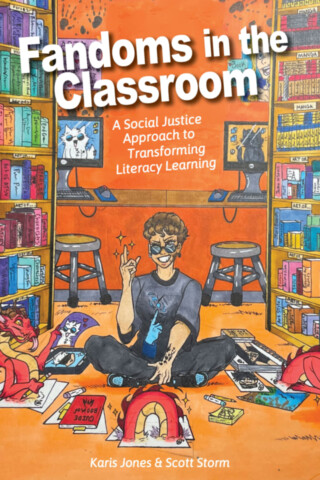
What is a fandom, and why do fandoms matter for school? Fandoms are passionate communities dedicated to appreciating and engaging with texts of interest (movies, TV shows, books, bands, brands, sports teams, etc.) via personally and communally meaningful literacy practices. It is increasingly obvious that scripted literacy curricula and standardized tests fall short of meeting meaningful literacy goals and create culturally destructive learning spaces. Fandoms in the Classroom provides an alternative for educators looking to center passion in their classrooms, individualizing their literacy curricula by building from youth’s interests. The book describes how educators in a wide range of secondary learning contexts can build curricula around students’ already-present fandom interests to support literacy growth. This text supports educators in a range of learning contexts with step-by-step processes for building learning spaces that support navigation of fandom and disciplinary literacies, with a particular focus on common obstacles and roadblocks that teachers have shared with us. It addresses how classrooms doing critical fandom work can address social justice issues across both fandom and disciplinary communities. This book covers relevant topics such as:Why Fandoms? We introduce readers to the concept of fandoms and how engaging students’ experiences in fandoms is not an extra or add-on but instead crucial to flipping the script on literacy learning.Bring Your Fandom to Class: Critically Putting Communities in Conversation. The book discusses how to shift ideas of literacy learning contexts from teacher-centric instruction to a community learning model.Fostering Engagement & Choosing Texts Together: Teachers are often nervous about teaching what they don’t know. The text provides strategies for making learning ecologies and having kids fill it with their own interests, describing specific step-by-step discussion routines that can support youth’s engagement with critical tools on texts of their choice.Building Culturally Responsive Assessments Engaging Youth-Centric Audiences: the book describes how educators can design more expansive literacy assessments with examples of culturally responsive objectives and tasks. The authors include a range of fandom genres and audiences that they have seen in their own work.Transforming Your Current Curriculum in Conversation with Fandoms: Supporting educators interested in expanding literature units in conversation with fandom texts, the text describes how to design units that put various discourse communities in conversation without deadening or co-opting youth interests.Interdisciplinary Applications: there is a discussion about specific examples of how educators the authors have supported in various contexts have applied this kind of work. It includes a focus on cross-disciplinary literacy, with cases highlighting applications for math, science, social studies and music disciplinary learning.Fandoms in the Classroom is a step-by-step guide for literacy instructors struggling to engage their students in meaningful learning. It is essential reading.Perfect for courses such as: Foundations of Literacy; Disciplinary Literacy; Literacy Across the Curriculum; Children's or Young Adult Literature; Writing in the Classroom; Digital Media Literacy; New and Digital Literacies; Teaching Diverse Learners; Theory to Practice; Language, Literacy and Culture; Literacy Policy and Practice; Foundations of Literacy Education; Popular Culture in Literacy Classrooms; History of Literacy Practices; Reading and Language Arts; Critical Theory
More
E-books are now distributed via VitalSource
VitalSource offer a more seamless way to access the ebook, and add some great new features including text-to-voice. You own your ebook for life, it is simply hosted on the vendor website, working much like Kindle and Nook. Click here to see more detailed information on this process.
As educational systems worldwide grapple with complex challenges requiring sustained, evidence-informed solutions, collaborative continuous improvement in education (CCIE) has emerged as a transformative approach to systemic change. Yet a critical gap remains: how do we effectively teach and learn these powerful improvement methods across the diverse landscape of educational institutions and professionals who work in them? This groundbreaking book addresses this vital question with practical wisdom and research-backed strategies. Teaching and Learning for Collaborative Continuous Improvement in Education: Challenges and Possibilities Across the Educational System tackles the pressing need to build CCIE capacity among higher education faculty, professional developers, state education department associates, and the broader network of professionals driving educational improvement initiatives. As policymakers increasingly turn to CCIE to inform system-wide reforms, this book provides the roadmap for spreading and deepening expertise across organizational boundaries and professional contexts. The authors examine three fundamental challenges facing the field: bridging knowledge gaps across diverse professional roles and organizations; balancing scholarly and practical applications of CCIE learning; and navigating the spectrum of delivery modalities from fully asynchronous to synchronous, and in-person to remote formats. Through real-world examples, chapter authors reveal both challenges and promising practices that transcend traditional silos and create meaningful learning communities. What sets this book apart is its collaborative approach to knowledge sharing. Rather than prescribing one-size-fits-all solutions, the editors and authors position themselves as colleagues and peers, sharing hard-won lessons from their own improvement journeys. Each chapter follows a systematic structure that includes contextual background, theoretical foundations, learning objectives and approaches, documented results, and honest reflections on lingering questions. The book's organization reflects its commitment to addressing real-world complexity. Following an introductory chapter that maps the current terrain of CCIE teaching and learning, subsequent sections dive deep into specific challenges: designing CCIE learning experiences for different audiences, adapting approaches for varying purposes, and leveraging different modalities effectively. Rich case studies and illustrative examples demonstrate how theory translates into practice across diverse educational contexts. Higher education faculty will find research-based approaches to curriculum design and pedagogy. Professional developers will discover strategies for building organizational capacity using theoretically-grounded and tested approaches. State education leaders will gain insights into system-wide implementation approaches. Most importantly, all readers will find concrete tools for learning with and from each other―breaking down the isolation that too often hampers improvement efforts. The book concludes with a look to the future―highlighting emerging trends and future opportunities in CCIE teaching and learning, while supplementary materials provide readers with immediately usable resources. It represents an essential contribution to the growing field of improvement science in education―and a vital resource for the professionals working to make that science accessible, applicable, and impactful across the entire educational ecosystem.Perfect for courses such as: Continuous Quality Improvement in Education and Human Services; Networked Improvement Communities; Improvement Science Capstone; Leadership for Continuous Improvement; Leadership Experiences, Application and Development; Leadership for Equity for Equity and Improvement; Instructional Leadership; Doctoral Seminar: Dynamics of Improving Schools and Districts; and Supervision of Instruction
More
E-books are now distributed via VitalSource
VitalSource offer a more seamless way to access the ebook, and add some great new features including text-to-voice. You own your ebook for life, it is simply hosted on the vendor website, working much like Kindle and Nook. Click here to see more detailed information on this process.
Hidden in Plain Sight: Women in Educational Leadership is an essential resource that examines the experiences, challenges, and achievements of women leading in higher education. Written for current and aspiring women academic leaders, it provides the tools, insights, and support needed to navigate this complex terrain successfully. Hidden in Plain Sight addresses a striking paradox: while many accomplished women hold academic leadership positions, they often remain invisible within their own institutions. Despite occupying roles of authority, women leaders frequently find themselves overlooked, unrecognized, and unheard. This contradiction exposes the gap between institutional claims that leadership is gender-neutral and the reality women face daily in academic settings. Drawing on demographic data, statistical trends, and evidence-based practices, this textbook offers practical guidance grounded in real experience. Readers will find case studies, personal anecdotes, and actionable strategies for advancing in academic leadership while maintaining personal integrity and well-being. The book explores various leadership approaches and identifies common pitfalls, equipping readers with knowledge to navigate challenges effectively. Hidden in Plain Sight serves as both mirror and map—reflecting the realities women leaders experience while charting pathways forward. It empowers current leaders to advocate for themselves and their institutions while inspiring the next generation to pursue academic leadership with eyes wide open and strategies firmly in hand. This is the guidebook for women determined to lead authentically, effectively, and sustainably in higher education. The book is written about and for women in leadership positions, and for women interested in educational leadership within the academy. It will also be of interest to college, university and public libraries; individuals including scholars in the discipline; and it can serve as a critical textbook in a variety of Leadership classes in undergraduate and graduate programs.Perfect for courses such as: Women and Leadership; Higher Education Administration; Gender Studies in Education; Educational Leadership and Policy; Sociology of Higher Education; Feminist Theory and Practice; Women's Studies Capstone Seminar; Organizational Behavior in Education; Diversity and Inclusion in Higher Education; Professional Development for Graduate Students
More
E-books are now distributed via VitalSource
VitalSource offer a more seamless way to access the ebook, and add some great new features including text-to-voice. You own your ebook for life, it is simply hosted on the vendor website, working much like Kindle and Nook. Click here to see more detailed information on this process.
In Transforming Teaching Through the Cycle of Care: A Comprehensive Guide to Empowering Education Through Relationships, Listening, Thinking, and Responding, author Mona Beth Zignego introduces a groundbreaking model that reshapes the way educators approach their profession. Drawing from decades of experience as a teacher, mentor, and researcher, Zignego offers a unique perspective on the vital role of care in the classroom. Through her "Cycle of Care" model, she breaks down the process of care into four critical elements: relationships, listening, thinking, and responding. This powerful framework is designed to help teachers not only support their students academically but also foster environments of trust, empathy, and social justice. Zignego dives deeply into real-life examples from her own experience and research, illustrating both the profound impact of care on student outcomes and the devastating effects of its absence. From stories of students like Emily, who struggled under an uncaring teacher’s response, to educators like Mr. Price, who embodied the very essence of care in his practice, Transforming Teaching Through the Cycle of Care illuminates the path toward transformative education. A key focus of the book is the concept of self-directed care for teachers—a practice Zignego argues is essential for preventing burnout and for sustaining a healthy, effective teaching career. She acknowledges the emotional, physical, and professional challenges teachers face and provides practical tools to help them navigate these challenges while maintaining a caring, student-centered approach. With exercises like the "Emotionater Tool" and the "Teaching Identity Map," she guides teachers in reflecting on their own needs, biases, and emotional well-being, ensuring that care is directed not only at students but also at themselves. This book is an invaluable resource for teachers, administrators, and anyone involved in education who wants to cultivate a nurturing and inclusive learning environment. Zignego’s insights remind us that care is the foundation upon which all meaningful education is built, and that by embracing care in teaching, we can create classrooms where every student feels seen, valued, and capable of success. Whether you are a new teacher seeking guidance or an experienced educator looking to deepen your practice, Transforming Teaching Through the Cycle of Care offers the inspiration and tools you need to transform your teaching through the power of care.Perfect for courses such as: Foundations of Culturally Responsive Teaching; Principles of Classroom Management and Relationships; Introduction to Social and Emotional Learning in Education; Educating for Equity and Social Justice; Foundations of Culturally and Linguistically Responsive Practice; Introduction to School Leadership and Improvement; Teaching in a Diverse Society; Supportive Classroom Communities; Sociocultural Perspectives in Education; and Teacher Leadership and Professional Collaboration
More
E-books are now distributed via VitalSource
VitalSource offer a more seamless way to access the ebook, and add some great new features including text-to-voice. You own your ebook for life, it is simply hosted on the vendor website, working much like Kindle and Nook. Click here to see more detailed information on this process.
Implementation Science: A Playbook for Instructional Leaders offers a practical approach to driving sustainable, impactful change in educational settings. Grounded in research-to-practice methodology, this essential guide is designed for district and school instructional leaders committed to elevating student outcomes through strategic, evidence-informed decisions. Dr. Carlson draws on decades of experience in teaching, leadership, curriculum development, and literacy research to deliver a step-by-step framework that empowers leaders to effectively plan, implement, monitor, and assess initiatives.In clear, accessible language, Implementation Science demystifies the core principles of implementation and bridges concepts to turnaround. It offers actionable strategies and tools for tackling complex challenges in today’s educational landscape. From curriculum selection to fostering an engaged, capable team, this playbook navigates the nuances of change management, helping leaders make data-driven decisions that stick. Each chapter culminates with key takeaways and questions for reflection, supporting instructional leaders in aligning their work with broader district goals.Perfect for superintendents, principals, curriculum directors, and aspiring leaders, Implementation Science is more than a guide—it’s a hands-on resource for building a sustainable, student-centered culture of continuous improvement. The book can also be adopted for a variety of courses such as Educational Leadership and Administration; Curriculum and Instructional Design; Data-Driven Decision Making in Education; Change Management in Education; and many more.CLICK HERE TO BUY THE PLAYBOOK/WORKBOOK BUNDLE AND SAVE!
More
E-books are now distributed via VitalSource
VitalSource offer a more seamless way to access the ebook, and add some great new features including text-to-voice. You own your ebook for life, it is simply hosted on the vendor website, working much like Kindle and Nook. Click here to see more detailed information on this process.
How do we create lasting systemic change in institutions designed to reproduce the status quo? Some might answer this question with responses related to mission, vision, resource allocation and investment, and talent. However, the path to creating sustainable changes in educational institutions is often obstructed by policy, institutional inertia, and ingrained systemic barriers. Work is sometimes reduced to a checkbox exercise aimed at compliance, rather than genuine transformation, leading to benefits only for groups traditionally supported by the established structures. For those striving for change, a sense of powerlessness can dominate, as structural constraints limit their agency and dilute their impact. Recognizing these realities, there can be no simple recipe or single formula that guarantees lasting change, particularly transformational change that shifts paradigms in ways that advance equity and inclusion. Instead of a formula, Systems Transformation for Equity in Education: Principles for Organizational Change introduces 6 key principles of organizational change. In order to engage in complex systems transformation for equity, we must: 1. know the contexts that surround systems change; 2. develop cohesive project plans and find appropriate funding for these plans; 3. understand the centrality of leadership; 4. work collectively towards equity through relationality, respect, and mutuality; 5. reflect upon success and challenges; and 6. ensure the institutionalization of systems transformation. The book is structured first to provide a broad overview of each principle, then to illustrate each using a case study of program change. Chapter One focuses on the principle of knowing the complex contexts that surround systems change. In this chapter, the book introduces the origins, objectives, complexities, diverse stakeholders and outcomes of the case study as well as contextual factors that should be considered in launching systems transformation. Chapter Two focuses on ensuring alignment in the design, development and enactment of transformative projects, including establishing an initial vision, using data to inform decision making and finding appropriate funding sources. Chapter Three focuses on the principle that Leadership matters in systems transformation for equity. This chapter highlights the importance of identifying a leadership team, providing clear team members’ roles, and dividing tasks wisely. Chapter Four focuses on cultivating consensus and moving forward collectively in diverse stakeholder groups with competing priorities. Chapter Five focuses on the importance of reflecting upon success to expand the impact of systems transformation, adapting programs to stay responsive to changing contexts, and on navigating unanticipated challenges to initiative-based work. Chapter Six focuses on expanding impact and identifying ways to ensure the institutionalization of systems transformation. It addresses some key factors such as documenting and communicating the successes and challenges of the project, disseminating evaluation findings; creating a plan for when the grant funding ends, accessing new funding; identifying continuing and new stakeholders; developing ongoing products; developing collective language; and ensuring institutional buy-in. The final chapter tells the story of lessons learned from this process and what has happened to the focal program in the 2 years following the end of the grant funding, particularly given changing socio-political contexts.Perfect for courses such as: Principles of Organizational Change; Equity and Organizational Change; Foundations of Organization Change; Educational Leadership; Race, Equity, and Leading Educational Change; Education Policy Implementation
More
E-books are now distributed via VitalSource
VitalSource offer a more seamless way to access the ebook, and add some great new features including text-to-voice. You own your ebook for life, it is simply hosted on the vendor website, working much like Kindle and Nook. Click here to see more detailed information on this process.
More than a century after William James published his provocative critique The PhD Octopus in 1903, his warnings about the corrupting entanglements between institutions and graduate students remain strikingly relevant. Doctoral Studies as Educational Industrial Complex revisits James’ concerns through a contemporary lens, offering a critical examination of doctoral education in the field of education in what feels like perennial crisis. Throughout the volume, contributors grapple with the tensions James identified: the obsession with credentials over genuine intellectual work, the “tyrannical machine” of institutional demands, and the misalignment between doctoral preparation and actual career paths. These tensions are particularly acute in practitioner-oriented EdD programs designed to produce scholar-practitioners who often remain in their local communities rather than entering the academy. Yet research-oriented PhD programs face their own crisis, as they continue to prepare scholars for a tenure-track job market that has dramatically contracted. With only 32% of faculty holding tenured or tenure-track positions in 2023—down from 53% in 1987—the traditional pathway to academic careers has fundamentally eroded. The book speaks to multiple audiences: faculty who supervise doctoral students and seek to understand the challenges they face; doctoral students navigating alternative program formats and uncertain career prospects; administrators responsible for program design and accreditation; and scholars interested in the future of higher education and professional preparation. By centering faculty expertise and critical analysis rather than external market demands, this volume offers a necessary counter-narrative to prevailing trends in doctoral education reform. Ultimately, this book argues for a reconsideration of what doctoral education should accomplish and for whom, grounding these questions in both historical perspective and contemporary realities.
More
Writing a Philosophy Statement: An Educator’s Workbook, Second Edition provides a step-by-step process for writing a clear and concise philosophy of education statement based on a reader’s beliefs about their approaches to teaching. This unique book provides information about five key philosophical approaches to teaching, using a range of activities for preservice and experienced teachers to examine classroom dilemmas. The workbook explores a variety of philosophical stances, including: Five philosophical approaches to teaching Strategies for identifying your approach to teaching Strategies for applying your approach in a written philosophy of education statement Practical uses for your philosophy statement Example Professional Development Activities include Case Studies; Check Lists; Sample Philosophy Statements; Tips and Tools for Writing a Philosophy Statement; and Using your Statement in Job Interviews and Graduate School Applications. A key feature of this book is the highly researched two-dimensional Philosophy of Education Scale, helpful in identifying an individual’s most and least likely approaches to teaching. The Scale includes a range of teaching practices that can prompt readers’ deep understanding of the sources that impact their approach decisions. This book offers educational leaders a much-needed pathway for collaborative communication about how teachers can impact school climate, change and attainment. Writing a Philosophy Statement is an essential tool for undergraduate and graduate students of education who are preparing for a career in teaching and for the academic rigors that they will encounter.Perfect for courses such as: Introduction to Education; Analysis of Instruction; Curriculum and Instruction; Research on Curriculum and Instruction; School Practice and Change; Philosophy of Education; Leadership and Change; Leadership and Collaboration; Principles of Leadership; Foundations of Education; History of Education; Senior Seminar; Student Teaching; Field Experience; and Methods of Instruction
More
E-books are now distributed via VitalSource
VitalSource offer a more seamless way to access the ebook, and add some great new features including text-to-voice. You own your ebook for life, it is simply hosted on the vendor website, working much like Kindle and Nook. Click here to see more detailed information on this process.
In these times, decisions large and small can have important consequences for educators. Everything from daily curricular choices and interpersonal encounters to long-term educational aims and approaches to educator-client relations is up for careful decision-making. While not every professional decision requires careful preparation and defense, more than ever, in our increasingly polarized, distrustful, and argumentative world, many more than we might anticipate do. How should educators prepare to make careful, defensible public decisions affecting their students and themselves? An important part of that preparation involves training in a range of logical and interpersonal abilities that come before and help to make good educational decisions. A Preface to Educational Decision-Making is aimed at describing those abilities, illustrating their professional uses, and providing a starting point for increasing educators’ practical skills in applying them. What are these abilities? For the most part, they involve common-sense attention to the ways that educators can become clearer about the nature of actual decisions they are asked to make, and aware of what must be done to make those decisions ones that all concerned can recognize as reasonable and as logically presented, even if not universally agreeable. In short, these are factors that provide, for decision-makers and their audiences, a preface to decisions that matter to those who make them and to those affected by them. A most important, though widely ignored set of those abilities center on making the nature of particular decisions clear to all concerned. Those abilities involve becoming sensitive to the ways such decisions can become or can be made to be unclear. In the give and take of public educational decision-making processes, bad decisions are often, even usually begin with confusion over what is to be decided and over what is proposed as the decision to make. The ability to get clarification, and the habit of clarifying before committing are crucial to good decision-making. A second set of preparatory abilities involve recognizing what must be done to actually decide what is true and/or advisable, as part of a decision at hand. Making what is recognized as a reasonable and well-reasoned decision depends in large part on applying those abilities clearly and often publicly. These two large sets of abilities are crucially connected. Making clear to oneself and to others what is to be decided is part and parcel of becoming aware of how to decide an issue at hand. This book works to explain the connections and to describe the order of their application. While most of these abilities have been described in other texts on what is usually called “informal logic,” A Preface to Educational Decision-Making is especially concerned with the sorts of decision that educators are called on to make in their professional lives. Moreover, this book widens the range of abilities to clarify and support professional decisions beyond what is usually discussed. The sections on educational speech acts and on deciding what to call true or advisable provide useful additions to educators’ repertoire of decision-making abilities. Finally, the discussion of interpersonal factors in public decision-making offers useful guides to reaching decisions with other educators and with clients.Perfect for courses such as: Foundations of Education; Philosophy; Social Foundations, Methods Courses in Education; Pre-student Teaching; and most Graduate courses in Educational Theory, Curriculum, Social Issues
More
E-books are now distributed via VitalSource
VitalSource offer a more seamless way to access the ebook, and add some great new features including text-to-voice. You own your ebook for life, it is simply hosted on the vendor website, working much like Kindle and Nook. Click here to see more detailed information on this process.
Library E-Books
We are signed up with aggregators who resell networkable e-book editions of our titles to academic libraries. These editions, priced at par with simultaneous hardcover editions of our titles, are not available direct from Stylus.
These aggregators offer a variety of plans to libraries, such as simultaneous access by multiple library patrons, and access to portions of titles at a fraction of list price under what is commonly referred to as a "patron-driven demand" model.
Focus Groups: Culturally Responsive Approaches for Qualitative Inquiry and Program Evaluation takes an in-depth look at how culturally-responsive focus groups are developed and implemented within the context of qualitative inquiry broadly, and program evaluation more specifically. The book showcases various forms of focus groups and how they can be responsive to specific communities across different disciplines. This book provides: an historical perspective on focus groupsa theoretical foundation helpful for supporting focus groups with marginalized groups, vulnerable populations (older adults, children), and participants within non-Western settingsbasic procedures for conducting focus groupsguidelines for cultural responsiveness andcase examples of alternative approaches to focus groups that target specific communities and those in different contexts. It also considers ethical issues around the use of culturally responsive focus groups, while providing guidance on analyzing and interpreting your data and establishing the credibility of your study. Focus Groups is an information rich resource for qualitative researchers and program evaluators at various levels who want to learn about or enhance their knowledge on designing and conducting culturally responsive focus groups.Perfect for courses such as:Foundations of Culturally Responsive Focus Groups | Culturally Responsive Approaches to Program Evaluation Practicing Qualitative Program Evaluation | Qualitative Research: Culturally Responsive Methods | Focus Groups in Research | Introduction to Qualitative Methods | Methods in Educational Research | Program Evaluation Practice | Designing Qualitative Research
More