
Critical Pedagogy

Book Cover
Learning Space
Exploring Critical Pedagogy through Science Fiction
Paperback
9781975506353
$41.95
Add to Cart
E-Book

E-books are now distributed via VitalSource

VitalSource offer a more seamless way to access the ebook, and add some great new features including text-to-voice. You own your ebook for life, it is simply hosted on the vendor website, working much like Kindle and Nook. Click here to see more detailed information on this process.

9781975506377
$41.95
Add to Cart
Lib E-Book

Library E-Books

We are signed up with aggregators who resell networkable e-book editions of our titles to academic libraries. These editions, priced at par with simultaneous hardcover editions of our titles, are not available direct from Stylus.

These aggregators offer a variety of plans to libraries, such as simultaneous access by multiple library patrons, and access to portions of titles at a fraction of list price under what is commonly referred to as a "patron-driven demand" model.

9781975506360
$155.00

As a genre, science fiction is uniquely suited for highlighting and modeling the basic tenets of critical pedagogy, that branch of educational philosophy and theory devoted equally to 1) exposing the hidden power structures embedded in educational practice and 2) articulating equitable and sustainable alternatives. The science fiction novum – that is, the technological or scientific newness found within the text – serves as a catalyst not only within the textual universe but also, potentially, within the universe of the reader. New questions arise. Previously hidden beliefs come to light. Tacit assumptions are exposed. The unfamiliar nova of science-fiction can lead to new interrogations of our own all-too familiar surroundings, causing us to see our previously unquestioned worlds in a new way. These new understandings are at the heart of critical pedagogy. The learning spaces within science fiction texts can expose the fault lines within the educational structures of the real world. Questions about what it means to be human, about the proper limits of technological power, or about the relationships and obligations of one species to another have profound implications for 21st century educators and learners, particularly those who are interested in creating just and equitable learning spaces. Learning Space: Exploring Critical Pedagogy through Science Fiction draws on popular science fiction stories to provide current and future educators with the language, concepts, vocabulary, and practices to cast a critical lens upon their own learning spaces and their own pedagogical practices. For example, a critical examination of the way that Yoda trains Luke Skywalker in The Empire Strikes Back reveals a great deal about the insidious nature of deficit thinking, assuming that students learn best when they “empty their minds” and remain “passive.” The assumed hierarchical power structure between teacher and student, and the assumed relationship between learners and the knowledge with which they are supposed to be filled – all of these are called into question when viewed through a critical lens. The more we recognize the injustice in Yoda’s pedagogy, the more we might begin to see it in our own. Similarly, Isaac Asimov’s classic Foundation trilogy imagines a world in which mathematical modeling and statistical computation are used not only to predict what people might do but instead to determine what they should do. This kind of algorithmic determinism is unfortunately common in contemporary education, and yet far too few educators and learners recognize just how much of their own agency has been given over to the machines. By highlighting the algorithmic inequities in the world of Asimov’s text, we begin to recognize similar inequities at play in our own world. Ultimately, this book uses science fiction to highlight educational inequities in such wide-ranging topics as standard English, literary canons, machine learning, notions of academic dishonesty, epistemicide, inequitable school discipline, and more. More importantly, however, it provides a framework for moving forward, giving current and future educators the critical knowledge and skills both to recognize pedagogical injustice and to create viable, just, and sustainable alternatives.

More
Book Cover
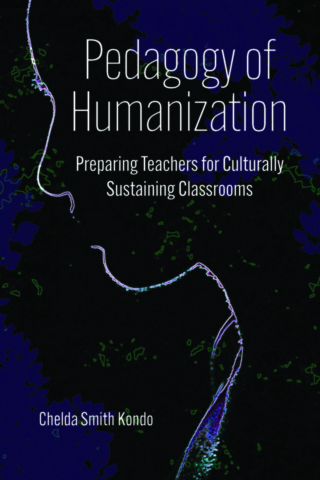
Pedagogy of Humanization
Preparing Teachers for Culturally Sustaining Classrooms
Paperback
9781975505097
$37.95
Add to Cart
E-Book

E-books are now distributed via VitalSource

VitalSource offer a more seamless way to access the ebook, and add some great new features including text-to-voice. You own your ebook for life, it is simply hosted on the vendor website, working much like Kindle and Nook. Click here to see more detailed information on this process.

9781975505110
$37.95
Add to Cart
Lib E-Book

Library E-Books

We are signed up with aggregators who resell networkable e-book editions of our titles to academic libraries. These editions, priced at par with simultaneous hardcover editions of our titles, are not available direct from Stylus.

These aggregators offer a variety of plans to libraries, such as simultaneous access by multiple library patrons, and access to portions of titles at a fraction of list price under what is commonly referred to as a "patron-driven demand" model.

9781975505103
$150.00

The purpose of Pedagogy of Humanization: Preparing Teachers for Culturally Sustaining Classrooms is to build a critical mass of educators who know how to employ the principles of critical pedagogy in elementary classrooms. This includes attention to the various knowledge, skills, and dispositions required of critical pedagogues in their curricula, instruction, assessment, classroom environment, and relationships. From Critical Race Theory (CRT) to restorative justice-oriented classroom management, the theoretical is made practical. Moreover, the structure of the book follows the curriculum of a traditional teacher education program, making it complementary to any teacher education course. The Pedagogy of Humanization is the first book to bring together the practice (how) and theory (what and why) of inclusive and asset-based teaching. In this book, a group of teacher-educators across disciplines explore their personal and professional identities to reveal the potential for applying each tenet of culturally relevant pedagogy in their respective fields. Filled with anecdotes, exercises, user-friendly theories and examples, readers will learn how teachers can humanize themselves to have the capacity to be effective teachers of children who have been dehumanized and underserved by traditional teaching and schooling. Pre-service teachers will read this book so that they can connect the material they study in teacher education courses to the daily work of being an educator who aims to be justice-oriented. However, this is not a “foolproof” guide or “how-to” manual that could be completed without direct support from mentors and colleagues. Instead, readers will practice the sort of engagement in individual and community growth that ignites the possibility of teaching as a force for social change. In many ways, chapters of the text could be used through a flipped classroom approach whereby faculty invert the typical cycle of content acquisition and application. The book will prove to be a valuable resource as a teaching text in classrooms devoted to critical pedagogy, Critical Race Theory, social justice, and other topics necessary to produce teachers who are prepared to maximize their effectiveness in educating today’s students.

More