
Curriculum

E-books are now distributed via VitalSource
VitalSource offer a more seamless way to access the ebook, and add some great new features including text-to-voice. You own your ebook for life, it is simply hosted on the vendor website, working much like Kindle and Nook. Click here to see more detailed information on this process.
Transdisciplinary Feedback in Higher Education: Feedback Practices to Promote Student Success Across the Disciplines in Higher Education covers a group of faculty at a small, public, comprehensive, Hispanic-serving university in west Texas who made a commitment to study effective feedback strategies and implement them in their courses across fourteen different disciplines. The faculty joined a learning community to discuss and implement high impact practices using ten feedback tools and strategies outlined by Riordan (2021). Twenty-two faculty share their unique experiences using effective feedback methodologies in over forty case studies with students in programs spanning across developmental education, biology, English, nursing, psychology, criminal justice, accounting, communication, history, political science, natural resource management, STEM, teacher education, and counseling. These case studies illustrate how each of the Riordan feedback strategies is effectively implemented, showcasing the resulting two-way exchange between the instructors and students in undergraduate and graduate courses. Drawing on their in-depth experiences, through these real world examples of feedback in higher education courses that have had a positive impact on students, authors Dr. Jeanne Qvarnstrom and Dr. Alicia M. Trotman provide insights into how meaningful feedback is framed and implemented in each discipline, using a customized approach to feedback to help readers identify the key feedback skills that are unique to each subject. Transdisciplinary Feedback in Higher Education: Feedback Practices to Promote Student Success Across the Disciplines in Higher Education is written primarily for faculty who know that feedback is important, but who also recognize that some types of feedback will be disregarded by the student. The purpose is to provide real world examples of feedback in higher education courses that have had a positive impact on students. Organized into three sections, in Part I of Transdisciplinary Feedback in Higher Education: Feedback Practices to Promote Student Success Across the Disciplines in Higher Education the authors explore instructor orientation to feedback, Part II highlights student orientation to feedback, and Part III illustrates the authors teaching the disciplinary tools as aligned with feedback strategies. While the tools and practices remain consistent, the implementation methods vary contextually to best meet the needs of the students in mastering the concepts of the disciplines. The reader gains a greater understanding of the ten feedback tools and practices from a transdisciplinary perspective. Each chapter ends with reflective questions for the reader and a reference list for future study. Effective feedback in higher education is a popular topic, but in Transdisciplinary Feedback in Higher Education: Feedback Practices to Promote Student Success Across the Disciplines in Higher Education, addresses a gap in research and offers examples from higher education. Transdisciplinary Feedback in Higher Education: Feedback Practices to Promote Student Success Across the Disciplines in Higher Education is dedicated to college and university instructors in various disciplines who recognize the power of feedback and want to learn more about effective forms of it. The book is well suited for faculty professional development initiatives, professional learning communities, and graduate programs in higher education and teacher education, making it an appropriate resource for both individual instructors and course adoption.
More
E-books are now distributed via VitalSource
VitalSource offer a more seamless way to access the ebook, and add some great new features including text-to-voice. You own your ebook for life, it is simply hosted on the vendor website, working much like Kindle and Nook. Click here to see more detailed information on this process.
Food, and the context surrounding it, frames much of our lives. Our culinary experiences are imbued with our physical, social, spiritual, and cultural identities. However, for many, food practices are alienating because certain culinary practices are privileged, while others are marginalized, especially in higher education spaces. Simply having access to safe and affirming food, drink, and dining spaces on campus and at off-campus events is a right that every student and faculty member should be able to enjoy. A Culinary Approach to Inclusion and Belonging in Higher Education is a new and innovative book that is unique in that it examines food as a social justice and inclusion issue. For some, religious traditions guide the consumption of only certain foods, accompanied by various periods of fasting and other important contexts around eating. Examples include the Jewish kashrut, a mandate on preparing and eating kosher food, and the Muslim halal and Ramadan, with daytime fasting. This extends off campus as well, to events and conferences that feature alcohol, which excludes those who choose or need to abstain. For those with medical conditions such as celiac disease (gluten-free), the absence of specific ingredients and foods is a medical necessity. For autistic students, or for queer and transgender people, the physical layout and social expectations of dining cause stress and isolation. International students lack a sense of belonging when the culinary decisions on a campus exclude familiar foods or settings, rendering a sense of invisibility for the students. Finally, we can look at Food Philosophy, how we think and what we believe about food, as similar to the field of Ethnic Studies, with an examination of who is included, excluded, and the need for transformation of the culinary system. Through its nine chapters, this book is designed to weave together explanatory material on various culinary needs with stories of challenges and successes in meeting the needs of those who live on, work on, or visit campuses. It highlights the need for identity-affirming culinary experiences that create a sense of inclusion and belonging. A Culinary Approach to Inclusion and Belonging in Higher Education is a great resource for researchers in cultural studies. In addition, it is an effective teaching tool for a variety of curriculum studies classes.Perfect for courses such as: Educational Leadership; Food Studies; Foundations of Education; Higher Education; Multicultural Education; Student Affairs
More
E-books are now distributed via VitalSource
VitalSource offer a more seamless way to access the ebook, and add some great new features including text-to-voice. You own your ebook for life, it is simply hosted on the vendor website, working much like Kindle and Nook. Click here to see more detailed information on this process.
What if the syllabus were a menu? What if learning began with a bite? Edible Tales: Folklore, Myths, and Food Narratives in Higher Learning invites readers to the table, literally and intellectually, to explore how food stories shape knowledge, identity, ethics, and pedagogy. Structured as a twelve-course banquet, the book moves from forbidden fruits and mythic punishments to kitchen-table dialogues, classroom rituals, and contemporary visual art. Across chapters, contributors examine how food functions as law and transgression, nourishment and discipline, inheritance and invention. Eve’s bite, Persephone’s seeds, and Gretel’s breadcrumbs are reread as moments where appetite becomes agency. Thanksgiving disasters become narrative laboratories. Off-calendar feasts and midnight breakfasts reveal how everyday rituals sustain resilience in academic and communal life. Olive oil tastings, medieval banquets, pupusa-making, and jollof debates demonstrate how foodways encode histories of gender, class, colonialism, migration, and belonging. Methodologically, Edible Tales blends scholarly analysis with creative forms: scripts, recipes, stage directions, audio guides, almanacs, and lesson “potions.” The volume models how folklore and food narratives can be mobilized in higher education classrooms as rigorous, embodied ways of knowing. Contributors show how storytelling, shared snacks, sensory memory, and digital food archives can foster trust, critical reflection, and ethical engagement, particularly in interdisciplinary, humanities-based, and social justice-oriented pedagogy. Designed for scholars and educators in education, folklore, cultural studies, food studies, and the humanities, Edible Tales is also an invitation to instructors seeking innovative pedagogy, to students hungry for meaning, and to readers who believe that stories travel best when passed hand to hand. Come hungry. Leave with stories. Pack the leftovers as questions, and carry them into tomorrow.Perfect for courses such as: Food Studies; Folklore and Mythology; Cultural Studies; Narrative Inquiry / Qualitative Research Methods; Curriculum Studies; Interdisciplinary Humanities; Anthropology of Food; Education and Social Justice; Gender, Culture, and Society; Teaching and Learning in Higher Education
More
E-books are now distributed via VitalSource
VitalSource offer a more seamless way to access the ebook, and add some great new features including text-to-voice. You own your ebook for life, it is simply hosted on the vendor website, working much like Kindle and Nook. Click here to see more detailed information on this process.
Recipes of Motherhood: Families, Communities, and the Power of Food Narratives delves into the powerful connections between food, culture, and motherhood within the demanding context of higher education. This thought-provoking volume, edited by Mila Zhu and Sarah Morrison, brings together diverse voices of academic mothers who share how food practices shape, sustain, and empower their lives as they navigate the complex terrain of career, family, and cultural identity. Drawing from personal narratives, case studies, and interdisciplinary research, Recipes of Motherhood illuminates the ways in which food serves as more than sustenance; it becomes a source of resilience, a tool for community-building, and a means of preserving cultural heritage. The academic mothers in this volume reveal how food acts as a metaphor and medium for navigating life’s challenges, allowing them to bridge their personal and professional identities. From adapting family recipes to sharing meals that create community, each story uncovers the unique strategies academic mothers use to sustain themselves and those around them in an environment that can often feel isolating. Grounded in feminist theory, food studies, and cultural memory, this book highlights how food stories are deeply intertwined with questions of gender, tradition, and self-identity. Chapters explore themes such as the symbolic role of food in cultural heritage, food as a form of resistance to institutional expectations, and culinary traditions as a way to build solidarity among women in academia. Through these narratives, Recipes of Motherhood provides a nuanced understanding of how food can act as both a grounding force and a form of empowerment in academic mothers’ lives. With its interdisciplinary approach, the book appeals not only to scholars in cultural studies, food studies, and gender studies but also to students, educators, and anyone interested in the transformative power of food. Readers will find in these pages a rich tapestry of stories that inspire, educate, and challenge traditional ideas about motherhood and academia. Perfect for academic courses and personal reading alike, the volume offers insight into how food serves as a vital element in the journey of academic mothers, helping them navigate the intersections of personal identity, professional resilience, and cultural expression. This volume invites readers to savor the complexities of academic motherhood through the lens of food and to consider how everyday acts of cooking and sharing meals can hold deep significance in our lives and our communities. Whether you are a mother, an educator, or simply someone interested in the stories that food can tell, Recipes of Motherhood is a captivating exploration of how culinary practices shape our relationships, our work, and our sense of self. Join us in celebrating the resilience, creativity, and heritage of academic mothers whose food stories nourish not only their families but also the broader academic community.Perfect for courses such as: Gender Studies / Women’s Studies – Motherhood and Identity; Food Studies – Cultural Narratives in Food Practices; Education Studies – Women in Academia: Challenges and Resilience; Sociology – Family and Society: Gender Roles and Cultural Heritage; Anthropology – Food, Culture, and Identity; Cultural Studies – Folklore, Tradition, and Modern Identities; Parenting and Family Studies – Motherhood and Work-Life Balance; Interdisciplinary Studies – Food as Narrative and Social Practice; Feminist Theory – Intersectionality of Motherhood, Career, and Culture; Psychology of Women – Resilience and Identity in Motherhood
More
E-books are now distributed via VitalSource
VitalSource offer a more seamless way to access the ebook, and add some great new features including text-to-voice. You own your ebook for life, it is simply hosted on the vendor website, working much like Kindle and Nook. Click here to see more detailed information on this process.
Why is the sense of taste so conspicuously absent from contemporary educational research and so severely rationed in the ways it is lived in universities and schools? After all, in the world, taste is a perceptual and epistemological powerhouse in the complicated process of staying alive as well as living a life. Taste is also a process of world making. It’s a way of reading, naming, mapping, imagining, remembering, and making worlds and connecting to the worlds of others--therefore it is curricular. In attending to how taste matters and matters of taste, chapters in Tasting Education: Viewing Curriculum, Pedagogy, Learning, and Educational Research Through the Sense of Taste invite participants to think about taste as a sense, and/or the sense of taste, as it plays out in the thinking and doing of education and its inquiry. This book takes up taste as an embodied set of meanings that are sensuous, pragmatic, and political: as a key part of the sensorium, and as engagement with the sensuosity of the olfactory, the nose, the mouth, the tongue as a way of making meaning of food, but also ways for making meaning from the food for thought and action that theory can provide. It also asks us to take into account the culture of food as it relates to education; whose palates are catered to and whose remain marginalized, deliberately destroyed, or are left-unfed? Taste, then, also becomes a way of resisting, challenging, and reimagining such modes as they play themselves out in curriculum and pedagogy and reveal collective commitments that include shared pleasure alongside political and social action (Siniscalchi, 2018). This book offers a space for deeper conversations around taste in curriculum and elsewhere, and how taste is being used to dismantle oppression in these spaces. The slow-food movement argues that “taste and pleasure” must return to the table (Siniscalchi, 2018). Tasting Education invites the mixed pleasures and problematics of taste to the table of educational research as well. Tasting Education will appeal to faculty and students in graduate-level courses related to curriculum, instruction, social foundations and leadership studies, as well as those involved with food studies courses.
More
E-books are now distributed via VitalSource
VitalSource offer a more seamless way to access the ebook, and add some great new features including text-to-voice. You own your ebook for life, it is simply hosted on the vendor website, working much like Kindle and Nook. Click here to see more detailed information on this process.
Writing as Artistry: EdD Students Learning to Write as Scholarly Practitioners is a timely guidebook that supports EdD students’ scholarly writing development while honoring and amplifying their rich practitioner knowledge and wisdom. EdD students are educational leaders and working professionals transitioning from expert-practitioners to scholarly practitioners who aim to positively transform the lives of students and communities. This resource addresses the significant need for mastering scholarly writing skills required for EdD students’ successful degree completion and real-life impact.The book’s conceptual approach frames scholarly writing as artistry. This perspective recognizes the work of practitioners as a deeply human and experiential process of solving problems of practice by drawing on prior knowledge and exploring new methods to improve practice. This view champions the idea that practitioners’ professional knowledge and rich prior experience are essential assets and that their insider knowledge is a necessary and key condition for rigorous practitioner inquiry. The authors adopt a critical stance that rejects the dominant notion of technical rationality, which historically views researchers as scholars and practitioners as mere “doers,” arguing instead that building successful experiences for EdD students requires and respects practitioners’ professional knowledge.The guidebook offers a scaffolded, practical approach to scholarly writing, aiming to guide the reader toward a practice-focused lens, provides practical tools for fostering scholarly writing, and builds students’ confidence as writers. It is centrally focused on developing practice-centered dissertations and culminating projects that align with professional-practice degrees.To support students throughout the process, the book provides a robust repertoire of writing approaches and strategies. It offers guidance on prewriting techniques for capturing initial ideas and helps students in effectively connecting their ideas with others. Critical to this artistic approach is the development of a unique writer’s voice and positionality, often through the use of reflexivity. The book includes comprehensive practical tools for navigating the often-challenging mechanics of scholarly work, detailing writing feedback and revision strategies, and including a range of templates and clear examples of student work. Furthermore, the guide provides essential advice for leveraging support structures, such as engaging with multiple mentors and critical friends. The guide also prepares students for diverse project types, including individual, collaborative, and alternative dissertation projects.Ultimately, mastering these skills is a critical way to support students in their work beyond graduation. The ability to write clear, scholarly reports is essential, as the skills learned must transfer from the Dissertation-in-Practice experience to the student's world of practice, thus ensuring real-world impact by enhancing leaders’ capacity to implement evidence-based solutions to complex problems.
More
E-books are now distributed via VitalSource
VitalSource offer a more seamless way to access the ebook, and add some great new features including text-to-voice. You own your ebook for life, it is simply hosted on the vendor website, working much like Kindle and Nook. Click here to see more detailed information on this process.
This new and innovative book, Improving Your College Courses: A Guide for Engaging in Digital Learning, provides instructors from any discipline with a guide for improving course quality and engaging learners in digital learning environments. It inspires professional development and learning (PDL) by making available an indispensable resource for higher education faculty seeking to enhance their teaching practices, propel meaningful experiences, and improve student outcomes. Instructors and administrators will want to read this research-informed, practical book authored by faculty with expertise in digital learning environments. All of them have published on this topic, some earning digital certifications and online teaching awards. Faculty and administrators attracted to a blend of theoretical insights and practical applications will welcome a solid resource for instructors engaged in continuous course improvement and PDL. At the same time, administrators overseeing faculty development as well as mentoring coordinators who sponsor PDL around instructional effectiveness and ethics will benefit from the use of the volume. Professors will find strategies that can be immediately implemented in their courses, making them a valuable tool for PDL. It will be a “must have” for new instructors and faculty who are adapting their teaching for a digital world. The book covers essential topics including course introduction; content and materials; engagement activities; accessibility and usability; and support strategies; as well as practical methods such as case studies, glossary, and appendix and supplementary materials with web content. Improving Your College Courses features pictures, figures, drawings, charts, and graphs designed to clearly illustrate the steps and concepts narrated. This book is designed to be an indispensable resource for educators seeking to enhance their teaching practices and improve student outcomes.Carol A. Mullen is the recipient of the 2026 Excellence in Research Award, AERA Division A: Administration, Organization, and Leadership. Watch a clip of her acceptance speech at: https://youtu.be/W5Ao9bGZrF0
More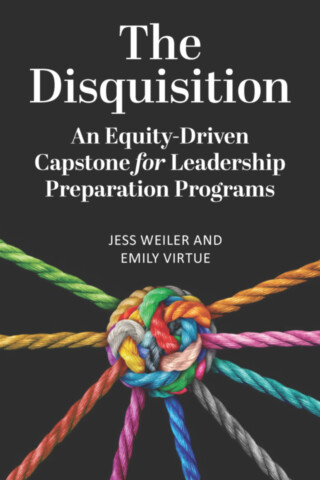
E-books are now distributed via VitalSource
VitalSource offer a more seamless way to access the ebook, and add some great new features including text-to-voice. You own your ebook for life, it is simply hosted on the vendor website, working much like Kindle and Nook. Click here to see more detailed information on this process.
Library E-Books
We are signed up with aggregators who resell networkable e-book editions of our titles to academic libraries. These editions, priced at par with simultaneous hardcover editions of our titles, are not available direct from Stylus.
These aggregators offer a variety of plans to libraries, such as simultaneous access by multiple library patrons, and access to portions of titles at a fraction of list price under what is commonly referred to as a "patron-driven demand" model.
The Disquisition: An Equity-Driven Capstone for Leadership Preparation Programs provides a thoughtful, detailed example of a capstone process and paper (The Disquisition) that employs improvement science, critical theory, and critical praxis to prepare educational leaders to disrupt inequity within their organizations. The chapters in this book represent 12 years of collaborative learning among experienced, respected, and award-winning leadership preparation faculty presently at or formerly from Western Carolina University (WCU). It integrates multiple sources of data from research, student feedback, faculty experiences, capstone committee member input, learnings from the Carnegie Project on the Education Doctorate (CPED), and program evaluation data examining the achievement of student learning outcomes. Following foundational chapters that describe the origin and evolution of the disquisition at WCU and its focus on social justice, faculty present six chapters—each one clearly detailing a primary component of the disquisition process and paper including the problem of practice; a causal analysis; identifying the improvement initiative; designing the improvement initiative; evaluating the improvement initiative and reporting results; and implications, recommendations, and leadership lessons learned. Each of these chapters includes a brief introduction to the component; expectations for students as practitioners (leading the work); expectations for students as scholars (evaluating and writing about the work); an excerpt from the disquisition paper outline relevant to the component; example figures, tables, or text from completed disquisition papers; and scholarly resources for scholar-practitioners. The final chapter of the book presents the process for convening a disquisition committee, a description of the IRB process, and the expectations for defending the disquisition at both the proposal defense and the final defense meeting. Although this book is written as a guide for students engaging in the disquisition process and writing the disquisition paper, it serves as a strong model for leadership preparation programs and university administrators who seek to build or refine their capstone (and program) in ways that ensure students are prepared to lead justice-driven transformation across their organizations.Perfect for courses such as: Dissertation-in-Practice Writing; Academic Writing for the Scholar Practitioner; Capstone-Independent Study; Capstone-Student Learning Community; Improvement Science: Data Collection, Analysis & Reporting; Improvement Science: Data Presentation; The Role of the Scholar-Practitioner as Educational Leader
More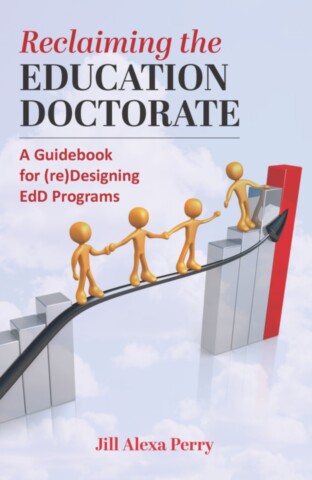
E-books are now distributed via VitalSource
VitalSource offer a more seamless way to access the ebook, and add some great new features including text-to-voice. You own your ebook for life, it is simply hosted on the vendor website, working much like Kindle and Nook. Click here to see more detailed information on this process.
Library E-Books
We are signed up with aggregators who resell networkable e-book editions of our titles to academic libraries. These editions, priced at par with simultaneous hardcover editions of our titles, are not available direct from Stylus.
These aggregators offer a variety of plans to libraries, such as simultaneous access by multiple library patrons, and access to portions of titles at a fraction of list price under what is commonly referred to as a "patron-driven demand" model.
Reclaiming the Education Doctorate: A Guidebook for (re)Designing EdD Programs is a practical guide for those seeking to (re)design a professional practice doctorate program in education that prepares Scholarly Practitioners. To tackle the comprehensive change process necessary for (re)designing the EdD, this book will guide the reader with an improvement lens that looks at the roots of the confusion of the EdD, the system that created it, and the framework that helped to reclaim it. Readers will be guided through a backward mapping (re)design process that begins with defining graduate outcomes, maps through the milestones and courses, ends with rethinking the admissions process. Along the way, readers will learn how to design and integrate a dissertation in practice into the curriculum, consider best practices for their program (re)design, and view examples of successful programs. Additionally, to support readers in their (re)design efforts, each chapter will offer exercises, tools, and resources that will guide the process. The book will prove to be an invaluable resource for anyone developing or revising their EdD program. After the opening chapter that explains the mission statement of Reclaiming the Education Doctorate, Jill Perry structures chapters to deal with the full range of issues that impact EdD programs, including: Roots of the EdD ProblemAim: The Professional Practice Doctorate Driving ChangeBackward mapping: beginning with the endThe heart of the program: CurriculumThe beginning: Admitting CandidatesMeasuring ImpactLeading Change
More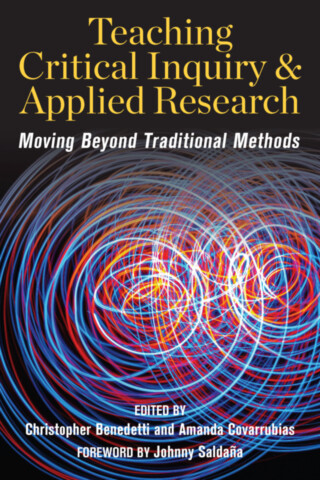
E-books are now distributed via VitalSource
VitalSource offer a more seamless way to access the ebook, and add some great new features including text-to-voice. You own your ebook for life, it is simply hosted on the vendor website, working much like Kindle and Nook. Click here to see more detailed information on this process.
Library E-Books
We are signed up with aggregators who resell networkable e-book editions of our titles to academic libraries. These editions, priced at par with simultaneous hardcover editions of our titles, are not available direct from Stylus.
These aggregators offer a variety of plans to libraries, such as simultaneous access by multiple library patrons, and access to portions of titles at a fraction of list price under what is commonly referred to as a "patron-driven demand" model.
A key distinction between an education doctorate, or Ed.D., and other doctorates in the field of education is the development of scholar practitioners armed with knowledge and skills to successfully lead change in their profession. Critical inquiry is one such skill, increasingly taught in many Ed.D. programs in some form of applied research methodology. Teaching Critical Inquiry and Applied Research: Moving Beyond Traditional Methods gathers insights from Ed.D. faculty regarding how the teaching of applied research occurs to develop scholar practitioners prepared to bring change to their respective professional fields. The 13 chapters provide a broad coverage of related topics, which includes advocacy and leadership through research, innovative features of methods courses, and methodology-focused program redesign. Each chapter includes strategies and recommendations for others interested in implementing something similar in their courses and programs. This book also captures student voices, in the form of vignettes written by students within each chapter, to illustrate the powerful impact of learning related to critical inquiry and applied research. Teaching Critical Inquiry and Applied Research is an excellent text for classrooms devoted to critical research, critical pedagogy, and other courses.
More