
Search results for john Dewey's imaginative
E-books are now distributed via VitalSource
VitalSource offer a more seamless way to access the ebook, and add some great new features including text-to-voice. You own your ebook for life, it is simply hosted on the vendor website, working much like Kindle and Nook. Click here to see more detailed information on this process.
Library E-Books
We are signed up with aggregators who resell networkable e-book editions of our titles to academic libraries. These editions, priced at par with simultaneous hardcover editions of our titles, are not available direct from Stylus.
These aggregators offer a variety of plans to libraries, such as simultaneous access by multiple library patrons, and access to portions of titles at a fraction of list price under what is commonly referred to as a "patron-driven demand" model.
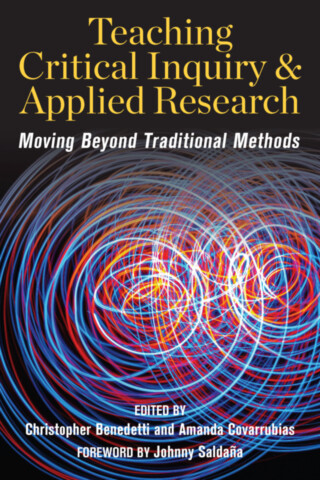
A key distinction between an education doctorate, or Ed.D., and other doctorates in the field of education is the development of scholar practitioners armed with knowledge and skills to successfully lead change in their profession. Critical inquiry is one such skill, increasingly taught in many Ed.D. programs in some form of applied research methodology. Teaching Critical Inquiry and Applied Research: Moving Beyond Traditional Methods gathers insights from Ed.D. faculty regarding how the teaching of applied research occurs to develop scholar practitioners prepared to bring change to their respective professional fields. The 13 chapters provide a broad coverage of related topics, which includes advocacy and leadership through research, innovative features of methods courses, and methodology-focused program redesign. Each chapter includes strategies and recommendations for others interested in implementing something similar in their courses and programs. This book also captures student voices, in the form of vignettes written by students within each chapter, to illustrate the powerful impact of learning related to critical inquiry and applied research. Teaching Critical Inquiry and Applied Research is an excellent text for classrooms devoted to critical research, critical pedagogy, and other courses.
More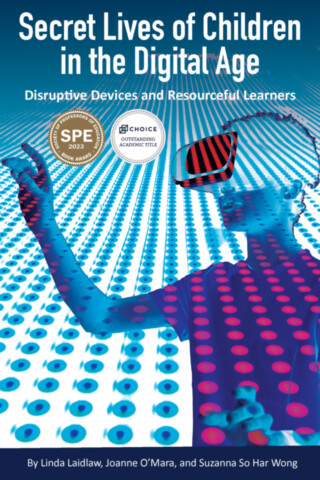
E-books are now distributed via VitalSource
VitalSource offer a more seamless way to access the ebook, and add some great new features including text-to-voice. You own your ebook for life, it is simply hosted on the vendor website, working much like Kindle and Nook. Click here to see more detailed information on this process.
Library E-Books
We are signed up with aggregators who resell networkable e-book editions of our titles to academic libraries. These editions, priced at par with simultaneous hardcover editions of our titles, are not available direct from Stylus.
These aggregators offer a variety of plans to libraries, such as simultaneous access by multiple library patrons, and access to portions of titles at a fraction of list price under what is commonly referred to as a "patron-driven demand" model.
Secret Lives of Children in the Digital Age: Disruptive Devices and Resourceful Learners offers an examination of the impact on children, their families and their teachers, as digital technologies and new literacy practices have rapidly transformed how children learn, play and communicate. While ease of access to enormous knowledge bases presents many benefits and advantages, mobile screen technologies are often perceived by parents and teachers as disruptive and worrisome. Developed from a wide range of the authors’ research over the past decade to an examination of remote learning during the COVID 19 pandemic, this book posits that while teachers, parents and governments are focused on protecting children, what is often neglected is children’s own agency and capacity to engage with mobile technologies in ways that support them in pursuing their own interests, pleasures and learning. This text works to disrupt boundaries in research, policy and practice, between home and school, and across virtual and actual worlds, positioning children as both users of media texts and coproducers of digitally mediated knowledge, with peers, family and teachers. Secret Lives of Children in the Digital Age brings together over a decade of shared research, conversations, writing and friendships across diverse geographies. Over the past decade, digital technologies have rapidly transformed how children learn, play and communicate. Tablet devices such as iPads are now ubiquitous in the lives of many children. Such devices are easy to use and provide multimodal options (i.e. operable via touch, speech, and icons, as well as conventional text). Users do not need to be conventionally literate to have access to powerful search engines, social media platforms, a range of ‘apps’ and games, or to be able to share their own creations on publication venues such as YouTube, TikTok and more. While such ease of access can present many benefits and advantages when positioned in relation to children’s use, but this access is not without concern, since mobile screen technologies are often perceived by parents and teachers as disruptive and worrisome, with popular media ramping up fears via publication of sensational articles.Secret Lives of Children in the Digital Age contributes to research on digital literacies, and offers a pedagogical examination of digital possibilities for bringing playfulness and innovation into learning.Perfect for courses such as: Introduction to Literacy Research | Qualitative Research Methods | Early Literacy | Research Methods in Language and Literacy | Introduction to Qualitative Research | New and Digital Literacies | Digital Media Education | Theories of Language and Literacy
More
E-books are now distributed via VitalSource
VitalSource offer a more seamless way to access the ebook, and add some great new features including text-to-voice. You own your ebook for life, it is simply hosted on the vendor website, working much like Kindle and Nook. Click here to see more detailed information on this process.
Library E-Books
We are signed up with aggregators who resell networkable e-book editions of our titles to academic libraries. These editions, priced at par with simultaneous hardcover editions of our titles, are not available direct from Stylus.
These aggregators offer a variety of plans to libraries, such as simultaneous access by multiple library patrons, and access to portions of titles at a fraction of list price under what is commonly referred to as a "patron-driven demand" model.
There are novels that portray cities as magical places, others as stifling, imposing environments, and others still as a gritty but beautiful, living landscape. Cities can be the center of culture, business, the arts, and are the meeting places for diversities of all kinds. Examining Images of Urban Life gathers contributions from scholars, educators, and young adult authors, like Benjamin Alire Saenz and e.E. Charlton-Trujillo, who consider how living in a city affects character identity and growth, and the ways authors world-build the urban setting. The collection discusses what the urban landscape means, and dispels the media-driven, anecdotally propagated preconceptions about city living.Urban life is varied and rich, just as its literature is. The collection revolves around a reconsideration of what the city represents, to its readers and to its inhabitants, and serves as a resource in urban settings, wherein teachers can select books that mirror and advocate for the students sitting in their classes.Perfect for courses such as: Young Adult Literature | Children’s Literature | Elementary Literacy | Reading and Literacy | Methods of Teaching | Public Purposes of Education | Educational or Historical Foundations of Education | Urban Studies | Media and Library Sciences
More
E-books are now distributed via VitalSource
VitalSource offer a more seamless way to access the ebook, and add some great new features including text-to-voice. You own your ebook for life, it is simply hosted on the vendor website, working much like Kindle and Nook. Click here to see more detailed information on this process.
Library E-Books
We are signed up with aggregators who resell networkable e-book editions of our titles to academic libraries. These editions, priced at par with simultaneous hardcover editions of our titles, are not available direct from Stylus.
These aggregators offer a variety of plans to libraries, such as simultaneous access by multiple library patrons, and access to portions of titles at a fraction of list price under what is commonly referred to as a "patron-driven demand" model.
American public education has been under assault for the last few decades as a “broken” system that needs a complete overhaul. In large part, these opinions are offered by people and organizations who know little about schools. But who are these influencers? This book is about conservative philanthropies, the organizations and individuals within their networks, and the strategies they use to shape educational policy and practice in K-12 and higher education. Each chapter examines a philanthropy, philanthropic network, or corporation focused on pushing an agenda of individualism, privatization, and conservative ideologies. Based in extensive research, including the tax filings of specific philanthropic foundations, the authors demonstrate how the philanthropic elite work within federal, state, and local governmental contexts to influence policy and practice. Within a global context of increasing wealth inequality, the authors question the motivations of these privileged few to withhold tax dollars from the US treasury where duly elected representatives can determine how tax dollars are used to benefit society. By allowing these philanthropic organizations tax exemptions under the guise of assumed benevolence, are citizens giving up their ability to hold these organizations accountable for how the money is spent? This book, aimed at a general audience of educators, provides the in-depth knowledge necessary to understand and resist private control of public policies and institutions.
More
E-books are now distributed via VitalSource
VitalSource offer a more seamless way to access the ebook, and add some great new features including text-to-voice. You own your ebook for life, it is simply hosted on the vendor website, working much like Kindle and Nook. Click here to see more detailed information on this process.
Library E-Books
We are signed up with aggregators who resell networkable e-book editions of our titles to academic libraries. These editions, priced at par with simultaneous hardcover editions of our titles, are not available direct from Stylus.
These aggregators offer a variety of plans to libraries, such as simultaneous access by multiple library patrons, and access to portions of titles at a fraction of list price under what is commonly referred to as a "patron-driven demand" model.
W. E. B. Du Bois’s seminal work, The Souls of Black Folk, not only captures the experience of African Americans in the years following the Civil War but also speaks to contemporary conditions. At a time when American public schools are increasingly re-segregating, are increasingly underfunded, and are perhaps nearly as separate and unequal as they were in earlier decades, this classic can help readers grasp links between a slavery past and a dismal present for too many young people of color. Disagreeing with Booker T. Washington, Du Bois analyzes the restrictiveness of education as a simple tool to prepare for work in pursuit of wealth (a trend still very much alive and well, especially in schools serving economically disadvantaged students). He also, however, demonstrates the challenges racism presents to individuals who embrace education as a tool for liberation. Du Bois’s accounts of how racism affected specific individuals allow readers to see philosophical issues in human terms. It can also help them think deeply about what kind of moral, social, educational and economic changes are necessary to provide all of America’s young people the equal opportunity promised to them inside and outside of schools.Perfect for courses in: Social Foundations of Education, Political and Social Foundations of Education, Foundations of American Education, Foundations of Education, Introduction to Education Theory and Policy, Philosophy and Education, History of American Education, and African American Education.
More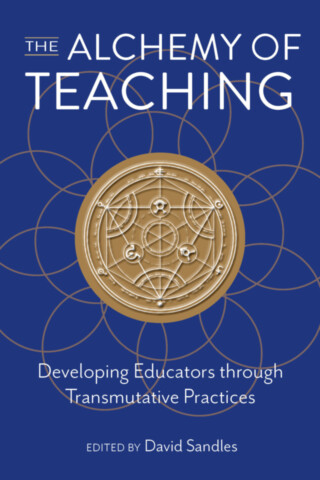
E-books are now distributed via VitalSource
VitalSource offer a more seamless way to access the ebook, and add some great new features including text-to-voice. You own your ebook for life, it is simply hosted on the vendor website, working much like Kindle and Nook. Click here to see more detailed information on this process.
Library E-Books
We are signed up with aggregators who resell networkable e-book editions of our titles to academic libraries. These editions, priced at par with simultaneous hardcover editions of our titles, are not available direct from Stylus.
These aggregators offer a variety of plans to libraries, such as simultaneous access by multiple library patrons, and access to portions of titles at a fraction of list price under what is commonly referred to as a "patron-driven demand" model.
With an alchemical verve, educators have been shaping the very direction of students' lives since time immemorial. With millions of teachers currently serving in the Tk-12 sector and millions more serving in higher education spaces, the need for quality educator development is essential. For Tk-12 educators, while there are teacher preparation programs to help shape their teacher identities, the challenge of neatly integrating all the rich content provided into a set of actions is considerable. For college educators writ large, there is no conspicuous preparation for teaching, leaving many to flounder early in their careers. In addition, homeschooled students, whose population has nearly doubled in recent years, also need and deserve access to professional training. While chiefly focused on Tk-12 educators, The Alchemy of Teaching supplies support for educators in all sectors and covers an array of topics germane to educators everywhere. Accordingly, this work draws on the early notions of alchemy, which is the art of transforming mundane metals into gold, to develop a template for educators to succeed while infusing essential, hard-earned wisdom along the way. Using the metals of alchemy as metaphors, the effective elements of teaching are parsed out in commonsensical and pragmatic ways, designed to give all those who educate students a template for strengthening their practice and the learning outcomes of their students. Written by highly experienced educators, this book is made up of three sections, with each detailing some of the prominent struggles educators regularly have in particular areas. Each author also elucidates the gold practices and provides techniques for avoiding some of the early pitfalls often experienced by educators. Each chapter of this book is dedicated to the practice of changing or transforming educator practices. It is a valuable tool for educators across the teaching spectrum to bring greater hope and success to their classrooms.Perfect for courses such as: Teacher Education; Classroom Management; Education Psychology; Social Justice; Foundational Courses in Teacher Education; Courses in Differentiation; Methods Courses in Mathematics
More
E-books are now distributed via VitalSource
VitalSource offer a more seamless way to access the ebook, and add some great new features including text-to-voice. You own your ebook for life, it is simply hosted on the vendor website, working much like Kindle and Nook. Click here to see more detailed information on this process.
Library E-Books
We are signed up with aggregators who resell networkable e-book editions of our titles to academic libraries. These editions, priced at par with simultaneous hardcover editions of our titles, are not available direct from Stylus.
These aggregators offer a variety of plans to libraries, such as simultaneous access by multiple library patrons, and access to portions of titles at a fraction of list price under what is commonly referred to as a "patron-driven demand" model.
This extensive overview first surveys the history of general education in the United States. It discusses how the recommendations of stakeholder groups have shaped general education in recent decades. Subsequent chapters detail best practices and findings in the assessment of student learning as it relates to the general education curriculum across institutional types. The discussion then turns to the larger impact of general education on culture and society as students navigate life beyond the undergraduate experience. The final chapters will provide insight into how various institutions are innovating through the general education curriculum, as well as a discussion on the keys to maintaining the relevancy of this curriculum throughout the 21st century and beyond.Perfect for courses such as:Assessment of Student Learning | Higher Education AdministrationAcademic Issues in Higher Education | Introduction to/Foundations of Higher Education
More
E-books are now distributed via VitalSource
VitalSource offer a more seamless way to access the ebook, and add some great new features including text-to-voice. You own your ebook for life, it is simply hosted on the vendor website, working much like Kindle and Nook. Click here to see more detailed information on this process.
Library E-Books
We are signed up with aggregators who resell networkable e-book editions of our titles to academic libraries. These editions, priced at par with simultaneous hardcover editions of our titles, are not available direct from Stylus.
These aggregators offer a variety of plans to libraries, such as simultaneous access by multiple library patrons, and access to portions of titles at a fraction of list price under what is commonly referred to as a "patron-driven demand" model.
The New Henry Giroux Reader presents Henry Giroux’s evolving body of work. The book articulates a crucial shift in his analyses after the September 11th, 2001 terrorist attack, when his writing took on more expansive articulations of power, politics, and pedagogy that addressed education and culture in forms that could no longer be contained via isolated reviews of media, schooling, or pedagogical practice. Instead, Giroux locates these discourses as a constellation of neoliberal influences on cultural practices, with education as the engine of their reproduction and their cessation. The New Henry Giroux Reader also takes up Giroux’s proclivity for using metaphors articulating death as the inevitable effect of neoliberalism and its invasion of cultural policy. Zombies, entropy, and violence permeate his work, coalescing around the central notion that market ideologies are anathema to human life. His early pieces signal an unnatural state of affairs seeping through the fabric of social life, and his work in cultural studies and public pedagogy signals the escalation of this unease across educative spaces. The next sections take up the fallout of 9/11 as an eruption of these horrific practices into all facets of human life, within traditional understandings of education and culture’s broader pedagogical imperatives. The book concludes with Giroux’s writings on education's vitalist capacity, demonstrating an unerring capacity for hope in the face of abject horror.Perfect for courses such as: History and Philosophy of Education, Political and Social Foundations of Education, Policy Issues in American Education, African American Education, Social Justice Research in Education, Marginality and the Politics of Resistance, Equity and Anti-Oppression, Cultural Studies and Public Pedagogy.
More
E-books are now distributed via VitalSource
VitalSource offer a more seamless way to access the ebook, and add some great new features including text-to-voice. You own your ebook for life, it is simply hosted on the vendor website, working much like Kindle and Nook. Click here to see more detailed information on this process.
The Little Shelter That Could: Literacy Resilience of Mothers and Children Facing Homelessness tells the story of homelessness, life in a shelter, and the impact of these factors on children’s lives and education. It is also a story of hope. Dr. Sadia Warsi discovered something remarkable during her research at Joseph's Shelter. Instead of educational disruption, she found literacy resilience. Families created sophisticated learning environments that challenged assumptions about capabilities during crisis. The Little Shelter That Could reveals extraordinary educational leadership, where children became teachers in hallway spaces and mothers transformed dormitories into literacy-rich environments. Through anonymized, reconstructed narrative case studies based on her research, this book documents how education served as both anchor during crisis and pathway to future possibilities. Rather than focusing on deficits, this work illuminates sophisticated educational knowledge families possess during vulnerable moments. Readers encounter stories of mothers who strategically selected books to accelerate their children's reading while in emergency housing, families who created "learning corners" that became the shelter's educational heart, and parents whose daily bus journeys maintained their children's school enrollment. Written for early childhood educators and teacher candidates, this book provides frameworks for recognizing family educational assets invisible to traditional assessments. Dr. Warsi challenges deficit-based approaches, offering asset-based strategies that build on what families already know. Drawing from extensive experience in special education and multicultural competency, Warsi provides trauma-informed approaches that honor family expertise while supporting growth. Twenty-five years after the initial study, these lessons remain urgently relevant, as housing instability affects an increasing number of families. The Little Shelter That Could offers hope, practical strategies, and a transformative vision for early childhood education that honors every family's educational assets.Perfect for courses such as: Foundations of Early Childhood Education; Family and Community Engagement in Education; Culturally Responsive Teaching; Early Childhood Literacy Development; Trauma-Informed Educational Practices; Introduction to Special Education; Assessment in Early Childhood Education; Supporting Diverse Families; Child Development and Learning; and Educational Equity and Social Justice
More
E-books are now distributed via VitalSource
VitalSource offer a more seamless way to access the ebook, and add some great new features including text-to-voice. You own your ebook for life, it is simply hosted on the vendor website, working much like Kindle and Nook. Click here to see more detailed information on this process.
Library E-Books
We are signed up with aggregators who resell networkable e-book editions of our titles to academic libraries. These editions, priced at par with simultaneous hardcover editions of our titles, are not available direct from Stylus.
These aggregators offer a variety of plans to libraries, such as simultaneous access by multiple library patrons, and access to portions of titles at a fraction of list price under what is commonly referred to as a "patron-driven demand" model.
Teachers’ religious identities shape their classroom practices in varied ways. From the books they select to the relationships they build with students to the way they see their role as a teacher, teachers’ religious identities shape their sense of what is possible and impossible within classroom settings. This book examines these complex navigations through portraits of three early-career evangelical Christian teachers as they explore the tension they feel between their teaching identities and their religious identities in the setting of the U.S. public education system. What these portraits make clear is that the prevailing assumption that religious teachers have wholly separate teaching and religious identities is an impossibility, no matter how devoutly it might be wished for, legislated, and imagined. Who are these teachers? How does their evangelical religious identity influence the way they navigate classroom spaces? How are they making sense of their own experiences as a religious person in a public school classroom?Perfect for courses in: Diversity and Inclusion in the Classroom | Introduction to Diversity for Educators | Foundations of Teaching for Learning | Role of the Teacher in American Education | Religion and Education | Educational Foundations
More