
Search results for john Dewey's imaginative
E-books are now distributed via VitalSource
VitalSource offer a more seamless way to access the ebook, and add some great new features including text-to-voice. You own your ebook for life, it is simply hosted on the vendor website, working much like Kindle and Nook. Click here to see more detailed information on this process.
Library E-Books
We are signed up with aggregators who resell networkable e-book editions of our titles to academic libraries. These editions, priced at par with simultaneous hardcover editions of our titles, are not available direct from Stylus.
These aggregators offer a variety of plans to libraries, such as simultaneous access by multiple library patrons, and access to portions of titles at a fraction of list price under what is commonly referred to as a "patron-driven demand" model.
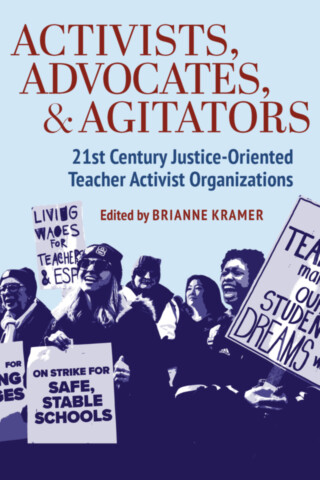
In recent years, the field of education has been fraught with a variety of different challenges. A multi-year pandemic, book banning, and legislative efforts seeking to ban Critical Race Theory and LGBTQ positive curriculum have had negative effects on K-12 education, leaving many educators feeling the progress made in several states and communities before and during the 2018 teacher walkouts and strikes was now gone. Teacher morale is sitting at a historic low point, with teachers leaving the profession in droves. Education as an institution is at a crucial tipping point, and changes focused on equity and reducing the neoliberal hold on reform need to be implemented in order to keep schools as democratic spaces. The way this vision can be realized is through activism and existing social movement organizations that use both traditional and netroots practices. The purpose of Activists, Advocates, and Agitators is to provide readers with a history and analysis of 21st century teacher activism in K-12 schools to better understand the effectiveness of organizing and activism. Additionally, the text will introduce readers to present-day activist groups whose work is positively changing education and schools and the ways in which some teachers are working within their communities to assist in their specific needs.Activists, Advocates, and Agitators is the perfect book to instruct preservice teachers about the conditions that they will face in their classrooms, arming them with valuable strategies to help them to achieve their academic goals. Perfect for courses such as: Social Foundations of Education; Foundations of Education; Education Policy; Educational Leadership; Teacher Leadership; Sociology of Education; Politics of Education; and Democratic Education
More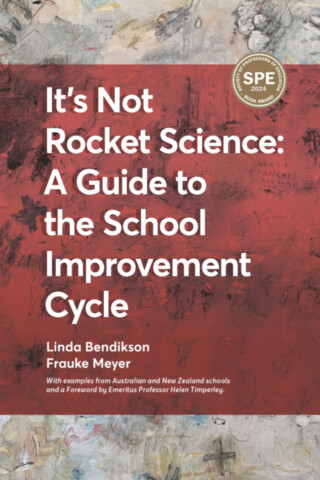
E-books are now distributed via VitalSource
VitalSource offer a more seamless way to access the ebook, and add some great new features including text-to-voice. You own your ebook for life, it is simply hosted on the vendor website, working much like Kindle and Nook. Click here to see more detailed information on this process.
Library E-Books
We are signed up with aggregators who resell networkable e-book editions of our titles to academic libraries. These editions, priced at par with simultaneous hardcover editions of our titles, are not available direct from Stylus.
These aggregators offer a variety of plans to libraries, such as simultaneous access by multiple library patrons, and access to portions of titles at a fraction of list price under what is commonly referred to as a "patron-driven demand" model.
It's Not Rocket Science - A Guide to the School Improvement Cycle: With Examples From New Zealand and Australian Schools presents an easy-to-read, practical guide to effectively leading school improvement. It walks leaders through each step of ‘The School Improvement Cycle’ developed by Bendikson and Meyer, providing case studies, examples, and helpful tools from primary and secondary schools for the implementation of each step. The book will support school leaders in implementing improvement cycles without making the classic mistakes of failing to develop measures of improvement and test change actions before scaling up. Schools and system leaders will benefit greatly from this practical guide, in which Bendikson and Meyer demonstrate that implementing improvement cycles is not a difficult process. While the book uses examples from Australian and New Zealand schools, the lessons that the book teaches can be applied to school leaders everywhere. The authors show how to make the complex work of improving student learning and outcomes at least somewhat simpler. They do this by describing and illustrating improvement steps that they have found to work in practice, providing examples from their work in schools to show the application of these ideas. If implemented properly, the cycles become “self-propelling,” thus reducing the cognitive load involved in planning how to improve. A range of evidence from international research and the authors’ own research and development work in schools explains the cycle and illustrate it. The book is entitled It’s Not Rocket Science because this is the common reaction from leaders once they understand the improvement cycle process. The book is perfect for a variety of courses in Education Leadership, Professional Development, and any other curriculum devoted to improving schools and student performance.Perfect for courses such as: Educational Leadership, Professional Development
More
E-books are now distributed via VitalSource
VitalSource offer a more seamless way to access the ebook, and add some great new features including text-to-voice. You own your ebook for life, it is simply hosted on the vendor website, working much like Kindle and Nook. Click here to see more detailed information on this process.
Library E-Books
We are signed up with aggregators who resell networkable e-book editions of our titles to academic libraries. These editions, priced at par with simultaneous hardcover editions of our titles, are not available direct from Stylus.
These aggregators offer a variety of plans to libraries, such as simultaneous access by multiple library patrons, and access to portions of titles at a fraction of list price under what is commonly referred to as a "patron-driven demand" model.
The first wave of Black immigrants arrived in North America during the 1960s and 1970s, coming originally from the Caribbean. An opportunity was missed, however, in documenting their everyday experience from a social science perspective: what did it mean for a Barbadian or a Jamaican to live in Toronto or New York? Were they Jamaicans or did they go with the descriptor ‘Black’? What relationship did they have with African Canadians or African Americans? Black Immigrants in North America answers these and other questions while documenting the second wave of Black immigration to North America, which started in the early 1990s. Theoretically and empirically grounded, the book is a documentation of the process of becoming Black – a radical identity transformation where a continental African is marked by Blackness. This, in turn, leads to a deeper understanding of what it means to encounter that social imaginary of, ‘Oh, they all look like Blacks to me!’ This encounter impacts what one learns and how one learns it, where learning English as a Second Language (ESL) is sidestepped in favor of Black English as a Second Language (BESL). Learning becomes a political and a pedagogical project of cultural, linguistic and identity investment and desire.Perfect for courses such as: Black Immigrants, Race Complexity, Critical Applied Linguistics, Ethnography, Graduate Course on Educational Foundations and Curriculum
More
E-books are now distributed via VitalSource
VitalSource offer a more seamless way to access the ebook, and add some great new features including text-to-voice. You own your ebook for life, it is simply hosted on the vendor website, working much like Kindle and Nook. Click here to see more detailed information on this process.
Implementation Science: A Playbook for Instructional Leaders offers a practical approach to driving sustainable, impactful change in educational settings. Grounded in research-to-practice methodology, this essential guide is designed for district and school instructional leaders committed to elevating student outcomes through strategic, evidence-informed decisions. Dr. Carlson draws on decades of experience in teaching, leadership, curriculum development, and literacy research to deliver a step-by-step framework that empowers leaders to effectively plan, implement, monitor, and assess initiatives.In clear, accessible language, Implementation Science demystifies the core principles of implementation and bridges concepts to turnaround. It offers actionable strategies and tools for tackling complex challenges in today’s educational landscape. From curriculum selection to fostering an engaged, capable team, this playbook navigates the nuances of change management, helping leaders make data-driven decisions that stick. Each chapter culminates with key takeaways and questions for reflection, supporting instructional leaders in aligning their work with broader district goals.Perfect for superintendents, principals, curriculum directors, and aspiring leaders, Implementation Science is more than a guide—it’s a hands-on resource for building a sustainable, student-centered culture of continuous improvement. The book can also be adopted for a variety of courses such as Educational Leadership and Administration; Curriculum and Instructional Design; Data-Driven Decision Making in Education; Change Management in Education; and many more.CLICK HERE TO BUY THE PLAYBOOK/WORKBOOK BUNDLE AND SAVE!
More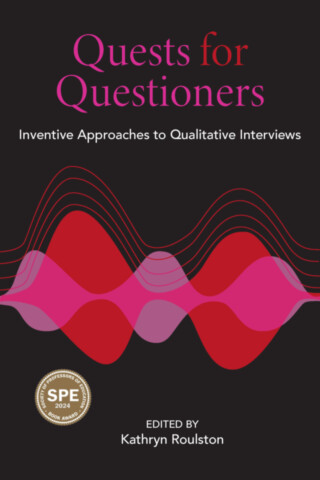
E-books are now distributed via VitalSource
VitalSource offer a more seamless way to access the ebook, and add some great new features including text-to-voice. You own your ebook for life, it is simply hosted on the vendor website, working much like Kindle and Nook. Click here to see more detailed information on this process.
Library E-Books
We are signed up with aggregators who resell networkable e-book editions of our titles to academic libraries. These editions, priced at par with simultaneous hardcover editions of our titles, are not available direct from Stylus.
These aggregators offer a variety of plans to libraries, such as simultaneous access by multiple library patrons, and access to portions of titles at a fraction of list price under what is commonly referred to as a "patron-driven demand" model.
This edited book presents a range of quests for those who want to learn from others through asking questions in research interviews and conversations and attending to the more-than-human aspects of the world. Authors in this book explore how to talk to people in ways that are responsive to cultural contexts and the challenges faced by people in everyday life, how to think with concepts drawn from an array of theories, including Karen Barad’s concept of “intra-action,” Rosi Braidotti’s work on “cartographies,” and Gilles Deleuze and Félix Guattari’s concepts of the “fold” and “assemblage.” Authors discuss a rich array of interview practices used by contemporary scholars—including, how to a. elicit verbal accounts from participants in culturally responsive ways;b. think with theory in relation to the use of interview methods; andc. integrate object, graphic, and photo elicitation methods and mobile and walking methods in research. The book is designed to provoke and inspire readers’ creativity to take risks and integrate different approaches to doing interviews in their research—in other words, to undertake methodological quests to experiment with the art of asking questions. Understanding the breadth of practices entailed in qualitative interview research can invigorate any researcher’s practice. This volume seeks to encourage researchers to design studies that account for how they interact with others in culturally responsive ways; to consider how they can draw on theoretical concepts to re-think, re-theorize, and question conventional interview practices; and to re-imagine the generation of interview accounts using other ways of knowing, including visual, sensory, and mobile methods.Perfect for courses such as: Introductory Research Methods │Introductory Qualitative Methods │Qualitative Research Design │Interview Research │Qualitative Data Collection
More
E-books are now distributed via VitalSource
VitalSource offer a more seamless way to access the ebook, and add some great new features including text-to-voice. You own your ebook for life, it is simply hosted on the vendor website, working much like Kindle and Nook. Click here to see more detailed information on this process.
Library E-Books
We are signed up with aggregators who resell networkable e-book editions of our titles to academic libraries. These editions, priced at par with simultaneous hardcover editions of our titles, are not available direct from Stylus.
These aggregators offer a variety of plans to libraries, such as simultaneous access by multiple library patrons, and access to portions of titles at a fraction of list price under what is commonly referred to as a "patron-driven demand" model.
Opening Third Spaces for Research in Education challenges dominant educational research methods. It rejects the reductive binaries normalized in social science research—theory/practice, objective/subjective, quantitative/qualitative. Drawing from multiple fields and eras, the book opens third spaces between these artificial poles to help researchers expand interpretations and possibilities for research. Critiquing the current focus on the measurement of “student learning outcomes” and high-stakes assessment, the book offers conceptual tools and case examples to support educators in reconceptualizing research. The book critiques the modernist notion that learning is an individual mental process of acquiring knowledge or skills. It argues instead that learning is inextricably entangled with social relations and cannot be isolated or controlled no matter how scientifically rigorous researchers try to be in their study designs. This challenges the current goal of educational research instruction to design “valid and reliable” studies that provide evidence for “best practices,” and reimagines it as opening third spaces to expand opportunities and approaches for inquiry.Perfect for courses such as: Foundations of Social and Cultural Analysis of Education | Agency, Resistance, and Identity in Education | Critical and Postmodern Pedagogies | Culture, Cognition, and Power Issues in Education | Modernity and Postmodernity in Social Thought and Education | Integrating Research and Practice in Social Justice Education | Cultural Studies in Education | Science, Technology, and Social Research after Eurocentrism | Critical Pedagogy | Language, Performance, and Power | Sociology of Education | Ideology, Racial Politics, and Public Policy: Sociology of Knowledge | Seminar in Cross National Studies of Educational Problems | Participatory Action Research and Programming
More
E-books are now distributed via VitalSource
VitalSource offer a more seamless way to access the ebook, and add some great new features including text-to-voice. You own your ebook for life, it is simply hosted on the vendor website, working much like Kindle and Nook. Click here to see more detailed information on this process.
An exponentially increasing number of students experience traumatic events in their daily lives. To address this phenomenon, Beginning Within: Marking a New Journey Toward Equity in Trauma-Informed Education Practices delves into the profound impact of adverse childhood experiences (ACEs). It brings together extensive research, thoughtful contemplations, and innovative ideas that shed light on some of the lesser-explored aspects of trauma-informed practices in education. Authors in the book have developed chapters around three guiding models for systemic change: John Kotter’s (1996/2012) Eight-Step Model for Organizational Change; Fallot and Harris’ (2001) Five Guiding Principles of Trauma-Informed Practice; and Smith, et al.'s (2017) five-level Building Equity Taxonomy.The chapters reflect the growth, grief, and galvanizing challenges that have shaped and continue to shape our understanding of equality, safety, and organizational change around trauma-informed educational practices. Hear from authors, experts, and leaders in the education field who are leading the way in systemic change, ranging from the work in Missouri after the shooting of Michael Brown in Ferguson, to university professors and classroom teachers seeking ways to use the past as guideposts toward a new journey of equity in trauma-informed practices, with each step paved by three research-supported tenets for creating a climate of trauma-informed practices, as offered by the editors of the book:The journey to equity begins with a deep dive into each stakeholder's internal beliefs about self-care.Self-care must be a priority, otherwise, caring for students comes at the lasting cost of secondary traumatic stress (STS) and teacher burnout.A sense of well-being must extend beyond the school building and into the community. Whether the reader is a pre-service teacher, a current teacher, an aspiring or current administrator, or an educator preparation faculty member, ideas are shared that can be implemented within a variety of schools, programs, or academic organizations.Perfect for courses such as: Trauma-Informed Education; Trauma-Informed Teaching; Foundations of Trauma-Informed Education; Trauma-Informed Practices and Pedagogy; Trauma-Informed Practices and Resilience; Trauma-Informed Classroom Teachers; Introduction to Becoming a Trauma-Informed Educator; Trauma-Sensitive Learning Environments; Foundations of Trauma-Informed Practices and Wellness
More
E-books are now distributed via VitalSource
VitalSource offer a more seamless way to access the ebook, and add some great new features including text-to-voice. You own your ebook for life, it is simply hosted on the vendor website, working much like Kindle and Nook. Click here to see more detailed information on this process.
Light a Fire and Watch It Burn: Disruptive Qualitative Methods in Education Research revolutionizes how qualitative research is conceptualized, taught, and practiced. Edited by Michael L. Boucher, Jr., Ph.D., this groundbreaking collection of essays by emerging and established scholars introduces equity-centered, justice-oriented methodologies designed to challenge entrenched systems of power and privilege. With a focus on amplifying marginalized voices and fostering transformative social action, this book serves as an inspiring, accessible resource for educators, researchers, and graduate students.Traditional qualitative research texts provide invaluable foundations for understanding methods such as participant observation, coding, and analysis. Yet, they often fail to address innovative approaches that challenge oppressive norms and center lived experiences of marginalized communities. Light a Fire and Watch It Burn fills this critical gap, presenting 15 concise, practice-oriented chapters on disruptive methods, including photovoice, duoethnography, feminist critical discourse analysis, and arts-based research like ethnodrama. These approaches reimagine qualitative inquiry as a vehicle for equity, inclusion, and justice, equipping readers with tools to create meaningful change.Each chapter follows a consistent structure, making the book an ideal classroom text for qualitative research courses. Readers will find clear explanations of the methodologies, their theoretical foundations, and how they disrupt systems of oppression while empowering participants. Practical examples, discussion questions, and curated lists of further readings encourage deep reflection and active engagement. This structure ensures seamless integration into weekly lessons for master’s and doctoral students, while also serving as a reference for scholars seeking to expand their methodological repertoire.From exploring anticolonial ethics to embracing culturally responsive frameworks like ʻŌiwi methodologies and Pláticas, the book highlights the potential of qualitative research to humanize and transform. Contributors share personal narratives and research experiences that illuminate how these methodologies foster trust, amplify silenced voices, and dismantle academic hierarchies. The metaphor of “lighting a fire” reflects the catalytic potential of these methods to spark curiosity, disrupt traditional paradigms, and ignite transformative social action, while “watching it burn” underscores the boldness and urgency of these practices in reimagining education research.Accessible, inspiring, and deeply rooted in critical theory, Light a Fire and Watch It Burn is an essential companion for students and educators who dare to confront power and reimagine research as a tool for justice. It challenges readers to move beyond the safe confines of traditional methods and embrace innovative practices that center humanity, equity, and resilience. Whether you are a graduate student beginning your journey, a scholar seeking to disrupt academic norms, or an educator looking for practical tools to inspire your students, this book provides the guidance and vision needed to reshape qualitative research—and, ultimately, the world it seeks to understand. Light a Fire and Watch It Burn is not just a book; it is a call to action for those ready to create a more inclusive, equitable future through research.Perfect for courses such as: Introduction to Qualitative Research Methods; Critical Theory in Education; Advanced Qualitative Research Design; Participatory Research in Education; Feminist Research in Social Sciences; Decolonizing Research Practices; Arts and Humanities-Based Inquiry; Social Justice in Education; Education Policy and Practice; Research Ethics and Methodologies
More
E-books are now distributed via VitalSource
VitalSource offer a more seamless way to access the ebook, and add some great new features including text-to-voice. You own your ebook for life, it is simply hosted on the vendor website, working much like Kindle and Nook. Click here to see more detailed information on this process.
Library E-Books
We are signed up with aggregators who resell networkable e-book editions of our titles to academic libraries. These editions, priced at par with simultaneous hardcover editions of our titles, are not available direct from Stylus.
These aggregators offer a variety of plans to libraries, such as simultaneous access by multiple library patrons, and access to portions of titles at a fraction of list price under what is commonly referred to as a "patron-driven demand" model.
Cartographies of Blackness and Black Indigeneities acknowledges the saliency of Blackness in contemporary social formations, insisting that how bodies are read is extremely important. The contributors to this volume elicit or produce both tangible and intangible social, political, material, spiritual and emotional effects and consequences on Black and African bodies, globally. It is a call to celebrate Blackness in all its complexities, including race, ethnicity, class, gender, sexuality, (dis)ability, spiritualities, and geographies. Understanding Blackness is to insist on Black and African political and cultural appreciation of the phenomenon outside of Euro-colonial attempts to regulate and define how Black and African bodies are perceived. This book intersperses discussions of Blackness with Black racial identity and cultural politics and the required responsibilities for the Global Black and African populations to build viable communities utilizing our differences—knowledges, cultures, politics, identities, histories—as strengths.
More
E-books are now distributed via VitalSource
VitalSource offer a more seamless way to access the ebook, and add some great new features including text-to-voice. You own your ebook for life, it is simply hosted on the vendor website, working much like Kindle and Nook. Click here to see more detailed information on this process.
Library E-Books
We are signed up with aggregators who resell networkable e-book editions of our titles to academic libraries. These editions, priced at par with simultaneous hardcover editions of our titles, are not available direct from Stylus.
These aggregators offer a variety of plans to libraries, such as simultaneous access by multiple library patrons, and access to portions of titles at a fraction of list price under what is commonly referred to as a "patron-driven demand" model.
Remixed and Reimagined: Innovations in Religion, Spirituality, and (Inter)faith in Higher Education is an edited book that invites readers to rethink and re-examine the traditional paradigms in which religion, spirituality, and interfaith (RSI) have been studied within higher education and student affairs settings. This volume introduces new theoretical frameworks that enrich and enliven the study of RSI, making it more dynamic, inclusive, and, most importantly, innovative. It is framed by a commitment to social justice and intersectionality, while centering the narratives of the religiously marginalized. The text is divided into two units. The first unit explores new and emergent frameworks for analyzing and interpreting RSI in higher education and student affairs. The second unit puts various theoretical frameworks into practice, while highlighting the often-marginalized voices of the religiously minoritized. The book concludes with a call for researchers to begin exploring the new proposed horizons within the study of RSI in higher education and student affairs. This text is perfect for graduate level seminars in higher education and student affairs programs. It is also an invaluable resource for researchers and scholars.Perfect for courses such as:Religion in Popular Culture | Religion and Spirituality in Higher Education | Introduction to the Study of Religion | Introduction to Interfaith (Multifaith studies) | Interfaith Dialogue on Campus | Introduction to Queer Studies | Contemporary Issues in LGBTQ Studies | Introduction to Diversity | Masters of Education (Graduate Level) | Politics of Difference | Diversity and Identity | Diverse Issues in Higher Education | Student Affairs
More