

Search results for making sense of rac

E-books are now distributed via VitalSource
VitalSource offer a more seamless way to access the ebook, and add some great new features including text-to-voice. You own your ebook for life, it is simply hosted on the vendor website, working much like Kindle and Nook. Click here to see more detailed information on this process.
Moving From Involvement to Equitable Community Collaboration offers a transformative vision in which families, educators, and communities become co-creators of educational systems. This collection centers equity in education by arguing that this cannot be achieved without shifting from models of parent involvement, partnership, and engagement toward authentic, collaborative practices that redistribute power and center the lived experiences of marginalized families. Drawing on research, it demonstrates how schools can shift from seeing families as simply clients or supporters to recognizing them as leaders, cultural brokers, and advocates for systemic change. At its heart, equitable community collaboration reimagines the relationships between schools, families, and communities. It asks educators to foster reciprocal relationships, shared leadership, and collective responsibility, where families’ voices shape decision-making and reform. Through compelling examples, ranging from Latinx families codeveloping district policies to multilingual parents co-designing curricula with educators, this collection illustrates how collaboration rooted in trust and authentic care can transform schools into sites of justice, belonging, and flourishing for all students. Each chapter weaves together scholarship, case studies, and practical tools to guide PreK–12 educators, leaders, and preservice teachers in embedding equitable collaboration into their daily practice. The book is organized into three dynamic sections: Conceptual Foundations introduces transformative frameworks for equitable collaboration, including relational power (“power with”), cultural brokering, and community cultural wealth. Taking the Next Steps offers practical strategies for building structures that sustain shared leadership, such as family advisory councils, co-designed curricula, and community-rooted partnerships. Interactive Features engages readers through reflective prompts, case studies, and curated resources that encourage self-reflection, dialogue, and application. By centering collective strengths rather than individual deficits, Moving From Involvement to Equitable Community Collaboration pushes back against competitive, individualistic models of education. It calls on schools to cultivate shared advocacy, mutual accountability, and structures that honor the expertise and leadership of the families that they serve. Importantly, Moving From Involvement to Equitable Community Collaboration frames this work as inherently sociopolitical, requiring schools to confront historic and current inequities, challenge hierarchies, and sustain practices that redistribute power over time. Written for educators, leaders, scholars, and community partners, Moving From Involvement to Equitable Community Collaboration provides both a critical lens and a practical roadmap for building reciprocal relationships that are culturally responsive, justice-oriented, and transformative. When working together, schools, families, and communities have the power to reimagine education, not in isolation, but in collaboration. This book shows how to take that essential step. Perfect for courses such as: Introduction to Social Justice in Education; Community Engagement; Introduction to Educating For Equity And Social Justice; Introduction to Cultivating Culturally Responsive Classrooms; Foundations Of Culturally And Linguistically Responsive Practice; Introduction to Teacher Leadership And School Improvement; Principles of Teaching Diverse Learners; Introduction to Multiculturalism in Education
More
E-books are now distributed via VitalSource
VitalSource offer a more seamless way to access the ebook, and add some great new features including text-to-voice. You own your ebook for life, it is simply hosted on the vendor website, working much like Kindle and Nook. Click here to see more detailed information on this process.
Recipes of Motherhood: Families, Communities, and the Power of Food Narratives delves into the powerful connections between food, culture, and motherhood within the demanding context of higher education. This thought-provoking volume, edited by Mila Zhu and Sarah Morrison, brings together diverse voices of academic mothers who share how food practices shape, sustain, and empower their lives as they navigate the complex terrain of career, family, and cultural identity. Drawing from personal narratives, case studies, and interdisciplinary research, Recipes of Motherhood illuminates the ways in which food serves as more than sustenance; it becomes a source of resilience, a tool for community-building, and a means of preserving cultural heritage. The academic mothers in this volume reveal how food acts as a metaphor and medium for navigating life’s challenges, allowing them to bridge their personal and professional identities. From adapting family recipes to sharing meals that create community, each story uncovers the unique strategies academic mothers use to sustain themselves and those around them in an environment that can often feel isolating. Grounded in feminist theory, food studies, and cultural memory, this book highlights how food stories are deeply intertwined with questions of gender, tradition, and self-identity. Chapters explore themes such as the symbolic role of food in cultural heritage, food as a form of resistance to institutional expectations, and culinary traditions as a way to build solidarity among women in academia. Through these narratives, Recipes of Motherhood provides a nuanced understanding of how food can act as both a grounding force and a form of empowerment in academic mothers’ lives. With its interdisciplinary approach, the book appeals not only to scholars in cultural studies, food studies, and gender studies but also to students, educators, and anyone interested in the transformative power of food. Readers will find in these pages a rich tapestry of stories that inspire, educate, and challenge traditional ideas about motherhood and academia. Perfect for academic courses and personal reading alike, the volume offers insight into how food serves as a vital element in the journey of academic mothers, helping them navigate the intersections of personal identity, professional resilience, and cultural expression. This volume invites readers to savor the complexities of academic motherhood through the lens of food and to consider how everyday acts of cooking and sharing meals can hold deep significance in our lives and our communities. Whether you are a mother, an educator, or simply someone interested in the stories that food can tell, Recipes of Motherhood is a captivating exploration of how culinary practices shape our relationships, our work, and our sense of self. Join us in celebrating the resilience, creativity, and heritage of academic mothers whose food stories nourish not only their families but also the broader academic community.Perfect for courses such as: Gender Studies / Women’s Studies – Motherhood and Identity; Food Studies – Cultural Narratives in Food Practices; Education Studies – Women in Academia: Challenges and Resilience; Sociology – Family and Society: Gender Roles and Cultural Heritage; Anthropology – Food, Culture, and Identity; Cultural Studies – Folklore, Tradition, and Modern Identities; Parenting and Family Studies – Motherhood and Work-Life Balance; Interdisciplinary Studies – Food as Narrative and Social Practice; Feminist Theory – Intersectionality of Motherhood, Career, and Culture; Psychology of Women – Resilience and Identity in Motherhood
More
E-books are now distributed via VitalSource
VitalSource offer a more seamless way to access the ebook, and add some great new features including text-to-voice. You own your ebook for life, it is simply hosted on the vendor website, working much like Kindle and Nook. Click here to see more detailed information on this process.
Promoting a growth mindset in PreK-12 schools is a valuable educational trend, based on the idea that students who believe they can grow and improve will succeed more easily. However, when students struggle academically, there’s often an undergirded assumption that they—and sometimes their families—are not trying hard enough or they just need to fit into a standardized mold. This deficit thinking places blame on students’ perceived limitations and can lead to lower expectations or biases toward students who come from diversified backgrounds, encompassing ability, socioeconomic status, race, language, gender, or culture. As an alternative approach, this book promotes the universal adoption of Asset-Based Practices (ABPs). ABPs encourage educators to see and honor the strengths in each student’s identity. ABPs shift our focus to the assets that students and families bring into the classroom, viewing differences as resources rather than obstacles. This means recognizing and building on students’ cultural, linguistic, and community-based knowledge to make learning richer and more inclusive for everyone.Implementing an asset-based approach can transform our classrooms. Research shows that students perform better and feel more motivated when they’re recognized and valued for who they are. Bringing students’ lived experiences into the curriculum can help them develop positive identities and a stronger sense of belonging, which boosts their academic and social growth. Instead of focusing on “fixing” students, ABPs ask us to adapt our teaching to connect with students’ cultural backgrounds and experiences, coupled with recognizing the wealth of knowledge that students bring from their families and communities.Switching to an asset-based approach helps us move away from simply encouraging perseverance or grit in students. Instead, it invites us to take responsibility for creating an environment where every student feels they belong and can succeed. With ABPs, we’re able to create more inclusive and affirming classrooms for all students, where their identities are seen as strengths, not obstacles, and where their cultural, linguistic, and community knowledge is a foundation for learning.Innovative and creative methodologies and practices that aspiring and practicing educators can use right away are the primary focus of this book. Because the editors and contributors are former or current PreK-12 practitioners, and many are also educational scholars, this book is written for a broad educational audience. Moving from Growth to Asset-Based Mindsets is for both preservice and practicing teachers across PreK-12 grade levels, school types, and geographic regions looking to improve their practice. To accomplish this, the editors and contributors provide entry points for transforming the educational landscape in favor of liberatory, asset-based practices in PreK-12 schools.Additionally, this book is ideal for teacher and administrator preparation programs, as well as PreK-12 professional development, because it guides readers through theoretical and empirical discussions, supported by hands-on applications that enable real-time application, and concludes with interactive features, like case studies, extension activities, and discussion prompts.Perfect for courses such as: Introduction to Educating For Equity And Social Justice; Introduction to Cultivating Culturally Responsive Classrooms; Foundations Of Culturally And Linguistically Responsive Practice; Introduction to Diversity, Equity, and Inclusion in Schools; Introduction To School Improvement, Introduction to Teacher Leadership And School Improvement; Introduction to Curriculum, Instruction, and Assessment; Principles of Teaching Diverse Learners; Introduction to Multiculturalism in Education
More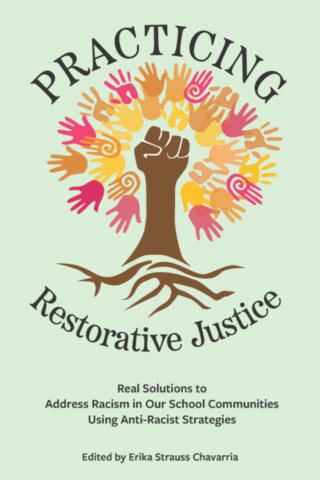
E-books are now distributed via VitalSource
VitalSource offer a more seamless way to access the ebook, and add some great new features including text-to-voice. You own your ebook for life, it is simply hosted on the vendor website, working much like Kindle and Nook. Click here to see more detailed information on this process.
Library E-Books
We are signed up with aggregators who resell networkable e-book editions of our titles to academic libraries. These editions, priced at par with simultaneous hardcover editions of our titles, are not available direct from Stylus.
These aggregators offer a variety of plans to libraries, such as simultaneous access by multiple library patrons, and access to portions of titles at a fraction of list price under what is commonly referred to as a "patron-driven demand" model.
Traditionally, educator preparation programs only provide classes related to content, practical pedagogy, and classroom management. If we hope to see any level of justice in the education system, preparation programs must include courses that take an honest and deep dive into the ways in which racism shows up in schools and communities. Aspiring educators are craving and demanding the tools and resources to be the best educators they can be for our students in this country. They know the importance of advocating for and enacting anti-racism in their pedagogical practices, in school policy and culture, and in their community. The authors of this book will offer first-hand testimony of how deep racism permeates public education, an institution that, since its founding, was never meant for Black and brown students, as well as solutions to create truly just and equitable school communities. The ultimate mission of Practicing Restorative Justice is to show readers the effectiveness of restorative justice practices in addressing a number of issues that impact Black and brown students. It takes a deep dive into the School-to-Prison Pipeline, in which failed education policies push students of color out of schools and into the penal system, dooming them for life. Other topics include policing in schools, systemic racism’s impact on classrooms and learners at all grade levels, and ways in which to decolonize the education system. The book provides classroom instructors, college of education faculty, and preservice teachers the concrete means to improve the learning experience of students of color in our public education system.
More
E-books are now distributed via VitalSource
VitalSource offer a more seamless way to access the ebook, and add some great new features including text-to-voice. You own your ebook for life, it is simply hosted on the vendor website, working much like Kindle and Nook. Click here to see more detailed information on this process.
In metropolitan areas across the United States, city and suburban public school students receive grossly unequal funding. Since funding is critical to student success, this means the primarily Black, Latinx, and low-income students attending city schools are being denied an equal education. So entrenched is this system, that it can feel normal, or too big to undo. Yet recent student activism in the form of an innovative, cross-community school partnership offers new hope. The Metropolitan Community: Partnering for Equality Across the Educational Divide tells the story of two Chicago-area schools—one suburban, one urban—whose students come together to examine the disparities between their schools and advocate for change. It follows these students over a year as they meet, tour each other’s schools, wrestle with how to discuss unfairness, and ultimately commit to fighting together for a more equal education. In-depth interviews and detailed observations chronicle the students’ advocacy, which unfolds in conversation with teachers and administrators and eventually brings them to the table with legislators, from whom they demand better policies. Through the examples set by students, readers are invited to develop their own “metro outlook,” to see how our seemingly separate worlds are connected by the educational system we hold in common and must work together to reshape. The first book to depict sustained allyship between city and suburban students, The Metropolitan Community offers an invigorating pedagogical approach, organizational model, and political strategy for achieving educational justice through youth-led partnerships and collaboration.Perfect for courses such as: School and Society; Curriculum and Instruction; Diversity and Equity in Education; Socio-cultural Foundations; Educational Policy; Culturally Relevant Pedagogy; Sociology of Education; Urban Education; Social Studies Methods; Multicultural Education; Anthropology of Education; School Counseling; School Psychology; and School Social Work Author Website: cynthiataines.com Recent Op-Ed: Bringing different school districts together can bridge social divides and inspire change Podcast Appearances: Leading Equity (audio, video), State of Ed (audio, video), and Teachers' Lounge/WNIJ (audio)
More
E-books are now distributed via VitalSource
VitalSource offer a more seamless way to access the ebook, and add some great new features including text-to-voice. You own your ebook for life, it is simply hosted on the vendor website, working much like Kindle and Nook. Click here to see more detailed information on this process.
As rural schools across the United States face ongoing teacher shortages, shifting community needs, and increasing demands on educators, the challenge of preparing and sustaining a strong local teacher workforce has become more urgent than ever. In Powering Teacher Apprenticeship: Case Studies on Rural Implementation and System Design, Katie Anderson-Pence presents a compelling and practical exploration of how teacher apprenticeship programs can transform educator preparation in rural communities. Drawing from real-world partnerships and implementation stories, this book examines how rural districts, universities, educators, and community organizations are working together to design apprenticeship pathways that are responsive to local needs and grounded in the strengths of rural places. Through detailed case studies, Anderson-Pence demonstrates that successful teacher apprenticeship programs are not built on one-size-fits-all models, but on collaborative systems that honor community culture, invest in relationships, and support aspiring educators throughout their development. The book highlights the essential components of effective rural apprenticeship systems, including strong mentor preparation, authentic clinical practice, coordinated support structures, braided funding strategies, and partnerships that align university preparation with district priorities. Readers gain insight into how rural schools are leveraging apprenticeship not only as a workforce solution, but as a long-term strategy for cultivating educators who are deeply connected to their communities and prepared for the intellectual, cultural, and emotional realities of teaching in rural settings. At the heart of Powering Teacher Apprenticeship is the idea that thoughtful system design matters. Anderson-Pence illustrates how sustainable apprenticeship pathways emerge when institutions and communities work together to create coherent, flexible, and human-centered models of teacher preparation. The book also offers practical guidance for policymakers and state leaders seeking to strengthen rural educator pipelines through supportive licensing structures, accessible funding models, and policies aligned with apprenticeship learning. For teacher educators, district leaders, and community stakeholders, this volume provides both inspiration and actionable strategies for developing apprenticeship programs that are immersive, relational, and rooted in place. Combining research, lived experience, and practical implementation insights, Powering Teacher Apprenticeship offers a hopeful and forward-looking vision for rural education—one in which communities are empowered to grow their own educators, strengthen local schools, and build sustainable systems that nurture both talent and belonging for generations to come. It is a powerful volume that will guide school administrators as well as preservice teachers, graduate students and faculty at Colleges of Education.Perfect for courses such as: Clinical Practice in Teacher Education; Place-Based Education and Community Engagement; Rural Schools and Community Partnerships; Education Policy: Teacher Workforce and Certification; Policy and Practice in Teacher Preparation Reform; Models of Teacher Apprenticeship and Mentorship; Issues and Innovations in Rural Schooling; Designing Sustainable Educator Pipelines
More
E-books are now distributed via VitalSource
VitalSource offer a more seamless way to access the ebook, and add some great new features including text-to-voice. You own your ebook for life, it is simply hosted on the vendor website, working much like Kindle and Nook. Click here to see more detailed information on this process.
Library E-Books
We are signed up with aggregators who resell networkable e-book editions of our titles to academic libraries. These editions, priced at par with simultaneous hardcover editions of our titles, are not available direct from Stylus.
These aggregators offer a variety of plans to libraries, such as simultaneous access by multiple library patrons, and access to portions of titles at a fraction of list price under what is commonly referred to as a "patron-driven demand" model.
The most effective and long-lasting student strike in U.S. History took place at San Francisco State College in 1968. The first Black Student Union, the first Black Studies Department, the only College of Ethnic Studies, and the admission of thousands of students of color resulted from this four-and-a-half-month strike which shut down 80% of the campus. It has been called the movement which “changed academia forever.” Black students were only a small percentage of those on campus, but they managed to engage thousands of white, Latino, Asian, and indigenous students; SDS and the Third World Liberation Front; the faculty union; and a huge portion of the San Francisco Community. In the end, they were able to win most of their 15 demands. The book is written by two participants in the strike, one a member of the BSU leadership. Oral histories of strike leaders are integrated with discussion of the events and significance of this movement. What were the politics and strategies? Why was the strike successful and what are the insights for today’s mass movements?
More
E-books are now distributed via VitalSource
VitalSource offer a more seamless way to access the ebook, and add some great new features including text-to-voice. You own your ebook for life, it is simply hosted on the vendor website, working much like Kindle and Nook. Click here to see more detailed information on this process.
Library E-Books
We are signed up with aggregators who resell networkable e-book editions of our titles to academic libraries. These editions, priced at par with simultaneous hardcover editions of our titles, are not available direct from Stylus.
These aggregators offer a variety of plans to libraries, such as simultaneous access by multiple library patrons, and access to portions of titles at a fraction of list price under what is commonly referred to as a "patron-driven demand" model.
As a genre, science fiction is uniquely suited for highlighting and modeling the basic tenets of critical pedagogy, that branch of educational philosophy and theory devoted equally to 1) exposing the hidden power structures embedded in educational practice and 2) articulating equitable and sustainable alternatives. The science fiction novum – that is, the technological or scientific newness found within the text – serves as a catalyst not only within the textual universe but also, potentially, within the universe of the reader. New questions arise. Previously hidden beliefs come to light. Tacit assumptions are exposed. The unfamiliar nova of science-fiction can lead to new interrogations of our own all-too familiar surroundings, causing us to see our previously unquestioned worlds in a new way. These new understandings are at the heart of critical pedagogy. The learning spaces within science fiction texts can expose the fault lines within the educational structures of the real world. Questions about what it means to be human, about the proper limits of technological power, or about the relationships and obligations of one species to another have profound implications for 21st century educators and learners, particularly those who are interested in creating just and equitable learning spaces. Learning Space: Exploring Critical Pedagogy through Science Fiction draws on popular science fiction stories to provide current and future educators with the language, concepts, vocabulary, and practices to cast a critical lens upon their own learning spaces and their own pedagogical practices. For example, a critical examination of the way that Yoda trains Luke Skywalker in The Empire Strikes Back reveals a great deal about the insidious nature of deficit thinking, assuming that students learn best when they “empty their minds” and remain “passive.” The assumed hierarchical power structure between teacher and student, and the assumed relationship between learners and the knowledge with which they are supposed to be filled – all of these are called into question when viewed through a critical lens. The more we recognize the injustice in Yoda’s pedagogy, the more we might begin to see it in our own. Similarly, Isaac Asimov’s classic Foundation trilogy imagines a world in which mathematical modeling and statistical computation are used not only to predict what people might do but instead to determine what they should do. This kind of algorithmic determinism is unfortunately common in contemporary education, and yet far too few educators and learners recognize just how much of their own agency has been given over to the machines. By highlighting the algorithmic inequities in the world of Asimov’s text, we begin to recognize similar inequities at play in our own world. Ultimately, this book uses science fiction to highlight educational inequities in such wide-ranging topics as standard English, literary canons, machine learning, notions of academic dishonesty, epistemicide, inequitable school discipline, and more. More importantly, however, it provides a framework for moving forward, giving current and future educators the critical knowledge and skills both to recognize pedagogical injustice and to create viable, just, and sustainable alternatives.
More
E-books are now distributed via VitalSource
VitalSource offer a more seamless way to access the ebook, and add some great new features including text-to-voice. You own your ebook for life, it is simply hosted on the vendor website, working much like Kindle and Nook. Click here to see more detailed information on this process.
Writing as Artistry: EdD Students Learning to Write as Scholarly Practitioners is a timely guidebook that supports EdD students’ scholarly writing development while honoring and amplifying their rich practitioner knowledge and wisdom. EdD students are educational leaders and working professionals transitioning from expert-practitioners to scholarly practitioners who aim to positively transform the lives of students and communities. This resource addresses the significant need for mastering scholarly writing skills required for EdD students’ successful degree completion and real-life impact.The book’s conceptual approach frames scholarly writing as artistry. This perspective recognizes the work of practitioners as a deeply human and experiential process of solving problems of practice by drawing on prior knowledge and exploring new methods to improve practice. This view champions the idea that practitioners’ professional knowledge and rich prior experience are essential assets and that their insider knowledge is a necessary and key condition for rigorous practitioner inquiry. The authors adopt a critical stance that rejects the dominant notion of technical rationality, which historically views researchers as scholars and practitioners as mere “doers,” arguing instead that building successful experiences for EdD students requires and respects practitioners’ professional knowledge.The guidebook offers a scaffolded, practical approach to scholarly writing, aiming to guide the reader toward a practice-focused lens, provides practical tools for fostering scholarly writing, and builds students’ confidence as writers. It is centrally focused on developing practice-centered dissertations and culminating projects that align with professional-practice degrees.To support students throughout the process, the book provides a robust repertoire of writing approaches and strategies. It offers guidance on prewriting techniques for capturing initial ideas and helps students in effectively connecting their ideas with others. Critical to this artistic approach is the development of a unique writer’s voice and positionality, often through the use of reflexivity. The book includes comprehensive practical tools for navigating the often-challenging mechanics of scholarly work, detailing writing feedback and revision strategies, and including a range of templates and clear examples of student work. Furthermore, the guide provides essential advice for leveraging support structures, such as engaging with multiple mentors and critical friends. The guide also prepares students for diverse project types, including individual, collaborative, and alternative dissertation projects.Ultimately, mastering these skills is a critical way to support students in their work beyond graduation. The ability to write clear, scholarly reports is essential, as the skills learned must transfer from the Dissertation-in-Practice experience to the student's world of practice, thus ensuring real-world impact by enhancing leaders’ capacity to implement evidence-based solutions to complex problems.
More
E-books are now distributed via VitalSource
VitalSource offer a more seamless way to access the ebook, and add some great new features including text-to-voice. You own your ebook for life, it is simply hosted on the vendor website, working much like Kindle and Nook. Click here to see more detailed information on this process.
This new and innovative book, Improving Your College Courses: A Guide for Engaging in Digital Learning, provides instructors from any discipline with a guide for improving course quality and engaging learners in digital learning environments. It inspires professional development and learning (PDL) by making available an indispensable resource for higher education faculty seeking to enhance their teaching practices, propel meaningful experiences, and improve student outcomes. Instructors and administrators will want to read this research-informed, practical book authored by faculty with expertise in digital learning environments. All of them have published on this topic, some earning digital certifications and online teaching awards. Faculty and administrators attracted to a blend of theoretical insights and practical applications will welcome a solid resource for instructors engaged in continuous course improvement and PDL. At the same time, administrators overseeing faculty development as well as mentoring coordinators who sponsor PDL around instructional effectiveness and ethics will benefit from the use of the volume. Professors will find strategies that can be immediately implemented in their courses, making them a valuable tool for PDL. It will be a “must have” for new instructors and faculty who are adapting their teaching for a digital world. The book covers essential topics including course introduction; content and materials; engagement activities; accessibility and usability; and support strategies; as well as practical methods such as case studies, glossary, and appendix and supplementary materials with web content. Improving Your College Courses features pictures, figures, drawings, charts, and graphs designed to clearly illustrate the steps and concepts narrated. This book is designed to be an indispensable resource for educators seeking to enhance their teaching practices and improve student outcomes.Carol A. Mullen is the recipient of the 2026 Excellence in Research Award, AERA Division A: Administration, Organization, and Leadership. Watch a clip of her acceptance speech at: https://youtu.be/W5Ao9bGZrF0
More