

Search results for making sense of rac
E-books are now distributed via VitalSource
VitalSource offer a more seamless way to access the ebook, and add some great new features including text-to-voice. You own your ebook for life, it is simply hosted on the vendor website, working much like Kindle and Nook. Click here to see more detailed information on this process.
Library E-Books
We are signed up with aggregators who resell networkable e-book editions of our titles to academic libraries. These editions, priced at par with simultaneous hardcover editions of our titles, are not available direct from Stylus.
These aggregators offer a variety of plans to libraries, such as simultaneous access by multiple library patrons, and access to portions of titles at a fraction of list price under what is commonly referred to as a "patron-driven demand" model.
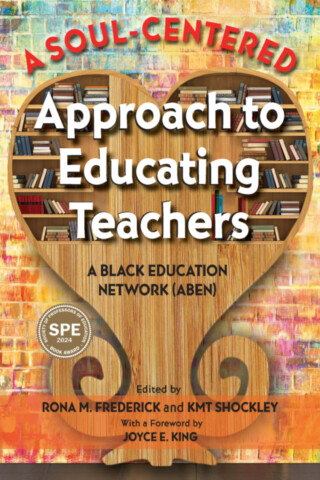
A Soul-Centered Approach to Educating Teachers has been created by A Black Education Network (ABEN), a national organization whose mission is to reverse the backward slide of Black students by utilizing culturally informed research, technology, and visionary community networking within the African Diaspora to facilitate academic and cultural excellence wherever scholars are. This interactive book presents portraits, narratives, and essays to illustrate the impact of ABEN on Black educators and those they serve.Traditional teacher education, curriculum, and instruction is largely disconnected from the lived experiences of diverse students and their communities. Current debates around Critical Race Theory and its application to curriculum call into question culturally responsive practices while others are striving for ways to support equitable practices in the classroom. Questions about these practices include, What does teacher and learning look like when grounded in community voice and practice? How can we better integrate the history, context, experience, and voice of the communities being served? How can teacher education apply authentic problem solving to address the concerns of a community?This inspirational and educational tale answers these questions for the myriad teachers, parents, administrators, school districts, community organizations, and community members who seek a better understanding of how to foster, access, and learn from spaces of Black excellence for Black children. Soul-Centered is essential reading for both scholars involved in a variety of disciplines in Education, and for community leaders interested in seeing how improved education practices can hugely benefit their constituents.
More
E-books are now distributed via VitalSource
VitalSource offer a more seamless way to access the ebook, and add some great new features including text-to-voice. You own your ebook for life, it is simply hosted on the vendor website, working much like Kindle and Nook. Click here to see more detailed information on this process.
Books and stories can inspire, create empathy, and be cathartic outlets. They expand our understanding of the lived experience as one of the most important conduits for how we spread knowledge and participate in shared humanity. Building on the work of Rudine Sims Bishop, Battle of the Bans: Narratives of Reading and Engaging with Banned Books explores how challenged and banned books act as windows, mirrors, and sliding doors. In the United States and globally, the twenty-first century is seeing renewed efforts at banning books in a variety of forms, including parental controls, book burning, curricular erasure and epistemicide, and social media banning. These efforts have the potential of silencing particular stories, histories, and perspectives. Book banning targets and has deleterious impacts on particular communities, including but not restricted to people of color, LGBTQ+, religious and cultural minorities, and people with different abilities. This edited collection counteracts the narrative that books are dangerous, centering a celebration of how stories shape lives. Educators, families, and individuals present a range of perspectives on how particular banned books have changed their lived experience and view of the world. Contributors discuss children’s literature, young adult literature, fiction, and nonfiction texts. The book is comprised of three parts. In the Context section, contributors explore lessons and/or situations for how banned books have, can, or should be used. In the Introspection section, contributors provide narratives about how banned books shaped a sense of self. In the Action section, contributors detail steps taken in response to book bans, providing strategies for countering censorship and erasure in classrooms, schools, and libraries. Battle of the Bans creates hope and conversation in an era of political divisiveness. It inspires readers to reflect on their own experiences with books, creates dialogue, and provides pathways to challenge book banning, ensuring access to stories, histories, and perspectives.The book will appeal to a wide range of audiences, including academics, librarians, classroom teachers, parents, and readers who understand the value of books and literature.Perfect for courses such as: Multicultural Literature; Honors Seminar/Special Topics: Book Banning; Curriculum Theory in Education; History of Reading; Contemporary Social Issues; Introduction to American Studies; Introduction to Policy Studies; Qualitative Research Methods; Narrative Research Methods; and Essay Writing
More
E-books are now distributed via VitalSource
VitalSource offer a more seamless way to access the ebook, and add some great new features including text-to-voice. You own your ebook for life, it is simply hosted on the vendor website, working much like Kindle and Nook. Click here to see more detailed information on this process.
Library E-Books
We are signed up with aggregators who resell networkable e-book editions of our titles to academic libraries. These editions, priced at par with simultaneous hardcover editions of our titles, are not available direct from Stylus.
These aggregators offer a variety of plans to libraries, such as simultaneous access by multiple library patrons, and access to portions of titles at a fraction of list price under what is commonly referred to as a "patron-driven demand" model.
There are novels that portray cities as magical places, others as stifling, imposing environments, and others still as a gritty but beautiful, living landscape. Cities can be the center of culture, business, the arts, and are the meeting places for diversities of all kinds. Examining Images of Urban Life gathers contributions from scholars, educators, and young adult authors, like Benjamin Alire Saenz and e.E. Charlton-Trujillo, who consider how living in a city affects character identity and growth, and the ways authors world-build the urban setting. The collection discusses what the urban landscape means, and dispels the media-driven, anecdotally propagated preconceptions about city living.Urban life is varied and rich, just as its literature is. The collection revolves around a reconsideration of what the city represents, to its readers and to its inhabitants, and serves as a resource in urban settings, wherein teachers can select books that mirror and advocate for the students sitting in their classes.Perfect for courses such as: Young Adult Literature | Children’s Literature | Elementary Literacy | Reading and Literacy | Methods of Teaching | Public Purposes of Education | Educational or Historical Foundations of Education | Urban Studies | Media and Library Sciences
More
E-books are now distributed via VitalSource
VitalSource offer a more seamless way to access the ebook, and add some great new features including text-to-voice. You own your ebook for life, it is simply hosted on the vendor website, working much like Kindle and Nook. Click here to see more detailed information on this process.
The argument at the heart of Toward Harmony: Teaching Practices for Connection, Belonging, and Inclusion for All Students is simple but urgent: Students are not failing. Schools are failing to accommodate students’ full humanity, particularly those who learn, behave, or communicate in ways that deviate from the norm. Too often, differences are framed as disruptions. Student mental health challenges have risen to a crisis level, causing a cascading effect of burnt-out teachers leaving the profession. Well-meaning administrators and educators often rely on tactics rooted in exclusion and isolation: removals, punishments, and labels, which they often realize do not work. Discipline policies and inclusion plans are failing the very children they were meant to support, often because they miss the underlying issues affecting students. To support educators, recent training programs, curricula, and books have focused on restorative practices and social-emotional skill-building, aiming to change how teachers approach students and how students manage emotions. Toward Harmony offers a fresh approach that reaches beyond social-emotional curricula and restorative circles. It engages educators in reflecting on and analyzing their practices while supporting innovative practices to support more students. Toward Harmony emerged from years of Amy Ballin’s work alongside students and teachers seeking a better way to learn together. She witnessed how transformative it can be when teachers shift from a behavior-management mindset to one of listening, wondering, and adapting. Difference should not be viewed as a deficit but rather as a meaningful part of students' identities and communities. This volume offers an alternative approach, expanding relationships and a sense of belonging through practices grounded in multiple pedagogical frameworks. Disability Studies in Education (DSE) invites us to view disability as a social construct rather than a personal flaw. Transformative social-emotional learning, a term coined by the Center for Academic Social Emotional Learning (CASEL), centers on belonging, identity, and equity. Trauma-informed approaches, which remind us that trauma impacts behavior and impulse control, is also discussed. The book argues that behavior is not an act of defiance. Critical pedagogy, including the work of Freire and Shalaby, calls on us to listen and learn from students. Toward Harmony is an essential book for a variety or education-oriented readers. Preservice teachers should incorporate it into their reading in preparation for dealing with the students from a variety of backgrounds and needs. College of Education faculty will want to use it as a core textbook in a wide range of classes. Mental health administrators will also find it informative in broadening their understanding of students’ needs.Perfect for courses such as: Classroom Management and Classroom Community Building; School Social Work; Introductory Teacher Education; Teaching Special Education; Inclusion; Disability Studies; Trauma Informed Approaches; Race, Intersectionality, and Equity in Education; Social-Emotional Teaching and Learning
More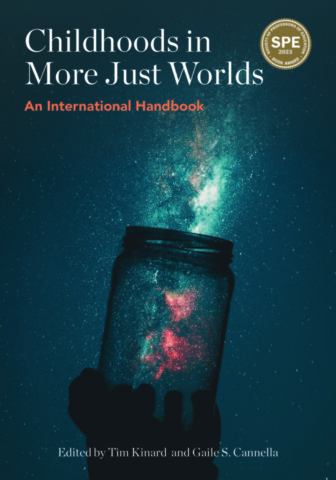
E-books are now distributed via VitalSource
VitalSource offer a more seamless way to access the ebook, and add some great new features including text-to-voice. You own your ebook for life, it is simply hosted on the vendor website, working much like Kindle and Nook. Click here to see more detailed information on this process.
Library E-Books
We are signed up with aggregators who resell networkable e-book editions of our titles to academic libraries. These editions, priced at par with simultaneous hardcover editions of our titles, are not available direct from Stylus.
These aggregators offer a variety of plans to libraries, such as simultaneous access by multiple library patrons, and access to portions of titles at a fraction of list price under what is commonly referred to as a "patron-driven demand" model.
Those who are younger continue to be objects of injustice and inequity; those who are younger, people of color, females, and human beings living in poverty have never been included in equitable performances of justice, care, respect, and fairness.The authors in this international volume use existing social values and institutions--and the strengths of these varied perspectives--to address justice in ways that have not previously been considered. The aim is to create more just worlds for those who are young--as well as for the rest of us.The first set of chapters, Bodies, Beings, and Relations in More Just Worlds, place at the forefront the lives of those who are younger who are commonly situated in positions of invisibility, disqualification, and even erasure. In the second section, Performances of Care and Education for More Just Worlds, the authors acknowledge that needed (re)conceptualizations of those who are younger, along with appreciation for human diversity and entanglements between the so-called human and nonhuman worlds, are the foundations for more just care and education environments. From the critique of neoliberal reform discourses to reconceptualizing human relations with nonhuman animal and material worlds, care and learning environments are rethought. The set of chapters in the final section, Stir of Echoes: 20th Century Childhoods in the 21st, take-up the 20th century critical concerns with constructions of “child” that have dominated and continue to govern perspectives imposed on those who are younger. Suggestions for becoming-with those who are younger through resources like reconceptualist scholarship, Black and Indigenous Studies, and various posthuman perspectives are provided throughout.Whatever the emphasis or focus of a section or chapter, throughout the volume is the recognition that dominant discourses (e.g. neoliberal capitalism, conservativism, progressivism, human exceptionalism) and the policies they create (and that facilitate them), influence possibilities for, and limitations to, more just childhood worlds. Therefore, each section includes chapters that address these complex discourses and policy issues. The reader is invited to engage with these complexities, to become-with the various texts, and to generate unthought possibilities for childhoods in more just worlds.Perfect for courses such as: Curriculum Theory │ Multicultural Education │ Cultural Knowledge of Teachers and Teaching │ Sociocultural Foundations │ Anthropology of Education │ Identity, Agency, and Education │ Race and Ethnic Relations in Schools │ Philosophical Foundations of Education │ Educational Epistemologies │ Theorizing and Researching Teaching and Learning │ Qualitative Research in Education: Paradigms, Theories, and Exemplars │ Epistemologies and Theories in Multicultural and Equity Studies │ Curricular Approaches to Multicultural and Equity Studies in Education │ Culturally Relevant Pedagogy (3) │ Multicultural and Global Perspectives in Teaching and Learning │ Teaching for Social Justice │ Diversity and Equity in Education │ 21st Century Childhood Curriculum │ Childhood and Globalization
More
E-books are now distributed via VitalSource
VitalSource offer a more seamless way to access the ebook, and add some great new features including text-to-voice. You own your ebook for life, it is simply hosted on the vendor website, working much like Kindle and Nook. Click here to see more detailed information on this process.
For any educator, administrator, or school leader who is committed to promoting student success, Unreached: What Every Educator Wants to Know About Engaging Families for Equity and Student Achievement is an indispensable resource. The premise of the book is grounded in the research that confirms that student achievement is closely tied to effective family partnerships, yet for many educators, identifying how to engage families as partners can feel overwhelming and nebulous. As a result, there is often a disconnect between schools and families that leads to families feeling excluded from the type of meaningful partnership efforts that can support student achievement. Unreached tackles this challenge by offering a clear roadmap for overcoming these barriers and cultivating trust between families and schools. One of the standout features of this volume is its focus on relevant, real-world applications designed to help districts and schools implement a sustainable approach that can support clear and meaningful gains for students.Trice Moore presents a series of practices, tips and a process for addressing the barriers that often prevent families from participating in their student’s education as partners. Drawing on research and practical scenarios, the book highlights the importance of viewing partnerships with families as a tool for advancing educational equity and offers insights on ways effective partnerships can play a pivotal role in promoting success for all students. At the heart of the book is a compelling overview of some of the systemic inequities and barriers that often exist in schools and how educators and school leaders can play a role in either perpetuating or dismantling those systems.Written by a leading voice in the field of family outreach and engagement, the book delves into the power of meaningful connections and offers four specific partnership recommendations and five authentic leadership practices to transform how schools partner with families to support student success. Unreached is not just a theoretical guide; it is a practical, hands-on resource filled with actionable strategies for educators, school teams and education leaders. Readers will learn how to earn trust with families, share responsibility and balance expectations respectfully across and beyond cultural differences within an environment where all parties feel valued and heard.The book also includes tools for developing family engagement plans, assessing your partnership approach and a recommendation summary for school teams. This workbook provides a thoughtful examination of the challenges linked to family engagement and a variety of tools for overcoming those challenges. It is an essential guide for educators seeking to bridge the gap between families and schools in ways that can help create an inclusive, equitable, and high-achieving environment for students. With a blend of practical scenarios, tools, tips and actionable insights, Unreached is a must-read for anyone interested in making gains in student achievement through culturally responsive family and community partnerships.Perfect for courses such as: Introduction, Intermediate, and Advanced courses in Family and Community Engagement, Leadership
More
E-books are now distributed via VitalSource
VitalSource offer a more seamless way to access the ebook, and add some great new features including text-to-voice. You own your ebook for life, it is simply hosted on the vendor website, working much like Kindle and Nook. Click here to see more detailed information on this process.
Library E-Books
We are signed up with aggregators who resell networkable e-book editions of our titles to academic libraries. These editions, priced at par with simultaneous hardcover editions of our titles, are not available direct from Stylus.
These aggregators offer a variety of plans to libraries, such as simultaneous access by multiple library patrons, and access to portions of titles at a fraction of list price under what is commonly referred to as a "patron-driven demand" model.
Foundations, Research, and Assessment of Fraternities and Sororities is inspired by continuing conversations about the enduring challenges facing fraternities and sororities on campuses across the country. The co-editors curate contributions from scholars and noteworthy practitioners from across higher education to examine a variety of issues relating to the past and future construct of these institutions. The text begins with a historical section that provides a perspective on the origins of fraternities and sororities. Other sections look at such critical areas as values, legal issues, and research. Values are described regarding the values congruence movement and acknowledging emerging areas of the individual fraternity and sorority experience. Legal issues include freedom of speech, hazing law, and risk management. Additional profiles of large, national benchmark surveys are included, and the book concludes with a final overview of the state of fraternity/sorority scholarship. This volume will appeal to a broad readership made up of faculty, administrations and alumni/ae.
More
E-books are now distributed via VitalSource
VitalSource offer a more seamless way to access the ebook, and add some great new features including text-to-voice. You own your ebook for life, it is simply hosted on the vendor website, working much like Kindle and Nook. Click here to see more detailed information on this process.
Have you ever thought about becoming a teacher? Are you preparing to enter the teaching profession and wondering what you will bring to your future classroom? Or are you already a teacher seeking to pause, reflect, and better understand your identity as an educator? Before we teach others, we must first understand ourselves. The Professional Identity Formation Journal: The 7 Characteristics of Teacher Identity is a reflective professional journey designed to guide aspiring and practicing educators through one of the most important and often overlooked steps in becoming an effective teacher: forming a professional educator identity. Teaching is more than delivering lessons and managing a classroom. Who we are as educators influences how we build relationships, respond to students, navigate differences, create learning environments, care for others, and ultimately impact the lives of the young people we serve. Yet professional identity is rarely something we stop to intentionally examine. This journal invites educators to do exactly that. Through thoughtful explanations, guided reflection, and purposeful prompts, readers will explore seven essential characteristics of educator identity: Personal Characteristic: Who am I, and what personal qualities do I bring to my role as an educator? Cultural Characteristic: How have my culture, experiences, beliefs, and perspectives shaped the way I understand and interact with others? Relationships Characteristic: How do I build authentic, trusting, and meaningful relationships with students, families, and colleagues? Class Manager Characteristic: How do I envision creating a classroom environment where students feel safe, valued, respected, and ready to learn? Caretaker Characteristic: How will I balance caring for students with maintaining healthy boundaries and caring for myself? Content Knowledge Characteristic: What do I know, what do I need to learn, and how will I continue growing in my area of expertise? Deliverer of Content Characteristic: How will I transform what I know into meaningful, accessible, engaging learning experiences for every student? What makes this journal unique is its two-year reflective process. Each identity is examined from two perspectives: before entering the classroom and during the second year of teaching. This intentional structure allows readers to capture their expectations, beliefs, questions, strengths, and areas for growth before they begin teaching and then return to those same ideas after experiencing the realities of the classroom. The result is more than a collection of journal entries. It becomes a personal record of professional growth and transformation. Whether you are a teacher candidate preparing for your first classroom, a new educator navigating the early years of teaching, or an experienced teacher seeking to reconnect with your purpose, this journal provides space to ask meaningful questions, recognize your growth, challenge your assumptions, and celebrate the educator you are becoming. Your teaching journey begins long before the first day of school. It begins with understanding who you are. We invite you to explore, reflect, and discover how your individual identity transforms as you begin and or continue your teaching journey.Perfect for courses such as: Introduction to Education; Diversity, Equity, and Inclusion in Education; Reflective Teaching Practices; Culturally Responsive Teaching; Portfolio Development and Professional Growth; Classroom Management and Learning Environments; Curriculum Design and Evaluation
More
E-books are now distributed via VitalSource
VitalSource offer a more seamless way to access the ebook, and add some great new features including text-to-voice. You own your ebook for life, it is simply hosted on the vendor website, working much like Kindle and Nook. Click here to see more detailed information on this process.
Transdisciplinary Feedback in Higher Education: Feedback Practices to Promote Student Success Across the Disciplines in Higher Education covers a group of faculty at a small, public, comprehensive, Hispanic-serving university in west Texas who made a commitment to study effective feedback strategies and implement them in their courses across fourteen different disciplines. The faculty joined a learning community to discuss and implement high impact practices using ten feedback tools and strategies outlined by Riordan (2021). Twenty-two faculty share their unique experiences using effective feedback methodologies in over forty case studies with students in programs spanning across developmental education, biology, English, nursing, psychology, criminal justice, accounting, communication, history, political science, natural resource management, STEM, teacher education, and counseling. These case studies illustrate how each of the Riordan feedback strategies is effectively implemented, showcasing the resulting two-way exchange between the instructors and students in undergraduate and graduate courses. Drawing on their in-depth experiences, through these real world examples of feedback in higher education courses that have had a positive impact on students, authors Dr. Jeanne Qvarnstrom and Dr. Alicia M. Trotman provide insights into how meaningful feedback is framed and implemented in each discipline, using a customized approach to feedback to help readers identify the key feedback skills that are unique to each subject. Transdisciplinary Feedback in Higher Education: Feedback Practices to Promote Student Success Across the Disciplines in Higher Education is written primarily for faculty who know that feedback is important, but who also recognize that some types of feedback will be disregarded by the student. The purpose is to provide real world examples of feedback in higher education courses that have had a positive impact on students. Organized into three sections, in Part I of Transdisciplinary Feedback in Higher Education: Feedback Practices to Promote Student Success Across the Disciplines in Higher Education the authors explore instructor orientation to feedback, Part II highlights student orientation to feedback, and Part III illustrates the authors teaching the disciplinary tools as aligned with feedback strategies. While the tools and practices remain consistent, the implementation methods vary contextually to best meet the needs of the students in mastering the concepts of the disciplines. The reader gains a greater understanding of the ten feedback tools and practices from a transdisciplinary perspective. Each chapter ends with reflective questions for the reader and a reference list for future study. Effective feedback in higher education is a popular topic, but in Transdisciplinary Feedback in Higher Education: Feedback Practices to Promote Student Success Across the Disciplines in Higher Education, addresses a gap in research and offers examples from higher education. Transdisciplinary Feedback in Higher Education: Feedback Practices to Promote Student Success Across the Disciplines in Higher Education is dedicated to college and university instructors in various disciplines who recognize the power of feedback and want to learn more about effective forms of it. The book is well suited for faculty professional development initiatives, professional learning communities, and graduate programs in higher education and teacher education, making it an appropriate resource for both individual instructors and course adoption.
More
E-books are now distributed via VitalSource
VitalSource offer a more seamless way to access the ebook, and add some great new features including text-to-voice. You own your ebook for life, it is simply hosted on the vendor website, working much like Kindle and Nook. Click here to see more detailed information on this process.
Teaching Through Generational Traumas offers a powerful and timely exploration of what it means to teach, learn, and thrive in higher education while navigating the weight of generational wounds. Written by historian and educator Detrice L. Roberts, this book blends personal reflection, scholarly research, and experience-based classroom practice to uncover how trauma, identity, and resilience shape today’s student experience. At its core, this book challenges the idea that education is only about transmitting knowledge. Instead, Roberts presents the classroom as a space of transformation where students must be equipped not only with intellectual tools but also the social and emotional skills necessary to face the complexities of modern life. Drawing on frameworks including Social and Emotional Learning (SEL), the VARK learning model, and culturally relevant pedagogy, Roberts simultaneously offers instructors and students pathways to recognize identity, manage emotions, and build meaningful and productive connections between past and present. Being able to differentiate instruction relies on our understanding of the types of learners that we have in our classroom and exploring the factors associated with why students are disconnected academically. These very factors can then be addressed and used to enhance student experiences and ability to learn through learner-defined curriculum development. Teaching Through Generational Traumas moves through layered themes reflecting Roberts’s dual perspective as both teacher and learner. Part I situates the conversation historically, acknowledging how generational traumas rooted in slavery, segregation, and systemic racism, continue to impact Black students in higher education. Part II explores the lived experience of respectability politics, dissociation, and the subtle pressures students face to perform identities that do not always align with their authentic selves. Part III shifts to pedagogical innovation, highlighting Roberts’s seven classroom practices: Socratic questioning, storytelling, critical pedagogy, SEL, opening rituals, culturally relevant teaching, and digital humanities. Each practice is illustrated through vivid classroom narratives, emphasizing how teaching strategies can nurture critical thinking while affirming student identity. In the final section, Roberts invites students, educators, and readers alike to consider methods of perpetual growth that extend beyond the classroom. She frames education not as a temporary pursuit, but as a lifelong journey of reflection, resilience, and meaning-making. The book closes with an Ode to the HBCU, honoring the historic and ongoing role of Historically Black Colleges and Universities as sites of cultural affirmation, intergenerational pride, and transformative education. Teaching Through Generational Traumas is a call to reimagine what education can be when it is rooted in empathy, awareness, and liberation. It speaks directly to faculty, administrators, and students at HBCUs and beyond, while also offering insights for those interested in the intersections of history, identity, and pedagogy. By weaving together scholarship, lived experience, and practical strategies, Roberts demonstrates how we can confront the challenges of dissociation, respectability, and trauma, and instead cultivate spaces where students and instructors learn, heal, and transform together. Perfect for courses such as: Foundations of Education; Teaching and Learning in Higher Education; Culturally Relevant Pedagogy / Multicultural Education; Trauma-Informed Teaching Practices; Educational Leadership & Policy Studies; Sociology of Education / Education and Society
More