

Search results for making sense of rac

E-books are now distributed via VitalSource
VitalSource offer a more seamless way to access the ebook, and add some great new features including text-to-voice. You own your ebook for life, it is simply hosted on the vendor website, working much like Kindle and Nook. Click here to see more detailed information on this process.
The Critical Role of Ethnic Studies in Educational Leadership addresses the urgency of having equity-minded and globally-oriented transformative leaders who seek to empower students and teachers alike through their commitment to integrate ethnically and culturally rich curriculum and instruction in today’s schools. The ethnic studies revival movement has emerged to combat the cycles of ignorance affecting society in negative ways. Unless educational leaders possess relevant cultural and ethnic proficiency, have global perspectives, and are eager to lead by example, educators will continue to flounder about the best ways to cultivate pluralism in American schools. Moreover, shifts in mindsets toward ethnically and culturally relevant school learning and teaching culture are needed for leaders to ensure that they not only have the knowledge and skill, but also the courage and will to reform schools through an inclusive and comprehensive approach based on the axioms of ethnic studies education in the K-20 settings. To amplify the importance and interconnected pathway that exists across these policies that bridge high schools, community colleges, and state universities, this volume details how educational leaders in California are continuing to advance social justice through the implementation of Ethnic Studies and the role that educational leadership—including credential, masters, and doctoral programs—can play in the full attainment of the goals for ethnic studies implementation. The lessons learned in California are relevant across the nation and around the world. As Ethnic Studies has expanded across PK-12 and higher education contexts, extant studies have both quantitatively and qualitatively detailed how participation in quality Ethnic Studies courses and programs in and out of schools can improve many student outcomes such as engagement, critical thinking, and achievement, as well as attendance, increased GPAs, and graduation rates. The work to effectively implement Ethnic Studies requires strong leadership, including students, teachers, community leaders, and site and district level administrators. The Critical Role of Ethnic Studies in Educational Leadership is an important book that appeals to a variety of readers. Those interested in a deeper understanding of Ethnic Studies will find the book will better inform them. Educational leaders are provided with both the rational and the methodologies for implementing this important concept in curriculum. It is also a valuable teaching resource for a variety of classroom settings.Perfect for courses such as: Intro to Ethnic Studies; Intro to Chicano Studies; Climate & Environmental Justice; Educational Reform; Educational Policy Environments; Theories of Cross-Cultural Education
More
E-books are now distributed via VitalSource
VitalSource offer a more seamless way to access the ebook, and add some great new features including text-to-voice. You own your ebook for life, it is simply hosted on the vendor website, working much like Kindle and Nook. Click here to see more detailed information on this process.
Reclaiming Space: Critical Conversations about Black Education to Spark Transformative Change invites readers on a journey to reimagine educational spaces that truly embrace diversity and inclusion. Along with contributing authors, Dr. Marks draws upon her personal experiences as a student and educator to explore systematic barriers that have hindered and marginalized Black voices and perspectives. With the spirit of Sankofa and the power of ‘reimagining and dreaming,’ Dr. Marks and her colleagues provide compelling narratives and research-based strategies that challenge traditional norms within educational spaces and empower stakeholders to actively participate in cultivating environments where Black educators and students can truly thrive. Reclaiming Space is not simply a call to action, it is an insistence on enacting culturally responsive and sustaining transformational change in educational spaces. Reclaiming Space acknowledges the ways in which Black youth and educators alike have been disenfranchised in educational spaces, from the silent push out of Black educators, diminishing the presence of Black educators in classrooms across the nation, to the plethora of harms caused to Black youth in K-12 spaces (including, but not limited to, the achievement gap, discipline gap, and disproportionate special education referrals). What we have seen since the Brown v. Board of Education decision is the marginalization of Black youth and educators in addition to the elimination of Black excellence in schools. As such, Reclaiming Space seeks to create a counter narrative to push back on deficit perspectives and ideologies in regards to the ways in which we view and interact with our Black students and educators. This volume works to illuminate the Black community and inspire all to consider the ways in which we can work to center Black excellence, and uplift Black youth and educators alike to reclaim space within the American educational system. Reclaiming Space will be separated into three sections, which will revolve around themes of disrupting harmful systems of practice, centering Black excellence and affirming Black culture, and supporting Black educators. Chapters for each of the three sections will be compiled of submitted manuscripts based on the questions listed above. In this way, this book volume seeks to work as a counter narrative to deficit viewpoints and perspectives, but also an act of itself in ‘reclaiming space.’ Reclaiming Space is intended to inspire others to center and/or affirm Black excellence in meaningful ways that work to better support our Black students and teachers. The text most strongly works for K-12 educators and administrators, faculty in higher education, and community members. The topics within Reclaiming Space are of interest to both those who are within the field of education and those who are not, as the issues stemming from harmful educational practices goes on to permeate spaces beyond. Having strong voices and experiences with disrupting these harmful practices from different perspectives and vantage points will hopefully not only better inform readers, but spark interest and hope as we move forward to dream about an educational system that is truly grounded in equitable access and opportunities for all.Perfect for courses such as: Introduction to Black Studies; Teaching for Diversity and Social Justice; Critical Thinking and Contemporary Social problem (sociology); Race and Ethnic Relations; Race and Ethnic Dynamics in the United States; Black Experiences in the United States; Cultural Diversity in US Schools; Sociology of Education; Sociocultural Foundations in Education; Classroom Management and Differentiated Instruction
More
E-books are now distributed via VitalSource
VitalSource offer a more seamless way to access the ebook, and add some great new features including text-to-voice. You own your ebook for life, it is simply hosted on the vendor website, working much like Kindle and Nook. Click here to see more detailed information on this process.
Transforming Education for Social Justice: Empirical Insights from Leadership, Equity, and Research in Action is a powerful anthology that brings together a collection of articles originally published in the Journal of Leadership, Equity, and Research (JLER). These chapters reflect a shared commitment to confronting systemic inequities and transforming PreK–12 and higher education through critical scholarship, equity-minded leadership, and community collaboration. As part of the Myers Education Press Ethnic Studies Revival Series, this volume is organized around three central themes:the role of educational leadership and transformative research for education reform and student empowerment,countering inequitable disciplinary practices through alternative and transformative approaches,the importance of student voice and activism for promoting equity and social justice.Together, these themes offer a framework for reimagining schools as spaces of resistance, healing, and liberation. In an era marked by heightened attacks on ethnic studies and diversity initiatives, Transforming Education for Social Justice offers timely empirical insights that support inclusive, justice-centered educational practices. The chapters draw on culturally responsive pedagogy, restorative justice, critical race theory, and decolonial frameworks to provide both a critique of existing structures and a vision for what is possible. This volume is an essential resource for scholars, educators, and policymakers committed to equity and social transformation. It is especially well-suited for use in Ethnic Studies, Educational Leadership, Teacher Preparation, and Social Justice Education courses.
More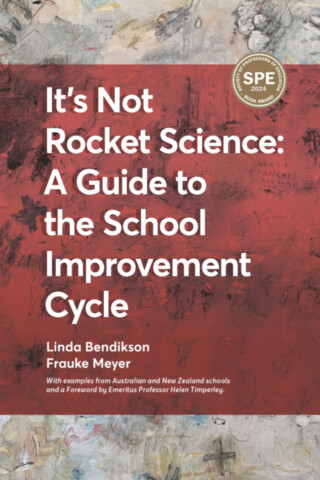
E-books are now distributed via VitalSource
VitalSource offer a more seamless way to access the ebook, and add some great new features including text-to-voice. You own your ebook for life, it is simply hosted on the vendor website, working much like Kindle and Nook. Click here to see more detailed information on this process.
Library E-Books
We are signed up with aggregators who resell networkable e-book editions of our titles to academic libraries. These editions, priced at par with simultaneous hardcover editions of our titles, are not available direct from Stylus.
These aggregators offer a variety of plans to libraries, such as simultaneous access by multiple library patrons, and access to portions of titles at a fraction of list price under what is commonly referred to as a "patron-driven demand" model.
It's Not Rocket Science - A Guide to the School Improvement Cycle: With Examples From New Zealand and Australian Schools presents an easy-to-read, practical guide to effectively leading school improvement. It walks leaders through each step of ‘The School Improvement Cycle’ developed by Bendikson and Meyer, providing case studies, examples, and helpful tools from primary and secondary schools for the implementation of each step. The book will support school leaders in implementing improvement cycles without making the classic mistakes of failing to develop measures of improvement and test change actions before scaling up. Schools and system leaders will benefit greatly from this practical guide, in which Bendikson and Meyer demonstrate that implementing improvement cycles is not a difficult process. While the book uses examples from Australian and New Zealand schools, the lessons that the book teaches can be applied to school leaders everywhere. The authors show how to make the complex work of improving student learning and outcomes at least somewhat simpler. They do this by describing and illustrating improvement steps that they have found to work in practice, providing examples from their work in schools to show the application of these ideas. If implemented properly, the cycles become “self-propelling,” thus reducing the cognitive load involved in planning how to improve. A range of evidence from international research and the authors’ own research and development work in schools explains the cycle and illustrate it. The book is entitled It’s Not Rocket Science because this is the common reaction from leaders once they understand the improvement cycle process. The book is perfect for a variety of courses in Education Leadership, Professional Development, and any other curriculum devoted to improving schools and student performance.Perfect for courses such as: Educational Leadership, Professional Development
More
E-books are now distributed via VitalSource
VitalSource offer a more seamless way to access the ebook, and add some great new features including text-to-voice. You own your ebook for life, it is simply hosted on the vendor website, working much like Kindle and Nook. Click here to see more detailed information on this process.
As educational systems worldwide grapple with complex challenges requiring sustained, evidence-informed solutions, collaborative continuous improvement in education (CCIE) has emerged as a transformative approach to systemic change. Yet a critical gap remains: how do we effectively teach and learn these powerful improvement methods across the diverse landscape of educational institutions and professionals who work in them? This groundbreaking book addresses this vital question with practical wisdom and research-backed strategies. Teaching and Learning for Collaborative Continuous Improvement in Education: Challenges and Possibilities Across the Educational System tackles the pressing need to build CCIE capacity among higher education faculty, professional developers, state education department associates, and the broader network of professionals driving educational improvement initiatives. As policymakers increasingly turn to CCIE to inform system-wide reforms, this book provides the roadmap for spreading and deepening expertise across organizational boundaries and professional contexts. The authors examine three fundamental challenges facing the field: bridging knowledge gaps across diverse professional roles and organizations; balancing scholarly and practical applications of CCIE learning; and navigating the spectrum of delivery modalities from fully asynchronous to synchronous, and in-person to remote formats. Through real-world examples, chapter authors reveal both challenges and promising practices that transcend traditional silos and create meaningful learning communities. What sets this book apart is its collaborative approach to knowledge sharing. Rather than prescribing one-size-fits-all solutions, the editors and authors position themselves as colleagues and peers, sharing hard-won lessons from their own improvement journeys. Each chapter follows a systematic structure that includes contextual background, theoretical foundations, learning objectives and approaches, documented results, and honest reflections on lingering questions. The book's organization reflects its commitment to addressing real-world complexity. Following an introductory chapter that maps the current terrain of CCIE teaching and learning, subsequent sections dive deep into specific challenges: designing CCIE learning experiences for different audiences, adapting approaches for varying purposes, and leveraging different modalities effectively. Rich case studies and illustrative examples demonstrate how theory translates into practice across diverse educational contexts. Higher education faculty will find research-based approaches to curriculum design and pedagogy. Professional developers will discover strategies for building organizational capacity using theoretically-grounded and tested approaches. State education leaders will gain insights into system-wide implementation approaches. Most importantly, all readers will find concrete tools for learning with and from each other―breaking down the isolation that too often hampers improvement efforts. The book concludes with a look to the future―highlighting emerging trends and future opportunities in CCIE teaching and learning, while supplementary materials provide readers with immediately usable resources. It represents an essential contribution to the growing field of improvement science in education―and a vital resource for the professionals working to make that science accessible, applicable, and impactful across the entire educational ecosystem.Perfect for courses such as: Continuous Quality Improvement in Education and Human Services; Networked Improvement Communities; Improvement Science Capstone; Leadership for Continuous Improvement; Leadership Experiences, Application and Development; Leadership for Equity for Equity and Improvement; Instructional Leadership; Doctoral Seminar: Dynamics of Improving Schools and Districts; and Supervision of Instruction
More
E-books are now distributed via VitalSource
VitalSource offer a more seamless way to access the ebook, and add some great new features including text-to-voice. You own your ebook for life, it is simply hosted on the vendor website, working much like Kindle and Nook. Click here to see more detailed information on this process.
Higher education in the United States appears to be in trouble. Much of the American public sees colleges and universities as disengaged, elitist, not open to new or alternative ideas, something to be escaped—not to mention expensive, unproductive, out of touch, unaccountable, oblivious to their own failings, and increasingly irrelevant. There are many in our society who are promoting a vision of higher education that uses these perceptions to call into question the role of colleges and universities in our democracy. But on the author’s campus of Augsburg University and on campuses across the country, in our neighborhoods, and wherever our alumni live and work, the author sees just the opposite. He sees students who view education as a gift that carries with it a responsibility to give back. He sees faculty and staff committed to the vision that students receive a three-dimensional education—an education that equips them to make a living, make a life, and build community. He sees alumni and neighbors who care about each other and the world, and who are working each and every day to support a just and inclusive democracy. For those of us who believe in the public purposes of higher education, we live in the tension between negative perceptions of our worth and the reality of what we do everyday on the ground to support social mobility, economic well-being, and a robust common life. In the context of that tension, Paul Pribbenow believes that there is a moral claim on those of us who lead colleges and universities to step forward with an alternative story. At a time when higher education is often characterized as a private, transactional good, we are called to articulate a vision that challenges the prevailing narrative and makes a moral case for higher education as an engine for a robust, pluralistic democracy. In more than two decades as a university president, he has sought to advance that case. To illustrate how, he will use the story of Jacob wrestling with the angel as depicted in the book of Genesis. A reminder of how the story unfolds. The same night he got up and took his two wives, his two maids, and his eleven children, and crossed the ford of the Jabbok. He took them and sent them across the stream, and likewise everything that he had. Jacob was left alone; and a man wrestled with him until daybreak. When the man saw that he did not prevail against Jacob, he struck him on the hip socket; and Jacob’s hip was put out of joint as he wrestled with him. Then he said, “Let me go, for the day is breaking.” But Jacob said, “I will not let you go, unless you bless me.” So he said to him, “What is your name?” And he said, “Jacob.” Then the man said, “You shall no longer be called Jacob, but Israel, for you have striven with God and with humans, and have prevailed.” Then Jacob asked him, “Please tell me your name.” But he said, “Why is it that you ask my name?” And there he blessed him. So Jacob called the place Peniel, saying, “For I have seen God face to face, and yet my life is preserved.” The sun rose upon him as he passed Penuel, limping because of his hip. Pribbenow’s argument, and sincere belief, is that higher education is about learning to wrestle with ideas, values, and relationships that demand our attention. He believes that students must learn to see the topics they wrestle with not as obstacles to overcome or defeat, but as “angels” that demand respect and thoughtful attention. The purpose of this vision of education is like it was for Jacob: to be named and claimed as those called to meaning and purpose in the world. And like Jacob who became Israel, wrestling with angels leaves students wounded, vulnerable, humbled—and also equipped for the work they are called to do - to thrive as neighbors, professionals, and citizens.Perfect for courses such as: Ethics and Higher Education; Higher Education Leadership; Education and Democracy; Leading Faith-Based Colleges and Universities; The State of Higher Education in America; Student Success and Academic Belonging
More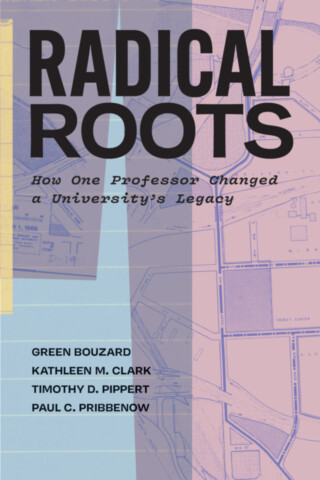
E-books are now distributed via VitalSource
VitalSource offer a more seamless way to access the ebook, and add some great new features including text-to-voice. You own your ebook for life, it is simply hosted on the vendor website, working much like Kindle and Nook. Click here to see more detailed information on this process.
Library E-Books
We are signed up with aggregators who resell networkable e-book editions of our titles to academic libraries. These editions, priced at par with simultaneous hardcover editions of our titles, are not available direct from Stylus.
These aggregators offer a variety of plans to libraries, such as simultaneous access by multiple library patrons, and access to portions of titles at a fraction of list price under what is commonly referred to as a "patron-driven demand" model.
Radical Roots: How One Professor Changed a University's Legacy tells the story of Joel Torstenson, a sociology professor at Augsburg University in Minneapolis, Minnesota. In the 1960s, Torstenson challenged his university to embrace its urban setting and to design its curricular, co-curricular, and community engagement programs to advance its mission of “Education for service.” The compelling story of Torstenson’s legacy at Augsburg over the past 60 years offers lessons for colleges and universities across the country committed to democratic engagement in their work at the intersections of mission and place. Augsburg University's saga as an urban settlement has not always been embraced by the university. Though location and place are central to the university’s identity, it is not sufficient to explain the integrative power of the university’s character. For that purpose, it is critical that place be understood through the lens of Augsburg’s academic mission and work. This integrated view of place and mission required a new way of imagining the university’s core work of educating students. The purpose of this book is two-fold. The first is to document and celebrate the legacy of Professor Joel Torstenson, and to understand the impact of this legacy’s inception, evolution, and current manifestations and impact at Augsburg and in the wider world. Professor Torstenson cared deeply about the public purpose of higher education, and Torstenson’s model for what this public purpose might look like prompted massive transformation in Augsburg University’s trajectory. The resulting experiments in education and commitment to the city flowered into a legacy that has spurred Augsburg University to create an innovative model for 21st Century education. This model has impacted everything from student learning and community life, to teaching and curricular structure, to the public mission of the institution and its presence in the city and world. Torstenson’s creative—and even radical—work in the 1960s and '70s has been carried through the decades by continued innovation in teaching and learning based in experiential education, and a commitment to place and community building. This legacy has simultaneously advanced the public purpose and mission of the University. Secondly, this book shares what are some of the lessons learned from fifty years of innovation following Torstenson’s vision, with the hope that these lessons might serve the broader community of colleges, universities, faculty, staff, and students engaged in similar pursuits. Augsburg’s innovative experiential education, place-based community engagement, and public and anchor institution work has been and will continue to be a model for other institutions. We believe that Torstenson’s legacy, and the lessons learned through the years of its evolution, has lessons to teach and models to follow for our sibling institutions across the United States. The volume includes discussion prompts and questions after each section. There is also a companion website (www.augsburg.edu/radicalroots) that includes additional resources related to the volume's themes.Perfect for course such as: Higher Education and Democracy in the United States; Principles of Experiential Education; Place Matters: Higher Education and Community Engagement; Universities as Anchor Institutions in their Communities; Introduction to Citizen Professionalism: Leading in the 21st Century; Public Work, Social Responsibility, and Vocation in a World of Extremes; Accompaniment: Developing Democratic Skills and Fostering Healing with Communities; Curricular Innovations in Higher Education; and Principles of Higher Education Pedagogy
More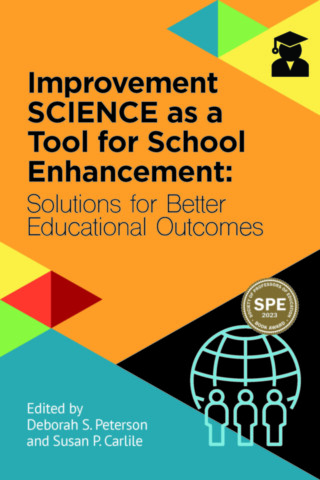
E-books are now distributed via VitalSource
VitalSource offer a more seamless way to access the ebook, and add some great new features including text-to-voice. You own your ebook for life, it is simply hosted on the vendor website, working much like Kindle and Nook. Click here to see more detailed information on this process.
Library E-Books
We are signed up with aggregators who resell networkable e-book editions of our titles to academic libraries. These editions, priced at par with simultaneous hardcover editions of our titles, are not available direct from Stylus.
These aggregators offer a variety of plans to libraries, such as simultaneous access by multiple library patrons, and access to portions of titles at a fraction of list price under what is commonly referred to as a "patron-driven demand" model.
Improvement Science as a Tool for School Enhancement is a collection of equity-focused improvement science-in-action, school-based case studies led by practitioners. Chapter authors tell us how and why improvement science principles make system-wide improvements in classroom practice, how they learned from the problems encountered and further, how they were then able to make changes within a school or district. A core principle of improvement science is variability in context (what works for whom and under what conditions), a critical concept for improvement in each of the case studies. How to use improvement science to address education disparities system-wide with urgency, commitment, and a belief in the success of every child, of every race, every ethnicity, gender, ability, and cultural identity, is the essence of this book.
More
E-books are now distributed via VitalSource
VitalSource offer a more seamless way to access the ebook, and add some great new features including text-to-voice. You own your ebook for life, it is simply hosted on the vendor website, working much like Kindle and Nook. Click here to see more detailed information on this process.
Library E-Books
We are signed up with aggregators who resell networkable e-book editions of our titles to academic libraries. These editions, priced at par with simultaneous hardcover editions of our titles, are not available direct from Stylus.
These aggregators offer a variety of plans to libraries, such as simultaneous access by multiple library patrons, and access to portions of titles at a fraction of list price under what is commonly referred to as a "patron-driven demand" model.
Exploring Data Production in Motion facilitates the use of feminist critical qualitative methodologies. With open-ended methods and poststructuralist theory and analysis, this book will offer tools to approach and to examine challenging and controversial topics ethically. This book will argue that to examine data of ‘individual’ experience and aspirations requires examining the process of the data production in which these were ‘produced’. It will form an understanding of a data production as a process, which in its fluidity enables us also to form an understanding of difference and change as inevitable parts of social processes.
More
E-books are now distributed via VitalSource
VitalSource offer a more seamless way to access the ebook, and add some great new features including text-to-voice. You own your ebook for life, it is simply hosted on the vendor website, working much like Kindle and Nook. Click here to see more detailed information on this process.
How do we create lasting systemic change in institutions designed to reproduce the status quo? Some might answer this question with responses related to mission, vision, resource allocation and investment, and talent. However, the path to creating sustainable changes in educational institutions is often obstructed by policy, institutional inertia, and ingrained systemic barriers. Work is sometimes reduced to a checkbox exercise aimed at compliance, rather than genuine transformation, leading to benefits only for groups traditionally supported by the established structures. For those striving for change, a sense of powerlessness can dominate, as structural constraints limit their agency and dilute their impact. Recognizing these realities, there can be no simple recipe or single formula that guarantees lasting change, particularly transformational change that shifts paradigms in ways that advance equity and inclusion. Instead of a formula, Systems Transformation for Equity in Education: Principles for Organizational Change introduces 6 key principles of organizational change. In order to engage in complex systems transformation for equity, we must: 1. know the contexts that surround systems change; 2. develop cohesive project plans and find appropriate funding for these plans; 3. understand the centrality of leadership; 4. work collectively towards equity through relationality, respect, and mutuality; 5. reflect upon success and challenges; and 6. ensure the institutionalization of systems transformation. The book is structured first to provide a broad overview of each principle, then to illustrate each using a case study of program change. Chapter One focuses on the principle of knowing the complex contexts that surround systems change. In this chapter, the book introduces the origins, objectives, complexities, diverse stakeholders and outcomes of the case study as well as contextual factors that should be considered in launching systems transformation. Chapter Two focuses on ensuring alignment in the design, development and enactment of transformative projects, including establishing an initial vision, using data to inform decision making and finding appropriate funding sources. Chapter Three focuses on the principle that Leadership matters in systems transformation for equity. This chapter highlights the importance of identifying a leadership team, providing clear team members’ roles, and dividing tasks wisely. Chapter Four focuses on cultivating consensus and moving forward collectively in diverse stakeholder groups with competing priorities. Chapter Five focuses on the importance of reflecting upon success to expand the impact of systems transformation, adapting programs to stay responsive to changing contexts, and on navigating unanticipated challenges to initiative-based work. Chapter Six focuses on expanding impact and identifying ways to ensure the institutionalization of systems transformation. It addresses some key factors such as documenting and communicating the successes and challenges of the project, disseminating evaluation findings; creating a plan for when the grant funding ends, accessing new funding; identifying continuing and new stakeholders; developing ongoing products; developing collective language; and ensuring institutional buy-in. The final chapter tells the story of lessons learned from this process and what has happened to the focal program in the 2 years following the end of the grant funding, particularly given changing socio-political contexts.Perfect for courses such as: Principles of Organizational Change; Equity and Organizational Change; Foundations of Organization Change; Educational Leadership; Race, Equity, and Leading Educational Change; Education Policy Implementation
More