

Diversity

E-books are now distributed via VitalSource
VitalSource offer a more seamless way to access the ebook, and add some great new features including text-to-voice. You own your ebook for life, it is simply hosted on the vendor website, working much like Kindle and Nook. Click here to see more detailed information on this process.
What does it mean for a school of education to advance justice and equity? Is it enough for its mission statement to include words like “justice” and “democracy,” to offer signature programs about justice, or for there to be a critical mass of scholars who write on this topic? Since its formation in 2016, Education Deans for Justice and Education (EDJE), a group of more than 400 education deans and leaders from large and small institutions, has been grappling with what it means to advance — as well as to trouble — justice and equity in and through our schools of education and education systems more broadly. Leading on the EDGE brings together ten chapters, along with an introduction and conclusion, written by deans and leaders from a diverse set of institutions across the United States. These leaders have implemented ideas that support an equity stance in their institutions using the EDJE Framework for Assessment and Transformation, an instrument designed for this purpose. As leaders of schools of education, many of us constantly ask: how can we transform our institutions in meaningful ways to foster justice and equity? What actions can we take that go beyond the essentials of revising the curriculum or diversifying our faculty, staff, and students? How can we take a holistic approach to the transformation of all aspects of our institutions, our governance structures, fundraising strategies, and external relationships with communities? We are living and working in precarious times with justice-oriented work at universities threatened at the federal level with possible serious ramifications at both public and private universities. With diversity, equity, and inclusion (DEI) programs, affirmative action measures, and equal opportunity policies under attack, university leaders committed to actions that support equity and access in their institutions require resources to support their work. Many initiatives that claim to address issues of justice and equity focus solely on curriculum and pedagogy. This Framework addresses all of the major areas in a school including admissions, hiring, development, budget priorities, community engagement, the support of faculty, staff, and students of color, as well as curriculum and pedagogical practices. The Framework was written by a large and varied group of people with great expertise and experience, who came together several times to pool their knowledge and resources. Through Leading on the EDGE, the authors tell complex and varied stories. While in some institutions, faculty quickly embraced ideas for focusing on justice and equity, other faculties were more reluctant. The stories in this volume reflect moments of vulnerability as well as strength. Authors reflect on the issues and challenges that arose from this work, how they adapted the Framework for their unique contexts and goals, how they got started, challenges they encountered, initial outcomes, how the work can be translated to other settings within the university and in other educational settings, and provide concrete strategies for their colleagues. At a time when education leaders are under attack, Leading on the EDGE provides concrete ideas and strategies for taking a stand and proclaiming a commitment to the transformative work of justice and equity in higher education. Chapters of Leading on the EDGE are conveyed in a variety of genres and styles: some are organized as case studies, others are more similar to reflective essays; some focus on assessment of the institution or school’s focus on equity and justice, while others turn their attention to how programs were implemented, including those results; some are written in a more traditional academic style while others more autobiographical, dialogical, or even artful.Perfect for courses such as: Higher Education Administration, Educational Leadership, Multicultural Education, Foundation of Education, Educational Policy, Race and Education, Research Methods, Social Justice Education, Organizational Management (in Education)
More
E-books are now distributed via VitalSource
VitalSource offer a more seamless way to access the ebook, and add some great new features including text-to-voice. You own your ebook for life, it is simply hosted on the vendor website, working much like Kindle and Nook. Click here to see more detailed information on this process.
Hidden in Plain Sight: Women in Educational Leadership is an essential resource that examines the experiences, challenges, and achievements of women leading in higher education. Written for current and aspiring women academic leaders, it provides the tools, insights, and support needed to navigate this complex terrain successfully. Hidden in Plain Sight addresses a striking paradox: while many accomplished women hold academic leadership positions, they often remain invisible within their own institutions. Despite occupying roles of authority, women leaders frequently find themselves overlooked, unrecognized, and unheard. This contradiction exposes the gap between institutional claims that leadership is gender-neutral and the reality women face daily in academic settings. Drawing on demographic data, statistical trends, and evidence-based practices, this textbook offers practical guidance grounded in real experience. Readers will find case studies, personal anecdotes, and actionable strategies for advancing in academic leadership while maintaining personal integrity and well-being. The book explores various leadership approaches and identifies common pitfalls, equipping readers with knowledge to navigate challenges effectively. Hidden in Plain Sight serves as both mirror and map—reflecting the realities women leaders experience while charting pathways forward. It empowers current leaders to advocate for themselves and their institutions while inspiring the next generation to pursue academic leadership with eyes wide open and strategies firmly in hand. This is the guidebook for women determined to lead authentically, effectively, and sustainably in higher education. The book is written about and for women in leadership positions, and for women interested in educational leadership within the academy. It will also be of interest to college, university and public libraries; individuals including scholars in the discipline; and it can serve as a critical textbook in a variety of Leadership classes in undergraduate and graduate programs.Perfect for courses such as: Women and Leadership; Higher Education Administration; Gender Studies in Education; Educational Leadership and Policy; Sociology of Higher Education; Feminist Theory and Practice; Women's Studies Capstone Seminar; Organizational Behavior in Education; Diversity and Inclusion in Higher Education; Professional Development for Graduate Students
More
E-books are now distributed via VitalSource
VitalSource offer a more seamless way to access the ebook, and add some great new features including text-to-voice. You own your ebook for life, it is simply hosted on the vendor website, working much like Kindle and Nook. Click here to see more detailed information on this process.
Food, and the context surrounding it, frames much of our lives. Our culinary experiences are imbued with our physical, social, spiritual, and cultural identities. However, for many, food practices are alienating because certain culinary practices are privileged, while others are marginalized, especially in higher education spaces. Simply having access to safe and affirming food, drink, and dining spaces on campus and at off-campus events is a right that every student and faculty member should be able to enjoy. A Culinary Approach to Inclusion and Belonging in Higher Education is a new and innovative book that is unique in that it examines food as a social justice and inclusion issue. For some, religious traditions guide the consumption of only certain foods, accompanied by various periods of fasting and other important contexts around eating. Examples include the Jewish kashrut, a mandate on preparing and eating kosher food, and the Muslim halal and Ramadan, with daytime fasting. This extends off campus as well, to events and conferences that feature alcohol, which excludes those who choose or need to abstain. For those with medical conditions such as celiac disease (gluten-free), the absence of specific ingredients and foods is a medical necessity. For autistic students, or for queer and transgender people, the physical layout and social expectations of dining cause stress and isolation. International students lack a sense of belonging when the culinary decisions on a campus exclude familiar foods or settings, rendering a sense of invisibility for the students. Finally, we can look at Food Philosophy, how we think and what we believe about food, as similar to the field of Ethnic Studies, with an examination of who is included, excluded, and the need for transformation of the culinary system. Through its nine chapters, this book is designed to weave together explanatory material on various culinary needs with stories of challenges and successes in meeting the needs of those who live on, work on, or visit campuses. It highlights the need for identity-affirming culinary experiences that create a sense of inclusion and belonging. A Culinary Approach to Inclusion and Belonging in Higher Education is a great resource for researchers in cultural studies. In addition, it is an effective teaching tool for a variety of curriculum studies classes.Perfect for courses such as: Educational Leadership; Food Studies; Foundations of Education; Higher Education; Multicultural Education; Student Affairs
More
E-books are now distributed via VitalSource
VitalSource offer a more seamless way to access the ebook, and add some great new features including text-to-voice. You own your ebook for life, it is simply hosted on the vendor website, working much like Kindle and Nook. Click here to see more detailed information on this process.
The Critical Role of Ethnic Studies in Educational Leadership addresses the urgency of having equity-minded and globally-oriented transformative leaders who seek to empower students and teachers alike through their commitment to integrate ethnically and culturally rich curriculum and instruction in today’s schools. The ethnic studies revival movement has emerged to combat the cycles of ignorance affecting society in negative ways. Unless educational leaders possess relevant cultural and ethnic proficiency, have global perspectives, and are eager to lead by example, educators will continue to flounder about the best ways to cultivate pluralism in American schools. Moreover, shifts in mindsets toward ethnically and culturally relevant school learning and teaching culture are needed for leaders to ensure that they not only have the knowledge and skill, but also the courage and will to reform schools through an inclusive and comprehensive approach based on the axioms of ethnic studies education in the K-20 settings. To amplify the importance and interconnected pathway that exists across these policies that bridge high schools, community colleges, and state universities, this volume details how educational leaders in California are continuing to advance social justice through the implementation of Ethnic Studies and the role that educational leadership—including credential, masters, and doctoral programs—can play in the full attainment of the goals for ethnic studies implementation. The lessons learned in California are relevant across the nation and around the world. As Ethnic Studies has expanded across PK-12 and higher education contexts, extant studies have both quantitatively and qualitatively detailed how participation in quality Ethnic Studies courses and programs in and out of schools can improve many student outcomes such as engagement, critical thinking, and achievement, as well as attendance, increased GPAs, and graduation rates. The work to effectively implement Ethnic Studies requires strong leadership, including students, teachers, community leaders, and site and district level administrators. The Critical Role of Ethnic Studies in Educational Leadership is an important book that appeals to a variety of readers. Those interested in a deeper understanding of Ethnic Studies will find the book will better inform them. Educational leaders are provided with both the rational and the methodologies for implementing this important concept in curriculum. It is also a valuable teaching resource for a variety of classroom settings.Perfect for courses such as: Intro to Ethnic Studies; Intro to Chicano Studies; Climate & Environmental Justice; Educational Reform; Educational Policy Environments; Theories of Cross-Cultural Education
More
E-books are now distributed via VitalSource
VitalSource offer a more seamless way to access the ebook, and add some great new features including text-to-voice. You own your ebook for life, it is simply hosted on the vendor website, working much like Kindle and Nook. Click here to see more detailed information on this process.
Fat on Campus: The Voices and Images of Fat College Students and the Impacts of Fatphobia amplifies the voices of 11 fat college students across the United States. Defined as “a pathological fear of fatness often manifested as negative attitudes and stereotypes about fat people” (Robinson et al., 1993, p. 468), fatphobia, like other forms of oppression, impacts our students and our campuses. Unlike other cultural phenomena, fatness is one of the last socially acceptable forms of bias. This text sheds light on fat students, increasing their visibility in higher education, explaining why it is important to recognize and address this critical issue on campuses across America. Using rich stories from students who self-identify as fat, this text honors their experiences and highlights how they have created welcoming spaces for themselves in often unwelcoming collegiate environments. The book shares findings from a national photovoice research study, including narratives and photographs. A methodological technique combining storytelling and photography, photovoice is often used to inspire social change. Aligned with the idea of transforming the future of higher education, this book serves as both a call to action for educators and a love letter to fat students on campus. The book is designed to engage educators and amplify the voices of fat students in an accessible way. While it may be tempting for readers to flip to the section corresponding with their functional area of interest, readers are invited to read the whole book and ask themselves, “How can I extend this research to my own place of work?”Perfect for courses such as: College Environments; Diversity in Higher Education; Understanding College Students; Arts-Based Research and Methodologies; Qualitative Research
More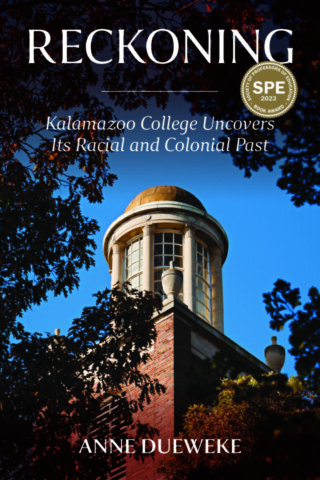
E-books are now distributed via VitalSource
VitalSource offer a more seamless way to access the ebook, and add some great new features including text-to-voice. You own your ebook for life, it is simply hosted on the vendor website, working much like Kindle and Nook. Click here to see more detailed information on this process.
Library E-Books
We are signed up with aggregators who resell networkable e-book editions of our titles to academic libraries. These editions, priced at par with simultaneous hardcover editions of our titles, are not available direct from Stylus.
These aggregators offer a variety of plans to libraries, such as simultaneous access by multiple library patrons, and access to portions of titles at a fraction of list price under what is commonly referred to as a "patron-driven demand" model.
At a time when many individuals and institutions are reexamining their histories to better understand their tangled roots of racism and oppression, Reckoning: Kalamazoo College Uncovers Its Racial and Colonial Past tells the story of how American ideas about colonialism and race shaped Kalamazoo College, a progressive liberal arts institution in the Midwest. Beginning with its founding in 1833 during the era of Indian Removal, the book follows the development of the college through the Civil War, the long period of racial entrenchment that followed Reconstruction, minstrel shows performed on campus in the 1950s during the rise of the Civil Rights movement, Black student activism in the wake of Martin Luther King’s assassination, the quest for multiculturalism in the 1990s, and the recent activism of a changing student body. This close look at the colonial and racial history of one institution reveals academia’s investment in White supremacy and the permutations and contradictions of race and racism in higher education. Though the details are unique to Kalamazoo, other predominantly White colleges and universities would have similar historical trajectories, for in the end our institutional histories reflect the history of the United States. By examining the ways in which a progressive, midwestern college has absorbed, resisted, and perpetuated American systems of colonialism and racism, the book challenges higher education to use this moment to make the deep, structural changes necessary to eliminate disparities in experiences and outcomes among students of color and their White peers. Reckoning is a volume that can be used in a variety of courses that deal with topics such as History of Education, Social Justice in Higher Education, and more.Perfect for courses such as: Pursuing Diversity, Inclusion, Justice, and Equity │ Education and Cultural Studies │ Exploring Whiteness │ Inquiry in Postsecondary Education │ Proseminar in Adult and Higher Education │ Education and Social Struggle in the U.S., WWII – Present │ Equity, Diversity, and Inclusion in Student Affairs │Diversity and Inclusion in Higher Education │ History of American Education │ Diversity in Higher Education
More
E-books are now distributed via VitalSource
VitalSource offer a more seamless way to access the ebook, and add some great new features including text-to-voice. You own your ebook for life, it is simply hosted on the vendor website, working much like Kindle and Nook. Click here to see more detailed information on this process.
Library E-Books
We are signed up with aggregators who resell networkable e-book editions of our titles to academic libraries. These editions, priced at par with simultaneous hardcover editions of our titles, are not available direct from Stylus.
These aggregators offer a variety of plans to libraries, such as simultaneous access by multiple library patrons, and access to portions of titles at a fraction of list price under what is commonly referred to as a "patron-driven demand" model.
Writing Beyond Recognition: Queer Re-Storying for Social Change documents and analyzes the insidious ways heteronormativity produces homophobia and heterosexism, including how this operates and is experienced by those who identify as gay, lesbian, bisexual, transgendered and queer. Using critical arts research practices read through queer and feminist theories and perspectives, the chapters in the book describe how participants who identified as lesbian, gay, bisexual and transgendered gained critical insights by learning to write and read about their experiences in new ways. Their revised queer stories function to enable a movement beyond merely recognizing to appreciating and understanding those differences. Robson offers a powerful argument about how everyone is narrated by and through discourses of gender and sexuality. Therefore, the content of the book is directed at all readers, not only those who identify as gay, lesbian, bisexual, transgendered or queer. The book will be important as a text in any course or area of study that is focused on inclusive education, cultural studies in education, critical arts research methods, gender and sexuality studies, and critical literacy approaches in education.Perfect for courses such as: Qualitative Research Methods | Social Justice | Ethnography | Critical Qualitative Inquiry | Gender, Sexuality, and Women’s Studies | Participatory Action Research | Arts-Based Research | Writing | Autobiography | Curriculum Studies | Teacher Education | Cultural Studies | Reading and Literacy Education | Community Education | Adult Education
More
E-books are now distributed via VitalSource
VitalSource offer a more seamless way to access the ebook, and add some great new features including text-to-voice. You own your ebook for life, it is simply hosted on the vendor website, working much like Kindle and Nook. Click here to see more detailed information on this process.
Library E-Books
We are signed up with aggregators who resell networkable e-book editions of our titles to academic libraries. These editions, priced at par with simultaneous hardcover editions of our titles, are not available direct from Stylus.
These aggregators offer a variety of plans to libraries, such as simultaneous access by multiple library patrons, and access to portions of titles at a fraction of list price under what is commonly referred to as a "patron-driven demand" model.
While there is a wealth of scholarship on Africana Education, no single volume has examined the roles of such important topics as Black Male Identity, Hip Hop Culture, Adult Learners, Leadership at Historically Black Colleges and Universities, Critical Black Pedagogy, among others. This book critically examines African Americans in higher education, with an emphasis on the social and philosophical foundations of Africana culture. This is a critical interdisciplinary study, one which explores the collection, interpretation, and analysis of quantitative and qualitative data in the field of higher education. To date, there are not any single-authored or edited collections that attempt to research the logical and conceptual ideas of the disciplinary matrix of Africana social and philosophical foundations of African Americans in higher education. Therefore, this volume provides readers with a compilation of literary, historical, philosophical, and communicative essays that describe and evaluate the Black experience from an Afrocentric perspective for the first time. It is required reading in a wide range of African American Studies courses.
More
E-books are now distributed via VitalSource
VitalSource offer a more seamless way to access the ebook, and add some great new features including text-to-voice. You own your ebook for life, it is simply hosted on the vendor website, working much like Kindle and Nook. Click here to see more detailed information on this process.
Library E-Books
We are signed up with aggregators who resell networkable e-book editions of our titles to academic libraries. These editions, priced at par with simultaneous hardcover editions of our titles, are not available direct from Stylus.
These aggregators offer a variety of plans to libraries, such as simultaneous access by multiple library patrons, and access to portions of titles at a fraction of list price under what is commonly referred to as a "patron-driven demand" model.
The most effective and long-lasting student strike in U.S. History took place at San Francisco State College in 1968. The first Black Student Union, the first Black Studies Department, the only College of Ethnic Studies, and the admission of thousands of students of color resulted from this four-and-a-half-month strike which shut down 80% of the campus. It has been called the movement which “changed academia forever.” Black students were only a small percentage of those on campus, but they managed to engage thousands of white, Latino, Asian, and indigenous students; SDS and the Third World Liberation Front; the faculty union; and a huge portion of the San Francisco Community. In the end, they were able to win most of their 15 demands. The book is written by two participants in the strike, one a member of the BSU leadership. Oral histories of strike leaders are integrated with discussion of the events and significance of this movement. What were the politics and strategies? Why was the strike successful and what are the insights for today’s mass movements?
More