

Research Skills

E-books are now distributed via VitalSource
VitalSource offer a more seamless way to access the ebook, and add some great new features including text-to-voice. You own your ebook for life, it is simply hosted on the vendor website, working much like Kindle and Nook. Click here to see more detailed information on this process.
Scaffolding the Language of Power: An Apprenticeship in Writing the Dissertation in Practice extends the interactive and supportive approach of the original Scaffolding the Language of Power to the unique genre demands of the Dissertation in Practice (DiP), the capstone of the Project on the Education Doctorate (CPED)-aligned Education Doctorate. Like its predecessor, the book is grounded in three interconnected commitments: doctoral writing as social justice, as genre, and as scaffolding. However, in this edition, original author Kathryn Strom teams up with CPED Executive Director Jill Alexa Perry to reimagine that framework for scholarly practitioners with professional knowledge, practical wisdom, and contextual change agendas that are central to the work of the dissertation. The book’s unique design features stem from our understanding of the DiP as a distinct form of doctoral inquiry oriented toward understanding, improving, and leading change within a specific practice context and in service of particular communities. Accordingly, this volume emphasizes the dual-audience nature of the DiP: although students write to their committee first, DiP work simultaneously needs to serve a practitioner/professional community. To achieve that, for example, scaffolds for organization, headings, and topic sentences are framed not only as tools for writing, but also for producing writing that is accessible to multiple audiences beyond academia. Second, the book maintains a practice-to-improvement arc, reminding readers throughout that their writing is building toward something that they will be implementing, evaluating, and acting on. Third, the book is written to honor the highly contextual nature of the DiP, helping writers achieve the specificity needed to make local work understandable and transferable to readers in other settings. Finally, the volume explicitly affirms a scholar-practitioner identity, positioning professional knowledge in dialogue with scholarly knowledge rather than as something requiring academic legitimization. These design features support readers while guiding them to complete the specific tasks of the dissertation in practice, which includes articulating a problem of practice grounded in organizational urgency and stakeholder impact; constructing a review of scholarly and professional knowledge; and using that literature to create a theory of action and contextual plan of intervention. The book focuses on applied research, with specific guidance for three methodologies most common to CPED-aligned programs, Action Research, Improvement Science, and Program/Practice Evaluation. As in the original volume, each chapter follows a carefully sequenced structure that includes warm-up reflections, explicit instruction in the genre's linguistic moves, annotated modeling, and scaffolded exercises that build systematically toward independent writing. Many examples are drawn from CPED-aligned dissertations, giving readers models that reflect the scholarship of practice central to their own doctoral work. Ultimately, the book provides an affirmative apprenticeship that honors practitioners' existing expertise while making visible the often-hidden rules of academic writing, helping scholarly practitioners build confidence in their writing and facilitating the dissemination of impact in service of local change.This title is part of a series--the first volume, Scaffolding the Language of Power: An Apprenticeship in Doctoral Level Writing and the Companion Workbook are available as a bundle.
More
E-books are now distributed via VitalSource
VitalSource offer a more seamless way to access the ebook, and add some great new features including text-to-voice. You own your ebook for life, it is simply hosted on the vendor website, working much like Kindle and Nook. Click here to see more detailed information on this process.
Recipes of Motherhood: Families, Communities, and the Power of Food Narratives delves into the powerful connections between food, culture, and motherhood within the demanding context of higher education. This thought-provoking volume, edited by Mila Zhu and Sarah Morrison, brings together diverse voices of academic mothers who share how food practices shape, sustain, and empower their lives as they navigate the complex terrain of career, family, and cultural identity. Drawing from personal narratives, case studies, and interdisciplinary research, Recipes of Motherhood illuminates the ways in which food serves as more than sustenance; it becomes a source of resilience, a tool for community-building, and a means of preserving cultural heritage. The academic mothers in this volume reveal how food acts as a metaphor and medium for navigating life’s challenges, allowing them to bridge their personal and professional identities. From adapting family recipes to sharing meals that create community, each story uncovers the unique strategies academic mothers use to sustain themselves and those around them in an environment that can often feel isolating. Grounded in feminist theory, food studies, and cultural memory, this book highlights how food stories are deeply intertwined with questions of gender, tradition, and self-identity. Chapters explore themes such as the symbolic role of food in cultural heritage, food as a form of resistance to institutional expectations, and culinary traditions as a way to build solidarity among women in academia. Through these narratives, Recipes of Motherhood provides a nuanced understanding of how food can act as both a grounding force and a form of empowerment in academic mothers’ lives. With its interdisciplinary approach, the book appeals not only to scholars in cultural studies, food studies, and gender studies but also to students, educators, and anyone interested in the transformative power of food. Readers will find in these pages a rich tapestry of stories that inspire, educate, and challenge traditional ideas about motherhood and academia. Perfect for academic courses and personal reading alike, the volume offers insight into how food serves as a vital element in the journey of academic mothers, helping them navigate the intersections of personal identity, professional resilience, and cultural expression. This volume invites readers to savor the complexities of academic motherhood through the lens of food and to consider how everyday acts of cooking and sharing meals can hold deep significance in our lives and our communities. Whether you are a mother, an educator, or simply someone interested in the stories that food can tell, Recipes of Motherhood is a captivating exploration of how culinary practices shape our relationships, our work, and our sense of self. Join us in celebrating the resilience, creativity, and heritage of academic mothers whose food stories nourish not only their families but also the broader academic community.Perfect for courses such as: Gender Studies / Women’s Studies – Motherhood and Identity; Food Studies – Cultural Narratives in Food Practices; Education Studies – Women in Academia: Challenges and Resilience; Sociology – Family and Society: Gender Roles and Cultural Heritage; Anthropology – Food, Culture, and Identity; Cultural Studies – Folklore, Tradition, and Modern Identities; Parenting and Family Studies – Motherhood and Work-Life Balance; Interdisciplinary Studies – Food as Narrative and Social Practice; Feminist Theory – Intersectionality of Motherhood, Career, and Culture; Psychology of Women – Resilience and Identity in Motherhood
More
E-books are now distributed via VitalSource
VitalSource offer a more seamless way to access the ebook, and add some great new features including text-to-voice. You own your ebook for life, it is simply hosted on the vendor website, working much like Kindle and Nook. Click here to see more detailed information on this process.
Walking the Doctoral Trail: A Fully Relatable (and Occasionally Humorous) Guide for Successful Completion and Beyond is not a how-to manual—and that is exactly the point. For many prospective and current doctoral students, beginning a doctorate is one of the most meaningful, and most underestimated, undertakings of their lives. This book meets doctoral sojourners where they are: curious, hopeful, anxious, determined, sometimes discouraged, and often more alone than expected. Rather than offering a prescriptive formula for “how to finish,” it invites readers into honest reflection, grounded conversation, and realistic preparation and action for the doctoral journey as it is truly lived. Co-authored by three doctoral completers, the book reflects decades of experience walking alongside doctoral students as educators, advisors, and practitioner-scholars who understand the academic and personal demands of doctoral life. Together, the authors offer diverse perspectives without promoting a single theoretical, methodological, or disciplinary stance. Using the metaphor of a hiking trail, Walking the Doctoral Trail supports doctoral students across disciplines and program structures and acknowledges that journeys differ in terrain and pacing, yet share common challenges and turning points. Organized into seven chapters representing stages of the doctoral journey, each topic includes reflection, guidance, warnings, trail tales, and space for readers’ own notes. Humor—through original cartoons—is woven throughout, reminding readers they are not alone and that completing the hike is achievable. Ideal for doctoral orientation courses and mentoring conversations, this book offers companionship, perspective, wisdom, and steady encouragement for those committed to walking the doctoral trail to the end. It will be a meaningful gift for someone considering—or beginning—a doctorate program as well! Walking the Doctoral Trail is an invaluable tool for every doctoral student, regardless of the stage that they find themselves in in their program.Perfect for courses such as: Introduction to Doctoral Education; Doctoral Research Seminar; Dissertation/Thesis Proposal Writing; Doctoral Dissertation Seminar; Foundations of Social Science Research; Foundations of Behavioral Science Research; Foundations of Organizational and Leadership Research; Introduction to Educational Research; Doctoral Mentoring and Advising; Inquiry as Practice
More
BUY THE BUNDLE AND SAVE!BOOK:Scaffolding the Language of Power: An Apprenticeship in Doctoral Level Writingoffers an accessible, practical, hands-on guide to developing the skills needed to successfully write a doctoral dissertation or thesis. This textbook-workbook hybrid can be used both as a program/course text and as a supplement for individual doctoral students in education and related social science and humanities fields.The book is built on three main ideas. First, writing is fundamentally connected to issues of social justice. Doctoral-level writing is part of the “language of power” in academia, which builds on the linguistic patterns of the dominant culture and serves as a gatekeeping mechanism. Second, writing is genre-based. This means that doctoral level writing is a particular way of using language, or a specific genre, with distinct rules and structures that can be taught. And third, writing can be scaffolded. Approaching writing as a pedagogical act that supports readers’ understanding through purposeful scaffolding is not just a way to successfully complete a doctoral dissertation—it is a way to make academic writing more accessible in general.WORKBOOK:The workbook is a supplement to the textbook featuring accompanying activities that are scaffolded and carefully sequenced to help students identify key ideas and generate text that can be used to build out the elements of each major dissertation task (e.g., problem statement, literature review, and so on).This supplemental workbook contains all the activities from the textbook in expanded form so that students can engage more fully with warm-ups, free-writes, analysis of mentor texts and examples, graphic organizers, and guided writing exercises. These activities are also accompanied with additional free-write prompts as well as bonus discussion questions for extended sense-making.Individual chapters include:1. Introduction: A Three-Pronged Approach to Writing at the Doctoral Level.2. The Rules: Writing as a Pedagogical Act.3. The Rest of the Rules of the Language of Power.4. The Problem Statement..5. The Literature Review.6. The Theoretical Framework.7. The Methodology Chapter.8. The Findings Chapter.9. The Discussion and RecommendationsThis book and workbook combo is appropriate for any course on academic writing in EdD or PhD programs. It is also useful for courses that teach how to write a problem statement, literature review, and/or theoretical framework. Additional courses include: Qualitative Research; Qualitative Practicum/pilot study courses; and Dissertation seminar and support courses.
More
This workbook is a supplement to the textbook Scaffolding the Language of Power: An Apprenticeship in Doctoral-Level Writing. One of the features of the textbook is accompanying activities that are scaffolded and carefully sequenced to help students identify key ideas and generate text that can be used to build out the elements of each major dissertation task (e.g., problem statement, literature review, and so on). However, these are mainly offered in abbreviated form due to space limitations.This supplemental workbook contains all the activities from the textbook in expanded form so that students can engage more fully with warm-ups, free-writes, analyses of mentor texts and examples, graphic organizers, and guided writing exercises. These activities are also accompanied with additional free-write prompts as well as bonus discussion questions for extended sense-making.Individual chapters include:1. Introduction: A Three-Pronged Approach to Writing at the Doctoral Level. This chapter provides discussion questions that help students make meaning of the three key ideas of the three main ideas that inform the book: critical perspectives on language, systemic functional linguistics, and sociocultural theory/scaffolding. Additional free-writing prompts are included that help students make personal connections to these ideas from their past and present experiences.2. The Rules: Writing as a Pedagogical Act. This chapter provides discussion questions and personal connection prompts for the first “rule” of the Language of Power framework: doctoral writing is organized and scaffolded. Exercises are then provided for readers to practice five different organization and scaffolding strategies, including headings/chunking, road maps, topic sentences, signal phrases, and transitions/connectors.3. The Rest of the Rules of the Language of Power. This chapter explores the remaining five rules of the “Language of Power” framework. Discussion questions and personal connection prompts are provided for each rule. Exercises are provided that help students practice key skills, including making well-reasoned arguments, identifying and using compelling evidence, writing with specificity and detail, synthesizing information, and developing original voice.4. The Problem Statement. This chapter provides discussion questions regarding the problem statement and its purposes: to explain the problem, convince the reader that the issue is indeed a problem, and describe how the proposed study will begin to address that problem. Exercises are provided that help students articulate the particular problem that will be driving their study, with graphic organizers that break down each part of the problem statement, including the problem summary, the problem background, the rationale of the study, and the purpose statement. Writing activities are also provided that help students take the text generated from these organizers, craft them into problem statement sections, and edit them.5. The Literature Review. This chapter provides discussion questions and personal connection prompts relating to the purposes and processes of the literature review. Activities and tools are provided for article analysis and pre-writing, as well as exercises in which readers analyze exemplars for writing moves. Graphic organizers and writing exercises are provided to help students create an overall schema for their literature review, identify and articulate gaps in the literature, build out levels of claims, and select and summarize exemplars.6. The Theoretical Framework. This chapter provides discussion questions and personal connection prompts regarding the theoretical foundation of the dissertation and its purposes. Graphic organizers and writing exercises are provided to help students craft a rationale for using the framework, define their theories or perspectives, provide a background of the theory or theories, and discuss the key concepts of the framework.7. The Methodology Chapter. This chapter provides activities that help students think through and describe their research design in clear and detailed terms. Exercises and graphic organizers are provided that help readers generate a description of their their methodology, participants and setting, data sources and procedures, analysis methods, trustworthiness, and positionality. Additional exercises are offered to help students map connections between their methodology, theoretical framework, and study purpose to ensure a coherent design.8. The Findings Chapter. This chapter provides warm-ups and discussion questions for building out the “results” chapter of the dissertation. Activities and exercises help readers create an overarching organizational structure for their findings, anchor them with major assertions, support those claims with compelling evidence, and provide analytic explanation. Additional activities are provided to help students reflect on the ways that they purposefully scaffold their readers’ understanding throughout the chapter and the ways that they meet the trustworthiness criteria they created for themselves in the previous chapter.9. The Discussion and Recommendations Chapter. This chapter provides discussion prompts to help students think through the purposes of the discussion and recommendations sections of the dissertation and begin generating text for both. Activities and graphic organizers support students to develop conclusions based on the findings, connect their findings and conclusions to extant literature, generate theoretical readings of their findings and conclusions, and draw out recommendations for addressing the initial problem they identified in the first chapter. Final exercises help students generate main take-aways and contributions, which they will use to develop their dissertation conclusion and abstract.CLICK HERE TO BUY THE BOOK/WORKBOOK BUNDLE AND SAVE!
More
E-books are now distributed via VitalSource
VitalSource offer a more seamless way to access the ebook, and add some great new features including text-to-voice. You own your ebook for life, it is simply hosted on the vendor website, working much like Kindle and Nook. Click here to see more detailed information on this process.
In the challenging world of doctoral studies, where less than 5% of the U.S. population holds a doctorate degree, support and guidance are crucial for success. From ABD to PhD and EdD: Navigating the Final Stretch of Your Doctoral Journey offers a unique and powerful approach to completing your doctoral degree through the often-overlooked strategy of peer mentoring/coaching groups. Drawing from years of experience mentoring doctoral students at prestigious institutions, Dr. Vickie E. Lake presents a comprehensive guide for both faculty and students. This book addresses the critical gap in support that many doctoral candidates face after completing their coursework, a period when guidance is most needed but often least available. From ABD to PhD and EdD is divided into three essential chapters:Doctoral Group Mentoring/Coaching: Learn the fundamentals of establishing and maintaining effective peer support groups. Understand the difference between mentoring and coaching, and how to leverage both for maximum benefit. Strategies for Success: Discover proven techniques for tackling each milestone of your doctoral journey, from comprehensive exams to the dissertation defense. This chapter offers practical advice on pre-writing strategies, time management, and overcoming common obstacles. Resources for Completion: Navigate the often-confusing world of university resources. Learn how to effectively utilize writing centers, librarians, graduate colleges, and professional organizations to support your research and writing process. This book is unique in its dual focus on both faculty and student perspectives. For faculty, it provides a roadmap for establishing and guiding doctoral support groups, addressing the challenges of workload balance and institutional recognition. For students, it offers a lifeline of peer support and practical strategies, especially valuable in an era of declining tenure-track positions and increasing pressure on completion times. From ABD to PhD and EdD doesn't shy away from addressing the current challenges in higher education, including the looming "enrollment cliff" and the decrease in tenure-earning faculty. Instead, it equips readers with the tools to navigate these changing landscapes successfully. Whether you're a doctoral student feeling isolated in your research, a faculty member looking to better support your advisees, or a university administrator aiming to improve completion rates, this book offers invaluable insights. It emphasizes the power of collaboration over competition, showing how peer support can transform the often solitary doctoral journey into a shared path to success. With its blend of personal anecdotes, research-based strategies, and practical advice, From ABD to PhD and EdD is more than just a guide—it's a call to action for a more supportive and effective doctoral education system. By fostering a culture of peer mentoring/coaching, this book aims to not only increase doctoral completion rates but also to cultivate a new generation of scholars equipped to support and guide others. Don't let the challenges of doctoral studies overwhelm you. Discover the power of peer support and expert guidance with From ABD to PhD and EdD – your roadmap to achieving your doctorate and beyond.
More
E-books are now distributed via VitalSource
VitalSource offer a more seamless way to access the ebook, and add some great new features including text-to-voice. You own your ebook for life, it is simply hosted on the vendor website, working much like Kindle and Nook. Click here to see more detailed information on this process.
Fat on Campus: The Voices and Images of Fat College Students and the Impacts of Fatphobia amplifies the voices of 11 fat college students across the United States. Defined as “a pathological fear of fatness often manifested as negative attitudes and stereotypes about fat people” (Robinson et al., 1993, p. 468), fatphobia, like other forms of oppression, impacts our students and our campuses. Unlike other cultural phenomena, fatness is one of the last socially acceptable forms of bias. This text sheds light on fat students, increasing their visibility in higher education, explaining why it is important to recognize and address this critical issue on campuses across America. Using rich stories from students who self-identify as fat, this text honors their experiences and highlights how they have created welcoming spaces for themselves in often unwelcoming collegiate environments. The book shares findings from a national photovoice research study, including narratives and photographs. A methodological technique combining storytelling and photography, photovoice is often used to inspire social change. Aligned with the idea of transforming the future of higher education, this book serves as both a call to action for educators and a love letter to fat students on campus. The book is designed to engage educators and amplify the voices of fat students in an accessible way. While it may be tempting for readers to flip to the section corresponding with their functional area of interest, readers are invited to read the whole book and ask themselves, “How can I extend this research to my own place of work?”Perfect for courses such as: College Environments; Diversity in Higher Education; Understanding College Students; Arts-Based Research and Methodologies; Qualitative Research
More
E-books are now distributed via VitalSource
VitalSource offer a more seamless way to access the ebook, and add some great new features including text-to-voice. You own your ebook for life, it is simply hosted on the vendor website, working much like Kindle and Nook. Click here to see more detailed information on this process.
Library E-Books
We are signed up with aggregators who resell networkable e-book editions of our titles to academic libraries. These editions, priced at par with simultaneous hardcover editions of our titles, are not available direct from Stylus.
These aggregators offer a variety of plans to libraries, such as simultaneous access by multiple library patrons, and access to portions of titles at a fraction of list price under what is commonly referred to as a "patron-driven demand" model.
Scaffolding the Language of Power: An Apprenticeship in Writing at the Doctoral Level offers an accessible, practical, hands-on guide to developing the skills needed to successfully write a doctoral dissertation or thesis. This textbook-workbook hybrid can be used both as a program/course text and as a supplement for individual doctoral students in education and related social science and humanities fields.The book is built on three main ideas. First, writing is fundamentally connected to issues of social justice. Doctoral-level writing is part of the “language of power” in academia, which builds on the linguistic patterns of the dominant culture and serves as a gatekeeping mechanism. Second, writing is genre-based. This means that doctoral level writing is a particular way of using language, or a specific genre, with distinct rules and structures that can be taught. And third, writing can be scaffolded. Approaching writing as a pedagogical act that supports readers’ understanding through purposeful scaffolding is not just a way to successfully complete a doctoral dissertation—it is a way to make academic writing more accessible in general.In its first chapter, Scaffolding the Language of Power provides a general framework for the rules of the doctoral “language of power.” Chapter two offers an in-depth look at organization and scaffolding as key features of academic writing at the doctoral level, with discussions and activities to practice drafting supportive headings, chunking text, creating road maps and topic sentences, and strategically linking sections, paragraphs, and sentences through transitions and connector phrases. Chapter three provides lessons and exercises to develop argumentation, evidence use, synthesis skills, and academic voice. The remaining six chapters address each major task of the dissertation, including the problem statement, literature review, theoretical framework, methodology, findings, and discussion. Each of these chapters explicitly teaches the purposes and elements of its specific dissertation task, guiding students through warm-ups, annotated examples with elaborated explanations of writing moves, and carefully sequenced activities. Ultimately, these pedagogical features support students to build out the pieces of their doctoral dissertations or theses, chapter by chapter.This book is appropriate for any course on academic writing in EdD or PhD programs. It is also useful for courses that teach how to write a problem statement, literature review, and/or theoretical framework. Additional courses include: Qualitative Research; Qualitative Practicum/pilot study courses; and Dissertation seminar and support courses.CLICK HERE TO BUY THE BOOK/WORKBOOK BUNDLE AND SAVE!CPED Webinar Series--Scaffolding the Language of Power: https://vimeo.com/1029693697
More
E-books are now distributed via VitalSource
VitalSource offer a more seamless way to access the ebook, and add some great new features including text-to-voice. You own your ebook for life, it is simply hosted on the vendor website, working much like Kindle and Nook. Click here to see more detailed information on this process.
Library E-Books
We are signed up with aggregators who resell networkable e-book editions of our titles to academic libraries. These editions, priced at par with simultaneous hardcover editions of our titles, are not available direct from Stylus.
These aggregators offer a variety of plans to libraries, such as simultaneous access by multiple library patrons, and access to portions of titles at a fraction of list price under what is commonly referred to as a "patron-driven demand" model.
Researchers working to clearly identify a research topic and theme have difficulty deciding how to focus their work. Using a potential-based learning focus, detailed in this text, readers are challenged to consider their role as researcher, scholar, and leader to guide their reflective work. Transformative Potential Based Research: A Guide to Successfully Finding One's Place in Research provides both the theoretical support and the guiding activities to help readers decide on an area of potential-based research. The result will prove to be transformational. To guide this work, Karen Moroz and Trish Harvey have developed a suitable framework. They invite readers to review the mountain metaphor shared within the framework and to keep the visual present at all times as they progress through the book. It is addressed often and readers will be invited to use, extend, and discuss it numerous times throughout their journey. Transformative Potential Based Research supports instructors and students through all stages of research, including: identifying and embracing relevant and essential topics, crafting research questions that accurately and concisely convey the purpose(s), exploring one’s own connection to the issue, developing and employing individual processes that lead to success, and determining a potential-based frame that motivates the writer and frames the workPerfect for courses such as: Dissertation; Research Methods; Educational Methods; Intro to Research Design; Academic Writing; Capstone Practicum; Educational Research; Understanding Research
More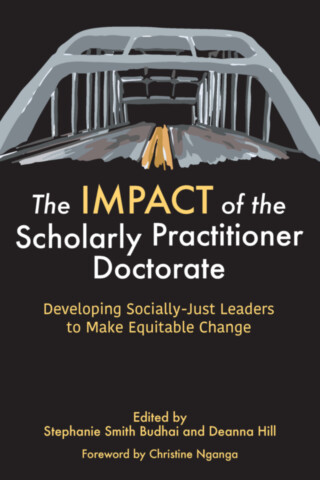
E-books are now distributed via VitalSource
VitalSource offer a more seamless way to access the ebook, and add some great new features including text-to-voice. You own your ebook for life, it is simply hosted on the vendor website, working much like Kindle and Nook. Click here to see more detailed information on this process.
Library E-Books
We are signed up with aggregators who resell networkable e-book editions of our titles to academic libraries. These editions, priced at par with simultaneous hardcover editions of our titles, are not available direct from Stylus.
These aggregators offer a variety of plans to libraries, such as simultaneous access by multiple library patrons, and access to portions of titles at a fraction of list price under what is commonly referred to as a "patron-driven demand" model.
The IMPACT of the Scholarly Practitioner Doctorate: Developing Socially-Just Leaders to Make Equitable Change is a collection of shared counternarratives between EdD alums and their supervising professor mentors, detailing their dissertation in practice (DiP) journeys as scholarly practitioners and the impact of the scholarly practitioner doctorate on their paths from doctoral students to socially-just leaders in a wide range of educational fields. The IMPACT of the Scholarly Practitioner Doctorate posits these relationships as the catalyst in bringing theory learned in course work to scholarly research that is positioned within practice, focused on contributing to equity-centered work. The book serves as an exemplar learning companion to a wide audience and diverse EdD programs looking to modify, develop, or redesign their programs to align with The Carnegie Project on the Education Doctorate (CPED) concepts including signature pedagogy, laboratories of practice, inquiry as practice and mentoring and advising. The IMPACT of the Scholarly Practitioner Doctorate demonstrates how change in education, community, and organizations have been impacted in efficacious ways. EdD students and their supervising professors, faculty, and administrators will be able to use this book’s content as their own catalyst for building socially-just leadership knowledge, skills, and dispositions while preparing their EdD students to exhibit equitable change in the professional practice areas they are in.Perfect for courses such as: Introduction to Educational Research; Social Justice Education Foundations; Leadership for Equity and Social Change; Transformative Leadership; Foundations of Inquiry for Social Justice; Qualitative Inquiry for Social Justice; Critical Perspectives for Equity in Education; Engaging in Critical Social Theories for Designing Research for Equity and Social Justice; Reform and Change for Social Justice; Educational Leadership Development
More