
Search results for Case for Kindness

E-books are now distributed via VitalSource
VitalSource offer a more seamless way to access the ebook, and add some great new features including text-to-voice. You own your ebook for life, it is simply hosted on the vendor website, working much like Kindle and Nook. Click here to see more detailed information on this process.
Teacher education, preparation, and professional development form the bedrock of what occurs in U.S. classrooms. Nonetheless, we are facing a teacher crisis on multiple fronts: teacher employment and retention are diminishing as the profession becomes increasingly deprofessionalized. Simultaneously, the majority of U.S. teachers are white, receiving teacher education from predominantly white institutions (PWIs), and are ill-equipped to teach effectively and responsively in our increasingly diverse classrooms. Since the standards movement took hold in the 1990s and gained momentum after the No Child Left Behind Act of 2002, education for pre- and in-service teachers has resembled a game of whack-a-mole in which postsecondary educators, academic coaches, school leaders, and professional development companies have formulated teacher education to respond to evolving policy mandates, student performance metrics, support for and rejection of DEI initiatives, and a constant flow of scholarship touting “best practices.” As a result, teacher education that pushes boundaries and the status quo must instead emphasize transformation, liberation, equity, and authentic learning for all students. In Moving from Limited to Liberated Teacher Education, we present nuanced approaches to transforming the education of pre- and in-service teachers, thus impacting PreK-12 at large. The enclosed chapters explore social justice instructional coaching, linguistically responsive academic coaching, transforming student and teacher assessment, preparing justice-oriented content-area teachers, teacher candidate identity and social justice mindset development, transformative action research in teacher preparation, critical professional development for justice, and transformative teacher mentorship. Educators are doing great work that pushes the limits of what is considered “best practices,” be it through advocating for authentic project-based curriculum and assessment over standardized assessments, restorative justice over punitive classroom management, culturally and linguistically responsive teaching over standards-based lesson planning, or instructional coaching that liberates teacher creativity and emphasizes mental health over performance and results. Moving from Limited to Liberated Teacher Education celebrates such practices and provides a roadmap for readers to enact them. Innovative and creative methodologies and practices that educators, educational leaders, and teacher preparation faculty can use right away are the primary focus of Moving from Limited to Liberated Teacher Education. As former or current PreK-12 practitioners, teacher educators, and/or education scholars, editors and contributors tailored the book for a broad educational audience. The editors and contributors provide practicing teachers, pre-service and practicing educational leaders (and mentors and coaches), and teacher educators entry points for transforming the PreK-20+ landscape in favor of liberatory, transformative practices in schools across grade levels, content areas, school types, and geographic regions. This book is ideal for teacher and leadership preparation programs and PreK-12 professional development, guiding readers through theoretical and empirical discussions supported by hands-on applications, and concluding with interactive features like case studies, extension activities, and discussion prompts.Perfect for courses such as: Introduction to Cultivating Culturally Responsive Schools; Introduction to Diversity, Equity, and Inclusion in Schools; Introduction to Supportive School Communities; Introduction To School Improvement; Instructional Coaching for Equity and Justice; Introduction to Transformative Professional Development and Professional Learning Communities; Instructional Leadership for Social Justice; Foundations of Social Justice School Leadership; Foundations of Transformative Leadership
More
E-books are now distributed via VitalSource
VitalSource offer a more seamless way to access the ebook, and add some great new features including text-to-voice. You own your ebook for life, it is simply hosted on the vendor website, working much like Kindle and Nook. Click here to see more detailed information on this process.
Attaining a Just Future: Disability Studies Examines Curriculum and Transition for Students Labeled with Intellectual Disability is a critical volume in the area of Disability Studies in Education that investigates current trends in curricular access for 14- to 21-year-old students with intellectual disabilities (ID), offering revelatory insights into how students with ID are understood and taught in U.S. schools. By analyzing the state of curricular access for students with ID through a myriad of perspectives, this book reveals that ideological barriers, educational policies, and neoliberal priorities substantially contribute to ongoing segregation and unequal outcomes for people with ID in U.S. schools and society. It examines how commonly used school curricular practices play a role in sustaining segregation and negative outcomes experienced by people with ID labels. The book centers the experiences of six young adults with ID labels, who, along with their families, were qualitatively interviewed with the goal of understanding the complexities of curriculum access and future planning from a first-person perspective. In addition, professionals who work with young adults with ID labels were also interviewed, including transition program directors, teachers, child study team members, administrators, a curriculum specialist, a transition advocate and a state-level employee. A mixed-methods survey was disseminated, which received 77 responses from teachers, administrators, and transition specialists regarding their usage and understanding of curriculum for their students. Finally, an analysis of publicly available documents from the websites of five commonly used published curricula targeted to students with significant disabilities was conducted. The first chapter in the book offers the readers information about the six students centered in this project and then provides contextual policy frameworks, a review of literature, and an overview of the intersectional theoretical approach that guides the analysis throughout the book. Chapter two considers the role that the Least Restrictive Environment policy plays in concretizing tracking in alignment to curricular opportunities for students with ID. Chapter three digs into the kinds of content curricular publishing companies target to high school and transition-aged students with ID, professional beliefs about curriculum for students with ID, and the learning goals students and families have for themselves. Chapter four unpacks the concept of “independence” within special education and how it becomes a justification for funneling students away from academic learning. Chapter five evaluates both segregative and inclusive practices found in 18-21 transition program planning, curricula and programming. Finally, chapter six highlights best-practices, advocacy tactics, and teaching approaches that can lead to improved outcomes for young adults with ID labels. This book reveals that the curricular choices made on behalf of many young adults with ID are often not aligned with their desires and are often based upon ideologies about intellectual functioning itself, rather than being based on the individual interests, cultural backgrounds, potential, skills, or ambitions of the young person. Ultimately, the book offers educators, administrators, advocates, disabled people, and families tools and ways of thinking that can lead to more just and inclusive futures for transition-aged students with ID labels.Perfect for courses such as: Foundations of Inclusive Education; Foundations in Curriculum Studies; Special Education and Educational Leadership; Inclusion and Educational Leadership; Special Education Law and Policy; Pedagogy in Secondary Inclusive Education; Disability Studies in Education; Foundations and Philosophies in Inclusive Education; Issues, Policies, and Trends in Inclusive Education; Inclusive Methods for Middle and Secondary Schools
More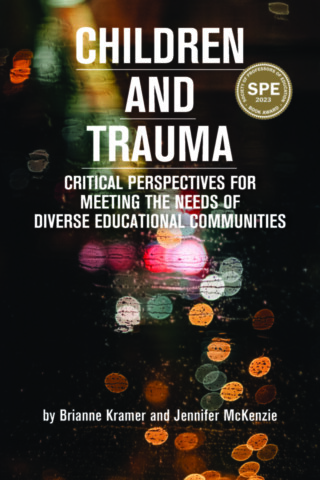
E-books are now distributed via VitalSource
VitalSource offer a more seamless way to access the ebook, and add some great new features including text-to-voice. You own your ebook for life, it is simply hosted on the vendor website, working much like Kindle and Nook. Click here to see more detailed information on this process.
Library E-Books
We are signed up with aggregators who resell networkable e-book editions of our titles to academic libraries. These editions, priced at par with simultaneous hardcover editions of our titles, are not available direct from Stylus.
These aggregators offer a variety of plans to libraries, such as simultaneous access by multiple library patrons, and access to portions of titles at a fraction of list price under what is commonly referred to as a "patron-driven demand" model.
According to the American Psychological Association (APA, 2015), trauma is an emotional response to a terrible event, which can lead to difficulties with emotional regulation, social relationships, and the development of physical symptoms. Traumatic experiences may include physical or sexual abuse, neglect, experiencing or witnessing violence, war, suicides, and disasters. Because of the prevalence of students with traumatic experiences in K-12 schools, development and use of trauma-informed practices (TIP) is currently increasing in educational spaces across the United States as educators and others who work with children become more aware of how socio-emotional development and exposure to trauma places children on a pathway through adulthood. Because of growth in these areas, it is important for educators and others who work with children to have a resource to consult. Children and Trauma: Critical Perspectives for Meeting the Needs of Diverse Educational Communities provides teachers, administrators, and others involved in education with an understanding of trauma-informed practices and explains how they can be used in the classroom. Additionally, school districts could utilize this text to implement professional development, particularly if they are considering creating a districtwide trauma-informed system.Perfect for courses such as: Trauma-Informed Educational Practice | Psychology | Educational Psychology | Foundations of Education | Pedagogy | Methods of Emotional or Behavioral Disorders | Teaching Methods | Diversity in Education | Social Work | Human Development
More
E-books are now distributed via VitalSource
VitalSource offer a more seamless way to access the ebook, and add some great new features including text-to-voice. You own your ebook for life, it is simply hosted on the vendor website, working much like Kindle and Nook. Click here to see more detailed information on this process.
Library E-Books
We are signed up with aggregators who resell networkable e-book editions of our titles to academic libraries. These editions, priced at par with simultaneous hardcover editions of our titles, are not available direct from Stylus.
These aggregators offer a variety of plans to libraries, such as simultaneous access by multiple library patrons, and access to portions of titles at a fraction of list price under what is commonly referred to as a "patron-driven demand" model.
This is a collection of interdisciplinary and logically interconnected papers from nationally and internationally acclaimed researchers in philosophy, psychology, history of education, teacher training, educational leaders and practitioners, child advocates, and educators who have been motivated by the philosophy and pedagogy of Dr. Janusz Korczak (1878-1942), a world famous moral exemplar and champion of children’s rights. The book provides answers to timely questions of how to respect children’s rights in K-12 schools, community centers, summer camps, and colleges; how to create an atmosphere of trust and safety, and provide social-emotional learning in the classroom; how to become a genuine child advocate; and how to support growing child agency. It also tells the story of Korczak, his life, and the lives of the children in his charge. Nurture, Care, Respect, and Trust details how Korczak’s legacy encourages and stimulates new projects and spreads around the world. The volume serves as a rich resource of practical materials for teachers and university instructors, introducing a number of innovative lesson plans, examples of students’ works, and school projects inspired by Korczak’s pedagogy.
More