

Search results for john Dewey's imaginative

E-books are now distributed via VitalSource
VitalSource offer a more seamless way to access the ebook, and add some great new features including text-to-voice. You own your ebook for life, it is simply hosted on the vendor website, working much like Kindle and Nook. Click here to see more detailed information on this process.
More than a century after William James published his provocative critique The PhD Octopus in 1903, his warnings about the corrupting entanglements between institutions and graduate students remain strikingly relevant. Doctoral Studies as Educational Industrial Complex revisits James’ concerns through a contemporary lens, offering a critical examination of doctoral education in the field of education in what feels like perennial crisis. Throughout the volume, contributors grapple with the tensions James identified: the obsession with credentials over genuine intellectual work, the “tyrannical machine” of institutional demands, and the misalignment between doctoral preparation and actual career paths. These tensions are particularly acute in practitioner-oriented EdD programs designed to produce scholar-practitioners who often remain in their local communities rather than entering the academy. Yet research-oriented PhD programs face their own crisis, as they continue to prepare scholars for a tenure-track job market that has dramatically contracted. With only 32% of faculty holding tenured or tenure-track positions in 2023—down from 53% in 1987—the traditional pathway to academic careers has fundamentally eroded. The book speaks to multiple audiences: faculty who supervise doctoral students and seek to understand the challenges they face; doctoral students navigating alternative program formats and uncertain career prospects; administrators responsible for program design and accreditation; and scholars interested in the future of higher education and professional preparation. By centering faculty expertise and critical analysis rather than external market demands, this volume offers a necessary counter-narrative to prevailing trends in doctoral education reform. Ultimately, this book argues for a reconsideration of what doctoral education should accomplish and for whom, grounding these questions in both historical perspective and contemporary realities.
More
E-books are now distributed via VitalSource
VitalSource offer a more seamless way to access the ebook, and add some great new features including text-to-voice. You own your ebook for life, it is simply hosted on the vendor website, working much like Kindle and Nook. Click here to see more detailed information on this process.
Library E-Books
We are signed up with aggregators who resell networkable e-book editions of our titles to academic libraries. These editions, priced at par with simultaneous hardcover editions of our titles, are not available direct from Stylus.
These aggregators offer a variety of plans to libraries, such as simultaneous access by multiple library patrons, and access to portions of titles at a fraction of list price under what is commonly referred to as a "patron-driven demand" model.
As a genre, science fiction is uniquely suited for highlighting and modeling the basic tenets of critical pedagogy, that branch of educational philosophy and theory devoted equally to 1) exposing the hidden power structures embedded in educational practice and 2) articulating equitable and sustainable alternatives. The science fiction novum – that is, the technological or scientific newness found within the text – serves as a catalyst not only within the textual universe but also, potentially, within the universe of the reader. New questions arise. Previously hidden beliefs come to light. Tacit assumptions are exposed. The unfamiliar nova of science-fiction can lead to new interrogations of our own all-too familiar surroundings, causing us to see our previously unquestioned worlds in a new way. These new understandings are at the heart of critical pedagogy. The learning spaces within science fiction texts can expose the fault lines within the educational structures of the real world. Questions about what it means to be human, about the proper limits of technological power, or about the relationships and obligations of one species to another have profound implications for 21st century educators and learners, particularly those who are interested in creating just and equitable learning spaces. Learning Space: Exploring Critical Pedagogy through Science Fiction draws on popular science fiction stories to provide current and future educators with the language, concepts, vocabulary, and practices to cast a critical lens upon their own learning spaces and their own pedagogical practices. For example, a critical examination of the way that Yoda trains Luke Skywalker in The Empire Strikes Back reveals a great deal about the insidious nature of deficit thinking, assuming that students learn best when they “empty their minds” and remain “passive.” The assumed hierarchical power structure between teacher and student, and the assumed relationship between learners and the knowledge with which they are supposed to be filled – all of these are called into question when viewed through a critical lens. The more we recognize the injustice in Yoda’s pedagogy, the more we might begin to see it in our own. Similarly, Isaac Asimov’s classic Foundation trilogy imagines a world in which mathematical modeling and statistical computation are used not only to predict what people might do but instead to determine what they should do. This kind of algorithmic determinism is unfortunately common in contemporary education, and yet far too few educators and learners recognize just how much of their own agency has been given over to the machines. By highlighting the algorithmic inequities in the world of Asimov’s text, we begin to recognize similar inequities at play in our own world. Ultimately, this book uses science fiction to highlight educational inequities in such wide-ranging topics as standard English, literary canons, machine learning, notions of academic dishonesty, epistemicide, inequitable school discipline, and more. More importantly, however, it provides a framework for moving forward, giving current and future educators the critical knowledge and skills both to recognize pedagogical injustice and to create viable, just, and sustainable alternatives.
More
E-books are now distributed via VitalSource
VitalSource offer a more seamless way to access the ebook, and add some great new features including text-to-voice. You own your ebook for life, it is simply hosted on the vendor website, working much like Kindle and Nook. Click here to see more detailed information on this process.
Teaching that aims to be inclusive of marginalized communities is under attack in the United States, evidenced, for example, in widespread school book banning efforts, prohibition of Advanced Placement African American history, and a general tenor of fear among educators across the K-12 and higher education spectrum. This fear originates from a variety of pedagogical attempts at teaching content or utilizing practices that do anything other than valorize the dominant narrative and status quo in the United States. Classroom teachers and college instructors ask what can be done to uphold the practices they know to support students from all backgrounds to experience educational success and inclusion that won’t capture the ire of parent groups, school boards, or educational commissions bent on squelching such critical efforts. Against the Current: Inclusive Multicultural Education Practices for Contentious Times addresses these issues by providing examples from K-12 and higher education classrooms where educators’ practices offer a path forward. Each chapter in the book presents an example of ways educators practice multicultural inclusivity and offers insights on how to do so even in hostile environments. Chapters in Part 1 of the book offer re-framings of flashpoint issues, including such topics as anti-Muslim racism and fugitive pedagogical practices. While the chapters in Part 1 offer a grounding in ways educators might rethink the work at hand, the chapters in Part 2 offer innovative tools or practices that educators across grade levels--including higher education--can use, including frameworks for cultivating deep listening when confronting emotionally charged topics in the classroom and curriculum materials for family and community engagement. Finally, Part 3 of the book offers case studies of this work in action, including examples at the individual teacher or instructor level, the classroom level, and the schoolwide level. The volume includes a guide for readers with discussion and reflection questions, extension activities, and additional resources for each chapter. Against the Current is critical reading in a variety of settings. It can be used in professional development programs to better equip teachers. College and university libraries will want it in their collections. As a teaching textbook, its content will apply to a large number of classes in multicultural education, inclusive teaching and learning, and other courses, thus equipping preservice teachers with valuable tools as they prepare to enter schools.Perfect for courses such as: Introduction to Education; Educational Equity; Foundations of Education; Multicultural Education; Social Justice and Education; Teacher Education; Teaching Methods; Educational Practice; Educational Studies
More
E-books are now distributed via VitalSource
VitalSource offer a more seamless way to access the ebook, and add some great new features including text-to-voice. You own your ebook for life, it is simply hosted on the vendor website, working much like Kindle and Nook. Click here to see more detailed information on this process.
In this moment of heightened political repression, racial retrenchment, and global anti-Blackness, the urgency of confronting anti-Blackness within, through, and across communities of color has never been greater. As book bans spread, Critical Race Theory (CRT) is vilified, and diversity, equity, and inclusion (DEI) initiatives are dismantled, we must reckon with the reality that anti-Blackness is not an aberration, but an organizing logic of racial formation and global white supremacy. This edited volume brings together scholars, educators, and community organizers to interrogate the ways anti-Blackness is perpetuated within / through / across Latinx and Asian American communities—and the complex, often contradictory practices of complicity, resistance, and solidarity that emerge in response. Drawing on interdisciplinary perspectives from disciplines / professions like education, ethnic studies, sociology, psychology, cultural studies, social work, and gender studies, Asian and Latinx Anti-Blackness in Schools and Communities: Complicated Stories of Complicity and Resistance refuses simplistic narratives that position non-Black communities of color solely as victims or solely as perpetrators. Instead, contributors adopt a both/and framework, naming the ways Latinx and Asian communities have benefited from proximity to whiteness (as it relates to anti-Blackness) while also highlighting the histories, ruptures, and refusals that open / reveal possibilities for coalition and collective liberation. Organized into three sections—Anti-Blackness With/In, Through, and Among Latinx & Asian Communities, Geographies and Spaces; Anti-Blackness in Latinx & Asian Teaching, Pedagogy, and Curriculum; and Anti-Blackness and the Precarity of Racial Categories—the chapters combine empirical research, conceptual essays, narrative, and autoethnographies. Together, they explore topics such as racial formation, racial hierarchy, racial triangulation, the intersections of Blackness, the policing of language and accent, and the lived experiences of multiracial individuals navigating contested racial boundaries. The book situates these discussions within the shifting demographic and political landscape of the United States, where the 2020 Census revealed a decline in the white population alongside an increase in racial diversity, and where Kamala Harris’s historic tenure as the first Black and Asian American Vice President (and presidential candidate) illuminated both the promise of representation and the persistence of racial hierarchy. These contexts underscore a central question animating the volume: How do Latinx and Asian communities—within schools, neighborhoods, and transnational networks—navigate the tensions between inclusion and erasure of Blackness in the broader racial imaginary? Ultimately, this volume is both critique and invitation. It challenges readers to: confront how anti-Blackness is reproduced in everyday practices and institutional structures; to reckon with the privileges and harms tied to racialized positioning; and to imagine relational, historical, and spatial practices of accountability within / through / and among Latinx and Asian communities. By centering the voices of scholars and storytellers committed to racial justice, Asian and Latinx Anti-Blackness in Schools and Communities offers not only a sharper understanding of racial dynamics beyond the Black–white binary, the impact of the binary, but also concrete pathways toward dismantling anti-Blackness and building enduring, justice-oriented solidarity.
More
E-books are now distributed via VitalSource
VitalSource offer a more seamless way to access the ebook, and add some great new features including text-to-voice. You own your ebook for life, it is simply hosted on the vendor website, working much like Kindle and Nook. Click here to see more detailed information on this process.
Cultivating Belonging by Design: The Q10 Way of Being; Leading with Intention, Teaching with Purpose, and Transforming Learning is an invitation to build schools where every learner truly belongs. Rooted in the Quantum Ten (Q10) Framework developed by Talisa Sullivan PhD, this book offers a powerful practical roadmap for educators and leaders ready to move beyond slogans and checklists into deep sustainable change. Written as both guide and companion, Cultivating Belonging by Design: The Q10 Way of Being walks readers through each Q10 element with clarity, courage, and heart. Cultivating Belonging by Design: The Q10 Way of Being aspires to revolutionize educational best practices by offering a comprehensive guide to the intentional integration of the ten essential educational best practices—also known as the Q10 elements. These elements include Maslow's Hierarchy of Needs, Growth Mindset, Inclusive Practices, Culturally Responsive Practices, Restorative Practices, Universal Design for Learning, Response to Intervention, Positive Behavioral Interventions & Supports, Social-Emotional Learning, and Trauma-Informed Practices. This book aims to provide access, opportunity, engagement, and success to all learners. Every chapter opens with an inspiring quote and a personal story, drawing readers into the real work of cultivating belonging. These narratives remind us that belonging is experienced in the daily lives of students, families, and educators. Chapters provide research informed background on a Q10 component, presented as parts of a coherent equity driven ecosystem. Readers see how these elements connect to create environments where every learner is seen challenged and supported. A Q10 Inquiry in every chapter invites readers to examine beliefs, policies, and habits through the lens of equity and belonging, helping individuals and teams surface assumptions, confront inequities, and imagine new possibilities. A Q10 Action offers concrete steps, real life examples, and strategies that can be adapted in schools and systems with space for reflection and planning. Designed for use by teachers, principals, and system level leaders, Cultivating Belonging by Design: The Q10 Way of Being can anchor professional learning book studies and leadership retreats. The book provides common language, frameworks, and stories that help communities transition from inspiration to implementation. More than a collection of best practices, Cultivating Belonging by Design: The Q10 Way of Being is a call to reimagine what schools can be. For anyone who believes education can be a vehicle for healing liberation and generational transformation, this book offers both a vision and a roadmap inviting readers to build communities of true belonging: one inquiry, one action, and one courageous step at a time.Perfect for courses such as: Introduction to Teaching; Foundations of Education; Diversity, Equity, Inclusion, and Belonging (DEIB) in Education; Human Development and Learning in the Classroom; Educational Leadership and Change; Equity-Centered School Leadership; Organizational Culture and School Improvement; Alternative Education and Student Reengagement; Leading Culturally Responsive Schools; School-Community Relations and Family Engagement; Creating Inclusive Campus Climates and Belonging
More
E-books are now distributed via VitalSource
VitalSource offer a more seamless way to access the ebook, and add some great new features including text-to-voice. You own your ebook for life, it is simply hosted on the vendor website, working much like Kindle and Nook. Click here to see more detailed information on this process.
Transformative Inquiry: Integrating Action Research and Systems Thinking explores how two dynamic methodologies—action research and systems thinking—can be combined to address complex challenges in education, healthcare, organizational leadership, and public policy. Grounded in participatory, iterative processes, both approaches emphasize collaboration, reflection, and systemic improvement. Together, they provide a flexible yet rigorous framework for change.This edited volume brings together scholars and practitioners to examine the historical foundations, theoretical intersections, and applied integration of action research and systems thinking. Chapters include conceptual models and case studies drawn from K–12 schools, higher education, health professions education, digital learning environments, and leadership development. Contributors demonstrate how these frameworks support root-cause analysis, stakeholder engagement, and adaptive interventions that move beyond surface-level solutions.Each chapter illustrates how reflective cycles of inquiry, when combined with systems thinking tools such as feedback loops and mental models, can uncover persistent barriers and guide meaningful, context-sensitive change. Topics include digital equity, culturally responsive pedagogy, instructional redesign, performance improvement, and professional learning.Transformative Inquiry will be of interest to scholars, educators, researchers, and practitioners seeking tools for leading improvement in complex systems. It supports graduate and doctoral-level courses in research methods, systems change, and leadership, as well as professional learning in schools, universities, and organizations.
More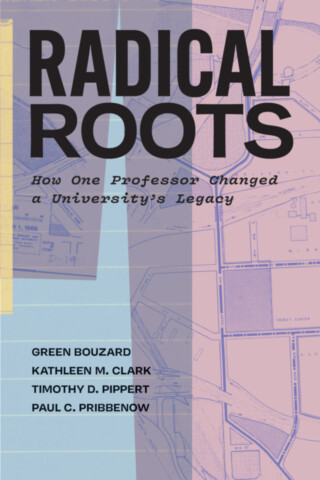
E-books are now distributed via VitalSource
VitalSource offer a more seamless way to access the ebook, and add some great new features including text-to-voice. You own your ebook for life, it is simply hosted on the vendor website, working much like Kindle and Nook. Click here to see more detailed information on this process.
Library E-Books
We are signed up with aggregators who resell networkable e-book editions of our titles to academic libraries. These editions, priced at par with simultaneous hardcover editions of our titles, are not available direct from Stylus.
These aggregators offer a variety of plans to libraries, such as simultaneous access by multiple library patrons, and access to portions of titles at a fraction of list price under what is commonly referred to as a "patron-driven demand" model.
Radical Roots: How One Professor Changed a University's Legacy tells the story of Joel Torstenson, a sociology professor at Augsburg University in Minneapolis, Minnesota. In the 1960s, Torstenson challenged his university to embrace its urban setting and to design its curricular, co-curricular, and community engagement programs to advance its mission of “Education for service.” The compelling story of Torstenson’s legacy at Augsburg over the past 60 years offers lessons for colleges and universities across the country committed to democratic engagement in their work at the intersections of mission and place. Augsburg University's saga as an urban settlement has not always been embraced by the university. Though location and place are central to the university’s identity, it is not sufficient to explain the integrative power of the university’s character. For that purpose, it is critical that place be understood through the lens of Augsburg’s academic mission and work. This integrated view of place and mission required a new way of imagining the university’s core work of educating students. The purpose of this book is two-fold. The first is to document and celebrate the legacy of Professor Joel Torstenson, and to understand the impact of this legacy’s inception, evolution, and current manifestations and impact at Augsburg and in the wider world. Professor Torstenson cared deeply about the public purpose of higher education, and Torstenson’s model for what this public purpose might look like prompted massive transformation in Augsburg University’s trajectory. The resulting experiments in education and commitment to the city flowered into a legacy that has spurred Augsburg University to create an innovative model for 21st Century education. This model has impacted everything from student learning and community life, to teaching and curricular structure, to the public mission of the institution and its presence in the city and world. Torstenson’s creative—and even radical—work in the 1960s and '70s has been carried through the decades by continued innovation in teaching and learning based in experiential education, and a commitment to place and community building. This legacy has simultaneously advanced the public purpose and mission of the University. Secondly, this book shares what are some of the lessons learned from fifty years of innovation following Torstenson’s vision, with the hope that these lessons might serve the broader community of colleges, universities, faculty, staff, and students engaged in similar pursuits. Augsburg’s innovative experiential education, place-based community engagement, and public and anchor institution work has been and will continue to be a model for other institutions. We believe that Torstenson’s legacy, and the lessons learned through the years of its evolution, has lessons to teach and models to follow for our sibling institutions across the United States. The volume includes discussion prompts and questions after each section. There is also a companion website (www.augsburg.edu/radicalroots) that includes additional resources related to the volume's themes.Perfect for course such as: Higher Education and Democracy in the United States; Principles of Experiential Education; Place Matters: Higher Education and Community Engagement; Universities as Anchor Institutions in their Communities; Introduction to Citizen Professionalism: Leading in the 21st Century; Public Work, Social Responsibility, and Vocation in a World of Extremes; Accompaniment: Developing Democratic Skills and Fostering Healing with Communities; Curricular Innovations in Higher Education; and Principles of Higher Education Pedagogy
More
E-books are now distributed via VitalSource
VitalSource offer a more seamless way to access the ebook, and add some great new features including text-to-voice. You own your ebook for life, it is simply hosted on the vendor website, working much like Kindle and Nook. Click here to see more detailed information on this process.
Critical Praxis Leadership: Grassroots Narratives from Justice-Driven Leaders for a Democratic Future is a powerful new book written for a broad audience of educators devoted to achieving equity in public education.In the wake of the past 50 years of surging neoliberal economics, policy and ideology that have given rise to emboldened far-Right movements, the weaknesses of democracy as a political project for promoting equity and justice are revealing themselves in multiple spheres of social life. In the U.S., protectionist and isolationist policies enmeshed with xenophobia, racism, misogyny, homo- and transphobia, and ablism lay bare the historical architecture of inequitable and unjust social structures that provide fuel for the engines of economic and social disparity. Education, long saddled with the Sisyphean task of leveling the playing field and affording economic advancement for economically and socially marginalized populations, has been effectively reeled into an administrative agenda aimed toward maintaining social reproduction which continues to funnel Black, Brown, female, disabled and queer bodies into subordinate social roles and carceral institutions or vanquish them entirely from social life.Within this shameless historical moment of cruelty, it is crucial to highlight the stories and experiences of leaders dedicated to cultivating equitable and just environments amid this global crisis. Justice-driven leaders who engage in critical praxis leadership emphasize grassroots efforts for genuine, actionable change rather than performative gestures or media attention. Their work unfolds in diverse contexts, motivated by different factors and involving varied groups of people. Critical Praxis Leadership features theoretically rich, practically grounded narratives from PK-12 and higher education leaders who strive to become justice-driven in their day-to-day work. As PK-12 school administrators, higher education administrators, union leaders, and community leaders reflect on the ways their praxis is informed by Black feminist, anti/decolonial, posthuman, anti-oppressive and other critical frameworks, readers will be immersed in real-life experiences by a variety of voices. They will get an inside look into how justice-driven leaders strive to live their philosophy in their practice and navigate complex situations while striving toward equitable change in institutions of learning.Practical for professors and students alike, readers will experience real world narratives, praxis-oriented questions and activities, and evocative artwork. While walking alongside current leaders in the field, readers are invited to unpack their own philosophies of justice-driven leadership and engage with thinking/doing justice-driven leadership differently to refine their visions of leadership through a lens of complexity and futurity. The activities and narratives in this book remind readers of the ever-presence of the past in who we are and who we wish to be as educational leaders working within historically rooted institutions designed to maintain systems of power and oppression. They remind readers of the deep colonial and racist roots that still shape the lives of learners and leaders alike, and they propose a movement toward a just future. Readers are encouraged to revisit the past, reclaim their knowledge of how social and institutional systems came to be what they are, and choose to do leadership differently as best they can, always working toward justice that lay on the horizon.Perfect for courses such as: Foundations of Educational Leadership, School Leaders as Change Agents, Leadership in Higher Education, Critical Perspective on Educational Leadership, Leadership for Equity and Inclusion, and Collaborative Approaches to Educational Leadership
More
E-books are now distributed via VitalSource
VitalSource offer a more seamless way to access the ebook, and add some great new features including text-to-voice. You own your ebook for life, it is simply hosted on the vendor website, working much like Kindle and Nook. Click here to see more detailed information on this process.
Transforming Education for Social Justice: Empirical Insights from Leadership, Equity, and Research in Action is a powerful anthology that brings together a collection of articles originally published in the Journal of Leadership, Equity, and Research (JLER). These chapters reflect a shared commitment to confronting systemic inequities and transforming PreK–12 and higher education through critical scholarship, equity-minded leadership, and community collaboration. As part of the Myers Education Press Ethnic Studies Revival Series, this volume is organized around three central themes:the role of educational leadership and transformative research for education reform and student empowerment,countering inequitable disciplinary practices through alternative and transformative approaches,the importance of student voice and activism for promoting equity and social justice.Together, these themes offer a framework for reimagining schools as spaces of resistance, healing, and liberation. In an era marked by heightened attacks on ethnic studies and diversity initiatives, Transforming Education for Social Justice offers timely empirical insights that support inclusive, justice-centered educational practices. The chapters draw on culturally responsive pedagogy, restorative justice, critical race theory, and decolonial frameworks to provide both a critique of existing structures and a vision for what is possible. This volume is an essential resource for scholars, educators, and policymakers committed to equity and social transformation. It is especially well-suited for use in Ethnic Studies, Educational Leadership, Teacher Preparation, and Social Justice Education courses.
More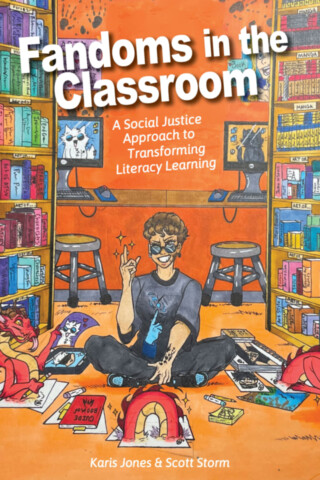
E-books are now distributed via VitalSource
VitalSource offer a more seamless way to access the ebook, and add some great new features including text-to-voice. You own your ebook for life, it is simply hosted on the vendor website, working much like Kindle and Nook. Click here to see more detailed information on this process.
Library E-Books
We are signed up with aggregators who resell networkable e-book editions of our titles to academic libraries. These editions, priced at par with simultaneous hardcover editions of our titles, are not available direct from Stylus.
These aggregators offer a variety of plans to libraries, such as simultaneous access by multiple library patrons, and access to portions of titles at a fraction of list price under what is commonly referred to as a "patron-driven demand" model.
What is a fandom, and why do fandoms matter for school? Fandoms are passionate communities dedicated to appreciating and engaging with texts of interest (movies, TV shows, books, bands, brands, sports teams, etc.) via personally and communally meaningful literacy practices. It is increasingly obvious that scripted literacy curricula and standardized tests fall short of meeting meaningful literacy goals and create culturally destructive learning spaces. Fandoms in the Classroom provides an alternative for educators looking to center passion in their classrooms, individualizing their literacy curricula by building from youth’s interests. The book describes how educators in a wide range of secondary learning contexts can build curricula around students’ already-present fandom interests to support literacy growth. This text supports educators in a range of learning contexts with step-by-step processes for building learning spaces that support navigation of fandom and disciplinary literacies, with a particular focus on common obstacles and roadblocks that teachers have shared with us. It addresses how classrooms doing critical fandom work can address social justice issues across both fandom and disciplinary communities. This book covers relevant topics such as:Why Fandoms? We introduce readers to the concept of fandoms and how engaging students’ experiences in fandoms is not an extra or add-on but instead crucial to flipping the script on literacy learning.Bring Your Fandom to Class: Critically Putting Communities in Conversation. The book discusses how to shift ideas of literacy learning contexts from teacher-centric instruction to a community learning model.Fostering Engagement & Choosing Texts Together: Teachers are often nervous about teaching what they don’t know. The text provides strategies for making learning ecologies and having kids fill it with their own interests, describing specific step-by-step discussion routines that can support youth’s engagement with critical tools on texts of their choice.Building Culturally Responsive Assessments Engaging Youth-Centric Audiences: the book describes how educators can design more expansive literacy assessments with examples of culturally responsive objectives and tasks. The authors include a range of fandom genres and audiences that they have seen in their own work.Transforming Your Current Curriculum in Conversation with Fandoms: Supporting educators interested in expanding literature units in conversation with fandom texts, the text describes how to design units that put various discourse communities in conversation without deadening or co-opting youth interests.Interdisciplinary Applications: there is a discussion about specific examples of how educators the authors have supported in various contexts have applied this kind of work. It includes a focus on cross-disciplinary literacy, with cases highlighting applications for math, science, social studies and music disciplinary learning.Fandoms in the Classroom is a step-by-step guide for literacy instructors struggling to engage their students in meaningful learning. It is essential reading.Perfect for courses such as: Foundations of Literacy; Disciplinary Literacy; Literacy Across the Curriculum; Children's or Young Adult Literature; Writing in the Classroom; Digital Media Literacy; New and Digital Literacies; Teaching Diverse Learners; Theory to Practice; Language, Literacy and Culture; Literacy Policy and Practice; Foundations of Literacy Education; Popular Culture in Literacy Classrooms; History of Literacy Practices; Reading and Language Arts; Critical Theory
More