
Search results for making sense of rac

E-books are now distributed via VitalSource
VitalSource offer a more seamless way to access the ebook, and add some great new features including text-to-voice. You own your ebook for life, it is simply hosted on the vendor website, working much like Kindle and Nook. Click here to see more detailed information on this process.
Multi-Tiered Systems of Support (MTSS) is an important addition to a long list of initiatives designed to ensure educational equity for all students. Veteran educators will recognize many MTSS strategies as practices they already use, while others may feel uncertain or overwhelmed by yet another framework. This book bridges that gap—grounding MTSS in authentic classroom experience and practical wisdom.Through vivid, real-life stories, the authors illuminate both the complexity and the humanity of school-based work. Drawing on decades of experience—as a classroom teacher and as a school counselor/psychologist—their narratives span from 1982 to the present day, including insights from K–12 settings and university teaching. Each chapter presents a compelling case study highlighting student and classroom engagement across grade levels. These stories invite reflection and dialogue around research-based best practices and educational theory, with each chapter concluding in a transparent explanation of the authors’ professional thinking.Readers will trace the evolution of educational practice over time—from an era when Culturally Responsive Pedagogy was rarely discussed to today’s emphasis on inclusive, socially-constructed learning environments. The book chronicles the profession’s broader shift from behaviorism to social constructivism and demonstrates how that journey informs effective MTSS implementation.The case studies illustrate how culturally responsive practices, data-informed decision making, and authentic relationships with students create the conditions where academic growth, positive behavior, and social-emotional wellness intersect. Universal (Tier I), Targeted (Tier II), and Intensive (Tier III) supports—across academics, behavior, and social-emotional learning—are woven seamlessly throughout.Ideal as an introduction to both the theory and practical application of MTSS, this book offers clarity, compassion, and hard-earned insight. It is designed to spark meaningful discussion in teacher preparation programs, professional learning communities, school buildings, and district leadership teams.Perfect for courses such as: Positive Behavior Supports; Role and Function of a School Psychologist: Positive Behavior Supports (Practicum); Crisis, Trauma Response, and Interventions; Academic Assessment & Intervention; Community, Family, and School Collaboration; Curriculum and Inquiry in Public Schools; Fundamentals of Teaching; Access to Learning in a Pluralistic Society; Teaching Emergent Bilingual Students and Students with Disabilities
More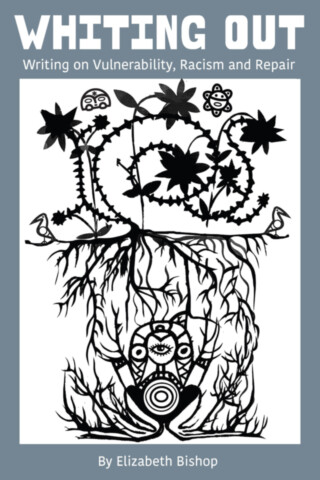
E-books are now distributed via VitalSource
VitalSource offer a more seamless way to access the ebook, and add some great new features including text-to-voice. You own your ebook for life, it is simply hosted on the vendor website, working much like Kindle and Nook. Click here to see more detailed information on this process.
Library E-Books
We are signed up with aggregators who resell networkable e-book editions of our titles to academic libraries. These editions, priced at par with simultaneous hardcover editions of our titles, are not available direct from Stylus.
These aggregators offer a variety of plans to libraries, such as simultaneous access by multiple library patrons, and access to portions of titles at a fraction of list price under what is commonly referred to as a "patron-driven demand" model.
Whiting Out: Writing on Vulnerability, Racism and Repair is an experimental text that seeks to collapse the space that white writers create between ourselves and our ideas when writing about race, identity, history, responsibility, positionality, power and the present. The book is written as a first-person meditation grounded in a poetics of vulnerability, undertaken as an author study in two major parts – fragmented first through the work of James Baldwin and then refracted through the writing of Gloria E. Anzaldúa. Whiting Out is for both aspiring and experienced teachers (especially white folks), as well as anyone open to writing new narratives and imagining new possible worlds. Perfect for courses such as: Introduction to Education; Introduction to Teaching and Learning; Introduction to Curriculum Studies; Education and Society; Education and Cultural Studies; Whiteness in Education; Critical Race Theory in Education; Race, Racism and Anti-Racism; Examining Race, Power and Privilege; Teaching and Learning in Diverse Contexts
More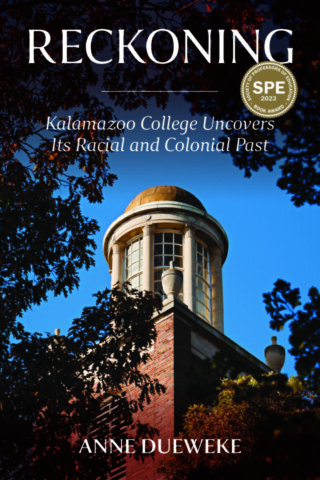
E-books are now distributed via VitalSource
VitalSource offer a more seamless way to access the ebook, and add some great new features including text-to-voice. You own your ebook for life, it is simply hosted on the vendor website, working much like Kindle and Nook. Click here to see more detailed information on this process.
Library E-Books
We are signed up with aggregators who resell networkable e-book editions of our titles to academic libraries. These editions, priced at par with simultaneous hardcover editions of our titles, are not available direct from Stylus.
These aggregators offer a variety of plans to libraries, such as simultaneous access by multiple library patrons, and access to portions of titles at a fraction of list price under what is commonly referred to as a "patron-driven demand" model.
At a time when many individuals and institutions are reexamining their histories to better understand their tangled roots of racism and oppression, Reckoning: Kalamazoo College Uncovers Its Racial and Colonial Past tells the story of how American ideas about colonialism and race shaped Kalamazoo College, a progressive liberal arts institution in the Midwest. Beginning with its founding in 1833 during the era of Indian Removal, the book follows the development of the college through the Civil War, the long period of racial entrenchment that followed Reconstruction, minstrel shows performed on campus in the 1950s during the rise of the Civil Rights movement, Black student activism in the wake of Martin Luther King’s assassination, the quest for multiculturalism in the 1990s, and the recent activism of a changing student body. This close look at the colonial and racial history of one institution reveals academia’s investment in White supremacy and the permutations and contradictions of race and racism in higher education. Though the details are unique to Kalamazoo, other predominantly White colleges and universities would have similar historical trajectories, for in the end our institutional histories reflect the history of the United States. By examining the ways in which a progressive, midwestern college has absorbed, resisted, and perpetuated American systems of colonialism and racism, the book challenges higher education to use this moment to make the deep, structural changes necessary to eliminate disparities in experiences and outcomes among students of color and their White peers. Reckoning is a volume that can be used in a variety of courses that deal with topics such as History of Education, Social Justice in Higher Education, and more.Perfect for courses such as: Pursuing Diversity, Inclusion, Justice, and Equity │ Education and Cultural Studies │ Exploring Whiteness │ Inquiry in Postsecondary Education │ Proseminar in Adult and Higher Education │ Education and Social Struggle in the U.S., WWII – Present │ Equity, Diversity, and Inclusion in Student Affairs │Diversity and Inclusion in Higher Education │ History of American Education │ Diversity in Higher Education
More
E-books are now distributed via VitalSource
VitalSource offer a more seamless way to access the ebook, and add some great new features including text-to-voice. You own your ebook for life, it is simply hosted on the vendor website, working much like Kindle and Nook. Click here to see more detailed information on this process.
Library E-Books
We are signed up with aggregators who resell networkable e-book editions of our titles to academic libraries. These editions, priced at par with simultaneous hardcover editions of our titles, are not available direct from Stylus.
These aggregators offer a variety of plans to libraries, such as simultaneous access by multiple library patrons, and access to portions of titles at a fraction of list price under what is commonly referred to as a "patron-driven demand" model.
Supporting Fraternities and Sororities in the Contemporary Era is inspired by sustained and reoccurring professional conversations and scholarship that have suggested that not just change is necessary, but that there ought to be a fundamental shift towards reconceptualizing the construct of fraternities and sororities. The co-editors curate work from scholars and noteworthy practitioners from across higher education to provide an imperative text that reflects the complexity and expansiveness by addressing diversity, programming, and support approaches. This text commences with the understanding that issues will continuously exist, requiring a greater nuanced depth of appreciation to reduce their negative impact. It also summarizes national organizations from authentic, represented voices. Chapters then focus on solutions to support the fraternity and sorority experience, providing strategies and emerging explanations for the issues described in this text. Supporting Fraternities and Sororities seeks to do exactly as the title implies: to inform all stakeholders so that they can make better decisions about the future of these institutions.
More
E-books are now distributed via VitalSource
VitalSource offer a more seamless way to access the ebook, and add some great new features including text-to-voice. You own your ebook for life, it is simply hosted on the vendor website, working much like Kindle and Nook. Click here to see more detailed information on this process.
Mistakes We Have Made: Implications for Social Justice Educators, second edition, continues the conversation started in the first edition. Dr. Bre Evans-Santiago has once again collected a variety of voices from authors with a wealth of experience teaching in K-12 schools and utilizing culturally relevant practices. This new edition is current with social justice research and strategies, while connecting the audience through personal vignettes in each chapter. The context is organized into three themes: Inclusive Classrooms, Curriculum Implementation, and Professionalism. Reflection questions are provided at the end of each chapter, which will guide the practitioners to self-reflect and plan next steps accordingly. The e-book provides links to videos, strategies, articles, and other supplemental materials to make this text a "one-stop-shop." Mistakes We Have Made speaks to several audiences, from pre-service teachers to any practitioner that needs a new perspective on teaching with a social justice lens. This text can be used in a variety of college courses, professional development workshops, or as a gift for new teachers.Perfect for courses such as: Social Justice for Educators | Diverse Perspectives for Educational Leaders | Diversity and Multiculturalism | Sociocultural Foundations in Education | Issues in Education | Elementary Teacher Foundations | Sociology of Education
More
E-books are now distributed via VitalSource
VitalSource offer a more seamless way to access the ebook, and add some great new features including text-to-voice. You own your ebook for life, it is simply hosted on the vendor website, working much like Kindle and Nook. Click here to see more detailed information on this process.
Library E-Books
We are signed up with aggregators who resell networkable e-book editions of our titles to academic libraries. These editions, priced at par with simultaneous hardcover editions of our titles, are not available direct from Stylus.
These aggregators offer a variety of plans to libraries, such as simultaneous access by multiple library patrons, and access to portions of titles at a fraction of list price under what is commonly referred to as a "patron-driven demand" model.
Food Stories: Navigating the Academy with Cultural Lessons from the Kitchen is the first volume in the series Culinary Canvas: A Series on Integrating the Arts and Food into Higher Education. The purpose of the series is to explore the innovative integration of arts and food into higher education. Each volume aims to inspire a paradigm shift in academia, advocating for a more holistic, creative, and inclusive approach to learning, teaching, researching, serving, and existing in the academy. In the present volume, Food Stories makes the case that food, and the culture surrounding food, is a closely held--and powerful--reality that shapes who we are as individuals, as members of varied communities, and invariably, informs who we are as educators and researchers. This book gives space for the authors to explore not only the impact that food and culture have had, and continue to have, on them as individuals, how that culture and experiences impact them as members of the academy (in teaching, research, and service), but also in providing some guidance to graduate students and junior faculty. In effect, chapters explore navigating academic work (teaching, research, and service) through the lens of food and the transferable lessons that can be gleaned from our grandmothers’, mothers’, fathers’, and our own kitchens. It is often the case that higher education fosters both imposter syndrome and a workaholic disposition that can be detrimental to teaching and research. What this book does, then, is to not only explore the ways in which what may seem as non-academic work such as cooking a meal can have on our work/life balance but, also, how to incorporate the very lessons of food into who we are as educators, how we teach, and how we can approach the work we do more broadly. Through carefully curated chapters, this text presents a wide array of perspectives across food and cultural regions, as well as imparting insights from the academy from authors spanning the spectrum of the career. It is an important book full of valuable lessons for graduate students, faculty and teachers who wish to use its content in their classrooms.Perfect for courses such as: Cultural Studies; Culturally-Responsive Pedagogy
More
E-books are now distributed via VitalSource
VitalSource offer a more seamless way to access the ebook, and add some great new features including text-to-voice. You own your ebook for life, it is simply hosted on the vendor website, working much like Kindle and Nook. Click here to see more detailed information on this process.
Moments & Movements: Counterstories for Critical Asian American+ Studies in Education is a collection of counterstories born from community and shared commitments to challenge the ways diverse diasporas and experiences of people from the Asian continent and the Pacific Ocean are largely made invisible, silenced, and erased. By defying reductionist narratives, the collection highlights stories built upon generations of struggle, resistance, advocacy, and joy, that impart wisdom for the current moment and for Asian American+ movements in the future, particularly movements based in education. The book’s topics, located at the nexus of multiple and interconnected fields, such as education, race/ethnic studies, policy and community studies, have broad appeal to a cross-section of university academics; P-12 teachers and leaders; and community educators and activists. Using the framing of Critical Asian American+ Studies, the chapters in this volume emphasize criticality as central to the work of educators committed to more just futures. The plus (+) symbol in “Asian American+” highlights the volume’s efforts at diverse inclusion and openness to various groups under a broad umbrella geographic category, including voices of various Pasifika, Arab and Middle Eastern communities, without eliding their distinct histories, cultures, politics, and experiences or erasing the tensions within and across the broader category of Asian American studies. The book is organized thematically into four sections that reflect key moments in an ongoing movement. This organization acknowledges that readers may be at different points in their journeys towards developing more critical perspectives or knowledge of Asian American, Arab/Middle Eastern American, and Pasifika peoples’ experiences in education. The first section, "The Moment We Begin", focuses on foundational beginnings, telling stories of how the authors made important first steps in creating the change they wished to see in their educational spheres. The second section, "Building an Inclusive Movement", examines how educators sustain and deepen their work within and outside of classrooms. The third section, "Extending the Movement", then looks at Critical Asian American+ Studies outside of classrooms and schools by attending to educational leadership, families and teacher identities, policy arenas, and educational, cultural, and community activism. Finally, in the fourth section, "Envisioning New Worlds", chapters attend to what justice-focused, future-oriented movements might look like for Critical Asian American+ Studies. All too often, critical community-grounded work can feel daunting. This collection pushes beyond prescribed borders that separate our communities and separate us into our own educational spheres (e.g. P-12, higher education, teacher education) and roles (professor, teacher, principal, student). As one of the few edited collections with such diverse perspectives, this collection provides multiple paths forward in Asian American, Arab/Middle Eastern American, and Pasifika Studies, inspires with its counterstories of struggle and success, and challenges readers to consider their own next steps.Perfect for courses such as: Asian Americans in Education; Critical Studies in Education; Multicultural Education/Sociocultural Foundations in Education; Ethnic Studies/Asian American Studies; Social Justice in Education; Critical Pedagogy and Education; Urban Education; Race, Ethnicity, and Education; Introduction to Education; School and Society
More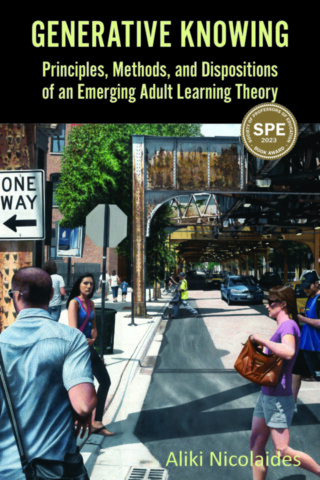
E-books are now distributed via VitalSource
VitalSource offer a more seamless way to access the ebook, and add some great new features including text-to-voice. You own your ebook for life, it is simply hosted on the vendor website, working much like Kindle and Nook. Click here to see more detailed information on this process.
Library E-Books
We are signed up with aggregators who resell networkable e-book editions of our titles to academic libraries. These editions, priced at par with simultaneous hardcover editions of our titles, are not available direct from Stylus.
These aggregators offer a variety of plans to libraries, such as simultaneous access by multiple library patrons, and access to portions of titles at a fraction of list price under what is commonly referred to as a "patron-driven demand" model.
Generative Knowing explores the mystery of learning from the unknown in ways that reveal that learning is a dynamic phenomenon, encompassing both personal and societal contexts. Dewey defines learning in terms of experience, reflection, continuity, and interactivity. When learning happens, it eventually solidifies into reliable truths that become a shortcut for taking action or making decisions—thus a habit of learning is formed and becomes rigid. Generative knowing is an emerging theory of adult learning that seeks the not-yet-foreknown potential that waits to be uncovered in the richness of experience. The book delivers vignettes of different lived experiences of being and becoming, signaling multiple ways in which a person shapes and transcends traditional conceptions of self-other binary activating the power to respond to the ongoing complex evolution of self and society. Generative Knowing seeks to accomplish four goals: to offer a unique exploration of learning, positioned as response-ability that illuminates the relatedness of learning and complex, ambiguous, unsolvable challenges that are recognizable in society as social challenges (i.e. forced migration)to present and distinguish an emerging theory of adult learning, generative knowing. Generative knowing emerged as a distinct learning disposition at the intersections of personal meaning making capacity (developmental psychology) encountering the characteristics of rising ambiguity (complexity sciences) and the lived experience of undergoing experienceto make visible and help others make the connections between generative knowing at a personal level and the complex, ambiguous unsolvable challenges in today’s society, andto provide illustrations of what generative knowing entails, how it shapes personal and societal transformation and how that may support educators, facilitator activists and change activists to make space for generative knowing when complex challenges call for both personal and societal transformations. Adult education as a field of practice is presently grappling with how adults learn in a world being recomposed by a global pandemic. Generative knowing—defined as ways of being and becoming that creatively activate potential—restores many rhythms of learning, helping readers gain fresh perspectives on how learning emerges from the unknown. The vital and personal stories in this book guide readers to walk in the territory of the unknown and to pay attention to the sensations of entanglements of self with multiple societal forces as a new way of learning. Perfect for courses such as: Adult Learning Theory │ Adult Learning Theory & Praxis │ Adult Development │ Transformative Learning │ Phenomenology │ Narrative Inquiry │ New Materialism │ Creative Research Methodologies
More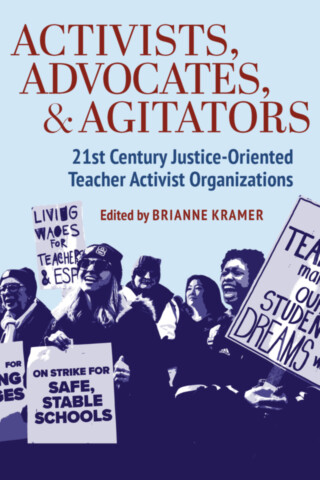
E-books are now distributed via VitalSource
VitalSource offer a more seamless way to access the ebook, and add some great new features including text-to-voice. You own your ebook for life, it is simply hosted on the vendor website, working much like Kindle and Nook. Click here to see more detailed information on this process.
Library E-Books
We are signed up with aggregators who resell networkable e-book editions of our titles to academic libraries. These editions, priced at par with simultaneous hardcover editions of our titles, are not available direct from Stylus.
These aggregators offer a variety of plans to libraries, such as simultaneous access by multiple library patrons, and access to portions of titles at a fraction of list price under what is commonly referred to as a "patron-driven demand" model.
In recent years, the field of education has been fraught with a variety of different challenges. A multi-year pandemic, book banning, and legislative efforts seeking to ban Critical Race Theory and LGBTQ positive curriculum have had negative effects on K-12 education, leaving many educators feeling the progress made in several states and communities before and during the 2018 teacher walkouts and strikes was now gone. Teacher morale is sitting at a historic low point, with teachers leaving the profession in droves. Education as an institution is at a crucial tipping point, and changes focused on equity and reducing the neoliberal hold on reform need to be implemented in order to keep schools as democratic spaces. The way this vision can be realized is through activism and existing social movement organizations that use both traditional and netroots practices. The purpose of Activists, Advocates, and Agitators is to provide readers with a history and analysis of 21st century teacher activism in K-12 schools to better understand the effectiveness of organizing and activism. Additionally, the text will introduce readers to present-day activist groups whose work is positively changing education and schools and the ways in which some teachers are working within their communities to assist in their specific needs.Activists, Advocates, and Agitators is the perfect book to instruct preservice teachers about the conditions that they will face in their classrooms, arming them with valuable strategies to help them to achieve their academic goals. Perfect for courses such as: Social Foundations of Education; Foundations of Education; Education Policy; Educational Leadership; Teacher Leadership; Sociology of Education; Politics of Education; and Democratic Education
More
E-books are now distributed via VitalSource
VitalSource offer a more seamless way to access the ebook, and add some great new features including text-to-voice. You own your ebook for life, it is simply hosted on the vendor website, working much like Kindle and Nook. Click here to see more detailed information on this process.
Teaching in PreK-12 classrooms requires not only pedagogical knowledge and field-related skill, but also creativity, flexibility, and responsiveness. Teachers, as lifelong learners and as leaders in education, must make sense of curricula, policies, research, and evidence in order to guide and shape their practices in unique and diverse contexts. How teachers make use of these “best practice” guides varies — there is no one-size-fits-all program or method that can be picked up and applied without classroom teachers’ localized and reflective contextualization. Designed for use by preservice teachers, experienced educators, mentors and coaches, school leaders, and teacher preparation faculty, Recognizing “Best Practices” as Locally Situated calls teachers into their power to disrupt, transform, and lead towards change in PreK-12 schools. This volume makes visible the critical work teachers engage in daily as they evaluate, interpret, implement, and assess the impact of particular strategies, resources, and approaches in their classrooms. Teachers must iterate on their teaching practice in cycles of continuous learning and reflection toward educational equity and social justice. Recognizing “Best Practices” as Locally Situated celebrates the voices, power, and pedagogical practices of teachers across a variety of content areas and settings, ranging from early childhood to adolescence and from transnational contexts, including multilingual classrooms in the U.S., Lebanon, and Ukraine, along with teacher preparation programs in the U.S. and Europe. Through vignettes, analysis, reflective prompts, lesson plans, resources, and activities, the authors make clear that teachers are agentic, innovative, and adaptive practitioners who translate evidence-based “best practices” into context-specific, responsive, and learner-centered pedagogical moves that build upon the assets of their students to support learning. They invite readers into their (trans)local worlds as readers’ shape and reconfigure their own (trans)local classrooms, schools, and educational ecosystems. Recognizing “Best Practices” as Locally Situated aims to bring together the voices of practitioners across K-12 education to examine their situated and expert testing, adaptation, and refusal of “best practices” within their classrooms and communities. The authors explore a best practice, as housed in this partially archived version of the U.S. Department of Education's Best Practices Clearinghouse or as explicitly named in research or practitioner literature. They explain the ways they have tested, accepted, rejected, modified, or otherwise adapted and contextualized that “best practice” within their own teaching context and with equity, inclusion, diversity, belonging, and social justice in mind. Recognizing “Best Practices” as Locally Situated provides an important overview and critique of currently circulating “best practices” for both novice and experienced educators. It provides classroom-tested pedagogical modes and resources with methodologies for engaging critically with “evidence,” including through generation of new evidence and knowledge bases situated within particular communities, times, places, and policy contexts. As part of Dr. Linsay DeMartino and Dr. Lisa Fetman's book series Demystifying Social Justice Education: Moving from Trendy to Transformative Equity and Justice Practices in Schools, this book aligns through its focus on equity and justice and the dismantling of taken-for-granted or “trendy” practices and policies in education. The collection of texts draws upon the lived experiences of educators, education researchers, community program leaders, and students and families to provide new evidence and as contributions to the literature centering around what is possible in equitable, responsive, belonging, and socially-just education.Perfect for courses such as: Introduction to Curriculum, Instruction, and Assessment in Diverse Classrooms; Introduction to Educating For Equity And Social Justice; Cultivating Culturally Responsive Classrooms; Critically Reflective Teaching; Adolescent Identities, Literacies, and Communities; Integrated Content and Language Learning (TESOL/TEFL/Bilingual Ed); Literacy Methods in Multilingual Classrooms; Resisting and Transforming the Purpose of Education: Education for Freedom; Professional Development and Leadership; Inquiry-Based Professional Learning; Introduction to Teacher Leadership And School Improvement
More