
Search results for making sense of rac

This workbook is a supplement to the textbook Scaffolding the Language of Power: An Apprenticeship in Doctoral-Level Writing. One of the features of the textbook is accompanying activities that are scaffolded and carefully sequenced to help students identify key ideas and generate text that can be used to build out the elements of each major dissertation task (e.g., problem statement, literature review, and so on). However, these are mainly offered in abbreviated form due to space limitations.This supplemental workbook contains all the activities from the textbook in expanded form so that students can engage more fully with warm-ups, free-writes, analyses of mentor texts and examples, graphic organizers, and guided writing exercises. These activities are also accompanied with additional free-write prompts as well as bonus discussion questions for extended sense-making.Individual chapters include:1. Introduction: A Three-Pronged Approach to Writing at the Doctoral Level. This chapter provides discussion questions that help students make meaning of the three key ideas of the three main ideas that inform the book: critical perspectives on language, systemic functional linguistics, and sociocultural theory/scaffolding. Additional free-writing prompts are included that help students make personal connections to these ideas from their past and present experiences.2. The Rules: Writing as a Pedagogical Act. This chapter provides discussion questions and personal connection prompts for the first “rule” of the Language of Power framework: doctoral writing is organized and scaffolded. Exercises are then provided for readers to practice five different organization and scaffolding strategies, including headings/chunking, road maps, topic sentences, signal phrases, and transitions/connectors.3. The Rest of the Rules of the Language of Power. This chapter explores the remaining five rules of the “Language of Power” framework. Discussion questions and personal connection prompts are provided for each rule. Exercises are provided that help students practice key skills, including making well-reasoned arguments, identifying and using compelling evidence, writing with specificity and detail, synthesizing information, and developing original voice.4. The Problem Statement. This chapter provides discussion questions regarding the problem statement and its purposes: to explain the problem, convince the reader that the issue is indeed a problem, and describe how the proposed study will begin to address that problem. Exercises are provided that help students articulate the particular problem that will be driving their study, with graphic organizers that break down each part of the problem statement, including the problem summary, the problem background, the rationale of the study, and the purpose statement. Writing activities are also provided that help students take the text generated from these organizers, craft them into problem statement sections, and edit them.5. The Literature Review. This chapter provides discussion questions and personal connection prompts relating to the purposes and processes of the literature review. Activities and tools are provided for article analysis and pre-writing, as well as exercises in which readers analyze exemplars for writing moves. Graphic organizers and writing exercises are provided to help students create an overall schema for their literature review, identify and articulate gaps in the literature, build out levels of claims, and select and summarize exemplars.6. The Theoretical Framework. This chapter provides discussion questions and personal connection prompts regarding the theoretical foundation of the dissertation and its purposes. Graphic organizers and writing exercises are provided to help students craft a rationale for using the framework, define their theories or perspectives, provide a background of the theory or theories, and discuss the key concepts of the framework.7. The Methodology Chapter. This chapter provides activities that help students think through and describe their research design in clear and detailed terms. Exercises and graphic organizers are provided that help readers generate a description of their their methodology, participants and setting, data sources and procedures, analysis methods, trustworthiness, and positionality. Additional exercises are offered to help students map connections between their methodology, theoretical framework, and study purpose to ensure a coherent design.8. The Findings Chapter. This chapter provides warm-ups and discussion questions for building out the “results” chapter of the dissertation. Activities and exercises help readers create an overarching organizational structure for their findings, anchor them with major assertions, support those claims with compelling evidence, and provide analytic explanation. Additional activities are provided to help students reflect on the ways that they purposefully scaffold their readers’ understanding throughout the chapter and the ways that they meet the trustworthiness criteria they created for themselves in the previous chapter.9. The Discussion and Recommendations Chapter. This chapter provides discussion prompts to help students think through the purposes of the discussion and recommendations sections of the dissertation and begin generating text for both. Activities and graphic organizers support students to develop conclusions based on the findings, connect their findings and conclusions to extant literature, generate theoretical readings of their findings and conclusions, and draw out recommendations for addressing the initial problem they identified in the first chapter. Final exercises help students generate main take-aways and contributions, which they will use to develop their dissertation conclusion and abstract.CLICK HERE TO BUY THE BOOK/WORKBOOK BUNDLE AND SAVE!
More
E-books are now distributed via VitalSource
VitalSource offer a more seamless way to access the ebook, and add some great new features including text-to-voice. You own your ebook for life, it is simply hosted on the vendor website, working much like Kindle and Nook. Click here to see more detailed information on this process.
Library E-Books
We are signed up with aggregators who resell networkable e-book editions of our titles to academic libraries. These editions, priced at par with simultaneous hardcover editions of our titles, are not available direct from Stylus.
These aggregators offer a variety of plans to libraries, such as simultaneous access by multiple library patrons, and access to portions of titles at a fraction of list price under what is commonly referred to as a "patron-driven demand" model.
The Educational Leader’s Guide to Improvement Science: Data, Design and Cases for Reflection is a collection illustrating applied organizational problem-solving using methods of improvement science in educational leadership. Early chapters introduce improvement science and then the reader is led through a logical sequence of inquiry, presented with cases of educational dilemma matched with principles of improvement science and provided examples of research methodology applied in context. Because improvement science research is so quickly becoming a signature pedagogy and core subject area of inquiry in the field of educational leadership, the literature is still scant in its coverage of improvement science models; it is the purpose of this publication to fill the void by providing concrete examples, through case studies, of instances where improvement research methods and analyses can be embedded to enhance and strengthen efforts at organizational improvement. This text concentrates on the elements faculty, students, and administrators need; specific models where improvement science frameworks enhance the reliability and validity of improvement or quality enhancement efforts.To learn more about Improvement Science and see our full list of books in this area, please click through to the Myers Education Press Improvement Science website. Perfect for courses such as: Introduction to Improvement Science, Seminar/Practicum in Educational Leadership, Introduction to Program Evaluation, Educational Research for Administrators, Action Research for School Practitioners, Educational Research, School Improvement, and Teacher Leadership.
More
E-books are now distributed via VitalSource
VitalSource offer a more seamless way to access the ebook, and add some great new features including text-to-voice. You own your ebook for life, it is simply hosted on the vendor website, working much like Kindle and Nook. Click here to see more detailed information on this process.
Privilege Through the Looking-Glass, Third Edition is a revised and expanded collection of essays that explore privilege and status characteristics in daily life. This collection seeks to make visible that which is often invisible. It seeks to sensitize us to things we have been taught not to see. Privilege, power, oppression, and domination operate in complex and insidious ways, impacting groups and individuals. And yet, these forces that affect our lives so deeply seem to at once operate in plain sight and lurk in the shadows, making them difficult to discern. Like water to a fish, environments are nearly impossible to perceive when we are immersed in them. This book attempts to expose our environments.With engaging and powerful writing, the contributors share their personal stories as a means of connecting the personal and the public. This volume applies an intersectional perspective to explore how race, class, gender, sexuality, education, and ableness converge, creating the basis for privilege and oppression. Privilege Through the Looking-Glass encourages readers to engage in self and social reflection and can be used in a range of courses in sociology, social work, communication, education, gender studies, and Black studies. Each chapter includes discussion questions and/or activities for further engagement, making it a perfect classroom text.
More
E-books are now distributed via VitalSource
VitalSource offer a more seamless way to access the ebook, and add some great new features including text-to-voice. You own your ebook for life, it is simply hosted on the vendor website, working much like Kindle and Nook. Click here to see more detailed information on this process.
In today’s troubling times, we frequently find ourselves in conversations with educational scholars, educators, and university students about feeling overwhelmed with the attacks on and challenges facing education, and unsure of how to act in this moment. What does it mean to leverage scholarship for public impact? What impact on public debate, awareness, or policy can collective action as large groups of scholars and leaders make that more traditional scholarship cannot or simply does not aspire to make? That is, when scholars and leaders speak in a collective and public-facing way, what interventions can we make in movement building for public education and for the public commons more broadly? Collectives and the Commons: The Role of Educational Scholars in Movement Building for Justice grapples with such questions by diving into the years-long journeys of four scholar collectives working toward justice in and through education. Each emerged in different times, places, and circumstances, but in recent years have connected under a “collective of collectives” umbrella that allowed them to share resources and support one another in their work: CReATE (Chicagoland Researchers and Advocates for Transformative Education), CARE-ED (California Alliance of Researchers for Equity in Education), HSESJD (Hawai‘i Scholars for Education, Social Justice and Diversity), and EDJE (Education Deans for Justice and Equity). The result of this effort is this volume, which serves as a resource for scholars who are interested in working collectively for movement building and advocacy. With that goal in mind, each chapter consists of two key components: a narrative essay (how the collective formed, how they were organized and operated, their theory of change, the initiatives they undertook, how they pushed scholarship into the public space, challenges faced, and lessons learned or take-aways for others interested in educational advocacy) and a range of selected artifacts (research briefs and fact sheets; statements, petitions, testimonies; media and art work; and public events and symposiums).Collectives and the Commons is needed today more than ever. The current assault on education is an assault on teachers and students, and on the welfare of everyone. This book should be read by every scholar interested in seeing social justice applied to schools, classrooms and students. It can also be adopted in a variety of courses in Colleges of Education.Perfect for courses such as: Introduction to Education, Educational Equity, Educational Leadership, Educational Policy, Foundations of Education, Multicultural Education, Race and Education, Research Methods, Social Justice and Education, Teacher Education
More
E-books are now distributed via VitalSource
VitalSource offer a more seamless way to access the ebook, and add some great new features including text-to-voice. You own your ebook for life, it is simply hosted on the vendor website, working much like Kindle and Nook. Click here to see more detailed information on this process.
Translating Words, Creating Worlds: Poetry Inside Out as Critical Literacy and Translanguaging Pedagogy in K-12 Classrooms is a timely and inspiring guide to bringing critical literacy, translanguaging, and student voice into today’s classrooms. Grounded in the innovative Poetry Inside Out (PIO) program developed at the Center for the Art of Translation, this volume demonstrates how poetry translation can transform language learning into a powerful act of collaboration, creativity, and cultural exploration. Across diverse K–12 settings, students engage with poems from around the world—written in languages such as Vietnamese, Spanish, and Albanian—and work together to translate them into English. Specifically, they first work in pairs to create a “Phrase-by-Phrase” translation, akin to a rough draft. Then, in groups of four, students meld and refine their drafts, developing a “Make it Flow” translation that the entire group agrees to. Through discussion, interpretation, performance, and revision, students do far more than learn vocabulary or grammar: they analyze meaning, wrestle with complex social and political themes, and develop sophisticated literacy practices rooted in authentic communication. Written by classroom teachers, school leaders, and literacy practitioners, Translating Words, Creating Worlds offers vivid, real-world examples of PIO in action across elementary, middle, and high school classrooms. The book provides practical, accessible strategies for educators seeking to create culturally sustaining, language-rich learning environments that honor and leverage students’ linguistic and cultural assets. At a moment when educators are searching for meaningful ways to support multilingual learners and foster inclusive classrooms, this volume delivers both inspiration and actionable pedagogy. Readers will discover how collaborative poetry translation can deepen students’ engagement with language, strengthen critical thinking, and cultivate empathy, dialogue, and intellectual curiosity. An essential resource for teachers, teacher educators, and TESOL/ESL professionals, Translating Words, Creating Worlds is ideal for courses in second language acquisition, literacy, multilingual education, and culturally responsive teaching.Perfect for courses such as: Literacy Education; Methods in ELA/Humanities; Educating Multilingual Children and Youth; Foundations of Bilingual Education; Bilingual Education Theory and Practices; Curriculum and Lesson Planning (Middle/Secondary and/or Elementary); Culture, Language, and Education
More
E-books are now distributed via VitalSource
VitalSource offer a more seamless way to access the ebook, and add some great new features including text-to-voice. You own your ebook for life, it is simply hosted on the vendor website, working much like Kindle and Nook. Click here to see more detailed information on this process.
More than a century after William James published his provocative critique The PhD Octopus in 1903, his warnings about the corrupting entanglements between institutions and graduate students remain strikingly relevant. Doctoral Studies as Educational Industrial Complex revisits James’ concerns through a contemporary lens, offering a critical examination of doctoral education in the field of education in what feels like perennial crisis. Throughout the volume, contributors grapple with the tensions James identified: the obsession with credentials over genuine intellectual work, the “tyrannical machine” of institutional demands, and the misalignment between doctoral preparation and actual career paths. These tensions are particularly acute in practitioner-oriented EdD programs designed to produce scholar-practitioners who often remain in their local communities rather than entering the academy. Yet research-oriented PhD programs face their own crisis, as they continue to prepare scholars for a tenure-track job market that has dramatically contracted. With only 32% of faculty holding tenured or tenure-track positions in 2023—down from 53% in 1987—the traditional pathway to academic careers has fundamentally eroded. The book speaks to multiple audiences: faculty who supervise doctoral students and seek to understand the challenges they face; doctoral students navigating alternative program formats and uncertain career prospects; administrators responsible for program design and accreditation; and scholars interested in the future of higher education and professional preparation. By centering faculty expertise and critical analysis rather than external market demands, this volume offers a necessary counter-narrative to prevailing trends in doctoral education reform. Ultimately, this book argues for a reconsideration of what doctoral education should accomplish and for whom, grounding these questions in both historical perspective and contemporary realities.
More
E-books are now distributed via VitalSource
VitalSource offer a more seamless way to access the ebook, and add some great new features including text-to-voice. You own your ebook for life, it is simply hosted on the vendor website, working much like Kindle and Nook. Click here to see more detailed information on this process.
What if the syllabus were a menu? What if learning began with a bite? Edible Tales: Folklore, Myths, and Food Narratives in Higher Learning invites readers to the table, literally and intellectually, to explore how food stories shape knowledge, identity, ethics, and pedagogy. Structured as a twelve-course banquet, the book moves from forbidden fruits and mythic punishments to kitchen-table dialogues, classroom rituals, and contemporary visual art. Across chapters, contributors examine how food functions as law and transgression, nourishment and discipline, inheritance and invention. Eve’s bite, Persephone’s seeds, and Gretel’s breadcrumbs are reread as moments where appetite becomes agency. Thanksgiving disasters become narrative laboratories. Off-calendar feasts and midnight breakfasts reveal how everyday rituals sustain resilience in academic and communal life. Olive oil tastings, medieval banquets, pupusa-making, and jollof debates demonstrate how foodways encode histories of gender, class, colonialism, migration, and belonging. Methodologically, Edible Tales blends scholarly analysis with creative forms: scripts, recipes, stage directions, audio guides, almanacs, and lesson “potions.” The volume models how folklore and food narratives can be mobilized in higher education classrooms as rigorous, embodied ways of knowing. Contributors show how storytelling, shared snacks, sensory memory, and digital food archives can foster trust, critical reflection, and ethical engagement, particularly in interdisciplinary, humanities-based, and social justice-oriented pedagogy. Designed for scholars and educators in education, folklore, cultural studies, food studies, and the humanities, Edible Tales is also an invitation to instructors seeking innovative pedagogy, to students hungry for meaning, and to readers who believe that stories travel best when passed hand to hand. Come hungry. Leave with stories. Pack the leftovers as questions, and carry them into tomorrow.Perfect for courses such as: Food Studies; Folklore and Mythology; Cultural Studies; Narrative Inquiry / Qualitative Research Methods; Curriculum Studies; Interdisciplinary Humanities; Anthropology of Food; Education and Social Justice; Gender, Culture, and Society; Teaching and Learning in Higher Education
More
E-books are now distributed via VitalSource
VitalSource offer a more seamless way to access the ebook, and add some great new features including text-to-voice. You own your ebook for life, it is simply hosted on the vendor website, working much like Kindle and Nook. Click here to see more detailed information on this process.
Library E-Books
We are signed up with aggregators who resell networkable e-book editions of our titles to academic libraries. These editions, priced at par with simultaneous hardcover editions of our titles, are not available direct from Stylus.
These aggregators offer a variety of plans to libraries, such as simultaneous access by multiple library patrons, and access to portions of titles at a fraction of list price under what is commonly referred to as a "patron-driven demand" model.
Some students enter classrooms with an “I dare you try to teach me” look on their faces, and others bounce into class excited to learn and anxious to please the teacher. We know we can’t automatically blame teachers or schools when students don’t want to learn. But we also know that sometimes teachers and schools don’t always set students up for success, and they don’t always help them love what they’re learning.Why Kids Love (and Hate) School: Reflections on Practice investigates some of the school and classroom practices that help students love school—and some that send students in the opposite direction. Intended for classroom teachers, teacher education students, and school administrators, chapters in the book investigate a variety of topics: how schools can build effective school cultures, the “struggle” students encounter in learning, practices of other countries that help students love school, testing practices that cause students to hate school—and much more. Perfect for courses in: Introduction to Education, General Methods, Management/Assessment, Educational Research, Educational Administration/Leadership, Teacher Leadership, Curriculum Theory, Curriculum Development.
More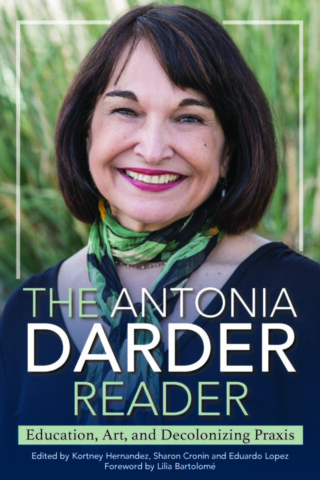
E-books are now distributed via VitalSource
VitalSource offer a more seamless way to access the ebook, and add some great new features including text-to-voice. You own your ebook for life, it is simply hosted on the vendor website, working much like Kindle and Nook. Click here to see more detailed information on this process.
Library E-Books
We are signed up with aggregators who resell networkable e-book editions of our titles to academic libraries. These editions, priced at par with simultaneous hardcover editions of our titles, are not available direct from Stylus.
These aggregators offer a variety of plans to libraries, such as simultaneous access by multiple library patrons, and access to portions of titles at a fraction of list price under what is commonly referred to as a "patron-driven demand" model.
Antonia Darder is a Puerto Rican and American scholar, artist, poet, song writer and activist. She holds the Leavey Presidential Endowed Chair in Ethics and Moral Leadership in the School of Education at Loyola Marymount University. Her scholarship is known around the world and her efforts have earned her a large number of academic awards, including the Scholars of Color Distinguished Career Contribution Award by the American Education Research Association. Three critical Darderean scholars (Kortney Hernandez, Sharon Cronin, and Eduardo Lopez), who have been lovingly mentored, empowered, and challenged by Darder, and who have developed their critical consciousness through the soulful educational wisdom of Darder, have come together to embrace the (im)possible task of curating a volume of some of her most powerful educational scholarship. This volume includes Antonia Darder’s central writings on the topics of language, culture, inequality, and education. If one were to “read” Darder, as Paulo Freire encouraged us to “read the word and the world,” her works would speak volumes of her unwavering commitment to the struggle for liberation and an emancipatory vision of the world. This is embodied in all aspects of her work as the range of her scholarship spans across mediums and decades. The Antonia Darder Reader is essential reading as a keystone volume in multiculturalism, critical studies, cultural studies, and many other disciplines.Perfect for courses such as: Social and Cultural Foundations of Education; History and Philosophy of Education; Teacher Education; Bilingual Education; Latinx and Education Studies; Critical Pedagogy; Critical Theory, Race and Education; Sociology of Education; Culturally Responsive Teaching; Social Justice and Research; Methodology
More
E-books are now distributed via VitalSource
VitalSource offer a more seamless way to access the ebook, and add some great new features including text-to-voice. You own your ebook for life, it is simply hosted on the vendor website, working much like Kindle and Nook. Click here to see more detailed information on this process.
The Critical Importance of Teacher Advocacy: Empowered Educators on the Front Lines is a powerful and timely anthology that amplifies the voices of education activists from across the United States who are committed to reimagining what it means to be an educator in today's challenging climate. At its heart, this book is a testament to the unwavering spirit of those who enter the classroom not just to teach, but to make a lasting impact on the lives of their students and the future of our society. In these pages, readers will find stories of courage, resilience, and resistance—narratives that highlight the importance of holding onto one’s core values amid increasing political, social, and institutional pressures. The educators featured in this compilation don’t just teach curriculum—they build authentic relationships with their students, create inclusive learning environments, and refuse to accept the status quo when it harms the very children they serve. More than a celebration of individual triumphs, The Critical Importance of Teacher Advocacy serves as a call to view education through a broader societal lens. It urges educators and readers alike to acknowledge how systemic inequities, policy decisions, and cultural narratives shape our schools and the experiences within them. Without this context, burnout is inevitable and attrition becomes a painful norm. This book also challenges its audience to think beyond immediate outcomes. The fight for justice and equity in education is a long game—one that may not yield tangible change within a single career or even a single lifetime. But these stories affirm that the work must continue. Educators must rise, speak out, organize, and even disrupt unjust systems to protect the very soul of our democracy. For new teachers, seasoned educators, and anyone invested in the future of public education, The Critical Importance of Teacher Advocacy is both a rallying cry and a source of deep inspiration. The work is hard—but these stories prove that it is always worth it. The book is a valuable teaching tool and textbook in a variety of classes for preservice teachers. It also is a great research tool for scholars working in teacher advocacy.
More