
Search results for making sense of rac
E-books are now distributed via VitalSource
VitalSource offer a more seamless way to access the ebook, and add some great new features including text-to-voice. You own your ebook for life, it is simply hosted on the vendor website, working much like Kindle and Nook. Click here to see more detailed information on this process.
Library E-Books
We are signed up with aggregators who resell networkable e-book editions of our titles to academic libraries. These editions, priced at par with simultaneous hardcover editions of our titles, are not available direct from Stylus.
These aggregators offer a variety of plans to libraries, such as simultaneous access by multiple library patrons, and access to portions of titles at a fraction of list price under what is commonly referred to as a "patron-driven demand" model.
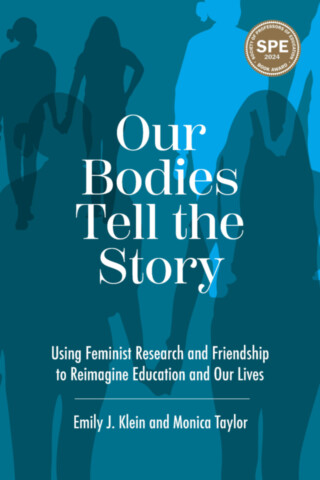
Our Bodies Tell the Story: Using Feminist Research and Friendship to Reimagine Education and Our Lives asks (and answers) a number of critical questions that are key to improving our educational system. How can we use our embodied stories to navigate and disrupt how schools and society reproduce the patriarchy and heteronormativity within our institutions of learning? How do we transgress oppressive boundaries (boundaries cultivated by the patriarchy that have been perpetuated at home, within school, outside of school, in university settings, and in communities) that permit our dehumanization and exclusion? As teachers, professors, and teacher educators, how do we navigate our students’ trauma when we are navigating the re-ignition of our own? This book sets out to tell the story of how the authors have tried to answer these questions in their lives and work. It is the story of a friendship, a partnership, a narrative retelling of their “becoming” as girls, teenagers, women, teachers, wives, daughters, scholars, and mothers. From the earliest memories of their gendered and sexualized childhoods to the present navigation of sexism, heteronormativity, and trauma in the context of teaching and schools, these stories reside in their bodies. They recall, construct, and reexamine, emerging from their dialogues—from talking face-to-face, to email, to FB messenger, poetry, and text. Our Bodies Tell the Story centers around the co/autoethnography of personal narratives, stories, and a kind of survival testimonies, the ways in which the authors bore witness to each other’s lives. The book extensively uses co/autoethnography as a self-study feminist research methodology that takes autoethnography, “a form of self-representation that complicates cultural norms by seeing autobiography as implicated in larger cultural processes” (Taylor & Coia, 2006, p. 278) and moves it beyond the singular to the plural. Using this methodology enables the authors to interweave their stories through dialogue, so that validity, insight, and analysis all emerge in the text. The book investigates the self within the social context of personal relationships, as well as the larger society. Creating a co/autoethnography is a rich, multi-layered endeavor because it is not conducted in a vacuum. As such, it is an important book for faculty and researchers involved in a number of disciplines, including auto/ethnographic research, gender studies, women’s studies, feminist studies, qualitative research and many other areas of study.Perfect for courses such as: Gender and Education │ Public Purposes of Schooling │ Introduction to Gender, Sexuality, and Women's Studies │ Critical Feminisms in Teacher Education │ Gender Issues in Teacher Education
More
E-books are now distributed via VitalSource
VitalSource offer a more seamless way to access the ebook, and add some great new features including text-to-voice. You own your ebook for life, it is simply hosted on the vendor website, working much like Kindle and Nook. Click here to see more detailed information on this process.
Library E-Books
We are signed up with aggregators who resell networkable e-book editions of our titles to academic libraries. These editions, priced at par with simultaneous hardcover editions of our titles, are not available direct from Stylus.
These aggregators offer a variety of plans to libraries, such as simultaneous access by multiple library patrons, and access to portions of titles at a fraction of list price under what is commonly referred to as a "patron-driven demand" model.
Using details from California’s unique, diverse social and political history makes the potentially dry foundations course into a very personal and dynamic topic for students to wrap their minds around. The book is a critical analysis of the evolution of educational policies that frame teachers’ and students’ roles and responsibilities in the historical and contemporary context of public education and thoroughly covers topics such as school segregation; the political structure of the state; bilingual education, school funding, NCLB, school choice, how policies arise and how they are legislated. Perfect for courses such as:Educational Foundations | Social Foundations of Education | Introduction to Teaching Multicultural Education | Curriculum and Instruction
More
E-books are now distributed via VitalSource
VitalSource offer a more seamless way to access the ebook, and add some great new features including text-to-voice. You own your ebook for life, it is simply hosted on the vendor website, working much like Kindle and Nook. Click here to see more detailed information on this process.
Library E-Books
We are signed up with aggregators who resell networkable e-book editions of our titles to academic libraries. These editions, priced at par with simultaneous hardcover editions of our titles, are not available direct from Stylus.
These aggregators offer a variety of plans to libraries, such as simultaneous access by multiple library patrons, and access to portions of titles at a fraction of list price under what is commonly referred to as a "patron-driven demand" model.
Teacher moonlighting has been studied and documented since at least the early 1960s, and yet, it can be easily argued that the phenomenon is still not understood. Teachers moonlight in higher numbers than other professions, and while most teachers claim that they do it for the money, increases in their compensation have not reduced the practice. By the Light of the Silvery Moon is the first book to provide a thorough review of the research on the topic, looking deeply into the intricate workings of a profession that is at least imperiled or, in the best of scenarios, a profession that is in transition. Teachers play a critical role in society, so teaching needs to be a sustainable profession where teachers may still moonlight, but the opportunities to expand the status as well as the content and context of their work are unlimited. This book fills an important gap in the literature by bringing together the research and situating it within a broader conversation about teachers’ work.Perfect for courses such as: All undergraduate and graduate Foundations of Education courses, Introduction to Education, History and Philosophy of Education, and Teacher Leadership.
More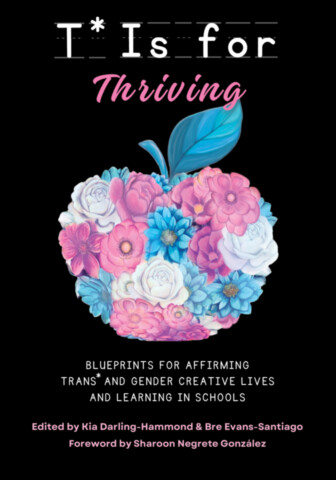
E-books are now distributed via VitalSource
VitalSource offer a more seamless way to access the ebook, and add some great new features including text-to-voice. You own your ebook for life, it is simply hosted on the vendor website, working much like Kindle and Nook. Click here to see more detailed information on this process.
Library E-Books
We are signed up with aggregators who resell networkable e-book editions of our titles to academic libraries. These editions, priced at par with simultaneous hardcover editions of our titles, are not available direct from Stylus.
These aggregators offer a variety of plans to libraries, such as simultaneous access by multiple library patrons, and access to portions of titles at a fraction of list price under what is commonly referred to as a "patron-driven demand" model.
Being a transgender* or gender creative (T*GC) child in the United States today means being the subject of a national debate about whether you are entitled to exist, live a full life, or control your body. T*GC students have suffered outside of and within schools, experiencing among the highest rates of academic exclusion, vulnerability to bullying and violence, poor mental health, and troubling life outcomes due to bias, stigma, and discrimination. At the time this manuscript was completed, the Human Rights Campaign had officially declared a “State of Emergency'' for LGBTQ+ Americans. Of the over 600 anti-LGBTQ+ bills recently introduced across the nation, nearly a third directly target trans* and gender-creative people, particularly children, violating both civil and human rights. Fortunately, not all bills will pass, and activists are moving liberation work forward everywhere every day. T* Is for Thriving offers collected wisdom from educators and community members about meeting T*GC students’ needs in schools in order to light a path toward their thriving. In it, the editors, Kia Darling-Hammond and Bre Evans-Santiago, have curated lesson plans that offer models for inclusive instruction, along with stories that amplify community guidance about how to be responsive, affirming, and celebratory of T*GC needs, histories, and contributions in schools. These stories and lessons are an immediate resource for advancing a pedagogy of hope and possibility, both in the present and the future. T* Is for Thriving is essential reading for anyone involved in developing and defending the rights of educators and students. It is the perfect text for courses in teacher education, as well as those focused on social justice, LGBTQ+ topics, and critical pedagogy.Perfect for courses such as: Multicultural Education; Gender Studies; Teaching Methods (Science, Social Studies, Language Arts, Math); Curriculum Design; Diversity in Education; Social Foundations of Education; Inclusive Methods of Teaching; Practicum/Clinical Practice; Literacy Methods; and History, Policy and Social Changes
More
E-books are now distributed via VitalSource
VitalSource offer a more seamless way to access the ebook, and add some great new features including text-to-voice. You own your ebook for life, it is simply hosted on the vendor website, working much like Kindle and Nook. Click here to see more detailed information on this process.
Library E-Books
We are signed up with aggregators who resell networkable e-book editions of our titles to academic libraries. These editions, priced at par with simultaneous hardcover editions of our titles, are not available direct from Stylus.
These aggregators offer a variety of plans to libraries, such as simultaneous access by multiple library patrons, and access to portions of titles at a fraction of list price under what is commonly referred to as a "patron-driven demand" model.
While there is a wealth of scholarship on Africana Education, no single volume has examined the roles of such important topics as Black Male Identity, Hip Hop Culture, Adult Learners, Leadership at Historically Black Colleges and Universities, Critical Black Pedagogy, among others. This book critically examines African Americans in higher education, with an emphasis on the social and philosophical foundations of Africana culture. This is a critical interdisciplinary study, one which explores the collection, interpretation, and analysis of quantitative and qualitative data in the field of higher education. To date, there are not any single-authored or edited collections that attempt to research the logical and conceptual ideas of the disciplinary matrix of Africana social and philosophical foundations of African Americans in higher education. Therefore, this volume provides readers with a compilation of literary, historical, philosophical, and communicative essays that describe and evaluate the Black experience from an Afrocentric perspective for the first time. It is required reading in a wide range of African American Studies courses.
More
E-books are now distributed via VitalSource
VitalSource offer a more seamless way to access the ebook, and add some great new features including text-to-voice. You own your ebook for life, it is simply hosted on the vendor website, working much like Kindle and Nook. Click here to see more detailed information on this process.
Library E-Books
We are signed up with aggregators who resell networkable e-book editions of our titles to academic libraries. These editions, priced at par with simultaneous hardcover editions of our titles, are not available direct from Stylus.
These aggregators offer a variety of plans to libraries, such as simultaneous access by multiple library patrons, and access to portions of titles at a fraction of list price under what is commonly referred to as a "patron-driven demand" model.
For the past 35 years, Scott Mandel has been teaching students in an urban Los Angeles school district. In addition, he instructs teachers in professional development courses. In those classes, he’s known for telling stories—stories gleaned from his time spent in the classroom. Classrooms in the Real World is a collection of many of those stories, presented as a set of teachable moments—a practical how-to book for new teachers, one based on interacting with kids on a daily basis. Rather than providing educational theories about what should be, Mandel shares real-life stories of how to relate to your students, administrators and parents, along with his thoughts on how to deal with the multiple curricular and classroom challenges that all teachers face in the real world. Chapters such as "Kids Don't Care How Much You Know As Long As They Know You Care," "Take Curricular Chances," "Administrators Want You To Succeed," "Keeping My Sanity All These Years," and “What Have I Learned” will give you the reader practical ideas, philosophies and encouragement from a long-time classroom teacher, someone still in the classroom sharing the lived experience of teaching in today’s school environment.Perfect for courses such as: Introduction to Teaching | Classroom Management | Student Teaching
More
E-books are now distributed via VitalSource
VitalSource offer a more seamless way to access the ebook, and add some great new features including text-to-voice. You own your ebook for life, it is simply hosted on the vendor website, working much like Kindle and Nook. Click here to see more detailed information on this process.
Library E-Books
We are signed up with aggregators who resell networkable e-book editions of our titles to academic libraries. These editions, priced at par with simultaneous hardcover editions of our titles, are not available direct from Stylus.
These aggregators offer a variety of plans to libraries, such as simultaneous access by multiple library patrons, and access to portions of titles at a fraction of list price under what is commonly referred to as a "patron-driven demand" model.
This extensive overview first surveys the history of general education in the United States. It discusses how the recommendations of stakeholder groups have shaped general education in recent decades. Subsequent chapters detail best practices and findings in the assessment of student learning as it relates to the general education curriculum across institutional types. The discussion then turns to the larger impact of general education on culture and society as students navigate life beyond the undergraduate experience. The final chapters will provide insight into how various institutions are innovating through the general education curriculum, as well as a discussion on the keys to maintaining the relevancy of this curriculum throughout the 21st century and beyond.Perfect for courses such as:Assessment of Student Learning | Higher Education AdministrationAcademic Issues in Higher Education | Introduction to/Foundations of Higher Education
More
E-books are now distributed via VitalSource
VitalSource offer a more seamless way to access the ebook, and add some great new features including text-to-voice. You own your ebook for life, it is simply hosted on the vendor website, working much like Kindle and Nook. Click here to see more detailed information on this process.
Library E-Books
We are signed up with aggregators who resell networkable e-book editions of our titles to academic libraries. These editions, priced at par with simultaneous hardcover editions of our titles, are not available direct from Stylus.
These aggregators offer a variety of plans to libraries, such as simultaneous access by multiple library patrons, and access to portions of titles at a fraction of list price under what is commonly referred to as a "patron-driven demand" model.
The New Henry Giroux Reader presents Henry Giroux’s evolving body of work. The book articulates a crucial shift in his analyses after the September 11th, 2001 terrorist attack, when his writing took on more expansive articulations of power, politics, and pedagogy that addressed education and culture in forms that could no longer be contained via isolated reviews of media, schooling, or pedagogical practice. Instead, Giroux locates these discourses as a constellation of neoliberal influences on cultural practices, with education as the engine of their reproduction and their cessation. The New Henry Giroux Reader also takes up Giroux’s proclivity for using metaphors articulating death as the inevitable effect of neoliberalism and its invasion of cultural policy. Zombies, entropy, and violence permeate his work, coalescing around the central notion that market ideologies are anathema to human life. His early pieces signal an unnatural state of affairs seeping through the fabric of social life, and his work in cultural studies and public pedagogy signals the escalation of this unease across educative spaces. The next sections take up the fallout of 9/11 as an eruption of these horrific practices into all facets of human life, within traditional understandings of education and culture’s broader pedagogical imperatives. The book concludes with Giroux’s writings on education's vitalist capacity, demonstrating an unerring capacity for hope in the face of abject horror.Perfect for courses such as: History and Philosophy of Education, Political and Social Foundations of Education, Policy Issues in American Education, African American Education, Social Justice Research in Education, Marginality and the Politics of Resistance, Equity and Anti-Oppression, Cultural Studies and Public Pedagogy.
More
E-books are now distributed via VitalSource
VitalSource offer a more seamless way to access the ebook, and add some great new features including text-to-voice. You own your ebook for life, it is simply hosted on the vendor website, working much like Kindle and Nook. Click here to see more detailed information on this process.
“If you want to achieve tenure, you should know a bit more about what it means and why it exists, and its benefits. All too often, even faculty don’t understand why tenure is important."Thus begins the Preface of the first edition of Candid Advice for New Faculty Members, the most comprehensive “how to” guide for graduate students, post-docs, and junior faculty across a variety of academic disciplines. Now, in the Second Edition of this award-winning volume, Marybeth Gasman has added a variety of new topics, including teaching in a post-COVID environment, the use of Artificial Intelligence (AI) in writing and research, new views of DEI, navigating our new politic world, managing your social media and many other important and timely topics. Drawing upon her own extensive experiences and that of many colleagues, Gasman provides you with an incredibly valuable tool for attaining tenure and for the things that you should do to advance your academic career. She provides practical (and sometimes humorous) advice about a range of topics, including:negotiating job offersplanning a research agendaimproving your teaching skillsmanaging serviceadvising studentsapplying for research grantsachieving life/work balancemanaging academic politicsIn addition to this valuable career advice, Gasman provides a peek behind the academy’s curtain by painting a vivid picture of the inner workings of the academy and all of its players. Candid Advice for New Faculty Members is required reading for every newly-minted faculty member, regardless of academic discipline. The wisdom provided in this volume will prove to be invaluable to your future career.Perfect for courses such as: Faculty and Academic Affairs, Seminar on Faculty Life, Doctoral seminars across various disciplines, College and University Teaching, Graduate Student Research Seminars, Professional Development Seminars
More
E-books are now distributed via VitalSource
VitalSource offer a more seamless way to access the ebook, and add some great new features including text-to-voice. You own your ebook for life, it is simply hosted on the vendor website, working much like Kindle and Nook. Click here to see more detailed information on this process.
Library E-Books
We are signed up with aggregators who resell networkable e-book editions of our titles to academic libraries. These editions, priced at par with simultaneous hardcover editions of our titles, are not available direct from Stylus.
These aggregators offer a variety of plans to libraries, such as simultaneous access by multiple library patrons, and access to portions of titles at a fraction of list price under what is commonly referred to as a "patron-driven demand" model.
The concept of difference occupies a central place in the philosophy of Gilles Deleuze. In this work, David Bright explores how Deleuze’s difference can be put to work in critical qualitative research. The book explores research and writing as a creative process of dynamically pursuing problems. Following Deleuze’s advice not to think of problems in terms of solutions, the book offers important methodological insights into the ways the subjects, objects, and processes of research might be conceived and represented in writing, exploring the problem of thinking and writing about difference in complex ways without reducing thought to static representations of identity. Bright uses the example of foreign teachers and international schooling in Vietnam to show us how Deleuze’s difference can be used in critical qualitative research, demonstrating the limits of traditional ways of thinking about difference in learning and teaching. Exploring Deleuze's Philosophy of Difference is a book that will interest all those with an interest in the application of Deleuze’s philosophy to critical qualitative research.
More