
Search results for using data

E-books are now distributed via VitalSource
VitalSource offer a more seamless way to access the ebook, and add some great new features including text-to-voice. You own your ebook for life, it is simply hosted on the vendor website, working much like Kindle and Nook. Click here to see more detailed information on this process.
Hidden in Plain Sight: Women in Educational Leadership is an essential resource that examines the experiences, challenges, and achievements of women leading in higher education. Written for current and aspiring women academic leaders, it provides the tools, insights, and support needed to navigate this complex terrain successfully. Hidden in Plain Sight addresses a striking paradox: while many accomplished women hold academic leadership positions, they often remain invisible within their own institutions. Despite occupying roles of authority, women leaders frequently find themselves overlooked, unrecognized, and unheard. This contradiction exposes the gap between institutional claims that leadership is gender-neutral and the reality women face daily in academic settings. Drawing on demographic data, statistical trends, and evidence-based practices, this textbook offers practical guidance grounded in real experience. Readers will find case studies, personal anecdotes, and actionable strategies for advancing in academic leadership while maintaining personal integrity and well-being. The book explores various leadership approaches and identifies common pitfalls, equipping readers with knowledge to navigate challenges effectively. Hidden in Plain Sight serves as both mirror and map—reflecting the realities women leaders experience while charting pathways forward. It empowers current leaders to advocate for themselves and their institutions while inspiring the next generation to pursue academic leadership with eyes wide open and strategies firmly in hand. This is the guidebook for women determined to lead authentically, effectively, and sustainably in higher education. The book is written about and for women in leadership positions, and for women interested in educational leadership within the academy. It will also be of interest to college, university and public libraries; individuals including scholars in the discipline; and it can serve as a critical textbook in a variety of Leadership classes in undergraduate and graduate programs.Perfect for courses such as: Women and Leadership; Higher Education Administration; Gender Studies in Education; Educational Leadership and Policy; Sociology of Higher Education; Feminist Theory and Practice; Women's Studies Capstone Seminar; Organizational Behavior in Education; Diversity and Inclusion in Higher Education; Professional Development for Graduate Students
More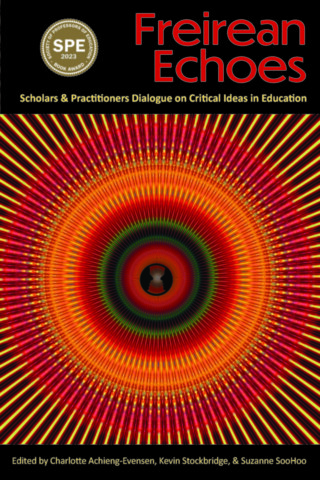
E-books are now distributed via VitalSource
VitalSource offer a more seamless way to access the ebook, and add some great new features including text-to-voice. You own your ebook for life, it is simply hosted on the vendor website, working much like Kindle and Nook. Click here to see more detailed information on this process.
Library E-Books
We are signed up with aggregators who resell networkable e-book editions of our titles to academic libraries. These editions, priced at par with simultaneous hardcover editions of our titles, are not available direct from Stylus.
These aggregators offer a variety of plans to libraries, such as simultaneous access by multiple library patrons, and access to portions of titles at a fraction of list price under what is commonly referred to as a "patron-driven demand" model.
How do Paulo Freire's ideas echo across time and contexts? What does the dialogical nature of text mean for critical pedagogy today? Inspired by Paulo Freire, this text utilizes a dialogical framework, inviting the reader into a deeper conceptual and contextual consciousness through the use of many voices. The core of this book has been stored away for several years waiting for loving students of Freire to bring it to life. The original group of lectures is a collection of speeches from keynote panelists given at a Critical Pedagogy conference in 2015 hosted by the Paulo Freire Democratic Project, Attallah College of Educational Studies at Chapman University in Orange, California. Over 200 people attended the conference coming from all parts of the world. Special guest speakers included Dr. Nita Anamaria Freire from Universidade Federal de Mato Grosso (Paulo Freire’s wife), Dr. Antonia Darder from Loyola Marymount University, Dr. Donaldo Macedo from University of Massachusetts, Dr. Peter McLaren and Dr. Tom Wilson from Chapman University. A highlight of the event was the rededication of the Paulo Freire Critical Pedagogy Archives housed in the university’s Leatherby Libraries. These archives hold Paulo’s personal notebook of study, his spectacles, instructional activity cards, and love notes to Nita. The collection also comprises original curriculum developed by Joe Kincheloe, protest posters from all over the world from Peter McLaren, paper mache puppets and curriculum developed by Alma Flor Ada and newspaper clippings and correspondences of Henry Giroux. Freirean Echoes acts as both an archive housing the writings of these and other scholars and activists for posterity. and as a living collection, allowing for the author voices to be in dialogue with each other and with the reader. This collective “talking text” echoes, reverberates, and amplifies critical Freirean ideas, thereby inviting the reader to extend Freirean thought into their lived experiences.Perfect for courses such as: Special Topics on Emerging Issues in Sociology of Education | Introduction to Educational Theory | Politics and Education and Special Topics in Comparative Education | Pedagogies of Social Change | Foundations: The Dialectics of the Global and the Local | Social Construction of Difference | Voice, Diversity, Equity and Social Justice | Introduction to Critical Pedagogy
More
E-books are now distributed via VitalSource
VitalSource offer a more seamless way to access the ebook, and add some great new features including text-to-voice. You own your ebook for life, it is simply hosted on the vendor website, working much like Kindle and Nook. Click here to see more detailed information on this process.
Curriculum and pedagogy are the heartbeat of our schools. They encompass what we do and do not teach–what content and approaches we either choose or are mandated to choose, or leave out or are mandated to leave out. Curriculum entails the overall educational experience of schooling, while pedagogy is the art and craft of teaching–or the translation of curriculum into student knowledge and growth. Hence, curriculum and pedagogy are sociocultural phenomena that impact and are impacted by context (e.g., students, community, colleagues, geography, etc.). Once upon a time, curriculum and pedagogy were the spaces in which educators could exercise creativity and exploration, reflecting the individual needs of their students and communities. However, as political structures shifted and the standards movement took hold in the late 20th century, freedoms around curriculum and pedagogy began to fade with increased oversight over and standardization of “best practices” with greater emphasis placed on performance and efficiency. Pedagogical practices were soon framed around producing results (test scores, graduation rates, measurable learning objectives derived from prescribed state standards), while curriculum became a prescribed structure formatted to reflect state standards with an eye toward test performance. Curriculum and pedagogy were further impeded by hegemonic forces calling for censorship of teaching and curriculum, such as the ban on Ethnic Studies in Tucson, Arizona, and continued attacks on Critical Race Theory nationwide. Further, curriculum became a tool for concealing and/or silencing the experiences and voices of our diverse students, educators, and communities. The results of these phenomena are teachers feeling uninspired and deprofessionalized and students feeling devalued and unheard–especially marginalized students. Since curriculum and pedagogy directly impact the experiences of teachers and students, they must be transformed. However, how do we do that within today’s tenuous PreK-12 environment? How do we transform curriculum and pedagogy so that they reflect, liberate, and ensure justice for students and educators in preschools, elementary schools, middle schools, high schools and the content areas taught within them? Moving from Traditional to Transformative Curriculum and Pedagogy addresses these challenges by providing clear and direct guidance for current and aspiring educators committed to transforming the status quo in their classrooms and schools. Innovative and creative methodologies and practices that aspiring and practicing educators can use right away are the primary focus of this book. Because the editors and contributors are former or current PreK-12 practitioners and/or education scholars, this book is written for a broad educational audience. The editors and contributors provide preservice and practicing teachers entry points for transforming the educational landscape in favor of liberatory, transformative practices in PreK-12 schools across grade levels, content areas, school types, and geographic regions. Additionally, this book is ideal for teacher preparation programs as well as PreK-12 professional development, as this book guides readers through theoretical and empirical discussions, supported by hands-on applications that enable real-time application, and concludes with interactive features, like case studies, extension activities, and discussion prompts.
More
E-books are now distributed via VitalSource
VitalSource offer a more seamless way to access the ebook, and add some great new features including text-to-voice. You own your ebook for life, it is simply hosted on the vendor website, working much like Kindle and Nook. Click here to see more detailed information on this process.
Cultivating Belonging by Design: The Q10 Way of Being; Leading with Intention, Teaching with Purpose, and Transforming Learning is an invitation to build schools where every learner truly belongs. Rooted in the Quantum Ten (Q10) Framework developed by Talisa Sullivan PhD, this book offers a powerful practical roadmap for educators and leaders ready to move beyond slogans and checklists into deep sustainable change. Written as both guide and companion, Cultivating Belonging by Design: The Q10 Way of Being walks readers through each Q10 element with clarity, courage, and heart. Cultivating Belonging by Design: The Q10 Way of Being aspires to revolutionize educational best practices by offering a comprehensive guide to the intentional integration of the ten essential educational best practices—also known as the Q10 elements. These elements include Maslow's Hierarchy of Needs, Growth Mindset, Inclusive Practices, Culturally Responsive Practices, Restorative Practices, Universal Design for Learning, Response to Intervention, Positive Behavioral Interventions & Supports, Social-Emotional Learning, and Trauma-Informed Practices. This book aims to provide access, opportunity, engagement, and success to all learners. Every chapter opens with an inspiring quote and a personal story, drawing readers into the real work of cultivating belonging. These narratives remind us that belonging is experienced in the daily lives of students, families, and educators. Chapters provide research informed background on a Q10 component, presented as parts of a coherent equity driven ecosystem. Readers see how these elements connect to create environments where every learner is seen challenged and supported. A Q10 Inquiry in every chapter invites readers to examine beliefs, policies, and habits through the lens of equity and belonging, helping individuals and teams surface assumptions, confront inequities, and imagine new possibilities. A Q10 Action offers concrete steps, real life examples, and strategies that can be adapted in schools and systems with space for reflection and planning. Designed for use by teachers, principals, and system level leaders, Cultivating Belonging by Design: The Q10 Way of Being can anchor professional learning book studies and leadership retreats. The book provides common language, frameworks, and stories that help communities transition from inspiration to implementation. More than a collection of best practices, Cultivating Belonging by Design: The Q10 Way of Being is a call to reimagine what schools can be. For anyone who believes education can be a vehicle for healing liberation and generational transformation, this book offers both a vision and a roadmap inviting readers to build communities of true belonging: one inquiry, one action, and one courageous step at a time.Perfect for courses such as: Introduction to Teaching; Foundations of Education; Diversity, Equity, Inclusion, and Belonging (DEIB) in Education; Human Development and Learning in the Classroom; Educational Leadership and Change; Equity-Centered School Leadership; Organizational Culture and School Improvement; Alternative Education and Student Reengagement; Leading Culturally Responsive Schools; School-Community Relations and Family Engagement; Creating Inclusive Campus Climates and Belonging
More
E-books are now distributed via VitalSource
VitalSource offer a more seamless way to access the ebook, and add some great new features including text-to-voice. You own your ebook for life, it is simply hosted on the vendor website, working much like Kindle and Nook. Click here to see more detailed information on this process.
Library E-Books
We are signed up with aggregators who resell networkable e-book editions of our titles to academic libraries. These editions, priced at par with simultaneous hardcover editions of our titles, are not available direct from Stylus.
These aggregators offer a variety of plans to libraries, such as simultaneous access by multiple library patrons, and access to portions of titles at a fraction of list price under what is commonly referred to as a "patron-driven demand" model.
Foundations, Research, and Assessment of Fraternities and Sororities is inspired by continuing conversations about the enduring challenges facing fraternities and sororities on campuses across the country. The co-editors curate contributions from scholars and noteworthy practitioners from across higher education to examine a variety of issues relating to the past and future construct of these institutions. The text begins with a historical section that provides a perspective on the origins of fraternities and sororities. Other sections look at such critical areas as values, legal issues, and research. Values are described regarding the values congruence movement and acknowledging emerging areas of the individual fraternity and sorority experience. Legal issues include freedom of speech, hazing law, and risk management. Additional profiles of large, national benchmark surveys are included, and the book concludes with a final overview of the state of fraternity/sorority scholarship. This volume will appeal to a broad readership made up of faculty, administrations and alumni/ae.
More
E-books are now distributed via VitalSource
VitalSource offer a more seamless way to access the ebook, and add some great new features including text-to-voice. You own your ebook for life, it is simply hosted on the vendor website, working much like Kindle and Nook. Click here to see more detailed information on this process.
Transformative Inquiry: Integrating Action Research and Systems Thinking explores how two dynamic methodologies—action research and systems thinking—can be combined to address complex challenges in education, healthcare, organizational leadership, and public policy. Grounded in participatory, iterative processes, both approaches emphasize collaboration, reflection, and systemic improvement. Together, they provide a flexible yet rigorous framework for change.This edited volume brings together scholars and practitioners to examine the historical foundations, theoretical intersections, and applied integration of action research and systems thinking. Chapters include conceptual models and case studies drawn from K–12 schools, higher education, health professions education, digital learning environments, and leadership development. Contributors demonstrate how these frameworks support root-cause analysis, stakeholder engagement, and adaptive interventions that move beyond surface-level solutions.Each chapter illustrates how reflective cycles of inquiry, when combined with systems thinking tools such as feedback loops and mental models, can uncover persistent barriers and guide meaningful, context-sensitive change. Topics include digital equity, culturally responsive pedagogy, instructional redesign, performance improvement, and professional learning.Transformative Inquiry will be of interest to scholars, educators, researchers, and practitioners seeking tools for leading improvement in complex systems. It supports graduate and doctoral-level courses in research methods, systems change, and leadership, as well as professional learning in schools, universities, and organizations.
More
E-books are now distributed via VitalSource
VitalSource offer a more seamless way to access the ebook, and add some great new features including text-to-voice. You own your ebook for life, it is simply hosted on the vendor website, working much like Kindle and Nook. Click here to see more detailed information on this process.
Recipes of Motherhood: Families, Communities, and the Power of Food Narratives delves into the powerful connections between food, culture, and motherhood within the demanding context of higher education. This thought-provoking volume, edited by Mila Zhu and Sarah Morrison, brings together diverse voices of academic mothers who share how food practices shape, sustain, and empower their lives as they navigate the complex terrain of career, family, and cultural identity. Drawing from personal narratives, case studies, and interdisciplinary research, Recipes of Motherhood illuminates the ways in which food serves as more than sustenance; it becomes a source of resilience, a tool for community-building, and a means of preserving cultural heritage. The academic mothers in this volume reveal how food acts as a metaphor and medium for navigating life’s challenges, allowing them to bridge their personal and professional identities. From adapting family recipes to sharing meals that create community, each story uncovers the unique strategies academic mothers use to sustain themselves and those around them in an environment that can often feel isolating. Grounded in feminist theory, food studies, and cultural memory, this book highlights how food stories are deeply intertwined with questions of gender, tradition, and self-identity. Chapters explore themes such as the symbolic role of food in cultural heritage, food as a form of resistance to institutional expectations, and culinary traditions as a way to build solidarity among women in academia. Through these narratives, Recipes of Motherhood provides a nuanced understanding of how food can act as both a grounding force and a form of empowerment in academic mothers’ lives. With its interdisciplinary approach, the book appeals not only to scholars in cultural studies, food studies, and gender studies but also to students, educators, and anyone interested in the transformative power of food. Readers will find in these pages a rich tapestry of stories that inspire, educate, and challenge traditional ideas about motherhood and academia. Perfect for academic courses and personal reading alike, the volume offers insight into how food serves as a vital element in the journey of academic mothers, helping them navigate the intersections of personal identity, professional resilience, and cultural expression. This volume invites readers to savor the complexities of academic motherhood through the lens of food and to consider how everyday acts of cooking and sharing meals can hold deep significance in our lives and our communities. Whether you are a mother, an educator, or simply someone interested in the stories that food can tell, Recipes of Motherhood is a captivating exploration of how culinary practices shape our relationships, our work, and our sense of self. Join us in celebrating the resilience, creativity, and heritage of academic mothers whose food stories nourish not only their families but also the broader academic community.Perfect for courses such as: Gender Studies / Women’s Studies – Motherhood and Identity; Food Studies – Cultural Narratives in Food Practices; Education Studies – Women in Academia: Challenges and Resilience; Sociology – Family and Society: Gender Roles and Cultural Heritage; Anthropology – Food, Culture, and Identity; Cultural Studies – Folklore, Tradition, and Modern Identities; Parenting and Family Studies – Motherhood and Work-Life Balance; Interdisciplinary Studies – Food as Narrative and Social Practice; Feminist Theory – Intersectionality of Motherhood, Career, and Culture; Psychology of Women – Resilience and Identity in Motherhood
More
E-books are now distributed via VitalSource
VitalSource offer a more seamless way to access the ebook, and add some great new features including text-to-voice. You own your ebook for life, it is simply hosted on the vendor website, working much like Kindle and Nook. Click here to see more detailed information on this process.
What does it mean for a school of education to advance justice and equity? Is it enough for its mission statement to include words like “justice” and “democracy,” to offer signature programs about justice, or for there to be a critical mass of scholars who write on this topic? Since its formation in 2016, Education Deans for Justice and Education (EDJE), a group of more than 400 education deans and leaders from large and small institutions, has been grappling with what it means to advance — as well as to trouble — justice and equity in and through our schools of education and education systems more broadly. Leading on the EDGE brings together ten chapters, along with an introduction and conclusion, written by deans and leaders from a diverse set of institutions across the United States. These leaders have implemented ideas that support an equity stance in their institutions using the EDJE Framework for Assessment and Transformation, an instrument designed for this purpose. As leaders of schools of education, many of us constantly ask: how can we transform our institutions in meaningful ways to foster justice and equity? What actions can we take that go beyond the essentials of revising the curriculum or diversifying our faculty, staff, and students? How can we take a holistic approach to the transformation of all aspects of our institutions, our governance structures, fundraising strategies, and external relationships with communities? We are living and working in precarious times with justice-oriented work at universities threatened at the federal level with possible serious ramifications at both public and private universities. With diversity, equity, and inclusion (DEI) programs, affirmative action measures, and equal opportunity policies under attack, university leaders committed to actions that support equity and access in their institutions require resources to support their work. Many initiatives that claim to address issues of justice and equity focus solely on curriculum and pedagogy. This Framework addresses all of the major areas in a school including admissions, hiring, development, budget priorities, community engagement, the support of faculty, staff, and students of color, as well as curriculum and pedagogical practices. The Framework was written by a large and varied group of people with great expertise and experience, who came together several times to pool their knowledge and resources. Through Leading on the EDGE, the authors tell complex and varied stories. While in some institutions, faculty quickly embraced ideas for focusing on justice and equity, other faculties were more reluctant. The stories in this volume reflect moments of vulnerability as well as strength. Authors reflect on the issues and challenges that arose from this work, how they adapted the Framework for their unique contexts and goals, how they got started, challenges they encountered, initial outcomes, how the work can be translated to other settings within the university and in other educational settings, and provide concrete strategies for their colleagues. At a time when education leaders are under attack, Leading on the EDGE provides concrete ideas and strategies for taking a stand and proclaiming a commitment to the transformative work of justice and equity in higher education. Chapters of Leading on the EDGE are conveyed in a variety of genres and styles: some are organized as case studies, others are more similar to reflective essays; some focus on assessment of the institution or school’s focus on equity and justice, while others turn their attention to how programs were implemented, including those results; some are written in a more traditional academic style while others more autobiographical, dialogical, or even artful.Perfect for courses such as: Higher Education Administration, Educational Leadership, Multicultural Education, Foundation of Education, Educational Policy, Race and Education, Research Methods, Social Justice Education, Organizational Management (in Education)
More
E-books are now distributed via VitalSource
VitalSource offer a more seamless way to access the ebook, and add some great new features including text-to-voice. You own your ebook for life, it is simply hosted on the vendor website, working much like Kindle and Nook. Click here to see more detailed information on this process.
Teacher education, preparation, and professional development form the bedrock of what occurs in U.S. classrooms. Nonetheless, we are facing a teacher crisis on multiple fronts: teacher employment and retention are diminishing as the profession becomes increasingly deprofessionalized. Simultaneously, the majority of U.S. teachers are white, receiving teacher education from predominantly white institutions (PWIs), and are ill-equipped to teach effectively and responsively in our increasingly diverse classrooms. Since the standards movement took hold in the 1990s and gained momentum after the No Child Left Behind Act of 2002, education for pre- and in-service teachers has resembled a game of whack-a-mole in which postsecondary educators, academic coaches, school leaders, and professional development companies have formulated teacher education to respond to evolving policy mandates, student performance metrics, support for and rejection of DEI initiatives, and a constant flow of scholarship touting “best practices.” As a result, teacher education that pushes boundaries and the status quo must instead emphasize transformation, liberation, equity, and authentic learning for all students. In Moving from Limited to Liberated Teacher Education, we present nuanced approaches to transforming the education of pre- and in-service teachers, thus impacting PreK-12 at large. The enclosed chapters explore social justice instructional coaching, linguistically responsive academic coaching, transforming student and teacher assessment, preparing justice-oriented content-area teachers, teacher candidate identity and social justice mindset development, transformative action research in teacher preparation, critical professional development for justice, and transformative teacher mentorship. Educators are doing great work that pushes the limits of what is considered “best practices,” be it through advocating for authentic project-based curriculum and assessment over standardized assessments, restorative justice over punitive classroom management, culturally and linguistically responsive teaching over standards-based lesson planning, or instructional coaching that liberates teacher creativity and emphasizes mental health over performance and results. Moving from Limited to Liberated Teacher Education celebrates such practices and provides a roadmap for readers to enact them. Innovative and creative methodologies and practices that educators, educational leaders, and teacher preparation faculty can use right away are the primary focus of Moving from Limited to Liberated Teacher Education. As former or current PreK-12 practitioners, teacher educators, and/or education scholars, editors and contributors tailored the book for a broad educational audience. The editors and contributors provide practicing teachers, pre-service and practicing educational leaders (and mentors and coaches), and teacher educators entry points for transforming the PreK-20+ landscape in favor of liberatory, transformative practices in schools across grade levels, content areas, school types, and geographic regions. This book is ideal for teacher and leadership preparation programs and PreK-12 professional development, guiding readers through theoretical and empirical discussions supported by hands-on applications, and concluding with interactive features like case studies, extension activities, and discussion prompts.Perfect for courses such as: Introduction to Cultivating Culturally Responsive Schools; Introduction to Diversity, Equity, and Inclusion in Schools; Introduction to Supportive School Communities; Introduction To School Improvement; Instructional Coaching for Equity and Justice; Introduction to Transformative Professional Development and Professional Learning Communities; Instructional Leadership for Social Justice; Foundations of Social Justice School Leadership; Foundations of Transformative Leadership
More
E-books are now distributed via VitalSource
VitalSource offer a more seamless way to access the ebook, and add some great new features including text-to-voice. You own your ebook for life, it is simply hosted on the vendor website, working much like Kindle and Nook. Click here to see more detailed information on this process.
Teaching Through Generational Traumas: Adaptive Practices to Combat Dissociation While Addressing the Impacts of Respectability offers a powerful and timely exploration of what it means to teach, learn, and thrive in higher education while navigating the weight of generational wounds. Written by historian and educator Detrice L. Roberts, this book blends personal reflection, scholarly research, and experience-based classroom practice to uncover how trauma, identity, and resilience shape today’s student experience. At its core, this book challenges the idea that education is only about transmitting knowledge. Instead, Roberts presents the classroom as a space of transformation where students must be equipped not only with intellectual tools but also the social and emotional skills necessary to face the complexities of modern life. Drawing on frameworks including Social and Emotional Learning (SEL), the VARK learning model, and culturally relevant pedagogy, Roberts simultaneously offers instructors and students pathways to recognize identity, manage emotions, and build meaningful and productive connections between past and present. There exists a culture of dissociation among students today, but they are more adaptive to learning that incorporates real world engagement that allows for them to actively participate in the learning process. Being able to differentiate instruction relies on our understanding of the types of learners that we have in our classroom and exploring the factors associated with why students are disconnected academically. These very factors can then be addressed and used to enhance student experiences and ability to learn through learner-defined curriculum development. Teaching Through Generational Traumas moves through layered themes reflecting Roberts’s dual perspective as both teacher and learner. Part I situates the conversation historically, acknowledging how generational traumas rooted in slavery, segregation, and systemic racism, continue to impact Black students in higher education. Part II explores the lived experience of respectability politics, dissociation, and the subtle pressures students face to perform identities that do not always align with their authentic selves. Part III shifts to pedagogical innovation, highlighting Roberts’s seven classroom practices: Socratic questioning, storytelling, critical pedagogy, SEL, opening rituals, culturally relevant teaching, and digital humanities. Each practice is illustrated through vivid classroom narratives, emphasizing how teaching strategies can nurture critical thinking while affirming student identity. In the final section, Roberts invites students, educators, and readers alike to consider methods of perpetual growth that extend beyond the classroom. She frames education not as a temporary pursuit, but as a lifelong journey of reflection, resilience, and meaning-making. The book closes with an Ode to the HBCU, honoring the historic and ongoing role of Historically Black Colleges and Universities as sites of cultural affirmation, intergenerational pride, and transformative education. Teaching Through Generational Traumas is a call to reimagine what education can be when it is rooted in empathy, awareness, and liberation. It speaks directly to faculty, administrators, and students at HBCUs and beyond, while also offering insights for those interested in the intersections of history, identity, and pedagogy. This book will resonate with readers who believe that classrooms should be communities of growth, reflection, and belonging. By weaving together scholarship, lived experience, and practical strategies, Roberts demonstrates how we can confront the challenges of dissociation, respectability, and trauma, and instead cultivate spaces where students and instructors learn, heal, and transform together.Perfect for courses such as: Foundations of Education; Teaching and Learning in Higher Education; Culturally Relevant Pedagogy / Multicultural Education; Trauma-Informed Teaching Practices (or Social and Emotional Learning in Schools); African American Educational History; African American History / African Diaspora Studies; Educational Leadership & Policy Studies; Sociology of Education / Education and Society
More