
Faculty Development

E-books are now distributed via VitalSource
VitalSource offer a more seamless way to access the ebook, and add some great new features including text-to-voice. You own your ebook for life, it is simply hosted on the vendor website, working much like Kindle and Nook. Click here to see more detailed information on this process.
Mistakes We Have Made: Implications for Social Justice Educators, second edition, continues the conversation started in the first edition. Dr. Bre Evans-Santiago has once again collected a variety of voices from authors with a wealth of experience teaching in K-12 schools and utilizing culturally relevant practices. This new edition is current with social justice research and strategies, while connecting the audience through personal vignettes in each chapter. The context is organized into three themes: Inclusive Classrooms, Curriculum Implementation, and Professionalism. Reflection questions are provided at the end of each chapter, which will guide the practitioners to self-reflect and plan next steps accordingly. The e-book provides links to videos, strategies, articles, and other supplemental materials to make this text a "one-stop-shop." Mistakes We Have Made speaks to several audiences, from pre-service teachers to any practitioner that needs a new perspective on teaching with a social justice lens. This text can be used in a variety of college courses, professional development workshops, or as a gift for new teachers.Perfect for courses such as: Social Justice for Educators | Diverse Perspectives for Educational Leaders | Diversity and Multiculturalism | Sociocultural Foundations in Education | Issues in Education | Elementary Teacher Foundations | Sociology of Education
More
E-books are now distributed via VitalSource
VitalSource offer a more seamless way to access the ebook, and add some great new features including text-to-voice. You own your ebook for life, it is simply hosted on the vendor website, working much like Kindle and Nook. Click here to see more detailed information on this process.
In metropolitan areas across the United States, city and suburban public school students receive grossly unequal funding. Since funding is critical to student success, this means the primarily Black, Latinx, and low-income students attending city schools are being denied an equal education. So entrenched is this system, that it can feel normal, or too big to undo. Yet recent student activism in the form of an innovative, cross-community school partnership offers new hope. The Metropolitan Community: Partnering for Equality Across the Educational Divide tells the story of two Chicago-area schools—one suburban, one urban—whose students come together to examine the disparities between their schools and advocate for change. It follows these students over a year as they meet, tour each other’s schools, wrestle with how to discuss unfairness, and ultimately commit to fighting together for a more equal education. In-depth interviews and detailed observations chronicle the students’ advocacy, which unfolds in conversation with teachers and administrators and eventually brings them to the table with legislators, from whom they demand better policies. Through the examples set by students, readers are invited to develop their own “metro outlook,” to see how our seemingly separate worlds are connected by the educational system we hold in common and must work together to reshape. The first book to depict sustained allyship between city and suburban students, The Metropolitan Community offers an invigorating pedagogical approach, organizational model, and political strategy for achieving educational justice through youth-led partnerships and collaboration.Perfect for courses such as: School and Society; Curriculum and Instruction; Diversity and Equity in Education; Socio-cultural Foundations; Educational Policy; Culturally Relevant Pedagogy; Sociology of Education; Urban Education; Social Studies Methods; Multicultural Education; Anthropology of Education; School Counseling; School Psychology; and School Social WorkAuthor Website: cynthiataines.com Recent Op-Ed: Bringing different school districts together can bridge social divides and inspire change Podcast Appearances: Leading Equity (audio, video), State of Ed (audio, video), and Teachers' Lounge/WNIJ (audio)
More
E-books are now distributed via VitalSource
VitalSource offer a more seamless way to access the ebook, and add some great new features including text-to-voice. You own your ebook for life, it is simply hosted on the vendor website, working much like Kindle and Nook. Click here to see more detailed information on this process.
Recognizing the "diversity crisis" in regards to the cultural dissonance between educators and their diverse students, Diversifying the Educator Pipeline provides a critical examination of the mistakes we have made in our efforts to bolster the presence of Black educators. Grounded with the historical context of Black educators in America, Shaylyn Marks weaves research, practice and personal accounts to critically examine why efforts to diversify the educator pipeline have not yielded the desired results. With an analytical lens, the recruitment, preparation, and retention of Black educators is examined while offering alternative practices to strengthen these efforts. Acknowledging the cyclical nature of potential trauma and harm that occurs in educational spaces, insights and recommendations are provided for all stakeholders as a means to cultivate a diverse educator workforce that better supports and reflects diverse classrooms of students. Diversifying the Educator Pipeline illuminates issues pertaining to the ways in which Black students and educators are disenfranchised, and serves as a call to action for the education community.Perfect for courses such as: Socio-Cultural Foundations of Education; Teaching for Diversity and Social Justice; Cultural Perspectives in Education; Afrofuturism: in Search of the Black Fantastic; Black Feminist and Womanist Perspectives; Educational Leadership; Curriculum Development and Transformation; Advanced Topics in Education; Critical Thinking and contemporary Social Problem; Race and Ethnic Relations; The African American Experience in the United States; Cultural Diversity in U.S. Schools; and Sociology of Education
More
E-books are now distributed via VitalSource
VitalSource offer a more seamless way to access the ebook, and add some great new features including text-to-voice. You own your ebook for life, it is simply hosted on the vendor website, working much like Kindle and Nook. Click here to see more detailed information on this process.
For any educator, administrator, or school leader who is committed to promoting student success, Unreached: What Every Educator Wants to Know About Engaging Families for Equity and Student Achievement is an indispensable resource. The premise of the book is grounded in the research that confirms that student achievement is closely tied to effective family partnerships, yet for many educators, identifying how to engage families as partners can feel overwhelming and nebulous. As a result, there is often a disconnect between schools and families that leads to families feeling excluded from the type of meaningful partnership efforts that can support student achievement. Unreached tackles this challenge by offering a clear roadmap for overcoming these barriers and cultivating trust between families and schools. One of the standout features of this volume is its focus on relevant, real-world applications designed to help districts and schools implement a sustainable approach that can support clear and meaningful gains for students.Trice Moore presents a series of practices, tips and a process for addressing the barriers that often prevent families from participating in their student’s education as partners. Drawing on research and practical scenarios, the book highlights the importance of viewing partnerships with families as a tool for advancing educational equity and offers insights on ways effective partnerships can play a pivotal role in promoting success for all students. At the heart of the book is a compelling overview of some of the systemic inequities and barriers that often exist in schools and how educators and school leaders can play a role in either perpetuating or dismantling those systems.Written by a leading voice in the field of family outreach and engagement, the book delves into the power of meaningful connections and offers four specific partnership recommendations and five authentic leadership practices to transform how schools partner with families to support student success. Unreached is not just a theoretical guide; it is a practical, hands-on resource filled with actionable strategies for educators, school teams and education leaders. Readers will learn how to earn trust with families, share responsibility and balance expectations respectfully across and beyond cultural differences within an environment where all parties feel valued and heard.The book also includes tools for developing family engagement plans, assessing your partnership approach and a recommendation summary for school teams. This workbook provides a thoughtful examination of the challenges linked to family engagement and a variety of tools for overcoming those challenges. It is an essential guide for educators seeking to bridge the gap between families and schools in ways that can help create an inclusive, equitable, and high-achieving environment for students. With a blend of practical scenarios, tools, tips and actionable insights, Unreached is a must-read for anyone interested in making gains in student achievement through culturally responsive family and community partnerships.Perfect for courses such as: Introduction, Intermediate, and Advanced courses in Family and Community Engagement, Leadership
More
E-books are now distributed via VitalSource
VitalSource offer a more seamless way to access the ebook, and add some great new features including text-to-voice. You own your ebook for life, it is simply hosted on the vendor website, working much like Kindle and Nook. Click here to see more detailed information on this process.
In Transforming Teaching Through the Cycle of Care: A Comprehensive Guide to Empowering Education Through Relationships, Listening, Thinking, and Responding, author Mona Beth Zignego introduces a groundbreaking model that reshapes the way educators approach their profession. Drawing from decades of experience as a teacher, mentor, and researcher, Zignego offers a unique perspective on the vital role of care in the classroom. Through her "Cycle of Care" model, she breaks down the process of care into four critical elements: relationships, listening, thinking, and responding. This powerful framework is designed to help teachers not only support their students academically but also foster environments of trust, empathy, and social justice. Zignego dives deeply into real-life examples from her own experience and research, illustrating both the profound impact of care on student outcomes and the devastating effects of its absence. From stories of students like Emily, who struggled under an uncaring teacher’s response, to educators like Mr. Price, who embodied the very essence of care in his practice, Transforming Teaching Through the Cycle of Care illuminates the path toward transformative education. A key focus of the book is the concept of self-directed care for teachers—a practice Zignego argues is essential for preventing burnout and for sustaining a healthy, effective teaching career. She acknowledges the emotional, physical, and professional challenges teachers face and provides practical tools to help them navigate these challenges while maintaining a caring, student-centered approach. With exercises like the "Emotionater Tool" and the "Teaching Identity Map," she guides teachers in reflecting on their own needs, biases, and emotional well-being, ensuring that care is directed not only at students but also at themselves. This book is an invaluable resource for teachers, administrators, and anyone involved in education who wants to cultivate a nurturing and inclusive learning environment. Zignego’s insights remind us that care is the foundation upon which all meaningful education is built, and that by embracing care in teaching, we can create classrooms where every student feels seen, valued, and capable of success. Whether you are a new teacher seeking guidance or an experienced educator looking to deepen your practice, Transforming Teaching Through the Cycle of Care offers the inspiration and tools you need to transform your teaching through the power of care.Perfect for courses such as: Foundations of Culturally Responsive Teaching; Principles of Classroom Management and Relationships; Introduction to Social and Emotional Learning in Education; Educating for Equity and Social Justice; Foundations of Culturally and Linguistically Responsive Practice; Introduction to School Leadership and Improvement; Teaching in a Diverse Society; Supportive Classroom Communities; Sociocultural Perspectives in Education; and Teacher Leadership and Professional Collaboration
More
E-books are now distributed via VitalSource
VitalSource offer a more seamless way to access the ebook, and add some great new features including text-to-voice. You own your ebook for life, it is simply hosted on the vendor website, working much like Kindle and Nook. Click here to see more detailed information on this process.
Library E-Books
We are signed up with aggregators who resell networkable e-book editions of our titles to academic libraries. These editions, priced at par with simultaneous hardcover editions of our titles, are not available direct from Stylus.
These aggregators offer a variety of plans to libraries, such as simultaneous access by multiple library patrons, and access to portions of titles at a fraction of list price under what is commonly referred to as a "patron-driven demand" model.
Scaffolding the Language of Power: An Apprenticeship in Writing at the Doctoral Level offers an accessible, practical, hands-on guide to developing the skills needed to successfully write a doctoral dissertation or thesis. This textbook-workbook hybrid can be used both as a program/course text and as a supplement for individual doctoral students in education and related social science and humanities fields.The book is built on three main ideas. First, writing is fundamentally connected to issues of social justice. Doctoral-level writing is part of the “language of power” in academia, which builds on the linguistic patterns of the dominant culture and serves as a gatekeeping mechanism. Second, writing is genre-based. This means that doctoral level writing is a particular way of using language, or a specific genre, with distinct rules and structures that can be taught. And third, writing can be scaffolded. Approaching writing as a pedagogical act that supports readers’ understanding through purposeful scaffolding is not just a way to successfully complete a doctoral dissertation—it is a way to make academic writing more accessible in general.In its first chapter, Scaffolding the Language of Power provides a general framework for the rules of the doctoral “language of power.” Chapter two offers an in-depth look at organization and scaffolding as key features of academic writing at the doctoral level, with discussions and activities to practice drafting supportive headings, chunking text, creating road maps and topic sentences, and strategically linking sections, paragraphs, and sentences through transitions and connector phrases. Chapter three provides lessons and exercises to develop argumentation, evidence use, synthesis skills, and academic voice. The remaining six chapters address each major task of the dissertation, including the problem statement, literature review, theoretical framework, methodology, findings, and discussion. Each of these chapters explicitly teaches the purposes and elements of its specific dissertation task, guiding students through warm-ups, annotated examples with elaborated explanations of writing moves, and carefully sequenced activities. Ultimately, these pedagogical features support students to build out the pieces of their doctoral dissertations or theses, chapter by chapter.This book is appropriate for any course on academic writing in EdD or PhD programs. It is also useful for courses that teach how to write a problem statement, literature review, and/or theoretical framework. Additional courses include: Qualitative Research; Qualitative Practicum/pilot study courses; and Dissertation seminar and support courses.CLICK HERE TO BUY THE BOOK/WORKBOOK BUNDLE AND SAVE!CPED Webinar Series--Scaffolding the Language of Power: https://vimeo.com/1029693697
More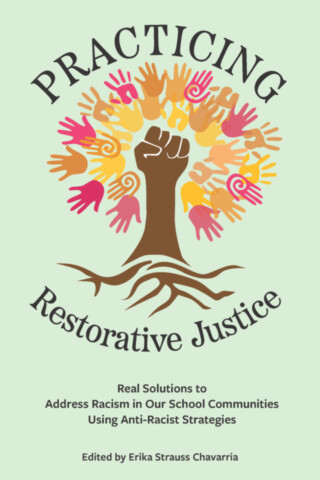
E-books are now distributed via VitalSource
VitalSource offer a more seamless way to access the ebook, and add some great new features including text-to-voice. You own your ebook for life, it is simply hosted on the vendor website, working much like Kindle and Nook. Click here to see more detailed information on this process.
Library E-Books
We are signed up with aggregators who resell networkable e-book editions of our titles to academic libraries. These editions, priced at par with simultaneous hardcover editions of our titles, are not available direct from Stylus.
These aggregators offer a variety of plans to libraries, such as simultaneous access by multiple library patrons, and access to portions of titles at a fraction of list price under what is commonly referred to as a "patron-driven demand" model.
Traditionally, educator preparation programs only provide classes related to content, practical pedagogy, and classroom management. If we hope to see any level of justice in the education system, preparation programs must include courses that take an honest and deep dive into the ways in which racism shows up in schools and communities. Aspiring educators are craving and demanding the tools and resources to be the best educators they can be for our students in this country. They know the importance of advocating for and enacting anti-racism in their pedagogical practices, in school policy and culture, and in their community. The authors of this book will offer first-hand testimony of how deep racism permeates public education, an institution that, since its founding, was never meant for Black and brown students, as well as solutions to create truly just and equitable school communities. The ultimate mission of Practicing Restorative Justice is to show readers the effectiveness of restorative justice practices in addressing a number of issues that impact Black and brown students. It takes a deep dive into the School-to-Prison Pipeline, in which failed education policies push students of color out of schools and into the penal system, dooming them for life. Other topics include policing in schools, systemic racism’s impact on classrooms and learners at all grade levels, and ways in which to decolonize the education system. The book provides classroom instructors, college of education faculty, and preservice teachers the concrete means to improve the learning experience of students of color in our public education system.
More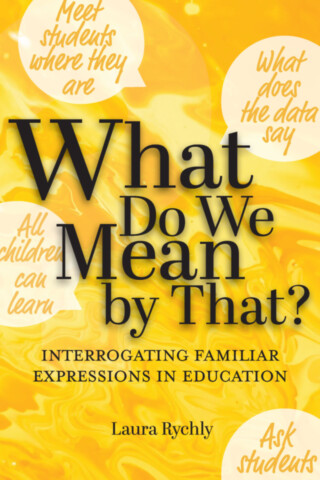
E-books are now distributed via VitalSource
VitalSource offer a more seamless way to access the ebook, and add some great new features including text-to-voice. You own your ebook for life, it is simply hosted on the vendor website, working much like Kindle and Nook. Click here to see more detailed information on this process.
Library E-Books
We are signed up with aggregators who resell networkable e-book editions of our titles to academic libraries. These editions, priced at par with simultaneous hardcover editions of our titles, are not available direct from Stylus.
These aggregators offer a variety of plans to libraries, such as simultaneous access by multiple library patrons, and access to portions of titles at a fraction of list price under what is commonly referred to as a "patron-driven demand" model.
What Do We Mean by That?: Interrogating Familiar Expressions in Education is a collection of essays that opens a space for all educational workers—teachers, teacher educators, administrators, politicians, and others—to unpack commonly used educational phrases and ideas. The idea is to carefully examine what we say to one another when we talk about schools, curriculum, students, and other educational problems or issues—when we say things like “We have to meet students where they are,” and “All children can learn,” or “What does the data say?” What Do We Mean by That? challenges and clarifies such phrases and the how, and why, that they shape educational policies and practices. The influential curricular theorist Dwayne Huebner charged us to always be aware of our “man-made tools,” such as language, and said that since “all educators attempt to shape the world; theorists should call attention to the tools used for the shaping in order that the world being shaped can be more beautiful and just.” Language is a tool in educational practice in myriad ways: between administrators and teachers, teachers and students, teachers and parents, and students and students, as examples. A scripted curriculum is a tool intended to provide fixed language to teachers. It is normal for phrases to make their way into our everyday practices and get lodged there. But we need opportunities to interrupt ourselves and study our language tools to ensure they help create beauty and justice. This collection of thoughtful essays seeks to be this interruption. It is an invaluable tool for improving the educational experience of students and schools.Perfect for courses such as: Foundations of Education; Curriculum Studies; Diversity in Education; Educational Rhetoric and Policy
More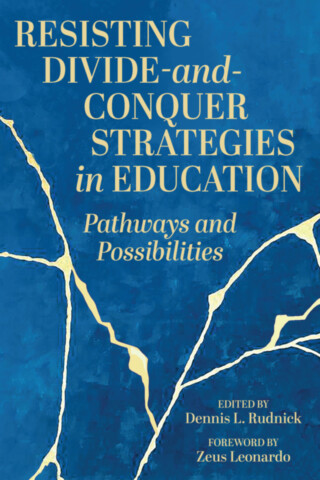
E-books are now distributed via VitalSource
VitalSource offer a more seamless way to access the ebook, and add some great new features including text-to-voice. You own your ebook for life, it is simply hosted on the vendor website, working much like Kindle and Nook. Click here to see more detailed information on this process.
Library E-Books
We are signed up with aggregators who resell networkable e-book editions of our titles to academic libraries. These editions, priced at par with simultaneous hardcover editions of our titles, are not available direct from Stylus.
These aggregators offer a variety of plans to libraries, such as simultaneous access by multiple library patrons, and access to portions of titles at a fraction of list price under what is commonly referred to as a "patron-driven demand" model.
Resisting Divide-and-Conquer Strategies in Education: Pathways and Possibilities examines the ways in which divide-and-conquer strategies operate in the American public education system. In U.S. education, these mechanisms are endemic and enduring, if not always evident. Coordinated, strategic, well-funded, politically-viable campaigns continue to stoke fear, othering, villainization, and dehumanization of minoritized groups, pushing false and problematic narratives that inhibit progress toward social justice. Weaponizing hegemony and leveraging misinformation, reactionary agents and institutions seek to suppress truth, block access to democratic participation, and dismantle education and other sites of emancipatory possibility through the strength of divide-and-conquer mechanisms, pitting relatively disempowered groups against one another to preserve the dominant social order. Readers of this book will encounter conceptual and critical interrogations of divide and conquer. The text will help facilitate inquiry and engagement into how divide and conquer operates and how it can be resisted. It looks at the history of the phenomenon, as well as its current state, especially as it relates to education. What insights and lessons might we learn from a focused examination of divide and conquer, and what strategies of resistance are both possible and necessary for challenging it? This text is designed for undergraduate and graduate classrooms in education and social sciences. Part I, Ideology and Sociopolitical Contexts, dissects how divide-and-conquer mechanisms operate ideologically and sociopolitically. Part II, Policies and Practices, focuses on how divide-and-conquer mechanisms shape exclusionary U.S. educational policies and practices. Part III, Resistance and Liberation, documents efforts of liberatory communicative, curricular, and pedagogical possibilities. Each chapter concludes with a set of critical questions for reflection and engagement.Perfect for courses such as: Foundations of Education; Schools and Society; Schooling in America; History of Education; Philosophy of Education; Sociology of Education; Social Studies; Critical Theory in Education
More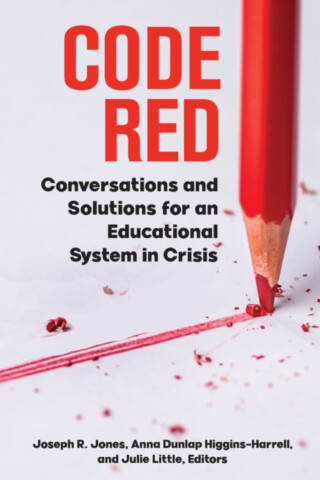
E-books are now distributed via VitalSource
VitalSource offer a more seamless way to access the ebook, and add some great new features including text-to-voice. You own your ebook for life, it is simply hosted on the vendor website, working much like Kindle and Nook. Click here to see more detailed information on this process.
Library E-Books
We are signed up with aggregators who resell networkable e-book editions of our titles to academic libraries. These editions, priced at par with simultaneous hardcover editions of our titles, are not available direct from Stylus.
These aggregators offer a variety of plans to libraries, such as simultaneous access by multiple library patrons, and access to portions of titles at a fraction of list price under what is commonly referred to as a "patron-driven demand" model.
In schools, a Code Red alert indicates a potential or immediate threat within a building or on a campus and is the signal for a full-scale lockdown of all classrooms. This book, Code Red: Conversations and Solutions for an Educational System in Crisis, presents a variety of voices from teachers, administrators, teacher preparation faculty, college supervisors, and pre-service teacher candidates. These voices are crying “Code Red” because they want a broken system repaired. For them, the system is bleeding, cancerous, and in turmoil, with the expectation that they work under arduous and often dangerous conditions; teachers are underpaid, devalued, exhausted, voiceless, and abused. They face an environment in which politics has replaced learning, students are failing and, in extreme circumstances, walking away from schools or even committing suicide. The political discourse is wrestling control from teachers in certain states. Neurodivergent students are being pushed aside. The altruistic profession of teaching is being reduced to factory work, in which teachers—especially those in their first five years of service—are leaving the profession at staggering rates. The profession itself is at risk of becoming obsolete. The contributors to Code Red believe that the American educational system has entered a moment of crisis. Their voices need to be heard, and their stories and lived experiences should be recognized. The adage is true: the answer to any problem resides with those who own the problem. We cannot create solutions without owning that these issues exist, and all of America owns the education of our children. Therefore, this book provides a dialogic space where everyone involved in the American educational system can reimagine the possibilities of our system and, through this process, begin creating positive and sustainable changes to bring our system out of crisis. In addition to providing a vivid picture of the current state of public schools, the book offers real solutions that can be used to produce healthier, more successful classrooms. It is an invaluable tool for instructors, pre-service teachers, and Colleges of Education administrators.Perfect for courses such as: Introductory Education; Undergraduate Social and Cultural Foundations of Education; Introductory Educational Leadership; Introductory Undergraduate Teacher Preparation; Graduate Foundations of Education; and Introductory MAT Graduate
More