
General Interest

E-books are now distributed via VitalSource
VitalSource offer a more seamless way to access the ebook, and add some great new features including text-to-voice. You own your ebook for life, it is simply hosted on the vendor website, working much like Kindle and Nook. Click here to see more detailed information on this process.
Learning to See School Systems: Power, Practice, and Improvement in Public Education is a volume dedicated to the goal of improving school systems. In 1513, Niccolò Machiavelli wrote The Prince to help rulers understand the realities of power. Five hundred years later, Dr. Michael R. L. Odell — educator, researcher, and amused observer of Texas school systems — offers a modern reflection for those who lead the nation’s classrooms and districts. Learning to See School Systems is both satire and system map: a handbook for anyone attempting to lead improvement in institutions designed to resist it gracefully. Across twelve chapters, it reveals how public education mirrors the politics of Florence—ambition, reform, accountability, and fortune disguised as data. Each chapter blends humor with hard truth: board relations as diplomacy, improvement plans as rituals, dashboards as illusion, crises as curriculum. Beneath the wit lies a serious purpose—to help educators see their districts as living systems, governed by patterns that Improvement Science now names but Machiavelli already understood. For teachers, principals, superintendents, and school board members alike, Learning to See School Systems is a mirror of modern schooling—ironic, affectionate, and uncomfortably accurate. Read it for laughter. Keep it for survival. Share it with anyone about to lead their first staff meeting. “He who governs schools must learn to rule hearts that believe themselves ungoverned.” — from Learning to See School SystemsPerfect for courses such as: School Improvement and Reform; School Policy; Organizational Leadership and Change
More
E-books are now distributed via VitalSource
VitalSource offer a more seamless way to access the ebook, and add some great new features including text-to-voice. You own your ebook for life, it is simply hosted on the vendor website, working much like Kindle and Nook. Click here to see more detailed information on this process.
As educational systems worldwide grapple with complex challenges requiring sustained, evidence-informed solutions, collaborative continuous improvement in education (CCIE) has emerged as a transformative approach to systemic change. Yet a critical gap remains: how do we effectively teach and learn these powerful improvement methods across the diverse landscape of educational institutions and professionals who work in them? This groundbreaking book addresses this vital question with practical wisdom and research-backed strategies. Teaching and Learning for Collaborative Continuous Improvement in Education: Challenges and Possibilities Across the Educational System tackles the pressing need to build CCIE capacity among higher education faculty, professional developers, state education department associates, and the broader network of professionals driving educational improvement initiatives. As policymakers increasingly turn to CCIE to inform system-wide reforms, this book provides the roadmap for spreading and deepening expertise across organizational boundaries and professional contexts. The authors examine three fundamental challenges facing the field: bridging knowledge gaps across diverse professional roles and organizations; balancing scholarly and practical applications of CCIE learning; and navigating the spectrum of delivery modalities from fully asynchronous to synchronous, and in-person to remote formats. Through real-world examples, chapter authors reveal both challenges and promising practices that transcend traditional silos and create meaningful learning communities. What sets this book apart is its collaborative approach to knowledge sharing. Rather than prescribing one-size-fits-all solutions, the editors and authors position themselves as colleagues and peers, sharing hard-won lessons from their own improvement journeys. Each chapter follows a systematic structure that includes contextual background, theoretical foundations, learning objectives and approaches, documented results, and honest reflections on lingering questions. The book's organization reflects its commitment to addressing real-world complexity. Following an introductory chapter that maps the current terrain of CCIE teaching and learning, subsequent sections dive deep into specific challenges: designing CCIE learning experiences for different audiences, adapting approaches for varying purposes, and leveraging different modalities effectively. Rich case studies and illustrative examples demonstrate how theory translates into practice across diverse educational contexts. Higher education faculty will find research-based approaches to curriculum design and pedagogy. Professional developers will discover strategies for building organizational capacity using theoretically-grounded and tested approaches. State education leaders will gain insights into system-wide implementation approaches. Most importantly, all readers will find concrete tools for learning with and from each other―breaking down the isolation that too often hampers improvement efforts. The book concludes with a look to the future―highlighting emerging trends and future opportunities in CCIE teaching and learning, while supplementary materials provide readers with immediately usable resources. It represents an essential contribution to the growing field of improvement science in education―and a vital resource for the professionals working to make that science accessible, applicable, and impactful across the entire educational ecosystem.Perfect for courses such as: Continuous Quality Improvement in Education and Human Services; Networked Improvement Communities; Improvement Science Capstone; Leadership for Continuous Improvement; Leadership Experiences, Application and Development; Leadership for Equity for Equity and Improvement; Instructional Leadership; Doctoral Seminar: Dynamics of Improving Schools and Districts; and Supervision of Instruction
More
E-books are now distributed via VitalSource
VitalSource offer a more seamless way to access the ebook, and add some great new features including text-to-voice. You own your ebook for life, it is simply hosted on the vendor website, working much like Kindle and Nook. Click here to see more detailed information on this process.
Learning to See the University: Power, Practice, and Improvement in Academic Systems is a sharp and reflective exploration of power, policy, and survival in modern higher education. Written in the spirit of Niccolò Machiavelli’s The Prince, the book translates political realism into the everyday governance of universities, where authority operates through committees, budgets, rankings, accreditation, and carefully managed narratives rather than formal command. Neither parody nor exposé, Learning to See the University offers a clear-eyed account of how universities function beneath the language of shared governance and collegiality. Drawing on systems thinking and Improvement Science, it explains why reforms stall, why innovation must often appear as continuity, and why leadership in higher education is shaped more by timing, incentives, and legitimacy than by vision alone. Structured as a modern adaptation of Machiavelli, each chapter reimagines concepts such as virtù, fortuna, fear, reputation, and loyalty within the academic ecosystem. Departments emerge as semi-sovereign fiefdoms, committees as instruments of stability, rankings as tools of perception, and crises as catalysts for change. The tone is accessible, wry, and reflective. Humor provides distance without cynicism, allowing readers to recognize familiar institutional patterns while gaining clarity rather than frustration. New administrators will find a survival guide; experienced leaders will recognize a mirror. Intended for provosts, deans, department chairs, and graduate students in higher education leadership, Learning to See the University is suited for doctoral programs, leadership seminars, and administrative retreats. Ultimately, it is not a guide to manipulation, but an argument for realism with conscience—and for leading universities with wisdom, restraint, and integrity.Perfect for courses such as: Higher Education Leadership; College and University Administration; Higher Education Policy and Politics; Institutional Research and Effectiveness; Strategic Planning in Higher Education; Change and Innovation in Higher Education; Finance and Budgeting in Higher Education; Higher Education Law and Ethics; Leadership Theory in Education; Organizational Theory in Education; Systems Thinking and Improvement in Higher Education
More
E-books are now distributed via VitalSource
VitalSource offer a more seamless way to access the ebook, and add some great new features including text-to-voice. You own your ebook for life, it is simply hosted on the vendor website, working much like Kindle and Nook. Click here to see more detailed information on this process.
Books and stories can inspire, create empathy, and be cathartic outlets. They expand our understanding of the lived experience as one of the most important conduits for how we spread knowledge and participate in shared humanity. Building on the work of Rudine Sims Bishop, Battle of the Bans: Narratives of Reading and Engaging with Banned Books explores how challenged and banned books act as windows, mirrors, and sliding doors. In the United States and globally, the twenty-first century is seeing renewed efforts at banning books in a variety of forms, including parental controls, book burning, curricular erasure and epistemicide, and social media banning. These efforts have the potential of silencing particular stories, histories, and perspectives. Book banning targets and has deleterious impacts on particular communities, including but not restricted to people of color, LGBTQ+, religious and cultural minorities, and people with different abilities. This edited collection counteracts the narrative that books are dangerous, centering a celebration of how stories shape lives. Educators, families, and individuals present a range of perspectives on how particular banned books have changed their lived experience and view of the world. Contributors discuss children’s literature, young adult literature, fiction, and nonfiction texts. The book is comprised of three parts. In the Context section, contributors explore lessons and/or situations for how banned books have, can, or should be used. In the Introspection section, contributors provide narratives about how banned books shaped a sense of self. In the Action section, contributors detail steps taken in response to book bans, providing strategies for countering censorship and erasure in classrooms, schools, and libraries. Battle of the Bans creates hope and conversation in an era of political divisiveness. It inspires readers to reflect on their own experiences with books, creates dialogue, and provides pathways to challenge book banning, ensuring access to stories, histories, and perspectives.The book will appeal to a wide range of audiences, including academics, librarians, classroom teachers, parents, and readers who understand the value of books and literature.Perfect for courses such as: Multicultural Literature; Honors Seminar/Special Topics: Book Banning; Curriculum Theory in Education; History of Reading; Contemporary Social Issues; Introduction to American Studies; Introduction to Policy Studies; Qualitative Research Methods; Narrative Research Methods; and Essay Writing
More
E-books are now distributed via VitalSource
VitalSource offer a more seamless way to access the ebook, and add some great new features including text-to-voice. You own your ebook for life, it is simply hosted on the vendor website, working much like Kindle and Nook. Click here to see more detailed information on this process.
Privilege Through the Looking-Glass, Third Edition is a revised and expanded collection of essays that explore privilege and status characteristics in daily life. This collection seeks to make visible that which is often invisible. It seeks to sensitize us to things we have been taught not to see. Privilege, power, oppression, and domination operate in complex and insidious ways, impacting groups and individuals. And yet, these forces that affect our lives so deeply seem to at once operate in plain sight and lurk in the shadows, making them difficult to discern. Like water to a fish, environments are nearly impossible to perceive when we are immersed in them. This book attempts to expose our environments.With engaging and powerful writing, the contributors share their personal stories as a means of connecting the personal and the public. This volume applies an intersectional perspective to explore how race, class, gender, sexuality, education, and ableness converge, creating the basis for privilege and oppression. Privilege Through the Looking-Glass encourages readers to engage in self and social reflection and can be used in a range of courses in sociology, social work, communication, education, gender studies, and Black studies. Each chapter includes discussion questions and/or activities for further engagement, making it a perfect classroom text.
More
E-books are now distributed via VitalSource
VitalSource offer a more seamless way to access the ebook, and add some great new features including text-to-voice. You own your ebook for life, it is simply hosted on the vendor website, working much like Kindle and Nook. Click here to see more detailed information on this process.
Photovoice research is a participatory qualitative research method where participants photograph themselves, then analyzing them to document and reflect upon their experiences and perspectives on a specific topic, often with the goal of raising awareness and advocating for change. It empowers participants by giving them control over the research process and their own narratives.Photovoice: Using Words and Images in Qualitative Research is a collection of essays from the field that focuses on educators’ implementation of photovoice in a myriad of settings. This methodology crosses disciplines and offers a powerful way to combine visual methods with social research, making it adaptable to many areas where understanding and representing marginalized voices are important.Photovoice is the perfect text for use in a variety of classrooms and courses, including:Introduction to Qualitative Research MethodsCommunity Studies (understanding how visual methods like photovoice can help researchers gain insight into the lived experiences of people within a community)Public Health (photovoice is a valuable method for understanding health disparities, the impact of the environment on health)Education (when studying participatory learning, student engagement, or community-based education. It would also be useful in teacher training programs focusing on inclusive and culturally responsive teaching.)Anthropology (courses on qualitative research or ethnography, photovoice allows for a deeper understanding of cultural and social dynamics through the visual representation of people's lived experiences)Selected topics in Educational ResearchPlace-Based Education
More
E-books are now distributed via VitalSource
VitalSource offer a more seamless way to access the ebook, and add some great new features including text-to-voice. You own your ebook for life, it is simply hosted on the vendor website, working much like Kindle and Nook. Click here to see more detailed information on this process.
Methodology and Praxis: Thinking with Patti Lather examines the work of Patti Lather and its importance at the intersections of curriculum theory, cultural studies, and critical qualitative research. The book explores the impact of Lather's work on the field both broadly and specifically and engages with her ideas and methods in innovative ways. From 1988-2014, Patti Lather was a faculty member at Ohio State University’s School of Educational Policy and Leadership, where she taught qualitative research, feminist methodology, and courses on gender and education. She has authored four influential books: Getting Smart: Feminist Research and Pedagogy With/in the Postmodern (1991 Critics Choice Award); Troubling the Angels: Women Living with HIV/AIDS (co-written with Chris Smithies, 1998 CHOICE Outstanding Academic Title); Getting Lost: Feminist Efforts Toward a Double(d) Science (2008 Critic’s Choice Award); and Engaging (Social) Science: Policy from the Side of the Messy (awarded the Critic’s Choice Award in 2010 and 2011). Dr. Lather has delivered lectures extensively both nationally and internationally, and has held several distinguished visiting lectureships. Her research explores (post)critical, feminist, and poststructural theories, with her recent work focusing on how the demand for scientifically-based research in education affects qualitative inquiry. She has served in visiting roles at institutions such as the University of British Columbia, Goteborg University, York University, and the Danish Pedagogy Institute, and in 1995 she undertook a sabbatical at the Humanities Research Institute at the University of California, Irvine, where she participated in a seminar on feminist research methodology. Her accolades include a 1989 Fulbright to New Zealand and induction as an AERA Fellow in 2009. Lather is a prominent and prolific scholar whose work has been influential in shaping multiple fields, challenging conventional understandings of research and knowledge, and advocating for social justice and equity in education. This collection represents a diverse group of scholars that build on these contributions and showcase the diverse ways in which research improves teaching and learning. Contributors in this volume include scholars in educational theory, social science, research methodology, feminist social theory, and curriculum theorizing. Perfect for courses such as: Cultural Studies of Education; Qualitative Research Methodology; Contemporary Curriculum Theory; Advanced Qualitative Inquiry; Feminist Theory and Methodology; Education Policy Studies; Research In Education
More
E-books are now distributed via VitalSource
VitalSource offer a more seamless way to access the ebook, and add some great new features including text-to-voice. You own your ebook for life, it is simply hosted on the vendor website, working much like Kindle and Nook. Click here to see more detailed information on this process.
Do you have the desire to build relationships with the special education teachers in your school or district but constantly feel weighed down by compliance issues? Special education teachers are leaving the field at alarming rates, and positive change through transformational leadership practices can help administrators build confidence and self-efficacy as leaders of special education programs and strengthen special education teachers’ commitment to remain in the field. In a book that guides an affective journey using John C. Maxwell’s teachings, Natasha Veale, a former special education teacher, professor of special education, and certified Maxwell Leadership consultant, demonstrates how to address administrators’ belief in their ability to become influential special education leaders and connect with their special education teachers, even without a background in special education. This book is ideal for pre-service and in-service assistant principals and principals, special education administrators, and general and special education teachers. Embedded school administrators’ anecdotes reveal experiences, challenges, and desires to build an emotionally supportive environment for their special education teachers. Practical advice and tips are offered to help administrators positively influence, individually consider, intellectually stimulate, and inspirationally motivate their special education teachers. In How to Retain Special Education Teachers: A Transformational Leadership Guide for School Administrators, you learn how to: Support special education teacher workload Build self-efficacy as a leader of special education Build relationships with special education teachers Strengthen Principal Preparation Programs This is a critically important book that should be read by every school administrator and by every College of Education faculty member involved in any area of special education.Perfect for courses such as: Principal Leadership for Special Education; Special Education Administration; Educational Leadership; Developing Teachers; Strategic Human Capital Leadership; Leading Change in Education; and Foundations in Education
More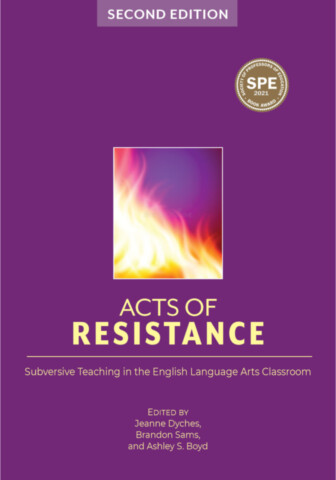
E-books are now distributed via VitalSource
VitalSource offer a more seamless way to access the ebook, and add some great new features including text-to-voice. You own your ebook for life, it is simply hosted on the vendor website, working much like Kindle and Nook. Click here to see more detailed information on this process.
Library E-Books
We are signed up with aggregators who resell networkable e-book editions of our titles to academic libraries. These editions, priced at par with simultaneous hardcover editions of our titles, are not available direct from Stylus.
These aggregators offer a variety of plans to libraries, such as simultaneous access by multiple library patrons, and access to portions of titles at a fraction of list price under what is commonly referred to as a "patron-driven demand" model.
The first edition of Acts of Resistance: Subversive Teaching in the English Language Arts (ELA) Classroom won the 2021 Society of Professors of Education's Outstanding Book Award and garnered other nominations. The second edition includes a foreword by Ashley Hope Pérez, author of the young adult literature novel Out of Darkness, one of the most frequently banned books across U.S. classrooms. Four new chapters reflect sociopolitical changes since the book's publication, including a widespread, coordinated uptick in the banning of books centering authors and characters from marginalized communities; the COVID-19 pandemic and with it, increased acts of violence against folks identifying as Asian, Asian American, and Pacific Islander; the murders of George Floyd, Breonna Taylor, and countless other victims of police brutality; the January 6th insurrection; the closing of the Trump era; the passing of anti-CRT and anti-LGBTQIA+ legislation; and a "school choice" movement that defunds public schools, deprofessionalizes educators, and places democracy in peril. Chapters specifically illustrate the storied practices of subversive teachers across the 6-12 ELA context. They provide educators with instructional ideas on how to do anti-oppressive work while also meeting traditional ELA disciplinary elements.
More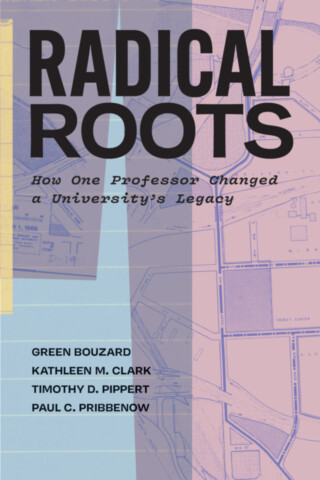
E-books are now distributed via VitalSource
VitalSource offer a more seamless way to access the ebook, and add some great new features including text-to-voice. You own your ebook for life, it is simply hosted on the vendor website, working much like Kindle and Nook. Click here to see more detailed information on this process.
Library E-Books
We are signed up with aggregators who resell networkable e-book editions of our titles to academic libraries. These editions, priced at par with simultaneous hardcover editions of our titles, are not available direct from Stylus.
These aggregators offer a variety of plans to libraries, such as simultaneous access by multiple library patrons, and access to portions of titles at a fraction of list price under what is commonly referred to as a "patron-driven demand" model.
Radical Roots: How One Professor Changed a University's Legacy tells the story of Joel Torstenson, a sociology professor at Augsburg University in Minneapolis, Minnesota. In the 1960s, Torstenson challenged his university to embrace its urban setting and to design its curricular, co-curricular, and community engagement programs to advance its mission of “Education for service.” The compelling story of Torstenson’s legacy at Augsburg over the past 60 years offers lessons for colleges and universities across the country committed to democratic engagement in their work at the intersections of mission and place. Augsburg University's saga as an urban settlement has not always been embraced by the university. Though location and place are central to the university’s identity, it is not sufficient to explain the integrative power of the university’s character. For that purpose, it is critical that place be understood through the lens of Augsburg’s academic mission and work. This integrated view of place and mission required a new way of imagining the university’s core work of educating students. The purpose of this book is two-fold. The first is to document and celebrate the legacy of Professor Joel Torstenson, and to understand the impact of this legacy’s inception, evolution, and current manifestations and impact at Augsburg and in the wider world. Professor Torstenson cared deeply about the public purpose of higher education, and Torstenson’s model for what this public purpose might look like prompted massive transformation in Augsburg University’s trajectory. The resulting experiments in education and commitment to the city flowered into a legacy that has spurred Augsburg University to create an innovative model for 21st Century education. This model has impacted everything from student learning and community life, to teaching and curricular structure, to the public mission of the institution and its presence in the city and world. Torstenson’s creative—and even radical—work in the 1960s and '70s has been carried through the decades by continued innovation in teaching and learning based in experiential education, and a commitment to place and community building. This legacy has simultaneously advanced the public purpose and mission of the University. Secondly, this book shares what are some of the lessons learned from fifty years of innovation following Torstenson’s vision, with the hope that these lessons might serve the broader community of colleges, universities, faculty, staff, and students engaged in similar pursuits. Augsburg’s innovative experiential education, place-based community engagement, and public and anchor institution work has been and will continue to be a model for other institutions. We believe that Torstenson’s legacy, and the lessons learned through the years of its evolution, has lessons to teach and models to follow for our sibling institutions across the United States. The volume includes discussion prompts and questions after each section. There is also a companion website (www.augsburg.edu/radicalroots) that includes additional resources related to the volume's themes.Perfect for course such as: Higher Education and Democracy in the United States; Principles of Experiential Education; Place Matters: Higher Education and Community Engagement; Universities as Anchor Institutions in their Communities; Introduction to Citizen Professionalism: Leading in the 21st Century; Public Work, Social Responsibility, and Vocation in a World of Extremes; Accompaniment: Developing Democratic Skills and Fostering Healing with Communities; Curricular Innovations in Higher Education; and Principles of Higher Education Pedagogy
More