

Research Skills

E-books are now distributed via VitalSource
VitalSource offer a more seamless way to access the ebook, and add some great new features including text-to-voice. You own your ebook for life, it is simply hosted on the vendor website, working much like Kindle and Nook. Click here to see more detailed information on this process.
Multi-Tiered Systems of Support (MTSS) is an important addition to a long list of initiatives designed to ensure educational equity for all students. Veteran educators will recognize many MTSS strategies as practices they already use, while others may feel uncertain or overwhelmed by yet another framework. This book bridges that gap—grounding MTSS in authentic classroom experience and practical wisdom.Through vivid, real-life stories, the authors illuminate both the complexity and the humanity of school-based work. Drawing on decades of experience—as a classroom teacher and as a school counselor/psychologist—their narratives span from 1982 to the present day, including insights from K–12 settings and university teaching. Each chapter presents a compelling case study highlighting student and classroom engagement across grade levels. These stories invite reflection and dialogue around research-based best practices and educational theory, with each chapter concluding in a transparent explanation of the authors’ professional thinking.Readers will trace the evolution of educational practice over time—from an era when Culturally Responsive Pedagogy was rarely discussed to today’s emphasis on inclusive, socially-constructed learning environments. The book chronicles the profession’s broader shift from behaviorism to social constructivism and demonstrates how that journey informs effective MTSS implementation.The case studies illustrate how culturally responsive practices, data-informed decision making, and authentic relationships with students create the conditions where academic growth, positive behavior, and social-emotional wellness intersect. Universal (Tier I), Targeted (Tier II), and Intensive (Tier III) supports—across academics, behavior, and social-emotional learning—are woven seamlessly throughout.Ideal as an introduction to both the theory and practical application of MTSS, this book offers clarity, compassion, and hard-earned insight. It is designed to spark meaningful discussion in teacher preparation programs, professional learning communities, school buildings, and district leadership teams.Perfect for courses such as: Positive Behavior Supports; Role and Function of a School Psychologist: Positive Behavior Supports (Practicum); Crisis, Trauma Response, and Interventions; Academic Assessment & Intervention; Community, Family, and School Collaboration; Curriculum and Inquiry in Public Schools; Fundamentals of Teaching; Access to Learning in a Pluralistic Society; Teaching Emergent Bilingual Students and Students with Disabilities
More
E-books are now distributed via VitalSource
VitalSource offer a more seamless way to access the ebook, and add some great new features including text-to-voice. You own your ebook for life, it is simply hosted on the vendor website, working much like Kindle and Nook. Click here to see more detailed information on this process.
Transformative Inquiry: Integrating Action Research and Systems Thinking explores how two dynamic methodologies—action research and systems thinking—can be combined to address complex challenges in education, healthcare, organizational leadership, and public policy. Grounded in participatory, iterative processes, both approaches emphasize collaboration, reflection, and systemic improvement. Together, they provide a flexible yet rigorous framework for change.This edited volume brings together scholars and practitioners to examine the historical foundations, theoretical intersections, and applied integration of action research and systems thinking. Chapters include conceptual models and case studies drawn from K–12 schools, higher education, health professions education, digital learning environments, and leadership development. Contributors demonstrate how these frameworks support root-cause analysis, stakeholder engagement, and adaptive interventions that move beyond surface-level solutions.Each chapter illustrates how reflective cycles of inquiry, when combined with systems thinking tools such as feedback loops and mental models, can uncover persistent barriers and guide meaningful, context-sensitive change. Topics include digital equity, culturally responsive pedagogy, instructional redesign, performance improvement, and professional learning.Transformative Inquiry will be of interest to scholars, educators, researchers, and practitioners seeking tools for leading improvement in complex systems. It supports graduate and doctoral-level courses in research methods, systems change, and leadership, as well as professional learning in schools, universities, and organizations.
More
E-books are now distributed via VitalSource
VitalSource offer a more seamless way to access the ebook, and add some great new features including text-to-voice. You own your ebook for life, it is simply hosted on the vendor website, working much like Kindle and Nook. Click here to see more detailed information on this process.
Photovoice research is a participatory qualitative research method where participants photograph themselves, then analyzing them to document and reflect upon their experiences and perspectives on a specific topic, often with the goal of raising awareness and advocating for change. It empowers participants by giving them control over the research process and their own narratives.Photovoice: Using Words and Images in Qualitative Research is a collection of essays from the field that focuses on educators’ implementation of photovoice in a myriad of settings. This methodology crosses disciplines and offers a powerful way to combine visual methods with social research, making it adaptable to many areas where understanding and representing marginalized voices are important.Photovoice is the perfect text for use in a variety of classrooms and courses, including:Introduction to Qualitative Research MethodsCommunity Studies (understanding how visual methods like photovoice can help researchers gain insight into the lived experiences of people within a community)Public Health (photovoice is a valuable method for understanding health disparities, the impact of the environment on health)Education (when studying participatory learning, student engagement, or community-based education. It would also be useful in teacher training programs focusing on inclusive and culturally responsive teaching.)Anthropology (courses on qualitative research or ethnography, photovoice allows for a deeper understanding of cultural and social dynamics through the visual representation of people's lived experiences)Selected topics in Educational ResearchPlace-Based Education
More
E-books are now distributed via VitalSource
VitalSource offer a more seamless way to access the ebook, and add some great new features including text-to-voice. You own your ebook for life, it is simply hosted on the vendor website, working much like Kindle and Nook. Click here to see more detailed information on this process.
Light a Fire and Watch It Burn: Disruptive Qualitative Methods in Education Research revolutionizes how qualitative research is conceptualized, taught, and practiced. Edited by Michael L. Boucher, Jr., Ph.D., this groundbreaking collection of essays by emerging and established scholars introduces equity-centered, justice-oriented methodologies designed to challenge entrenched systems of power and privilege. With a focus on amplifying marginalized voices and fostering transformative social action, this book serves as an inspiring, accessible resource for educators, researchers, and graduate students.Traditional qualitative research texts provide invaluable foundations for understanding methods such as participant observation, coding, and analysis. Yet, they often fail to address innovative approaches that challenge oppressive norms and center lived experiences of marginalized communities. Light a Fire and Watch It Burn fills this critical gap, presenting 15 concise, practice-oriented chapters on disruptive methods, including photovoice, duoethnography, feminist critical discourse analysis, and arts-based research like ethnodrama. These approaches reimagine qualitative inquiry as a vehicle for equity, inclusion, and justice, equipping readers with tools to create meaningful change.Each chapter follows a consistent structure, making the book an ideal classroom text for qualitative research courses. Readers will find clear explanations of the methodologies, their theoretical foundations, and how they disrupt systems of oppression while empowering participants. Practical examples, discussion questions, and curated lists of further readings encourage deep reflection and active engagement. This structure ensures seamless integration into weekly lessons for master’s and doctoral students, while also serving as a reference for scholars seeking to expand their methodological repertoire.From exploring anticolonial ethics to embracing culturally responsive frameworks like ʻŌiwi methodologies and Pláticas, the book highlights the potential of qualitative research to humanize and transform. Contributors share personal narratives and research experiences that illuminate how these methodologies foster trust, amplify silenced voices, and dismantle academic hierarchies. The metaphor of “lighting a fire” reflects the catalytic potential of these methods to spark curiosity, disrupt traditional paradigms, and ignite transformative social action, while “watching it burn” underscores the boldness and urgency of these practices in reimagining education research.Accessible, inspiring, and deeply rooted in critical theory, Light a Fire and Watch It Burn is an essential companion for students and educators who dare to confront power and reimagine research as a tool for justice. It challenges readers to move beyond the safe confines of traditional methods and embrace innovative practices that center humanity, equity, and resilience. Whether you are a graduate student beginning your journey, a scholar seeking to disrupt academic norms, or an educator looking for practical tools to inspire your students, this book provides the guidance and vision needed to reshape qualitative research—and, ultimately, the world it seeks to understand. Light a Fire and Watch It Burn is not just a book; it is a call to action for those ready to create a more inclusive, equitable future through research.Perfect for courses such as: Introduction to Qualitative Research Methods; Critical Theory in Education; Advanced Qualitative Research Design; Participatory Research in Education; Feminist Research in Social Sciences; Decolonizing Research Practices; Arts and Humanities-Based Inquiry; Social Justice in Education; Education Policy and Practice; Research Ethics and Methodologies
More
E-books are now distributed via VitalSource
VitalSource offer a more seamless way to access the ebook, and add some great new features including text-to-voice. You own your ebook for life, it is simply hosted on the vendor website, working much like Kindle and Nook. Click here to see more detailed information on this process.
Library E-Books
We are signed up with aggregators who resell networkable e-book editions of our titles to academic libraries. These editions, priced at par with simultaneous hardcover editions of our titles, are not available direct from Stylus.
These aggregators offer a variety of plans to libraries, such as simultaneous access by multiple library patrons, and access to portions of titles at a fraction of list price under what is commonly referred to as a "patron-driven demand" model.
Scaffolding the Language of Power: An Apprenticeship in Writing at the Doctoral Level offers an accessible, practical, hands-on guide to developing the skills needed to successfully write a doctoral dissertation or thesis. This textbook-workbook hybrid can be used both as a program/course text and as a supplement for individual doctoral students in education and related social science and humanities fields.The book is built on three main ideas. First, writing is fundamentally connected to issues of social justice. Doctoral-level writing is part of the “language of power” in academia, which builds on the linguistic patterns of the dominant culture and serves as a gatekeeping mechanism. Second, writing is genre-based. This means that doctoral level writing is a particular way of using language, or a specific genre, with distinct rules and structures that can be taught. And third, writing can be scaffolded. Approaching writing as a pedagogical act that supports readers’ understanding through purposeful scaffolding is not just a way to successfully complete a doctoral dissertation—it is a way to make academic writing more accessible in general.In its first chapter, Scaffolding the Language of Power provides a general framework for the rules of the doctoral “language of power.” Chapter two offers an in-depth look at organization and scaffolding as key features of academic writing at the doctoral level, with discussions and activities to practice drafting supportive headings, chunking text, creating road maps and topic sentences, and strategically linking sections, paragraphs, and sentences through transitions and connector phrases. Chapter three provides lessons and exercises to develop argumentation, evidence use, synthesis skills, and academic voice. The remaining six chapters address each major task of the dissertation, including the problem statement, literature review, theoretical framework, methodology, findings, and discussion. Each of these chapters explicitly teaches the purposes and elements of its specific dissertation task, guiding students through warm-ups, annotated examples with elaborated explanations of writing moves, and carefully sequenced activities. Ultimately, these pedagogical features support students to build out the pieces of their doctoral dissertations or theses, chapter by chapter.This book is appropriate for any course on academic writing in EdD or PhD programs. It is also useful for courses that teach how to write a problem statement, literature review, and/or theoretical framework. Additional courses include: Qualitative Research; Qualitative Practicum/pilot study courses; and Dissertation seminar and support courses.CLICK HERE TO BUY THE BOOK/WORKBOOK BUNDLE AND SAVE!CPED Webinar Series--Scaffolding the Language of Power: https://vimeo.com/1029693697
More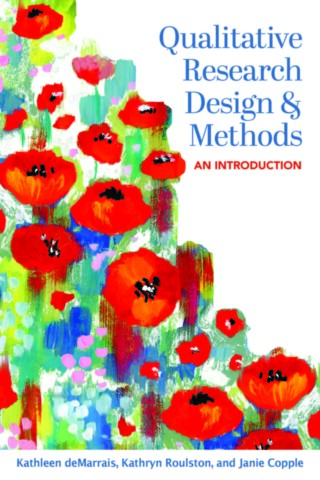
E-books are now distributed via VitalSource
VitalSource offer a more seamless way to access the ebook, and add some great new features including text-to-voice. You own your ebook for life, it is simply hosted on the vendor website, working much like Kindle and Nook. Click here to see more detailed information on this process.
Library E-Books
We are signed up with aggregators who resell networkable e-book editions of our titles to academic libraries. These editions, priced at par with simultaneous hardcover editions of our titles, are not available direct from Stylus.
These aggregators offer a variety of plans to libraries, such as simultaneous access by multiple library patrons, and access to portions of titles at a fraction of list price under what is commonly referred to as a "patron-driven demand" model.
Written by scholars from three generations of qualitative methodologists, Qualitative Research Design and Methods: An Introduction situates qualitative research within the history of the field and integrates this history within discussions of specific research designs. This novel approach allows readers to come to know the genealogy of the field and how previous generations of scholars have informed what we know today as qualitative research. The text reflects these more traditional as well as emerging qualitative research approaches, providing a theoretically grounded approach to designing and implementing qualitative research studies. While some introductory research texts focus on the specific methods of qualitative research with little attention to the role of theory, this book forefronts theory in qualitative research. The authors speak to students new to qualitative research with clear discussions of theory and theoretical concepts and how those notions must be considered throughout all aspects of research design, implementation, and representation of findings. Each chapter integrates discussion of theory. In addition, the book highlights the role of ethics in the same way with a chapter at the beginning as well as discussions of ethics threaded throughout each of the design chapters. Qualitative Research Design and Methods is THE introductory textbook for students taking introductory masters and doctoral courses in qualitative research. Instructors in those classes will appreciate the straightforward language and concepts provided by the authors.Perfect for courses such as: Introduction to Qualitative Research and Qualitative Research Design
More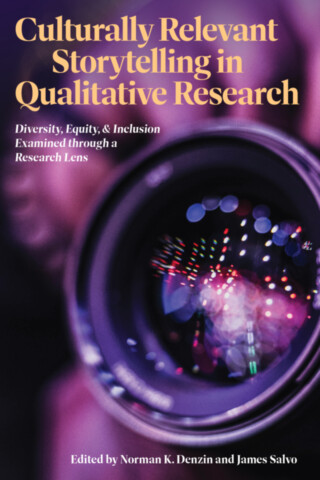
E-books are now distributed via VitalSource
VitalSource offer a more seamless way to access the ebook, and add some great new features including text-to-voice. You own your ebook for life, it is simply hosted on the vendor website, working much like Kindle and Nook. Click here to see more detailed information on this process.
Library E-Books
We are signed up with aggregators who resell networkable e-book editions of our titles to academic libraries. These editions, priced at par with simultaneous hardcover editions of our titles, are not available direct from Stylus.
These aggregators offer a variety of plans to libraries, such as simultaneous access by multiple library patrons, and access to portions of titles at a fraction of list price under what is commonly referred to as a "patron-driven demand" model.
This volume brings together work developing storytelling and narrative as an educational methodological framework. Chapters foreground scholarship that helps promote creating change, both educational and societal, through the use of critical storytelling regarding diversity, equity, inclusion, and justice (DEIJ). These include both narratives of challenges and possibilities that educators sometimes encounter in research spaces when intentionally centering DEIJ in their educational practice. Chapters also pay close attention to research ethics and explore epistemological alternatives and attempt to find ways toward generative dialogue regarding the reception and implementation of culturally-relevant pedagogy. This collection offers much sustained reflection on shared and sharable ways of knowing that interrogate the very philosophical foundations of education, pointing us to ever-more equitable futures.
More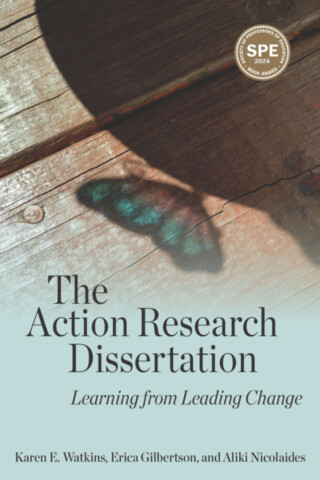
E-books are now distributed via VitalSource
VitalSource offer a more seamless way to access the ebook, and add some great new features including text-to-voice. You own your ebook for life, it is simply hosted on the vendor website, working much like Kindle and Nook. Click here to see more detailed information on this process.
Library E-Books
We are signed up with aggregators who resell networkable e-book editions of our titles to academic libraries. These editions, priced at par with simultaneous hardcover editions of our titles, are not available direct from Stylus.
These aggregators offer a variety of plans to libraries, such as simultaneous access by multiple library patrons, and access to portions of titles at a fraction of list price under what is commonly referred to as a "patron-driven demand" model.
The idea of the doctorate is undergoing a transformation as experts explore the nature of “doctorateness” and its relevance for current organizational and societal challenges. The professional practice doctorate has emerged as a highly useful framework to address these challenges and it necessarily requires a distinctive approach to the doctoral dissertation. The Action Research Dissertation: Learning from Leading Change shares a framework for the action research dissertation, outlining the specific ways in which action research fosters the development of scholar-leaders. It offers both doctoral students who are practitioners in applied fields, and the faculty who guide them in their doctoral research, a comprehensive and applied approach to action research that focuses on facilitating and leading change in organizations, as well as ways to address how to translate the findings of this work into a rigorous, dissertation research study. Throughout the book, the authors explicitly address the connection between the parallel and mutually-reinforcing processes of taking action and conducting research, offering rich insights, tools, and case examples that outline specifically how to use action research to both guide a change effort and generate useful insights to contribute to theory-building. This is an essential book for a variety of readers, including professional practice doctoral students, faculty directing the studies of those students, program administrators, professional development coordinators, and many others.Perfect for courses such as: Introduction to Action Research, Action Research, Applied Research, Qualitative Research, Mixed Methods Research, and Case Study Research
More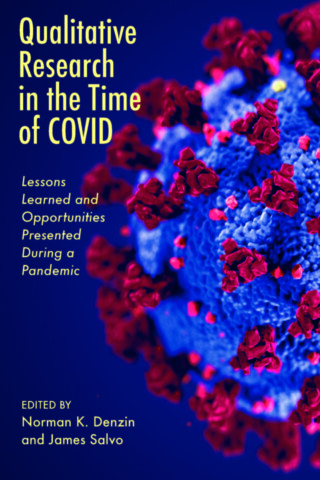
E-books are now distributed via VitalSource
VitalSource offer a more seamless way to access the ebook, and add some great new features including text-to-voice. You own your ebook for life, it is simply hosted on the vendor website, working much like Kindle and Nook. Click here to see more detailed information on this process.
Library E-Books
We are signed up with aggregators who resell networkable e-book editions of our titles to academic libraries. These editions, priced at par with simultaneous hardcover editions of our titles, are not available direct from Stylus.
These aggregators offer a variety of plans to libraries, such as simultaneous access by multiple library patrons, and access to portions of titles at a fraction of list price under what is commonly referred to as a "patron-driven demand" model.
Qualitative Research in the Time of COVID: Lessons Learned and Opportunities Presented During a Pandemic focuses broadly upon educational issues during the COVID-19 pandemic. The chapters make note of how contextual understandings are important for the future of researchers, especially when those contexts involve inequality made more acute since the pandemic. The chapters illustrate the importance of creating a climate of care based upon the principles of care ethics, and also examine projects that could be taken in the context of necessary self-care during challenging times. Chapters address the climate of caring in both in-person and online educational spaces and what it means to support students in an expanded conception of classroom space. In discussions ranging from exemplars of arts-based, personal narrative to completing a dissertation during a pandemic, chapters share both the immensity of the challenges and the rewards of productive and meaningful work both domestically and internationally. In the context of the living taking place after the pandemic’s coming into being as an event, this volume humbly offers writings as documents of remembrance of our historical present, offering with the hope that the historical may continue to move forward with an ethics of care ever in the foreground. Qualitative Research in the Time of COVID is perfect for such courses as Qualitative Research, Qualitative Inquiry, Ethnography, Teacher Education, Action Research, and Educational Research.
More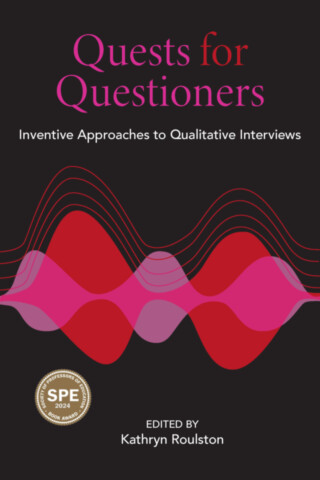
E-books are now distributed via VitalSource
VitalSource offer a more seamless way to access the ebook, and add some great new features including text-to-voice. You own your ebook for life, it is simply hosted on the vendor website, working much like Kindle and Nook. Click here to see more detailed information on this process.
Library E-Books
We are signed up with aggregators who resell networkable e-book editions of our titles to academic libraries. These editions, priced at par with simultaneous hardcover editions of our titles, are not available direct from Stylus.
These aggregators offer a variety of plans to libraries, such as simultaneous access by multiple library patrons, and access to portions of titles at a fraction of list price under what is commonly referred to as a "patron-driven demand" model.
This edited book presents a range of quests for those who want to learn from others through asking questions in research interviews and conversations and attending to the more-than-human aspects of the world. Authors in this book explore how to talk to people in ways that are responsive to cultural contexts and the challenges faced by people in everyday life, how to think with concepts drawn from an array of theories, including Karen Barad’s concept of “intra-action,” Rosi Braidotti’s work on “cartographies,” and Gilles Deleuze and Félix Guattari’s concepts of the “fold” and “assemblage.” Authors discuss a rich array of interview practices used by contemporary scholars—including, how to a. elicit verbal accounts from participants in culturally responsive ways;b. think with theory in relation to the use of interview methods; andc. integrate object, graphic, and photo elicitation methods and mobile and walking methods in research. The book is designed to provoke and inspire readers’ creativity to take risks and integrate different approaches to doing interviews in their research—in other words, to undertake methodological quests to experiment with the art of asking questions. Understanding the breadth of practices entailed in qualitative interview research can invigorate any researcher’s practice. This volume seeks to encourage researchers to design studies that account for how they interact with others in culturally responsive ways; to consider how they can draw on theoretical concepts to re-think, re-theorize, and question conventional interview practices; and to re-imagine the generation of interview accounts using other ways of knowing, including visual, sensory, and mobile methods.Perfect for courses such as: Introductory Research Methods │Introductory Qualitative Methods │Qualitative Research Design │Interview Research │Qualitative Data Collection
More