

Social Justice & Equity

E-books are now distributed via VitalSource
VitalSource offer a more seamless way to access the ebook, and add some great new features including text-to-voice. You own your ebook for life, it is simply hosted on the vendor website, working much like Kindle and Nook. Click here to see more detailed information on this process.
Food, and the context surrounding it, frames much of our lives. Our culinary experiences are imbued with our physical, social, spiritual, and cultural identities. However, for many, food practices are alienating because certain culinary practices are privileged, while others are marginalized, especially in higher education spaces. Simply having access to safe and affirming food, drink, and dining spaces on campus and at off-campus events is a right that every student and faculty member should be able to enjoy. A Culinary Approach to Inclusion and Belonging in Higher Education is a new and innovative book that is unique in that it examines food as a social justice and inclusion issue. For some, religious traditions guide the consumption of only certain foods, accompanied by various periods of fasting and other important contexts around eating. Examples include the Jewish kashrut, a mandate on preparing and eating kosher food, and the Muslim halal and Ramadan, with daytime fasting. This extends off campus as well, to events and conferences that feature alcohol, which excludes those who choose or need to abstain. For those with medical conditions such as celiac disease (gluten-free), the absence of specific ingredients and foods is a medical necessity. For autistic students, or for queer and transgender people, the physical layout and social expectations of dining cause stress and isolation. International students lack a sense of belonging when the culinary decisions on a campus exclude familiar foods or settings, rendering a sense of invisibility for the students. Finally, we can look at Food Philosophy, how we think and what we believe about food, as similar to the field of Ethnic Studies, with an examination of who is included, excluded, and the need for transformation of the culinary system. Through its nine chapters, this book is designed to weave together explanatory material on various culinary needs with stories of challenges and successes in meeting the needs of those who live on, work on, or visit campuses. It highlights the need for identity-affirming culinary experiences that create a sense of inclusion and belonging. A Culinary Approach to Inclusion and Belonging in Higher Education is a great resource for researchers in cultural studies. In addition, it is an effective teaching tool for a variety of curriculum studies classes.Perfect for courses such as: Educational Leadership; Food Studies; Foundations of Education; Higher Education; Multicultural Education; Student Affairs
More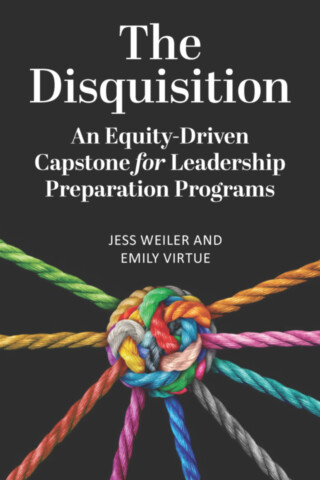
E-books are now distributed via VitalSource
VitalSource offer a more seamless way to access the ebook, and add some great new features including text-to-voice. You own your ebook for life, it is simply hosted on the vendor website, working much like Kindle and Nook. Click here to see more detailed information on this process.
Library E-Books
We are signed up with aggregators who resell networkable e-book editions of our titles to academic libraries. These editions, priced at par with simultaneous hardcover editions of our titles, are not available direct from Stylus.
These aggregators offer a variety of plans to libraries, such as simultaneous access by multiple library patrons, and access to portions of titles at a fraction of list price under what is commonly referred to as a "patron-driven demand" model.
The Disquisition: An Equity-Driven Capstone for Leadership Preparation Programs provides a thoughtful, detailed example of a capstone process and paper (The Disquisition) that employs improvement science, critical theory, and critical praxis to prepare educational leaders to disrupt inequity within their organizations. The chapters in this book represent 12 years of collaborative learning among experienced, respected, and award-winning leadership preparation faculty presently at or formerly from Western Carolina University (WCU). It integrates multiple sources of data from research, student feedback, faculty experiences, capstone committee member input, learnings from the Carnegie Project on the Education Doctorate (CPED), and program evaluation data examining the achievement of student learning outcomes. Following foundational chapters that describe the origin and evolution of the disquisition at WCU and its focus on social justice, faculty present six chapters—each one clearly detailing a primary component of the disquisition process and paper including the problem of practice; a causal analysis; identifying the improvement initiative; designing the improvement initiative; evaluating the improvement initiative and reporting results; and implications, recommendations, and leadership lessons learned. Each of these chapters includes a brief introduction to the component; expectations for students as practitioners (leading the work); expectations for students as scholars (evaluating and writing about the work); an excerpt from the disquisition paper outline relevant to the component; example figures, tables, or text from completed disquisition papers; and scholarly resources for scholar-practitioners. The final chapter of the book presents the process for convening a disquisition committee, a description of the IRB process, and the expectations for defending the disquisition at both the proposal defense and the final defense meeting. Although this book is written as a guide for students engaging in the disquisition process and writing the disquisition paper, it serves as a strong model for leadership preparation programs and university administrators who seek to build or refine their capstone (and program) in ways that ensure students are prepared to lead justice-driven transformation across their organizations.Perfect for courses such as: Dissertation-in-Practice Writing; Academic Writing for the Scholar Practitioner; Capstone-Independent Study; Capstone-Student Learning Community; Improvement Science: Data Collection, Analysis & Reporting; Improvement Science: Data Presentation; The Role of the Scholar-Practitioner as Educational Leader
More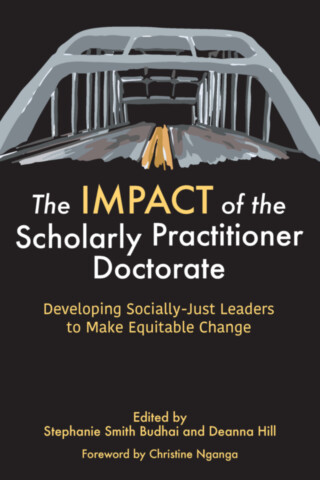
E-books are now distributed via VitalSource
VitalSource offer a more seamless way to access the ebook, and add some great new features including text-to-voice. You own your ebook for life, it is simply hosted on the vendor website, working much like Kindle and Nook. Click here to see more detailed information on this process.
Library E-Books
We are signed up with aggregators who resell networkable e-book editions of our titles to academic libraries. These editions, priced at par with simultaneous hardcover editions of our titles, are not available direct from Stylus.
These aggregators offer a variety of plans to libraries, such as simultaneous access by multiple library patrons, and access to portions of titles at a fraction of list price under what is commonly referred to as a "patron-driven demand" model.
The IMPACT of the Scholarly Practitioner Doctorate: Developing Socially-Just Leaders to Make Equitable Change is a collection of shared counternarratives between EdD alums and their supervising professor mentors, detailing their dissertation in practice (DiP) journeys as scholarly practitioners and the impact of the scholarly practitioner doctorate on their paths from doctoral students to socially-just leaders in a wide range of educational fields. The IMPACT of the Scholarly Practitioner Doctorate posits these relationships as the catalyst in bringing theory learned in course work to scholarly research that is positioned within practice, focused on contributing to equity-centered work. The book serves as an exemplar learning companion to a wide audience and diverse EdD programs looking to modify, develop, or redesign their programs to align with The Carnegie Project on the Education Doctorate (CPED) concepts including signature pedagogy, laboratories of practice, inquiry as practice and mentoring and advising. The IMPACT of the Scholarly Practitioner Doctorate demonstrates how change in education, community, and organizations have been impacted in efficacious ways. EdD students and their supervising professors, faculty, and administrators will be able to use this book’s content as their own catalyst for building socially-just leadership knowledge, skills, and dispositions while preparing their EdD students to exhibit equitable change in the professional practice areas they are in.Perfect for courses such as: Introduction to Educational Research; Social Justice Education Foundations; Leadership for Equity and Social Change; Transformative Leadership; Foundations of Inquiry for Social Justice; Qualitative Inquiry for Social Justice; Critical Perspectives for Equity in Education; Engaging in Critical Social Theories for Designing Research for Equity and Social Justice; Reform and Change for Social Justice; Educational Leadership Development
More
E-books are now distributed via VitalSource
VitalSource offer a more seamless way to access the ebook, and add some great new features including text-to-voice. You own your ebook for life, it is simply hosted on the vendor website, working much like Kindle and Nook. Click here to see more detailed information on this process.
Library E-Books
We are signed up with aggregators who resell networkable e-book editions of our titles to academic libraries. These editions, priced at par with simultaneous hardcover editions of our titles, are not available direct from Stylus.
These aggregators offer a variety of plans to libraries, such as simultaneous access by multiple library patrons, and access to portions of titles at a fraction of list price under what is commonly referred to as a "patron-driven demand" model.
The New Henry Giroux Reader presents Henry Giroux’s evolving body of work. The book articulates a crucial shift in his analyses after the September 11th, 2001 terrorist attack, when his writing took on more expansive articulations of power, politics, and pedagogy that addressed education and culture in forms that could no longer be contained via isolated reviews of media, schooling, or pedagogical practice. Instead, Giroux locates these discourses as a constellation of neoliberal influences on cultural practices, with education as the engine of their reproduction and their cessation. The New Henry Giroux Reader also takes up Giroux’s proclivity for using metaphors articulating death as the inevitable effect of neoliberalism and its invasion of cultural policy. Zombies, entropy, and violence permeate his work, coalescing around the central notion that market ideologies are anathema to human life. His early pieces signal an unnatural state of affairs seeping through the fabric of social life, and his work in cultural studies and public pedagogy signals the escalation of this unease across educative spaces. The next sections take up the fallout of 9/11 as an eruption of these horrific practices into all facets of human life, within traditional understandings of education and culture’s broader pedagogical imperatives. The book concludes with Giroux’s writings on education's vitalist capacity, demonstrating an unerring capacity for hope in the face of abject horror.Perfect for courses such as: History and Philosophy of Education, Political and Social Foundations of Education, Policy Issues in American Education, African American Education, Social Justice Research in Education, Marginality and the Politics of Resistance, Equity and Anti-Oppression, Cultural Studies and Public Pedagogy.
More