

Search results for Case for Kindness

E-books are now distributed via VitalSource
VitalSource offer a more seamless way to access the ebook, and add some great new features including text-to-voice. You own your ebook for life, it is simply hosted on the vendor website, working much like Kindle and Nook. Click here to see more detailed information on this process.
Since its formation in 2016, Education Deans for Justice and Education (EDJE), a group of more than 400 education deans and leaders from large and small institutions, has been grappling with what it means to advance — as well as to trouble — justice and equity in and through our schools of education and education systems more broadly. Leading on the EDGE brings together ten chapters, along with an introduction and conclusion, written by deans and leaders from a diverse set of institutions across the United States. These leaders have implemented ideas that support an equity stance in their institutions using the EDJE Framework for Assessment and Transformation, an instrument designed for this purpose. We are living and working in precarious times with justice-oriented work at universities threatened at the federal level with possible serious ramifications at both public and private universities. With diversity, equity, and inclusion (DEI) programs, affirmative action measures, and equal opportunity policies under attack, university leaders committed to actions that support equity and access in their institutions require resources to support their work. Many initiatives that claim to address issues of justice and equity focus solely on curriculum and pedagogy. This Framework addresses all of the major areas in a school including admissions, hiring, development, budget priorities, community engagement, the support of faculty, staff, and students of color, as well as curriculum and pedagogical practices. The Framework was written by a large and varied group of people with great expertise and experience, who came together several times to pool their knowledge and resources. Through Leading on the EDGE, the authors tell complex and varied stories. While in some institutions, faculty quickly embraced ideas for focusing on justice and equity, other faculties were more reluctant. The stories in this volume reflect moments of vulnerability as well as strength. Authors reflect on the issues and challenges that arose from this work, how they adapted the Framework for their unique contexts and goals, how they got started, challenges they encountered, initial outcomes, how the work can be translated to other settings within the university and in other educational settings, and provide concrete strategies for their colleagues. At a time when education leaders are under attack, Leading on the EDGE provides concrete ideas and strategies for taking a stand and proclaiming a commitment to the transformative work of justice and equity in higher education. Chapters of Leading on the EDGE are conveyed in a variety of genres and styles: some are organized as case studies, others are more similar to reflective essays; some focus on assessment of the institution or school’s focus on equity and justice, while others turn their attention to how programs were implemented, including those results; some are written in a more traditional academic style while others more autobiographical, dialogical, or even artful. Perfect for courses such as: Higher Education Administration, Educational Leadership, Multicultural Education, Foundation of Education, Educational Policy, Race and Education, Research Methods, Social Justice Education, Organizational Management (in Education)
More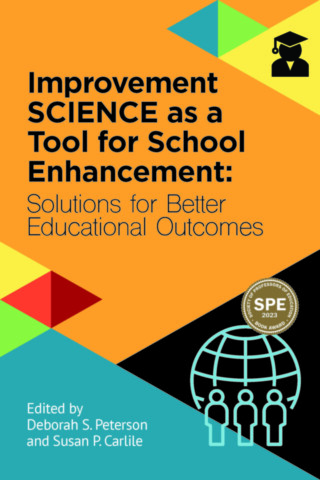
E-books are now distributed via VitalSource
VitalSource offer a more seamless way to access the ebook, and add some great new features including text-to-voice. You own your ebook for life, it is simply hosted on the vendor website, working much like Kindle and Nook. Click here to see more detailed information on this process.
Library E-Books
We are signed up with aggregators who resell networkable e-book editions of our titles to academic libraries. These editions, priced at par with simultaneous hardcover editions of our titles, are not available direct from Stylus.
These aggregators offer a variety of plans to libraries, such as simultaneous access by multiple library patrons, and access to portions of titles at a fraction of list price under what is commonly referred to as a "patron-driven demand" model.
Improvement Science as a Tool for School Enhancement is a collection of equity-focused improvement science-in-action, school-based case studies led by practitioners. Chapter authors tell us how and why improvement science principles make system-wide improvements in classroom practice, how they learned from the problems encountered and further, how they were then able to make changes within a school or district. A core principle of improvement science is variability in context (what works for whom and under what conditions), a critical concept for improvement in each of the case studies. How to use improvement science to address education disparities system-wide with urgency, commitment, and a belief in the success of every child, of every race, every ethnicity, gender, ability, and cultural identity, is the essence of this book.
More
E-books are now distributed via VitalSource
VitalSource offer a more seamless way to access the ebook, and add some great new features including text-to-voice. You own your ebook for life, it is simply hosted on the vendor website, working much like Kindle and Nook. Click here to see more detailed information on this process.
Beyond Labels: Understanding Refugee Students with Disabilities in Educational Contexts is an essential text that provides educators with insight into the educational needs of refugee students with disabilities through six meticulously researched case studies and illuminates the complex relationship between displacement trauma and disability, from physical disabilities and dyslexia to autism and visual impairment. Beyond Labels offers evidence-based frameworks for differentiating between language acquisition challenges and learning disabilities, implementing culturally responsive assessments, and developing accommodations that respect both refugee experiences and disability-related needs. Each case study provides guidance on special education processes, family school partnerships, and classroom implementation strategies.Educational professionals will find analysis of critical questions regarding cultural perspectives on disability, effective accommodation strategies, and ensuring educational continuity for students experiencing both displacement and disability. The text includes practical tools such as reflection questions, assessment guidelines, and strength-based intervention approaches.This practical reference for special educators, ESL specialists, school psychologists, and administrators bridges refugee education and disability studies, creating new possibilities for supporting resilient yet vulnerable student populations.Perfect for courses such as: Inclusive Education and Diverse Learners; Special Education Policy and Practice for Refugee Children; Multicultural Education; Educational Psychology for Exceptional Children; Refugee and Immigrant Education; Social Justice in Education; Global Migration and Education; Cross-Cultural Communication in Educational Settings; Trauma-Informed Educational Practices
More
E-books are now distributed via VitalSource
VitalSource offer a more seamless way to access the ebook, and add some great new features including text-to-voice. You own your ebook for life, it is simply hosted on the vendor website, working much like Kindle and Nook. Click here to see more detailed information on this process.
Library E-Books
We are signed up with aggregators who resell networkable e-book editions of our titles to academic libraries. These editions, priced at par with simultaneous hardcover editions of our titles, are not available direct from Stylus.
These aggregators offer a variety of plans to libraries, such as simultaneous access by multiple library patrons, and access to portions of titles at a fraction of list price under what is commonly referred to as a "patron-driven demand" model.
Teachers’ religious identities shape their classroom practices in varied ways. From the books they select to the relationships they build with students to the way they see their role as a teacher, teachers’ religious identities shape their sense of what is possible and impossible within classroom settings. This book examines these complex navigations through portraits of three early-career evangelical Christian teachers as they explore the tension they feel between their teaching identities and their religious identities in the setting of the U.S. public education system. What these portraits make clear is that the prevailing assumption that religious teachers have wholly separate teaching and religious identities is an impossibility, no matter how devoutly it might be wished for, legislated, and imagined. Who are these teachers? How does their evangelical religious identity influence the way they navigate classroom spaces? How are they making sense of their own experiences as a religious person in a public school classroom?Perfect for courses in: Diversity and Inclusion in the Classroom | Introduction to Diversity for Educators | Foundations of Teaching for Learning | Role of the Teacher in American Education | Religion and Education | Educational Foundations
More
E-books are now distributed via VitalSource
VitalSource offer a more seamless way to access the ebook, and add some great new features including text-to-voice. You own your ebook for life, it is simply hosted on the vendor website, working much like Kindle and Nook. Click here to see more detailed information on this process.
In today’s troubling times, we frequently find ourselves in conversations with educational scholars, educators, and university students about feeling overwhelmed with the attacks on and challenges facing education, and unsure of how to act in this moment. What does it mean to leverage scholarship for public impact? What impact on public debate, awareness, or policy can collective action as large groups of scholars and leaders make that more traditional scholarship cannot or simply does not aspire to make? That is, when scholars and leaders speak in a collective and public-facing way, what interventions can we make in movement building for public education and for the public commons more broadly? Collectives and the Commons: The Role of Educational Scholars in Movement Building for Justice grapples with such questions by diving into the years-long journeys of four scholar collectives working toward justice in and through education. Each emerged in different times, places, and circumstances, but in recent years have connected under a “collective of collectives” umbrella that allowed them to share resources and support one another in their work: CReATE (Chicagoland Researchers and Advocates for Transformative Education), CARE-ED (California Alliance of Researchers for Equity in Education), HSESJD (Hawai‘i Scholars for Education, Social Justice and Diversity), and EDJE (Education Deans for Justice and Equity). The result of this effort is this volume, which serves as a resource for scholars who are interested in working collectively for movement building and advocacy. With that goal in mind, each chapter consists of two key components: a narrative essay (how the collective formed, how they were organized and operated, their theory of change, the initiatives they undertook, how they pushed scholarship into the public space, challenges faced, and lessons learned or take-aways for others interested in educational advocacy) and a range of selected artifacts (research briefs and fact sheets; statements, petitions, testimonies; media and art work; and public events and symposiums).Collectives and the Commons is needed today more than ever. The current assault on education is an assault on teachers and students, and on the welfare of everyone. This book should be read by every scholar interested in seeing social justice applied to schools, classrooms and students. It can also be adopted in a variety of courses in Colleges of Education.Perfect for courses such as: Introduction to Education, Educational Equity, Educational Leadership, Educational Policy, Foundations of Education, Multicultural Education, Race and Education, Research Methods, Social Justice and Education, Teacher Education
More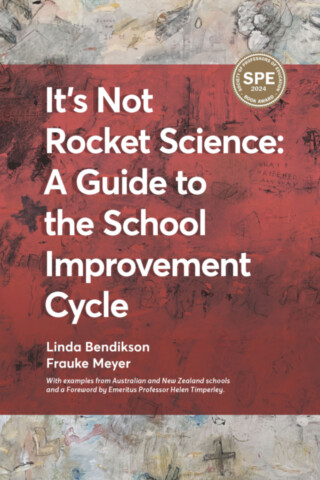
E-books are now distributed via VitalSource
VitalSource offer a more seamless way to access the ebook, and add some great new features including text-to-voice. You own your ebook for life, it is simply hosted on the vendor website, working much like Kindle and Nook. Click here to see more detailed information on this process.
Library E-Books
We are signed up with aggregators who resell networkable e-book editions of our titles to academic libraries. These editions, priced at par with simultaneous hardcover editions of our titles, are not available direct from Stylus.
These aggregators offer a variety of plans to libraries, such as simultaneous access by multiple library patrons, and access to portions of titles at a fraction of list price under what is commonly referred to as a "patron-driven demand" model.
It's Not Rocket Science - A Guide to the School Improvement Cycle: With Examples From New Zealand and Australian Schools presents an easy-to-read, practical guide to effectively leading school improvement. It walks leaders through each step of ‘The School Improvement Cycle’ developed by Bendikson and Meyer, providing case studies, examples, and helpful tools from primary and secondary schools for the implementation of each step. The book will support school leaders in implementing improvement cycles without making the classic mistakes of failing to develop measures of improvement and test change actions before scaling up. Schools and system leaders will benefit greatly from this practical guide, in which Bendikson and Meyer demonstrate that implementing improvement cycles is not a difficult process. While the book uses examples from Australian and New Zealand schools, the lessons that the book teaches can be applied to school leaders everywhere. The authors show how to make the complex work of improving student learning and outcomes at least somewhat simpler. They do this by describing and illustrating improvement steps that they have found to work in practice, providing examples from their work in schools to show the application of these ideas. If implemented properly, the cycles become “self-propelling,” thus reducing the cognitive load involved in planning how to improve. A range of evidence from international research and the authors’ own research and development work in schools explains the cycle and illustrate it. The book is entitled It’s Not Rocket Science because this is the common reaction from leaders once they understand the improvement cycle process. The book is perfect for a variety of courses in Education Leadership, Professional Development, and any other curriculum devoted to improving schools and student performance.Perfect for courses such as: Educational Leadership, Professional Development
More
E-books are now distributed via VitalSource
VitalSource offer a more seamless way to access the ebook, and add some great new features including text-to-voice. You own your ebook for life, it is simply hosted on the vendor website, working much like Kindle and Nook. Click here to see more detailed information on this process.
Library E-Books
We are signed up with aggregators who resell networkable e-book editions of our titles to academic libraries. These editions, priced at par with simultaneous hardcover editions of our titles, are not available direct from Stylus.
These aggregators offer a variety of plans to libraries, such as simultaneous access by multiple library patrons, and access to portions of titles at a fraction of list price under what is commonly referred to as a "patron-driven demand" model.
This extensive overview first surveys the history of general education in the United States. It discusses how the recommendations of stakeholder groups have shaped general education in recent decades. Subsequent chapters detail best practices and findings in the assessment of student learning as it relates to the general education curriculum across institutional types. The discussion then turns to the larger impact of general education on culture and society as students navigate life beyond the undergraduate experience. The final chapters will provide insight into how various institutions are innovating through the general education curriculum, as well as a discussion on the keys to maintaining the relevancy of this curriculum throughout the 21st century and beyond.Perfect for courses such as:Assessment of Student Learning | Higher Education AdministrationAcademic Issues in Higher Education | Introduction to/Foundations of Higher Education
More
E-books are now distributed via VitalSource
VitalSource offer a more seamless way to access the ebook, and add some great new features including text-to-voice. You own your ebook for life, it is simply hosted on the vendor website, working much like Kindle and Nook. Click here to see more detailed information on this process.
Library E-Books
We are signed up with aggregators who resell networkable e-book editions of our titles to academic libraries. These editions, priced at par with simultaneous hardcover editions of our titles, are not available direct from Stylus.
These aggregators offer a variety of plans to libraries, such as simultaneous access by multiple library patrons, and access to portions of titles at a fraction of list price under what is commonly referred to as a "patron-driven demand" model.
Improvement Science: Promoting Equity in Schools is intended for classroom teachers, school leaders, and district leaders charged with leading improvement efforts in schools. From questions such as “how do I develop a love of reading in my classroom?” to “how can I better manage student behavior during independent learning time?” to “what should we do to make sure kids of all races read at grade level by 3rd grade” to “how could we include families of all backgrounds as partners in learning” or “how do we increase our graduation rate among underserved students," this book shares real-life examples from those who are currently leading equity-focused improvement in our classrooms and schools. If you are curious about how Improvement Science has been used, or how others have succeeded—or failed—at equity-focused improvement efforts in our classrooms and in our schools, or if you’re wondering how to spur discussions in school districts, universities, and communities about leading equity-focused improvement, this book is for you. Teachers, students, family members, community members, principals and superintendents will be inspired to embrace Improvement Science as a method to improve equity in their schools. The book helps people new to Improvement Science to understand the basic steps to implement the process. If you’re a beginner, it provides some basic steps and a resource (https://www.carnegiefoundation.org/our-ideas/six-core-principles-improvement/) to help you understand the process better; for those with some experience, the book will be an excellent refresher and tool with functional suggestions to take your practice further. 1. Form a Team. 2. Examine Data. 3. Ask Why. 4. Read Research. 5. Get Perspective of Those Closest to the Problem. 6. Plan the Change. After you’ve done the above, then it’s time to test one idea, using short Plan Do Study Act cycles. These are short improvement cycles. Students are only in our classrooms generally for one year, so the cycles need to be short, perhaps even as short as one week, to ensure that every instructional move we are making truly does improve the experience of the students. Readers of Improvement Science: Promoting Equity in Schools will be taking an important step toward achieving the goal of producing socially just classrooms and schools. WATCH: Meet the Authors (ZOOM recording from #CPED21 Virtual Convening, 10/20/21). To learn more about Improvement Science and see our full list of books in this area, please click through to the Myers Education Press Improvement Science website. Perfect for courses such as: Culturally Responsive Learning Environments; Educating For Equity And Social Justice; Cultivating Culturally Responsive Classrooms; Integrating Methods And Curriculum Design; Inquiry, Assessment, And Instructional Design; Foundations Of Culturally And Linguistically Responsive Practice; Math Literacy; Physical Education; Professional Collaboration In Education; Language And Literacy Development Of Diverse Learners; Equal Opportunity: Racism; Diversity And Equity In Schools; Cultural Proficiency In Schools; Language And Power In Education; Teaching For Equity In Literacy; Supportive Classroom Communities; Cultural Diversity In Literature; Engaging Students In Writing; Introduction To School Leadership; Introduction To School Improvement; Teacher Leadership And School Improvement
More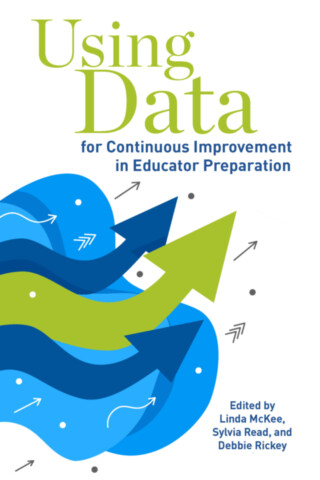
E-books are now distributed via VitalSource
VitalSource offer a more seamless way to access the ebook, and add some great new features including text-to-voice. You own your ebook for life, it is simply hosted on the vendor website, working much like Kindle and Nook. Click here to see more detailed information on this process.
Library E-Books
We are signed up with aggregators who resell networkable e-book editions of our titles to academic libraries. These editions, priced at par with simultaneous hardcover editions of our titles, are not available direct from Stylus.
These aggregators offer a variety of plans to libraries, such as simultaneous access by multiple library patrons, and access to portions of titles at a fraction of list price under what is commonly referred to as a "patron-driven demand" model.
Using Data for Continuous Improvement in Educator Preparation provides case studies that illuminate and contextualize the ways in which educator preparation programs determine the data they need to improve, collect data, analyze data, share data with stakeholders, and close the loop by making focused improvements based on the data. Educator preparation programs operate in a wide range of contexts that have different requirements (e.g., state-mandated measures), different affordances, and different needs. This text focuses on not only the stories of how data is collected, analyzed, and used for improvement, but also on how stakeholders are impacted by the continuous improvement process. In the editors’ work with accreditation and educator preparation program evaluation, they noticed a variety of approaches to collecting, analyzing, and using data for program improvement. Often this intense work with data goes unnoticed and unappreciated because it is done in the service of accreditation that, once completed, does not reach an audience outside of the institution and the accreditation agency. Using Data for Continuous Improvement in Educator Preparation solves this problem by shedding light on this important work. This volume inaugurates the AAQEP Program Evaluation in Education Series.Perfect for courses such as: Methods of Program Evaluation; Teacher Education; Improvement Science
More
E-books are now distributed via VitalSource
VitalSource offer a more seamless way to access the ebook, and add some great new features including text-to-voice. You own your ebook for life, it is simply hosted on the vendor website, working much like Kindle and Nook. Click here to see more detailed information on this process.
The Critical Role of Ethnic Studies in Educational Leadership addresses the urgency of having equity-minded and globally-oriented transformative leaders who seek to empower students and teachers alike through their commitment to integrate ethnically and culturally rich curriculum and instruction in today’s schools. The ethnic studies revival movement has emerged to combat the cycles of ignorance affecting society in negative ways. Unless educational leaders possess relevant cultural and ethnic proficiency, have global perspectives, and are eager to lead by example, educators will continue to flounder about the best ways to cultivate pluralism in American schools. Moreover, shifts in mindsets toward ethnically and culturally relevant school learning and teaching culture are needed for leaders to ensure that they not only have the knowledge and skill, but also the courage and will to reform schools through an inclusive and comprehensive approach based on the axioms of ethnic studies education in the K-20 settings. To amplify the importance and interconnected pathway that exists across these policies that bridge high schools, community colleges, and state universities, this volume details how educational leaders in California are continuing to advance social justice through the implementation of Ethnic Studies and the role that educational leadership—including credential, masters, and doctoral programs—can play in the full attainment of the goals for ethnic studies implementation. The lessons learned in California are relevant across the nation and around the world. As Ethnic Studies has expanded across PK-12 and higher education contexts, extant studies have both quantitatively and qualitatively detailed how participation in quality Ethnic Studies courses and programs in and out of schools can improve many student outcomes such as engagement, critical thinking, and achievement, as well as attendance, increased GPAs, and graduation rates. The work to effectively implement Ethnic Studies requires strong leadership, including students, teachers, community leaders, and site and district level administrators. The Critical Role of Ethnic Studies in Educational Leadership is an important book that appeals to a variety of readers. Those interested in a deeper understanding of Ethnic Studies will find the book will better inform them. Educational leaders are provided with both the rational and the methodologies for implementing this important concept in curriculum. It is also a valuable teaching resource for a variety of classroom settings.Perfect for courses such as: Intro to Ethnic Studies; Intro to Chicano Studies; Climate & Environmental Justice; Educational Reform; Educational Policy Environments; Theories of Cross-Cultural Education
More