
Search results for Case for Kindness

E-books are now distributed via VitalSource
VitalSource offer a more seamless way to access the ebook, and add some great new features including text-to-voice. You own your ebook for life, it is simply hosted on the vendor website, working much like Kindle and Nook. Click here to see more detailed information on this process.
Literacy and Life: Serendipity, Generosity, and Goodwill in the Academic Study of Literacy as Social Practices is a retrospective account of a serendipitous academic life that unfolded over 40 years as an organic interplay of fortunate happenstance, regular acts of collegial kindness, and a personal disposition to spontaneously follow ideas, events, and arguments wherever they led. Early chapters explore how a chance encounter with Space Invaders players inspired an initial interest in literacy as a phenomenon, and how the work of Paulo Freire led to considering functional literacy and critical literacy as a social praxis. Middle chapters describe how experiences of literacy and everyday life in a rural Nicaraguan village, and exploring literacy in the context of the "new capitalism" of the 1990s, led to multiple rethinkings of critical literacy. Later chapters trace work done over more than 20 years with Michele Knobel around their shared interests in “new literacies” and pedagogical approaches to enhancing teacher research literacy. Literacy and Life celebrates rich experiences of collegiality and goodwill throughout an entire trajectory of thinking, researching, writing, and teaching about literacy as social practices. Each chapter describes how the author’s activity and endeavor were mediated and powerfully enabled by generosity, collaborative support, sharing, and trust on the part of many people, from many different walks of life in many different countries. Literacy and Life bears witness to a life blessed with everyday experiences where beneficence was very much an enabling and personally liberating norm.Perfect for courses such as: Literacy in Society; Literacy as Social Practice; Literacy Education: Research, Practice, Policy and Politics; Contemporary Literacies; Literature/Composition courses on Memoir; Approaches to Teaching and Learning in a Complex World; Thinking, Learning and Reflective Practice (Philosophy)
More
E-books are now distributed via VitalSource
VitalSource offer a more seamless way to access the ebook, and add some great new features including text-to-voice. You own your ebook for life, it is simply hosted on the vendor website, working much like Kindle and Nook. Click here to see more detailed information on this process.
Library E-Books
We are signed up with aggregators who resell networkable e-book editions of our titles to academic libraries. These editions, priced at par with simultaneous hardcover editions of our titles, are not available direct from Stylus.
These aggregators offer a variety of plans to libraries, such as simultaneous access by multiple library patrons, and access to portions of titles at a fraction of list price under what is commonly referred to as a "patron-driven demand" model.
Some students enter classrooms with an “I dare you try to teach me” look on their faces, and others bounce into class excited to learn and anxious to please the teacher. We know we can’t automatically blame teachers or schools when students don’t want to learn. But we also know that sometimes teachers and schools don’t always set students up for success, and they don’t always help them love what they’re learning.Why Kids Love (and Hate) School: Reflections on Practice investigates some of the school and classroom practices that help students love school—and some that send students in the opposite direction. Intended for classroom teachers, teacher education students, and school administrators, chapters in the book investigate a variety of topics: how schools can build effective school cultures, the “struggle” students encounter in learning, practices of other countries that help students love school, testing practices that cause students to hate school—and much more. Perfect for courses in: Introduction to Education, General Methods, Management/Assessment, Educational Research, Educational Administration/Leadership, Teacher Leadership, Curriculum Theory, Curriculum Development.
More
E-books are now distributed via VitalSource
VitalSource offer a more seamless way to access the ebook, and add some great new features including text-to-voice. You own your ebook for life, it is simply hosted on the vendor website, working much like Kindle and Nook. Click here to see more detailed information on this process.
This new and innovative book, Improving Your College Courses: A Guide for Engaging in Digital Learning, provides instructors from any discipline with a guide for improving course quality and engaging learners in digital learning environments. It inspires professional development and learning (PDL) by making available an indispensable resource for higher education faculty seeking to enhance their teaching practices, propel meaningful experiences, and improve student outcomes. Instructors and administrators will want to read this research-informed, practical book authored by faculty with expertise in digital learning environments. All of them have published on this topic, some earning digital certifications and online teaching awards. Faculty and administrators attracted to a blend of theoretical insights and practical applications will welcome a solid resource for instructors engaged in continuous course improvement and PDL. At the same time, administrators overseeing faculty development as well as mentoring coordinators who sponsor PDL around instructional effectiveness and ethics will benefit from the use of the volume. Professors will find strategies that can be immediately implemented in their courses, making them a valuable tool for PDL. It will be a “must have” for new instructors and faculty who are adapting their teaching for a digital world. The book covers essential topics including course introduction; content and materials; engagement activities; accessibility and usability; and support strategies; as well as practical methods such as case studies, glossary, and appendix and supplementary materials with web content. Improving Your College Courses features pictures, figures, drawings, charts, and graphs designed to clearly illustrate the steps and concepts narrated. This book is designed to be an indispensable resource for educators seeking to enhance their teaching practices and improve student outcomes.Carol A. Mullen is the recipient of the 2026 Excellence in Research Award, AERA Division A: Administration, Organization, and Leadership. Watch a clip of her acceptance speech at: https://youtu.be/W5Ao9bGZrF0
More
E-books are now distributed via VitalSource
VitalSource offer a more seamless way to access the ebook, and add some great new features including text-to-voice. You own your ebook for life, it is simply hosted on the vendor website, working much like Kindle and Nook. Click here to see more detailed information on this process.
Library E-Books
We are signed up with aggregators who resell networkable e-book editions of our titles to academic libraries. These editions, priced at par with simultaneous hardcover editions of our titles, are not available direct from Stylus.
These aggregators offer a variety of plans to libraries, such as simultaneous access by multiple library patrons, and access to portions of titles at a fraction of list price under what is commonly referred to as a "patron-driven demand" model.
The central claim of this volume is that higher education institutions that seek to educate their students for freedom and liberation—the idea behind the liberal arts—must be prepared to embrace the truths they pursue and to lean into the reconciliation demanded by those truths. In other words, they must journey through truth to freedom, but only by way of reconciliation. For Augsburg University, the truths interrogated delve deep into the heart of its faith tradition, academic mission, and commitment to social justice. Through appreciative and critical inquiry, the truths discovered demand reconciliation with the past so as to be freed for the work they are called to do as “informed citizens, thoughtful stewards, critical thinkers, and responsible leaders”—Augsburg’s mission! These essays offer a compelling example to other institutions about the important work of connecting past, present, and future—of seeking truth through freedom by way of reconciliation—work that is foundational to an institution’s mission, identity, and future planning.Perfect for courses such as: Place Matters: Colleges and Universities as Anchors in their Communities; Introduction to Interfaith Learning, Leadership, and Living; History of Higher Education in America; Foundations of Democratic Engagement and Higher Education; Introduction to Experiential Education; Foundations of Higher Education Leadership
More
E-books are now distributed via VitalSource
VitalSource offer a more seamless way to access the ebook, and add some great new features including text-to-voice. You own your ebook for life, it is simply hosted on the vendor website, working much like Kindle and Nook. Click here to see more detailed information on this process.
Library E-Books
We are signed up with aggregators who resell networkable e-book editions of our titles to academic libraries. These editions, priced at par with simultaneous hardcover editions of our titles, are not available direct from Stylus.
These aggregators offer a variety of plans to libraries, such as simultaneous access by multiple library patrons, and access to portions of titles at a fraction of list price under what is commonly referred to as a "patron-driven demand" model.
Letters to the Field: Curriculum Scholars’ Stories for Future Generations encapsulates a generation of scholars who revitalized the field of Curriculum Studies across North America in the mid-1970s, as well as the generations of scholars who immediately followed, all of whom are now themselves senior scholars. Rather than another edited work of reprints or new monographs, this volume seeks to do something special by providing an opportunity for this group of scholars to speak to their field about understandings they believe to be of significance. The strength of this book generally resides in two overarching factors. First, there is the depth and strength of this well-rounded, highly regarded group of scholars whose work speaks to the heart of the interdisciplinary nature of curriculum studies and curriculum theorizing. Second, as you might imagine, this is a significant moment in the United States when the very foundation of curriculum theory–critical inquiry and often an engagement with questions of race, queerness, disability, and the like–continues to be under attack in K-12 schools and universities across the United States. Contributors speak to the foundations of the field and the contemporary challenges that the field and schools of education more broadly must survive. Contributions to this important work are five to seven handwritten or, in the case of scholars who are unable to write, typed pages. There are also chapters that have accompanying photos and drawings. The reproduction of actual letters in the book lend authenticity and will appeal to readers by giving an intimate view into the thoughts and wishes of these scholars. We also understand that, similar to the challenge folks might face when handwriting a document, some writing might not be legible to all readers. Therefore, stable QR codes and/or hyperlinks to typed versions of handwritten chapters are included so that readers can easily look at typed versions alongside the handwritten work online. Letters to the Field makes an invaluable contribution to Curriculum Studies. By providing a history of the rationale used to revitalize the field, it will prove a valuable addition to the libraries of educators in a variety of disciplines.Perfect for courses such as: Introduction to Curriculum Theory; Introduction to College Teaching; Social Foundations of Education; History of American Higher Education; Traditions of Inquiry; and Introduction to Scholarship
More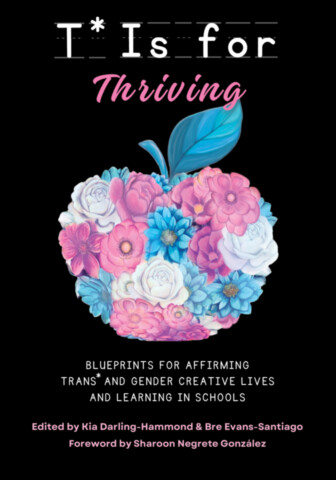
E-books are now distributed via VitalSource
VitalSource offer a more seamless way to access the ebook, and add some great new features including text-to-voice. You own your ebook for life, it is simply hosted on the vendor website, working much like Kindle and Nook. Click here to see more detailed information on this process.
Library E-Books
We are signed up with aggregators who resell networkable e-book editions of our titles to academic libraries. These editions, priced at par with simultaneous hardcover editions of our titles, are not available direct from Stylus.
These aggregators offer a variety of plans to libraries, such as simultaneous access by multiple library patrons, and access to portions of titles at a fraction of list price under what is commonly referred to as a "patron-driven demand" model.
Being a transgender* or gender creative (T*GC) child in the United States today means being the subject of a national debate about whether you are entitled to exist, live a full life, or control your body. T*GC students have suffered outside of and within schools, experiencing among the highest rates of academic exclusion, vulnerability to bullying and violence, poor mental health, and troubling life outcomes due to bias, stigma, and discrimination. At the time this manuscript was completed, the Human Rights Campaign had officially declared a “State of Emergency'' for LGBTQ+ Americans. Of the over 600 anti-LGBTQ+ bills recently introduced across the nation, nearly a third directly target trans* and gender-creative people, particularly children, violating both civil and human rights. Fortunately, not all bills will pass, and activists are moving liberation work forward everywhere every day. T* Is for Thriving offers collected wisdom from educators and community members about meeting T*GC students’ needs in schools in order to light a path toward their thriving. In it, the editors, Kia Darling-Hammond and Bre Evans-Santiago, have curated lesson plans that offer models for inclusive instruction, along with stories that amplify community guidance about how to be responsive, affirming, and celebratory of T*GC needs, histories, and contributions in schools. These stories and lessons are an immediate resource for advancing a pedagogy of hope and possibility, both in the present and the future. T* Is for Thriving is essential reading for anyone involved in developing and defending the rights of educators and students. It is the perfect text for courses in teacher education, as well as those focused on social justice, LGBTQ+ topics, and critical pedagogy.Perfect for courses such as: Multicultural Education; Gender Studies; Teaching Methods (Science, Social Studies, Language Arts, Math); Curriculum Design; Diversity in Education; Social Foundations of Education; Inclusive Methods of Teaching; Practicum/Clinical Practice; Literacy Methods; and History, Policy and Social Changes
More
E-books are now distributed via VitalSource
VitalSource offer a more seamless way to access the ebook, and add some great new features including text-to-voice. You own your ebook for life, it is simply hosted on the vendor website, working much like Kindle and Nook. Click here to see more detailed information on this process.
The Little Shelter That Could: Literacy Resilience of Mothers and Children Facing Homelessness tells the story of homelessness, life in a shelter, and the impact of these factors on children’s lives and education. It is also a story of hope. Dr. Sadia Warsi discovered something remarkable during her research at Joseph's Shelter. Instead of educational disruption, she found literacy resilience. Families created sophisticated learning environments that challenged assumptions about capabilities during crisis. The Little Shelter That Could reveals extraordinary educational leadership, where children became teachers in hallway spaces and mothers transformed dormitories into literacy-rich environments. Through anonymized, reconstructed narrative case studies based on her research, this book documents how education served as both anchor during crisis and pathway to future possibilities. Rather than focusing on deficits, this work illuminates sophisticated educational knowledge families possess during vulnerable moments. Readers encounter stories of mothers who strategically selected books to accelerate their children's reading while in emergency housing, families who created "learning corners" that became the shelter's educational heart, and parents whose daily bus journeys maintained their children's school enrollment. Written for early childhood educators and teacher candidates, this book provides frameworks for recognizing family educational assets invisible to traditional assessments. Dr. Warsi challenges deficit-based approaches, offering asset-based strategies that build on what families already know. Drawing from extensive experience in special education and multicultural competency, Warsi provides trauma-informed approaches that honor family expertise while supporting growth. Twenty-five years after the initial study, these lessons remain urgently relevant, as housing instability affects an increasing number of families. The Little Shelter That Could offers hope, practical strategies, and a transformative vision for early childhood education that honors every family's educational assets.Perfect for courses such as: Foundations of Early Childhood Education; Family and Community Engagement in Education; Culturally Responsive Teaching; Early Childhood Literacy Development; Trauma-Informed Educational Practices; Introduction to Special Education; Assessment in Early Childhood Education; Supporting Diverse Families; Child Development and Learning; and Educational Equity and Social Justice
More
E-books are now distributed via VitalSource
VitalSource offer a more seamless way to access the ebook, and add some great new features including text-to-voice. You own your ebook for life, it is simply hosted on the vendor website, working much like Kindle and Nook. Click here to see more detailed information on this process.
Library E-Books
We are signed up with aggregators who resell networkable e-book editions of our titles to academic libraries. These editions, priced at par with simultaneous hardcover editions of our titles, are not available direct from Stylus.
These aggregators offer a variety of plans to libraries, such as simultaneous access by multiple library patrons, and access to portions of titles at a fraction of list price under what is commonly referred to as a "patron-driven demand" model.
Our Bodies Tell the Story: Using Feminist Research and Friendship to Reimagine Education and Our Lives asks (and answers) a number of critical questions that are key to improving our educational system. How can we use our embodied stories to navigate and disrupt how schools and society reproduce the patriarchy and heteronormativity within our institutions of learning? How do we transgress oppressive boundaries (boundaries cultivated by the patriarchy that have been perpetuated at home, within school, outside of school, in university settings, and in communities) that permit our dehumanization and exclusion? As teachers, professors, and teacher educators, how do we navigate our students’ trauma when we are navigating the re-ignition of our own? This book sets out to tell the story of how the authors have tried to answer these questions in their lives and work. It is the story of a friendship, a partnership, a narrative retelling of their “becoming” as girls, teenagers, women, teachers, wives, daughters, scholars, and mothers. From the earliest memories of their gendered and sexualized childhoods to the present navigation of sexism, heteronormativity, and trauma in the context of teaching and schools, these stories reside in their bodies. They recall, construct, and reexamine, emerging from their dialogues—from talking face-to-face, to email, to FB messenger, poetry, and text. Our Bodies Tell the Story centers around the co/autoethnography of personal narratives, stories, and a kind of survival testimonies, the ways in which the authors bore witness to each other’s lives. The book extensively uses co/autoethnography as a self-study feminist research methodology that takes autoethnography, “a form of self-representation that complicates cultural norms by seeing autobiography as implicated in larger cultural processes” (Taylor & Coia, 2006, p. 278) and moves it beyond the singular to the plural. Using this methodology enables the authors to interweave their stories through dialogue, so that validity, insight, and analysis all emerge in the text. The book investigates the self within the social context of personal relationships, as well as the larger society. Creating a co/autoethnography is a rich, multi-layered endeavor because it is not conducted in a vacuum. As such, it is an important book for faculty and researchers involved in a number of disciplines, including auto/ethnographic research, gender studies, women’s studies, feminist studies, qualitative research and many other areas of study.Perfect for courses such as: Gender and Education │ Public Purposes of Schooling │ Introduction to Gender, Sexuality, and Women's Studies │ Critical Feminisms in Teacher Education │ Gender Issues in Teacher Education
More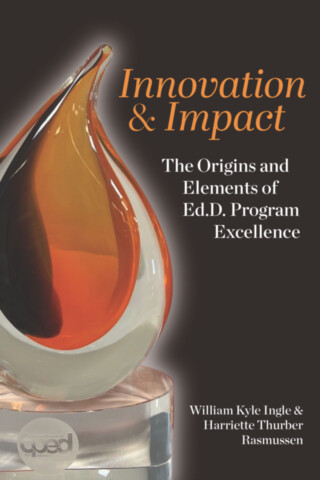
E-books are now distributed via VitalSource
VitalSource offer a more seamless way to access the ebook, and add some great new features including text-to-voice. You own your ebook for life, it is simply hosted on the vendor website, working much like Kindle and Nook. Click here to see more detailed information on this process.
Library E-Books
We are signed up with aggregators who resell networkable e-book editions of our titles to academic libraries. These editions, priced at par with simultaneous hardcover editions of our titles, are not available direct from Stylus.
These aggregators offer a variety of plans to libraries, such as simultaneous access by multiple library patrons, and access to portions of titles at a fraction of list price under what is commonly referred to as a "patron-driven demand" model.
Professional and educational associations, such as the Carnegie Project for the Education Doctorate (CPED), create and offer awards that recognize the accomplishments of individuals, programs, and institutions. In this edited book, W. Kyle Ingle and Harriette Thurber Rasmussen focus on CPED’s Program of the Year (POY) Award, examining its history, purpose, submission requirements, its committee structure, activities, and outcomes. Faculty members from CPED’s award-winning institutions have been invited to discuss their innovative programs, how these innovations were developed, how they pursue social justice, and how these innovations have been sustained since winning the award. Furthermore, the award’s role in facilitating the diffusion of innovative and effective practices among CPED member institutions is examined. The book and its chapters are framed through the lens of innovation diffusion theory. Popularized by communication theorist Everett Rogers (1967, 2003), innovation diffusion theory has spread widely across the social sciences. In his seminal work, Diffusion of Innovations, Rogers defines an innovation as “an idea, practice, or object that is perceived as new by an individual or other unit of adoption” (2003, p. 12). Innovation diffusion is the process by which an innovation spreads among the members of a social system, in this case the internal and external communities of Ed.D.-granting institutions.The book includes dual components: (1) innovative programs that drive social justice and (2) how these institutional innovations were developed and sustained. The latter component will shed light on three self-study processes related to these award-winnng programs: The process of creating the featured innovative program;The process of applying for the program of the year award; and The process of writing the journey and considering the impact of the program of the year award on their institution, including any reinvention/adaptations. Taken together, readers will examine and understand “process[es] by which alteration occurs in the structure and function of a social system” (Rogers, 1995, p. 6) in pursuit of social justice goals through programmatic innovation.Perfect for courses such as: Program Development & Assessment in Higher Education; Instructional Planning for Student Learning and Achievement; Performance Improvement; Instructional Design and Development; e-Learning Design and Development; College Teaching; Supervised Experience in Higher Education; Special Problems in Educational Leadership; Professional Projects in Higher Education; Organizational Improvement in Higher Education
More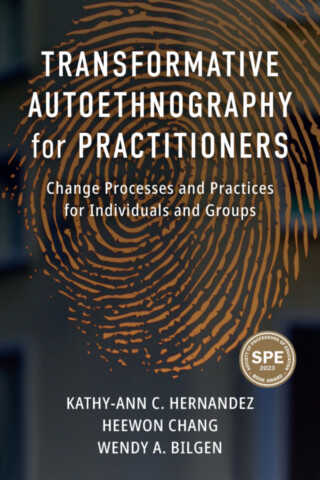
E-books are now distributed via VitalSource
VitalSource offer a more seamless way to access the ebook, and add some great new features including text-to-voice. You own your ebook for life, it is simply hosted on the vendor website, working much like Kindle and Nook. Click here to see more detailed information on this process.
Library E-Books
We are signed up with aggregators who resell networkable e-book editions of our titles to academic libraries. These editions, priced at par with simultaneous hardcover editions of our titles, are not available direct from Stylus.
These aggregators offer a variety of plans to libraries, such as simultaneous access by multiple library patrons, and access to portions of titles at a fraction of list price under what is commonly referred to as a "patron-driven demand" model.
Can transformation be the primary goal of autoethnographic research? In this book, the authors present a compelling case that this is indeed possible. Since autoethnography first appeared as a nascent approach to social inquiry, much has been written about it as a useful addition to the field of qualitative research methods. Over the years, its usage has been extended across various disciplines including the humanities, human services, social sciences, leadership studies, engineering, education, counseling, and even medical education. Notably, the primary function of autoethnography to advance our understanding around sociocultural phenomena has been increasingly paired with a parallel function of the many ways in which this research method can also contribute to practice. However, though its contribution to scholarship is well documented, less has been written about its practical usage as the focal point of inquiry. Yet there is growing evidence that one of the emerging strengths of autoethnography is its transformative capabilities. In Transformative Autoethnography for Practitioners, Hernandez, Chang and Bilgen turn the spotlight on autoethnography as a tool for practitioners where the primary goal is to solve real world problems by facilitating transformational change at the individual, group and/or organizational levels. They draw on existing scholarship as well as their collective work and expertise to provide a Transformative Autoethnographic Model (TAM) for use by practitioners who are intent on effecting such changes in their respective contexts. The book contains seven chapters. Chapters One through Three provide the theoretical grounding for a transformative autoethnography model. Chapter One begins with a broad overview of autoethnographic research and the unique characteristics of this method that makes it especially suited for effecting transformational learning. In chapters Two and Three, the authors provide a quick review of the literature relevant to individual autoethnography and collaborative autoethnography respectively. Each chapter discussion is centered around explicating the transformative elements of the method as well as how it is able to effect change at the individual, group, and organizational level. Chapters Four through Six focus on the praxis of transformative autoethnography. In Chapter Four, the transformative autoethnography model (TAM) is presented in detail and templates are provided for its application. Chapters Five and Six show the application of the TAM in a variety of settings. The book ends with a final chapter discussion on the continuing evolution of autoethnographic explorations, as well as future applications for the TAM model in a fast changing digital landscape. Perfect for courses such as: Research Methods in the Social Sciences | Qualitative Research Methods | Narrative Research | Advanced Qualitative Research Methods | Coaching and Consulting | Leading Change
More