

Search results for making sense of rac

E-books are now distributed via VitalSource
VitalSource offer a more seamless way to access the ebook, and add some great new features including text-to-voice. You own your ebook for life, it is simply hosted on the vendor website, working much like Kindle and Nook. Click here to see more detailed information on this process.
Library E-Books
We are signed up with aggregators who resell networkable e-book editions of our titles to academic libraries. These editions, priced at par with simultaneous hardcover editions of our titles, are not available direct from Stylus.
These aggregators offer a variety of plans to libraries, such as simultaneous access by multiple library patrons, and access to portions of titles at a fraction of list price under what is commonly referred to as a "patron-driven demand" model.
Anticipating Education is an interdisciplinary collection of Britzman’s previously published and unpublished papers that examines the dilemmas created by anticipating education, provoked when teachers, students, and professors encounter the unknown while trying to know emotional situations affecting their waiting, wanting, and wishing for teaching and learning. Anticipation has a particular flavor in scenes of education and not only since schooling presents again the mise-en-scène of childhood; anticipation also signifies the estranged temporality of anxiety, phantasies, and defense that compose and decompose hopes for transforming knowledge, sociality, and subjectivity in group life. This book is composed of Britzman’s well regarded and highly cited conceptual contributions to thinking broadly on topics of intersubjectivity and pedagogy at the university and schools; the reception of difficult knowledge as unresolved social conflicts in pedagogical thought; and the significance of psychoanalysis with pedagogy. Four themes address the anxieties of teaching and learning: phantasies of education; difficult knowledge; transforming subjects; and, psychoanalysis with education. Anticipating Education is required reading for every newly-minted faculty member. The wisdom provided in this volume will prove to be invaluable to your future career.Perfect for courses such as: Foundations of Education | Theories of Teaching and Learning | Special Topics | Advanced Curriculum Theory | Philosophy of Education | Social Thought and Education | Studies of Language, Culture and Teaching | Child and Adolescent Development
More
E-books are now distributed via VitalSource
VitalSource offer a more seamless way to access the ebook, and add some great new features including text-to-voice. You own your ebook for life, it is simply hosted on the vendor website, working much like Kindle and Nook. Click here to see more detailed information on this process.
Centering Multilingual Learners in School Curriculum through Community Asset Mapping is written for educators working with culturally and linguistically diverse student populations, particularly those from historically marginalized backgrounds. It presents and explores Community Asset Mapping (CAM) as a transformative pedagogical approach that values students’ lived experiences, cultural wealth, and linguistic repertoires as essential components of learning. It speaks to teachers who seek to integrate students’ strengths and assets into the curriculum while challenging hierarchical structures of knowledge and language within the education system. Written by two multilingual language education professionals who draw upon their own educational journeys and rich, multifaceted experience working with multilingual learners, this book is also grounded in a post-qualitative research approach. It weaves together culturally responsive teaching, translanguaging, and community asset mapping as a co-learning practice, alongside a diverse range of critical theories and pedagogical approaches. This resource extends beyond academic scholarship; it engages with community-based initiatives, social entrepreneurship, and lived experiences to offer both a holistic perspective and a practical, action-oriented approach. Through this lens, the authors aim to equip educators with the tools to transform classrooms into more equitable and justice-driven learning spaces. Throughout the book, numerous examples and practical resources are offered to bring these ideas to life, demonstrating how CAM can be implemented in the classroom as a powerful and enriching teaching strategy. More than just a resource, this book is a call to action—an invitation for educators to embark on a collaborative journey. It embraces vulnerability, emphasizes co-learning, and celebrates the communities that shape the work of language education professionals. Through this shared effort, the authors invite educators to join them in critically reimagining education and advocating for more equitable, asset-based practices that truly honor the voices and experiences of their students.Perfect for courses such as: Multicultural and multilingual Education; Sociolinguistics; Methods and Materials in TESOL Education; Curriculum Design in Education or TESOL; Language, Culture and Society; Urban Education; Family Engagement in Education
More
E-books are now distributed via VitalSource
VitalSource offer a more seamless way to access the ebook, and add some great new features including text-to-voice. You own your ebook for life, it is simply hosted on the vendor website, working much like Kindle and Nook. Click here to see more detailed information on this process.
The Little Shelter That Could: Literacy Resilience of Mothers and Children Facing Homelessness tells the story of homelessness, life in a shelter, and the impact of these factors on children’s lives and education. It is also a story of hope. Dr. Sadia Warsi discovered something remarkable during her research at Joseph's Shelter. Instead of educational disruption, she found literacy resilience. Families created sophisticated learning environments that challenged assumptions about capabilities during crisis. The Little Shelter That Could reveals extraordinary educational leadership, where children became teachers in hallway spaces and mothers transformed dormitories into literacy-rich environments. Through anonymized, reconstructed narrative case studies based on her research, this book documents how education served as both anchor during crisis and pathway to future possibilities. Rather than focusing on deficits, this work illuminates sophisticated educational knowledge families possess during vulnerable moments. Readers encounter stories of mothers who strategically selected books to accelerate their children's reading while in emergency housing, families who created "learning corners" that became the shelter's educational heart, and parents whose daily bus journeys maintained their children's school enrollment. Written for early childhood educators and teacher candidates, this book provides frameworks for recognizing family educational assets invisible to traditional assessments. Dr. Warsi challenges deficit-based approaches, offering asset-based strategies that build on what families already know. Drawing from extensive experience in special education and multicultural competency, Warsi provides trauma-informed approaches that honor family expertise while supporting growth. Twenty-five years after the initial study, these lessons remain urgently relevant, as housing instability affects an increasing number of families. The Little Shelter That Could offers hope, practical strategies, and a transformative vision for early childhood education that honors every family's educational assets.Perfect for courses such as: Foundations of Early Childhood Education; Family and Community Engagement in Education; Culturally Responsive Teaching; Early Childhood Literacy Development; Trauma-Informed Educational Practices; Introduction to Special Education; Assessment in Early Childhood Education; Supporting Diverse Families; Child Development and Learning; and Educational Equity and Social Justice
More
E-books are now distributed via VitalSource
VitalSource offer a more seamless way to access the ebook, and add some great new features including text-to-voice. You own your ebook for life, it is simply hosted on the vendor website, working much like Kindle and Nook. Click here to see more detailed information on this process.
Library E-Books
We are signed up with aggregators who resell networkable e-book editions of our titles to academic libraries. These editions, priced at par with simultaneous hardcover editions of our titles, are not available direct from Stylus.
These aggregators offer a variety of plans to libraries, such as simultaneous access by multiple library patrons, and access to portions of titles at a fraction of list price under what is commonly referred to as a "patron-driven demand" model.
From Myers Education Press—the publisher who brought you such titles as A School with a View, Childhoods, and Student Activism in the Academy—comes a story or rather…a series of stories that are as out of this world as its protagonist. Long before he became a renowned Critical Studies professor at Chapman University, Peter McLaren was just another Toronto native trying to survive in a conservative working-class family. His father fought in WWII while his mother put food on the table, but—like his father—Peter was caught in his own battles dodging abusive teachers and navigating through an academic roller-coaster. Sure, his home life may be ripped from a '50s sitcom on the surface; but his background and the rest of his life from that point on was far from one…or maybe it was. This book chronicles Peter’s cross-country climb up the educational ladder as a teacher steeped in the school system, his encounters with various key players in history—from the Black Panthers to Timothy Leary, and everything else in between. Perfect for courses such as: History of Education, Race and Ethnic Studies, Sociology of Education, Social Justice and Education, Democracy and Civics, Community Engagement, Policy Studies, and Critical Race Theory.
More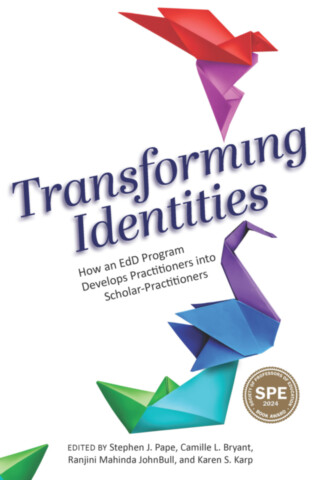
E-books are now distributed via VitalSource
VitalSource offer a more seamless way to access the ebook, and add some great new features including text-to-voice. You own your ebook for life, it is simply hosted on the vendor website, working much like Kindle and Nook. Click here to see more detailed information on this process.
Library E-Books
We are signed up with aggregators who resell networkable e-book editions of our titles to academic libraries. These editions, priced at par with simultaneous hardcover editions of our titles, are not available direct from Stylus.
These aggregators offer a variety of plans to libraries, such as simultaneous access by multiple library patrons, and access to portions of titles at a fraction of list price under what is commonly referred to as a "patron-driven demand" model.
Transforming Identities is the story of one doctoral program that was developed to transform the individuals who participated in the program personally and professionally, leading to improved ways of working within their professional practice. The book details the components of the program believed to have contributed to students' transformed personal and professional identities. The description of the program serves as a frame for 14 individual, compelling stories of transformation. These stories include identities experienced during the program, programmatic components that were mechanisms for change, and the impact of these alums' transformation on their professional organizations. In the final chapter, the editors look across the alums' stories of transformation to inform those who are developing/redeveloping doctor of education programs. Mechanisms of change highlighted by these former students include courses, communities of practice, advisers, and comprehensive examination. The book also synthesizes alums' descriptions of the phases of their transformation, what it means to be a scholar-practitioner, and what meaningful contributions “look like” within their professional contexts. The Johns Hopkins University (JHU) Doctor of Education (EdD) program was created with the expressed programmatic outcome of developing leaders who possess the knowledge, skills, and dispositions to rigorously examine educational problems of practice with stakeholders within their context of professional practice. Transforming Identities frames this discussion of identity transformation from an improvement science perspective as depicted by Bryk et al. (2015) (see also Author et al., 2022). Using this framework for the Applied Dissertation, the program supported its scholar-practitioners to partner with their colleagues in educational institutions and to independently take on the challenges and opportunities they encountered in their work within their context of professional practice. The initial chapters in the book provide an overview of the EdD program, to frame the remaining chapters in which graduates from the program describe their inspirational stories of transformation. They describe the ways in which the program components, including their dissertation, transformed their identity as well as their work within their context of professional practice. These stories present the ways in which these change agents within their organizations have served as insiders who, with greater knowledge and access to knowledge, were able to become the bridge between research and practice, and practice and research and thereby change their organizations from the inside. These stories of transformation highlight how their skills and insights accurately identify the variability in the contexts in which their problem of practice is situated, the variability in the successes of interventions within similar contexts, and the most appropriate way to move the organization forward toward improved outcomes. Each chapter tells the author’s story of transformation from practitioner to scholar-practitioner through the dissertation study and beyond.
More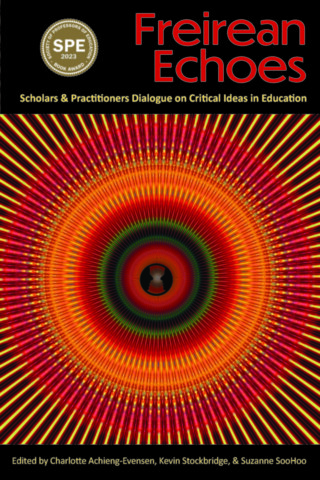
E-books are now distributed via VitalSource
VitalSource offer a more seamless way to access the ebook, and add some great new features including text-to-voice. You own your ebook for life, it is simply hosted on the vendor website, working much like Kindle and Nook. Click here to see more detailed information on this process.
Library E-Books
We are signed up with aggregators who resell networkable e-book editions of our titles to academic libraries. These editions, priced at par with simultaneous hardcover editions of our titles, are not available direct from Stylus.
These aggregators offer a variety of plans to libraries, such as simultaneous access by multiple library patrons, and access to portions of titles at a fraction of list price under what is commonly referred to as a "patron-driven demand" model.
How do Paulo Freire's ideas echo across time and contexts? What does the dialogical nature of text mean for critical pedagogy today? Inspired by Paulo Freire, this text utilizes a dialogical framework, inviting the reader into a deeper conceptual and contextual consciousness through the use of many voices. The core of this book has been stored away for several years waiting for loving students of Freire to bring it to life. The original group of lectures is a collection of speeches from keynote panelists given at a Critical Pedagogy conference in 2015 hosted by the Paulo Freire Democratic Project, Attallah College of Educational Studies at Chapman University in Orange, California. Over 200 people attended the conference coming from all parts of the world. Special guest speakers included Dr. Nita Anamaria Freire from Universidade Federal de Mato Grosso (Paulo Freire’s wife), Dr. Antonia Darder from Loyola Marymount University, Dr. Donaldo Macedo from University of Massachusetts, Dr. Peter McLaren and Dr. Tom Wilson from Chapman University. A highlight of the event was the rededication of the Paulo Freire Critical Pedagogy Archives housed in the university’s Leatherby Libraries. These archives hold Paulo’s personal notebook of study, his spectacles, instructional activity cards, and love notes to Nita. The collection also comprises original curriculum developed by Joe Kincheloe, protest posters from all over the world from Peter McLaren, paper mache puppets and curriculum developed by Alma Flor Ada and newspaper clippings and correspondences of Henry Giroux. Freirean Echoes acts as both an archive housing the writings of these and other scholars and activists for posterity. and as a living collection, allowing for the author voices to be in dialogue with each other and with the reader. This collective “talking text” echoes, reverberates, and amplifies critical Freirean ideas, thereby inviting the reader to extend Freirean thought into their lived experiences. Perfect for courses such as: Special Topics on Emerging Issues in Sociology of Education | Introduction to Educational Theory | Politics and Education and Special Topics in Comparative Education | Pedagogies of Social Change | Foundations: The Dialectics of the Global and the Local | Social Construction of Difference | Voice, Diversity, Equity and Social Justice | Introduction to Critical Pedagogy
More
E-books are now distributed via VitalSource
VitalSource offer a more seamless way to access the ebook, and add some great new features including text-to-voice. You own your ebook for life, it is simply hosted on the vendor website, working much like Kindle and Nook. Click here to see more detailed information on this process.
Library E-Books
We are signed up with aggregators who resell networkable e-book editions of our titles to academic libraries. These editions, priced at par with simultaneous hardcover editions of our titles, are not available direct from Stylus.
These aggregators offer a variety of plans to libraries, such as simultaneous access by multiple library patrons, and access to portions of titles at a fraction of list price under what is commonly referred to as a "patron-driven demand" model.
The How and Why of Laboratory Schools: Innovations and Success Stories in Teacher Preparation and Student Learning is an eagerly anticipated exploration crafted by esteemed researchers and practitioners from some of the foremost Laboratory Schools across the United States and internationally. These institutions, also recognized as demonstration schools or university-affiliated schools, play pivotal roles in the landscape of education, serving as bastions of innovation, research, and professional development. At their core, Laboratory Schools are multifaceted entities, assuming key responsibilities such as teacher training and professional development, serving as hubs for research and innovation, embodying models of best practices, fostering collaboration within university communities, shaping curriculum development and evaluation, and championing inclusion and special education. Their impact reverberates throughout the educational sphere, shaping the future of teaching, learning, and educational policies. The How and Why of Laboratory Schools serves as a beacon in the realm of education literature, offering an array of accessible examples that inspire and enlighten researchers, practitioners, and policymakers alike. With a global perspective, this volume provides a comprehensive snapshot of both the research and practice within Laboratory Schools worldwide, featuring exemplary models not only from the United States but also from various international settings. Spanning an variety of topics including demonstration schools, teacher preparation, innovative pedagogy and curriculum, early childhood education, elementary and primary education, middle and secondary education, STEM-focused initiatives, promotion of democracy, establishment of research laboratories, support for diverse learners, preservice teacher education, collaboration models, and the role of teachers as researchers, this book encompasses the diverse facets of Laboratory Schools' contributions to education. Moreover, the book serves as a blueprint for the development of new Laboratory Schools, offering insights into various models, funding mechanisms, and strategies for integration into university research and teacher training programs. By showcasing successful examples and providing practical guidance, this book empowers educational institutions to embark on the journey of establishing their own school, enriching both their local communities and the broader educational landscape. Beyond the present, this book also articulates a compelling case for the future of Laboratory Schools, highlighting their potential to continually innovate, adapt, and lead educational transformation in the years to come. Through its insightful analyses and compelling narratives, The How and Why of Laboratory Schools heralds a future where Laboratory Schools remain at the forefront of educational excellence and innovation, not only domestically but also on the international stage.Perfect for courses such as: Comparative Education; Education Reform; Professional Development Models; School Improvement; Foundations in Education; Early Childhood Education
More
E-books are now distributed via VitalSource
VitalSource offer a more seamless way to access the ebook, and add some great new features including text-to-voice. You own your ebook for life, it is simply hosted on the vendor website, working much like Kindle and Nook. Click here to see more detailed information on this process.
Library E-Books
We are signed up with aggregators who resell networkable e-book editions of our titles to academic libraries. These editions, priced at par with simultaneous hardcover editions of our titles, are not available direct from Stylus.
These aggregators offer a variety of plans to libraries, such as simultaneous access by multiple library patrons, and access to portions of titles at a fraction of list price under what is commonly referred to as a "patron-driven demand" model.
Researchers working to clearly identify a research topic and theme have difficulty deciding how to focus their work. Using a potential-based learning focus, detailed in this text, readers are challenged to consider their role as researcher, scholar, and leader to guide their reflective work. Transformative Potential Based Research: A Guide to Successfully Finding One's Place in Research provides both the theoretical support and the guiding activities to help readers decide on an area of potential-based research. The result will prove to be transformational. To guide this work, Karen Moroz and Trish Harvey have developed a suitable framework. They invite readers to review the mountain metaphor shared within the framework and to keep the visual present at all times as they progress through the book. It is addressed often and readers will be invited to use, extend, and discuss it numerous times throughout their journey. Transformative Potential Based Research supports instructors and students through all stages of research, including: identifying and embracing relevant and essential topics, crafting research questions that accurately and concisely convey the purpose(s), exploring one’s own connection to the issue, developing and employing individual processes that lead to success, and determining a potential-based frame that motivates the writer and frames the workPerfect for courses such as: Dissertation; Research Methods; Educational Methods; Intro to Research Design; Academic Writing; Capstone Practicum; Educational Research; Understanding Research
More
E-books are now distributed via VitalSource
VitalSource offer a more seamless way to access the ebook, and add some great new features including text-to-voice. You own your ebook for life, it is simply hosted on the vendor website, working much like Kindle and Nook. Click here to see more detailed information on this process.
Curriculum and pedagogy are the heartbeat of our schools. They encompass what we do and do not teach–what content and approaches we either choose or are mandated to choose, or leave out or are mandated to leave out. Curriculum entails the overall educational experience of schooling, while pedagogy is the art and craft of teaching–or the translation of curriculum into student knowledge and growth. Hence, curriculum and pedagogy are sociocultural phenomena that impact and are impacted by context (e.g., students, community, colleagues, geography, etc.). Once upon a time, curriculum and pedagogy were the spaces in which educators could exercise creativity and exploration, reflecting the individual needs of their students and communities. However, as political structures shifted and the standards movement took hold in the late 20th century, freedoms around curriculum and pedagogy began to fade with increased oversight over and standardization of “best practices” with greater emphasis placed on performance and efficiency. Pedagogical practices were soon framed around producing results (test scores, graduation rates, measurable learning objectives derived from prescribed state standards), while curriculum became a prescribed structure formatted to reflect state standards with an eye toward test performance. Curriculum and pedagogy were further impeded by hegemonic forces calling for censorship of teaching and curriculum, such as the ban on Ethnic Studies in Tucson, Arizona, and continued attacks on Critical Race Theory nationwide. Further, curriculum became a tool for concealing and/or silencing the experiences and voices of our diverse students, educators, and communities. The results of these phenomena are teachers feeling uninspired and deprofessionalized and students feeling devalued and unheard–especially marginalized students. Since curriculum and pedagogy directly impact the experiences of teachers and students, they must be transformed. However, how do we do that within today’s tenuous PreK-12 environment? How do we transform curriculum and pedagogy so that they reflect, liberate, and ensure justice for students and educators in preschools, elementary schools, middle schools, high schools and the content areas taught within them? Moving from Traditional to Transformative Curriculum and Pedagogy addresses these challenges by providing clear and direct guidance for current and aspiring educators committed to transforming the status quo in their classrooms and schools. Innovative and creative methodologies and practices that aspiring and practicing educators can use right away are the primary focus of this book. Because the editors and contributors are former or current PreK-12 practitioners and/or education scholars, this book is written for a broad educational audience. The editors and contributors provide preservice and practicing teachers entry points for transforming the educational landscape in favor of liberatory, transformative practices in PreK-12 schools across grade levels, content areas, school types, and geographic regions. Additionally, this book is ideal for teacher preparation programs as well as PreK-12 professional development, as this book guides readers through theoretical and empirical discussions, supported by hands-on applications that enable real-time application, and concludes with interactive features, like case studies, extension activities, and discussion prompts.
More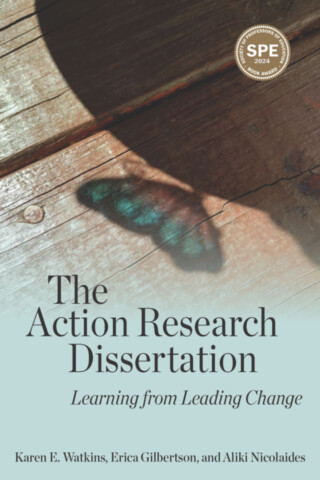
E-books are now distributed via VitalSource
VitalSource offer a more seamless way to access the ebook, and add some great new features including text-to-voice. You own your ebook for life, it is simply hosted on the vendor website, working much like Kindle and Nook. Click here to see more detailed information on this process.
Library E-Books
We are signed up with aggregators who resell networkable e-book editions of our titles to academic libraries. These editions, priced at par with simultaneous hardcover editions of our titles, are not available direct from Stylus.
These aggregators offer a variety of plans to libraries, such as simultaneous access by multiple library patrons, and access to portions of titles at a fraction of list price under what is commonly referred to as a "patron-driven demand" model.
The idea of the doctorate is undergoing a transformation as experts explore the nature of “doctorateness” and its relevance for current organizational and societal challenges. The professional practice doctorate has emerged as a highly useful framework to address these challenges and it necessarily requires a distinctive approach to the doctoral dissertation. The Action Research Dissertation: Learning from Leading Change shares a framework for the action research dissertation, outlining the specific ways in which action research fosters the development of scholar-leaders. It offers both doctoral students who are practitioners in applied fields, and the faculty who guide them in their doctoral research, a comprehensive and applied approach to action research that focuses on facilitating and leading change in organizations, as well as ways to address how to translate the findings of this work into a rigorous, dissertation research study. Throughout the book, the authors explicitly address the connection between the parallel and mutually-reinforcing processes of taking action and conducting research, offering rich insights, tools, and case examples that outline specifically how to use action research to both guide a change effort and generate useful insights to contribute to theory-building. This is an essential book for a variety of readers, including professional practice doctoral students, faculty directing the studies of those students, program administrators, professional development coordinators, and many others.Perfect for courses such as: Introduction to Action Research, Action Research, Applied Research, Qualitative Research, Mixed Methods Research, and Case Study Research
More