
Search results for using data

E-books are now distributed via VitalSource
VitalSource offer a more seamless way to access the ebook, and add some great new features including text-to-voice. You own your ebook for life, it is simply hosted on the vendor website, working much like Kindle and Nook. Click here to see more detailed information on this process.
Library E-Books
We are signed up with aggregators who resell networkable e-book editions of our titles to academic libraries. These editions, priced at par with simultaneous hardcover editions of our titles, are not available direct from Stylus.
These aggregators offer a variety of plans to libraries, such as simultaneous access by multiple library patrons, and access to portions of titles at a fraction of list price under what is commonly referred to as a "patron-driven demand" model.
Some students enter classrooms with an “I dare you try to teach me” look on their faces, and others bounce into class excited to learn and anxious to please the teacher. We know we can’t automatically blame teachers or schools when students don’t want to learn. But we also know that sometimes teachers and schools don’t always set students up for success, and they don’t always help them love what they’re learning.Why Kids Love (and Hate) School: Reflections on Practice investigates some of the school and classroom practices that help students love school—and some that send students in the opposite direction. Intended for classroom teachers, teacher education students, and school administrators, chapters in the book investigate a variety of topics: how schools can build effective school cultures, the “struggle” students encounter in learning, practices of other countries that help students love school, testing practices that cause students to hate school—and much more. Perfect for courses in: Introduction to Education, General Methods, Management/Assessment, Educational Research, Educational Administration/Leadership, Teacher Leadership, Curriculum Theory, Curriculum Development.
More
E-books are now distributed via VitalSource
VitalSource offer a more seamless way to access the ebook, and add some great new features including text-to-voice. You own your ebook for life, it is simply hosted on the vendor website, working much like Kindle and Nook. Click here to see more detailed information on this process.
Why is the sense of taste so conspicuously absent from contemporary educational research and so severely rationed in the ways it is lived in universities and schools? After all, in the world, taste is a perceptual and epistemological powerhouse in the complicated process of staying alive as well as living a life. Taste is also a process of world making. It’s a way of reading, naming, mapping, imagining, remembering, and making worlds and connecting to the worlds of others--therefore it is curricular. In attending to how taste matters and matters of taste, chapters in Tasting Education: Viewing Curriculum, Pedagogy, Learning, and Educational Research Through the Sense of Taste invite participants to think about taste as a sense, and/or the sense of taste, as it plays out in the thinking and doing of education and its inquiry. This book takes up taste as an embodied set of meanings that are sensuous, pragmatic, and political: as a key part of the sensorium, and as engagement with the sensuosity of the olfactory, the nose, the mouth, the tongue as a way of making meaning of food, but also ways for making meaning from the food for thought and action that theory can provide. It also asks us to take into account the culture of food as it relates to education; whose palates are catered to and whose remain marginalized, deliberately destroyed, or are left-unfed? Taste, then, also becomes a way of resisting, challenging, and reimagining such modes as they play themselves out in curriculum and pedagogy and reveal collective commitments that include shared pleasure alongside political and social action (Siniscalchi, 2018). This book offers a space for deeper conversations around taste in curriculum and elsewhere, and how taste is being used to dismantle oppression in these spaces. The slow-food movement argues that “taste and pleasure” must return to the table (Siniscalchi, 2018). Tasting Education invites the mixed pleasures and problematics of taste to the table of educational research as well. Tasting Education will appeal to faculty and students in graduate-level courses related to curriculum, instruction, social foundations and leadership studies, as well as those involved with food studies courses.
More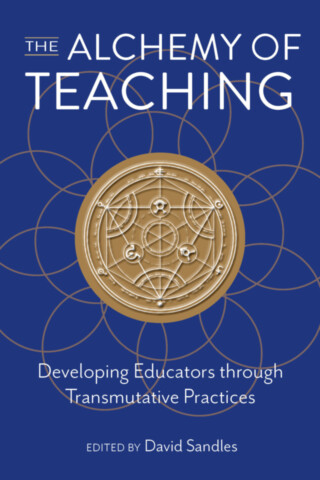
E-books are now distributed via VitalSource
VitalSource offer a more seamless way to access the ebook, and add some great new features including text-to-voice. You own your ebook for life, it is simply hosted on the vendor website, working much like Kindle and Nook. Click here to see more detailed information on this process.
Library E-Books
We are signed up with aggregators who resell networkable e-book editions of our titles to academic libraries. These editions, priced at par with simultaneous hardcover editions of our titles, are not available direct from Stylus.
These aggregators offer a variety of plans to libraries, such as simultaneous access by multiple library patrons, and access to portions of titles at a fraction of list price under what is commonly referred to as a "patron-driven demand" model.
With an alchemical verve, educators have been shaping the very direction of students' lives since time immemorial. With millions of teachers currently serving in the Tk-12 sector and millions more serving in higher education spaces, the need for quality educator development is essential. For Tk-12 educators, while there are teacher preparation programs to help shape their teacher identities, the challenge of neatly integrating all the rich content provided into a set of actions is considerable. For college educators writ large, there is no conspicuous preparation for teaching, leaving many to flounder early in their careers. In addition, homeschooled students, whose population has nearly doubled in recent years, also need and deserve access to professional training. While chiefly focused on Tk-12 educators, The Alchemy of Teaching supplies support for educators in all sectors and covers an array of topics germane to educators everywhere. Accordingly, this work draws on the early notions of alchemy, which is the art of transforming mundane metals into gold, to develop a template for educators to succeed while infusing essential, hard-earned wisdom along the way. Using the metals of alchemy as metaphors, the effective elements of teaching are parsed out in commonsensical and pragmatic ways, designed to give all those who educate students a template for strengthening their practice and the learning outcomes of their students. Written by highly experienced educators, this book is made up of three sections, with each detailing some of the prominent struggles educators regularly have in particular areas. Each author also elucidates the gold practices and provides techniques for avoiding some of the early pitfalls often experienced by educators. Each chapter of this book is dedicated to the practice of changing or transforming educator practices. It is a valuable tool for educators across the teaching spectrum to bring greater hope and success to their classrooms.Perfect for courses such as: Teacher Education; Classroom Management; Education Psychology; Social Justice; Foundational Courses in Teacher Education; Courses in Differentiation; Methods Courses in Mathematics
More
E-books are now distributed via VitalSource
VitalSource offer a more seamless way to access the ebook, and add some great new features including text-to-voice. You own your ebook for life, it is simply hosted on the vendor website, working much like Kindle and Nook. Click here to see more detailed information on this process.
Decoloniality and African Education is a vibrant and vital collection of essays that addresses the challenges, possibilities, and responsibilities for the future of de- and anti-colonial African education as it is taught in universities in the U.S. and Canada, particularly in Colleges of Education. It looks at the ways in which African education is taught in these countries, and how the curriculum for the topic is influenced by colonialization, thus restricting or removing altogether the essence of Africanness from the content of classes.The themes of this book go beyond the mere rhetoric of decolonialization by creating specific approaches to dismantling colonial educational systems in North American universities as well as in Africa itself, creating a new environment for African education duly informed by local cultural resource knowing, known from grounded everyday practices of authentic African educators. In other words, it is a revision of educational practices informed by what educators know and are doing for the lessons in envisioning schooling and education in North America and Africa. African educators are urged to think through solutions specific to the problems and challenges in schools today, and to meet the call of our times to provide education to young learners that not only empowers them, but also provides them with background knowledge, cultural grounding, and specific lessons that will enable them to craft their own futures. So how do we “do” decolonial education from the standpoint of African educators and learners everyday schooling practice and knowledge? Decoloniality and African Education argues that a careful embrace of African Indigenous and cultural knowings determine the successful response to this question. It engages both the “decolonial” and the “anti-colonial,” with a reading that the “decolonial” (as many have pointed out, see Parry, 1994) is a process and a path toward an end, which is the goal of the “anti-colonial” (see Dei, 2022).Decoloniality and African Education is essential reading for students and scholars committed to the improvement of educational outcomes for African American students. It’s a book that empowers educators and raises awareness about African-based teaching environments. It can be used in a variety of courses, including African Studies, African Development, Anti-Colonial Thought and Indigenous Knowledge, and the Pedagogical Implications of Decolonization.
More
E-books are now distributed via VitalSource
VitalSource offer a more seamless way to access the ebook, and add some great new features including text-to-voice. You own your ebook for life, it is simply hosted on the vendor website, working much like Kindle and Nook. Click here to see more detailed information on this process.
Library E-Books
We are signed up with aggregators who resell networkable e-book editions of our titles to academic libraries. These editions, priced at par with simultaneous hardcover editions of our titles, are not available direct from Stylus.
These aggregators offer a variety of plans to libraries, such as simultaneous access by multiple library patrons, and access to portions of titles at a fraction of list price under what is commonly referred to as a "patron-driven demand" model.
Some hundred years after John Dewey worked to illuminate what it means to educate and how public education serves as the bedrock of democracy, his seminal Democracy and Education speaks urgently not only to critical contemporary educational issues but to contemporary political issues as well. As mania for testing forces a steadily narrowing curriculum, Dewey explains why democracy cannot “flourish” if “the chief influences in selecting subject matter of instruction are utilitarian ends narrowly conceived for the masses.” As such utilitarian subject matter is increasingly placed online, isolating individual students and their electronic screens, he insists that education happens not through direct instruction but “indirectly by means of the environment” where members of a community engage in meaningful tasks. As the American population appears increasingly subject to rhetorical manipulation and ideological extremism, Dewey imagines the possibility of education cultivating “habits of mind which secure social changes without introducing disorder.” Insightful and inspiring, Dewey’s classic reintroduces readers to educational and political possibilities hard to remember as political and corporate forces to work reshape American public schools in the service of global profit rather than democratic life.Myers Education Press’s Timely Classics in Education offer readers the opportunity to return to the original works of giants whose influence on education have persisted through the years. Critical introductions to each work offer information on the context of the original work as well as insights into current relevance. For readers unfamiliar with each text, the introductions provide entrée to the work; for experienced readers, the series offers an opportunity to return to original works untainted by the distortions of decades of interpretation. Unlike poorly produced facsimile editions, Timely Classics are high-quality products. They can be adopted for use in many types of education classes.Perfect for courses in: Social Foundations of Education, Political and Social Foundations of Education, Foundations of American Education, Foundations of Education, Introduction to Education Theory and Policy, Philosophy and Education, History of American Education, and The Philosophy of John Dewey.
More
E-books are now distributed via VitalSource
VitalSource offer a more seamless way to access the ebook, and add some great new features including text-to-voice. You own your ebook for life, it is simply hosted on the vendor website, working much like Kindle and Nook. Click here to see more detailed information on this process.
Do you have the desire to build relationships with the special education teachers in your school or district but constantly feel weighed down by compliance issues? Special education teachers are leaving the field at alarming rates, and positive change through transformational leadership practices can help administrators build confidence and self-efficacy as leaders of special education programs and strengthen special education teachers’ commitment to remain in the field. In a book that guides an affective journey using John C. Maxwell’s teachings, Natasha Veale, a former special education teacher, professor of special education, and certified Maxwell Leadership consultant, demonstrates how to address administrators’ belief in their ability to become influential special education leaders and connect with their special education teachers, even without a background in special education. This book is ideal for pre-service and in-service assistant principals and principals, special education administrators, and general and special education teachers. Embedded school administrators’ anecdotes reveal experiences, challenges, and desires to build an emotionally supportive environment for their special education teachers. Practical advice and tips are offered to help administrators positively influence, individually consider, intellectually stimulate, and inspirationally motivate their special education teachers. In How to Retain Special Education Teachers: A Transformational Leadership Guide for School Administrators, you learn how to: Support special education teacher workload Build self-efficacy as a leader of special education Build relationships with special education teachers Strengthen Principal Preparation Programs This is a critically important book that should be read by every school administrator and by every College of Education faculty member involved in any area of special education.Perfect for courses such as: Principal Leadership for Special Education; Special Education Administration; Educational Leadership; Developing Teachers; Strategic Human Capital Leadership; Leading Change in Education; and Foundations in Education
More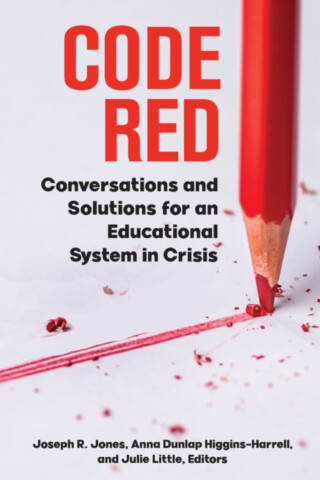
E-books are now distributed via VitalSource
VitalSource offer a more seamless way to access the ebook, and add some great new features including text-to-voice. You own your ebook for life, it is simply hosted on the vendor website, working much like Kindle and Nook. Click here to see more detailed information on this process.
Library E-Books
We are signed up with aggregators who resell networkable e-book editions of our titles to academic libraries. These editions, priced at par with simultaneous hardcover editions of our titles, are not available direct from Stylus.
These aggregators offer a variety of plans to libraries, such as simultaneous access by multiple library patrons, and access to portions of titles at a fraction of list price under what is commonly referred to as a "patron-driven demand" model.
In schools, a Code Red alert indicates a potential or immediate threat within a building or on a campus and is the signal for a full-scale lockdown of all classrooms. This book, Code Red: Conversations and Solutions for an Educational System in Crisis, presents a variety of voices from teachers, administrators, teacher preparation faculty, college supervisors, and pre-service teacher candidates. These voices are crying “Code Red” because they want a broken system repaired. For them, the system is bleeding, cancerous, and in turmoil, with the expectation that they work under arduous and often dangerous conditions; teachers are underpaid, devalued, exhausted, voiceless, and abused. They face an environment in which politics has replaced learning, students are failing and, in extreme circumstances, walking away from schools or even committing suicide. The political discourse is wrestling control from teachers in certain states. Neurodivergent students are being pushed aside. The altruistic profession of teaching is being reduced to factory work, in which teachers—especially those in their first five years of service—are leaving the profession at staggering rates. The profession itself is at risk of becoming obsolete. The contributors to Code Red believe that the American educational system has entered a moment of crisis. Their voices need to be heard, and their stories and lived experiences should be recognized. The adage is true: the answer to any problem resides with those who own the problem. We cannot create solutions without owning that these issues exist, and all of America owns the education of our children. Therefore, this book provides a dialogic space where everyone involved in the American educational system can reimagine the possibilities of our system and, through this process, begin creating positive and sustainable changes to bring our system out of crisis. In addition to providing a vivid picture of the current state of public schools, the book offers real solutions that can be used to produce healthier, more successful classrooms. It is an invaluable tool for instructors, pre-service teachers, and Colleges of Education administrators.Perfect for courses such as: Introductory Education; Undergraduate Social and Cultural Foundations of Education; Introductory Educational Leadership; Introductory Undergraduate Teacher Preparation; Graduate Foundations of Education; and Introductory MAT Graduate
More
E-books are now distributed via VitalSource
VitalSource offer a more seamless way to access the ebook, and add some great new features including text-to-voice. You own your ebook for life, it is simply hosted on the vendor website, working much like Kindle and Nook. Click here to see more detailed information on this process.
Methodology and Praxis: Thinking with Patti Lather examines the work of Patti Lather and its importance at the intersections of curriculum theory, cultural studies, and critical qualitative research. The book explores the impact of Lather's work on the field both broadly and specifically and engages with her ideas and methods in innovative ways. From 1988-2014, Patti Lather was a faculty member at Ohio State University’s School of Educational Policy and Leadership, where she taught qualitative research, feminist methodology, and courses on gender and education. She has authored four influential books: Getting Smart: Feminist Research and Pedagogy With/in the Postmodern (1991 Critics Choice Award); Troubling the Angels: Women Living with HIV/AIDS (co-written with Chris Smithies, 1998 CHOICE Outstanding Academic Title); Getting Lost: Feminist Efforts Toward a Double(d) Science (2008 Critic’s Choice Award); and Engaging (Social) Science: Policy from the Side of the Messy (awarded the Critic’s Choice Award in 2010 and 2011). Dr. Lather has delivered lectures extensively both nationally and internationally, and has held several distinguished visiting lectureships. Her research explores (post)critical, feminist, and poststructural theories, with her recent work focusing on how the demand for scientifically-based research in education affects qualitative inquiry. She has served in visiting roles at institutions such as the University of British Columbia, Goteborg University, York University, and the Danish Pedagogy Institute, and in 1995 she undertook a sabbatical at the Humanities Research Institute at the University of California, Irvine, where she participated in a seminar on feminist research methodology. Her accolades include a 1989 Fulbright to New Zealand and induction as an AERA Fellow in 2009. Lather is a prominent and prolific scholar whose work has been influential in shaping multiple fields, challenging conventional understandings of research and knowledge, and advocating for social justice and equity in education. This collection represents a diverse group of scholars that build on these contributions and showcase the diverse ways in which research improves teaching and learning. Contributors in this volume include scholars in educational theory, social science, research methodology, feminist social theory, and curriculum theorizing. Perfect for courses such as: Cultural Studies of Education; Qualitative Research Methodology; Contemporary Curriculum Theory; Advanced Qualitative Inquiry; Feminist Theory and Methodology; Education Policy Studies; Research In Education
More
E-books are now distributed via VitalSource
VitalSource offer a more seamless way to access the ebook, and add some great new features including text-to-voice. You own your ebook for life, it is simply hosted on the vendor website, working much like Kindle and Nook. Click here to see more detailed information on this process.
Library E-Books
We are signed up with aggregators who resell networkable e-book editions of our titles to academic libraries. These editions, priced at par with simultaneous hardcover editions of our titles, are not available direct from Stylus.
These aggregators offer a variety of plans to libraries, such as simultaneous access by multiple library patrons, and access to portions of titles at a fraction of list price under what is commonly referred to as a "patron-driven demand" model.
Letters to the Field: Curriculum Scholars’ Stories for Future Generations encapsulates a generation of scholars who revitalized the field of Curriculum Studies across North America in the mid-1970s, as well as the generations of scholars who immediately followed, all of whom are now themselves senior scholars. Rather than another edited work of reprints or new monographs, this volume seeks to do something special by providing an opportunity for this group of scholars to speak to their field about understandings they believe to be of significance. The strength of this book generally resides in two overarching factors. First, there is the depth and strength of this well-rounded, highly regarded group of scholars whose work speaks to the heart of the interdisciplinary nature of curriculum studies and curriculum theorizing. Second, as you might imagine, this is a significant moment in the United States when the very foundation of curriculum theory–critical inquiry and often an engagement with questions of race, queerness, disability, and the like–continues to be under attack in K-12 schools and universities across the United States. Contributors speak to the foundations of the field and the contemporary challenges that the field and schools of education more broadly must survive. Contributions to this important work are five to seven handwritten or, in the case of scholars who are unable to write, typed pages. There are also chapters that have accompanying photos and drawings. The reproduction of actual letters in the book lend authenticity and will appeal to readers by giving an intimate view into the thoughts and wishes of these scholars. We also understand that, similar to the challenge folks might face when handwriting a document, some writing might not be legible to all readers. Therefore, stable QR codes and/or hyperlinks to typed versions of handwritten chapters are included so that readers can easily look at typed versions alongside the handwritten work online. Letters to the Field makes an invaluable contribution to Curriculum Studies. By providing a history of the rationale used to revitalize the field, it will prove a valuable addition to the libraries of educators in a variety of disciplines.Perfect for courses such as: Introduction to Curriculum Theory; Introduction to College Teaching; Social Foundations of Education; History of American Higher Education; Traditions of Inquiry; and Introduction to Scholarship
More
E-books are now distributed via VitalSource
VitalSource offer a more seamless way to access the ebook, and add some great new features including text-to-voice. You own your ebook for life, it is simply hosted on the vendor website, working much like Kindle and Nook. Click here to see more detailed information on this process.
Library E-Books
We are signed up with aggregators who resell networkable e-book editions of our titles to academic libraries. These editions, priced at par with simultaneous hardcover editions of our titles, are not available direct from Stylus.
These aggregators offer a variety of plans to libraries, such as simultaneous access by multiple library patrons, and access to portions of titles at a fraction of list price under what is commonly referred to as a "patron-driven demand" model.
How do ideas change practices and people? In Ideas That Changed Literacy Practices, 32 influential scholars in literacy education get personal about how they have worked on ideas and how those ideas have worked on them. Together, the essays offer never-before revealed personal histories of the authors’ published writing about ideas that have shaped the field of literacy education. As a collection, the essays highlight some of the major themes that have guided and changed literacy practices over the last few decades. They also offer a rare glimpse into the complex ways histories of research emerge alongside personal and political influences on policy and practice. The volume includes an introductory chapter by Sumara and Alvermann in which they detail the processes they used in creating a context for the significance of this work. They begin with the premise that most literacy scholars rarely, if ever, reveal their personal and intellectual investments in ideas that have animated their research and other scholarly endeavors. That this observation rang true for all of the contributors was evidenced in their responses to the invitation. For example, some replied by saying this was the most exciting project they had engaged in because it required reflection on what motivated them to write the requested 3,500-word essay; others mentioned they were looking forward to reading what their peers would share. Ideas That Changed Literacy Practices is a unique collection of autobiographical essays that situates literacy learning and teaching in a rich context of personal and professional knowledge that highlights and celebrates the vibrant complexities of the field of literacy education. It is a unique and valuable resource for researchers and educators, whether in K-12 or higher education. Perfect for courses such as: Introduction to Literacy Research ӏ Literacy Research and Methods ӏ Language, Literacy and Culture ӏ Literacy Policy and Practice ӏ Narrative Research ӏ Interpretive Inquiry ӏ Research Methods in Education ӏ Foundations of Literacy Education ӏ Research Methods in Language and Literacy ӏ Popular Culture in Literacy Classrooms ӏ New and Digital Literacies ӏ History of Literacy Practices ӏ Educational Philosophy ӏ Reading and Language Arts ӏ Critical Theory ӏ Poststructuralism ӏ Digital Media Education ӏ Creative Writing ӏ Politics of Literacy
More