
Search results for using data

E-books are now distributed via VitalSource
VitalSource offer a more seamless way to access the ebook, and add some great new features including text-to-voice. You own your ebook for life, it is simply hosted on the vendor website, working much like Kindle and Nook. Click here to see more detailed information on this process.
In these times, decisions large and small can have important consequences for educators. Everything from daily curricular choices and interpersonal encounters to long-term educational aims and approaches to educator-client relations is up for careful decision-making. While not every professional decision requires careful preparation and defense, more than ever, in our increasingly polarized, distrustful, and argumentative world, many more than we might anticipate do. How should educators prepare to make careful, defensible public decisions affecting their students and themselves? An important part of that preparation involves training in a range of logical and interpersonal abilities that come before and help to make good educational decisions. A Preface to Educational Decision-Making is aimed at describing those abilities, illustrating their professional uses, and providing a starting point for increasing educators’ practical skills in applying them. What are these abilities? For the most part, they involve common-sense attention to the ways that educators can become clearer about the nature of actual decisions they are asked to make, and aware of what must be done to make those decisions ones that all concerned can recognize as reasonable and as logically presented, even if not universally agreeable. In short, these are factors that provide, for decision-makers and their audiences, a preface to decisions that matter to those who make them and to those affected by them. A most important, though widely ignored set of those abilities center on making the nature of particular decisions clear to all concerned. Those abilities involve becoming sensitive to the ways such decisions can become or can be made to be unclear. In the give and take of public educational decision-making processes, bad decisions are often, even usually begin with confusion over what is to be decided and over what is proposed as the decision to make. The ability to get clarification, and the habit of clarifying before committing are crucial to good decision-making. A second set of preparatory abilities involve recognizing what must be done to actually decide what is true and/or advisable, as part of a decision at hand. Making what is recognized as a reasonable and well-reasoned decision depends in large part on applying those abilities clearly and often publicly. These two large sets of abilities are crucially connected. Making clear to oneself and to others what is to be decided is part and parcel of becoming aware of how to decide an issue at hand. This book works to explain the connections and to describe the order of their application. While most of these abilities have been described in other texts on what is usually called “informal logic,” A Preface to Educational Decision-Making is especially concerned with the sorts of decision that educators are called on to make in their professional lives. Moreover, this book widens the range of abilities to clarify and support professional decisions beyond what is usually discussed. The sections on educational speech acts and on deciding what to call true or advisable provide useful additions to educators’ repertoire of decision-making abilities. Finally, the discussion of interpersonal factors in public decision-making offers useful guides to reaching decisions with other educators and with clients.Perfect for courses such as: Foundations of Education; Philosophy; Social Foundations, Methods Courses in Education; Pre-student Teaching; and most Graduate courses in Educational Theory, Curriculum, Social Issues
More
E-books are now distributed via VitalSource
VitalSource offer a more seamless way to access the ebook, and add some great new features including text-to-voice. You own your ebook for life, it is simply hosted on the vendor website, working much like Kindle and Nook. Click here to see more detailed information on this process.
Library E-Books
We are signed up with aggregators who resell networkable e-book editions of our titles to academic libraries. These editions, priced at par with simultaneous hardcover editions of our titles, are not available direct from Stylus.
These aggregators offer a variety of plans to libraries, such as simultaneous access by multiple library patrons, and access to portions of titles at a fraction of list price under what is commonly referred to as a "patron-driven demand" model.
Focus Groups: Culturally Responsive Approaches for Qualitative Inquiry and Program Evaluation takes an in-depth look at how culturally-responsive focus groups are developed and implemented within the context of qualitative inquiry broadly, and program evaluation more specifically. The book showcases various forms of focus groups and how they can be responsive to specific communities across different disciplines. This book provides: an historical perspective on focus groupsa theoretical foundation helpful for supporting focus groups with marginalized groups, vulnerable populations (older adults, children), and participants within non-Western settingsbasic procedures for conducting focus groupsguidelines for cultural responsiveness andcase examples of alternative approaches to focus groups that target specific communities and those in different contexts. It also considers ethical issues around the use of culturally responsive focus groups, while providing guidance on analyzing and interpreting your data and establishing the credibility of your study. Focus Groups is an information rich resource for qualitative researchers and program evaluators at various levels who want to learn about or enhance their knowledge on designing and conducting culturally responsive focus groups.Perfect for courses such as:Foundations of Culturally Responsive Focus Groups | Culturally Responsive Approaches to Program Evaluation Practicing Qualitative Program Evaluation | Qualitative Research: Culturally Responsive Methods | Focus Groups in Research | Introduction to Qualitative Methods | Methods in Educational Research | Program Evaluation Practice | Designing Qualitative Research
More
E-books are now distributed via VitalSource
VitalSource offer a more seamless way to access the ebook, and add some great new features including text-to-voice. You own your ebook for life, it is simply hosted on the vendor website, working much like Kindle and Nook. Click here to see more detailed information on this process.
Implementation Science: A Playbook for Instructional Leaders offers a practical approach to driving sustainable, impactful change in educational settings. Grounded in research-to-practice methodology, this essential guide is designed for district and school instructional leaders committed to elevating student outcomes through strategic, evidence-informed decisions. Dr. Carlson draws on decades of experience in teaching, leadership, curriculum development, and literacy research to deliver a step-by-step framework that empowers leaders to effectively plan, implement, monitor, and assess initiatives.In clear, accessible language, Implementation Science demystifies the core principles of implementation and bridges concepts to turnaround. It offers actionable strategies and tools for tackling complex challenges in today’s educational landscape. From curriculum selection to fostering an engaged, capable team, this playbook navigates the nuances of change management, helping leaders make data-driven decisions that stick. Each chapter culminates with key takeaways and questions for reflection, supporting instructional leaders in aligning their work with broader district goals.Perfect for superintendents, principals, curriculum directors, and aspiring leaders, Implementation Science is more than a guide—it’s a hands-on resource for building a sustainable, student-centered culture of continuous improvement. The book can also be adopted for a variety of courses such as Educational Leadership and Administration; Curriculum and Instructional Design; Data-Driven Decision Making in Education; Change Management in Education; and many more.CLICK HERE TO BUY THE PLAYBOOK/WORKBOOK BUNDLE AND SAVE!
More
E-books are now distributed via VitalSource
VitalSource offer a more seamless way to access the ebook, and add some great new features including text-to-voice. You own your ebook for life, it is simply hosted on the vendor website, working much like Kindle and Nook. Click here to see more detailed information on this process.
In Transforming Teaching Through the Cycle of Care: A Comprehensive Guide to Empowering Education Through Relationships, Listening, Thinking, and Responding, author Mona Beth Zignego introduces a groundbreaking model that reshapes the way educators approach their profession. Drawing from decades of experience as a teacher, mentor, and researcher, Zignego offers a unique perspective on the vital role of care in the classroom. Through her "Cycle of Care" model, she breaks down the process of care into four critical elements: relationships, listening, thinking, and responding. This powerful framework is designed to help teachers not only support their students academically but also foster environments of trust, empathy, and social justice. Zignego dives deeply into real-life examples from her own experience and research, illustrating both the profound impact of care on student outcomes and the devastating effects of its absence. From stories of students like Emily, who struggled under an uncaring teacher’s response, to educators like Mr. Price, who embodied the very essence of care in his practice, Transforming Teaching Through the Cycle of Care illuminates the path toward transformative education. A key focus of the book is the concept of self-directed care for teachers—a practice Zignego argues is essential for preventing burnout and for sustaining a healthy, effective teaching career. She acknowledges the emotional, physical, and professional challenges teachers face and provides practical tools to help them navigate these challenges while maintaining a caring, student-centered approach. With exercises like the "Emotionater Tool" and the "Teaching Identity Map," she guides teachers in reflecting on their own needs, biases, and emotional well-being, ensuring that care is directed not only at students but also at themselves. This book is an invaluable resource for teachers, administrators, and anyone involved in education who wants to cultivate a nurturing and inclusive learning environment. Zignego’s insights remind us that care is the foundation upon which all meaningful education is built, and that by embracing care in teaching, we can create classrooms where every student feels seen, valued, and capable of success. Whether you are a new teacher seeking guidance or an experienced educator looking to deepen your practice, Transforming Teaching Through the Cycle of Care offers the inspiration and tools you need to transform your teaching through the power of care.Perfect for courses such as: Foundations of Culturally Responsive Teaching; Principles of Classroom Management and Relationships; Introduction to Social and Emotional Learning in Education; Educating for Equity and Social Justice; Foundations of Culturally and Linguistically Responsive Practice; Introduction to School Leadership and Improvement; Teaching in a Diverse Society; Supportive Classroom Communities; Sociocultural Perspectives in Education; and Teacher Leadership and Professional Collaboration
More
E-books are now distributed via VitalSource
VitalSource offer a more seamless way to access the ebook, and add some great new features including text-to-voice. You own your ebook for life, it is simply hosted on the vendor website, working much like Kindle and Nook. Click here to see more detailed information on this process.
Library E-Books
We are signed up with aggregators who resell networkable e-book editions of our titles to academic libraries. These editions, priced at par with simultaneous hardcover editions of our titles, are not available direct from Stylus.
These aggregators offer a variety of plans to libraries, such as simultaneous access by multiple library patrons, and access to portions of titles at a fraction of list price under what is commonly referred to as a "patron-driven demand" model.
Improvement Science: Promoting Equity in Schools is intended for classroom teachers, school leaders, and district leaders charged with leading improvement efforts in schools. From questions such as “how do I develop a love of reading in my classroom?” to “how can I better manage student behavior during independent learning time?” to “what should we do to make sure kids of all races read at grade level by 3rd grade” to “how could we include families of all backgrounds as partners in learning” or “how do we increase our graduation rate among underserved students," this book shares real-life examples from those who are currently leading equity-focused improvement in our classrooms and schools. If you are curious about how Improvement Science has been used, or how others have succeeded—or failed—at equity-focused improvement efforts in our classrooms and in our schools, or if you’re wondering how to spur discussions in school districts, universities, and communities about leading equity-focused improvement, this book is for you. Teachers, students, family members, community members, principals and superintendents will be inspired to embrace Improvement Science as a method to improve equity in their schools. The book helps people new to Improvement Science to understand the basic steps to implement the process. If you’re a beginner, it provides some basic steps and a resource (https://www.carnegiefoundation.org/our-ideas/six-core-principles-improvement/) to help you understand the process better; for those with some experience, the book will be an excellent refresher and tool with functional suggestions to take your practice further. 1. Form a Team. 2. Examine Data. 3. Ask Why. 4. Read Research. 5. Get Perspective of Those Closest to the Problem. 6. Plan the Change. After you’ve done the above, then it’s time to test one idea, using short Plan Do Study Act cycles. These are short improvement cycles. Students are only in our classrooms generally for one year, so the cycles need to be short, perhaps even as short as one week, to ensure that every instructional move we are making truly does improve the experience of the students. Readers of Improvement Science: Promoting Equity in Schools will be taking an important step toward achieving the goal of producing socially just classrooms and schools.WATCH: Meet the Authors (ZOOM recording from #CPED21 Virtual Convening, 10/20/21). To learn more about Improvement Science and see our full list of books in this area, please click through to the Myers Education Press Improvement Science website. Perfect for courses such as: Culturally Responsive Learning Environments; Educating For Equity And Social Justice; Cultivating Culturally Responsive Classrooms; Integrating Methods And Curriculum Design; Inquiry, Assessment, And Instructional Design; Foundations Of Culturally And Linguistically Responsive Practice; Math Literacy; Physical Education; Professional Collaboration In Education; Language And Literacy Development Of Diverse Learners; Equal Opportunity: Racism; Diversity And Equity In Schools; Cultural Proficiency In Schools; Language And Power In Education; Teaching For Equity In Literacy; Supportive Classroom Communities; Cultural Diversity In Literature; Engaging Students In Writing; Introduction To School Leadership; Introduction To School Improvement; Teacher Leadership And School Improvement
More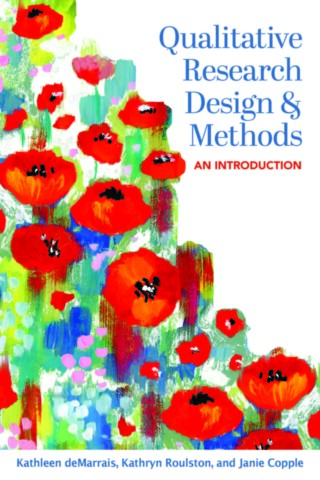
E-books are now distributed via VitalSource
VitalSource offer a more seamless way to access the ebook, and add some great new features including text-to-voice. You own your ebook for life, it is simply hosted on the vendor website, working much like Kindle and Nook. Click here to see more detailed information on this process.
Library E-Books
We are signed up with aggregators who resell networkable e-book editions of our titles to academic libraries. These editions, priced at par with simultaneous hardcover editions of our titles, are not available direct from Stylus.
These aggregators offer a variety of plans to libraries, such as simultaneous access by multiple library patrons, and access to portions of titles at a fraction of list price under what is commonly referred to as a "patron-driven demand" model.
Written by scholars from three generations of qualitative methodologists, Qualitative Research Design and Methods: An Introduction situates qualitative research within the history of the field and integrates this history within discussions of specific research designs. This novel approach allows readers to come to know the genealogy of the field and how previous generations of scholars have informed what we know today as qualitative research. The text reflects these more traditional as well as emerging qualitative research approaches, providing a theoretically grounded approach to designing and implementing qualitative research studies. While some introductory research texts focus on the specific methods of qualitative research with little attention to the role of theory, this book forefronts theory in qualitative research. The authors speak to students new to qualitative research with clear discussions of theory and theoretical concepts and how those notions must be considered throughout all aspects of research design, implementation, and representation of findings. Each chapter integrates discussion of theory. In addition, the book highlights the role of ethics in the same way with a chapter at the beginning as well as discussions of ethics threaded throughout each of the design chapters. Qualitative Research Design and Methods is THE introductory textbook for students taking introductory masters and doctoral courses in qualitative research. Instructors in those classes will appreciate the straightforward language and concepts provided by the authors.Perfect for courses such as: Introduction to Qualitative Research and Qualitative Research Design
More
E-books are now distributed via VitalSource
VitalSource offer a more seamless way to access the ebook, and add some great new features including text-to-voice. You own your ebook for life, it is simply hosted on the vendor website, working much like Kindle and Nook. Click here to see more detailed information on this process.
Light a Fire and Watch It Burn: Disruptive Qualitative Methods in Education Research revolutionizes how qualitative research is conceptualized, taught, and practiced. Edited by Michael L. Boucher, Jr., Ph.D., this groundbreaking collection of essays by emerging and established scholars introduces equity-centered, justice-oriented methodologies designed to challenge entrenched systems of power and privilege. With a focus on amplifying marginalized voices and fostering transformative social action, this book serves as an inspiring, accessible resource for educators, researchers, and graduate students.Traditional qualitative research texts provide invaluable foundations for understanding methods such as participant observation, coding, and analysis. Yet, they often fail to address innovative approaches that challenge oppressive norms and center lived experiences of marginalized communities. Light a Fire and Watch It Burn fills this critical gap, presenting 15 concise, practice-oriented chapters on disruptive methods, including photovoice, duoethnography, feminist critical discourse analysis, and arts-based research like ethnodrama. These approaches reimagine qualitative inquiry as a vehicle for equity, inclusion, and justice, equipping readers with tools to create meaningful change.Each chapter follows a consistent structure, making the book an ideal classroom text for qualitative research courses. Readers will find clear explanations of the methodologies, their theoretical foundations, and how they disrupt systems of oppression while empowering participants. Practical examples, discussion questions, and curated lists of further readings encourage deep reflection and active engagement. This structure ensures seamless integration into weekly lessons for master’s and doctoral students, while also serving as a reference for scholars seeking to expand their methodological repertoire.From exploring anticolonial ethics to embracing culturally responsive frameworks like ʻŌiwi methodologies and Pláticas, the book highlights the potential of qualitative research to humanize and transform. Contributors share personal narratives and research experiences that illuminate how these methodologies foster trust, amplify silenced voices, and dismantle academic hierarchies. The metaphor of “lighting a fire” reflects the catalytic potential of these methods to spark curiosity, disrupt traditional paradigms, and ignite transformative social action, while “watching it burn” underscores the boldness and urgency of these practices in reimagining education research.Accessible, inspiring, and deeply rooted in critical theory, Light a Fire and Watch It Burn is an essential companion for students and educators who dare to confront power and reimagine research as a tool for justice. It challenges readers to move beyond the safe confines of traditional methods and embrace innovative practices that center humanity, equity, and resilience. Whether you are a graduate student beginning your journey, a scholar seeking to disrupt academic norms, or an educator looking for practical tools to inspire your students, this book provides the guidance and vision needed to reshape qualitative research—and, ultimately, the world it seeks to understand. Light a Fire and Watch It Burn is not just a book; it is a call to action for those ready to create a more inclusive, equitable future through research.Perfect for courses such as: Introduction to Qualitative Research Methods; Critical Theory in Education; Advanced Qualitative Research Design; Participatory Research in Education; Feminist Research in Social Sciences; Decolonizing Research Practices; Arts and Humanities-Based Inquiry; Social Justice in Education; Education Policy and Practice; Research Ethics and Methodologies
More
E-books are now distributed via VitalSource
VitalSource offer a more seamless way to access the ebook, and add some great new features including text-to-voice. You own your ebook for life, it is simply hosted on the vendor website, working much like Kindle and Nook. Click here to see more detailed information on this process.
Library E-Books
We are signed up with aggregators who resell networkable e-book editions of our titles to academic libraries. These editions, priced at par with simultaneous hardcover editions of our titles, are not available direct from Stylus.
These aggregators offer a variety of plans to libraries, such as simultaneous access by multiple library patrons, and access to portions of titles at a fraction of list price under what is commonly referred to as a "patron-driven demand" model.
This is a collection of interdisciplinary and logically interconnected papers from nationally and internationally acclaimed researchers in philosophy, psychology, history of education, teacher training, educational leaders and practitioners, child advocates, and educators who have been motivated by the philosophy and pedagogy of Dr. Janusz Korczak (1878-1942), a world famous moral exemplar and champion of children’s rights. The book provides answers to timely questions of how to respect children’s rights in K-12 schools, community centers, summer camps, and colleges; how to create an atmosphere of trust and safety, and provide social-emotional learning in the classroom; how to become a genuine child advocate; and how to support growing child agency. It also tells the story of Korczak, his life, and the lives of the children in his charge. Nurture, Care, Respect, and Trust details how Korczak’s legacy encourages and stimulates new projects and spreads around the world. The volume serves as a rich resource of practical materials for teachers and university instructors, introducing a number of innovative lesson plans, examples of students’ works, and school projects inspired by Korczak’s pedagogy.
More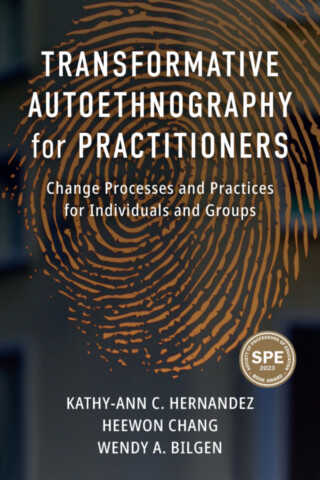
E-books are now distributed via VitalSource
VitalSource offer a more seamless way to access the ebook, and add some great new features including text-to-voice. You own your ebook for life, it is simply hosted on the vendor website, working much like Kindle and Nook. Click here to see more detailed information on this process.
Library E-Books
We are signed up with aggregators who resell networkable e-book editions of our titles to academic libraries. These editions, priced at par with simultaneous hardcover editions of our titles, are not available direct from Stylus.
These aggregators offer a variety of plans to libraries, such as simultaneous access by multiple library patrons, and access to portions of titles at a fraction of list price under what is commonly referred to as a "patron-driven demand" model.
Can transformation be the primary goal of autoethnographic research? In this book, the authors present a compelling case that this is indeed possible. Since autoethnography first appeared as a nascent approach to social inquiry, much has been written about it as a useful addition to the field of qualitative research methods. Over the years, its usage has been extended across various disciplines including the humanities, human services, social sciences, leadership studies, engineering, education, counseling, and even medical education. Notably, the primary function of autoethnography to advance our understanding around sociocultural phenomena has been increasingly paired with a parallel function of the many ways in which this research method can also contribute to practice. However, though its contribution to scholarship is well documented, less has been written about its practical usage as the focal point of inquiry. Yet there is growing evidence that one of the emerging strengths of autoethnography is its transformative capabilities. In Transformative Autoethnography for Practitioners, Hernandez, Chang and Bilgen turn the spotlight on autoethnography as a tool for practitioners where the primary goal is to solve real world problems by facilitating transformational change at the individual, group and/or organizational levels. They draw on existing scholarship as well as their collective work and expertise to provide a Transformative Autoethnographic Model (TAM) for use by practitioners who are intent on effecting such changes in their respective contexts. The book contains seven chapters. Chapters One through Three provide the theoretical grounding for a transformative autoethnography model. Chapter One begins with a broad overview of autoethnographic research and the unique characteristics of this method that makes it especially suited for effecting transformational learning. In chapters Two and Three, the authors provide a quick review of the literature relevant to individual autoethnography and collaborative autoethnography respectively. Each chapter discussion is centered around explicating the transformative elements of the method as well as how it is able to effect change at the individual, group, and organizational level. Chapters Four through Six focus on the praxis of transformative autoethnography. In Chapter Four, the transformative autoethnography model (TAM) is presented in detail and templates are provided for its application. Chapters Five and Six show the application of the TAM in a variety of settings. The book ends with a final chapter discussion on the continuing evolution of autoethnographic explorations, as well as future applications for the TAM model in a fast changing digital landscape. Perfect for courses such as: Research Methods in the Social Sciences | Qualitative Research Methods | Narrative Research | Advanced Qualitative Research Methods | Coaching and Consulting | Leading Change
More
E-books are now distributed via VitalSource
VitalSource offer a more seamless way to access the ebook, and add some great new features including text-to-voice. You own your ebook for life, it is simply hosted on the vendor website, working much like Kindle and Nook. Click here to see more detailed information on this process.
Library E-Books
We are signed up with aggregators who resell networkable e-book editions of our titles to academic libraries. These editions, priced at par with simultaneous hardcover editions of our titles, are not available direct from Stylus.
These aggregators offer a variety of plans to libraries, such as simultaneous access by multiple library patrons, and access to portions of titles at a fraction of list price under what is commonly referred to as a "patron-driven demand" model.
Studies of teacher leadership have proliferated over the past fifty years. Earlier work tended to focus exclusively on the link between teacher leadership and school improvement. Now, however, cross-cultural research on the relationship between teacher leadership and power, agency and school culture has the potential to contribute to a deeper understanding of the teaching profession in diverse geographical and social contexts. A Cross-Cultural Consideration of Teacher Leaders’ Narratives of Power, Agency and School Culture presents groundbreaking work that expands discussions of teachers’ work to highlight the struggles of a profession in three different countries: England, Jamaica and the United States. This research provides examples of teacher leaders’ narratives about power, agency and school culture, presenting the voices of teacher leaders across diverse contexts. It identifies the “lessons” that transcend culture and speaks to the importance of understanding how teachers’ work (and teacher leadership) functions within complex school cultures. This work has profound implications for teaching, learning and leading in a 21st century global economy.Perfect for courses such as:Teacher Leadership | Educational Leadership and Management | Teaching and Teaching Methods | Action Research/Applied Research
More