
Policy & Reform

E-books are now distributed via VitalSource
VitalSource offer a more seamless way to access the ebook, and add some great new features including text-to-voice. You own your ebook for life, it is simply hosted on the vendor website, working much like Kindle and Nook. Click here to see more detailed information on this process.
The contemporary movement for Asian American history education is deeply rooted in the broader historical struggle for Asian American Studies. Emerging as a formal academic discipline in the late 1960s, Asian American Studies was born from the activism of Black, Indigenous, Chicanx, and Asian American students during the 1968–1969 strikes at San Francisco State College and the University of California, Berkeley. In the late 1980s and 1990s, Asian American Studies saw significant national growth propelled by college student activism. In the wake of these first two waves of the Asian American movement, historian Erika Lee has described recent legislative mandates for Asian American education as its “third era,” now focused on K-12 education. The Third Wave of the Asian American Studies Movement: Advocating for & Advancing Asian American Studies in K-12 Classrooms highlights the various efforts to center Asian American experiences, narratives, and histories in K-12 classrooms across the United States. In states where legislative mandates have passed, there remain significant disorganization and challenges with providing the resources educators need to implement the mandated instruction. In particular, the lack of funding for curricular development and teacher professional development has left organizers and educators with few resources. This has resulted in uneven approaches that vary widely in terms of their criticality – an essential component of ethnic studies writ large. At the same time, there have been incredible successes and alternative approaches to creating Asian American-focused teaching and learning spaces, but few of these examples have been documented in scholarly journals due to the lengthy publication process and nascent nature of these movements. The Third Wave of the Asian American Studies Movement: Advocating for & Advancing Asian American Studies in K-12 Classrooms offers an innovative and intimate glimpse into the experiences of educators, organizers, and youth who insist on centering Asian America in and out of the classroom. In doing so, educators and youth will find examples of classroom practices and the impact of Asian American Studies on them personally and academically. The Third Wave of the Asian American Studies Movement: Advocating for & Advancing Asian American Studies in K-12 Classrooms will be targeted to academics, educators, and community organizers. For scholars of Asian American Studies broadly (including historians, sociologists, anthropologists, educators), this book will offer a rare glimpse into very recent efforts for Asian American Studies from the last five years and will be a vital addition to college, university, and public libraries. Among researchers and teacher educators interested in Asian American education, the chapters provide in-depth insight into contemporary Asian American Studies curriculum and instruction. Ethnic studies scholarship is largely published by researchers who have not participated in traditional teacher preparation and are unfamiliar with K-12 classroom praxis. The authors contributing to this volume consist of classroom teachers, their students, teacher educators, education scholars, and community organizers – that is, individuals who are deeply and directly involved in the day-to-day efforts to raise awareness, teach, and learn about Asian American Studies in public schools. While more and more states continue to pass legislative mandates for the teaching of Asian American histories, few resources are available that highlight the critical consciousness, pedagogical challenges, and professional development necessary to bring such requirements to fruition. The Third Wave of the Asian American Studies Movement: Advocating for & Advancing Asian American Studies in K-12 Classrooms can be adopted by instructors to address this gap in the field. The strategies, successes, and challenges described in this book will be a vital resource for those interested in promoting the teaching of Asian American Studies in their own schools, districts, communities, and states.Perfect for courses such as: Introduction to Asian American Studies; Ethnic Studies; Asian American Education; Asian American Studies & Education; Multicultural Education in the United States; Current Issues in Educational Policy; Current Issues in Social Studies Education
More
E-books are now distributed via VitalSource
VitalSource offer a more seamless way to access the ebook, and add some great new features including text-to-voice. You own your ebook for life, it is simply hosted on the vendor website, working much like Kindle and Nook. Click here to see more detailed information on this process.
Books and stories can inspire, create empathy, and be cathartic outlets. They expand our understanding of the lived experience as one of the most important conduits for how we spread knowledge and participate in shared humanity. Building on the work of Rudine Sims Bishop, Battle of the Bans: Narratives of Reading and Engaging with Banned Books explores how challenged and banned books act as windows, mirrors, and sliding doors. In the United States and globally, the twenty-first century is seeing renewed efforts at banning books in a variety of forms, including parental controls, book burning, curricular erasure and epistemicide, and social media banning. These efforts have the potential of silencing particular stories, histories, and perspectives. Book banning targets and has deleterious impacts on particular communities, including but not restricted to people of color, LGBTQ+, religious and cultural minorities, and people with different abilities. This edited collection counteracts the narrative that books are dangerous, centering a celebration of how stories shape lives. Educators, families, and individuals present a range of perspectives on how particular banned books have changed their lived experience and view of the world. Contributors discuss children’s literature, young adult literature, fiction, and nonfiction texts. The book is comprised of three parts. In the Context section, contributors explore lessons and/or situations for how banned books have, can, or should be used. In the Introspection section, contributors provide narratives about how banned books shaped a sense of self. In the Action section, contributors detail steps taken in response to book bans, providing strategies for countering censorship and erasure in classrooms, schools, and libraries. Battle of the Bans creates hope and conversation in an era of political divisiveness. It inspires readers to reflect on their own experiences with books, creates dialogue, and provides pathways to challenge book banning, ensuring access to stories, histories, and perspectives.The book will appeal to a wide range of audiences, including academics, librarians, classroom teachers, parents, and readers who understand the value of books and literature.Perfect for courses such as: Multicultural Literature; Honors Seminar/Special Topics: Book Banning; Curriculum Theory in Education; History of Reading; Contemporary Social Issues; Introduction to American Studies; Introduction to Policy Studies; Qualitative Research Methods; Narrative Research Methods; and Essay Writing
More
E-books are now distributed via VitalSource
VitalSource offer a more seamless way to access the ebook, and add some great new features including text-to-voice. You own your ebook for life, it is simply hosted on the vendor website, working much like Kindle and Nook. Click here to see more detailed information on this process.
Critical Praxis Leadership: Grassroots Narratives from Justice-Driven Leaders for a Democratic Future is a powerful new book written for a broad audience of educators devoted to achieving equity in public education.In the wake of the past 50 years of surging neoliberal economics, policy and ideology that have given rise to emboldened far-Right movements, the weaknesses of democracy as a political project for promoting equity and justice are revealing themselves in multiple spheres of social life. In the U.S., protectionist and isolationist policies enmeshed with xenophobia, racism, misogyny, homo- and transphobia, and ablism lay bare the historical architecture of inequitable and unjust social structures that provide fuel for the engines of economic and social disparity. Education, long saddled with the Sisyphean task of leveling the playing field and affording economic advancement for economically and socially marginalized populations, has been effectively reeled into an administrative agenda aimed toward maintaining social reproduction which continues to funnel Black, Brown, female, disabled and queer bodies into subordinate social roles and carceral institutions or vanquish them entirely from social life.Within this shameless historical moment of cruelty, it is crucial to highlight the stories and experiences of leaders dedicated to cultivating equitable and just environments amid this global crisis. Justice-driven leaders who engage in critical praxis leadership emphasize grassroots efforts for genuine, actionable change rather than performative gestures or media attention. Their work unfolds in diverse contexts, motivated by different factors and involving varied groups of people. Critical Praxis Leadership features theoretically rich, practically grounded narratives from PK-12 and higher education leaders who strive to become justice-driven in their day-to-day work. As PK-12 school administrators, higher education administrators, union leaders, and community leaders reflect on the ways their praxis is informed by Black feminist, anti/decolonial, posthuman, anti-oppressive and other critical frameworks, readers will be immersed in real-life experiences by a variety of voices. They will get an inside look into how justice-driven leaders strive to live their philosophy in their practice and navigate complex situations while striving toward equitable change in institutions of learning.Practical for professors and students alike, readers will experience real world narratives, praxis-oriented questions and activities, and evocative artwork. While walking alongside current leaders in the field, readers are invited to unpack their own philosophies of justice-driven leadership and engage with thinking/doing justice-driven leadership differently to refine their visions of leadership through a lens of complexity and futurity. The activities and narratives in this book remind readers of the ever-presence of the past in who we are and who we wish to be as educational leaders working within historically rooted institutions designed to maintain systems of power and oppression. They remind readers of the deep colonial and racist roots that still shape the lives of learners and leaders alike, and they propose a movement toward a just future. Readers are encouraged to revisit the past, reclaim their knowledge of how social and institutional systems came to be what they are, and choose to do leadership differently as best they can, always working toward justice that lay on the horizon.Perfect for courses such as: Foundations of Educational Leadership, School Leaders as Change Agents, Leadership in Higher Education, Critical Perspective on Educational Leadership, Leadership for Equity and Inclusion, and Collaborative Approaches to Educational Leadership
More
E-books are now distributed via VitalSource
VitalSource offer a more seamless way to access the ebook, and add some great new features including text-to-voice. You own your ebook for life, it is simply hosted on the vendor website, working much like Kindle and Nook. Click here to see more detailed information on this process.
Hauntings, Remembering, and Aesthetics offers an intimate, artful exploration of what is lost—and what remains—when schools are closed. Grounded in the stories of two shuttered public schools in Chicago, it weaves together research, narrative, memory, and visual art to honor the communities shaped by these institutions and reckon with the systemic forces that led to their closure. Drawing from archival research, local records, personal memories, and conversations with former students, educators, and community members, the author—who has a personal connection to each school—reconstructs the histories left behind by braiding their voices with collages and photographs. The book makes visible the deep ties between school communities and the neighborhoods they served. This powerful storytelling serves as a prompt for reflection and reconsideration of school closures.The portraits that emerge tell of schools that operated under immense financial strain but built strong, nurturing environments through resourcefulness and relationships. Participants recall staff who shaped their lives, naming teachers and leaders as transformative figures in their youth. They speak openly about the racism, classism, and broken promises surrounding public education in gentrifying neighborhoods—where public housing was demolished and communities were displaced. In their words, school closures were not isolated policy decisions but outcomes of a broader inequality and disinvestment. Far from passive witnesses, these community members critically examine the past, theorizing their experiences and naming the systemic failures that framed them. They express a desire to pause, reflect, and remember—to reclaim the memory of their schools as spaces of resilience, joy, and collective resistance. As one participant shared, “There’s so much history in us.” That history, the book argues, is too often erased in mainstream narratives about school closures. By presenting these stories through both visual and literary forms, the book creates a new kind of archive—one grounded in lived experiences and presented through aesthetics. It invites educators, parents, policymakers, journalists, and anyone invested in public education to listen differently: to hear what was lost when the schools closed, and to recognize what still echoes in the voices of those who remember.This is not just a story of the past—it is a call to action in the present through stories that have always been here. These acts of remembering resist the dominant, data-driven narratives that often justify school closures. It reveals the human cost of policies disconnected from community realities and asks us to imagine more just futures for public education in our cities. This book asks us to see and hear stories anew, through the haunting beauty of memory, artwork, and collective reflection.Perfect for courses such as: Social Foundations of Education; Educational Policy Studies; History of Urban Education; Sociology of Education; Teacher Education in Urban Education; Historical and Cultural Contexts of Urban Education; Qualitative Research Methods; Arts-based Research Methods; Visual Research Methods
More
E-books are now distributed via VitalSource
VitalSource offer a more seamless way to access the ebook, and add some great new features including text-to-voice. You own your ebook for life, it is simply hosted on the vendor website, working much like Kindle and Nook. Click here to see more detailed information on this process.
Moments & Movements: Counterstories for Critical Asian American+ Studies in Education is a collection of counterstories born from community and shared commitments to challenge the ways diverse diasporas and experiences of people from the Asian continent and the Pacific Ocean are largely made invisible, silenced, and erased. By defying reductionist narratives, the collection highlights stories built upon generations of struggle, resistance, advocacy, and joy, that impart wisdom for the current moment and for Asian American+ movements in the future, particularly movements based in education. The book’s topics, located at the nexus of multiple and interconnected fields, such as education, race/ethnic studies, policy and community studies, have broad appeal to a cross-section of university academics; P-12 teachers and leaders; and community educators and activists. Using the framing of Critical Asian American+ Studies, the chapters in this volume emphasize criticality as central to the work of educators committed to more just futures. The plus (+) symbol in “Asian American+” highlights the volume’s efforts at diverse inclusion and openness to various groups under a broad umbrella geographic category, including voices of various Pasifika, Arab and Middle Eastern communities, without eliding their distinct histories, cultures, politics, and experiences or erasing the tensions within and across the broader category of Asian American studies. The book is organized thematically into four sections that reflect key moments in an ongoing movement. This organization acknowledges that readers may be at different points in their journeys towards developing more critical perspectives or knowledge of Asian American, Arab/Middle Eastern American, and Pasifika peoples’ experiences in education. The first section, "The Moment We Begin", focuses on foundational beginnings, telling stories of how the authors made important first steps in creating the change they wished to see in their educational spheres. The second section, "Building an Inclusive Movement", examines how educators sustain and deepen their work within and outside of classrooms. The third section, "Extending the Movement", then looks at Critical Asian American+ Studies outside of classrooms and schools by attending to educational leadership, families and teacher identities, policy arenas, and educational, cultural, and community activism. Finally, in the fourth section, "Envisioning New Worlds", chapters attend to what justice-focused, future-oriented movements might look like for Critical Asian American+ Studies. All too often, critical community-grounded work can feel daunting. This collection pushes beyond prescribed borders that separate our communities and separate us into our own educational spheres (e.g. P-12, higher education, teacher education) and roles (professor, teacher, principal, student). As one of the few edited collections with such diverse perspectives, this collection provides multiple paths forward in Asian American, Arab/Middle Eastern American, and Pasifika Studies, inspires with its counterstories of struggle and success, and challenges readers to consider their own next steps.Perfect for courses such as: Asian Americans in Education; Critical Studies in Education; Multicultural Education/Sociocultural Foundations in Education; Ethnic Studies/Asian American Studies; Social Justice in Education; Critical Pedagogy and Education; Urban Education; Race, Ethnicity, and Education; Introduction to Education; School and Society
More
E-books are now distributed via VitalSource
VitalSource offer a more seamless way to access the ebook, and add some great new features including text-to-voice. You own your ebook for life, it is simply hosted on the vendor website, working much like Kindle and Nook. Click here to see more detailed information on this process.
Library E-Books
We are signed up with aggregators who resell networkable e-book editions of our titles to academic libraries. These editions, priced at par with simultaneous hardcover editions of our titles, are not available direct from Stylus.
These aggregators offer a variety of plans to libraries, such as simultaneous access by multiple library patrons, and access to portions of titles at a fraction of list price under what is commonly referred to as a "patron-driven demand" model.
The How and Why of Laboratory Schools: Innovations and Success Stories in Teacher Preparation and Student Learning is an eagerly anticipated exploration crafted by esteemed researchers and practitioners from some of the foremost Laboratory Schools across the United States and internationally. These institutions, also recognized as demonstration schools or university-affiliated schools, play pivotal roles in the landscape of education, serving as bastions of innovation, research, and professional development. At their core, Laboratory Schools are multifaceted entities, assuming key responsibilities such as teacher training and professional development, serving as hubs for research and innovation, embodying models of best practices, fostering collaboration within university communities, shaping curriculum development and evaluation, and championing inclusion and special education. Their impact reverberates throughout the educational sphere, shaping the future of teaching, learning, and educational policies. The How and Why of Laboratory Schools serves as a beacon in the realm of education literature, offering an array of accessible examples that inspire and enlighten researchers, practitioners, and policymakers alike. With a global perspective, this volume provides a comprehensive snapshot of both the research and practice within Laboratory Schools worldwide, featuring exemplary models not only from the United States but also from various international settings. Spanning an variety of topics including demonstration schools, teacher preparation, innovative pedagogy and curriculum, early childhood education, elementary and primary education, middle and secondary education, STEM-focused initiatives, promotion of democracy, establishment of research laboratories, support for diverse learners, preservice teacher education, collaboration models, and the role of teachers as researchers, this book encompasses the diverse facets of Laboratory Schools' contributions to education. Moreover, the book serves as a blueprint for the development of new Laboratory Schools, offering insights into various models, funding mechanisms, and strategies for integration into university research and teacher training programs. By showcasing successful examples and providing practical guidance, this book empowers educational institutions to embark on the journey of establishing their own school, enriching both their local communities and the broader educational landscape. Beyond the present, this book also articulates a compelling case for the future of Laboratory Schools, highlighting their potential to continually innovate, adapt, and lead educational transformation in the years to come. Through its insightful analyses and compelling narratives, The How and Why of Laboratory Schools heralds a future where Laboratory Schools remain at the forefront of educational excellence and innovation, not only domestically but also on the international stage.Perfect for courses such as: Comparative Education; Education Reform; Professional Development Models; School Improvement; Foundations in Education; Early Childhood Education
More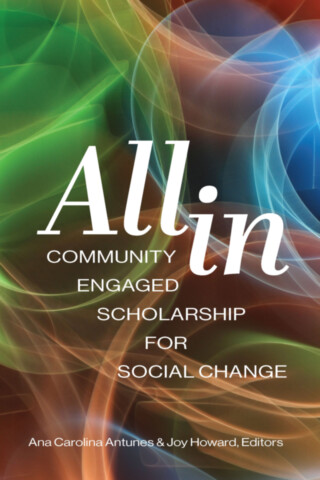
E-books are now distributed via VitalSource
VitalSource offer a more seamless way to access the ebook, and add some great new features including text-to-voice. You own your ebook for life, it is simply hosted on the vendor website, working much like Kindle and Nook. Click here to see more detailed information on this process.
Library E-Books
We are signed up with aggregators who resell networkable e-book editions of our titles to academic libraries. These editions, priced at par with simultaneous hardcover editions of our titles, are not available direct from Stylus.
These aggregators offer a variety of plans to libraries, such as simultaneous access by multiple library patrons, and access to portions of titles at a fraction of list price under what is commonly referred to as a "patron-driven demand" model.
All In: Community Engaged Scholarship for Social Change is the first volume of the book series URBAN Matters. The URBAN Matters Book Series is one of the three prongs of the not-for profit organization URBAN Matters, which also includes a blog and virtual talks. The goal of the series, beyond engaging with the chapters in this book, is for readers to find their way into the different spaces that the organization has created to support scholars and activists who share commitments to just education and just research as a means to creating a more socially just world. This initial volume is an extension of over a decade-long collaboration among scholars, activists, educators, and youth across the United States engaged in work with the Urban Research Based Action Network (URBAN). It is a natural outgrowth of work from a network dedicated to building the field of community engaged activist scholarship. URBAN is made up of activist scholars from diverse fields (e.g., sociology, urban planning, education) who live and work in different contexts (e.g., east coast, west coast, Midwest, urban and even rural settings). They come from higher education spaces, non-profits, community organizations and grassroots organizing.In All In: Community Engaged Scholarship for Social Change, authors at various stages of their academic and professional careers, and in very different geographical contexts and community settings, provide unique examples of the ethos of the network. Readers will be able to envision tangible examples of public scholarship for social justice and be inspired to begin, to continue and to extend their own projects within various communities. Contributors featured in this volume were invited to write about their work based on presentations they gave at the All In Conference in Santa Cruz, CA in 2022. This conference was the largest URBAN-sponsored gathering to date with 440 attendees and was co-sponsored by The Institute for Social Transformation at the University of California, Santa Cruz. The focus of the convening was on critical public scholarship and its role in working towards social justice.The book is divided into three sections: Teaching and Curriculum as Activism, Community Based Research as Social Justice, and Policy and/or Networking as Justice Work.Perfect for courses such as: Community Based Research; Research Methods; Qualitative Methods; Public Administration; Public Health
More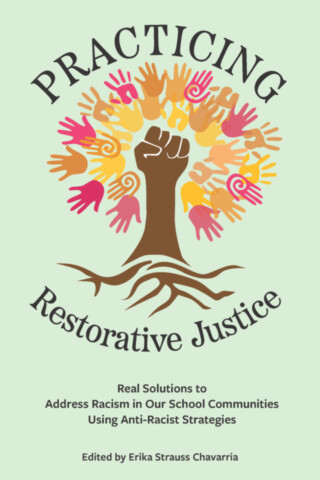
E-books are now distributed via VitalSource
VitalSource offer a more seamless way to access the ebook, and add some great new features including text-to-voice. You own your ebook for life, it is simply hosted on the vendor website, working much like Kindle and Nook. Click here to see more detailed information on this process.
Library E-Books
We are signed up with aggregators who resell networkable e-book editions of our titles to academic libraries. These editions, priced at par with simultaneous hardcover editions of our titles, are not available direct from Stylus.
These aggregators offer a variety of plans to libraries, such as simultaneous access by multiple library patrons, and access to portions of titles at a fraction of list price under what is commonly referred to as a "patron-driven demand" model.
Traditionally, educator preparation programs only provide classes related to content, practical pedagogy, and classroom management. If we hope to see any level of justice in the education system, preparation programs must include courses that take an honest and deep dive into the ways in which racism shows up in schools and communities. Aspiring educators are craving and demanding the tools and resources to be the best educators they can be for our students in this country. They know the importance of advocating for and enacting anti-racism in their pedagogical practices, in school policy and culture, and in their community. The authors of this book will offer first-hand testimony of how deep racism permeates public education, an institution that, since its founding, was never meant for Black and brown students, as well as solutions to create truly just and equitable school communities. The ultimate mission of Practicing Restorative Justice is to show readers the effectiveness of restorative justice practices in addressing a number of issues that impact Black and brown students. It takes a deep dive into the School-to-Prison Pipeline, in which failed education policies push students of color out of schools and into the penal system, dooming them for life. Other topics include policing in schools, systemic racism’s impact on classrooms and learners at all grade levels, and ways in which to decolonize the education system. The book provides classroom instructors, college of education faculty, and preservice teachers the concrete means to improve the learning experience of students of color in our public education system.
More
E-books are now distributed via VitalSource
VitalSource offer a more seamless way to access the ebook, and add some great new features including text-to-voice. You own your ebook for life, it is simply hosted on the vendor website, working much like Kindle and Nook. Click here to see more detailed information on this process.
Library E-Books
We are signed up with aggregators who resell networkable e-book editions of our titles to academic libraries. These editions, priced at par with simultaneous hardcover editions of our titles, are not available direct from Stylus.
These aggregators offer a variety of plans to libraries, such as simultaneous access by multiple library patrons, and access to portions of titles at a fraction of list price under what is commonly referred to as a "patron-driven demand" model.
“Who’s Gonna Water My Tomatoes?”: School Gardens, Kitchens, and the Search for Educational Authenticity updates an old concept for our modern age, utilizing school gardens and culinary kitchens where students grow, prepare, and eat their own food. Over a century ago, the educational philosopher John Dewey proposed reforming education around the needs of the whole child, emphasizing academic learning and the child's social needs for effective participation in a democratic society. In Dewey’s view, children would best learn by engaging in authentic experiences that would introduce, complement, and complete their regular classroom experiences. Dewey talked about school gardens and kitchens as two specific laboratories where children could apply what they were learning in school in daily life. Today, the tensions between experiential learning and the more rote learning often found in regular classrooms remain. Educators increasingly find themselves accountable to the narrow performance pressures imposed by standardized testing, pressures that often squeeze out the joys and possibilities for more authentic and engaging learning found in real-world experiences. This book explores Dewey’s philosophy with particular attention given to experiential learning’s relationship to gardens and kitchens. The school garden and kitchen movement itself has ebbed and flowed over the last hundred years in response to changing societal and educational pressures. This history leads to the present day, where the edible schoolyard movement is experiencing a new spring as educators, parents, and school communities find value in edible schoolyard’s possibilities for providing more wholistic education that better meets the academic, social, and emotional needs of students. The book focuses on a network of edible schoolyards by introducing educators, teachers, principals, and staff who are making edible schoolyards happen today. Their vision and motivations form in their favorite lessons and in the connections between garden and kitchen experiences to the more traditional subject matter favored on state tests. Suggestions and resources for starting new edible schoolyards, including suggested recipes, are provided for those who want to get growing with their own edible schoolyards.Perfect for courses such as: Educational Reform; Educational History; Educational Philosophy; Educational Leadership; Curriculum Development and Transformation; Experiential Learning; Project Based Learning; and Educational Policy Environments
More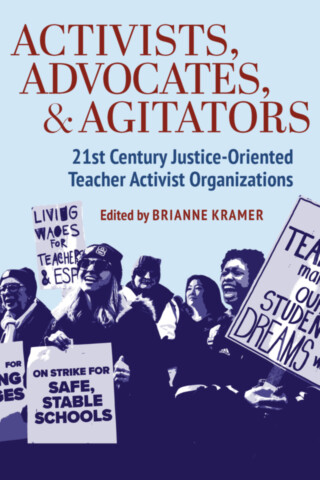
E-books are now distributed via VitalSource
VitalSource offer a more seamless way to access the ebook, and add some great new features including text-to-voice. You own your ebook for life, it is simply hosted on the vendor website, working much like Kindle and Nook. Click here to see more detailed information on this process.
Library E-Books
We are signed up with aggregators who resell networkable e-book editions of our titles to academic libraries. These editions, priced at par with simultaneous hardcover editions of our titles, are not available direct from Stylus.
These aggregators offer a variety of plans to libraries, such as simultaneous access by multiple library patrons, and access to portions of titles at a fraction of list price under what is commonly referred to as a "patron-driven demand" model.
In recent years, the field of education has been fraught with a variety of different challenges. A multi-year pandemic, book banning, and legislative efforts seeking to ban Critical Race Theory and LGBTQ positive curriculum have had negative effects on K-12 education, leaving many educators feeling the progress made in several states and communities before and during the 2018 teacher walkouts and strikes was now gone. Teacher morale is sitting at a historic low point, with teachers leaving the profession in droves. Education as an institution is at a crucial tipping point, and changes focused on equity and reducing the neoliberal hold on reform need to be implemented in order to keep schools as democratic spaces. The way this vision can be realized is through activism and existing social movement organizations that use both traditional and netroots practices. The purpose of Activists, Advocates, and Agitators is to provide readers with a history and analysis of 21st century teacher activism in K-12 schools to better understand the effectiveness of organizing and activism. Additionally, the text will introduce readers to present-day activist groups whose work is positively changing education and schools and the ways in which some teachers are working within their communities to assist in their specific needs.Activists, Advocates, and Agitators is the perfect book to instruct preservice teachers about the conditions that they will face in their classrooms, arming them with valuable strategies to help them to achieve their academic goals. Perfect for courses such as: Social Foundations of Education; Foundations of Education; Education Policy; Educational Leadership; Teacher Leadership; Sociology of Education; Politics of Education; and Democratic Education
More