
Race & Diversity

E-books are now distributed via VitalSource
VitalSource offer a more seamless way to access the ebook, and add some great new features including text-to-voice. You own your ebook for life, it is simply hosted on the vendor website, working much like Kindle and Nook. Click here to see more detailed information on this process.
Recognizing the "diversity crisis" in regards to the cultural dissonance between educators and their diverse students, Diversifying the Educator Pipeline provides a critical examination of the mistakes we have made in our efforts to bolster the presence of Black educators. Grounded with the historical context of Black educators in America, Shaylyn Marks weaves research, practice and personal accounts to critically examine why efforts to diversify the educator pipeline have not yielded the desired results. With an analytical lens, the recruitment, preparation, and retention of Black educators is examined while offering alternative practices to strengthen these efforts. Acknowledging the cyclical nature of potential trauma and harm that occurs in educational spaces, insights and recommendations are provided for all stakeholders as a means to cultivate a diverse educator workforce that better supports and reflects diverse classrooms of students. Diversifying the Educator Pipeline illuminates issues pertaining to the ways in which Black students and educators are disenfranchised, and serves as a call to action for the education community.Perfect for courses such as: Socio-Cultural Foundations of Education; Teaching for Diversity and Social Justice; Cultural Perspectives in Education; Afrofuturism: in Search of the Black Fantastic; Black Feminist and Womanist Perspectives; Educational Leadership; Curriculum Development and Transformation; Advanced Topics in Education; Critical Thinking and contemporary Social Problem; Race and Ethnic Relations; The African American Experience in the United States; Cultural Diversity in U.S. Schools; and Sociology of Education
More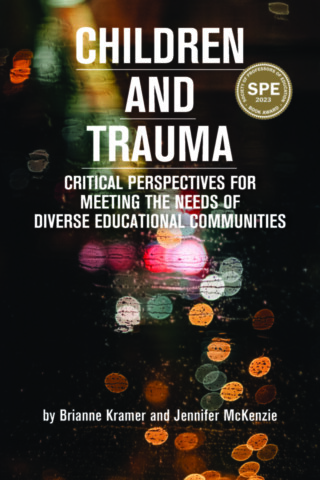
E-books are now distributed via VitalSource
VitalSource offer a more seamless way to access the ebook, and add some great new features including text-to-voice. You own your ebook for life, it is simply hosted on the vendor website, working much like Kindle and Nook. Click here to see more detailed information on this process.
Library E-Books
We are signed up with aggregators who resell networkable e-book editions of our titles to academic libraries. These editions, priced at par with simultaneous hardcover editions of our titles, are not available direct from Stylus.
These aggregators offer a variety of plans to libraries, such as simultaneous access by multiple library patrons, and access to portions of titles at a fraction of list price under what is commonly referred to as a "patron-driven demand" model.
According to the American Psychological Association (APA, 2015), trauma is an emotional response to a terrible event, which can lead to difficulties with emotional regulation, social relationships, and the development of physical symptoms. Traumatic experiences may include physical or sexual abuse, neglect, experiencing or witnessing violence, war, suicides, and disasters. Because of the prevalence of students with traumatic experiences in K-12 schools, development and use of trauma-informed practices (TIP) is currently increasing in educational spaces across the United States as educators and others who work with children become more aware of how socio-emotional development and exposure to trauma places children on a pathway through adulthood. Because of growth in these areas, it is important for educators and others who work with children to have a resource to consult. Children and Trauma: Critical Perspectives for Meeting the Needs of Diverse Educational Communities provides teachers, administrators, and others involved in education with an understanding of trauma-informed practices and explains how they can be used in the classroom. Additionally, school districts could utilize this text to implement professional development, particularly if they are considering creating a districtwide trauma-informed system.Perfect for courses such as: Trauma-Informed Educational Practice | Psychology | Educational Psychology | Foundations of Education | Pedagogy | Methods of Emotional or Behavioral Disorders | Teaching Methods | Diversity in Education | Social Work | Human Development
More
E-books are now distributed via VitalSource
VitalSource offer a more seamless way to access the ebook, and add some great new features including text-to-voice. You own your ebook for life, it is simply hosted on the vendor website, working much like Kindle and Nook. Click here to see more detailed information on this process.
Library E-Books
We are signed up with aggregators who resell networkable e-book editions of our titles to academic libraries. These editions, priced at par with simultaneous hardcover editions of our titles, are not available direct from Stylus.
These aggregators offer a variety of plans to libraries, such as simultaneous access by multiple library patrons, and access to portions of titles at a fraction of list price under what is commonly referred to as a "patron-driven demand" model.
Improvement Science: Promoting Equity in Schools is intended for classroom teachers, school leaders, and district leaders charged with leading improvement efforts in schools. From questions such as “how do I develop a love of reading in my classroom?” to “how can I better manage student behavior during independent learning time?” to “what should we do to make sure kids of all races read at grade level by 3rd grade” to “how could we include families of all backgrounds as partners in learning” or “how do we increase our graduation rate among underserved students," this book shares real-life examples from those who are currently leading equity-focused improvement in our classrooms and schools. If you are curious about how Improvement Science has been used, or how others have succeeded—or failed—at equity-focused improvement efforts in our classrooms and in our schools, or if you’re wondering how to spur discussions in school districts, universities, and communities about leading equity-focused improvement, this book is for you. Teachers, students, family members, community members, principals and superintendents will be inspired to embrace Improvement Science as a method to improve equity in their schools. The book helps people new to Improvement Science to understand the basic steps to implement the process. If you’re a beginner, it provides some basic steps and a resource (https://www.carnegiefoundation.org/our-ideas/six-core-principles-improvement/) to help you understand the process better; for those with some experience, the book will be an excellent refresher and tool with functional suggestions to take your practice further. 1. Form a Team. 2. Examine Data. 3. Ask Why. 4. Read Research. 5. Get Perspective of Those Closest to the Problem. 6. Plan the Change. After you’ve done the above, then it’s time to test one idea, using short Plan Do Study Act cycles. These are short improvement cycles. Students are only in our classrooms generally for one year, so the cycles need to be short, perhaps even as short as one week, to ensure that every instructional move we are making truly does improve the experience of the students. Readers of Improvement Science: Promoting Equity in Schools will be taking an important step toward achieving the goal of producing socially just classrooms and schools.WATCH: Meet the Authors (ZOOM recording from #CPED21 Virtual Convening, 10/20/21). To learn more about Improvement Science and see our full list of books in this area, please click through to the Myers Education Press Improvement Science website. Perfect for courses such as: Culturally Responsive Learning Environments; Educating For Equity And Social Justice; Cultivating Culturally Responsive Classrooms; Integrating Methods And Curriculum Design; Inquiry, Assessment, And Instructional Design; Foundations Of Culturally And Linguistically Responsive Practice; Math Literacy; Physical Education; Professional Collaboration In Education; Language And Literacy Development Of Diverse Learners; Equal Opportunity: Racism; Diversity And Equity In Schools; Cultural Proficiency In Schools; Language And Power In Education; Teaching For Equity In Literacy; Supportive Classroom Communities; Cultural Diversity In Literature; Engaging Students In Writing; Introduction To School Leadership; Introduction To School Improvement; Teacher Leadership And School Improvement
More
E-books are now distributed via VitalSource
VitalSource offer a more seamless way to access the ebook, and add some great new features including text-to-voice. You own your ebook for life, it is simply hosted on the vendor website, working much like Kindle and Nook. Click here to see more detailed information on this process.
Library E-Books
We are signed up with aggregators who resell networkable e-book editions of our titles to academic libraries. These editions, priced at par with simultaneous hardcover editions of our titles, are not available direct from Stylus.
These aggregators offer a variety of plans to libraries, such as simultaneous access by multiple library patrons, and access to portions of titles at a fraction of list price under what is commonly referred to as a "patron-driven demand" model.
There are novels that portray cities as magical places, others as stifling, imposing environments, and others still as a gritty but beautiful, living landscape. Cities can be the center of culture, business, the arts, and are the meeting places for diversities of all kinds. Examining Images of Urban Life gathers contributions from scholars, educators, and young adult authors, like Benjamin Alire Saenz and e.E. Charlton-Trujillo, who consider how living in a city affects character identity and growth, and the ways authors world-build the urban setting. The collection discusses what the urban landscape means, and dispels the media-driven, anecdotally propagated preconceptions about city living.Urban life is varied and rich, just as its literature is. The collection revolves around a reconsideration of what the city represents, to its readers and to its inhabitants, and serves as a resource in urban settings, wherein teachers can select books that mirror and advocate for the students sitting in their classes.Perfect for courses such as: Young Adult Literature | Children’s Literature | Elementary Literacy | Reading and Literacy | Methods of Teaching | Public Purposes of Education | Educational or Historical Foundations of Education | Urban Studies | Media and Library Sciences
More
E-books are now distributed via VitalSource
VitalSource offer a more seamless way to access the ebook, and add some great new features including text-to-voice. You own your ebook for life, it is simply hosted on the vendor website, working much like Kindle and Nook. Click here to see more detailed information on this process.
Library E-Books
We are signed up with aggregators who resell networkable e-book editions of our titles to academic libraries. These editions, priced at par with simultaneous hardcover editions of our titles, are not available direct from Stylus.
These aggregators offer a variety of plans to libraries, such as simultaneous access by multiple library patrons, and access to portions of titles at a fraction of list price under what is commonly referred to as a "patron-driven demand" model.
This volume brings together leading scholars and practitioners to address the theory and practice of African-centered education. The contributors provide (1) perspectives on the history, methods, successes and challenges of African-centered education, (2) discussions of the efforts that are being made to counter the miseducation of Black children, and (3) prescriptions for—and analyses of—the way forward for Black children and Black communities. The authors argue that Black children need an education that moves them toward leading and taking agency within their own communities. They address several areas that capture the essence of what African-centered education is, how it works, and why it is a critical imperative at this moment. Those areas include historical analyses of African-centered education; parental perspectives; strategies for working with Black children; African-centered culture, science and STEM; culturally responsive curriculum and instruction; and culturally responsive resources for teachers and school leaders.
More
E-books are now distributed via VitalSource
VitalSource offer a more seamless way to access the ebook, and add some great new features including text-to-voice. You own your ebook for life, it is simply hosted on the vendor website, working much like Kindle and Nook. Click here to see more detailed information on this process.
Library E-Books
We are signed up with aggregators who resell networkable e-book editions of our titles to academic libraries. These editions, priced at par with simultaneous hardcover editions of our titles, are not available direct from Stylus.
These aggregators offer a variety of plans to libraries, such as simultaneous access by multiple library patrons, and access to portions of titles at a fraction of list price under what is commonly referred to as a "patron-driven demand" model.
The history of presidential politics reached a new and significant milestone with the election of Barack Obama in 2008. It sparked great hope in America for greater racial equity and social justice. A Paradise to Regain: Post-Obama Insights from Women Educators of the Black Diaspora seeks to avert the likelihood of erasure of President Obama’s legacy of hope and possibility that every child, regardless of race, faith, and gender affiliation, can dream big and live to see his/her dream turn into reality. As women educators of color, we all agree that the socio-political climate prevailing in the United States of America, since the aftermath of the 2016 election, requires unprecedented agency. The book provides space for Black women educators–African Americans, Naturalized Black Americans, and Foreign-born Blacks from Africa, the Caribbean Islands and South America (e.g., Guyana)–to have a candid conversation with their young children—sons and daughters, nephews and nieces—about the roadblocks they are likely to face as minority youth of color in their pursuit of greatness and the reminder that they have a role model in President Obama to look up to in moments of extreme frustration and exasperation. Voices of engaged educators of color are indispensable to make sure that children understand that that despite a 360-degree turn from eight consecutive years of a reassuring message that “change had come,” that paradise had been gained, into the threatening message of “making America white again,” we count on them to regain the paradise. Perfect for courses such as: Racism and Education Inequality in the Lives of African-American Youth, Introduction to the African Diaspora, Equity and Diversity in Schools, Place, Language, Power and Knowledge, Global and Multicultural Education in the Secondary School, Issues in Urban Education, Culture Power and Education, Social Class Education and Pedagogy, Language, Culture, and Education, The Politics of Literacy and Race in Schools, Race and Racism in Education and Society, Race, Ethnicity and Linguistic Diversity in Classrooms and Communities, and Education and Society.
More