
Literacy

E-books are now distributed via VitalSource
VitalSource offer a more seamless way to access the ebook, and add some great new features including text-to-voice. You own your ebook for life, it is simply hosted on the vendor website, working much like Kindle and Nook. Click here to see more detailed information on this process.
Thanks to Literacy Pedagogy with Whole-Earth Consciousness, teachers of young and older novice readers alike no longer have to separate structured reading instruction from meaningful, engaging, age-appropriate content. In clear language and with multiple examples drawn directly from practice – including case studies, vignettes, discourse analyses, text sets, samples of curriculum, and more – this book shows how literacy pedagogy can be merged with science-based concepts, understandings, and practices relating to caring for ourselves, caring for others, and caring for the earth as a whole. With environmental challenges pressing ever more closely on everyday life – including effects of extreme heat, flooding, tornadoes, hurricanes, and wildfire, among others – Literacy Pedagogy with Whole-Earth Consciousness offers a hopeful path forward for literacy educators, science educators, elementary educators, tutors, university faculty and students, homeschooling families, and childcare providers. Readers will draw inspiration from seeing how earth-conscious literacy pedagogy unfolds in multiple educational contexts: an afterschool program, a virtual literacy tutorial, a 3-week school enrichment program, and a graduate-level literacy course. Rogers and Schaenen showcase how place-based approaches to literacy instruction can empower students and teachers alike as readers while also dramatically deepening their relationships with the environment. Uniquely, Literacy Pedagogy with Whole-Earth Consciousness merges together teacher action research, discourse analysis, literacy teacher education, and eco-justice pedagogies. What results is a timely, conceptually rich guide to an experiential and evidence-based approach to literacy teaching and learning. Experiential approaches to literacy learning can help enrich the understanding young people have about themselves, other people, and their sense of belonging on planet Earth. Literacy Pedagogy with Whole-Earth Consciousness can be a central adopted text in undergraduate and graduate classrooms: with student reading scores seemingly stuck or worsening, what’s urgently needed are innovative, thoughtful, authentic approaches to teaching literacy comprehensively at the earliest and intermediate stages, especially in classes preparing teachers for service or extending the repertoires of in-service teachers at the graduate level. It will also be a useful adopted text in graduate classes that explore discourse analysis and teacher action research. Because the book will include examples of critically oriented discourse analysis within an action research framework, Literacy Pedagogy with Whole-Earth Consciousness will appeal to fellow critical literacy researchers, as well as scholars and practitioners of discourse analysis. The book will extend approaches to critical discourse studies in educational 4 settings by engaging eco-linguistics as a pedagogical and research tool. For this reason, literacy clinic directors and their affiliated faculty will also be interested readers. As a guide to cutting-edge curriculum and instruction with regard to literacy and the environment, college, university, and public libraries will want to include this book in their collections. The authors write with clarity for the ever-growing number of homeschooling families, microschools, and indeed any caregivers of young children who are interested in merging research-based developmental literacy with environmental content in age-appropriate ways. Literacy Pedagogy with Whole-Earth Consciousness is accessible and useful to all participants in an ever-growing and collaborative community of learners. The authors made the decision to jump into the kind of work that would foreground relationships, seek continuities, embrace non-linear patterns of change, and adhere to a basic ecological principle of favoring diversity over monoculture. Through a two-year inquiry across multiple contexts, they have worked to envision and construct a conceptual and practical trellis that will support the fruits of comprehensive literacy development – phonics, comprehension, fluency, writing, spelling, curiosity, and joy – while remaining grounded in place-based content and care. Along the way, they have engaged in reflexive research, documenting, analyzing, synthesizing, and reflecting on their practice across multiple learning ecologies.Perfect for courses such as: Eco-Literacy; Action Research/Teacher Research; Foundations of Teaching Literacy; Teaching Reading and Writing in School and Community Settings; Education and Society Through Service Learning; Climate Change Narratives; Literacy and Social Justice; Discourse Analysis; Theory and Practice of Literacy Tutoring; Teaching and Learning in Environmental Education; Science Communications; Science Literacy
More
E-books are now distributed via VitalSource
VitalSource offer a more seamless way to access the ebook, and add some great new features including text-to-voice. You own your ebook for life, it is simply hosted on the vendor website, working much like Kindle and Nook. Click here to see more detailed information on this process.
Literacy and Life: Serendipity, Generosity, and Goodwill in the Academic Study of Literacy as Social Practices is a retrospective account of a serendipitous academic life that unfolded over 40 years as an organic interplay of fortunate happenstance, regular acts of collegial kindness, and a personal disposition to spontaneously follow ideas, events, and arguments wherever they led. Early chapters explore how a chance encounter with Space Invaders players inspired an initial interest in literacy as a phenomenon, and how the work of Paulo Freire led to considering functional literacy and critical literacy as a social praxis. Middle chapters describe how experiences of literacy and everyday life in a rural Nicaraguan village, and exploring literacy in the context of the "new capitalism" of the 1990s, led to multiple rethinkings of critical literacy. Later chapters trace work done over more than 20 years with Michele Knobel around their shared interests in “new literacies” and pedagogical approaches to enhancing teacher research literacy. Literacy and Life celebrates rich experiences of collegiality and goodwill throughout an entire trajectory of thinking, researching, writing, and teaching about literacy as social practices. Each chapter describes how the author’s activity and endeavor were mediated and powerfully enabled by generosity, collaborative support, sharing, and trust on the part of many people, from many different walks of life in many different countries. Literacy and Life bears witness to a life blessed with everyday experiences where beneficence was very much an enabling and personally liberating norm.Perfect for courses such as: Literacy in Society; Literacy as Social Practice; Literacy Education: Research, Practice, Policy and Politics; Contemporary Literacies; Literature/Composition courses on Memoir; Approaches to Teaching and Learning in a Complex World; Thinking, Learning and Reflective Practice (Philosophy)
More
E-books are now distributed via VitalSource
VitalSource offer a more seamless way to access the ebook, and add some great new features including text-to-voice. You own your ebook for life, it is simply hosted on the vendor website, working much like Kindle and Nook. Click here to see more detailed information on this process.
Translating Words, Creating Worlds: Poetry Inside Out as Critical Literacy and Translanguaging Pedagogy in K-12 Classrooms is a timely and inspiring guide to bringing critical literacy, translanguaging, and student voice into today’s classrooms. Grounded in the innovative Poetry Inside Out (PIO) program developed at the Center for the Art of Translation, this volume demonstrates how poetry translation can transform language learning into a powerful act of collaboration, creativity, and cultural exploration. Across diverse K–12 settings, students engage with poems from around the world—written in languages such as Vietnamese, Spanish, and Albanian—and work together to translate them into English. Specifically, they first work in pairs to create a “Phrase-by-Phrase” translation, akin to a rough draft. Then, in groups of four, students meld and refine their drafts, developing a “Make it Flow” translation that the entire group agrees to. Through discussion, interpretation, performance, and revision, students do far more than learn vocabulary or grammar: they analyze meaning, wrestle with complex social and political themes, and develop sophisticated literacy practices rooted in authentic communication. Written by classroom teachers, school leaders, and literacy practitioners, Translating Words, Creating Worlds offers vivid, real-world examples of PIO in action across elementary, middle, and high school classrooms. The book provides practical, accessible strategies for educators seeking to create culturally sustaining, language-rich learning environments that honor and leverage students’ linguistic and cultural assets. At a moment when educators are searching for meaningful ways to support multilingual learners and foster inclusive classrooms, this volume delivers both inspiration and actionable pedagogy. Readers will discover how collaborative poetry translation can deepen students’ engagement with language, strengthen critical thinking, and cultivate empathy, dialogue, and intellectual curiosity. An essential resource for teachers, teacher educators, and TESOL/ESL professionals, Translating Words, Creating Worlds is ideal for courses in second language acquisition, literacy, multilingual education, and culturally responsive teaching.Perfect for courses such as: Literacy Education; Methods in ELA/Humanities; Educating Multilingual Children and Youth; Foundations of Bilingual Education; Bilingual Education Theory and Practices; Curriculum and Lesson Planning (Middle/Secondary and/or Elementary); Culture, Language, and Education
More
E-books are now distributed via VitalSource
VitalSource offer a more seamless way to access the ebook, and add some great new features including text-to-voice. You own your ebook for life, it is simply hosted on the vendor website, working much like Kindle and Nook. Click here to see more detailed information on this process.
The Little Shelter That Could: Literacy Resilience of Mothers and Children Facing Homelessness tells the story of homelessness, life in a shelter, and the impact of these factors on children’s lives and education. It is also a story of hope. Dr. Sadia Warsi discovered something remarkable during her research at Joseph's Shelter. Instead of educational disruption, she found literacy resilience. Families created sophisticated learning environments that challenged assumptions about capabilities during crisis. The Little Shelter That Could reveals extraordinary educational leadership, where children became teachers in hallway spaces and mothers transformed dormitories into literacy-rich environments. Through anonymized, reconstructed narrative case studies based on her research, this book documents how education served as both anchor during crisis and pathway to future possibilities. Rather than focusing on deficits, this work illuminates sophisticated educational knowledge families possess during vulnerable moments. Readers encounter stories of mothers who strategically selected books to accelerate their children's reading while in emergency housing, families who created "learning corners" that became the shelter's educational heart, and parents whose daily bus journeys maintained their children's school enrollment. Written for early childhood educators and teacher candidates, this book provides frameworks for recognizing family educational assets invisible to traditional assessments. Dr. Warsi challenges deficit-based approaches, offering asset-based strategies that build on what families already know. Drawing from extensive experience in special education and multicultural competency, Warsi provides trauma-informed approaches that honor family expertise while supporting growth. Twenty-five years after the initial study, these lessons remain urgently relevant, as housing instability affects an increasing number of families. The Little Shelter That Could offers hope, practical strategies, and a transformative vision for early childhood education that honors every family's educational assets.Perfect for courses such as: Foundations of Early Childhood Education; Family and Community Engagement in Education; Culturally Responsive Teaching; Early Childhood Literacy Development; Trauma-Informed Educational Practices; Introduction to Special Education; Assessment in Early Childhood Education; Supporting Diverse Families; Child Development and Learning; and Educational Equity and Social Justice
More
E-books are now distributed via VitalSource
VitalSource offer a more seamless way to access the ebook, and add some great new features including text-to-voice. You own your ebook for life, it is simply hosted on the vendor website, working much like Kindle and Nook. Click here to see more detailed information on this process.
Library E-Books
We are signed up with aggregators who resell networkable e-book editions of our titles to academic libraries. These editions, priced at par with simultaneous hardcover editions of our titles, are not available direct from Stylus.
These aggregators offer a variety of plans to libraries, such as simultaneous access by multiple library patrons, and access to portions of titles at a fraction of list price under what is commonly referred to as a "patron-driven demand" model.
As a genre, science fiction is uniquely suited for highlighting and modeling the basic tenets of critical pedagogy, that branch of educational philosophy and theory devoted equally to 1) exposing the hidden power structures embedded in educational practice and 2) articulating equitable and sustainable alternatives. The science fiction novum – that is, the technological or scientific newness found within the text – serves as a catalyst not only within the textual universe but also, potentially, within the universe of the reader. New questions arise. Previously hidden beliefs come to light. Tacit assumptions are exposed. The unfamiliar nova of science-fiction can lead to new interrogations of our own all-too familiar surroundings, causing us to see our previously unquestioned worlds in a new way. These new understandings are at the heart of critical pedagogy. The learning spaces within science fiction texts can expose the fault lines within the educational structures of the real world. Questions about what it means to be human, about the proper limits of technological power, or about the relationships and obligations of one species to another have profound implications for 21st century educators and learners, particularly those who are interested in creating just and equitable learning spaces. Learning Space: Exploring Critical Pedagogy through Science Fiction draws on popular science fiction stories to provide current and future educators with the language, concepts, vocabulary, and practices to cast a critical lens upon their own learning spaces and their own pedagogical practices. For example, a critical examination of the way that Yoda trains Luke Skywalker in The Empire Strikes Back reveals a great deal about the insidious nature of deficit thinking, assuming that students learn best when they “empty their minds” and remain “passive.” The assumed hierarchical power structure between teacher and student, and the assumed relationship between learners and the knowledge with which they are supposed to be filled – all of these are called into question when viewed through a critical lens. The more we recognize the injustice in Yoda’s pedagogy, the more we might begin to see it in our own. Similarly, Isaac Asimov’s classic Foundation trilogy imagines a world in which mathematical modeling and statistical computation are used not only to predict what people might do but instead to determine what they should do. This kind of algorithmic determinism is unfortunately common in contemporary education, and yet far too few educators and learners recognize just how much of their own agency has been given over to the machines. By highlighting the algorithmic inequities in the world of Asimov’s text, we begin to recognize similar inequities at play in our own world. Ultimately, this book uses science fiction to highlight educational inequities in such wide-ranging topics as standard English, literary canons, machine learning, notions of academic dishonesty, epistemicide, inequitable school discipline, and more. More importantly, however, it provides a framework for moving forward, giving current and future educators the critical knowledge and skills both to recognize pedagogical injustice and to create viable, just, and sustainable alternatives.
More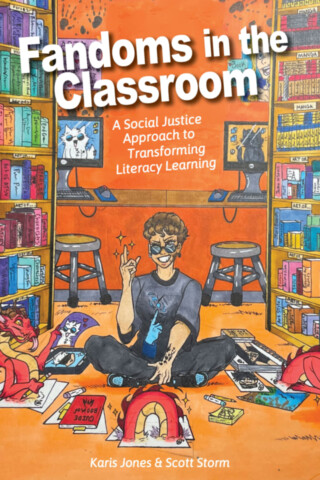
E-books are now distributed via VitalSource
VitalSource offer a more seamless way to access the ebook, and add some great new features including text-to-voice. You own your ebook for life, it is simply hosted on the vendor website, working much like Kindle and Nook. Click here to see more detailed information on this process.
Library E-Books
We are signed up with aggregators who resell networkable e-book editions of our titles to academic libraries. These editions, priced at par with simultaneous hardcover editions of our titles, are not available direct from Stylus.
These aggregators offer a variety of plans to libraries, such as simultaneous access by multiple library patrons, and access to portions of titles at a fraction of list price under what is commonly referred to as a "patron-driven demand" model.
What is a fandom, and why do fandoms matter for school? Fandoms are passionate communities dedicated to appreciating and engaging with texts of interest (movies, TV shows, books, bands, brands, sports teams, etc.) via personally and communally meaningful literacy practices. It is increasingly obvious that scripted literacy curricula and standardized tests fall short of meeting meaningful literacy goals and create culturally destructive learning spaces. Fandoms in the Classroom provides an alternative for educators looking to center passion in their classrooms, individualizing their literacy curricula by building from youth’s interests. The book describes how educators in a wide range of secondary learning contexts can build curricula around students’ already-present fandom interests to support literacy growth. This text supports educators in a range of learning contexts with step-by-step processes for building learning spaces that support navigation of fandom and disciplinary literacies, with a particular focus on common obstacles and roadblocks that teachers have shared with us. It addresses how classrooms doing critical fandom work can address social justice issues across both fandom and disciplinary communities. This book covers relevant topics such as:Why Fandoms? We introduce readers to the concept of fandoms and how engaging students’ experiences in fandoms is not an extra or add-on but instead crucial to flipping the script on literacy learning.Bring Your Fandom to Class: Critically Putting Communities in Conversation. The book discusses how to shift ideas of literacy learning contexts from teacher-centric instruction to a community learning model.Fostering Engagement & Choosing Texts Together: Teachers are often nervous about teaching what they don’t know. The text provides strategies for making learning ecologies and having kids fill it with their own interests, describing specific step-by-step discussion routines that can support youth’s engagement with critical tools on texts of their choice.Building Culturally Responsive Assessments Engaging Youth-Centric Audiences: the book describes how educators can design more expansive literacy assessments with examples of culturally responsive objectives and tasks. The authors include a range of fandom genres and audiences that they have seen in their own work.Transforming Your Current Curriculum in Conversation with Fandoms: Supporting educators interested in expanding literature units in conversation with fandom texts, the text describes how to design units that put various discourse communities in conversation without deadening or co-opting youth interests.Interdisciplinary Applications: there is a discussion about specific examples of how educators the authors have supported in various contexts have applied this kind of work. It includes a focus on cross-disciplinary literacy, with cases highlighting applications for math, science, social studies and music disciplinary learning.Fandoms in the Classroom is a step-by-step guide for literacy instructors struggling to engage their students in meaningful learning. It is essential reading.Perfect for courses such as: Foundations of Literacy; Disciplinary Literacy; Literacy Across the Curriculum; Children's or Young Adult Literature; Writing in the Classroom; Digital Media Literacy; New and Digital Literacies; Teaching Diverse Learners; Theory to Practice; Language, Literacy and Culture; Literacy Policy and Practice; Foundations of Literacy Education; Popular Culture in Literacy Classrooms; History of Literacy Practices; Reading and Language Arts; Critical Theory
More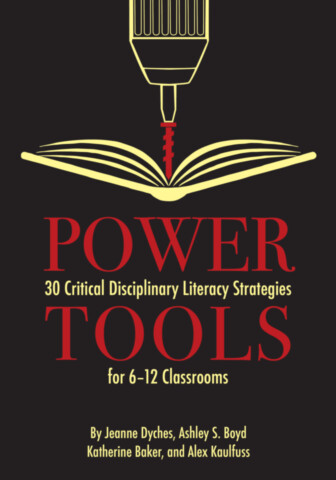
E-books are now distributed via VitalSource
VitalSource offer a more seamless way to access the ebook, and add some great new features including text-to-voice. You own your ebook for life, it is simply hosted on the vendor website, working much like Kindle and Nook. Click here to see more detailed information on this process.
Library E-Books
We are signed up with aggregators who resell networkable e-book editions of our titles to academic libraries. These editions, priced at par with simultaneous hardcover editions of our titles, are not available direct from Stylus.
These aggregators offer a variety of plans to libraries, such as simultaneous access by multiple library patrons, and access to portions of titles at a fraction of list price under what is commonly referred to as a "patron-driven demand" model.
Virtually all national standards now require students and teachers to understand the particulars of disciplinary literacy. But recently emerging scholarship suggests that disciplinary literacy is, by itself, an incomplete and potentially problematic approach to secondary literacy instruction. By asking students to “think like” or even “be like” experts, students may receive implicit messaging about whose knowledge is—and isn’t—valued. Critical disciplinary literacy (CDL) creates space for, and highlights connections between, critical literacies and disciplinary literacies. CDL acknowledges disciplines as unique communities with their own specialized (and often exclusionary) skills, norms, practices, and discourses, but deviates from conventional applications of disciplinary literacy by responding to the ways in which power systems and the analytic skills needed to understand them work differently based on the disciplines at hand. A CDL instructional approach acknowledges that applying the critical literacy skills of “reading the word and the world” to understand the power dynamics of vaccine distributions requires a different skill set and strategy approach than looking at textual representations of masculinity in Romeo and Juliet.Written by a team of educators with over 70 combined years of classroom experience, Power Tools: 30 Critical Disciplinary Literacy Strategies for 6–12 Classrooms offers readers research-based, multidisciplinary, ready-to-implement disciplinary literacy strategies from critical literacy lenses. The book sets itself apart from other strategy textbooks by offering creative strategy implementation that calls attention to power systems. Educators can learn, for example, how they might employ read-alouds to explore the global refugee crisis, or use the exit ticket strategy to help students reflect on the relationship between race and COVID statistics/experiences.Power Tools: 30 Critical Disciplinary Literacy Strategies for 6–12 Classrooms provides standards-aligned lessons that both challenge and extend traditional engagement practices to build a more just world. Each chapter includes:An overview of each strategy, situated within the research of best practices;Two disciplinary examples for each CDL strategy (e.g., an example of a CDL think-aloud in seventh grade math and tenth grade ELA classroom). Chapters provide resources such as examples of student work, discussion prompts, dialogue between teacher and students, and reprintables;Ideas for addressing resistance to CDL instruction.Preservice and in-service teachers, as well as teacher educators and researchers, looking to do and support justice-oriented work in disciplinary spaces will find value in the book.Power Tools is an ideal text to implement in courses such as Disciplinary Literacy, Secondary Literacy, Content Area Literacy, Methods/Strategies for Teaching Social Justice, Multicultural Education, ELA methods, Science methods, Social Studies methods, and Mathematics methods.
More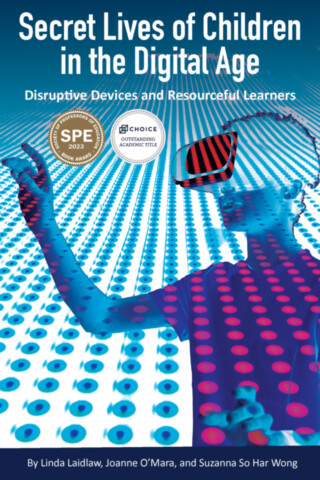
E-books are now distributed via VitalSource
VitalSource offer a more seamless way to access the ebook, and add some great new features including text-to-voice. You own your ebook for life, it is simply hosted on the vendor website, working much like Kindle and Nook. Click here to see more detailed information on this process.
Library E-Books
We are signed up with aggregators who resell networkable e-book editions of our titles to academic libraries. These editions, priced at par with simultaneous hardcover editions of our titles, are not available direct from Stylus.
These aggregators offer a variety of plans to libraries, such as simultaneous access by multiple library patrons, and access to portions of titles at a fraction of list price under what is commonly referred to as a "patron-driven demand" model.
Secret Lives of Children in the Digital Age: Disruptive Devices and Resourceful Learners offers an examination of the impact on children, their families and their teachers, as digital technologies and new literacy practices have rapidly transformed how children learn, play and communicate. While ease of access to enormous knowledge bases presents many benefits and advantages, mobile screen technologies are often perceived by parents and teachers as disruptive and worrisome. Developed from a wide range of the authors’ research over the past decade to an examination of remote learning during the COVID 19 pandemic, this book posits that while teachers, parents and governments are focused on protecting children, what is often neglected is children’s own agency and capacity to engage with mobile technologies in ways that support them in pursuing their own interests, pleasures and learning. This text works to disrupt boundaries in research, policy and practice, between home and school, and across virtual and actual worlds, positioning children as both users of media texts and coproducers of digitally mediated knowledge, with peers, family and teachers. Secret Lives of Children in the Digital Age brings together over a decade of shared research, conversations, writing and friendships across diverse geographies. Over the past decade, digital technologies have rapidly transformed how children learn, play and communicate. Tablet devices such as iPads are now ubiquitous in the lives of many children. Such devices are easy to use and provide multimodal options (i.e. operable via touch, speech, and icons, as well as conventional text). Users do not need to be conventionally literate to have access to powerful search engines, social media platforms, a range of ‘apps’ and games, or to be able to share their own creations on publication venues such as YouTube, TikTok and more. While such ease of access can present many benefits and advantages when positioned in relation to children’s use, but this access is not without concern, since mobile screen technologies are often perceived by parents and teachers as disruptive and worrisome, with popular media ramping up fears via publication of sensational articles.Secret Lives of Children in the Digital Age contributes to research on digital literacies, and offers a pedagogical examination of digital possibilities for bringing playfulness and innovation into learning.Perfect for courses such as: Introduction to Literacy Research | Qualitative Research Methods | Early Literacy | Research Methods in Language and Literacy | Introduction to Qualitative Research | New and Digital Literacies | Digital Media Education | Theories of Language and Literacy
More
E-books are now distributed via VitalSource
VitalSource offer a more seamless way to access the ebook, and add some great new features including text-to-voice. You own your ebook for life, it is simply hosted on the vendor website, working much like Kindle and Nook. Click here to see more detailed information on this process.
Library E-Books
We are signed up with aggregators who resell networkable e-book editions of our titles to academic libraries. These editions, priced at par with simultaneous hardcover editions of our titles, are not available direct from Stylus.
These aggregators offer a variety of plans to libraries, such as simultaneous access by multiple library patrons, and access to portions of titles at a fraction of list price under what is commonly referred to as a "patron-driven demand" model.
Navigating Media Literacy: A Pedagogical Tour of Disneyland is an education playbook applied to the vast mediated universe of Disney. Readers of all ages can critically apply media literacy principles while still conscientiously participating as consumer-citizens, media creators, and agents of change. Media literacy is defined throughout this book as an instructional method rather than a political movement. The book counterbalances the frequently myopic critiques of cultural scholars and the critical exemption granted by those across the world who find Disney to be a source of great pleasure. Integrated theory and practical examples allow readers to investigate of themselves and draw their own conclusions based on real inquisitive, observatory, and creative experiences that constitute media literacy (access, analyze, evaluate, create, reflect and act). Each chapter is ideologically mapped to an actual physical realm of Disneyland (e.g., Main Street, USA; Adventureland; Tomorrowland; Frontierland; Fantasyland). Each site provides a pedagogical playground for experimenting with each media literacy concept (e.g., context, audience, language, ownership, representation). The reader will come away with a deeper pedagogical understanding of how to cultivate media literacy using any context or subject—not just Disney. Each chapter includes discursive excerpts from students, along with assignments, discussion prompts, and classroom exercises, making it a valuable resource as a classroom textbook.Perfect for courses such as: Media Literacy | Communication and Media Arts | Film Studies | Media History | Transmedia Studies | Business | Marketing
More
E-books are now distributed via VitalSource
VitalSource offer a more seamless way to access the ebook, and add some great new features including text-to-voice. You own your ebook for life, it is simply hosted on the vendor website, working much like Kindle and Nook. Click here to see more detailed information on this process.
Library E-Books
We are signed up with aggregators who resell networkable e-book editions of our titles to academic libraries. These editions, priced at par with simultaneous hardcover editions of our titles, are not available direct from Stylus.
These aggregators offer a variety of plans to libraries, such as simultaneous access by multiple library patrons, and access to portions of titles at a fraction of list price under what is commonly referred to as a "patron-driven demand" model.
Novice and early career researchers often have difficulty with understanding how theory, data analysis and interpretation of findings “hang together” in a well-designed and theorized qualitative research investigation and with learning how to draw on such understanding to conduct rigorous data analysis and interpretation of their analytic results. Data Analysis, Interpretation, and Theory in Literacy Studies Research demonstrates how to design, conduct and analyze a well put together qualitative research project. Using their own successful studies, chapter authors spell out a problem area, research question, and theoretical framing, carefully explaining their choices and decisions. They then show in detail how they analyzed their data, and why they took this approach. Finally, they demonstrate how they interpreted the results of their analysis, to make them meaningful in research terms. Approaches include interactional sociolinguistics, microethnographic discourse analysis, multimodal analysis, iterative coding, conversation analysis, and multimediated discourse analysis, among others. This book will appeal to beginning researchers and to literacy researchers responsible for teaching qualitative literacy studies research design at undergraduate and graduate levels.
More