
Search results for Case for Kindness

E-books are now distributed via VitalSource
VitalSource offer a more seamless way to access the ebook, and add some great new features including text-to-voice. You own your ebook for life, it is simply hosted on the vendor website, working much like Kindle and Nook. Click here to see more detailed information on this process.
Library E-Books
We are signed up with aggregators who resell networkable e-book editions of our titles to academic libraries. These editions, priced at par with simultaneous hardcover editions of our titles, are not available direct from Stylus.
These aggregators offer a variety of plans to libraries, such as simultaneous access by multiple library patrons, and access to portions of titles at a fraction of list price under what is commonly referred to as a "patron-driven demand" model.
While there is a wealth of scholarship on Africana Education, no single volume has examined the roles of such important topics as Black Male Identity, Hip Hop Culture, Adult Learners, Leadership at Historically Black Colleges and Universities, Critical Black Pedagogy, among others. This book critically examines African Americans in higher education, with an emphasis on the social and philosophical foundations of Africana culture. This is a critical interdisciplinary study, one which explores the collection, interpretation, and analysis of quantitative and qualitative data in the field of higher education. To date, there are not any single-authored or edited collections that attempt to research the logical and conceptual ideas of the disciplinary matrix of Africana social and philosophical foundations of African Americans in higher education. Therefore, this volume provides readers with a compilation of literary, historical, philosophical, and communicative essays that describe and evaluate the Black experience from an Afrocentric perspective for the first time. It is required reading in a wide range of African American Studies courses.
More
E-books are now distributed via VitalSource
VitalSource offer a more seamless way to access the ebook, and add some great new features including text-to-voice. You own your ebook for life, it is simply hosted on the vendor website, working much like Kindle and Nook. Click here to see more detailed information on this process.
Muslim families raising children with autism navigate complex intersections of faith, culture, and disability services that remain largely unexamined in special education literature. In a first for that academic literature, Faith, Family, and Neurodiversity: Islamic Approaches to Understanding Autism addresses this critical gap by centering the voices and expertise of Muslim families who have developed sophisticated strategies for supporting their children while maintaining religious identity and cultural values within American educational systems. Drawing on extensive community engagement and research, Dr. Sadia Warsi and Ms. Sophia Memon document how Islamic principles provide conceptual frameworks for understanding autism that align with contemporary special education values while offering additional resources for family resilience. Through composite narratives that protect participant confidentiality, this volume examines how families successfully integrate Islamic wisdom with evidence-based interventions to create comprehensive support programs. The analysis reveals systematic gaps in how educational institutions serve culturally diverse families, while each chapter integrates young adult literature featuring characters with exceptionalities, including autism, as pedagogical tools for building cultural competence. This volume challenges prevailing assumptions about cultural values and evidence-based practice, offering a strengths-based perspective on cultural diversity in special education. Faith, Family, and Neurodiversity provides essential content for special educators, school psychologists, administrators, teacher preparation faculty, and educational researchers committed to creating truly inclusive educational systems. The goal of the book is to become a foundational document in the study of this unique but important phenomenon. It can be adopted in a variety of neurodiversity or cultural studies classes, and it is essential reading for special education teachers, especially those dealing with issues of health in diverse cultures.Perfect for courses such as: Introduction to Special Education; Culturally Responsive Teaching in Special Education; Family Engagement in Special Education; Foundations of Inclusive Education; Autism Spectrum Disorders: Theory and Practice; Multicultural Education; Diversity in Early Childhood Special Education; Critical Perspectives in Disability Studies; Educational Equity and Social Justice; Collaboration with Families and Communities
More
E-books are now distributed via VitalSource
VitalSource offer a more seamless way to access the ebook, and add some great new features including text-to-voice. You own your ebook for life, it is simply hosted on the vendor website, working much like Kindle and Nook. Click here to see more detailed information on this process.
Transformative Inquiry: Integrating Action Research and Systems Thinking explores how two dynamic methodologies—action research and systems thinking—can be combined to address complex challenges in education, healthcare, organizational leadership, and public policy. Grounded in participatory, iterative processes, both approaches emphasize collaboration, reflection, and systemic improvement. Together, they provide a flexible yet rigorous framework for change.This edited volume brings together scholars and practitioners to examine the historical foundations, theoretical intersections, and applied integration of action research and systems thinking. Chapters include conceptual models and case studies drawn from K–12 schools, higher education, health professions education, digital learning environments, and leadership development. Contributors demonstrate how these frameworks support root-cause analysis, stakeholder engagement, and adaptive interventions that move beyond surface-level solutions.Each chapter illustrates how reflective cycles of inquiry, when combined with systems thinking tools such as feedback loops and mental models, can uncover persistent barriers and guide meaningful, context-sensitive change. Topics include digital equity, culturally responsive pedagogy, instructional redesign, performance improvement, and professional learning.Transformative Inquiry will be of interest to scholars, educators, researchers, and practitioners seeking tools for leading improvement in complex systems. It supports graduate and doctoral-level courses in research methods, systems change, and leadership, as well as professional learning in schools, universities, and organizations.
More
E-books are now distributed via VitalSource
VitalSource offer a more seamless way to access the ebook, and add some great new features including text-to-voice. You own your ebook for life, it is simply hosted on the vendor website, working much like Kindle and Nook. Click here to see more detailed information on this process.
Advancing Special Education Through Improvement Science: A Practical Guide offers a comprehensive and accessible resource for educators, administrators, and policymakers committed to enhancing equity and effectiveness in special education. It bridges the gap between theory and practice by providing a structured approach to applying improvement science within the unique context of special education services. Grounded in the principles of continuous improvement, the book introduces a methodical process for identifying, testing, and refining practices to achieve better outcomes for students with disabilities. It emphasizes the importance of understanding educational systems' complexities and using data-driven strategies to foster lasting change.A key strength of this guide is its focus on the role of data in driving improvement. Readers are guided through practical methods for collecting, analyzing, and using data to inform decisions, along with solutions to common challenges in the process. By centering evidence-based decision-making, the book empowers educators to make meaningful changes that positively impact student outcomes. Collaboration is another major theme. The text highlights the importance of engaging teachers, administrators, families, and students in improvement efforts. Strategies for building strong teams, fostering trust, and ensuring inclusive stakeholder participation are woven throughout, reinforcing the idea that sustainable improvement depends on shared responsibility.Real-world case studies illustrate successful applications of improvement science in diverse school settings. These examples provide readers with insights into implementation challenges and successes, offering practical takeaways that can be adapted for their own contexts. To support day-to-day implementation, the book includes a variety of tools and resources such as data collection templates, PDSA (Plan-Do-Study-Act) cycle checklists, and facilitation guides for collaborative meetings. These practical assets make it easier for educators to incorporate improvement science into their routines.Finally, the guide addresses the critical need for sustainability and scalability. It offers strategies for embedding improvement practices into school and district operations so that gains can be maintained and expanded over time. By focusing on long-term change, the book helps ensure that students with disabilities benefit from ongoing, systemic improvements.Whether you're a classroom teacher, school leader, or policymaker, this guide provides the knowledge and tools needed to drive meaningful progress in special education through improvement science.Perfect for courses such as: Introduction to Special Education; Exceptional Children; Foundations of Special Education; Special Education Leadership; School Improvement and Reform
More
E-books are now distributed via VitalSource
VitalSource offer a more seamless way to access the ebook, and add some great new features including text-to-voice. You own your ebook for life, it is simply hosted on the vendor website, working much like Kindle and Nook. Click here to see more detailed information on this process.
Library E-Books
We are signed up with aggregators who resell networkable e-book editions of our titles to academic libraries. These editions, priced at par with simultaneous hardcover editions of our titles, are not available direct from Stylus.
These aggregators offer a variety of plans to libraries, such as simultaneous access by multiple library patrons, and access to portions of titles at a fraction of list price under what is commonly referred to as a "patron-driven demand" model.
The How and Why of Laboratory Schools: Innovations and Success Stories in Teacher Preparation and Student Learning is an eagerly anticipated exploration crafted by esteemed researchers and practitioners from some of the foremost Laboratory Schools across the United States and internationally. These institutions, also recognized as demonstration schools or university-affiliated schools, play pivotal roles in the landscape of education, serving as bastions of innovation, research, and professional development. At their core, Laboratory Schools are multifaceted entities, assuming key responsibilities such as teacher training and professional development, serving as hubs for research and innovation, embodying models of best practices, fostering collaboration within university communities, shaping curriculum development and evaluation, and championing inclusion and special education. Their impact reverberates throughout the educational sphere, shaping the future of teaching, learning, and educational policies. The How and Why of Laboratory Schools serves as a beacon in the realm of education literature, offering an array of accessible examples that inspire and enlighten researchers, practitioners, and policymakers alike. With a global perspective, this volume provides a comprehensive snapshot of both the research and practice within Laboratory Schools worldwide, featuring exemplary models not only from the United States but also from various international settings. Spanning an variety of topics including demonstration schools, teacher preparation, innovative pedagogy and curriculum, early childhood education, elementary and primary education, middle and secondary education, STEM-focused initiatives, promotion of democracy, establishment of research laboratories, support for diverse learners, preservice teacher education, collaboration models, and the role of teachers as researchers, this book encompasses the diverse facets of Laboratory Schools' contributions to education. Moreover, the book serves as a blueprint for the development of new Laboratory Schools, offering insights into various models, funding mechanisms, and strategies for integration into university research and teacher training programs. By showcasing successful examples and providing practical guidance, this book empowers educational institutions to embark on the journey of establishing their own school, enriching both their local communities and the broader educational landscape. Beyond the present, this book also articulates a compelling case for the future of Laboratory Schools, highlighting their potential to continually innovate, adapt, and lead educational transformation in the years to come. Through its insightful analyses and compelling narratives, The How and Why of Laboratory Schools heralds a future where Laboratory Schools remain at the forefront of educational excellence and innovation, not only domestically but also on the international stage.Perfect for courses such as: Comparative Education; Education Reform; Professional Development Models; School Improvement; Foundations in Education; Early Childhood Education
More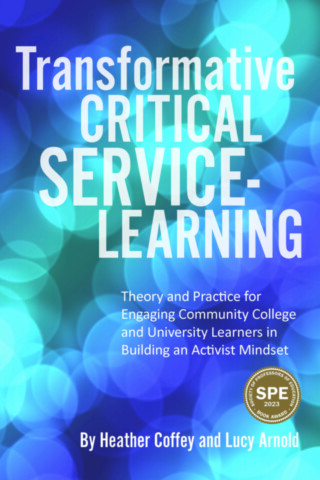
E-books are now distributed via VitalSource
VitalSource offer a more seamless way to access the ebook, and add some great new features including text-to-voice. You own your ebook for life, it is simply hosted on the vendor website, working much like Kindle and Nook. Click here to see more detailed information on this process.
Library E-Books
We are signed up with aggregators who resell networkable e-book editions of our titles to academic libraries. These editions, priced at par with simultaneous hardcover editions of our titles, are not available direct from Stylus.
These aggregators offer a variety of plans to libraries, such as simultaneous access by multiple library patrons, and access to portions of titles at a fraction of list price under what is commonly referred to as a "patron-driven demand" model.
Transformative Critical Service-Learning offers hands-on tools for implementing, reflecting on, and assessing critical service-learning in classrooms and community spaces. Answering a need from practitioners for a practical tool for making sense of critical service-learning, the authors introduce the Critical Service-Learning Implementation Model as a way to encourage conversations among stakeholders. Materials include specific criteria to examine, examples of application and context, and ways to incorporate the model into reflective practices. Valuing partnerships, reflection, and analysis of power dynamics, the research and strategies offered here provide an entry point for faculty new to critical service-learning, while also offering new ideas and tools for long-time practitioners. Chapters offer particular attention to strategies for engaging students, syllabus development, and reflective cycles. Additionally, the authors offer a model for faculty development in the area of critical service-learning at the institutional level, including suggestions for faculty and administrators interested in increasing engagement with social justice and community spaces. As institutions of higher education are focusing more on the ways in which they can meet the needs of the communities surrounding their campuses, The Carnegie Foundation’s Elective Classification for Community Engagement provides a special-purpose designation for higher education institutions with commitments in the area of community engagement. Universities must commit to institutional change in order to improve the outcomes for the communities surrounding the campus. The classification framework represents best practices in the field and encourages continuous improvement through periodic re-classification. Service-learning has been identified as one of the more effective methods for engaging undergraduate and graduate students in community engaged scholarship, which facilitates development of critical inquiry, understanding needs assessment, and deep reflection on inequality. The authors intend this book to benefit university faculty endeavoring to begin or develop service-learning courses, higher education administrators who want to train and engage university faculty in adopting a more community engaged teaching model, and P-12 teachers, who often serve as community partners with higher education institutions to facilitate justice-oriented approaches to teaching their diverse students.Perfect for courses such as: Critical Thinking and Communication/Service-Learning │ Service-Learning Capstone │ Pathways to Effective Community Engagement │ School and Community Collaboration │ Teaching to Transform Society │ Food, Environment, and Sustainability │ Race and the Right to Vote in the US │ Education and Society │ Environmental Education │ Race, Place, and Memory
More
E-books are now distributed via VitalSource
VitalSource offer a more seamless way to access the ebook, and add some great new features including text-to-voice. You own your ebook for life, it is simply hosted on the vendor website, working much like Kindle and Nook. Click here to see more detailed information on this process.
Library E-Books
We are signed up with aggregators who resell networkable e-book editions of our titles to academic libraries. These editions, priced at par with simultaneous hardcover editions of our titles, are not available direct from Stylus.
These aggregators offer a variety of plans to libraries, such as simultaneous access by multiple library patrons, and access to portions of titles at a fraction of list price under what is commonly referred to as a "patron-driven demand" model.
Conservative ideologues have sought to shift the focus from the collective good to the individual good and to redirect the purposes and aims of education away from public benefit and in favor of private enterprise. As such, market-oriented, privatized, and standardized approaches to education reform have worked toward achieving that goal. This book is a primer on how the political right is utilizing various aspects of philanthropy and the political process to influence educational policymaking. In 1971, corporate lawyer and future U.S. Supreme Court Justice Lewis Powell wrote a detailed memo that galvanized a small group of conservative philanthropists to create an organizational structure and fifty-year plan to alter the political landscape of the United States. Funded with significant “dark money,” the fruits of their labor are evident today in the current political context and sharp cultural divisions in society. Philanthropy, Hidden Strategy, and Collective Resistance examines the ideologies behind the philanthropic efforts in education from the 1970s until today. Authors examine specific strategies philanthropists have used to impact both educational policy and practice in the U.S. as well as the legal and policy context in which these initiatives have thrived. The book, aimed for a broad audience of educators, provides a depth of knowledge of philanthropic funding as well as specific strategies to incite collective resistance to the current context of hyperaccountability, privatization of schooling at all levels, and attempts to move the U.S. further away from a commitment to the collective good.Perfect for courses such as: Critical and Contemporary Issues in Education, Education Policy, Educational Policy Analysis, Social Foundations of Education, Philanthropy, Public Policy & Community Change, Philanthropic Studies, Sociology of Education, Politics of Education, Current Issues in Education, Government and the Mass Media, Polarization of American Politics.
More
E-books are now distributed via VitalSource
VitalSource offer a more seamless way to access the ebook, and add some great new features including text-to-voice. You own your ebook for life, it is simply hosted on the vendor website, working much like Kindle and Nook. Click here to see more detailed information on this process.
In a higher education landscape that seems to be increasingly focused on accreditation and accountability, administrators, faculty, and staff in higher education institutions expend considerable resources engaging in assessment activities in response to the demands of compliance-oriented external forces. Beyond Accreditation: Designing and Implementing Meaningful Quality Assurance and Continuous Improvement Systems presents an alternative paradigm for consideration: the primary purpose of assessment systems should be to provide program improvement, with the resulting data serving as supporting evidence for compliance-oriented requests. The book is intended to provide a foundation of background knowledge to empower programs, regardless of size or disciplinary context, to engage in the processes associated with assessment in pursuit of continuous improvement. It supplies data and other information in three distinct ways throughout the book. In some chapters, candid dialogues between the authors are presented in a conversational tone. In others, a more philosophical and sometimes historical perspective provides background knowledge informing why certain things are done and the purposes those activities serve. The remaining chapters present a practical approach to engaging in assessment, from identifying signature assessments to analyzing and reporting on data, all within the overarching context of designing an assessment system that serves continuous improvement efforts. The accountability mindset that has taken hold in education, and in higher education in particular, has fostered a view of assessment as a complicated, challenging, and burdensome enterprise that is done to us in pursuit of compliance. Throughout the book, assessment is presented as something to be done in pursuit of continuous improvement. The authors hope that its contents prove useful to anyone in search of assistance in these efforts. Perfect for courses such as: Educational Program Evaluation; Teacher Education; Education Policy; Teacher Education Policy; and Human Resources in Education.
More
E-books are now distributed via VitalSource
VitalSource offer a more seamless way to access the ebook, and add some great new features including text-to-voice. You own your ebook for life, it is simply hosted on the vendor website, working much like Kindle and Nook. Click here to see more detailed information on this process.
Library E-Books
We are signed up with aggregators who resell networkable e-book editions of our titles to academic libraries. These editions, priced at par with simultaneous hardcover editions of our titles, are not available direct from Stylus.
These aggregators offer a variety of plans to libraries, such as simultaneous access by multiple library patrons, and access to portions of titles at a fraction of list price under what is commonly referred to as a "patron-driven demand" model.
Cartographies of Blackness and Black Indigeneities acknowledges the saliency of Blackness in contemporary social formations, insisting that how bodies are read is extremely important. The contributors to this volume elicit or produce both tangible and intangible social, political, material, spiritual and emotional effects and consequences on Black and African bodies, globally. It is a call to celebrate Blackness in all its complexities, including race, ethnicity, class, gender, sexuality, (dis)ability, spiritualities, and geographies. Understanding Blackness is to insist on Black and African political and cultural appreciation of the phenomenon outside of Euro-colonial attempts to regulate and define how Black and African bodies are perceived. This book intersperses discussions of Blackness with Black racial identity and cultural politics and the required responsibilities for the Global Black and African populations to build viable communities utilizing our differences—knowledges, cultures, politics, identities, histories—as strengths.
More
E-books are now distributed via VitalSource
VitalSource offer a more seamless way to access the ebook, and add some great new features including text-to-voice. You own your ebook for life, it is simply hosted on the vendor website, working much like Kindle and Nook. Click here to see more detailed information on this process.
PreK-12 schools across the United States are adopting social and emotional learning (SEL) programs for both students and educators. However, most of these schools are adopting non-contextualized, trendy, and traditional SEL programs, in which students and educators are conditioned to apply certain knowledge and skills that speak to only a small subset of students rather than utilizing authentic, equity-driven SEL models. As such, SEL programming must be transformed and sustained to reflect new and shifting identities of both students and educators, like the expanding ability, cultural, gender, linguistic, race, religion, and socioeconomic formations and their intersections, as well as tensions within predominantly white institutions. Moving from Trendy to Transformative Social-Emotional Learning presents a diverse collection of chapters that discuss authentic and contextualized equity and justice models that are focused on the possibilities of transformative SEL programming. The book’s primary focus is on innovative and creative methodologies and practices that aspiring and practicing educators can use right away. Because the editors and contributors are former or current PreK-12 practitioners and/or educational scholars, this book is written for a broad educational audience. Directed to both preservice and practicing teachers across PreK-12 grade levels, school types, and geographic regions looking to improve their practice, the text provides entry points for transforming the SEL landscape in favor of liberatory, justice-based, and equitable practices. Additionally, this book is ideal for teacher and administrator preparation programs, as well as PreK-12 professional development, because it guides readers through theoretical and empirical discussions, punctuated by hands-on applications that enable real-time application, and concludes with interactive features, including case studies, extension activities, and discussion prompts. Specific topics include enacting culturally-relevant SEL; addressing youth mental health through cultivating authentic belonging and mindfulness in classrooms; equitable SEL curricular and pedagogical practices; developing adult SEL; culturally-grounded identity development, ensuring safe environments for building identity and relationships; and SEL in teacher education and mentorship.Perfect for courses such as: Introduction to Educating For Equity And Social Justice; Introduction to Cultivating Culturally Responsive Classrooms; Foundations of Classroom Management; Introduction to Diversity, Equity, and Inclusion in Schools; Principles of Professional Collaboration In Education; Introduction To School Improvement, Introduction to Teacher Leadership And School Improvement; Introduction to Curriculum, Instruction, and Assessment; Principles of Building Classroom Communities; Principles of Teaching Diverse Learners; Principles of Youth Voices in Education
More