
Search results for Case for Kindness

E-books are now distributed via VitalSource
VitalSource offer a more seamless way to access the ebook, and add some great new features including text-to-voice. You own your ebook for life, it is simply hosted on the vendor website, working much like Kindle and Nook. Click here to see more detailed information on this process.
Teaching that aims to be inclusive of marginalized communities is under attack in the United States, evidenced, for example, in widespread school book banning efforts, prohibition of Advanced Placement African American history, and a general tenor of fear among educators across the K-12 and higher education spectrum. This fear originates from a variety of pedagogical attempts at teaching content or utilizing practices that do anything other than valorize the dominant narrative and status quo in the United States. Classroom teachers and college instructors ask what can be done to uphold the practices they know to support students from all backgrounds to experience educational success and inclusion that won’t capture the ire of parent groups, school boards, or educational commissions bent on squelching such critical efforts. Against the Current: Inclusive Multicultural Education Practices for Contentious Times addresses these issues by providing examples from K-12 and higher education classrooms where educators’ practices offer a path forward. Each chapter in the book presents an example of ways educators practice multicultural inclusivity and offers insights on how to do so even in hostile environments. Chapters in Part 1 of the book offer re-framings of flashpoint issues, including such topics as anti-Muslim racism and fugitive pedagogical practices. While the chapters in Part 1 offer a grounding in ways educators might rethink the work at hand, the chapters in Part 2 offer innovative tools or practices that educators across grade levels--including higher education--can use, including frameworks for cultivating deep listening when confronting emotionally charged topics in the classroom and curriculum materials for family and community engagement. Finally, Part 3 of the book offers case studies of this work in action, including examples at the individual teacher or instructor level, the classroom level, and the schoolwide level. The volume includes a guide for readers with discussion and reflection questions, extension activities, and additional resources for each chapter. Against the Current is critical reading in a variety of settings. It can be used in professional development programs to better equip teachers. College and university libraries will want it in their collections. As a teaching textbook, its content will apply to a large number of classes in multicultural education, inclusive teaching and learning, and other courses, thus equipping preservice teachers with valuable tools as they prepare to enter schools.Perfect for courses such as: Introduction to Education; Educational Equity; Foundations of Education; Multicultural Education; Social Justice and Education; Teacher Education; Teaching Methods; Educational Practice; Educational Studies
More
E-books are now distributed via VitalSource
VitalSource offer a more seamless way to access the ebook, and add some great new features including text-to-voice. You own your ebook for life, it is simply hosted on the vendor website, working much like Kindle and Nook. Click here to see more detailed information on this process.
Thanks to Literacy Pedagogy with Whole-Earth Consciousness, teachers of young and older novice readers alike no longer have to separate structured reading instruction from meaningful, engaging, age-appropriate content. In clear language and with multiple examples drawn directly from practice – including case studies, vignettes, discourse analyses, text sets, samples of curriculum, and more – this book shows how literacy pedagogy can be merged with science-based concepts, understandings, and practices relating to caring for ourselves, caring for others, and caring for the earth as a whole. With environmental challenges pressing ever more closely on everyday life – including effects of extreme heat, flooding, tornadoes, hurricanes, and wildfire, among others – Literacy Pedagogy with Whole-Earth Consciousness offers a hopeful path forward for literacy educators, science educators, elementary educators, tutors, university faculty and students, homeschooling families, and childcare providers. Readers will draw inspiration from seeing how earth-conscious literacy pedagogy unfolds in multiple educational contexts: an afterschool program, a virtual literacy tutorial, a 3-week school enrichment program, and a graduate-level literacy course. Rogers and Schaenen showcase how place-based approaches to literacy instruction can empower students and teachers alike as readers while also dramatically deepening their relationships with the environment. Uniquely, Literacy Pedagogy with Whole-Earth Consciousness merges together teacher action research, discourse analysis, literacy teacher education, and eco-justice pedagogies. What results is a timely, conceptually rich guide to an experiential and evidence-based approach to literacy teaching and learning. Experiential approaches to literacy learning can help enrich the understanding young people have about themselves, other people, and their sense of belonging on planet Earth. Literacy Pedagogy with Whole-Earth Consciousness can be a central adopted text in undergraduate and graduate classrooms: with student reading scores seemingly stuck or worsening, what’s urgently needed are innovative, thoughtful, authentic approaches to teaching literacy comprehensively at the earliest and intermediate stages, especially in classes preparing teachers for service or extending the repertoires of in-service teachers at the graduate level. It will also be a useful adopted text in graduate classes that explore discourse analysis and teacher action research. Because the book will include examples of critically oriented discourse analysis within an action research framework, Literacy Pedagogy with Whole-Earth Consciousness will appeal to fellow critical literacy researchers, as well as scholars and practitioners of discourse analysis. The book will extend approaches to critical discourse studies in educational 4 settings by engaging eco-linguistics as a pedagogical and research tool. For this reason, literacy clinic directors and their affiliated faculty will also be interested readers. As a guide to cutting-edge curriculum and instruction with regard to literacy and the environment, college, university, and public libraries will want to include this book in their collections. The authors write with clarity for the ever-growing number of homeschooling families, microschools, and indeed any caregivers of young children who are interested in merging research-based developmental literacy with environmental content in age-appropriate ways. Literacy Pedagogy with Whole-Earth Consciousness is accessible and useful to all participants in an ever-growing and collaborative community of learners. The authors made the decision to jump into the kind of work that would foreground relationships, seek continuities, embrace non-linear patterns of change, and adhere to a basic ecological principle of favoring diversity over monoculture. Through a two-year inquiry across multiple contexts, they have worked to envision and construct a conceptual and practical trellis that will support the fruits of comprehensive literacy development – phonics, comprehension, fluency, writing, spelling, curiosity, and joy – while remaining grounded in place-based content and care. Along the way, they have engaged in reflexive research, documenting, analyzing, synthesizing, and reflecting on their practice across multiple learning ecologies.Perfect for courses such as: Eco-Literacy; Action Research/Teacher Research; Foundations of Teaching Literacy; Teaching Reading and Writing in School and Community Settings; Education and Society Through Service Learning; Climate Change Narratives; Literacy and Social Justice; Discourse Analysis; Theory and Practice of Literacy Tutoring; Teaching and Learning in Environmental Education; Science Communications; Science Literacy
More
E-books are now distributed via VitalSource
VitalSource offer a more seamless way to access the ebook, and add some great new features including text-to-voice. You own your ebook for life, it is simply hosted on the vendor website, working much like Kindle and Nook. Click here to see more detailed information on this process.
Over the past three decades, the landscape of educator preparation has changed so that more people can enter the teaching profession than ever before. This welcome expansion of access to the teaching profession has been accomplished both through the creation of new entities bringing new models of preparation online and, even more so, through the multiplication of new program tracks and pathways in the institutions of higher education (IHEs) that have long been and continue to be responsible for preparing the largest proportion of teachers and other professional educators. The preparation landscape has also become more dynamic and more responsive to needs at local and regional levels. In this era of teacher shortage, expanded access is good news, but are all pathways equal with regard to quality of preparation? Locating Quality in the Dynamic Educator Preparation Landscape centers on the experiences of a variety of preparation programs—all accredited by the Association for Advancing Quality in Educator Preparation (AAQEP), each unique in its approach to addressing the needs of its prospective teachers and its local school partners. The featured programs include public and private preparation providers from across the nation, some based in longstanding institutions of higher education, some operating in newer organizational models. They share a common claim to quality through having met the same accreditation standards, yet each excels in its own right in addressing specific needs. The book shows that while qualities can be shared, quality is fundamentally a divergent rather than a convergent characteristic, and that program evaluation and accreditation regimes be framed accordingly. It argues that educational policy needs to be based on an appreciation of the many dimensions of quality program practice that are needed to address the varied and particular needs of schools, communities, and populations that are entering the educator preparation pipeline. So long as we are able to ensure that all pathways into teaching result in the preparation of effective educators who are able to serve students, schools, families, and communities well by promoting student learning and thriving, we will reap the benefits of this new, varied, and dynamic landscape of educator preparation.Perfect for courses such as: Educational Program Evaluation; Teacher Education; Education Policy; Teacher Education Policy; and Human Resources in Education
More
E-books are now distributed via VitalSource
VitalSource offer a more seamless way to access the ebook, and add some great new features including text-to-voice. You own your ebook for life, it is simply hosted on the vendor website, working much like Kindle and Nook. Click here to see more detailed information on this process.
Mistakes We Have Made: Implications for Social Justice Educators, second edition, continues the conversation started in the first edition. Dr. Bre Evans-Santiago has once again collected a variety of voices from authors with a wealth of experience teaching in K-12 schools and utilizing culturally relevant practices. This new edition is current with social justice research and strategies, while connecting the audience through personal vignettes in each chapter. The context is organized into three themes: Inclusive Classrooms, Curriculum Implementation, and Professionalism. Reflection questions are provided at the end of each chapter, which will guide the practitioners to self-reflect and plan next steps accordingly. The e-book provides links to videos, strategies, articles, and other supplemental materials to make this text a "one-stop-shop." Mistakes We Have Made speaks to several audiences, from pre-service teachers to any practitioner that needs a new perspective on teaching with a social justice lens. This text can be used in a variety of college courses, professional development workshops, or as a gift for new teachers.Perfect for courses such as: Social Justice for Educators | Diverse Perspectives for Educational Leaders | Diversity and Multiculturalism | Sociocultural Foundations in Education | Issues in Education | Elementary Teacher Foundations | Sociology of Education
More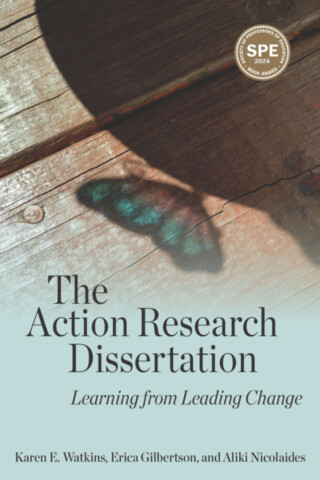
E-books are now distributed via VitalSource
VitalSource offer a more seamless way to access the ebook, and add some great new features including text-to-voice. You own your ebook for life, it is simply hosted on the vendor website, working much like Kindle and Nook. Click here to see more detailed information on this process.
Library E-Books
We are signed up with aggregators who resell networkable e-book editions of our titles to academic libraries. These editions, priced at par with simultaneous hardcover editions of our titles, are not available direct from Stylus.
These aggregators offer a variety of plans to libraries, such as simultaneous access by multiple library patrons, and access to portions of titles at a fraction of list price under what is commonly referred to as a "patron-driven demand" model.
The idea of the doctorate is undergoing a transformation as experts explore the nature of “doctorateness” and its relevance for current organizational and societal challenges. The professional practice doctorate has emerged as a highly useful framework to address these challenges and it necessarily requires a distinctive approach to the doctoral dissertation. The Action Research Dissertation: Learning from Leading Change shares a framework for the action research dissertation, outlining the specific ways in which action research fosters the development of scholar-leaders. It offers both doctoral students who are practitioners in applied fields, and the faculty who guide them in their doctoral research, a comprehensive and applied approach to action research that focuses on facilitating and leading change in organizations, as well as ways to address how to translate the findings of this work into a rigorous, dissertation research study. Throughout the book, the authors explicitly address the connection between the parallel and mutually-reinforcing processes of taking action and conducting research, offering rich insights, tools, and case examples that outline specifically how to use action research to both guide a change effort and generate useful insights to contribute to theory-building. This is an essential book for a variety of readers, including professional practice doctoral students, faculty directing the studies of those students, program administrators, professional development coordinators, and many others.Perfect for courses such as: Introduction to Action Research, Action Research, Applied Research, Qualitative Research, Mixed Methods Research, and Case Study Research
More
E-books are now distributed via VitalSource
VitalSource offer a more seamless way to access the ebook, and add some great new features including text-to-voice. You own your ebook for life, it is simply hosted on the vendor website, working much like Kindle and Nook. Click here to see more detailed information on this process.
Library E-Books
We are signed up with aggregators who resell networkable e-book editions of our titles to academic libraries. These editions, priced at par with simultaneous hardcover editions of our titles, are not available direct from Stylus.
These aggregators offer a variety of plans to libraries, such as simultaneous access by multiple library patrons, and access to portions of titles at a fraction of list price under what is commonly referred to as a "patron-driven demand" model.
Food Stories: Navigating the Academy with Cultural Lessons from the Kitchen is the first volume in the series Culinary Canvas: A Series on Integrating the Arts and Food into Higher Education. The purpose of the series is to explore the innovative integration of arts and food into higher education. Each volume aims to inspire a paradigm shift in academia, advocating for a more holistic, creative, and inclusive approach to learning, teaching, researching, serving, and existing in the academy. In the present volume, Food Stories makes the case that food, and the culture surrounding food, is a closely held--and powerful--reality that shapes who we are as individuals, as members of varied communities, and invariably, informs who we are as educators and researchers. This book gives space for the authors to explore not only the impact that food and culture have had, and continue to have, on them as individuals, how that culture and experiences impact them as members of the academy (in teaching, research, and service), but also in providing some guidance to graduate students and junior faculty. In effect, chapters explore navigating academic work (teaching, research, and service) through the lens of food and the transferable lessons that can be gleaned from our grandmothers’, mothers’, fathers’, and our own kitchens. It is often the case that higher education fosters both imposter syndrome and a workaholic disposition that can be detrimental to teaching and research. What this book does, then, is to not only explore the ways in which what may seem as non-academic work such as cooking a meal can have on our work/life balance but, also, how to incorporate the very lessons of food into who we are as educators, how we teach, and how we can approach the work we do more broadly. Through carefully curated chapters, this text presents a wide array of perspectives across food and cultural regions, as well as imparting insights from the academy from authors spanning the spectrum of the career. It is an important book full of valuable lessons for graduate students, faculty and teachers who wish to use its content in their classrooms.Perfect for courses such as: Cultural Studies; Culturally-Responsive Pedagogy
More
E-books are now distributed via VitalSource
VitalSource offer a more seamless way to access the ebook, and add some great new features including text-to-voice. You own your ebook for life, it is simply hosted on the vendor website, working much like Kindle and Nook. Click here to see more detailed information on this process.
Library E-Books
We are signed up with aggregators who resell networkable e-book editions of our titles to academic libraries. These editions, priced at par with simultaneous hardcover editions of our titles, are not available direct from Stylus.
These aggregators offer a variety of plans to libraries, such as simultaneous access by multiple library patrons, and access to portions of titles at a fraction of list price under what is commonly referred to as a "patron-driven demand" model.
Repertories of Racial Resistance: Pedagogical Dreaming in Transborder Educational Spaces explores the integral role of dreaming and imagination in pursuing educational justice. The illuminating case studies in this book highlight how youth and adults utilize Transformative Methodologies not only to generate knowledge, but also promote social change. Transformative Methodologies are approaches to research and knowledge production that explicitly: center the perspectives, experiences, and expertise of BIPOC youth and communities as essential to research challenge conventional social science frameworks that relegate communities as “objects” of inquiry, and facilitate ethnically and racially minoritized young people to leverage their educational opportunities to express their agency, imagine emancipatory futures, and embody social change. Chapters in the book demonstrate how researchers, practitioners, and youth utilize methodologies such as participatory action research, testimonials, counter narratives and critical storytelling to make sense of social inequalities and envision futures rooted in justice. This text considers the intimate relationship between youth leadership and empowerment with dreaming and imagination. The book includes case studies based in diverse contexts such as K-12 schools, community-based settings, and higher education. Moreover, the text specifically highlights how BIPOC young people leverage their imaginations as part of their efforts to advocate for justice in their communities, families, and schools. This book emphasizes the importance for researchers and practitioners to leverage youth imagination and freedom dreams in creating culturally sustaining educational settings and promoting transformative youth leadership. This volume will be of interest to graduate, postgraduate students, researchers and academics in fields such as multicultural education, critical pedagogy, youth development and qualitative and participatory methodologies. Pre-service teachers, practitioners, and libraries will also find this book useful. Perfect for courses such as: Multicultural Education, Foundations of Education, Critical Pedagogy and Education, Youth Development, Out of School Time Education, Research Methodology, Anthropology and Education, Sociology and Education, and Youth Resistance
More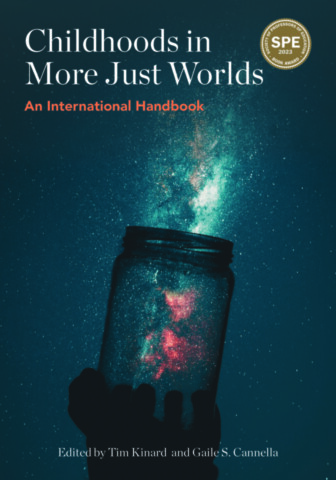
E-books are now distributed via VitalSource
VitalSource offer a more seamless way to access the ebook, and add some great new features including text-to-voice. You own your ebook for life, it is simply hosted on the vendor website, working much like Kindle and Nook. Click here to see more detailed information on this process.
Library E-Books
We are signed up with aggregators who resell networkable e-book editions of our titles to academic libraries. These editions, priced at par with simultaneous hardcover editions of our titles, are not available direct from Stylus.
These aggregators offer a variety of plans to libraries, such as simultaneous access by multiple library patrons, and access to portions of titles at a fraction of list price under what is commonly referred to as a "patron-driven demand" model.
Those who are younger continue to be objects of injustice and inequity; those who are younger, people of color, females, and human beings living in poverty have never been included in equitable performances of justice, care, respect, and fairness.The authors in this international volume use existing social values and institutions--and the strengths of these varied perspectives--to address justice in ways that have not previously been considered. The aim is to create more just worlds for those who are young--as well as for the rest of us.The first set of chapters, Bodies, Beings, and Relations in More Just Worlds, place at the forefront the lives of those who are younger who are commonly situated in positions of invisibility, disqualification, and even erasure. In the second section, Performances of Care and Education for More Just Worlds, the authors acknowledge that needed (re)conceptualizations of those who are younger, along with appreciation for human diversity and entanglements between the so-called human and nonhuman worlds, are the foundations for more just care and education environments. From the critique of neoliberal reform discourses to reconceptualizing human relations with nonhuman animal and material worlds, care and learning environments are rethought. The set of chapters in the final section, Stir of Echoes: 20th Century Childhoods in the 21st, take-up the 20th century critical concerns with constructions of “child” that have dominated and continue to govern perspectives imposed on those who are younger. Suggestions for becoming-with those who are younger through resources like reconceptualist scholarship, Black and Indigenous Studies, and various posthuman perspectives are provided throughout.Whatever the emphasis or focus of a section or chapter, throughout the volume is the recognition that dominant discourses (e.g. neoliberal capitalism, conservativism, progressivism, human exceptionalism) and the policies they create (and that facilitate them), influence possibilities for, and limitations to, more just childhood worlds. Therefore, each section includes chapters that address these complex discourses and policy issues. The reader is invited to engage with these complexities, to become-with the various texts, and to generate unthought possibilities for childhoods in more just worlds.Perfect for courses such as: Curriculum Theory │ Multicultural Education │ Cultural Knowledge of Teachers and Teaching │ Sociocultural Foundations │ Anthropology of Education │ Identity, Agency, and Education │ Race and Ethnic Relations in Schools │ Philosophical Foundations of Education │ Educational Epistemologies │ Theorizing and Researching Teaching and Learning │ Qualitative Research in Education: Paradigms, Theories, and Exemplars │ Epistemologies and Theories in Multicultural and Equity Studies │ Curricular Approaches to Multicultural and Equity Studies in Education │ Culturally Relevant Pedagogy (3) │ Multicultural and Global Perspectives in Teaching and Learning │ Teaching for Social Justice │ Diversity and Equity in Education │ 21st Century Childhood Curriculum │ Childhood and Globalization
More
E-books are now distributed via VitalSource
VitalSource offer a more seamless way to access the ebook, and add some great new features including text-to-voice. You own your ebook for life, it is simply hosted on the vendor website, working much like Kindle and Nook. Click here to see more detailed information on this process.
Transdisciplinary Feedback in Higher Education: Feedback Practices to Promote Student Success Across the Disciplines in Higher Education covers a group of faculty at a small, public, comprehensive, Hispanic-serving university in west Texas who made a commitment to study effective feedback strategies and implement them in their courses across fourteen different disciplines. The faculty joined a learning community to discuss and implement high impact practices using ten feedback tools and strategies outlined by Riordan (2021). Twenty-two faculty share their unique experiences using effective feedback methodologies in over forty case studies with students in programs spanning across developmental education, biology, English, nursing, psychology, criminal justice, accounting, communication, history, political science, natural resource management, STEM, teacher education, and counseling. These case studies illustrate how each of the Riordan feedback strategies is effectively implemented, showcasing the resulting two-way exchange between the instructors and students in undergraduate and graduate courses. Drawing on their in-depth experiences, through these real world examples of feedback in higher education courses that have had a positive impact on students, authors Dr. Jeanne Qvarnstrom and Dr. Alicia M. Trotman provide insights into how meaningful feedback is framed and implemented in each discipline, using a customized approach to feedback to help readers identify the key feedback skills that are unique to each subject. Transdisciplinary Feedback in Higher Education: Feedback Practices to Promote Student Success Across the Disciplines in Higher Education is written primarily for faculty who know that feedback is important, but who also recognize that some types of feedback will be disregarded by the student. The purpose is to provide real world examples of feedback in higher education courses that have had a positive impact on students. Organized into three sections, in Part I of Transdisciplinary Feedback in Higher Education: Feedback Practices to Promote Student Success Across the Disciplines in Higher Education the authors explore instructor orientation to feedback, Part II highlights student orientation to feedback, and Part III illustrates the authors teaching the disciplinary tools as aligned with feedback strategies. While the tools and practices remain consistent, the implementation methods vary contextually to best meet the needs of the students in mastering the concepts of the disciplines. The reader gains a greater understanding of the ten feedback tools and practices from a transdisciplinary perspective. Each chapter ends with reflective questions for the reader and a reference list for future study. Effective feedback in higher education is a popular topic, but in Transdisciplinary Feedback in Higher Education: Feedback Practices to Promote Student Success Across the Disciplines in Higher Education, addresses a gap in research and offers examples from higher education. Transdisciplinary Feedback in Higher Education: Feedback Practices to Promote Student Success Across the Disciplines in Higher Education is dedicated to college and university instructors in various disciplines who recognize the power of feedback and want to learn more about effective forms of it. The book is well suited for faculty professional development initiatives, professional learning communities, and graduate programs in higher education and teacher education, making it an appropriate resource for both individual instructors and course adoption.
More
E-books are now distributed via VitalSource
VitalSource offer a more seamless way to access the ebook, and add some great new features including text-to-voice. You own your ebook for life, it is simply hosted on the vendor website, working much like Kindle and Nook. Click here to see more detailed information on this process.
Higher education in the United States appears to be in trouble. Much of the American public sees colleges and universities as disengaged, elitist, not open to new or alternative ideas, something to be escaped—not to mention expensive, unproductive, out of touch, unaccountable, oblivious to their own failings, and increasingly irrelevant. There are many in our society who are promoting a vision of higher education that uses these perceptions to call into question the role of colleges and universities in our democracy. But on the author’s campus of Augsburg University and on campuses across the country, in our neighborhoods, and wherever our alumni live and work, the author sees just the opposite. He sees students who view education as a gift that carries with it a responsibility to give back. He sees faculty and staff committed to the vision that students receive a three-dimensional education—an education that equips them to make a living, make a life, and build community. He sees alumni and neighbors who care about each other and the world, and who are working each and every day to support a just and inclusive democracy. For those of us who believe in the public purposes of higher education, we live in the tension between negative perceptions of our worth and the reality of what we do everyday on the ground to support social mobility, economic well-being, and a robust common life. In the context of that tension, Paul Pribbenow believes that there is a moral claim on those of us who lead colleges and universities to step forward with an alternative story. At a time when higher education is often characterized as a private, transactional good, we are called to articulate a vision that challenges the prevailing narrative and makes a moral case for higher education as an engine for a robust, pluralistic democracy. In more than two decades as a university president, he has sought to advance that case. To illustrate how, he will use the story of Jacob wrestling with the angel as depicted in the book of Genesis. A reminder of how the story unfolds. The same night he got up and took his two wives, his two maids, and his eleven children, and crossed the ford of the Jabbok. He took them and sent them across the stream, and likewise everything that he had. Jacob was left alone; and a man wrestled with him until daybreak. When the man saw that he did not prevail against Jacob, he struck him on the hip socket; and Jacob’s hip was put out of joint as he wrestled with him. Then he said, “Let me go, for the day is breaking.” But Jacob said, “I will not let you go, unless you bless me.” So he said to him, “What is your name?” And he said, “Jacob.” Then the man said, “You shall no longer be called Jacob, but Israel, for you have striven with God and with humans, and have prevailed.” Then Jacob asked him, “Please tell me your name.” But he said, “Why is it that you ask my name?” And there he blessed him. So Jacob called the place Peniel, saying, “For I have seen God face to face, and yet my life is preserved.” The sun rose upon him as he passed Penuel, limping because of his hip. Pribbenow’s argument, and sincere belief, is that higher education is about learning to wrestle with ideas, values, and relationships that demand our attention. He believes that students must learn to see the topics they wrestle with not as obstacles to overcome or defeat, but as “angels” that demand respect and thoughtful attention. The purpose of this vision of education is like it was for Jacob: to be named and claimed as those called to meaning and purpose in the world. And like Jacob who became Israel, wrestling with angels leaves students wounded, vulnerable, humbled—and also equipped for the work they are called to do - to thrive as neighbors, professionals, and citizens.Perfect for courses such as: Ethics and Higher Education; Higher Education Leadership; Education and Democracy; Leading Faith-Based Colleges and Universities; The State of Higher Education in America; Student Success and Academic Belonging
More