
Search results for using data
E-books are now distributed via VitalSource
VitalSource offer a more seamless way to access the ebook, and add some great new features including text-to-voice. You own your ebook for life, it is simply hosted on the vendor website, working much like Kindle and Nook. Click here to see more detailed information on this process.
Library E-Books
We are signed up with aggregators who resell networkable e-book editions of our titles to academic libraries. These editions, priced at par with simultaneous hardcover editions of our titles, are not available direct from Stylus.
These aggregators offer a variety of plans to libraries, such as simultaneous access by multiple library patrons, and access to portions of titles at a fraction of list price under what is commonly referred to as a "patron-driven demand" model.
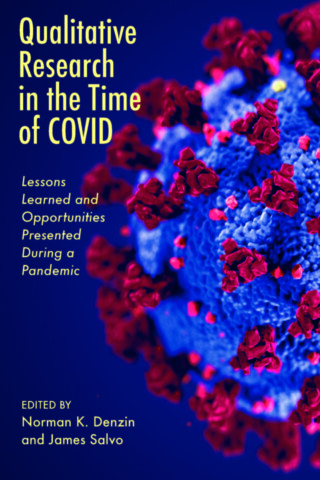
Qualitative Research in the Time of COVID: Lessons Learned and Opportunities Presented During a Pandemic focuses broadly upon educational issues during the COVID-19 pandemic. The chapters make note of how contextual understandings are important for the future of researchers, especially when those contexts involve inequality made more acute since the pandemic. The chapters illustrate the importance of creating a climate of care based upon the principles of care ethics, and also examine projects that could be taken in the context of necessary self-care during challenging times. Chapters address the climate of caring in both in-person and online educational spaces and what it means to support students in an expanded conception of classroom space. In discussions ranging from exemplars of arts-based, personal narrative to completing a dissertation during a pandemic, chapters share both the immensity of the challenges and the rewards of productive and meaningful work both domestically and internationally. In the context of the living taking place after the pandemic’s coming into being as an event, this volume humbly offers writings as documents of remembrance of our historical present, offering with the hope that the historical may continue to move forward with an ethics of care ever in the foreground. Qualitative Research in the Time of COVID is perfect for such courses as Qualitative Research, Qualitative Inquiry, Ethnography, Teacher Education, Action Research, and Educational Research.
More
E-books are now distributed via VitalSource
VitalSource offer a more seamless way to access the ebook, and add some great new features including text-to-voice. You own your ebook for life, it is simply hosted on the vendor website, working much like Kindle and Nook. Click here to see more detailed information on this process.
PreK-12 schools across the United States are adopting social and emotional learning (SEL) programs for both students and educators. However, most of these schools are adopting non-contextualized, trendy, and traditional SEL programs, in which students and educators are conditioned to apply certain knowledge and skills that speak to only a small subset of students rather than utilizing authentic, equity-driven SEL models. As such, SEL programming must be transformed and sustained to reflect new and shifting identities of both students and educators, like the expanding ability, cultural, gender, linguistic, race, religion, and socioeconomic formations and their intersections, as well as tensions within predominantly white institutions. Moving from Trendy to Transformative Social-Emotional Learning presents a diverse collection of chapters that discuss authentic and contextualized equity and justice models that are focused on the possibilities of transformative SEL programming. The book’s primary focus is on innovative and creative methodologies and practices that aspiring and practicing educators can use right away. Because the editors and contributors are former or current PreK-12 practitioners and/or educational scholars, this book is written for a broad educational audience. Directed to both preservice and practicing teachers across PreK-12 grade levels, school types, and geographic regions looking to improve their practice, the text provides entry points for transforming the SEL landscape in favor of liberatory, justice-based, and equitable practices. Additionally, this book is ideal for teacher and administrator preparation programs, as well as PreK-12 professional development, because it guides readers through theoretical and empirical discussions, punctuated by hands-on applications that enable real-time application, and concludes with interactive features, including case studies, extension activities, and discussion prompts. Specific topics include enacting culturally-relevant SEL; addressing youth mental health through cultivating authentic belonging and mindfulness in classrooms; equitable SEL curricular and pedagogical practices; developing adult SEL; culturally-grounded identity development, ensuring safe environments for building identity and relationships; and SEL in teacher education and mentorship.Perfect for courses such as: Introduction to Educating For Equity And Social Justice; Introduction to Cultivating Culturally Responsive Classrooms; Foundations of Classroom Management; Introduction to Diversity, Equity, and Inclusion in Schools; Principles of Professional Collaboration In Education; Introduction To School Improvement, Introduction to Teacher Leadership And School Improvement; Introduction to Curriculum, Instruction, and Assessment; Principles of Building Classroom Communities; Principles of Teaching Diverse Learners; Principles of Youth Voices in Education
More
E-books are now distributed via VitalSource
VitalSource offer a more seamless way to access the ebook, and add some great new features including text-to-voice. You own your ebook for life, it is simply hosted on the vendor website, working much like Kindle and Nook. Click here to see more detailed information on this process.
Promoting a growth mindset in PreK-12 schools is a valuable educational trend, based on the idea that students who believe they can grow and improve will succeed more easily. However, when students struggle academically, there’s often an undergirded assumption that they—and sometimes their families—are not trying hard enough or they just need to fit into a standardized mold. This deficit thinking places blame on students’ perceived limitations and can lead to lower expectations or biases toward students who come from diversified backgrounds, encompassing ability, socioeconomic status, race, language, gender, or culture. As an alternative approach, this book promotes the universal adoption of Asset-Based Practices (ABPs). ABPs encourage educators to see and honor the strengths in each student’s identity. ABPs shift our focus to the assets that students and families bring into the classroom, viewing differences as resources rather than obstacles. This means recognizing and building on students’ cultural, linguistic, and community-based knowledge to make learning richer and more inclusive for everyone.Implementing an asset-based approach can transform our classrooms. Research shows that students perform better and feel more motivated when they’re recognized and valued for who they are. Bringing students’ lived experiences into the curriculum can help them develop positive identities and a stronger sense of belonging, which boosts their academic and social growth. Instead of focusing on “fixing” students, ABPs ask us to adapt our teaching to connect with students’ cultural backgrounds and experiences, coupled with recognizing the wealth of knowledge that students bring from their families and communities.Switching to an asset-based approach helps us move away from simply encouraging perseverance or grit in students. Instead, it invites us to take responsibility for creating an environment where every student feels they belong and can succeed. With ABPs, we’re able to create more inclusive and affirming classrooms for all students, where their identities are seen as strengths, not obstacles, and where their cultural, linguistic, and community knowledge is a foundation for learning.Innovative and creative methodologies and practices that aspiring and practicing educators can use right away are the primary focus of this book. Because the editors and contributors are former or current PreK-12 practitioners, and many are also educational scholars, this book is written for a broad educational audience. Moving from Growth to Asset-Based Mindsets is for both preservice and practicing teachers across PreK-12 grade levels, school types, and geographic regions looking to improve their practice. To accomplish this, the editors and contributors provide entry points for transforming the educational landscape in favor of liberatory, asset-based practices in PreK-12 schools.Additionally, this book is ideal for teacher and administrator preparation programs, as well as PreK-12 professional development, because it guides readers through theoretical and empirical discussions, supported by hands-on applications that enable real-time application, and concludes with interactive features, like case studies, extension activities, and discussion prompts.Perfect for courses such as: Introduction to Educating For Equity And Social Justice; Introduction to Cultivating Culturally Responsive Classrooms; Foundations Of Culturally And Linguistically Responsive Practice; Introduction to Diversity, Equity, and Inclusion in Schools; Introduction To School Improvement, Introduction to Teacher Leadership And School Improvement; Introduction to Curriculum, Instruction, and Assessment; Principles of Teaching Diverse Learners; Introduction to Multiculturalism in Education
More
E-books are now distributed via VitalSource
VitalSource offer a more seamless way to access the ebook, and add some great new features including text-to-voice. You own your ebook for life, it is simply hosted on the vendor website, working much like Kindle and Nook. Click here to see more detailed information on this process.
Moments & Movements: Counterstories for Critical Asian American+ Studies in Education is a collection of counterstories born from community and shared commitments to challenge the ways diverse diasporas and experiences of people from the Asian continent and the Pacific Ocean are largely made invisible, silenced, and erased. By defying reductionist narratives, the collection highlights stories built upon generations of struggle, resistance, advocacy, and joy, that impart wisdom for the current moment and for Asian American+ movements in the future, particularly movements based in education. The book’s topics, located at the nexus of multiple and interconnected fields, such as education, race/ethnic studies, policy and community studies, have broad appeal to a cross-section of university academics; P-12 teachers and leaders; and community educators and activists. Using the framing of Critical Asian American+ Studies, the chapters in this volume emphasize criticality as central to the work of educators committed to more just futures. The plus (+) symbol in “Asian American+” highlights the volume’s efforts at diverse inclusion and openness to various groups under a broad umbrella geographic category, including voices of various Pasifika, Arab and Middle Eastern communities, without eliding their distinct histories, cultures, politics, and experiences or erasing the tensions within and across the broader category of Asian American studies. The book is organized thematically into four sections that reflect key moments in an ongoing movement. This organization acknowledges that readers may be at different points in their journeys towards developing more critical perspectives or knowledge of Asian American, Arab/Middle Eastern American, and Pasifika peoples’ experiences in education. The first section, "The Moment We Begin", focuses on foundational beginnings, telling stories of how the authors made important first steps in creating the change they wished to see in their educational spheres. The second section, "Building an Inclusive Movement", examines how educators sustain and deepen their work within and outside of classrooms. The third section, "Extending the Movement", then looks at Critical Asian American+ Studies outside of classrooms and schools by attending to educational leadership, families and teacher identities, policy arenas, and educational, cultural, and community activism. Finally, in the fourth section, "Envisioning New Worlds", chapters attend to what justice-focused, future-oriented movements might look like for Critical Asian American+ Studies. All too often, critical community-grounded work can feel daunting. This collection pushes beyond prescribed borders that separate our communities and separate us into our own educational spheres (e.g. P-12, higher education, teacher education) and roles (professor, teacher, principal, student). As one of the few edited collections with such diverse perspectives, this collection provides multiple paths forward in Asian American, Arab/Middle Eastern American, and Pasifika Studies, inspires with its counterstories of struggle and success, and challenges readers to consider their own next steps.Perfect for courses such as: Asian Americans in Education; Critical Studies in Education; Multicultural Education/Sociocultural Foundations in Education; Ethnic Studies/Asian American Studies; Social Justice in Education; Critical Pedagogy and Education; Urban Education; Race, Ethnicity, and Education; Introduction to Education; School and Society
More
E-books are now distributed via VitalSource
VitalSource offer a more seamless way to access the ebook, and add some great new features including text-to-voice. You own your ebook for life, it is simply hosted on the vendor website, working much like Kindle and Nook. Click here to see more detailed information on this process.
Transforming Education for Social Justice: Empirical Insights from Leadership, Equity, and Research in Action is a powerful anthology that brings together a collection of articles originally published in the Journal of Leadership, Equity, and Research (JLER). These chapters reflect a shared commitment to confronting systemic inequities and transforming PreK–12 and higher education through critical scholarship, equity-minded leadership, and community collaboration. As part of the Myers Education Press Ethnic Studies Revival Series, this volume is organized around three central themes:the role of educational leadership and transformative research for education reform and student empowerment,countering inequitable disciplinary practices through alternative and transformative approaches,the importance of student voice and activism for promoting equity and social justice.Together, these themes offer a framework for reimagining schools as spaces of resistance, healing, and liberation. In an era marked by heightened attacks on ethnic studies and diversity initiatives, Transforming Education for Social Justice offers timely empirical insights that support inclusive, justice-centered educational practices. The chapters draw on culturally responsive pedagogy, restorative justice, critical race theory, and decolonial frameworks to provide both a critique of existing structures and a vision for what is possible. This volume is an essential resource for scholars, educators, and policymakers committed to equity and social transformation. It is especially well-suited for use in Ethnic Studies, Educational Leadership, Teacher Preparation, and Social Justice Education courses.
More
E-books are now distributed via VitalSource
VitalSource offer a more seamless way to access the ebook, and add some great new features including text-to-voice. You own your ebook for life, it is simply hosted on the vendor website, working much like Kindle and Nook. Click here to see more detailed information on this process.
Learning to See the University: Power, Practice, and Improvement in Academic Systems is a sharp and reflective exploration of power, policy, and survival in modern higher education. Written in the spirit of Niccolò Machiavelli’s The Prince, the book translates political realism into the everyday governance of universities, where authority operates through committees, budgets, rankings, accreditation, and carefully managed narratives rather than formal command. Neither parody nor exposé, Learning to See the University offers a clear-eyed account of how universities function beneath the language of shared governance and collegiality. Drawing on systems thinking and Improvement Science, it explains why reforms stall, why innovation must often appear as continuity, and why leadership in higher education is shaped more by timing, incentives, and legitimacy than by vision alone. Structured as a modern adaptation of Machiavelli, each chapter reimagines concepts such as virtù, fortuna, fear, reputation, and loyalty within the academic ecosystem. Departments emerge as semi-sovereign fiefdoms, committees as instruments of stability, rankings as tools of perception, and crises as catalysts for change. The tone is accessible, wry, and reflective. Humor provides distance without cynicism, allowing readers to recognize familiar institutional patterns while gaining clarity rather than frustration. New administrators will find a survival guide; experienced leaders will recognize a mirror. Intended for provosts, deans, department chairs, and graduate students in higher education leadership, Learning to See the University is suited for doctoral programs, leadership seminars, and administrative retreats. Ultimately, it is not a guide to manipulation, but an argument for realism with conscience—and for leading universities with wisdom, restraint, and integrity.Perfect for courses such as: Higher Education Leadership; College and University Administration; Higher Education Policy and Politics; Institutional Research and Effectiveness; Strategic Planning in Higher Education; Change and Innovation in Higher Education; Finance and Budgeting in Higher Education; Higher Education Law and Ethics; Leadership Theory in Education; Organizational Theory in Education; Systems Thinking and Improvement in Higher Education
More
E-books are now distributed via VitalSource
VitalSource offer a more seamless way to access the ebook, and add some great new features including text-to-voice. You own your ebook for life, it is simply hosted on the vendor website, working much like Kindle and Nook. Click here to see more detailed information on this process.
Library E-Books
We are signed up with aggregators who resell networkable e-book editions of our titles to academic libraries. These editions, priced at par with simultaneous hardcover editions of our titles, are not available direct from Stylus.
These aggregators offer a variety of plans to libraries, such as simultaneous access by multiple library patrons, and access to portions of titles at a fraction of list price under what is commonly referred to as a "patron-driven demand" model.
The Science I Know: Culturally Relevant Science Lessons from Secondary Classrooms is a collection of culturally relevant lesson plans written by secondary science teachers. Each lesson discusses how the tenets of academic success, cultural competence and critical consciousness that are part of the theory of Culturally Relevant Pedagogy (CRP) are addressed (Ladson-Billings, 1995). Additionally, each lesson plan is structured following the 5E learning cycle (Bybee, 2006) and aligned to the Next Generation Science Standards (NAS, 2012). The goal of this book is to help science teachers understand how to go about designing lessons that are culturally relevant. The hope is that the lessons that are detailed in each chapter will inspire teachers to draw the cultural knowledge from their students and capitalize on it when designing science lessons. After an introductory chapter that discusses how science education has shifted in recent decades to address the needs of diverse students, the main body of the text is divided into three sections. The first part introduces Culturally Relevant Pedagogy (CRP) as a framework; this is important for those readers unfamiliar with Gloria Ladson-Billings’ work. It addresses and discusses the three tenets of CRP (Academic Success, Cultural Competence and Critical Consciousness) and it includes an explanation of how each area can be observed and addressed in science education specifically. The second part features lesson plans from secondary science classrooms written by teachers from different subject areas (i.e., life science, physical science, earth science, etc.). The lesson plans follow the 5E Instructional Model (Bybee et. al., 2006). This model promotes inquiry by guiding teachers in the design of lesson plans that are “based upon cognitive psychology, constructivist-learning theory, and best practices in science teaching.” (Duran & Duran, 2004). A brief snapshot of each teacher precedes each lesson plan. A discussion about how each of the CRP tenets is observed appears after each lesson plan. Finally, each plan featured has a section that addresses the concepts of Funds of Knowledge (Moll et al., 1992). This concept guides teachers in the process of identifying and maximizing students’ cultural capital in the classroom. Each lesson plan chapter concludes with questions for further consideration for teachers. The last part of the book features best practices for teachers when preparing and planning to implement culturally relevant practices in their classrooms, as well as a lesson plan template for teachers.The Science I Know is not only essential reading for all science teachers interested in utilizing culturally relevant instructional practices in their classroom, but also a valuable tool in the instruction of pre-service teachers in Colleges of Education. The book’s structure is ideal for classroom use.Perfect for courses such as: Foundations of Cultural Studies in Education; Education and Culture; Learner Differences; Secondary Science Pedagogy; Culturally Relevant Science; and Multicultural Education
More
E-books are now distributed via VitalSource
VitalSource offer a more seamless way to access the ebook, and add some great new features including text-to-voice. You own your ebook for life, it is simply hosted on the vendor website, working much like Kindle and Nook. Click here to see more detailed information on this process.
Books and stories can inspire, create empathy, and be cathartic outlets. They expand our understanding of the lived experience as one of the most important conduits for how we spread knowledge and participate in shared humanity. Building on the work of Rudine Sims Bishop, Battle of the Bans: Narratives of Reading and Engaging with Banned Books explores how challenged and banned books act as windows, mirrors, and sliding doors. In the United States and globally, the twenty-first century is seeing renewed efforts at banning books in a variety of forms, including parental controls, book burning, curricular erasure and epistemicide, and social media banning. These efforts have the potential of silencing particular stories, histories, and perspectives. Book banning targets and has deleterious impacts on particular communities, including but not restricted to people of color, LGBTQ+, religious and cultural minorities, and people with different abilities. This edited collection counteracts the narrative that books are dangerous, centering a celebration of how stories shape lives. Educators, families, and individuals present a range of perspectives on how particular banned books have changed their lived experience and view of the world. Contributors discuss children’s literature, young adult literature, fiction, and nonfiction texts. The book is comprised of three parts. In the Context section, contributors explore lessons and/or situations for how banned books have, can, or should be used. In the Introspection section, contributors provide narratives about how banned books shaped a sense of self. In the Action section, contributors detail steps taken in response to book bans, providing strategies for countering censorship and erasure in classrooms, schools, and libraries. Battle of the Bans creates hope and conversation in an era of political divisiveness. It inspires readers to reflect on their own experiences with books, creates dialogue, and provides pathways to challenge book banning, ensuring access to stories, histories, and perspectives.The book will appeal to a wide range of audiences, including academics, librarians, classroom teachers, parents, and readers who understand the value of books and literature.Perfect for courses such as: Multicultural Literature; Honors Seminar/Special Topics: Book Banning; Curriculum Theory in Education; History of Reading; Contemporary Social Issues; Introduction to American Studies; Introduction to Policy Studies; Qualitative Research Methods; Narrative Research Methods; and Essay Writing
More
E-books are now distributed via VitalSource
VitalSource offer a more seamless way to access the ebook, and add some great new features including text-to-voice. You own your ebook for life, it is simply hosted on the vendor website, working much like Kindle and Nook. Click here to see more detailed information on this process.
Digital Age Leadership: Building Effective Multi-Generational Online Teaching Teams is a practical guide for educational and organizational leaders managing diverse, multi-generational teams in online environments. In today’s rapidly evolving digital landscape, understanding how to lead teams made up of Baby Boomers, Generation X, Millennials, and Generation Z is essential for success. This book provides a framework for understanding generational dynamics, adapting leadership strategies, and building collaborative, high-performing teams in online settings. Each generation brings unique strengths, communication styles, and expectations to the digital classroom, creating both challenges and opportunities for growth. Digital Age Leadership explores how these generational traits influence leadership and team dynamics, providing practical strategies for building trust, bridging gaps, and fostering an inclusive and cohesive team culture. By leveraging the strengths of each generation, leaders can cultivate an environment where all team members thrive. These strategies will empower leaders to implement lasting change within their teams and organizations, ensuring long-term success and growth in the digital age. Drawing from extensive research and real-world experience, Digital Age Leadership serves as both an academic text and a professional development resource. It includes discussion questions, team exercises, and practical scenarios for immediate use, making it ideal for individual growth, team training, and academic course adoption. These elements ensure the book is accessible to educators, administrators, and organizational leaders. The book has proven to be the ultimate resource for leaders who want to build, develop, and sustain high-performing, adaptable teams in the ever-evolving world of online education. Digital Age Leadership: Navigating Multi-Generational Online Teaching Teams will appeal to a wide range of readers. These include educational administrators and corporate leaders responsible for managing online learning and training programs. K-12 online school principals and directors, higher education program administrators, department chairs, and professional development specialists who oversee virtual teaching teams will find great value in the framework presented in the book. The book will also benefit graduate students, faculty in educational leadership and technology programs, and corporate learning leaders managing online training. It targets professionals seeking both theoretical insights and practical tools for leading multi-generational online teaching teams.Perfect for courses such as: Educational Leadership in the Digital Age; Managing Multi-Generational Teams in Higher Education; Online Teaching and Learning Strategies; Leadership in Digital Education Environments; Transformative Leadership in Online Education; Diversity, Equity, and Inclusion in Online Education; Technology Integration and Team Building in Education; Collaborative Learning in Virtual Environments; Building and Leading Remote Educational Teams; Developing Effective Online Teaching Communities
More
E-books are now distributed via VitalSource
VitalSource offer a more seamless way to access the ebook, and add some great new features including text-to-voice. You own your ebook for life, it is simply hosted on the vendor website, working much like Kindle and Nook. Click here to see more detailed information on this process.
In today’s troubling times, we frequently find ourselves in conversations with educational scholars, educators, and university students about feeling overwhelmed with the attacks on and challenges facing education, and unsure of how to act in this moment. What does it mean to leverage scholarship for public impact? What impact on public debate, awareness, or policy can collective action as large groups of scholars and leaders make that more traditional scholarship cannot or simply does not aspire to make? That is, when scholars and leaders speak in a collective and public-facing way, what interventions can we make in movement building for public education and for the public commons more broadly? Collectives and the Commons: The Role of Educational Scholars in Movement Building for Justice grapples with such questions by diving into the years-long journeys of four scholar collectives working toward justice in and through education. Each emerged in different times, places, and circumstances, but in recent years have connected under a “collective of collectives” umbrella that allowed them to share resources and support one another in their work: CReATE (Chicagoland Researchers and Advocates for Transformative Education), CARE-ED (California Alliance of Researchers for Equity in Education), HSESJD (Hawai‘i Scholars for Education, Social Justice and Diversity), and EDJE (Education Deans for Justice and Equity). The result of this effort is this volume, which serves as a resource for scholars who are interested in working collectively for movement building and advocacy. With that goal in mind, each chapter consists of two key components: a narrative essay (how the collective formed, how they were organized and operated, their theory of change, the initiatives they undertook, how they pushed scholarship into the public space, challenges faced, and lessons learned or take-aways for others interested in educational advocacy) and a range of selected artifacts (research briefs and fact sheets; statements, petitions, testimonies; media and art work; and public events and symposiums).Collectives and the Commons is needed today more than ever. The current assault on education is an assault on teachers and students, and on the welfare of everyone. This book should be read by every scholar interested in seeing social justice applied to schools, classrooms and students. It can also be adopted in a variety of courses in Colleges of Education.Perfect for courses such as: Introduction to Education, Educational Equity, Educational Leadership, Educational Policy, Foundations of Education, Multicultural Education, Race and Education, Research Methods, Social Justice and Education, Teacher Education
More