
Search results for using data

E-books are now distributed via VitalSource
VitalSource offer a more seamless way to access the ebook, and add some great new features including text-to-voice. You own your ebook for life, it is simply hosted on the vendor website, working much like Kindle and Nook. Click here to see more detailed information on this process.
As educational systems worldwide grapple with complex challenges requiring sustained, evidence-informed solutions, collaborative continuous improvement in education (CCIE) has emerged as a transformative approach to systemic change. Yet a critical gap remains: how do we effectively teach and learn these powerful improvement methods across the diverse landscape of educational institutions and professionals who work in them? This groundbreaking book addresses this vital question with practical wisdom and research-backed strategies. Teaching and Learning for Collaborative Continuous Improvement in Education: Challenges and Possibilities Across the Educational System tackles the pressing need to build CCIE capacity among higher education faculty, professional developers, state education department associates, and the broader network of professionals driving educational improvement initiatives. As policymakers increasingly turn to CCIE to inform system-wide reforms, this book provides the roadmap for spreading and deepening expertise across organizational boundaries and professional contexts. The authors examine three fundamental challenges facing the field: bridging knowledge gaps across diverse professional roles and organizations; balancing scholarly and practical applications of CCIE learning; and navigating the spectrum of delivery modalities from fully asynchronous to synchronous, and in-person to remote formats. Through real-world examples, chapter authors reveal both challenges and promising practices that transcend traditional silos and create meaningful learning communities. What sets this book apart is its collaborative approach to knowledge sharing. Rather than prescribing one-size-fits-all solutions, the editors and authors position themselves as colleagues and peers, sharing hard-won lessons from their own improvement journeys. Each chapter follows a systematic structure that includes contextual background, theoretical foundations, learning objectives and approaches, documented results, and honest reflections on lingering questions. The book's organization reflects its commitment to addressing real-world complexity. Following an introductory chapter that maps the current terrain of CCIE teaching and learning, subsequent sections dive deep into specific challenges: designing CCIE learning experiences for different audiences, adapting approaches for varying purposes, and leveraging different modalities effectively. Rich case studies and illustrative examples demonstrate how theory translates into practice across diverse educational contexts. Higher education faculty will find research-based approaches to curriculum design and pedagogy. Professional developers will discover strategies for building organizational capacity using theoretically-grounded and tested approaches. State education leaders will gain insights into system-wide implementation approaches. Most importantly, all readers will find concrete tools for learning with and from each other―breaking down the isolation that too often hampers improvement efforts. The book concludes with a look to the future―highlighting emerging trends and future opportunities in CCIE teaching and learning, while supplementary materials provide readers with immediately usable resources. It represents an essential contribution to the growing field of improvement science in education―and a vital resource for the professionals working to make that science accessible, applicable, and impactful across the entire educational ecosystem.Perfect for courses such as: Continuous Quality Improvement in Education and Human Services; Networked Improvement Communities; Improvement Science Capstone; Leadership for Continuous Improvement; Leadership Experiences, Application and Development; Leadership for Equity for Equity and Improvement; Instructional Leadership; Doctoral Seminar: Dynamics of Improving Schools and Districts; and Supervision of Instruction
More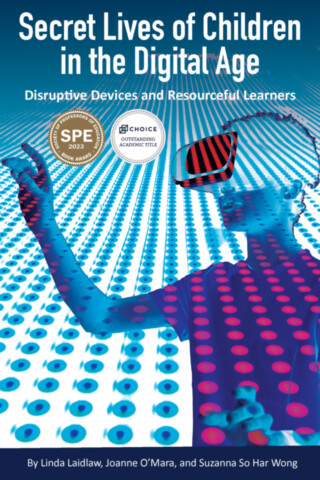
E-books are now distributed via VitalSource
VitalSource offer a more seamless way to access the ebook, and add some great new features including text-to-voice. You own your ebook for life, it is simply hosted on the vendor website, working much like Kindle and Nook. Click here to see more detailed information on this process.
Library E-Books
We are signed up with aggregators who resell networkable e-book editions of our titles to academic libraries. These editions, priced at par with simultaneous hardcover editions of our titles, are not available direct from Stylus.
These aggregators offer a variety of plans to libraries, such as simultaneous access by multiple library patrons, and access to portions of titles at a fraction of list price under what is commonly referred to as a "patron-driven demand" model.
Secret Lives of Children in the Digital Age: Disruptive Devices and Resourceful Learners offers an examination of the impact on children, their families and their teachers, as digital technologies and new literacy practices have rapidly transformed how children learn, play and communicate. While ease of access to enormous knowledge bases presents many benefits and advantages, mobile screen technologies are often perceived by parents and teachers as disruptive and worrisome. Developed from a wide range of the authors’ research over the past decade to an examination of remote learning during the COVID 19 pandemic, this book posits that while teachers, parents and governments are focused on protecting children, what is often neglected is children’s own agency and capacity to engage with mobile technologies in ways that support them in pursuing their own interests, pleasures and learning. This text works to disrupt boundaries in research, policy and practice, between home and school, and across virtual and actual worlds, positioning children as both users of media texts and coproducers of digitally mediated knowledge, with peers, family and teachers. Secret Lives of Children in the Digital Age brings together over a decade of shared research, conversations, writing and friendships across diverse geographies. Over the past decade, digital technologies have rapidly transformed how children learn, play and communicate. Tablet devices such as iPads are now ubiquitous in the lives of many children. Such devices are easy to use and provide multimodal options (i.e. operable via touch, speech, and icons, as well as conventional text). Users do not need to be conventionally literate to have access to powerful search engines, social media platforms, a range of ‘apps’ and games, or to be able to share their own creations on publication venues such as YouTube, TikTok and more. While such ease of access can present many benefits and advantages when positioned in relation to children’s use, but this access is not without concern, since mobile screen technologies are often perceived by parents and teachers as disruptive and worrisome, with popular media ramping up fears via publication of sensational articles.Secret Lives of Children in the Digital Age contributes to research on digital literacies, and offers a pedagogical examination of digital possibilities for bringing playfulness and innovation into learning.Perfect for courses such as: Introduction to Literacy Research | Qualitative Research Methods | Early Literacy | Research Methods in Language and Literacy | Introduction to Qualitative Research | New and Digital Literacies | Digital Media Education | Theories of Language and Literacy
More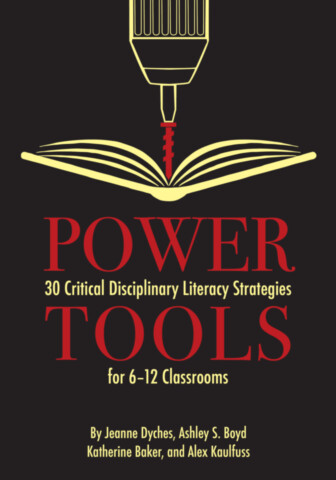
E-books are now distributed via VitalSource
VitalSource offer a more seamless way to access the ebook, and add some great new features including text-to-voice. You own your ebook for life, it is simply hosted on the vendor website, working much like Kindle and Nook. Click here to see more detailed information on this process.
Library E-Books
We are signed up with aggregators who resell networkable e-book editions of our titles to academic libraries. These editions, priced at par with simultaneous hardcover editions of our titles, are not available direct from Stylus.
These aggregators offer a variety of plans to libraries, such as simultaneous access by multiple library patrons, and access to portions of titles at a fraction of list price under what is commonly referred to as a "patron-driven demand" model.
Virtually all national standards now require students and teachers to understand the particulars of disciplinary literacy. But recently emerging scholarship suggests that disciplinary literacy is, by itself, an incomplete and potentially problematic approach to secondary literacy instruction. By asking students to “think like” or even “be like” experts, students may receive implicit messaging about whose knowledge is—and isn’t—valued. Critical disciplinary literacy (CDL) creates space for, and highlights connections between, critical literacies and disciplinary literacies. CDL acknowledges disciplines as unique communities with their own specialized (and often exclusionary) skills, norms, practices, and discourses, but deviates from conventional applications of disciplinary literacy by responding to the ways in which power systems and the analytic skills needed to understand them work differently based on the disciplines at hand. A CDL instructional approach acknowledges that applying the critical literacy skills of “reading the word and the world” to understand the power dynamics of vaccine distributions requires a different skill set and strategy approach than looking at textual representations of masculinity in Romeo and Juliet.Written by a team of educators with over 70 combined years of classroom experience, Power Tools: 30 Critical Disciplinary Literacy Strategies for 6–12 Classrooms offers readers research-based, multidisciplinary, ready-to-implement disciplinary literacy strategies from critical literacy lenses. The book sets itself apart from other strategy textbooks by offering creative strategy implementation that calls attention to power systems. Educators can learn, for example, how they might employ read-alouds to explore the global refugee crisis, or use the exit ticket strategy to help students reflect on the relationship between race and COVID statistics/experiences.Power Tools: 30 Critical Disciplinary Literacy Strategies for 6–12 Classrooms provides standards-aligned lessons that both challenge and extend traditional engagement practices to build a more just world. Each chapter includes:An overview of each strategy, situated within the research of best practices;Two disciplinary examples for each CDL strategy (e.g., an example of a CDL think-aloud in seventh grade math and tenth grade ELA classroom). Chapters provide resources such as examples of student work, discussion prompts, dialogue between teacher and students, and reprintables;Ideas for addressing resistance to CDL instruction.Preservice and in-service teachers, as well as teacher educators and researchers, looking to do and support justice-oriented work in disciplinary spaces will find value in the book.Power Tools is an ideal text to implement in courses such as Disciplinary Literacy, Secondary Literacy, Content Area Literacy, Methods/Strategies for Teaching Social Justice, Multicultural Education, ELA methods, Science methods, Social Studies methods, and Mathematics methods.
More
E-books are now distributed via VitalSource
VitalSource offer a more seamless way to access the ebook, and add some great new features including text-to-voice. You own your ebook for life, it is simply hosted on the vendor website, working much like Kindle and Nook. Click here to see more detailed information on this process.
Writing as Artistry: EdD Students Learning to Write as Scholarly Practitioners is a timely guidebook that supports EdD students’ scholarly writing development while honoring and amplifying their rich practitioner knowledge and wisdom. EdD students are educational leaders and working professionals transitioning from expert-practitioners to scholarly practitioners who aim to positively transform the lives of students and communities. This resource addresses the significant need for mastering scholarly writing skills required for EdD students’ successful degree completion and real-life impact.The book’s conceptual approach frames scholarly writing as artistry. This perspective recognizes the work of practitioners as a deeply human and experiential process of solving problems of practice by drawing on prior knowledge and exploring new methods to improve practice. This view champions the idea that practitioners’ professional knowledge and rich prior experience are essential assets and that their insider knowledge is a necessary and key condition for rigorous practitioner inquiry. The authors adopt a critical stance that rejects the dominant notion of technical rationality, which historically views researchers as scholars and practitioners as mere “doers,” arguing instead that building successful experiences for EdD students requires and respects practitioners’ professional knowledge.The guidebook offers a scaffolded, practical approach to scholarly writing, aiming to guide the reader toward a practice-focused lens, provides practical tools for fostering scholarly writing, and builds students’ confidence as writers. It is centrally focused on developing practice-centered dissertations and culminating projects that align with professional-practice degrees.To support students throughout the process, the book provides a robust repertoire of writing approaches and strategies. It offers guidance on prewriting techniques for capturing initial ideas and helps students in effectively connecting their ideas with others. Critical to this artistic approach is the development of a unique writer’s voice and positionality, often through the use of reflexivity. The book includes comprehensive practical tools for navigating the often-challenging mechanics of scholarly work, detailing writing feedback and revision strategies, and including a range of templates and clear examples of student work. Furthermore, the guide provides essential advice for leveraging support structures, such as engaging with multiple mentors and critical friends. The guide also prepares students for diverse project types, including individual, collaborative, and alternative dissertation projects.Ultimately, mastering these skills is a critical way to support students in their work beyond graduation. The ability to write clear, scholarly reports is essential, as the skills learned must transfer from the Dissertation-in-Practice experience to the student's world of practice, thus ensuring real-world impact by enhancing leaders’ capacity to implement evidence-based solutions to complex problems.
More
E-books are now distributed via VitalSource
VitalSource offer a more seamless way to access the ebook, and add some great new features including text-to-voice. You own your ebook for life, it is simply hosted on the vendor website, working much like Kindle and Nook. Click here to see more detailed information on this process.
Multi-Tiered Systems of Support (MTSS) is an important addition to a long list of initiatives designed to ensure educational equity for all students. Veteran educators will recognize many MTSS strategies as practices they already use, while others may feel uncertain or overwhelmed by yet another framework. This book bridges that gap—grounding MTSS in authentic classroom experience and practical wisdom.Through vivid, real-life stories, the authors illuminate both the complexity and the humanity of school-based work. Drawing on decades of experience—as a classroom teacher and as a school counselor/psychologist—their narratives span from 1982 to the present day, including insights from K–12 settings and university teaching. Each chapter presents a compelling case study highlighting student and classroom engagement across grade levels. These stories invite reflection and dialogue around research-based best practices and educational theory, with each chapter concluding in a transparent explanation of the authors’ professional thinking.Readers will trace the evolution of educational practice over time—from an era when Culturally Responsive Pedagogy was rarely discussed to today’s emphasis on inclusive, socially-constructed learning environments. The book chronicles the profession’s broader shift from behaviorism to social constructivism and demonstrates how that journey informs effective MTSS implementation.The case studies illustrate how culturally responsive practices, data-informed decision making, and authentic relationships with students create the conditions where academic growth, positive behavior, and social-emotional wellness intersect. Universal (Tier I), Targeted (Tier II), and Intensive (Tier III) supports—across academics, behavior, and social-emotional learning—are woven seamlessly throughout.Ideal as an introduction to both the theory and practical application of MTSS, this book offers clarity, compassion, and hard-earned insight. It is designed to spark meaningful discussion in teacher preparation programs, professional learning communities, school buildings, and district leadership teams.Perfect for courses such as: Positive Behavior Supports; Role and Function of a School Psychologist: Positive Behavior Supports (Practicum); Crisis, Trauma Response, and Interventions; Academic Assessment & Intervention; Community, Family, and School Collaboration; Curriculum and Inquiry in Public Schools; Fundamentals of Teaching; Access to Learning in a Pluralistic Society; Teaching Emergent Bilingual Students and Students with Disabilities
More
E-books are now distributed via VitalSource
VitalSource offer a more seamless way to access the ebook, and add some great new features including text-to-voice. You own your ebook for life, it is simply hosted on the vendor website, working much like Kindle and Nook. Click here to see more detailed information on this process.
In the challenging world of doctoral studies, where less than 5% of the U.S. population holds a doctorate degree, support and guidance are crucial for success. From ABD to PhD and EdD: Navigating the Final Stretch of Your Doctoral Journey offers a unique and powerful approach to completing your doctoral degree through the often-overlooked strategy of peer mentoring/coaching groups. Drawing from years of experience mentoring doctoral students at prestigious institutions, Dr. Vickie E. Lake presents a comprehensive guide for both faculty and students. This book addresses the critical gap in support that many doctoral candidates face after completing their coursework, a period when guidance is most needed but often least available. From ABD to PhD and EdD is divided into three essential chapters:Doctoral Group Mentoring/Coaching: Learn the fundamentals of establishing and maintaining effective peer support groups. Understand the difference between mentoring and coaching, and how to leverage both for maximum benefit. Strategies for Success: Discover proven techniques for tackling each milestone of your doctoral journey, from comprehensive exams to the dissertation defense. This chapter offers practical advice on pre-writing strategies, time management, and overcoming common obstacles. Resources for Completion: Navigate the often-confusing world of university resources. Learn how to effectively utilize writing centers, librarians, graduate colleges, and professional organizations to support your research and writing process. This book is unique in its dual focus on both faculty and student perspectives. For faculty, it provides a roadmap for establishing and guiding doctoral support groups, addressing the challenges of workload balance and institutional recognition. For students, it offers a lifeline of peer support and practical strategies, especially valuable in an era of declining tenure-track positions and increasing pressure on completion times. From ABD to PhD and EdD doesn't shy away from addressing the current challenges in higher education, including the looming "enrollment cliff" and the decrease in tenure-earning faculty. Instead, it equips readers with the tools to navigate these changing landscapes successfully. Whether you're a doctoral student feeling isolated in your research, a faculty member looking to better support your advisees, or a university administrator aiming to improve completion rates, this book offers invaluable insights. It emphasizes the power of collaboration over competition, showing how peer support can transform the often solitary doctoral journey into a shared path to success. With its blend of personal anecdotes, research-based strategies, and practical advice, From ABD to PhD and EdD is more than just a guide—it's a call to action for a more supportive and effective doctoral education system. By fostering a culture of peer mentoring/coaching, this book aims to not only increase doctoral completion rates but also to cultivate a new generation of scholars equipped to support and guide others. Don't let the challenges of doctoral studies overwhelm you. Discover the power of peer support and expert guidance with From ABD to PhD and EdD – your roadmap to achieving your doctorate and beyond.
More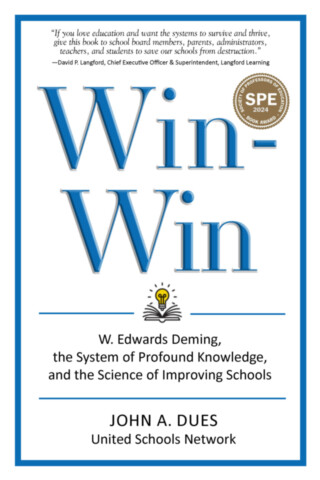
E-books are now distributed via VitalSource
VitalSource offer a more seamless way to access the ebook, and add some great new features including text-to-voice. You own your ebook for life, it is simply hosted on the vendor website, working much like Kindle and Nook. Click here to see more detailed information on this process.
Library E-Books
We are signed up with aggregators who resell networkable e-book editions of our titles to academic libraries. These editions, priced at par with simultaneous hardcover editions of our titles, are not available direct from Stylus.
These aggregators offer a variety of plans to libraries, such as simultaneous access by multiple library patrons, and access to portions of titles at a fraction of list price under what is commonly referred to as a "patron-driven demand" model.
Win-Win: W. Edwards Deming, the System of Profound Knowledge, and the Science of Improving Schools is for systems leaders who lead our country’s school districts, charter management organizations, and educational nonprofits and government agencies, as well as for those who train these system leaders in our graduate schools of education. The strategies for school improvement detailed in this book are based on the theories of W. Edwards Deming, who was known as the father of the quality movement and was hugely influential in post-WWII Japan. He is most well-known for his theories of management. Win-Win offers real-world strategies to education leaders of improvement, based on Demings’ System of Profound Knowledge. A leader of improvement does not need to be expert in the four components of profound knowledge, but they do need to understand the basic theory, their interconnectedness, and why they are necessary for these efforts. Win-Win provides this basic understanding. This book equips the reader with the knowledge and skills needed to harness the power of the System of Profound Knowledge to improve the performance of schools systems, students, and teachers. It can be used in a variety of classrooms in Colleges of Education, and it is the perfect teaching tool in professional development efforts.Perfect for courses such as: Organizational Change; Strategies of Educational Leadership; School/District Improvement Using Data Analysis; Supervision Theory and Practice; Theory, Research, & Leadership; Transformational Systems Leadership; Philosophical and Theoretical Foundations of Leadership; The Philosophy of Scientific Knowledge; Systemic Educational Reform; Applied Improvement Science Investigations
More
E-books are now distributed via VitalSource
VitalSource offer a more seamless way to access the ebook, and add some great new features including text-to-voice. You own your ebook for life, it is simply hosted on the vendor website, working much like Kindle and Nook. Click here to see more detailed information on this process.
Library E-Books
We are signed up with aggregators who resell networkable e-book editions of our titles to academic libraries. These editions, priced at par with simultaneous hardcover editions of our titles, are not available direct from Stylus.
These aggregators offer a variety of plans to libraries, such as simultaneous access by multiple library patrons, and access to portions of titles at a fraction of list price under what is commonly referred to as a "patron-driven demand" model.
As a genre, science fiction is uniquely suited for highlighting and modeling the basic tenets of critical pedagogy, that branch of educational philosophy and theory devoted equally to 1) exposing the hidden power structures embedded in educational practice and 2) articulating equitable and sustainable alternatives. The science fiction novum – that is, the technological or scientific newness found within the text – serves as a catalyst not only within the textual universe but also, potentially, within the universe of the reader. New questions arise. Previously hidden beliefs come to light. Tacit assumptions are exposed. The unfamiliar nova of science-fiction can lead to new interrogations of our own all-too familiar surroundings, causing us to see our previously unquestioned worlds in a new way. These new understandings are at the heart of critical pedagogy. The learning spaces within science fiction texts can expose the fault lines within the educational structures of the real world. Questions about what it means to be human, about the proper limits of technological power, or about the relationships and obligations of one species to another have profound implications for 21st century educators and learners, particularly those who are interested in creating just and equitable learning spaces. Learning Space: Exploring Critical Pedagogy through Science Fiction draws on popular science fiction stories to provide current and future educators with the language, concepts, vocabulary, and practices to cast a critical lens upon their own learning spaces and their own pedagogical practices. For example, a critical examination of the way that Yoda trains Luke Skywalker in The Empire Strikes Back reveals a great deal about the insidious nature of deficit thinking, assuming that students learn best when they “empty their minds” and remain “passive.” The assumed hierarchical power structure between teacher and student, and the assumed relationship between learners and the knowledge with which they are supposed to be filled – all of these are called into question when viewed through a critical lens. The more we recognize the injustice in Yoda’s pedagogy, the more we might begin to see it in our own. Similarly, Isaac Asimov’s classic Foundation trilogy imagines a world in which mathematical modeling and statistical computation are used not only to predict what people might do but instead to determine what they should do. This kind of algorithmic determinism is unfortunately common in contemporary education, and yet far too few educators and learners recognize just how much of their own agency has been given over to the machines. By highlighting the algorithmic inequities in the world of Asimov’s text, we begin to recognize similar inequities at play in our own world. Ultimately, this book uses science fiction to highlight educational inequities in such wide-ranging topics as standard English, literary canons, machine learning, notions of academic dishonesty, epistemicide, inequitable school discipline, and more. More importantly, however, it provides a framework for moving forward, giving current and future educators the critical knowledge and skills both to recognize pedagogical injustice and to create viable, just, and sustainable alternatives.
More
Writing a Philosophy Statement: An Educator’s Workbook, Second Edition provides a step-by-step process for writing a clear and concise philosophy of education statement based on a reader’s beliefs about their approaches to teaching. This unique book provides information about five key philosophical approaches to teaching, using a range of activities for preservice and experienced teachers to examine classroom dilemmas. The workbook explores a variety of philosophical stances, including: Five philosophical approaches to teaching Strategies for identifying your approach to teaching Strategies for applying your approach in a written philosophy of education statement Practical uses for your philosophy statement Example Professional Development Activities include Case Studies; Check Lists; Sample Philosophy Statements; Tips and Tools for Writing a Philosophy Statement; and Using your Statement in Job Interviews and Graduate School Applications. A key feature of this book is the highly researched two-dimensional Philosophy of Education Scale, helpful in identifying an individual’s most and least likely approaches to teaching. The Scale includes a range of teaching practices that can prompt readers’ deep understanding of the sources that impact their approach decisions. This book offers educational leaders a much-needed pathway for collaborative communication about how teachers can impact school climate, change and attainment. Writing a Philosophy Statement is an essential tool for undergraduate and graduate students of education who are preparing for a career in teaching and for the academic rigors that they will encounter.Perfect for courses such as: Introduction to Education; Analysis of Instruction; Curriculum and Instruction; Research on Curriculum and Instruction; School Practice and Change; Philosophy of Education; Leadership and Change; Leadership and Collaboration; Principles of Leadership; Foundations of Education; History of Education; Senior Seminar; Student Teaching; Field Experience; and Methods of Instruction
More
E-books are now distributed via VitalSource
VitalSource offer a more seamless way to access the ebook, and add some great new features including text-to-voice. You own your ebook for life, it is simply hosted on the vendor website, working much like Kindle and Nook. Click here to see more detailed information on this process.
“If you want to achieve tenure, you should know a bit more about what it means and why it exists, and its benefits. All too often, even faculty don’t understand why tenure is important."Thus begins the Preface of the first edition of Candid Advice for New Faculty Members, the most comprehensive “how to” guide for graduate students, post-docs, and junior faculty across a variety of academic disciplines. Now, in the Second Edition of this award-winning volume, Marybeth Gasman has added a variety of new topics, including teaching in a post-COVID environment, the use of Artificial Intelligence (AI) in writing and research, new views of DEI, navigating our new politic world, managing your social media and many other important and timely topics. Drawing upon her own extensive experiences and that of many colleagues, Gasman provides you with an incredibly valuable tool for attaining tenure and for the things that you should do to advance your academic career. She provides practical (and sometimes humorous) advice about a range of topics, including:negotiating job offersplanning a research agendaimproving your teaching skillsmanaging serviceadvising studentsapplying for research grantsachieving life/work balancemanaging academic politicsIn addition to this valuable career advice, Gasman provides a peek behind the academy’s curtain by painting a vivid picture of the inner workings of the academy and all of its players. Candid Advice for New Faculty Members is required reading for every newly-minted faculty member, regardless of academic discipline. The wisdom provided in this volume will prove to be invaluable to your future career.Perfect for courses such as: Faculty and Academic Affairs, Seminar on Faculty Life, Doctoral seminars across various disciplines, College and University Teaching, Graduate Student Research Seminars, Professional Development Seminars
More