
Search results for using data
E-books are now distributed via VitalSource
VitalSource offer a more seamless way to access the ebook, and add some great new features including text-to-voice. You own your ebook for life, it is simply hosted on the vendor website, working much like Kindle and Nook. Click here to see more detailed information on this process.
Library E-Books
We are signed up with aggregators who resell networkable e-book editions of our titles to academic libraries. These editions, priced at par with simultaneous hardcover editions of our titles, are not available direct from Stylus.
These aggregators offer a variety of plans to libraries, such as simultaneous access by multiple library patrons, and access to portions of titles at a fraction of list price under what is commonly referred to as a "patron-driven demand" model.
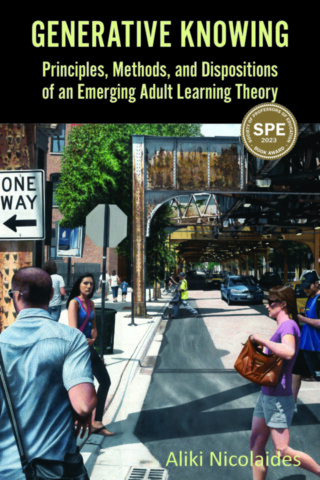
Generative Knowing explores the mystery of learning from the unknown in ways that reveal that learning is a dynamic phenomenon, encompassing both personal and societal contexts. Dewey defines learning in terms of experience, reflection, continuity, and interactivity. When learning happens, it eventually solidifies into reliable truths that become a shortcut for taking action or making decisions—thus a habit of learning is formed and becomes rigid. Generative knowing is an emerging theory of adult learning that seeks the not-yet-foreknown potential that waits to be uncovered in the richness of experience. The book delivers vignettes of different lived experiences of being and becoming, signaling multiple ways in which a person shapes and transcends traditional conceptions of self-other binary activating the power to respond to the ongoing complex evolution of self and society. Generative Knowing seeks to accomplish four goals: to offer a unique exploration of learning, positioned as response-ability that illuminates the relatedness of learning and complex, ambiguous, unsolvable challenges that are recognizable in society as social challenges (i.e. forced migration)to present and distinguish an emerging theory of adult learning, generative knowing. Generative knowing emerged as a distinct learning disposition at the intersections of personal meaning making capacity (developmental psychology) encountering the characteristics of rising ambiguity (complexity sciences) and the lived experience of undergoing experienceto make visible and help others make the connections between generative knowing at a personal level and the complex, ambiguous unsolvable challenges in today’s society, andto provide illustrations of what generative knowing entails, how it shapes personal and societal transformation and how that may support educators, facilitator activists and change activists to make space for generative knowing when complex challenges call for both personal and societal transformations. Adult education as a field of practice is presently grappling with how adults learn in a world being recomposed by a global pandemic. Generative knowing—defined as ways of being and becoming that creatively activate potential—restores many rhythms of learning, helping readers gain fresh perspectives on how learning emerges from the unknown. The vital and personal stories in this book guide readers to walk in the territory of the unknown and to pay attention to the sensations of entanglements of self with multiple societal forces as a new way of learning. Perfect for courses such as: Adult Learning Theory │ Adult Learning Theory & Praxis │ Adult Development │ Transformative Learning │ Phenomenology │ Narrative Inquiry │ New Materialism │ Creative Research Methodologies
More
E-books are now distributed via VitalSource
VitalSource offer a more seamless way to access the ebook, and add some great new features including text-to-voice. You own your ebook for life, it is simply hosted on the vendor website, working much like Kindle and Nook. Click here to see more detailed information on this process.
Library E-Books
We are signed up with aggregators who resell networkable e-book editions of our titles to academic libraries. These editions, priced at par with simultaneous hardcover editions of our titles, are not available direct from Stylus.
These aggregators offer a variety of plans to libraries, such as simultaneous access by multiple library patrons, and access to portions of titles at a fraction of list price under what is commonly referred to as a "patron-driven demand" model.
Ubuntu Pedagogy is a compelling narrative born from the author's lived experience and extensive teaching in the United States. The book chronicles her journey to Southern Africa, where she sought to understand what it means to "teach in the spirit of ubuntu." The book explores the transformative power of Ubuntu, an ancient African philosophy rooted in human interconnectedness and mutual care. It demonstrates how the principles of Ubuntu can be applied to create an engaging, inclusive, and effective learning environment. This work blends personal stories, practical examples, and a conceptual framework of Ubuntu pedagogy, illustrating its profound impact on both teaching practices and student achievement.Part OneIn this section, the author recounts her challenging first year of teaching within a large urban public school district. Through reflection, she recognizes how the traumatic events of 9/11 impacted how she showed up as a teacher and underscored the importance of reflective practice, which became a cornerstone of her teaching philosophy. Through these reflections, she emphasizes the need for educators to engage in self-examination and continuous learning to navigate and overcome initial challenges effectively.Part TwoIn part two, the author unpacks the essence of teaching in the spirit of Ubuntu, focusing on its six core components. Central to this approach is understanding oneself and building positive relationships with others. This section explores creating unity among students from a place of love and care and the importance of using evidence-based practices to cater to diverse learning needs. It provides actionable insights into fostering a classroom environment rooted in compassion and mutual respect.Part ThreeThis part of the book transports readers to the author's time working with children and teachers in the rural and inner-city schools of Botswana and Namibia. As an outsider, she observed and documented numerous instances of Ubuntu in action which highlighted the profound sense of community and support inherent in the Ubuntu philosophy, offering valuable lessons for educators worldwide.Part FourThis section examines the role of Ubuntu in creating a harmonious learning environment through a compassionate approach to discipline. It discusses how Ubuntu-based discipline strategies can foster respect, responsibility, and positive student behavior, enhancing the classroom atmosphere.Part FiveIn part five, the author distinguishes between cultural competence and Ubuntu competence, elaborating on what it means to be a truly competent teacher. Drawing from real-life experiences of educators in inner-city schools across the United States, this section highlights the importance of embracing diverse cultural perspectives and fostering an inclusive learning environment.Part SixThis section explores the intrinsic link between who educators are as individuals and how they teach. It provides a step-by-step guide for educators to develop and articulate their teaching philosophy, emphasizing the importance of authenticity and self-awareness in fostering meaningful connections with students.Part SevenThe book's final section focuses on practical applications of Ubuntu principles to cultivate good character among students using proverbs, aphorisms, and adinkra symbols as tools to promote ethical decision-making and positive behavior. This chapter offers concrete strategies for educators to help students develop moral integrity and make sound choices. Ubuntu Pedagogy is more than a pedagogical guide; it is a testament to the power of human connection and compassionate teaching. By integrating Ubuntu into educational practices, the author will inspire educators to create nurturing, inclusive, and effective learning environments that honor the humanity of every student.
More
E-books are now distributed via VitalSource
VitalSource offer a more seamless way to access the ebook, and add some great new features including text-to-voice. You own your ebook for life, it is simply hosted on the vendor website, working much like Kindle and Nook. Click here to see more detailed information on this process.
We Are Children of the Corn/Somos Hija/o/xs del Maíz: Husks of Hope, Resistance, and Latina/o/x Educational Success is a collection of empirical studies that explores the complex and multi-faceted journeys of Latina/o/x students. With maíz (corn) as the guiding symbol, this book incorporates indigenous teachings and knowledge to highlight the pillars and resources of support—referred to as “husks”—that nurture Latina/o/x students' growth, resilience, and achievement as they navigate the U.S. schooling system. This anthology offers examples that underscore the role of schools, families, and communities in shaping Latina/o/x students’ trajectories from pre-K to higher education.The volume builds upon the parent book, The Chicana/o/x Dream, by examining the intersectional experiences of Latina/o/x students in varied educational contexts, the resources they access within educational spaces, and their familial and community support systems. Using the Framework of Atravesada/o/xs Nepantleando (FAN), the authors in this anthology illustrate how Latina/o/x students become nepantlera/os—change agents who create and foster diverse cultural spaces and advocate for transformation. The book is organized around three themes: planting seeds to foster college access, cultivating students to foster college readiness, and harvesting to support college completion. Through these themes, the volume aims to empower educators, researchers, and policymakers to foster diverse, equitable, and inclusive school and community spaces that amplify Latina/o/x student voice and center their experiences.We Are Children of the Corn/Somos Hija/o/xs del Maíz is a valuable contribution to the scholarship on the Latina/o/x student experience in the United States. It is the perfect text for a variety of courses in Ethnic Studies and Cultural Studies.
More
E-books are now distributed via VitalSource
VitalSource offer a more seamless way to access the ebook, and add some great new features including text-to-voice. You own your ebook for life, it is simply hosted on the vendor website, working much like Kindle and Nook. Click here to see more detailed information on this process.
Higher education in the United States appears to be in trouble. Much of the American public sees colleges and universities as disengaged, elitist, not open to new or alternative ideas, something to be escaped—not to mention expensive, unproductive, out of touch, unaccountable, oblivious to their own failings, and increasingly irrelevant. There are many in our society who are promoting a vision of higher education that uses these perceptions to call into question the role of colleges and universities in our democracy. But on the author’s campus of Augsburg University and on campuses across the country, in our neighborhoods, and wherever our alumni live and work, the author sees just the opposite. He sees students who view education as a gift that carries with it a responsibility to give back. He sees faculty and staff committed to the vision that students receive a three-dimensional education—an education that equips them to make a living, make a life, and build community. He sees alumni and neighbors who care about each other and the world, and who are working each and every day to support a just and inclusive democracy. For those of us who believe in the public purposes of higher education, we live in the tension between negative perceptions of our worth and the reality of what we do everyday on the ground to support social mobility, economic well-being, and a robust common life. In the context of that tension, Paul Pribbenow believes that there is a moral claim on those of us who lead colleges and universities to step forward with an alternative story. At a time when higher education is often characterized as a private, transactional good, we are called to articulate a vision that challenges the prevailing narrative and makes a moral case for higher education as an engine for a robust, pluralistic democracy. In more than two decades as a university president, he has sought to advance that case. To illustrate how, he will use the story of Jacob wrestling with the angel as depicted in the book of Genesis. A reminder of how the story unfolds. The same night he got up and took his two wives, his two maids, and his eleven children, and crossed the ford of the Jabbok. He took them and sent them across the stream, and likewise everything that he had. Jacob was left alone; and a man wrestled with him until daybreak. When the man saw that he did not prevail against Jacob, he struck him on the hip socket; and Jacob’s hip was put out of joint as he wrestled with him. Then he said, “Let me go, for the day is breaking.” But Jacob said, “I will not let you go, unless you bless me.” So he said to him, “What is your name?” And he said, “Jacob.” Then the man said, “You shall no longer be called Jacob, but Israel, for you have striven with God and with humans, and have prevailed.” Then Jacob asked him, “Please tell me your name.” But he said, “Why is it that you ask my name?” And there he blessed him. So Jacob called the place Peniel, saying, “For I have seen God face to face, and yet my life is preserved.” The sun rose upon him as he passed Penuel, limping because of his hip. Pribbenow’s argument, and sincere belief, is that higher education is about learning to wrestle with ideas, values, and relationships that demand our attention. He believes that students must learn to see the topics they wrestle with not as obstacles to overcome or defeat, but as “angels” that demand respect and thoughtful attention. The purpose of this vision of education is like it was for Jacob: to be named and claimed as those called to meaning and purpose in the world. And like Jacob who became Israel, wrestling with angels leaves students wounded, vulnerable, humbled—and also equipped for the work they are called to do - to thrive as neighbors, professionals, and citizens.Perfect for courses such as: Ethics and Higher Education; Higher Education Leadership; Education and Democracy; Leading Faith-Based Colleges and Universities; The State of Higher Education in America; Student Success and Academic Belonging
More
E-books are now distributed via VitalSource
VitalSource offer a more seamless way to access the ebook, and add some great new features including text-to-voice. You own your ebook for life, it is simply hosted on the vendor website, working much like Kindle and Nook. Click here to see more detailed information on this process.
Attaining a Just Future: Disability Studies Examines Curriculum and Transition for Students Labeled with Intellectual Disability is a critical volume in the area of Disability Studies in Education that investigates current trends in curricular access for 14- to 21-year-old students with intellectual disabilities (ID), offering revelatory insights into how students with ID are understood and taught in U.S. schools. By analyzing the state of curricular access for students with ID through a myriad of perspectives, this book reveals that ideological barriers, educational policies, and neoliberal priorities substantially contribute to ongoing segregation and unequal outcomes for people with ID in U.S. schools and society. It examines how commonly used school curricular practices play a role in sustaining segregation and negative outcomes experienced by people with ID labels. The book centers the experiences of six young adults with ID labels, who, along with their families, were qualitatively interviewed with the goal of understanding the complexities of curriculum access and future planning from a first-person perspective. In addition, professionals who work with young adults with ID labels were also interviewed, including transition program directors, teachers, child study team members, administrators, a curriculum specialist, a transition advocate and a state-level employee. A mixed-methods survey was disseminated, which received 77 responses from teachers, administrators, and transition specialists regarding their usage and understanding of curriculum for their students. Finally, an analysis of publicly available documents from the websites of five commonly used published curricula targeted to students with significant disabilities was conducted. The first chapter in the book offers the readers information about the six students centered in this project and then provides contextual policy frameworks, a review of literature, and an overview of the intersectional theoretical approach that guides the analysis throughout the book. Chapter two considers the role that the Least Restrictive Environment policy plays in concretizing tracking in alignment to curricular opportunities for students with ID. Chapter three digs into the kinds of content curricular publishing companies target to high school and transition-aged students with ID, professional beliefs about curriculum for students with ID, and the learning goals students and families have for themselves. Chapter four unpacks the concept of “independence” within special education and how it becomes a justification for funneling students away from academic learning. Chapter five evaluates both segregative and inclusive practices found in 18-21 transition program planning, curricula and programming. Finally, chapter six highlights best-practices, advocacy tactics, and teaching approaches that can lead to improved outcomes for young adults with ID labels. This book reveals that the curricular choices made on behalf of many young adults with ID are often not aligned with their desires and are often based upon ideologies about intellectual functioning itself, rather than being based on the individual interests, cultural backgrounds, potential, skills, or ambitions of the young person. Ultimately, the book offers educators, administrators, advocates, disabled people, and families tools and ways of thinking that can lead to more just and inclusive futures for transition-aged students with ID labels.Perfect for courses such as: Foundations of Inclusive Education; Foundations in Curriculum Studies; Special Education and Educational Leadership; Inclusion and Educational Leadership; Special Education Law and Policy; Pedagogy in Secondary Inclusive Education; Disability Studies in Education; Foundations and Philosophies in Inclusive Education; Issues, Policies, and Trends in Inclusive Education; Inclusive Methods for Middle and Secondary Schools
More
E-books are now distributed via VitalSource
VitalSource offer a more seamless way to access the ebook, and add some great new features including text-to-voice. You own your ebook for life, it is simply hosted on the vendor website, working much like Kindle and Nook. Click here to see more detailed information on this process.
How do we create lasting systemic change in institutions designed to reproduce the status quo? Some might answer this question with responses related to mission, vision, resource allocation and investment, and talent. However, the path to creating sustainable changes in educational institutions is often obstructed by policy, institutional inertia, and ingrained systemic barriers. Work is sometimes reduced to a checkbox exercise aimed at compliance, rather than genuine transformation, leading to benefits only for groups traditionally supported by the established structures. For those striving for change, a sense of powerlessness can dominate, as structural constraints limit their agency and dilute their impact. Recognizing these realities, there can be no simple recipe or single formula that guarantees lasting change, particularly transformational change that shifts paradigms in ways that advance equity and inclusion. Instead of a formula, Systems Transformation for Equity in Education: Principles for Organizational Change introduces 6 key principles of organizational change. In order to engage in complex systems transformation for equity, we must: 1. know the contexts that surround systems change; 2. develop cohesive project plans and find appropriate funding for these plans; 3. understand the centrality of leadership; 4. work collectively towards equity through relationality, respect, and mutuality; 5. reflect upon success and challenges; and 6. ensure the institutionalization of systems transformation. The book is structured first to provide a broad overview of each principle, then to illustrate each using a case study of program change. Chapter One focuses on the principle of knowing the complex contexts that surround systems change. In this chapter, the book introduces the origins, objectives, complexities, diverse stakeholders and outcomes of the case study as well as contextual factors that should be considered in launching systems transformation. Chapter Two focuses on ensuring alignment in the design, development and enactment of transformative projects, including establishing an initial vision, using data to inform decision making and finding appropriate funding sources. Chapter Three focuses on the principle that Leadership matters in systems transformation for equity. This chapter highlights the importance of identifying a leadership team, providing clear team members’ roles, and dividing tasks wisely. Chapter Four focuses on cultivating consensus and moving forward collectively in diverse stakeholder groups with competing priorities. Chapter Five focuses on the importance of reflecting upon success to expand the impact of systems transformation, adapting programs to stay responsive to changing contexts, and on navigating unanticipated challenges to initiative-based work. Chapter Six focuses on expanding impact and identifying ways to ensure the institutionalization of systems transformation. It addresses some key factors such as documenting and communicating the successes and challenges of the project, disseminating evaluation findings; creating a plan for when the grant funding ends, accessing new funding; identifying continuing and new stakeholders; developing ongoing products; developing collective language; and ensuring institutional buy-in. The final chapter tells the story of lessons learned from this process and what has happened to the focal program in the 2 years following the end of the grant funding, particularly given changing socio-political contexts.Perfect for courses such as: Principles of Organizational Change; Equity and Organizational Change; Foundations of Organization Change; Educational Leadership; Race, Equity, and Leading Educational Change; Education Policy Implementation
More
E-books are now distributed via VitalSource
VitalSource offer a more seamless way to access the ebook, and add some great new features including text-to-voice. You own your ebook for life, it is simply hosted on the vendor website, working much like Kindle and Nook. Click here to see more detailed information on this process.
Library E-Books
We are signed up with aggregators who resell networkable e-book editions of our titles to academic libraries. These editions, priced at par with simultaneous hardcover editions of our titles, are not available direct from Stylus.
These aggregators offer a variety of plans to libraries, such as simultaneous access by multiple library patrons, and access to portions of titles at a fraction of list price under what is commonly referred to as a "patron-driven demand" model.
Indigeneity and Decolonial Resistance is an excellent text for use in a variety of upper-division undergraduate and graduate classrooms. It is also a valuable addition to the libraries of writers and researchers interested in indigenous studies and decolonialism.
More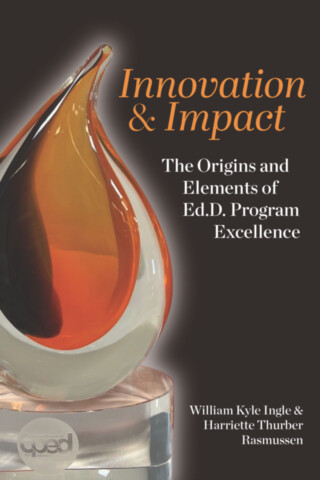
E-books are now distributed via VitalSource
VitalSource offer a more seamless way to access the ebook, and add some great new features including text-to-voice. You own your ebook for life, it is simply hosted on the vendor website, working much like Kindle and Nook. Click here to see more detailed information on this process.
Library E-Books
We are signed up with aggregators who resell networkable e-book editions of our titles to academic libraries. These editions, priced at par with simultaneous hardcover editions of our titles, are not available direct from Stylus.
These aggregators offer a variety of plans to libraries, such as simultaneous access by multiple library patrons, and access to portions of titles at a fraction of list price under what is commonly referred to as a "patron-driven demand" model.
Professional and educational associations, such as the Carnegie Project for the Education Doctorate (CPED), create and offer awards that recognize the accomplishments of individuals, programs, and institutions. In this edited book, W. Kyle Ingle and Harriette Thurber Rasmussen focus on CPED’s Program of the Year (POY) Award, examining its history, purpose, submission requirements, its committee structure, activities, and outcomes. Faculty members from CPED’s award-winning institutions have been invited to discuss their innovative programs, how these innovations were developed, how they pursue social justice, and how these innovations have been sustained since winning the award. Furthermore, the award’s role in facilitating the diffusion of innovative and effective practices among CPED member institutions is examined. The book and its chapters are framed through the lens of innovation diffusion theory. Popularized by communication theorist Everett Rogers (1967, 2003), innovation diffusion theory has spread widely across the social sciences. In his seminal work, Diffusion of Innovations, Rogers defines an innovation as “an idea, practice, or object that is perceived as new by an individual or other unit of adoption” (2003, p. 12). Innovation diffusion is the process by which an innovation spreads among the members of a social system, in this case the internal and external communities of Ed.D.-granting institutions.The book includes dual components: (1) innovative programs that drive social justice and (2) how these institutional innovations were developed and sustained. The latter component will shed light on three self-study processes related to these award-winnng programs: The process of creating the featured innovative program;The process of applying for the program of the year award; and The process of writing the journey and considering the impact of the program of the year award on their institution, including any reinvention/adaptations. Taken together, readers will examine and understand “process[es] by which alteration occurs in the structure and function of a social system” (Rogers, 1995, p. 6) in pursuit of social justice goals through programmatic innovation.Perfect for courses such as: Program Development & Assessment in Higher Education; Instructional Planning for Student Learning and Achievement; Performance Improvement; Instructional Design and Development; e-Learning Design and Development; College Teaching; Supervised Experience in Higher Education; Special Problems in Educational Leadership; Professional Projects in Higher Education; Organizational Improvement in Higher Education
More
E-books are now distributed via VitalSource
VitalSource offer a more seamless way to access the ebook, and add some great new features including text-to-voice. You own your ebook for life, it is simply hosted on the vendor website, working much like Kindle and Nook. Click here to see more detailed information on this process.
Privilege Through the Looking-Glass, Third Edition is a revised and expanded collection of essays that explore privilege and status characteristics in daily life. This collection seeks to make visible that which is often invisible. It seeks to sensitize us to things we have been taught not to see. Privilege, power, oppression, and domination operate in complex and insidious ways, impacting groups and individuals. And yet, these forces that affect our lives so deeply seem to at once operate in plain sight and lurk in the shadows, making them difficult to discern. Like water to a fish, environments are nearly impossible to perceive when we are immersed in them. This book attempts to expose our environments.With engaging and powerful writing, the contributors share their personal stories as a means of connecting the personal and the public. This volume applies an intersectional perspective to explore how race, class, gender, sexuality, education, and ableness converge, creating the basis for privilege and oppression. Privilege Through the Looking-Glass encourages readers to engage in self and social reflection and can be used in a range of courses in sociology, social work, communication, education, gender studies, and Black studies. Each chapter includes discussion questions and/or activities for further engagement, making it a perfect classroom text.
More
E-books are now distributed via VitalSource
VitalSource offer a more seamless way to access the ebook, and add some great new features including text-to-voice. You own your ebook for life, it is simply hosted on the vendor website, working much like Kindle and Nook. Click here to see more detailed information on this process.
Library E-Books
We are signed up with aggregators who resell networkable e-book editions of our titles to academic libraries. These editions, priced at par with simultaneous hardcover editions of our titles, are not available direct from Stylus.
These aggregators offer a variety of plans to libraries, such as simultaneous access by multiple library patrons, and access to portions of titles at a fraction of list price under what is commonly referred to as a "patron-driven demand" model.
Repertories of Racial Resistance: Pedagogical Dreaming in Transborder Educational Spaces explores the integral role of dreaming and imagination in pursuing educational justice. The illuminating case studies in this book highlight how youth and adults utilize Transformative Methodologies not only to generate knowledge, but also promote social change. Transformative Methodologies are approaches to research and knowledge production that explicitly: center the perspectives, experiences, and expertise of BIPOC youth and communities as essential to research challenge conventional social science frameworks that relegate communities as “objects” of inquiry, and facilitate ethnically and racially minoritized young people to leverage their educational opportunities to express their agency, imagine emancipatory futures, and embody social change. Chapters in the book demonstrate how researchers, practitioners, and youth utilize methodologies such as participatory action research, testimonials, counter narratives and critical storytelling to make sense of social inequalities and envision futures rooted in justice. This text considers the intimate relationship between youth leadership and empowerment with dreaming and imagination. The book includes case studies based in diverse contexts such as K-12 schools, community-based settings, and higher education. Moreover, the text specifically highlights how BIPOC young people leverage their imaginations as part of their efforts to advocate for justice in their communities, families, and schools. This book emphasizes the importance for researchers and practitioners to leverage youth imagination and freedom dreams in creating culturally sustaining educational settings and promoting transformative youth leadership. This volume will be of interest to graduate, postgraduate students, researchers and academics in fields such as multicultural education, critical pedagogy, youth development and qualitative and participatory methodologies. Pre-service teachers, practitioners, and libraries will also find this book useful. Perfect for courses such as: Multicultural Education, Foundations of Education, Critical Pedagogy and Education, Youth Development, Out of School Time Education, Research Methodology, Anthropology and Education, Sociology and Education, and Youth Resistance
More