

Leadership & Administration

E-books are now distributed via VitalSource
VitalSource offer a more seamless way to access the ebook, and add some great new features including text-to-voice. You own your ebook for life, it is simply hosted on the vendor website, working much like Kindle and Nook. Click here to see more detailed information on this process.
What does it mean for a school of education to advance justice and equity? Is it enough for its mission statement to include words like “justice” and “democracy,” to offer signature programs about justice, or for there to be a critical mass of scholars who write on this topic? Since its formation in 2016, Education Deans for Justice and Education (EDJE), a group of more than 400 education deans and leaders from large and small institutions, has been grappling with what it means to advance — as well as to trouble — justice and equity in and through our schools of education and education systems more broadly. Leading on the EDGE brings together ten chapters, along with an introduction and conclusion, written by deans and leaders from a diverse set of institutions across the United States. These leaders have implemented ideas that support an equity stance in their institutions using the EDJE Framework for Assessment and Transformation, an instrument designed for this purpose. As leaders of schools of education, many of us constantly ask: how can we transform our institutions in meaningful ways to foster justice and equity? What actions can we take that go beyond the essentials of revising the curriculum or diversifying our faculty, staff, and students? How can we take a holistic approach to the transformation of all aspects of our institutions, our governance structures, fundraising strategies, and external relationships with communities? We are living and working in precarious times with justice-oriented work at universities threatened at the federal level with possible serious ramifications at both public and private universities. With diversity, equity, and inclusion (DEI) programs, affirmative action measures, and equal opportunity policies under attack, university leaders committed to actions that support equity and access in their institutions require resources to support their work. Many initiatives that claim to address issues of justice and equity focus solely on curriculum and pedagogy. This Framework addresses all of the major areas in a school including admissions, hiring, development, budget priorities, community engagement, the support of faculty, staff, and students of color, as well as curriculum and pedagogical practices. The Framework was written by a large and varied group of people with great expertise and experience, who came together several times to pool their knowledge and resources. Through Leading on the EDGE, the authors tell complex and varied stories. While in some institutions, faculty quickly embraced ideas for focusing on justice and equity, other faculties were more reluctant. The stories in this volume reflect moments of vulnerability as well as strength. Authors reflect on the issues and challenges that arose from this work, how they adapted the Framework for their unique contexts and goals, how they got started, challenges they encountered, initial outcomes, how the work can be translated to other settings within the university and in other educational settings, and provide concrete strategies for their colleagues. At a time when education leaders are under attack, Leading on the EDGE provides concrete ideas and strategies for taking a stand and proclaiming a commitment to the transformative work of justice and equity in higher education. Chapters of Leading on the EDGE are conveyed in a variety of genres and styles: some are organized as case studies, others are more similar to reflective essays; some focus on assessment of the institution or school’s focus on equity and justice, while others turn their attention to how programs were implemented, including those results; some are written in a more traditional academic style while others more autobiographical, dialogical, or even artful.Perfect for courses such as: Higher Education Administration, Educational Leadership, Multicultural Education, Foundation of Education, Educational Policy, Race and Education, Research Methods, Social Justice Education, Organizational Management (in Education)
More
E-books are now distributed via VitalSource
VitalSource offer a more seamless way to access the ebook, and add some great new features including text-to-voice. You own your ebook for life, it is simply hosted on the vendor website, working much like Kindle and Nook. Click here to see more detailed information on this process.
Digital Age Leadership: Building Effective Multi-Generational Online Teaching Teams is a practical guide for educational and organizational leaders managing diverse, multi-generational teams in online environments. In today’s rapidly evolving digital landscape, understanding how to lead teams made up of Baby Boomers, Generation X, Millennials, and Generation Z is essential for success. This book provides a framework for understanding generational dynamics, adapting leadership strategies, and building collaborative, high-performing teams in online settings. Each generation brings unique strengths, communication styles, and expectations to the digital classroom, creating both challenges and opportunities for growth. Digital Age Leadership explores how these generational traits influence leadership and team dynamics, providing practical strategies for building trust, bridging gaps, and fostering an inclusive and cohesive team culture. By leveraging the strengths of each generation, leaders can cultivate an environment where all team members thrive. These strategies will empower leaders to implement lasting change within their teams and organizations, ensuring long-term success and growth in the digital age. Drawing from extensive research and real-world experience, Digital Age Leadership serves as both an academic text and a professional development resource. It includes discussion questions, team exercises, and practical scenarios for immediate use, making it ideal for individual growth, team training, and academic course adoption. These elements ensure the book is accessible to educators, administrators, and organizational leaders. The book has proven to be the ultimate resource for leaders who want to build, develop, and sustain high-performing, adaptable teams in the ever-evolving world of online education. Digital Age Leadership: Navigating Multi-Generational Online Teaching Teams will appeal to a wide range of readers. These include educational administrators and corporate leaders responsible for managing online learning and training programs. K-12 online school principals and directors, higher education program administrators, department chairs, and professional development specialists who oversee virtual teaching teams will find great value in the framework presented in the book. The book will also benefit graduate students, faculty in educational leadership and technology programs, and corporate learning leaders managing online training. It targets professionals seeking both theoretical insights and practical tools for leading multi-generational online teaching teams.Perfect for courses such as: Educational Leadership in the Digital Age; Managing Multi-Generational Teams in Higher Education; Online Teaching and Learning Strategies; Leadership in Digital Education Environments; Transformative Leadership in Online Education; Diversity, Equity, and Inclusion in Online Education; Technology Integration and Team Building in Education; Collaborative Learning in Virtual Environments; Building and Leading Remote Educational Teams; Developing Effective Online Teaching Communities
More
E-books are now distributed via VitalSource
VitalSource offer a more seamless way to access the ebook, and add some great new features including text-to-voice. You own your ebook for life, it is simply hosted on the vendor website, working much like Kindle and Nook. Click here to see more detailed information on this process.
Hidden in Plain Sight: Women in Educational Leadership is an essential resource that examines the experiences, challenges, and achievements of women leading in higher education. Written for current and aspiring women academic leaders, it provides the tools, insights, and support needed to navigate this complex terrain successfully. Hidden in Plain Sight addresses a striking paradox: while many accomplished women hold academic leadership positions, they often remain invisible within their own institutions. Despite occupying roles of authority, women leaders frequently find themselves overlooked, unrecognized, and unheard. This contradiction exposes the gap between institutional claims that leadership is gender-neutral and the reality women face daily in academic settings. Drawing on demographic data, statistical trends, and evidence-based practices, this textbook offers practical guidance grounded in real experience. Readers will find case studies, personal anecdotes, and actionable strategies for advancing in academic leadership while maintaining personal integrity and well-being. The book explores various leadership approaches and identifies common pitfalls, equipping readers with knowledge to navigate challenges effectively. Hidden in Plain Sight serves as both mirror and map—reflecting the realities women leaders experience while charting pathways forward. It empowers current leaders to advocate for themselves and their institutions while inspiring the next generation to pursue academic leadership with eyes wide open and strategies firmly in hand. This is the guidebook for women determined to lead authentically, effectively, and sustainably in higher education. The book is written about and for women in leadership positions, and for women interested in educational leadership within the academy. It will also be of interest to college, university and public libraries; individuals including scholars in the discipline; and it can serve as a critical textbook in a variety of Leadership classes in undergraduate and graduate programs.Perfect for courses such as: Women and Leadership; Higher Education Administration; Gender Studies in Education; Educational Leadership and Policy; Sociology of Higher Education; Feminist Theory and Practice; Women's Studies Capstone Seminar; Organizational Behavior in Education; Diversity and Inclusion in Higher Education; Professional Development for Graduate Students
More
E-books are now distributed via VitalSource
VitalSource offer a more seamless way to access the ebook, and add some great new features including text-to-voice. You own your ebook for life, it is simply hosted on the vendor website, working much like Kindle and Nook. Click here to see more detailed information on this process.
Learning to See School Systems: Power, Practice, and Improvement in Public Education is a volume dedicated to the goal of improving school systems. In 1513, Niccolò Machiavelli wrote The Prince to help rulers understand the realities of power. Five hundred years later, Dr. Michael R. L. Odell — educator, researcher, and amused observer of Texas school systems — offers a modern reflection for those who lead the nation’s classrooms and districts. Learning to See School Systems is both satire and system map: a handbook for anyone attempting to lead improvement in institutions designed to resist it gracefully. Across twelve chapters, it reveals how public education mirrors the politics of Florence—ambition, reform, accountability, and fortune disguised as data. Each chapter blends humor with hard truth: board relations as diplomacy, improvement plans as rituals, dashboards as illusion, crises as curriculum. Beneath the wit lies a serious purpose—to help educators see their districts as living systems, governed by patterns that Improvement Science now names but Machiavelli already understood. For teachers, principals, superintendents, and school board members alike, Learning to See School Systems is a mirror of modern schooling—ironic, affectionate, and uncomfortably accurate. Read it for laughter. Keep it for survival. Share it with anyone about to lead their first staff meeting. “He who governs schools must learn to rule hearts that believe themselves ungoverned.” — from Learning to See School SystemsPerfect for courses such as: School Improvement and Reform; School Policy; Organizational Leadership and Change
More
E-books are now distributed via VitalSource
VitalSource offer a more seamless way to access the ebook, and add some great new features including text-to-voice. You own your ebook for life, it is simply hosted on the vendor website, working much like Kindle and Nook. Click here to see more detailed information on this process.
Learning to See the University: Power, Practice, and Improvement in Academic Systems is a sharp and reflective exploration of power, policy, and survival in modern higher education. Written in the spirit of Niccolò Machiavelli’s The Prince, the book translates political realism into the everyday governance of universities, where authority operates through committees, budgets, rankings, accreditation, and carefully managed narratives rather than formal command. Neither parody nor exposé, Learning to See the University offers a clear-eyed account of how universities function beneath the language of shared governance and collegiality. Drawing on systems thinking and Improvement Science, it explains why reforms stall, why innovation must often appear as continuity, and why leadership in higher education is shaped more by timing, incentives, and legitimacy than by vision alone. Structured as a modern adaptation of Machiavelli, each chapter reimagines concepts such as virtù, fortuna, fear, reputation, and loyalty within the academic ecosystem. Departments emerge as semi-sovereign fiefdoms, committees as instruments of stability, rankings as tools of perception, and crises as catalysts for change. The tone is accessible, wry, and reflective. Humor provides distance without cynicism, allowing readers to recognize familiar institutional patterns while gaining clarity rather than frustration. New administrators will find a survival guide; experienced leaders will recognize a mirror. Intended for provosts, deans, department chairs, and graduate students in higher education leadership, Learning to See the University is suited for doctoral programs, leadership seminars, and administrative retreats. Ultimately, it is not a guide to manipulation, but an argument for realism with conscience—and for leading universities with wisdom, restraint, and integrity.Perfect for courses such as: Higher Education Leadership; College and University Administration; Higher Education Policy and Politics; Institutional Research and Effectiveness; Strategic Planning in Higher Education; Change and Innovation in Higher Education; Finance and Budgeting in Higher Education; Higher Education Law and Ethics; Leadership Theory in Education; Organizational Theory in Education; Systems Thinking and Improvement in Higher Education
More
E-books are now distributed via VitalSource
VitalSource offer a more seamless way to access the ebook, and add some great new features including text-to-voice. You own your ebook for life, it is simply hosted on the vendor website, working much like Kindle and Nook. Click here to see more detailed information on this process.
Do you have the desire to build relationships with the special education teachers in your school or district but constantly feel weighed down by compliance issues? Special education teachers are leaving the field at alarming rates, and positive change through transformational leadership practices can help administrators build confidence and self-efficacy as leaders of special education programs and strengthen special education teachers’ commitment to remain in the field. In a book that guides an affective journey using John C. Maxwell’s teachings, Natasha Veale, a former special education teacher, professor of special education, and certified Maxwell Leadership consultant, demonstrates how to address administrators’ belief in their ability to become influential special education leaders and connect with their special education teachers, even without a background in special education. This book is ideal for pre-service and in-service assistant principals and principals, special education administrators, and general and special education teachers. Embedded school administrators’ anecdotes reveal experiences, challenges, and desires to build an emotionally supportive environment for their special education teachers. Practical advice and tips are offered to help administrators positively influence, individually consider, intellectually stimulate, and inspirationally motivate their special education teachers. In How to Retain Special Education Teachers: A Transformational Leadership Guide for School Administrators, you learn how to: Support special education teacher workload Build self-efficacy as a leader of special education Build relationships with special education teachers Strengthen Principal Preparation Programs This is a critically important book that should be read by every school administrator and by every College of Education faculty member involved in any area of special education.Perfect for courses such as: Principal Leadership for Special Education; Special Education Administration; Educational Leadership; Developing Teachers; Strategic Human Capital Leadership; Leading Change in Education; and Foundations in Education
More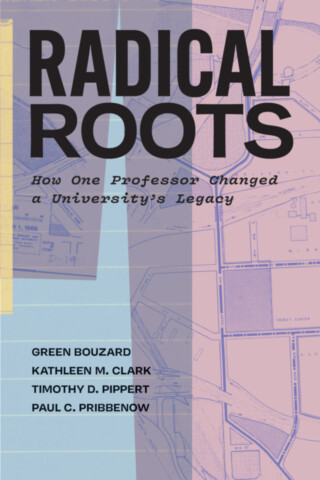
E-books are now distributed via VitalSource
VitalSource offer a more seamless way to access the ebook, and add some great new features including text-to-voice. You own your ebook for life, it is simply hosted on the vendor website, working much like Kindle and Nook. Click here to see more detailed information on this process.
Library E-Books
We are signed up with aggregators who resell networkable e-book editions of our titles to academic libraries. These editions, priced at par with simultaneous hardcover editions of our titles, are not available direct from Stylus.
These aggregators offer a variety of plans to libraries, such as simultaneous access by multiple library patrons, and access to portions of titles at a fraction of list price under what is commonly referred to as a "patron-driven demand" model.
Radical Roots: How One Professor Changed a University's Legacy tells the story of Joel Torstenson, a sociology professor at Augsburg University in Minneapolis, Minnesota. In the 1960s, Torstenson challenged his university to embrace its urban setting and to design its curricular, co-curricular, and community engagement programs to advance its mission of “Education for service.” The compelling story of Torstenson’s legacy at Augsburg over the past 60 years offers lessons for colleges and universities across the country committed to democratic engagement in their work at the intersections of mission and place. Augsburg University's saga as an urban settlement has not always been embraced by the university. Though location and place are central to the university’s identity, it is not sufficient to explain the integrative power of the university’s character. For that purpose, it is critical that place be understood through the lens of Augsburg’s academic mission and work. This integrated view of place and mission required a new way of imagining the university’s core work of educating students. The purpose of this book is two-fold. The first is to document and celebrate the legacy of Professor Joel Torstenson, and to understand the impact of this legacy’s inception, evolution, and current manifestations and impact at Augsburg and in the wider world. Professor Torstenson cared deeply about the public purpose of higher education, and Torstenson’s model for what this public purpose might look like prompted massive transformation in Augsburg University’s trajectory. The resulting experiments in education and commitment to the city flowered into a legacy that has spurred Augsburg University to create an innovative model for 21st Century education. This model has impacted everything from student learning and community life, to teaching and curricular structure, to the public mission of the institution and its presence in the city and world. Torstenson’s creative—and even radical—work in the 1960s and '70s has been carried through the decades by continued innovation in teaching and learning based in experiential education, and a commitment to place and community building. This legacy has simultaneously advanced the public purpose and mission of the University. Secondly, this book shares what are some of the lessons learned from fifty years of innovation following Torstenson’s vision, with the hope that these lessons might serve the broader community of colleges, universities, faculty, staff, and students engaged in similar pursuits. Augsburg’s innovative experiential education, place-based community engagement, and public and anchor institution work has been and will continue to be a model for other institutions. We believe that Torstenson’s legacy, and the lessons learned through the years of its evolution, has lessons to teach and models to follow for our sibling institutions across the United States. The volume includes discussion prompts and questions after each section. There is also a companion website (www.augsburg.edu/radicalroots) that includes additional resources related to the volume's themes.Perfect for course such as: Higher Education and Democracy in the United States; Principles of Experiential Education; Place Matters: Higher Education and Community Engagement; Universities as Anchor Institutions in their Communities; Introduction to Citizen Professionalism: Leading in the 21st Century; Public Work, Social Responsibility, and Vocation in a World of Extremes; Accompaniment: Developing Democratic Skills and Fostering Healing with Communities; Curricular Innovations in Higher Education; and Principles of Higher Education Pedagogy
More
E-books are now distributed via VitalSource
VitalSource offer a more seamless way to access the ebook, and add some great new features including text-to-voice. You own your ebook for life, it is simply hosted on the vendor website, working much like Kindle and Nook. Click here to see more detailed information on this process.
Library E-Books
We are signed up with aggregators who resell networkable e-book editions of our titles to academic libraries. These editions, priced at par with simultaneous hardcover editions of our titles, are not available direct from Stylus.
These aggregators offer a variety of plans to libraries, such as simultaneous access by multiple library patrons, and access to portions of titles at a fraction of list price under what is commonly referred to as a "patron-driven demand" model.
Critical Transformative Educational Leadership and Policy Studies - A Reader is a comprehensive collection of critical contributions from most of the leading voices in the fields of educational leadership and educational policy studies, pushing back against the current neoliberal authoritarian environment. The volume offers alternative ways to perceive and to formulate education leadership and policy from a critical transformative perspective. Individual chapters discuss such topics as social justice in education; poverty, race and public education; counter-hegemonic education movements; the privatization of schools; and school reform and advocacy leadership, among others, all from a critical perspective. It is a crucial and timely volume for educators, school administrators, educational leaders, social activists, and union leaders concerned with the current state of our universities and our education system.Perfect for courses such as: Political Economy of Urban Education | Leadership and Policy Studies | Educational Policy and Reform | Politics of Education | Cultural Studies | Curriculum Theory and Development | Socio Historical Foundations | Indigenous Knowledges and Methodologies | Cultural Studies and Education
More