
Scholarship of Teaching & Learning

E-books are now distributed via VitalSource
VitalSource offer a more seamless way to access the ebook, and add some great new features including text-to-voice. You own your ebook for life, it is simply hosted on the vendor website, working much like Kindle and Nook. Click here to see more detailed information on this process.
Teaching Through Generational Traumas: Adaptive Practices to Combat Dissociation While Addressing the Impacts of Respectability offers a powerful and timely exploration of what it means to teach, learn, and thrive in higher education while navigating the weight of generational wounds. Written by historian and educator Detrice L. Roberts, this book blends personal reflection, scholarly research, and experience-based classroom practice to uncover how trauma, identity, and resilience shape today’s student experience. At its core, this book challenges the idea that education is only about transmitting knowledge. Instead, Roberts presents the classroom as a space of transformation where students must be equipped not only with intellectual tools but also the social and emotional skills necessary to face the complexities of modern life. Drawing on frameworks including Social and Emotional Learning (SEL), the VARK learning model, and culturally relevant pedagogy, Roberts simultaneously offers instructors and students pathways to recognize identity, manage emotions, and build meaningful and productive connections between past and present. There exists a culture of dissociation among students today, but they are more adaptive to learning that incorporates real world engagement that allows for them to actively participate in the learning process. Being able to differentiate instruction relies on our understanding of the types of learners that we have in our classroom and exploring the factors associated with why students are disconnected academically. These very factors can then be addressed and used to enhance student experiences and ability to learn through learner-defined curriculum development. Teaching Through Generational Traumas moves through layered themes reflecting Roberts’s dual perspective as both teacher and learner. Part I situates the conversation historically, acknowledging how generational traumas rooted in slavery, segregation, and systemic racism, continue to impact Black students in higher education. Part II explores the lived experience of respectability politics, dissociation, and the subtle pressures students face to perform identities that do not always align with their authentic selves. Part III shifts to pedagogical innovation, highlighting Roberts’s seven classroom practices: Socratic questioning, storytelling, critical pedagogy, SEL, opening rituals, culturally relevant teaching, and digital humanities. Each practice is illustrated through vivid classroom narratives, emphasizing how teaching strategies can nurture critical thinking while affirming student identity. In the final section, Roberts invites students, educators, and readers alike to consider methods of perpetual growth that extend beyond the classroom. She frames education not as a temporary pursuit, but as a lifelong journey of reflection, resilience, and meaning-making. The book closes with an Ode to the HBCU, honoring the historic and ongoing role of Historically Black Colleges and Universities as sites of cultural affirmation, intergenerational pride, and transformative education. Teaching Through Generational Traumas is a call to reimagine what education can be when it is rooted in empathy, awareness, and liberation. It speaks directly to faculty, administrators, and students at HBCUs and beyond, while also offering insights for those interested in the intersections of history, identity, and pedagogy. This book will resonate with readers who believe that classrooms should be communities of growth, reflection, and belonging. By weaving together scholarship, lived experience, and practical strategies, Roberts demonstrates how we can confront the challenges of dissociation, respectability, and trauma, and instead cultivate spaces where students and instructors learn, heal, and transform together.Perfect for courses such as: Foundations of Education; Teaching and Learning in Higher Education; Culturally Relevant Pedagogy / Multicultural Education; Trauma-Informed Teaching Practices (or Social and Emotional Learning in Schools); African American Educational History; African American History / African Diaspora Studies; Educational Leadership & Policy Studies; Sociology of Education / Education and Society
More
E-books are now distributed via VitalSource
VitalSource offer a more seamless way to access the ebook, and add some great new features including text-to-voice. You own your ebook for life, it is simply hosted on the vendor website, working much like Kindle and Nook. Click here to see more detailed information on this process.
More than a century after William James published his provocative critique The PhD Octopus in 1903, his warnings about the corrupting entanglements between institutions and graduate students remain strikingly relevant. Doctoral Studies as Educational Industrial Complex revisits James’ concerns through a contemporary lens, offering a critical examination of doctoral education in the field of education in what feels like perennial crisis. Throughout the volume, contributors grapple with the tensions James identified: the obsession with credentials over genuine intellectual work, the “tyrannical machine” of institutional demands, and the misalignment between doctoral preparation and actual career paths. These tensions are particularly acute in practitioner-oriented EdD programs designed to produce scholar-practitioners who often remain in their local communities rather than entering the academy. Yet research-oriented PhD programs face their own crisis, as they continue to prepare scholars for a tenure-track job market that has dramatically contracted. With only 32% of faculty holding tenured or tenure-track positions in 2023—down from 53% in 1987—the traditional pathway to academic careers has fundamentally eroded. The book speaks to multiple audiences: faculty who supervise doctoral students and seek to understand the challenges they face; doctoral students navigating alternative program formats and uncertain career prospects; administrators responsible for program design and accreditation; and scholars interested in the future of higher education and professional preparation. By centering faculty expertise and critical analysis rather than external market demands, this volume offers a necessary counter-narrative to prevailing trends in doctoral education reform. Ultimately, this book argues for a reconsideration of what doctoral education should accomplish and for whom, grounding these questions in both historical perspective and contemporary realities.
More
E-books are now distributed via VitalSource
VitalSource offer a more seamless way to access the ebook, and add some great new features including text-to-voice. You own your ebook for life, it is simply hosted on the vendor website, working much like Kindle and Nook. Click here to see more detailed information on this process.
Writing as Artistry: EdD Students Learning to Write as Scholarly Practitioners is a timely guidebook that supports EdD students’ scholarly writing development while honoring and amplifying their rich practitioner knowledge and wisdom. EdD students are educational leaders and working professionals transitioning from expert-practitioners to scholarly practitioners who aim to positively transform the lives of students and communities. This resource addresses the significant need for mastering scholarly writing skills required for EdD students’ successful degree completion and real-life impact.The book’s conceptual approach frames scholarly writing as artistry. This perspective recognizes the work of practitioners as a deeply human and experiential process of solving problems of practice by drawing on prior knowledge and exploring new methods to improve practice. This view champions the idea that practitioners’ professional knowledge and rich prior experience are essential assets and that their insider knowledge is a necessary and key condition for rigorous practitioner inquiry. The authors adopt a critical stance that rejects the dominant notion of technical rationality, which historically views researchers as scholars and practitioners as mere “doers,” arguing instead that building successful experiences for EdD students requires and respects practitioners’ professional knowledge.The guidebook offers a scaffolded, practical approach to scholarly writing, aiming to guide the reader toward a practice-focused lens, provides practical tools for fostering scholarly writing, and builds students’ confidence as writers. It is centrally focused on developing practice-centered dissertations and culminating projects that align with professional-practice degrees.To support students throughout the process, the book provides a robust repertoire of writing approaches and strategies. It offers guidance on prewriting techniques for capturing initial ideas and helps students in effectively connecting their ideas with others. Critical to this artistic approach is the development of a unique writer’s voice and positionality, often through the use of reflexivity. The book includes comprehensive practical tools for navigating the often-challenging mechanics of scholarly work, detailing writing feedback and revision strategies, and including a range of templates and clear examples of student work. Furthermore, the guide provides essential advice for leveraging support structures, such as engaging with multiple mentors and critical friends. The guide also prepares students for diverse project types, including individual, collaborative, and alternative dissertation projects.Ultimately, mastering these skills is a critical way to support students in their work beyond graduation. The ability to write clear, scholarly reports is essential, as the skills learned must transfer from the Dissertation-in-Practice experience to the student's world of practice, thus ensuring real-world impact by enhancing leaders’ capacity to implement evidence-based solutions to complex problems.
More
Writing a Philosophy Statement: An Educator’s Workbook, Second Edition provides a step-by-step process for writing a clear and concise philosophy of education statement based on a reader’s beliefs about their approaches to teaching. This unique book provides information about five key philosophical approaches to teaching, using a range of activities for preservice and experienced teachers to examine classroom dilemmas. The workbook explores a variety of philosophical stances, including: Five philosophical approaches to teaching Strategies for identifying your approach to teaching Strategies for applying your approach in a written philosophy of education statement Practical uses for your philosophy statement Example Professional Development Activities include Case Studies; Check Lists; Sample Philosophy Statements; Tips and Tools for Writing a Philosophy Statement; and Using your Statement in Job Interviews and Graduate School Applications. A key feature of this book is the highly researched two-dimensional Philosophy of Education Scale, helpful in identifying an individual’s most and least likely approaches to teaching. The Scale includes a range of teaching practices that can prompt readers’ deep understanding of the sources that impact their approach decisions. This book offers educational leaders a much-needed pathway for collaborative communication about how teachers can impact school climate, change and attainment. Writing a Philosophy Statement is an essential tool for undergraduate and graduate students of education who are preparing for a career in teaching and for the academic rigors that they will encounter.Perfect for courses such as: Introduction to Education; Analysis of Instruction; Curriculum and Instruction; Research on Curriculum and Instruction; School Practice and Change; Philosophy of Education; Leadership and Change; Leadership and Collaboration; Principles of Leadership; Foundations of Education; History of Education; Senior Seminar; Student Teaching; Field Experience; and Methods of Instruction
More
E-books are now distributed via VitalSource
VitalSource offer a more seamless way to access the ebook, and add some great new features including text-to-voice. You own your ebook for life, it is simply hosted on the vendor website, working much like Kindle and Nook. Click here to see more detailed information on this process.
Library E-Books
We are signed up with aggregators who resell networkable e-book editions of our titles to academic libraries. These editions, priced at par with simultaneous hardcover editions of our titles, are not available direct from Stylus.
These aggregators offer a variety of plans to libraries, such as simultaneous access by multiple library patrons, and access to portions of titles at a fraction of list price under what is commonly referred to as a "patron-driven demand" model.
Food Stories: Navigating the Academy with Cultural Lessons from the Kitchen is the first volume in the series Culinary Canvas: A Series on Integrating the Arts and Food into Higher Education. The purpose of the series is to explore the innovative integration of arts and food into higher education. Each volume aims to inspire a paradigm shift in academia, advocating for a more holistic, creative, and inclusive approach to learning, teaching, researching, serving, and existing in the academy. In the present volume, Food Stories makes the case that food, and the culture surrounding food, is a closely held--and powerful--reality that shapes who we are as individuals, as members of varied communities, and invariably, informs who we are as educators and researchers. This book gives space for the authors to explore not only the impact that food and culture have had, and continue to have, on them as individuals, how that culture and experiences impact them as members of the academy (in teaching, research, and service), but also in providing some guidance to graduate students and junior faculty. In effect, chapters explore navigating academic work (teaching, research, and service) through the lens of food and the transferable lessons that can be gleaned from our grandmothers’, mothers’, fathers’, and our own kitchens. It is often the case that higher education fosters both imposter syndrome and a workaholic disposition that can be detrimental to teaching and research. What this book does, then, is to not only explore the ways in which what may seem as non-academic work such as cooking a meal can have on our work/life balance but, also, how to incorporate the very lessons of food into who we are as educators, how we teach, and how we can approach the work we do more broadly. Through carefully curated chapters, this text presents a wide array of perspectives across food and cultural regions, as well as imparting insights from the academy from authors spanning the spectrum of the career. It is an important book full of valuable lessons for graduate students, faculty and teachers who wish to use its content in their classrooms.Perfect for courses such as: Cultural Studies; Culturally-Responsive Pedagogy
More
E-books are now distributed via VitalSource
VitalSource offer a more seamless way to access the ebook, and add some great new features including text-to-voice. You own your ebook for life, it is simply hosted on the vendor website, working much like Kindle and Nook. Click here to see more detailed information on this process.
Library E-Books
We are signed up with aggregators who resell networkable e-book editions of our titles to academic libraries. These editions, priced at par with simultaneous hardcover editions of our titles, are not available direct from Stylus.
These aggregators offer a variety of plans to libraries, such as simultaneous access by multiple library patrons, and access to portions of titles at a fraction of list price under what is commonly referred to as a "patron-driven demand" model.
Researchers working to clearly identify a research topic and theme have difficulty deciding how to focus their work. Using a potential-based learning focus, detailed in this text, readers are challenged to consider their role as researcher, scholar, and leader to guide their reflective work. Transformative Potential Based Research: A Guide to Successfully Finding One's Place in Research provides both the theoretical support and the guiding activities to help readers decide on an area of potential-based research. The result will prove to be transformational. To guide this work, Karen Moroz and Trish Harvey have developed a suitable framework. They invite readers to review the mountain metaphor shared within the framework and to keep the visual present at all times as they progress through the book. It is addressed often and readers will be invited to use, extend, and discuss it numerous times throughout their journey. Transformative Potential Based Research supports instructors and students through all stages of research, including: identifying and embracing relevant and essential topics, crafting research questions that accurately and concisely convey the purpose(s), exploring one’s own connection to the issue, developing and employing individual processes that lead to success, and determining a potential-based frame that motivates the writer and frames the workPerfect for courses such as: Dissertation; Research Methods; Educational Methods; Intro to Research Design; Academic Writing; Capstone Practicum; Educational Research; Understanding Research
More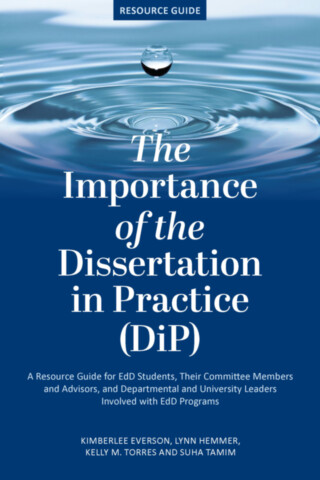
E-books are now distributed via VitalSource
VitalSource offer a more seamless way to access the ebook, and add some great new features including text-to-voice. You own your ebook for life, it is simply hosted on the vendor website, working much like Kindle and Nook. Click here to see more detailed information on this process.
Library E-Books
We are signed up with aggregators who resell networkable e-book editions of our titles to academic libraries. These editions, priced at par with simultaneous hardcover editions of our titles, are not available direct from Stylus.
These aggregators offer a variety of plans to libraries, such as simultaneous access by multiple library patrons, and access to portions of titles at a fraction of list price under what is commonly referred to as a "patron-driven demand" model.
The Importance of the Dissertation in Practice (DiP): A Resource Guide for EdD Students, Their Committee Members and Advisors, and Departmental and University Leaders Involved with EdD Programs is the first book-length study that looks at the elements of high-quality Dissertations in Practice (DiPs). It serves as a resource for EdD students, their committee members, their advisors, and departmental or university leaders involved with EdD programs. The book can be used to improve support from key stakeholders within EdD programs for the implementation of the DiP in the development of practitioner-scholars. The first section of the book discusses the difference between the DiP and traditional dissertations, the history of the DiP, and how the practitioner-scholar is developed through the DiP process. Next, the book describes the elements that are reflective of a high-quality DiP. Finally, it addresses a few of the unique formats that are sometimes used with the DiP, some of the practical issues with implementing the DiP, and issues of the future including the use of artificial intelligence. The ultimate goal of The Importance of the Dissertation in Practice is to serve as a practical guide for all those involved with the DiP, reflecting the editors’ and authors’ experiences working with students within a variety of higher education institutions.Perfect for courses such as: Introduction to Research Methods (doctoral level); Improvement Science; Applied Research Methods; Advanced Research Methods; Introduction to the Dissertation; Educational Evaluation; Theory of Change in Education; Educational Policy
More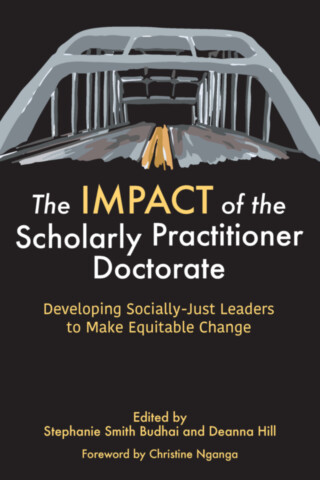
E-books are now distributed via VitalSource
VitalSource offer a more seamless way to access the ebook, and add some great new features including text-to-voice. You own your ebook for life, it is simply hosted on the vendor website, working much like Kindle and Nook. Click here to see more detailed information on this process.
Library E-Books
We are signed up with aggregators who resell networkable e-book editions of our titles to academic libraries. These editions, priced at par with simultaneous hardcover editions of our titles, are not available direct from Stylus.
These aggregators offer a variety of plans to libraries, such as simultaneous access by multiple library patrons, and access to portions of titles at a fraction of list price under what is commonly referred to as a "patron-driven demand" model.
The IMPACT of the Scholarly Practitioner Doctorate: Developing Socially-Just Leaders to Make Equitable Change is a collection of shared counternarratives between EdD alums and their supervising professor mentors, detailing their dissertation in practice (DiP) journeys as scholarly practitioners and the impact of the scholarly practitioner doctorate on their paths from doctoral students to socially-just leaders in a wide range of educational fields. The IMPACT of the Scholarly Practitioner Doctorate posits these relationships as the catalyst in bringing theory learned in course work to scholarly research that is positioned within practice, focused on contributing to equity-centered work. The book serves as an exemplar learning companion to a wide audience and diverse EdD programs looking to modify, develop, or redesign their programs to align with The Carnegie Project on the Education Doctorate (CPED) concepts including signature pedagogy, laboratories of practice, inquiry as practice and mentoring and advising. The IMPACT of the Scholarly Practitioner Doctorate demonstrates how change in education, community, and organizations have been impacted in efficacious ways. EdD students and their supervising professors, faculty, and administrators will be able to use this book’s content as their own catalyst for building socially-just leadership knowledge, skills, and dispositions while preparing their EdD students to exhibit equitable change in the professional practice areas they are in.Perfect for courses such as: Introduction to Educational Research; Social Justice Education Foundations; Leadership for Equity and Social Change; Transformative Leadership; Foundations of Inquiry for Social Justice; Qualitative Inquiry for Social Justice; Critical Perspectives for Equity in Education; Engaging in Critical Social Theories for Designing Research for Equity and Social Justice; Reform and Change for Social Justice; Educational Leadership Development
More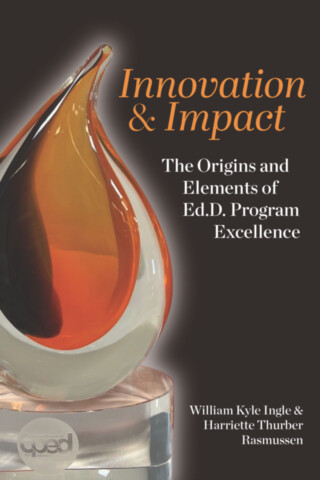
E-books are now distributed via VitalSource
VitalSource offer a more seamless way to access the ebook, and add some great new features including text-to-voice. You own your ebook for life, it is simply hosted on the vendor website, working much like Kindle and Nook. Click here to see more detailed information on this process.
Library E-Books
We are signed up with aggregators who resell networkable e-book editions of our titles to academic libraries. These editions, priced at par with simultaneous hardcover editions of our titles, are not available direct from Stylus.
These aggregators offer a variety of plans to libraries, such as simultaneous access by multiple library patrons, and access to portions of titles at a fraction of list price under what is commonly referred to as a "patron-driven demand" model.
Professional and educational associations, such as the Carnegie Project for the Education Doctorate (CPED), create and offer awards that recognize the accomplishments of individuals, programs, and institutions. In this edited book, W. Kyle Ingle and Harriette Thurber Rasmussen focus on CPED’s Program of the Year (POY) Award, examining its history, purpose, submission requirements, its committee structure, activities, and outcomes. Faculty members from CPED’s award-winning institutions have been invited to discuss their innovative programs, how these innovations were developed, how they pursue social justice, and how these innovations have been sustained since winning the award. Furthermore, the award’s role in facilitating the diffusion of innovative and effective practices among CPED member institutions is examined. The book and its chapters are framed through the lens of innovation diffusion theory. Popularized by communication theorist Everett Rogers (1967, 2003), innovation diffusion theory has spread widely across the social sciences. In his seminal work, Diffusion of Innovations, Rogers defines an innovation as “an idea, practice, or object that is perceived as new by an individual or other unit of adoption” (2003, p. 12). Innovation diffusion is the process by which an innovation spreads among the members of a social system, in this case the internal and external communities of Ed.D.-granting institutions.The book includes dual components: (1) innovative programs that drive social justice and (2) how these institutional innovations were developed and sustained. The latter component will shed light on three self-study processes related to these award-winnng programs: The process of creating the featured innovative program;The process of applying for the program of the year award; and The process of writing the journey and considering the impact of the program of the year award on their institution, including any reinvention/adaptations. Taken together, readers will examine and understand “process[es] by which alteration occurs in the structure and function of a social system” (Rogers, 1995, p. 6) in pursuit of social justice goals through programmatic innovation.Perfect for courses such as: Program Development & Assessment in Higher Education; Instructional Planning for Student Learning and Achievement; Performance Improvement; Instructional Design and Development; e-Learning Design and Development; College Teaching; Supervised Experience in Higher Education; Special Problems in Educational Leadership; Professional Projects in Higher Education; Organizational Improvement in Higher Education
More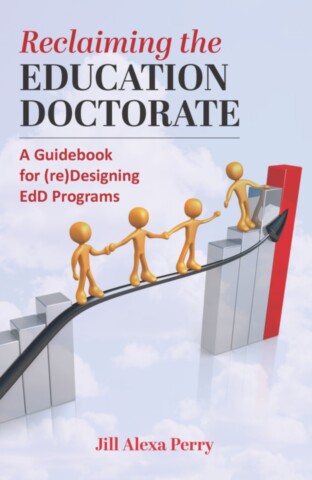
E-books are now distributed via VitalSource
VitalSource offer a more seamless way to access the ebook, and add some great new features including text-to-voice. You own your ebook for life, it is simply hosted on the vendor website, working much like Kindle and Nook. Click here to see more detailed information on this process.
Library E-Books
We are signed up with aggregators who resell networkable e-book editions of our titles to academic libraries. These editions, priced at par with simultaneous hardcover editions of our titles, are not available direct from Stylus.
These aggregators offer a variety of plans to libraries, such as simultaneous access by multiple library patrons, and access to portions of titles at a fraction of list price under what is commonly referred to as a "patron-driven demand" model.
Reclaiming the Education Doctorate: A Guidebook for (re)Designing EdD Programs is a practical guide for those seeking to (re)design a professional practice doctorate program in education that prepares Scholarly Practitioners. To tackle the comprehensive change process necessary for (re)designing the EdD, this book will guide the reader with an improvement lens that looks at the roots of the confusion of the EdD, the system that created it, and the framework that helped to reclaim it. Readers will be guided through a backward mapping (re)design process that begins with defining graduate outcomes, maps through the milestones and courses, ends with rethinking the admissions process. Along the way, readers will learn how to design and integrate a dissertation in practice into the curriculum, consider best practices for their program (re)design, and view examples of successful programs. Additionally, to support readers in their (re)design efforts, each chapter will offer exercises, tools, and resources that will guide the process. The book will prove to be an invaluable resource for anyone developing or revising their EdD program. After the opening chapter that explains the mission statement of Reclaiming the Education Doctorate, Jill Perry structures chapters to deal with the full range of issues that impact EdD programs, including: Roots of the EdD ProblemAim: The Professional Practice Doctorate Driving ChangeBackward mapping: beginning with the endThe heart of the program: CurriculumThe beginning: Admitting CandidatesMeasuring ImpactLeading Change
More