
Search results for making sense of rac

E-books are now distributed via VitalSource
VitalSource offer a more seamless way to access the ebook, and add some great new features including text-to-voice. You own your ebook for life, it is simply hosted on the vendor website, working much like Kindle and Nook. Click here to see more detailed information on this process.
Library E-Books
We are signed up with aggregators who resell networkable e-book editions of our titles to academic libraries. These editions, priced at par with simultaneous hardcover editions of our titles, are not available direct from Stylus.
These aggregators offer a variety of plans to libraries, such as simultaneous access by multiple library patrons, and access to portions of titles at a fraction of list price under what is commonly referred to as a "patron-driven demand" model.
Many people believe that “education” has a disproportionately negative effect on them and those close to them. With so much wealth, technological prowess, innovation, and economic development, why do we still have marginalization, social inequalities, conflict, mass incarceration and generational poverty? The connection to democracy, Education for Democracy (EfD) and social justice is, for Carr and Thésée, clear, and this volume interweaves a narrative within these themes based on a Freirian theoretical backdrop. This book presents a vision for transformative education and EfD, seeking to cultivate, stimulate and support political and media literacy, critical engagement and a re-conceptualization of what education is, and, importantly, how it can address entrenched, systemic and institutional problems that plague society. Based on over a decade of empirical research in a range of contexts and jurisdictions, the authors strive to link teaching and learning with agency, solidarity, action and transformative change within the conceptual framework of a critically-engaged EfD. Perfect for courses in: Sociology of Education; Social Justice and Education; Democracy and Civics; Community Engagement; Education Policy; Service Learning; Education Reform; Citizenship Education; Transformative Education; Politics of Education.
More
E-books are now distributed via VitalSource
VitalSource offer a more seamless way to access the ebook, and add some great new features including text-to-voice. You own your ebook for life, it is simply hosted on the vendor website, working much like Kindle and Nook. Click here to see more detailed information on this process.
Library E-Books
We are signed up with aggregators who resell networkable e-book editions of our titles to academic libraries. These editions, priced at par with simultaneous hardcover editions of our titles, are not available direct from Stylus.
These aggregators offer a variety of plans to libraries, such as simultaneous access by multiple library patrons, and access to portions of titles at a fraction of list price under what is commonly referred to as a "patron-driven demand" model.
Remixed and Reimagined: Innovations in Religion, Spirituality, and (Inter)faith in Higher Education is an edited book that invites readers to rethink and re-examine the traditional paradigms in which religion, spirituality, and interfaith (RSI) have been studied within higher education and student affairs settings. This volume introduces new theoretical frameworks that enrich and enliven the study of RSI, making it more dynamic, inclusive, and, most importantly, innovative. It is framed by a commitment to social justice and intersectionality, while centering the narratives of the religiously marginalized. The text is divided into two units. The first unit explores new and emergent frameworks for analyzing and interpreting RSI in higher education and student affairs. The second unit puts various theoretical frameworks into practice, while highlighting the often-marginalized voices of the religiously minoritized. The book concludes with a call for researchers to begin exploring the new proposed horizons within the study of RSI in higher education and student affairs. This text is perfect for graduate level seminars in higher education and student affairs programs. It is also an invaluable resource for researchers and scholars.Perfect for courses such as:Religion in Popular Culture | Religion and Spirituality in Higher Education | Introduction to the Study of Religion | Introduction to Interfaith (Multifaith studies) | Interfaith Dialogue on Campus | Introduction to Queer Studies | Contemporary Issues in LGBTQ Studies | Introduction to Diversity | Masters of Education (Graduate Level) | Politics of Difference | Diversity and Identity | Diverse Issues in Higher Education | Student Affairs
More
E-books are now distributed via VitalSource
VitalSource offer a more seamless way to access the ebook, and add some great new features including text-to-voice. You own your ebook for life, it is simply hosted on the vendor website, working much like Kindle and Nook. Click here to see more detailed information on this process.
Library E-Books
We are signed up with aggregators who resell networkable e-book editions of our titles to academic libraries. These editions, priced at par with simultaneous hardcover editions of our titles, are not available direct from Stylus.
These aggregators offer a variety of plans to libraries, such as simultaneous access by multiple library patrons, and access to portions of titles at a fraction of list price under what is commonly referred to as a "patron-driven demand" model.
For scholars interested in the intersection of writing and online instruction, Writing in Online Courses: How the Online Environment Shapes Writing and Practice examines both the theoretical and practical implications of writing in online courses. The essays in this collection reflect upon what the authors have learned about the synergistic way that writing helps to shape online instruction and how online instruction helps to shape the writing process. While many educators continue to question the reasons for teaching online, these essays demonstrate the useful ways in which it enhances and informs student writing and learning. From the vantage point of different disciplines, the authors examine how the writing process is revealed and changed when it is placed at the center of an online learning environment. These scholars and practitioners attest to the multiple ways that teaching online has enabled them to rethink how writing functions in their classes, allowing them to pursue educational goals and student outcomes that may have been more difficult or even impossible to pursue in the traditional classroom. Perfect for courses in: Writing and Emerging Technologies, English Online, Topics in Composition and Rhetoric, Approaches to Teaching Writing, Technology in the Classroom, Educational Technology for Teaching and Learning, Foundations of Distance Education, Composition Theory, Introduction to Rhetoric and Composition, Writing and the Teaching of Writing.
More
E-books are now distributed via VitalSource
VitalSource offer a more seamless way to access the ebook, and add some great new features including text-to-voice. You own your ebook for life, it is simply hosted on the vendor website, working much like Kindle and Nook. Click here to see more detailed information on this process.
John Dewey (1859–1952), one of the most prominent American intellectuals for the first half of the twentieth century, is considered by many to be the father of public education, advocating for the concept that the purpose of public education was to develop an informed citizenry that prepared them for active participation in public life. He was highly regarded for his lectures on the power of pedagogy, best documented in his seminal volume, Democracy and Education, a book that remains as relevant today as when it first published more than 100 years ago. He was famous for other lectures as well. Among them are the Bridgewater Lectures of 1922, represented here for the first time as a freestanding volume. Dewey gave these lectures at the Bridgewater Normal School in Bridgewater, MA, an institution founded by Horace Mann. The lectures touch on three themes: Social Purposes in Education Individuality in Education The Classroom Teacher They appear as full-length speeches, unaltered from their original form. Additionally, the volume contains three interpretive essays by recognized experts in the philosophy and pedagogy of Dewey: The Course and Its Occurrences Individuality, Sociality, and Temporality: Reflections on Dewey’s Bridgewater Lectures of 1922 Dewey’s Bridgewater Lectures and the Emergence of the Aesthetic in His Later Works This is a book that all Dewey scholars will want to have in their library. In addition, the themes in the volume make it an appropriate adoption for such classes as History of Education, Philosophy of Education and other foundation courses.
More
E-books are now distributed via VitalSource
VitalSource offer a more seamless way to access the ebook, and add some great new features including text-to-voice. You own your ebook for life, it is simply hosted on the vendor website, working much like Kindle and Nook. Click here to see more detailed information on this process.
Library E-Books
We are signed up with aggregators who resell networkable e-book editions of our titles to academic libraries. These editions, priced at par with simultaneous hardcover editions of our titles, are not available direct from Stylus.
These aggregators offer a variety of plans to libraries, such as simultaneous access by multiple library patrons, and access to portions of titles at a fraction of list price under what is commonly referred to as a "patron-driven demand" model.
Navigating Media Literacy: A Pedagogical Tour of Disneyland is an education playbook applied to the vast mediated universe of Disney. Readers of all ages can critically apply media literacy principles while still conscientiously participating as consumer-citizens, media creators, and agents of change. Media literacy is defined throughout this book as an instructional method rather than a political movement. The book counterbalances the frequently myopic critiques of cultural scholars and the critical exemption granted by those across the world who find Disney to be a source of great pleasure. Integrated theory and practical examples allow readers to investigate of themselves and draw their own conclusions based on real inquisitive, observatory, and creative experiences that constitute media literacy (access, analyze, evaluate, create, reflect and act). Each chapter is ideologically mapped to an actual physical realm of Disneyland (e.g., Main Street, USA; Adventureland; Tomorrowland; Frontierland; Fantasyland). Each site provides a pedagogical playground for experimenting with each media literacy concept (e.g., context, audience, language, ownership, representation). The reader will come away with a deeper pedagogical understanding of how to cultivate media literacy using any context or subject—not just Disney. Each chapter includes discursive excerpts from students, along with assignments, discussion prompts, and classroom exercises, making it a valuable resource as a classroom textbook.Perfect for courses such as: Media Literacy | Communication and Media Arts | Film Studies | Media History | Transmedia Studies | Business | Marketing
More
E-books are now distributed via VitalSource
VitalSource offer a more seamless way to access the ebook, and add some great new features including text-to-voice. You own your ebook for life, it is simply hosted on the vendor website, working much like Kindle and Nook. Click here to see more detailed information on this process.
Library E-Books
We are signed up with aggregators who resell networkable e-book editions of our titles to academic libraries. These editions, priced at par with simultaneous hardcover editions of our titles, are not available direct from Stylus.
These aggregators offer a variety of plans to libraries, such as simultaneous access by multiple library patrons, and access to portions of titles at a fraction of list price under what is commonly referred to as a "patron-driven demand" model.
Improvement Science in Education: A Primer, second edition, is the first and introductory volume in the Myers Education Press series, Improvement Science in Education and Beyond. It provides a comprehensive overview of improvement science as a framework to guide continuous improvement and reconceptualizes improvement by centering equity and justice as the purpose of improvement. The Primer is designed to introduce improvement science, a methodology with origins in manufacturing, engineering and healthcare, to educational audiences. The book first explores the philosophical and methodological foundations of improvement science, juxtaposing it with traditional forms of research so that clear distinctions can be drawn. Chapters in the latter half of the book introduce the principles of improvement, give guidance and tools for operationalizing the principles in practice, and conclude with questions to ensure you are improving with equity in mind. Constantly reminding readers to think about who is involved and impacted, the Primer makes improvement science accessible to novices and adds critical dimensions for experienced practitioners to consider. In the second edition of this best-selling book, Brandi Hinnant-Crawford, a nationally recognized authority in the methodology, has added valuable new content that updates the literature and enhances the focus of the volume by asking even more who questions: who benefits, who bears the burden, whose priorities and values are reflected, and who is heard when decisions are made. Improvement for equity requires more than profound knowledge and subject matter knowledge—it requires criticality. Improvement science is rapidly becoming the signature methodology for accomplishing continuous improvement in universities, public school districts, and professional development programs. Its goal is to create better learning environments.Perfect for courses such as: Educational Research; School Improvement; and Program Evaluation
More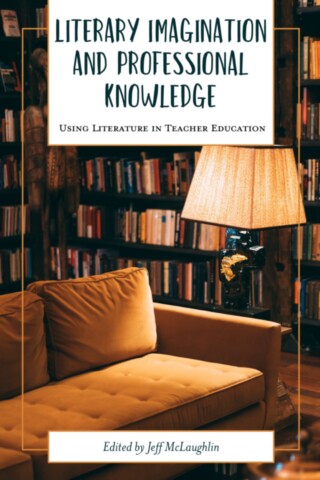
E-books are now distributed via VitalSource
VitalSource offer a more seamless way to access the ebook, and add some great new features including text-to-voice. You own your ebook for life, it is simply hosted on the vendor website, working much like Kindle and Nook. Click here to see more detailed information on this process.
Library E-Books
We are signed up with aggregators who resell networkable e-book editions of our titles to academic libraries. These editions, priced at par with simultaneous hardcover editions of our titles, are not available direct from Stylus.
These aggregators offer a variety of plans to libraries, such as simultaneous access by multiple library patrons, and access to portions of titles at a fraction of list price under what is commonly referred to as a "patron-driven demand" model.
Literary Imagination and Professional Knowledge: Using Literature in Teacher Education establishes a foundation for expanding the use of literature in teacher education curricula. The contributors to this collection have a wide variety of education and experience, thus bringing a richness to the content of the volume. Literature can be a valuable means for illuminating subject matter in college courses focused on educational psychology, educational foundations, human development, educational assessment, and other areas critical to the development of future teachers. When literary excerpts are incorporated into the presentation of content, the resulting connections can serve to enhance--in both quality and scope--student understanding and classroom discussions.This book is intended to provide specific suggestions and outlines for incorporating literature (e.g., fiction, poetry, and narrative) in teacher education courses. A variety of genres, historical contexts, and specific applications are represented. Among the literary works highlighted are Great Expectations by Charles Dickens, Milton’s Paradise Lost, Brave New World by Aldous Huxley, Homer’s Odyssey, Dante’s Inferno, The Sum of Our Days by Isabel Allende, the Gilgamesh legend, the poetry of Jason Reynolds, the writings and artwork of William Blake, and classic folk and fairy tales. They are used as frameworks for introducing or exemplifying concepts typically covered in teacher education curricula. One chapter also describes a research investigation into the effects of using literature on pre-service teachers’ beliefs and attitudes about cultural diversity.Perfect for courses such as: Educational Psychology │ Educational Foundations │ Child Development │ Teaching Methods - Elementary │ Teaching Methods - Secondary │ Student Teaching
More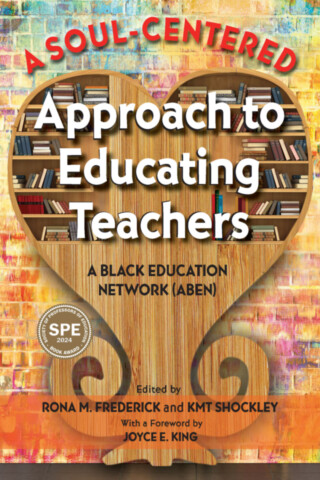
E-books are now distributed via VitalSource
VitalSource offer a more seamless way to access the ebook, and add some great new features including text-to-voice. You own your ebook for life, it is simply hosted on the vendor website, working much like Kindle and Nook. Click here to see more detailed information on this process.
Library E-Books
We are signed up with aggregators who resell networkable e-book editions of our titles to academic libraries. These editions, priced at par with simultaneous hardcover editions of our titles, are not available direct from Stylus.
These aggregators offer a variety of plans to libraries, such as simultaneous access by multiple library patrons, and access to portions of titles at a fraction of list price under what is commonly referred to as a "patron-driven demand" model.
A Soul-Centered Approach to Educating Teachers has been created by A Black Education Network (ABEN), a national organization whose mission is to reverse the backward slide of Black students by utilizing culturally informed research, technology, and visionary community networking within the African Diaspora to facilitate academic and cultural excellence wherever scholars are. This interactive book presents portraits, narratives, and essays to illustrate the impact of ABEN on Black educators and those they serve.Traditional teacher education, curriculum, and instruction is largely disconnected from the lived experiences of diverse students and their communities. Current debates around Critical Race Theory and its application to curriculum call into question culturally responsive practices while others are striving for ways to support equitable practices in the classroom. Questions about these practices include, What does teacher and learning look like when grounded in community voice and practice? How can we better integrate the history, context, experience, and voice of the communities being served? How can teacher education apply authentic problem solving to address the concerns of a community?This inspirational and educational tale answers these questions for the myriad teachers, parents, administrators, school districts, community organizations, and community members who seek a better understanding of how to foster, access, and learn from spaces of Black excellence for Black children. Soul-Centered is essential reading for both scholars involved in a variety of disciplines in Education, and for community leaders interested in seeing how improved education practices can hugely benefit their constituents.
More
E-books are now distributed via VitalSource
VitalSource offer a more seamless way to access the ebook, and add some great new features including text-to-voice. You own your ebook for life, it is simply hosted on the vendor website, working much like Kindle and Nook. Click here to see more detailed information on this process.
Books and stories can inspire, create empathy, and be cathartic outlets. They expand our understanding of the lived experience as one of the most important conduits for how we spread knowledge and participate in shared humanity. Building on the work of Rudine Sims Bishop, Battle of the Bans: Narratives of Reading and Engaging with Banned Books explores how challenged and banned books act as windows, mirrors, and sliding doors. In the United States and globally, the twenty-first century is seeing renewed efforts at banning books in a variety of forms, including parental controls, book burning, curricular erasure and epistemicide, and social media banning. These efforts have the potential of silencing particular stories, histories, and perspectives. Book banning targets and has deleterious impacts on particular communities, including but not restricted to people of color, LGBTQ+, religious and cultural minorities, and people with different abilities. This edited collection counteracts the narrative that books are dangerous, centering a celebration of how stories shape lives. Educators, families, and individuals present a range of perspectives on how particular banned books have changed their lived experience and view of the world. Contributors discuss children’s literature, young adult literature, fiction, and nonfiction texts. The book is comprised of three parts. In the Context section, contributors explore lessons and/or situations for how banned books have, can, or should be used. In the Introspection section, contributors provide narratives about how banned books shaped a sense of self. In the Action section, contributors detail steps taken in response to book bans, providing strategies for countering censorship and erasure in classrooms, schools, and libraries. Battle of the Bans creates hope and conversation in an era of political divisiveness. It inspires readers to reflect on their own experiences with books, creates dialogue, and provides pathways to challenge book banning, ensuring access to stories, histories, and perspectives.The book will appeal to a wide range of audiences, including academics, librarians, classroom teachers, parents, and readers who understand the value of books and literature.Perfect for courses such as: Multicultural Literature; Honors Seminar/Special Topics: Book Banning; Curriculum Theory in Education; History of Reading; Contemporary Social Issues; Introduction to American Studies; Introduction to Policy Studies; Qualitative Research Methods; Narrative Research Methods; and Essay Writing
More
E-books are now distributed via VitalSource
VitalSource offer a more seamless way to access the ebook, and add some great new features including text-to-voice. You own your ebook for life, it is simply hosted on the vendor website, working much like Kindle and Nook. Click here to see more detailed information on this process.
Library E-Books
We are signed up with aggregators who resell networkable e-book editions of our titles to academic libraries. These editions, priced at par with simultaneous hardcover editions of our titles, are not available direct from Stylus.
These aggregators offer a variety of plans to libraries, such as simultaneous access by multiple library patrons, and access to portions of titles at a fraction of list price under what is commonly referred to as a "patron-driven demand" model.
There are novels that portray cities as magical places, others as stifling, imposing environments, and others still as a gritty but beautiful, living landscape. Cities can be the center of culture, business, the arts, and are the meeting places for diversities of all kinds. Examining Images of Urban Life gathers contributions from scholars, educators, and young adult authors, like Benjamin Alire Saenz and e.E. Charlton-Trujillo, who consider how living in a city affects character identity and growth, and the ways authors world-build the urban setting. The collection discusses what the urban landscape means, and dispels the media-driven, anecdotally propagated preconceptions about city living.Urban life is varied and rich, just as its literature is. The collection revolves around a reconsideration of what the city represents, to its readers and to its inhabitants, and serves as a resource in urban settings, wherein teachers can select books that mirror and advocate for the students sitting in their classes.Perfect for courses such as: Young Adult Literature | Children’s Literature | Elementary Literacy | Reading and Literacy | Methods of Teaching | Public Purposes of Education | Educational or Historical Foundations of Education | Urban Studies | Media and Library Sciences
More