
Search results for making sense of rac

E-books are now distributed via VitalSource
VitalSource offer a more seamless way to access the ebook, and add some great new features including text-to-voice. You own your ebook for life, it is simply hosted on the vendor website, working much like Kindle and Nook. Click here to see more detailed information on this process.
Library E-Books
We are signed up with aggregators who resell networkable e-book editions of our titles to academic libraries. These editions, priced at par with simultaneous hardcover editions of our titles, are not available direct from Stylus.
These aggregators offer a variety of plans to libraries, such as simultaneous access by multiple library patrons, and access to portions of titles at a fraction of list price under what is commonly referred to as a "patron-driven demand" model.
Scaffolding the Language of Power: An Apprenticeship in Writing at the Doctoral Level offers an accessible, practical, hands-on guide to developing the skills needed to successfully write a doctoral dissertation or thesis. This textbook-workbook hybrid can be used both as a program/course text and as a supplement for individual doctoral students in education and related social science and humanities fields.The book is built on three main ideas. First, writing is fundamentally connected to issues of social justice. Doctoral-level writing is part of the “language of power” in academia, which builds on the linguistic patterns of the dominant culture and serves as a gatekeeping mechanism. Second, writing is genre-based. This means that doctoral level writing is a particular way of using language, or a specific genre, with distinct rules and structures that can be taught. And third, writing can be scaffolded. Approaching writing as a pedagogical act that supports readers’ understanding through purposeful scaffolding is not just a way to successfully complete a doctoral dissertation—it is a way to make academic writing more accessible in general.In its first chapter, Scaffolding the Language of Power provides a general framework for the rules of the doctoral “language of power.” Chapter two offers an in-depth look at organization and scaffolding as key features of academic writing at the doctoral level, with discussions and activities to practice drafting supportive headings, chunking text, creating road maps and topic sentences, and strategically linking sections, paragraphs, and sentences through transitions and connector phrases. Chapter three provides lessons and exercises to develop argumentation, evidence use, synthesis skills, and academic voice. The remaining six chapters address each major task of the dissertation, including the problem statement, literature review, theoretical framework, methodology, findings, and discussion. Each of these chapters explicitly teaches the purposes and elements of its specific dissertation task, guiding students through warm-ups, annotated examples with elaborated explanations of writing moves, and carefully sequenced activities. Ultimately, these pedagogical features support students to build out the pieces of their doctoral dissertations or theses, chapter by chapter.This book is appropriate for any course on academic writing in EdD or PhD programs. It is also useful for courses that teach how to write a problem statement, literature review, and/or theoretical framework. Additional courses include: Qualitative Research; Qualitative Practicum/pilot study courses; and Dissertation seminar and support courses.CLICK HERE TO BUY THE BOOK/WORKBOOK BUNDLE AND SAVE!CPED Webinar Series--Scaffolding the Language of Power: https://vimeo.com/1029693697
More
E-books are now distributed via VitalSource
VitalSource offer a more seamless way to access the ebook, and add some great new features including text-to-voice. You own your ebook for life, it is simply hosted on the vendor website, working much like Kindle and Nook. Click here to see more detailed information on this process.
Library E-Books
We are signed up with aggregators who resell networkable e-book editions of our titles to academic libraries. These editions, priced at par with simultaneous hardcover editions of our titles, are not available direct from Stylus.
These aggregators offer a variety of plans to libraries, such as simultaneous access by multiple library patrons, and access to portions of titles at a fraction of list price under what is commonly referred to as a "patron-driven demand" model.
Our society urgently needs education that motivates, challenges, engages, and affirms all students. No matter their previous successes or failures, every student has enormous learning potential and important contributions to make now and in the future. Such meaningful learning experiences don't just happen, they need to be intentionally designed. This book supports those who will undertake this vitally important work. Learning that Matters: A Field Guide to Course Design for Transformative Education is a pragmatic resource for designing courses that engage college students as active citizens. This "work" book provides research-informed approaches for creating learning experiences and developing innovative, intellectually-engaging courses. Whether a novice or a veteran, by engaging with the text, collaborating with colleagues, and reflecting on the important work of a teacher, any motivated educator can become a transformative educator. Every college course has the potential to transform students' lives. Through implementation of critical concepts such as connected and authentic assessments; dilemmas, issues, and questions; portable thinking skills and engaging strategies; and a purposeful focus on inclusivity and equity, readers begin the process of change needed for preparing students who will be able to address the monumental challenges facing our society.Click HERE to watch the book launch.Click HERE to hear the authors discuss their book.Perfect for courses such as: Education Curriculum and Instruction | Design for Transformative Learning | An Introduction to Evidence-based Undergraduate Teaching | New Faculty Orientations | Freshman Seminar Faculty Trainings | Center for Teaching & Learning | Workshops in Course Design
More
E-books are now distributed via VitalSource
VitalSource offer a more seamless way to access the ebook, and add some great new features including text-to-voice. You own your ebook for life, it is simply hosted on the vendor website, working much like Kindle and Nook. Click here to see more detailed information on this process.
In a higher education landscape that seems to be increasingly focused on accreditation and accountability, administrators, faculty, and staff in higher education institutions expend considerable resources engaging in assessment activities in response to the demands of compliance-oriented external forces. Beyond Accreditation: Designing and Implementing Meaningful Quality Assurance and Continuous Improvement Systems presents an alternative paradigm for consideration: the primary purpose of assessment systems should be to provide program improvement, with the resulting data serving as supporting evidence for compliance-oriented requests. The book is intended to provide a foundation of background knowledge to empower programs, regardless of size or disciplinary context, to engage in the processes associated with assessment in pursuit of continuous improvement. It supplies data and other information in three distinct ways throughout the book. In some chapters, candid dialogues between the authors are presented in a conversational tone. In others, a more philosophical and sometimes historical perspective provides background knowledge informing why certain things are done and the purposes those activities serve. The remaining chapters present a practical approach to engaging in assessment, from identifying signature assessments to analyzing and reporting on data, all within the overarching context of designing an assessment system that serves continuous improvement efforts. The accountability mindset that has taken hold in education, and in higher education in particular, has fostered a view of assessment as a complicated, challenging, and burdensome enterprise that is done to us in pursuit of compliance. Throughout the book, assessment is presented as something to be done in pursuit of continuous improvement. The authors hope that its contents prove useful to anyone in search of assistance in these efforts. Perfect for courses such as: Educational Program Evaluation; Teacher Education; Education Policy; Teacher Education Policy; and Human Resources in Education.
More
E-books are now distributed via VitalSource
VitalSource offer a more seamless way to access the ebook, and add some great new features including text-to-voice. You own your ebook for life, it is simply hosted on the vendor website, working much like Kindle and Nook. Click here to see more detailed information on this process.
Library E-Books
We are signed up with aggregators who resell networkable e-book editions of our titles to academic libraries. These editions, priced at par with simultaneous hardcover editions of our titles, are not available direct from Stylus.
These aggregators offer a variety of plans to libraries, such as simultaneous access by multiple library patrons, and access to portions of titles at a fraction of list price under what is commonly referred to as a "patron-driven demand" model.
This collection consists of theoretical discussions, personal reflections, research reports, and policy suggestions sourced in the experiences of our most vulnerable students with an eye to making schools places all students might love rather than hate. The essays take up these issues from the perspectives of poverty, gender, race, ethnicity, ability, language, and religion among others.These essays also provide practical advice for teachers and administrators—both practicing and pre-service—for making classrooms and schools spaces that would encourage our students to say, “I love school.” Perfect for courses in: Introduction to Education, General Methods, Social Foundations of Education, Diversity, Management/Assessment, Philosophy of Education, Sociology of Education, Educational Research, Educational Administration/Leadership, Teacher Leadership, Curriculum Theory, and Curriculum Development.
More
E-books are now distributed via VitalSource
VitalSource offer a more seamless way to access the ebook, and add some great new features including text-to-voice. You own your ebook for life, it is simply hosted on the vendor website, working much like Kindle and Nook. Click here to see more detailed information on this process.
Library E-Books
We are signed up with aggregators who resell networkable e-book editions of our titles to academic libraries. These editions, priced at par with simultaneous hardcover editions of our titles, are not available direct from Stylus.
These aggregators offer a variety of plans to libraries, such as simultaneous access by multiple library patrons, and access to portions of titles at a fraction of list price under what is commonly referred to as a "patron-driven demand" model.
2021 CHOICE Outstanding Academic TitleAcross the globe, students are speaking up, walking out, and marching for social and ecological justice. Despite deficit discourses about students, youth are using their voice and agency to call forth a better world. Will educators respond to this call to stand with students in relational solidarity as co-constructors of a new tomorrow? What is possible when teachers and students engage together in new ways? Pedagogies of With-ness: Students, Teachers, Voice and Agency offers insight into the transformative possibilities of education when enacted as the art of being with. Driven by student voices and their experiences of marginalization, this text takes a clear ethical stance. It asserts that students are both capable and competent. Taking a narrative approach, this book honors academic work that is rooted in educational practice. Expanding beyond traditional conceptions of student voice, chapters engage in meditations on three themes: identity, pedagogy, and partnership. This book is an exploration of with-ness, a way of knowing, being, and acting. By centralizing the all-too-often suppressed wisdom of youth, teachers and researchers engage in new forms of critique and possibility-making with students. Editors reflect on this central theme, exploring the dimensions of such pedagogies of with-ness. Through this book, teachers are invited to imagine pedagogy under this new framework, actively committed to students, their voice, and mutual engagement. Click HERE<\/a> to watch the Pedagogies of With-ness book discussion. <\/b><\/p>
More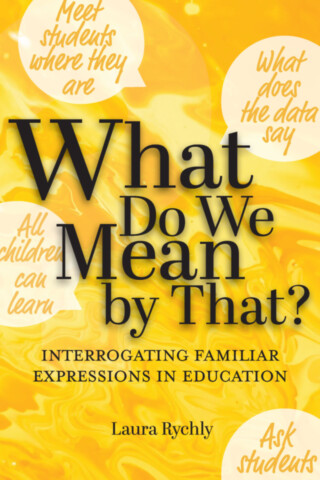
E-books are now distributed via VitalSource
VitalSource offer a more seamless way to access the ebook, and add some great new features including text-to-voice. You own your ebook for life, it is simply hosted on the vendor website, working much like Kindle and Nook. Click here to see more detailed information on this process.
Library E-Books
We are signed up with aggregators who resell networkable e-book editions of our titles to academic libraries. These editions, priced at par with simultaneous hardcover editions of our titles, are not available direct from Stylus.
These aggregators offer a variety of plans to libraries, such as simultaneous access by multiple library patrons, and access to portions of titles at a fraction of list price under what is commonly referred to as a "patron-driven demand" model.
What Do We Mean by That?: Interrogating Familiar Expressions in Education is a collection of essays that opens a space for all educational workers—teachers, teacher educators, administrators, politicians, and others—to unpack commonly used educational phrases and ideas. The idea is to carefully examine what we say to one another when we talk about schools, curriculum, students, and other educational problems or issues—when we say things like “We have to meet students where they are,” and “All children can learn,” or “What does the data say?” What Do We Mean by That? challenges and clarifies such phrases and the how, and why, that they shape educational policies and practices. The influential curricular theorist Dwayne Huebner charged us to always be aware of our “man-made tools,” such as language, and said that since “all educators attempt to shape the world; theorists should call attention to the tools used for the shaping in order that the world being shaped can be more beautiful and just.” Language is a tool in educational practice in myriad ways: between administrators and teachers, teachers and students, teachers and parents, and students and students, as examples. A scripted curriculum is a tool intended to provide fixed language to teachers. It is normal for phrases to make their way into our everyday practices and get lodged there. But we need opportunities to interrupt ourselves and study our language tools to ensure they help create beauty and justice. This collection of thoughtful essays seeks to be this interruption. It is an invaluable tool for improving the educational experience of students and schools.Perfect for courses such as: Foundations of Education; Curriculum Studies; Diversity in Education; Educational Rhetoric and Policy
More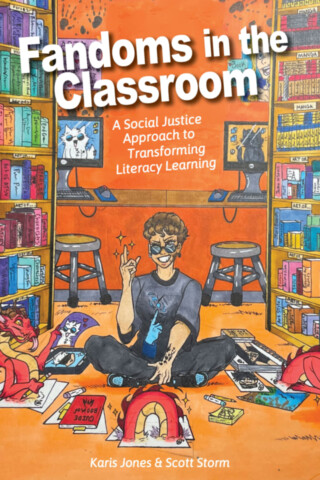
E-books are now distributed via VitalSource
VitalSource offer a more seamless way to access the ebook, and add some great new features including text-to-voice. You own your ebook for life, it is simply hosted on the vendor website, working much like Kindle and Nook. Click here to see more detailed information on this process.
Library E-Books
We are signed up with aggregators who resell networkable e-book editions of our titles to academic libraries. These editions, priced at par with simultaneous hardcover editions of our titles, are not available direct from Stylus.
These aggregators offer a variety of plans to libraries, such as simultaneous access by multiple library patrons, and access to portions of titles at a fraction of list price under what is commonly referred to as a "patron-driven demand" model.
What is a fandom, and why do fandoms matter for school? Fandoms are passionate communities dedicated to appreciating and engaging with texts of interest (movies, TV shows, books, bands, brands, sports teams, etc.) via personally and communally meaningful literacy practices. It is increasingly obvious that scripted literacy curricula and standardized tests fall short of meeting meaningful literacy goals and create culturally destructive learning spaces. Fandoms in the Classroom provides an alternative for educators looking to center passion in their classrooms, individualizing their literacy curricula by building from youth’s interests. The book describes how educators in a wide range of secondary learning contexts can build curricula around students’ already-present fandom interests to support literacy growth. This text supports educators in a range of learning contexts with step-by-step processes for building learning spaces that support navigation of fandom and disciplinary literacies, with a particular focus on common obstacles and roadblocks that teachers have shared with us. It addresses how classrooms doing critical fandom work can address social justice issues across both fandom and disciplinary communities. This book covers relevant topics such as:Why Fandoms? We introduce readers to the concept of fandoms and how engaging students’ experiences in fandoms is not an extra or add-on but instead crucial to flipping the script on literacy learning.Bring Your Fandom to Class: Critically Putting Communities in Conversation. The book discusses how to shift ideas of literacy learning contexts from teacher-centric instruction to a community learning model.Fostering Engagement & Choosing Texts Together: Teachers are often nervous about teaching what they don’t know. The text provides strategies for making learning ecologies and having kids fill it with their own interests, describing specific step-by-step discussion routines that can support youth’s engagement with critical tools on texts of their choice.Building Culturally Responsive Assessments Engaging Youth-Centric Audiences: the book describes how educators can design more expansive literacy assessments with examples of culturally responsive objectives and tasks. The authors include a range of fandom genres and audiences that they have seen in their own work.Transforming Your Current Curriculum in Conversation with Fandoms: Supporting educators interested in expanding literature units in conversation with fandom texts, the text describes how to design units that put various discourse communities in conversation without deadening or co-opting youth interests.Interdisciplinary Applications: there is a discussion about specific examples of how educators the authors have supported in various contexts have applied this kind of work. It includes a focus on cross-disciplinary literacy, with cases highlighting applications for math, science, social studies and music disciplinary learning.Fandoms in the Classroom is a step-by-step guide for literacy instructors struggling to engage their students in meaningful learning. It is essential reading.Perfect for courses such as: Foundations of Literacy; Disciplinary Literacy; Literacy Across the Curriculum; Children's or Young Adult Literature; Writing in the Classroom; Digital Media Literacy; New and Digital Literacies; Teaching Diverse Learners; Theory to Practice; Language, Literacy and Culture; Literacy Policy and Practice; Foundations of Literacy Education; Popular Culture in Literacy Classrooms; History of Literacy Practices; Reading and Language Arts; Critical Theory
More
E-books are now distributed via VitalSource
VitalSource offer a more seamless way to access the ebook, and add some great new features including text-to-voice. You own your ebook for life, it is simply hosted on the vendor website, working much like Kindle and Nook. Click here to see more detailed information on this process.
An exponentially increasing number of students experience traumatic events in their daily lives. To address this phenomenon, Beginning Within: Marking a New Journey Toward Equity in Trauma-Informed Education Practices delves into the profound impact of adverse childhood experiences (ACEs). It brings together extensive research, thoughtful contemplations, and innovative ideas that shed light on some of the lesser-explored aspects of trauma-informed practices in education. Authors in the book have developed chapters around three guiding models for systemic change: John Kotter’s (1996/2012) Eight-Step Model for Organizational Change; Fallot and Harris’ (2001) Five Guiding Principles of Trauma-Informed Practice; and Smith, et al.'s (2017) five-level Building Equity Taxonomy.The chapters reflect the growth, grief, and galvanizing challenges that have shaped and continue to shape our understanding of equality, safety, and organizational change around trauma-informed educational practices. Hear from authors, experts, and leaders in the education field who are leading the way in systemic change, ranging from the work in Missouri after the shooting of Michael Brown in Ferguson, to university professors and classroom teachers seeking ways to use the past as guideposts toward a new journey of equity in trauma-informed practices, with each step paved by three research-supported tenets for creating a climate of trauma-informed practices, as offered by the editors of the book:The journey to equity begins with a deep dive into each stakeholder's internal beliefs about self-care.Self-care must be a priority, otherwise, caring for students comes at the lasting cost of secondary traumatic stress (STS) and teacher burnout.A sense of well-being must extend beyond the school building and into the community. Whether the reader is a pre-service teacher, a current teacher, an aspiring or current administrator, or an educator preparation faculty member, ideas are shared that can be implemented within a variety of schools, programs, or academic organizations.Perfect for courses such as: Trauma-Informed Education; Trauma-Informed Teaching; Foundations of Trauma-Informed Education; Trauma-Informed Practices and Pedagogy; Trauma-Informed Practices and Resilience; Trauma-Informed Classroom Teachers; Introduction to Becoming a Trauma-Informed Educator; Trauma-Sensitive Learning Environments; Foundations of Trauma-Informed Practices and Wellness
More
E-books are now distributed via VitalSource
VitalSource offer a more seamless way to access the ebook, and add some great new features including text-to-voice. You own your ebook for life, it is simply hosted on the vendor website, working much like Kindle and Nook. Click here to see more detailed information on this process.
Scaffolding the Language of Power: An Apprenticeship in Writing the Dissertation in Practice extends the interactive and supportive approach of the original Scaffolding the Language of Power to the unique genre demands of the Dissertation in Practice (DiP), the capstone of the Project on the Education Doctorate (CPED)-aligned Education Doctorate. Like its predecessor, the book is grounded in three interconnected commitments: doctoral writing as social justice, as genre, and as scaffolding. However, in this edition, original author Kathryn Strom teams up with CPED Executive Director Jill Alexa Perry to reimagine that framework for scholarly practitioners with professional knowledge, practical wisdom, and contextual change agendas that are central to the work of the dissertation. The book’s unique design features stem from our understanding of the DiP as a distinct form of doctoral inquiry oriented toward understanding, improving, and leading change within a specific practice context and in service of particular communities. Accordingly, this volume emphasizes the dual-audience nature of the DiP: although students write to their committee first, DiP work simultaneously needs to serve a practitioner/professional community. To achieve that, for example, scaffolds for organization, headings, and topic sentences are framed not only as tools for writing, but also for producing writing that is accessible to multiple audiences beyond academia. Second, the book maintains a practice-to-improvement arc, reminding readers throughout that their writing is building toward something that they will be implementing, evaluating, and acting on. Third, the book is written to honor the highly contextual nature of the DiP, helping writers achieve the specificity needed to make local work understandable and transferable to readers in other settings. Finally, the volume explicitly affirms a scholar-practitioner identity, positioning professional knowledge in dialogue with scholarly knowledge rather than as something requiring academic legitimization. These design features support readers while guiding them to complete the specific tasks of the dissertation in practice, which includes articulating a problem of practice grounded in organizational urgency and stakeholder impact; constructing a review of scholarly and professional knowledge; and using that literature to create a theory of action and contextual plan of intervention. The book focuses on applied research, with specific guidance for three methodologies most common to CPED-aligned programs, Action Research, Improvement Science, and Program/Practice Evaluation. As in the original volume, each chapter follows a carefully sequenced structure that includes warm-up reflections, explicit instruction in the genre's linguistic moves, annotated modeling, and scaffolded exercises that build systematically toward independent writing. Many examples are drawn from CPED-aligned dissertations, giving readers models that reflect the scholarship of practice central to their own doctoral work. Ultimately, the book provides an affirmative apprenticeship that honors practitioners' existing expertise while making visible the often-hidden rules of academic writing, helping scholarly practitioners build confidence in their writing and facilitating the dissemination of impact in service of local change.This title is part of a series--the first volume, Scaffolding the Language of Power: An Apprenticeship in Doctoral Level Writing and the Companion Workbook are available as a bundle.
More
E-books are now distributed via VitalSource
VitalSource offer a more seamless way to access the ebook, and add some great new features including text-to-voice. You own your ebook for life, it is simply hosted on the vendor website, working much like Kindle and Nook. Click here to see more detailed information on this process.
Advancing Special Education Through Improvement Science: A Practical Guide offers a comprehensive and accessible resource for educators, administrators, and policymakers committed to enhancing equity and effectiveness in special education. It bridges the gap between theory and practice by providing a structured approach to applying improvement science within the unique context of special education services. Grounded in the principles of continuous improvement, the book introduces a methodical process for identifying, testing, and refining practices to achieve better outcomes for students with disabilities. It emphasizes the importance of understanding educational systems' complexities and using data-driven strategies to foster lasting change.A key strength of this guide is its focus on the role of data in driving improvement. Readers are guided through practical methods for collecting, analyzing, and using data to inform decisions, along with solutions to common challenges in the process. By centering evidence-based decision-making, the book empowers educators to make meaningful changes that positively impact student outcomes. Collaboration is another major theme. The text highlights the importance of engaging teachers, administrators, families, and students in improvement efforts. Strategies for building strong teams, fostering trust, and ensuring inclusive stakeholder participation are woven throughout, reinforcing the idea that sustainable improvement depends on shared responsibility.Real-world case studies illustrate successful applications of improvement science in diverse school settings. These examples provide readers with insights into implementation challenges and successes, offering practical takeaways that can be adapted for their own contexts. To support day-to-day implementation, the book includes a variety of tools and resources such as data collection templates, PDSA (Plan-Do-Study-Act) cycle checklists, and facilitation guides for collaborative meetings. These practical assets make it easier for educators to incorporate improvement science into their routines.Finally, the guide addresses the critical need for sustainability and scalability. It offers strategies for embedding improvement practices into school and district operations so that gains can be maintained and expanded over time. By focusing on long-term change, the book helps ensure that students with disabilities benefit from ongoing, systemic improvements.Whether you're a classroom teacher, school leader, or policymaker, this guide provides the knowledge and tools needed to drive meaningful progress in special education through improvement science.Perfect for courses such as: Introduction to Special Education; Exceptional Children; Foundations of Special Education; Special Education Leadership; School Improvement and Reform
More