
Search results for making sense of rac

E-books are now distributed via VitalSource
VitalSource offer a more seamless way to access the ebook, and add some great new features including text-to-voice. You own your ebook for life, it is simply hosted on the vendor website, working much like Kindle and Nook. Click here to see more detailed information on this process.
Food, and the context surrounding it, frames much of our lives. Our culinary experiences are imbued with our physical, social, spiritual, and cultural identities. However, for many, food practices are alienating because certain culinary practices are privileged, while others are marginalized, especially in higher education spaces. Simply having access to safe and affirming food, drink, and dining spaces on campus and at off-campus events is a right that every student and faculty member should be able to enjoy. A Culinary Approach to Inclusion and Belonging in Higher Education is a new and innovative book that is unique in that it examines food as a social justice and inclusion issue. For some, religious traditions guide the consumption of only certain foods, accompanied by various periods of fasting and other important contexts around eating. Examples include the Jewish kashrut, a mandate on preparing and eating kosher food, and the Muslim halal and Ramadan, with daytime fasting. This extends off campus as well, to events and conferences that feature alcohol, which excludes those who choose or need to abstain. For those with medical conditions such as celiac disease (gluten-free), the absence of specific ingredients and foods is a medical necessity. For autistic students, or for queer and transgender people, the physical layout and social expectations of dining cause stress and isolation. International students lack a sense of belonging when the culinary decisions on a campus exclude familiar foods or settings, rendering a sense of invisibility for the students. Finally, we can look at Food Philosophy, how we think and what we believe about food, as similar to the field of Ethnic Studies, with an examination of who is included, excluded, and the need for transformation of the culinary system. Through its nine chapters, this book is designed to weave together explanatory material on various culinary needs with stories of challenges and successes in meeting the needs of those who live on, work on, or visit campuses. It highlights the need for identity-affirming culinary experiences that create a sense of inclusion and belonging. A Culinary Approach to Inclusion and Belonging in Higher Education is a great resource for researchers in cultural studies. In addition, it is an effective teaching tool for a variety of curriculum studies classes.Perfect for courses such as: Educational Leadership; Food Studies; Foundations of Education; Higher Education; Multicultural Education; Student Affairs
More
E-books are now distributed via VitalSource
VitalSource offer a more seamless way to access the ebook, and add some great new features including text-to-voice. You own your ebook for life, it is simply hosted on the vendor website, working much like Kindle and Nook. Click here to see more detailed information on this process.
Library E-Books
We are signed up with aggregators who resell networkable e-book editions of our titles to academic libraries. These editions, priced at par with simultaneous hardcover editions of our titles, are not available direct from Stylus.
These aggregators offer a variety of plans to libraries, such as simultaneous access by multiple library patrons, and access to portions of titles at a fraction of list price under what is commonly referred to as a "patron-driven demand" model.
The intent of Challenges in (Re)designing EdD Programs: Supporting Change with Learning Cases is to provide faculty, who are seeking to redesign their EdD programs into professional practice doctorate, with case examples that describe common challenges and pitfalls encountered during the redesign process. Each of the cases portrays real situations generated from case study research conducted by the chapter authors. Each case is comprised of three parts: a) a contextual overview of the challenge or problem, b) case study notes that ground the challenge or problem in literature and provide deeper understanding of the issues at hand, and c) a set of discussion questions that will guide faculty in conversation about similar issues they may face in their own program redesign. This volume is an invaluable resource for program leaders, faculty, and graduate students involved in EdD programs.
More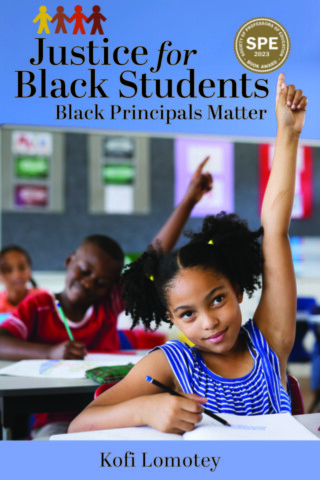
E-books are now distributed via VitalSource
VitalSource offer a more seamless way to access the ebook, and add some great new features including text-to-voice. You own your ebook for life, it is simply hosted on the vendor website, working much like Kindle and Nook. Click here to see more detailed information on this process.
Library E-Books
We are signed up with aggregators who resell networkable e-book editions of our titles to academic libraries. These editions, priced at par with simultaneous hardcover editions of our titles, are not available direct from Stylus.
These aggregators offer a variety of plans to libraries, such as simultaneous access by multiple library patrons, and access to portions of titles at a fraction of list price under what is commonly referred to as a "patron-driven demand" model.
In Justice for Black Students: Black Principals Matter, Kofi Lomotey begins with a two-pronged premise: (1) Black students do not receive a quality education in US public (or private) schools, and (2) Black principals, like Black teachers, can make a positive impact on the academic and overall success of Black students. Through the chronicling of his own work over 50 years—as a practitioner and an academic—Lomotey puts forth this argument with a focus on Black principals. In this book, he positions his 1993 coining of the term ethno-humanism—a role identity which he attributes to successful Black principals—as a fundamental/critical component of the leadership of these principals. In reprinting three of his earlier articles and sharing new information (including a review of the literature on Black male principals), he provides a broad-based description of this role identity and then links it to the more recent concepts of culturally responsive/culturally relevant teaching/pedagogy and culturally responsive/culturally relevant school leadership, before describing the implications for Black students of his own work and of other research that has been conducted on Black principals. This volume is essential reading for all educators interested in seeing a significant improvement in the academic and overall success of Black students. Preservice teachers, practitioners, and administrators will find enormous value in the book’s message.Perfect for courses such as: Introduction to Education │ Leadership for Equity and Social Justice in Education │ Black Education │ Multicultural Education │ School Leadership │ Culturally Responsive Leadership
More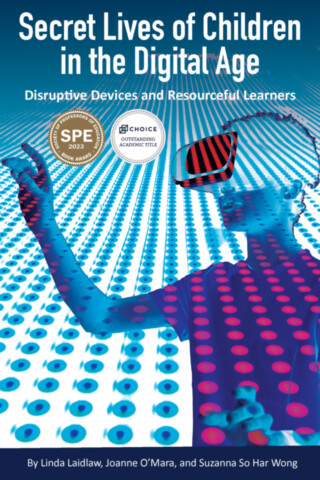
E-books are now distributed via VitalSource
VitalSource offer a more seamless way to access the ebook, and add some great new features including text-to-voice. You own your ebook for life, it is simply hosted on the vendor website, working much like Kindle and Nook. Click here to see more detailed information on this process.
Library E-Books
We are signed up with aggregators who resell networkable e-book editions of our titles to academic libraries. These editions, priced at par with simultaneous hardcover editions of our titles, are not available direct from Stylus.
These aggregators offer a variety of plans to libraries, such as simultaneous access by multiple library patrons, and access to portions of titles at a fraction of list price under what is commonly referred to as a "patron-driven demand" model.
Secret Lives of Children in the Digital Age: Disruptive Devices and Resourceful Learners offers an examination of the impact on children, their families and their teachers, as digital technologies and new literacy practices have rapidly transformed how children learn, play and communicate. While ease of access to enormous knowledge bases presents many benefits and advantages, mobile screen technologies are often perceived by parents and teachers as disruptive and worrisome. Developed from a wide range of the authors’ research over the past decade to an examination of remote learning during the COVID 19 pandemic, this book posits that while teachers, parents and governments are focused on protecting children, what is often neglected is children’s own agency and capacity to engage with mobile technologies in ways that support them in pursuing their own interests, pleasures and learning. This text works to disrupt boundaries in research, policy and practice, between home and school, and across virtual and actual worlds, positioning children as both users of media texts and coproducers of digitally mediated knowledge, with peers, family and teachers. Secret Lives of Children in the Digital Age brings together over a decade of shared research, conversations, writing and friendships across diverse geographies. Over the past decade, digital technologies have rapidly transformed how children learn, play and communicate. Tablet devices such as iPads are now ubiquitous in the lives of many children. Such devices are easy to use and provide multimodal options (i.e. operable via touch, speech, and icons, as well as conventional text). Users do not need to be conventionally literate to have access to powerful search engines, social media platforms, a range of ‘apps’ and games, or to be able to share their own creations on publication venues such as YouTube, TikTok and more. While such ease of access can present many benefits and advantages when positioned in relation to children’s use, but this access is not without concern, since mobile screen technologies are often perceived by parents and teachers as disruptive and worrisome, with popular media ramping up fears via publication of sensational articles.Secret Lives of Children in the Digital Age contributes to research on digital literacies, and offers a pedagogical examination of digital possibilities for bringing playfulness and innovation into learning.Perfect for courses such as: Introduction to Literacy Research | Qualitative Research Methods | Early Literacy | Research Methods in Language and Literacy | Introduction to Qualitative Research | New and Digital Literacies | Digital Media Education | Theories of Language and Literacy
More
E-books are now distributed via VitalSource
VitalSource offer a more seamless way to access the ebook, and add some great new features including text-to-voice. You own your ebook for life, it is simply hosted on the vendor website, working much like Kindle and Nook. Click here to see more detailed information on this process.
Library E-Books
We are signed up with aggregators who resell networkable e-book editions of our titles to academic libraries. These editions, priced at par with simultaneous hardcover editions of our titles, are not available direct from Stylus.
These aggregators offer a variety of plans to libraries, such as simultaneous access by multiple library patrons, and access to portions of titles at a fraction of list price under what is commonly referred to as a "patron-driven demand" model.
Letters to the Field: Curriculum Scholars’ Stories for Future Generations encapsulates a generation of scholars who revitalized the field of Curriculum Studies across North America in the mid-1970s, as well as the generations of scholars who immediately followed, all of whom are now themselves senior scholars. Rather than another edited work of reprints or new monographs, this volume seeks to do something special by providing an opportunity for this group of scholars to speak to their field about understandings they believe to be of significance. The strength of this book generally resides in two overarching factors. First, there is the depth and strength of this well-rounded, highly regarded group of scholars whose work speaks to the heart of the interdisciplinary nature of curriculum studies and curriculum theorizing. Second, as you might imagine, this is a significant moment in the United States when the very foundation of curriculum theory–critical inquiry and often an engagement with questions of race, queerness, disability, and the like–continues to be under attack in K-12 schools and universities across the United States. Contributors speak to the foundations of the field and the contemporary challenges that the field and schools of education more broadly must survive. Contributions to this important work are five to seven handwritten or, in the case of scholars who are unable to write, typed pages. There are also chapters that have accompanying photos and drawings. The reproduction of actual letters in the book lend authenticity and will appeal to readers by giving an intimate view into the thoughts and wishes of these scholars. We also understand that, similar to the challenge folks might face when handwriting a document, some writing might not be legible to all readers. Therefore, stable QR codes and/or hyperlinks to typed versions of handwritten chapters are included so that readers can easily look at typed versions alongside the handwritten work online. Letters to the Field makes an invaluable contribution to Curriculum Studies. By providing a history of the rationale used to revitalize the field, it will prove a valuable addition to the libraries of educators in a variety of disciplines.Perfect for courses such as: Introduction to Curriculum Theory; Introduction to College Teaching; Social Foundations of Education; History of American Higher Education; Traditions of Inquiry; and Introduction to Scholarship
More
The Instructional Leaders Companion Workbook to Implementation Science: A Playbook for Instructional LeadersThis companion workbook, aligned to the three components of Implementation Science, Enabling Context, Effective Practices, and Effective Implementation, is a hands-on resource designed to help educators, instructional leaders, and district teams bring implementation science principles to life in real-world educational settings. The workbook provides structured tools, practical strategies, and real-world examples to bridge theory to practice, ensuring successful, sustainable, and equity-centered improvements in teaching and learning. Leaders will be able to plan, implement, monitor, and assess their chosen intervention. By the end of this workbook, leaders will have a complete strategic plan with all supports to finally reach their intended outcomes.Enabling Context focuses on creating the conditions for effective and lasting change, providing protocols, planning tools, and team-building activities to build capacity and align resources across leadership, staff, and support teams.Effective Practices translates research-based instructional strategies into actionable steps for the classroom, supporting continuous improvement through cycles of planning, implementation, and refinement.Effective Implementation guides teams through the entire process of planning, executing, monitoring, and assessing new initiatives, offering practical frameworks and data-informed decision-making tools to drive meaningful change.Whether used individually or together with Implementation Science: A Playbook for Instructional Leaders, this workbook empowers educators and leadership teams to create cohesive plans, collaborate effectively, and ensure their efforts lead to measurable improvements in student outcomes.CLICK HERE TO BUY THE PLAYBOOK/WORKBOOK BUNDLE AND SAVE!Perfect for courses in: Foundations of Implementation Science in Education; Instructional Leadership and School Improvement; Curriculum Design, Adoption, and Implementation; Data-Driven Decision Making for Educational Leaders; Systems Change and Continuous Improvement; Strategic Planning for K-12 Educational Initiatives; Evidence-Based Practices in Teaching and Learning; Educational Change Management and Policy Implementation; School Leadership and Organizational Effectiveness; Professional Development and Coaching for Educators.
More
E-books are now distributed via VitalSource
VitalSource offer a more seamless way to access the ebook, and add some great new features including text-to-voice. You own your ebook for life, it is simply hosted on the vendor website, working much like Kindle and Nook. Click here to see more detailed information on this process.
Library E-Books
We are signed up with aggregators who resell networkable e-book editions of our titles to academic libraries. These editions, priced at par with simultaneous hardcover editions of our titles, are not available direct from Stylus.
These aggregators offer a variety of plans to libraries, such as simultaneous access by multiple library patrons, and access to portions of titles at a fraction of list price under what is commonly referred to as a "patron-driven demand" model.
African American males are confronted with formidable barriers in their pursuit of quality education, resulting in stark disparities in academic performance, economic opportunities, and social outcomes. Despite numerous educational initiatives striving for parity, African American males persistently bear the brunt of the highest rates of suspensions, expulsions, and dropout rates, surpassing all other demographic groups. Educational environments often fail to acknowledge and integrate the cultural and social needs of Black males, viewing them as "problems" rather than recognizing their immense potential for academic and leadership success. The prevalence of negative stereotypes in media, particularly in video games, exacerbates societal biases, portraying African American males as inherently violent and criminal. These representations contribute to implicit biases that affect perceptions and treatment in real-life scenarios. The systemic issues within the education system, coupled with socioeconomic factors, result in African American males being underrepresented in advanced placement and gifted education programs. This underrepresentation limits their opportunities for higher education and professional advancement. Confronting these challenges necessitates a comprehensive approach that encompasses the creation of inclusive educational environments, the eradication of systemic racism, and the promotion of positive representations of African American males in media. By acknowledging and fostering the potential of Black males, society can strive to reduce disparities and cultivate a more equitable and just education system that recognizes and celebrates their academic and professional achievements.African American Males and Video Games explores the perspectives of four African American male college students aged 18 to 21 on the impact of video games on their academic growth and development. The participants, all maintaining a GPA of 3.0 or higher, shared their experiences with teachers, video games, and coping mechanisms. This qualitative approach allowed for a rich understanding of the participant's experiences and the role of video games in their academic and mental well-being.Video games emerged as a significant coping tool for the participants, providing a mental escape from academic and social pressures. The games allowed them to engage in competitive and creative activities, fostering a sense of accomplishment and reducing stress. For example, games like NBA 2K21 and Forza Horizon 4 enabled them to explore alter egos and interests in a virtual space, offering entertainment and a sense of community.African American Males and Video Games is a critical text for exploring alternatives in providing a quality education experience for young African American males. It is vital reading for educators in all areas of higher education, and a valuable teaching tool in Colleges of Education.Professor Rudolf Inderst interviewed Kenneth Jones for a New Books Network podcast. Listen at: https://newbooksnetwork.com/african-american-males-and-video-gamesPerfect for courses such as: Educational Psychology; Sociology of Education; African American Studies; Media Studies; Game Design; Youth Development; Digital Literacy; Cultural Studies; Educational Technology; Social Psychology; Gender Studies
More
E-books are now distributed via VitalSource
VitalSource offer a more seamless way to access the ebook, and add some great new features including text-to-voice. You own your ebook for life, it is simply hosted on the vendor website, working much like Kindle and Nook. Click here to see more detailed information on this process.
Library E-Books
We are signed up with aggregators who resell networkable e-book editions of our titles to academic libraries. These editions, priced at par with simultaneous hardcover editions of our titles, are not available direct from Stylus.
These aggregators offer a variety of plans to libraries, such as simultaneous access by multiple library patrons, and access to portions of titles at a fraction of list price under what is commonly referred to as a "patron-driven demand" model.
Womanish Black Girls/Women Resisting Contradictions of Silence and Voice is a collection of essays written by varied black women who fill spaces within the academy, public schools, civic organizations, and religious institutions. These writings are critically reflective and illuminate autobiographical storied-lives. A major theme is the notion of womanish black girls/women resisting the familial and communal expectations of being seen, rather than heard. Consequently, these memories and lived stories name contradictions between “being told what to do or say” and “knowing and deciding for herself.” Additional themes include womanism and feminism, male patriarchy, violence, cultural norms, positionality, spirituality, representation, survival, and schooling. While the aforementioned can revive painful images and feelings, the essays offer hope, joy, redemption, and the re-imagining of new ways of being in individual and communal spaces. An expectation is that middle school black girls, high school black girls, college/university black girls, and community black women will view this work as seedlings for understanding resistance, claiming voice, and healing.Perfect for courses in: Adolescent Development, American Studies, Black Studies, Educational Anthropology, Latino Studies, Multicultural Education, Social Foundations of Education, Sociology and Women's Studies.
More
E-books are now distributed via VitalSource
VitalSource offer a more seamless way to access the ebook, and add some great new features including text-to-voice. You own your ebook for life, it is simply hosted on the vendor website, working much like Kindle and Nook. Click here to see more detailed information on this process.
Library E-Books
We are signed up with aggregators who resell networkable e-book editions of our titles to academic libraries. These editions, priced at par with simultaneous hardcover editions of our titles, are not available direct from Stylus.
These aggregators offer a variety of plans to libraries, such as simultaneous access by multiple library patrons, and access to portions of titles at a fraction of list price under what is commonly referred to as a "patron-driven demand" model.
Improvement Science: Promoting Equity in Schools is intended for classroom teachers, school leaders, and district leaders charged with leading improvement efforts in schools. From questions such as “how do I develop a love of reading in my classroom?” to “how can I better manage student behavior during independent learning time?” to “what should we do to make sure kids of all races read at grade level by 3rd grade” to “how could we include families of all backgrounds as partners in learning” or “how do we increase our graduation rate among underserved students," this book shares real-life examples from those who are currently leading equity-focused improvement in our classrooms and schools. If you are curious about how Improvement Science has been used, or how others have succeeded—or failed—at equity-focused improvement efforts in our classrooms and in our schools, or if you’re wondering how to spur discussions in school districts, universities, and communities about leading equity-focused improvement, this book is for you. Teachers, students, family members, community members, principals and superintendents will be inspired to embrace Improvement Science as a method to improve equity in their schools. The book helps people new to Improvement Science to understand the basic steps to implement the process. If you’re a beginner, it provides some basic steps and a resource (https://www.carnegiefoundation.org/our-ideas/six-core-principles-improvement/) to help you understand the process better; for those with some experience, the book will be an excellent refresher and tool with functional suggestions to take your practice further. 1. Form a Team. 2. Examine Data. 3. Ask Why. 4. Read Research. 5. Get Perspective of Those Closest to the Problem. 6. Plan the Change. After you’ve done the above, then it’s time to test one idea, using short Plan Do Study Act cycles. These are short improvement cycles. Students are only in our classrooms generally for one year, so the cycles need to be short, perhaps even as short as one week, to ensure that every instructional move we are making truly does improve the experience of the students. Readers of Improvement Science: Promoting Equity in Schools will be taking an important step toward achieving the goal of producing socially just classrooms and schools.WATCH: Meet the Authors (ZOOM recording from #CPED21 Virtual Convening, 10/20/21). To learn more about Improvement Science and see our full list of books in this area, please click through to the Myers Education Press Improvement Science website. Perfect for courses such as: Culturally Responsive Learning Environments; Educating For Equity And Social Justice; Cultivating Culturally Responsive Classrooms; Integrating Methods And Curriculum Design; Inquiry, Assessment, And Instructional Design; Foundations Of Culturally And Linguistically Responsive Practice; Math Literacy; Physical Education; Professional Collaboration In Education; Language And Literacy Development Of Diverse Learners; Equal Opportunity: Racism; Diversity And Equity In Schools; Cultural Proficiency In Schools; Language And Power In Education; Teaching For Equity In Literacy; Supportive Classroom Communities; Cultural Diversity In Literature; Engaging Students In Writing; Introduction To School Leadership; Introduction To School Improvement; Teacher Leadership And School Improvement
More
E-books are now distributed via VitalSource
VitalSource offer a more seamless way to access the ebook, and add some great new features including text-to-voice. You own your ebook for life, it is simply hosted on the vendor website, working much like Kindle and Nook. Click here to see more detailed information on this process.
Library E-Books
We are signed up with aggregators who resell networkable e-book editions of our titles to academic libraries. These editions, priced at par with simultaneous hardcover editions of our titles, are not available direct from Stylus.
These aggregators offer a variety of plans to libraries, such as simultaneous access by multiple library patrons, and access to portions of titles at a fraction of list price under what is commonly referred to as a "patron-driven demand" model.
It’s clear that American public education has been under assault for more than the last 30 years. So much of this current "age of accountability" has focused on blame, both of teachers and those who prepare them. Somehow, unlike in other professions, declarations were made to the effect that anyone could teach better than teachers, including business leaders and people from tony universities without teacher preparation. The Age of Accountability scrutinizes the attack on teachers through weaponized data. While an effective corporate tool to improve bottom-line goals, its use in education became more sinister and misanthropic. International PISA scores imply the mediocre ability of American students, fueling a belief that American education needed more than an upgrade. The only answer that would placate many was a complete upheaval, a redefinition of a teacher and who should be permitted to become one. We teachers ceded authority to these business and legislative forces. Their subsequent fervor for testing overwhelmed teaching and drove the joy out of schooling for students. It is time for a recounting of what has been done to the profession and to our children. Young teachers need encouragement and veteran teachers need reminding of their valiant and effective efforts.
More