
Search results for award
E-books are now distributed via VitalSource
VitalSource offer a more seamless way to access the ebook, and add some great new features including text-to-voice. You own your ebook for life, it is simply hosted on the vendor website, working much like Kindle and Nook. Click here to see more detailed information on this process.
Library E-Books
We are signed up with aggregators who resell networkable e-book editions of our titles to academic libraries. These editions, priced at par with simultaneous hardcover editions of our titles, are not available direct from Stylus.
These aggregators offer a variety of plans to libraries, such as simultaneous access by multiple library patrons, and access to portions of titles at a fraction of list price under what is commonly referred to as a "patron-driven demand" model.
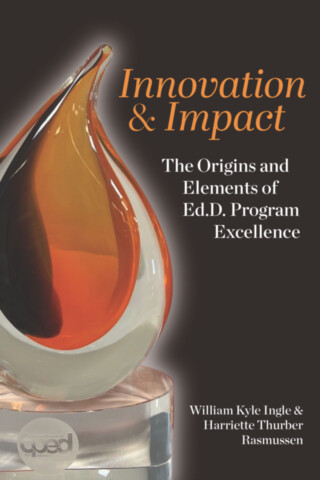
Professional and educational associations, such as the Carnegie Project for the Education Doctorate (CPED), create and offer awards that recognize the accomplishments of individuals, programs, and institutions. In this edited book, W. Kyle Ingle and Harriette Thurber Rasmussen focus on CPED’s Program of the Year (POY) Award, examining its history, purpose, submission requirements, its committee structure, activities, and outcomes. Faculty members from CPED’s award-winning institutions have been invited to discuss their innovative programs, how these innovations were developed, how they pursue social justice, and how these innovations have been sustained since winning the award. Furthermore, the award’s role in facilitating the diffusion of innovative and effective practices among CPED member institutions is examined. The book and its chapters are framed through the lens of innovation diffusion theory. Popularized by communication theorist Everett Rogers (1967, 2003), innovation diffusion theory has spread widely across the social sciences. In his seminal work, Diffusion of Innovations, Rogers defines an innovation as “an idea, practice, or object that is perceived as new by an individual or other unit of adoption” (2003, p. 12). Innovation diffusion is the process by which an innovation spreads among the members of a social system, in this case the internal and external communities of Ed.D.-granting institutions.The book includes dual components: (1) innovative programs that drive social justice and (2) how these institutional innovations were developed and sustained. The latter component will shed light on three self-study processes related to these award-winnng programs: The process of creating the featured innovative program;The process of applying for the program of the year award; and The process of writing the journey and considering the impact of the program of the year award on their institution, including any reinvention/adaptations. Taken together, readers will examine and understand “process[es] by which alteration occurs in the structure and function of a social system” (Rogers, 1995, p. 6) in pursuit of social justice goals through programmatic innovation.Perfect for courses such as: Program Development & Assessment in Higher Education; Instructional Planning for Student Learning and Achievement; Performance Improvement; Instructional Design and Development; e-Learning Design and Development; College Teaching; Supervised Experience in Higher Education; Special Problems in Educational Leadership; Professional Projects in Higher Education; Organizational Improvement in Higher Education
More
A 2022 SPE Outstanding Book Award Winner We Be Lovin' Black Children is a pro-Black book. Pro-Black does not mean anti-white or anti anything else. It means that this little book is about what we must do to ensure that Black children across the world are loved, safe, and that their souls and spirits are healed from the ongoing damage of living in a world where white supremacy flourishes. It offers strategies and activities that families, communities, social organizations, and others can use to unapologetically love Black children. This book will facilitate Black children's cultural and academic excellence.Meet the editors: https://youtu.be/q21_yZCblk8
More
E-books are now distributed via VitalSource
VitalSource offer a more seamless way to access the ebook, and add some great new features including text-to-voice. You own your ebook for life, it is simply hosted on the vendor website, working much like Kindle and Nook. Click here to see more detailed information on this process.
Methodology and Praxis: Thinking with Patti Lather examines the work of Patti Lather and its importance at the intersections of curriculum theory, cultural studies, and critical qualitative research. The book explores the impact of Lather's work on the field both broadly and specifically and engages with her ideas and methods in innovative ways. From 1988-2014, Patti Lather was a faculty member at Ohio State University’s School of Educational Policy and Leadership, where she taught qualitative research, feminist methodology, and courses on gender and education. She has authored four influential books: Getting Smart: Feminist Research and Pedagogy With/in the Postmodern (1991 Critics Choice Award); Troubling the Angels: Women Living with HIV/AIDS (co-written with Chris Smithies, 1998 CHOICE Outstanding Academic Title); Getting Lost: Feminist Efforts Toward a Double(d) Science (2008 Critic’s Choice Award); and Engaging (Social) Science: Policy from the Side of the Messy (awarded the Critic’s Choice Award in 2010 and 2011). Dr. Lather has delivered lectures extensively both nationally and internationally, and has held several distinguished visiting lectureships. Her research explores (post)critical, feminist, and poststructural theories, with her recent work focusing on how the demand for scientifically-based research in education affects qualitative inquiry. She has served in visiting roles at institutions such as the University of British Columbia, Goteborg University, York University, and the Danish Pedagogy Institute, and in 1995 she undertook a sabbatical at the Humanities Research Institute at the University of California, Irvine, where she participated in a seminar on feminist research methodology. Her accolades include a 1989 Fulbright to New Zealand and induction as an AERA Fellow in 2009. Lather is a prominent and prolific scholar whose work has been influential in shaping multiple fields, challenging conventional understandings of research and knowledge, and advocating for social justice and equity in education. This collection represents a diverse group of scholars that build on these contributions and showcase the diverse ways in which research improves teaching and learning. Contributors in this volume include scholars in educational theory, social science, research methodology, feminist social theory, and curriculum theorizing. Perfect for courses such as: Cultural Studies of Education; Qualitative Research Methodology; Contemporary Curriculum Theory; Advanced Qualitative Inquiry; Feminist Theory and Methodology; Education Policy Studies; Research In Education
More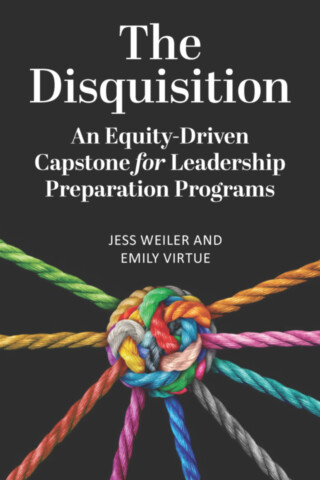
E-books are now distributed via VitalSource
VitalSource offer a more seamless way to access the ebook, and add some great new features including text-to-voice. You own your ebook for life, it is simply hosted on the vendor website, working much like Kindle and Nook. Click here to see more detailed information on this process.
Library E-Books
We are signed up with aggregators who resell networkable e-book editions of our titles to academic libraries. These editions, priced at par with simultaneous hardcover editions of our titles, are not available direct from Stylus.
These aggregators offer a variety of plans to libraries, such as simultaneous access by multiple library patrons, and access to portions of titles at a fraction of list price under what is commonly referred to as a "patron-driven demand" model.
The Disquisition: An Equity-Driven Capstone for Leadership Preparation Programs provides a thoughtful, detailed example of a capstone process and paper (The Disquisition) that employs improvement science, critical theory, and critical praxis to prepare educational leaders to disrupt inequity within their organizations. The chapters in this book represent 12 years of collaborative learning among experienced, respected, and award-winning leadership preparation faculty presently at or formerly from Western Carolina University (WCU). It integrates multiple sources of data from research, student feedback, faculty experiences, capstone committee member input, learnings from the Carnegie Project on the Education Doctorate (CPED), and program evaluation data examining the achievement of student learning outcomes. Following foundational chapters that describe the origin and evolution of the disquisition at WCU and its focus on social justice, faculty present six chapters—each one clearly detailing a primary component of the disquisition process and paper including the problem of practice; a causal analysis; identifying the improvement initiative; designing the improvement initiative; evaluating the improvement initiative and reporting results; and implications, recommendations, and leadership lessons learned. Each of these chapters includes a brief introduction to the component; expectations for students as practitioners (leading the work); expectations for students as scholars (evaluating and writing about the work); an excerpt from the disquisition paper outline relevant to the component; example figures, tables, or text from completed disquisition papers; and scholarly resources for scholar-practitioners. The final chapter of the book presents the process for convening a disquisition committee, a description of the IRB process, and the expectations for defending the disquisition at both the proposal defense and the final defense meeting. Although this book is written as a guide for students engaging in the disquisition process and writing the disquisition paper, it serves as a strong model for leadership preparation programs and university administrators who seek to build or refine their capstone (and program) in ways that ensure students are prepared to lead justice-driven transformation across their organizations.Perfect for courses such as: Dissertation-in-Practice Writing; Academic Writing for the Scholar Practitioner; Capstone-Independent Study; Capstone-Student Learning Community; Improvement Science: Data Collection, Analysis & Reporting; Improvement Science: Data Presentation; The Role of the Scholar-Practitioner as Educational Leader
More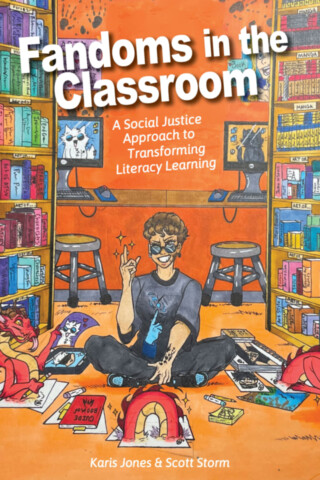
E-books are now distributed via VitalSource
VitalSource offer a more seamless way to access the ebook, and add some great new features including text-to-voice. You own your ebook for life, it is simply hosted on the vendor website, working much like Kindle and Nook. Click here to see more detailed information on this process.
Library E-Books
We are signed up with aggregators who resell networkable e-book editions of our titles to academic libraries. These editions, priced at par with simultaneous hardcover editions of our titles, are not available direct from Stylus.
These aggregators offer a variety of plans to libraries, such as simultaneous access by multiple library patrons, and access to portions of titles at a fraction of list price under what is commonly referred to as a "patron-driven demand" model.
What is a fandom, and why do fandoms matter for school? Fandoms are passionate communities dedicated to appreciating and engaging with texts of interest (movies, TV shows, books, bands, brands, sports teams, etc.) via personally and communally meaningful literacy practices. It is increasingly obvious that scripted literacy curricula and standardized tests fall short of meeting meaningful literacy goals and create culturally destructive learning spaces. Fandoms in the Classroom provides an alternative for educators looking to center passion in their classrooms, individualizing their literacy curricula by building from youth’s interests. The book describes how educators in a wide range of secondary learning contexts can build curricula around students’ already-present fandom interests to support literacy growth. This text supports educators in a range of learning contexts with step-by-step processes for building learning spaces that support navigation of fandom and disciplinary literacies, with a particular focus on common obstacles and roadblocks that teachers have shared with us. It addresses how classrooms doing critical fandom work can address social justice issues across both fandom and disciplinary communities. This book covers relevant topics such as:Why Fandoms? We introduce readers to the concept of fandoms and how engaging students’ experiences in fandoms is not an extra or add-on but instead crucial to flipping the script on literacy learning.Bring Your Fandom to Class: Critically Putting Communities in Conversation. The book discusses how to shift ideas of literacy learning contexts from teacher-centric instruction to a community learning model.Fostering Engagement & Choosing Texts Together: Teachers are often nervous about teaching what they don’t know. The text provides strategies for making learning ecologies and having kids fill it with their own interests, describing specific step-by-step discussion routines that can support youth’s engagement with critical tools on texts of their choice.Building Culturally Responsive Assessments Engaging Youth-Centric Audiences: the book describes how educators can design more expansive literacy assessments with examples of culturally responsive objectives and tasks. The authors include a range of fandom genres and audiences that they have seen in their own work.Transforming Your Current Curriculum in Conversation with Fandoms: Supporting educators interested in expanding literature units in conversation with fandom texts, the text describes how to design units that put various discourse communities in conversation without deadening or co-opting youth interests.Interdisciplinary Applications: there is a discussion about specific examples of how educators the authors have supported in various contexts have applied this kind of work. It includes a focus on cross-disciplinary literacy, with cases highlighting applications for math, science, social studies and music disciplinary learning.Fandoms in the Classroom is a step-by-step guide for literacy instructors struggling to engage their students in meaningful learning. It is essential reading.Perfect for courses such as: Foundations of Literacy; Disciplinary Literacy; Literacy Across the Curriculum; Children's or Young Adult Literature; Writing in the Classroom; Digital Media Literacy; New and Digital Literacies; Teaching Diverse Learners; Theory to Practice; Language, Literacy and Culture; Literacy Policy and Practice; Foundations of Literacy Education; Popular Culture in Literacy Classrooms; History of Literacy Practices; Reading and Language Arts; Critical Theory
More
E-books are now distributed via VitalSource
VitalSource offer a more seamless way to access the ebook, and add some great new features including text-to-voice. You own your ebook for life, it is simply hosted on the vendor website, working much like Kindle and Nook. Click here to see more detailed information on this process.
Library E-Books
We are signed up with aggregators who resell networkable e-book editions of our titles to academic libraries. These editions, priced at par with simultaneous hardcover editions of our titles, are not available direct from Stylus.
These aggregators offer a variety of plans to libraries, such as simultaneous access by multiple library patrons, and access to portions of titles at a fraction of list price under what is commonly referred to as a "patron-driven demand" model.
Letters to the Field: Curriculum Scholars’ Stories for Future Generations encapsulates a generation of scholars who revitalized the field of Curriculum Studies across North America in the mid-1970s, as well as the generations of scholars who immediately followed, all of whom are now themselves senior scholars. Rather than another edited work of reprints or new monographs, this volume seeks to do something special by providing an opportunity for this group of scholars to speak to their field about understandings they believe to be of significance. The strength of this book generally resides in two overarching factors. First, there is the depth and strength of this well-rounded, highly regarded group of scholars whose work speaks to the heart of the interdisciplinary nature of curriculum studies and curriculum theorizing. Second, as you might imagine, this is a significant moment in the United States when the very foundation of curriculum theory–critical inquiry and often an engagement with questions of race, queerness, disability, and the like–continues to be under attack in K-12 schools and universities across the United States. Contributors speak to the foundations of the field and the contemporary challenges that the field and schools of education more broadly must survive. Contributions to this important work are five to seven handwritten or, in the case of scholars who are unable to write, typed pages. There are also chapters that have accompanying photos and drawings. The reproduction of actual letters in the book lend authenticity and will appeal to readers by giving an intimate view into the thoughts and wishes of these scholars. We also understand that, similar to the challenge folks might face when handwriting a document, some writing might not be legible to all readers. Therefore, stable QR codes and/or hyperlinks to typed versions of handwritten chapters are included so that readers can easily look at typed versions alongside the handwritten work online. Letters to the Field makes an invaluable contribution to Curriculum Studies. By providing a history of the rationale used to revitalize the field, it will prove a valuable addition to the libraries of educators in a variety of disciplines.Perfect for courses such as: Introduction to Curriculum Theory; Introduction to College Teaching; Social Foundations of Education; History of American Higher Education; Traditions of Inquiry; and Introduction to Scholarship
More
E-books are now distributed via VitalSource
VitalSource offer a more seamless way to access the ebook, and add some great new features including text-to-voice. You own your ebook for life, it is simply hosted on the vendor website, working much like Kindle and Nook. Click here to see more detailed information on this process.
Library E-Books
We are signed up with aggregators who resell networkable e-book editions of our titles to academic libraries. These editions, priced at par with simultaneous hardcover editions of our titles, are not available direct from Stylus.
These aggregators offer a variety of plans to libraries, such as simultaneous access by multiple library patrons, and access to portions of titles at a fraction of list price under what is commonly referred to as a "patron-driven demand" model.
There are novels that portray cities as magical places, others as stifling, imposing environments, and others still as a gritty but beautiful, living landscape. Cities can be the center of culture, business, the arts, and are the meeting places for diversities of all kinds. Examining Images of Urban Life gathers contributions from scholars, educators, and young adult authors, like Benjamin Alire Saenz and e.E. Charlton-Trujillo, who consider how living in a city affects character identity and growth, and the ways authors world-build the urban setting. The collection discusses what the urban landscape means, and dispels the media-driven, anecdotally propagated preconceptions about city living.Urban life is varied and rich, just as its literature is. The collection revolves around a reconsideration of what the city represents, to its readers and to its inhabitants, and serves as a resource in urban settings, wherein teachers can select books that mirror and advocate for the students sitting in their classes.Perfect for courses such as: Young Adult Literature | Children’s Literature | Elementary Literacy | Reading and Literacy | Methods of Teaching | Public Purposes of Education | Educational or Historical Foundations of Education | Urban Studies | Media and Library Sciences
More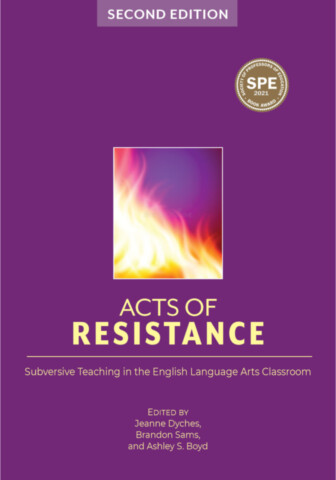
E-books are now distributed via VitalSource
VitalSource offer a more seamless way to access the ebook, and add some great new features including text-to-voice. You own your ebook for life, it is simply hosted on the vendor website, working much like Kindle and Nook. Click here to see more detailed information on this process.
Library E-Books
We are signed up with aggregators who resell networkable e-book editions of our titles to academic libraries. These editions, priced at par with simultaneous hardcover editions of our titles, are not available direct from Stylus.
These aggregators offer a variety of plans to libraries, such as simultaneous access by multiple library patrons, and access to portions of titles at a fraction of list price under what is commonly referred to as a "patron-driven demand" model.
The first edition of Acts of Resistance: Subversive Teaching in the English Language Arts (ELA) Classroom won the 2021 Society of Professors of Education's Outstanding Book Award and garnered other nominations. The second edition includes a foreword by Ashley Hope Pérez, author of the young adult literature novel Out of Darkness, one of the most frequently banned books across U.S. classrooms. Four new chapters reflect sociopolitical changes since the book's publication, including a widespread, coordinated uptick in the banning of books centering authors and characters from marginalized communities; the COVID-19 pandemic and with it, increased acts of violence against folks identifying as Asian, Asian American, and Pacific Islander; the murders of George Floyd, Breonna Taylor, and countless other victims of police brutality; the January 6th insurrection; the closing of the Trump era; the passing of anti-CRT and anti-LGBTQIA+ legislation; and a "school choice" movement that defunds public schools, deprofessionalizes educators, and places democracy in peril. Chapters specifically illustrate the storied practices of subversive teachers across the 6-12 ELA context. They provide educators with instructional ideas on how to do anti-oppressive work while also meeting traditional ELA disciplinary elements.
More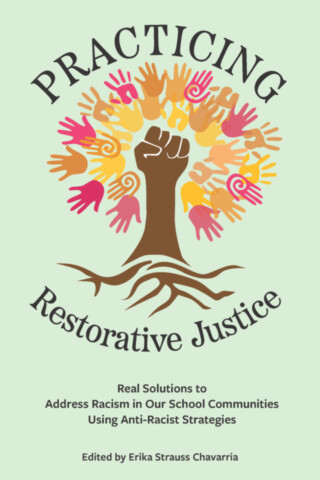
E-books are now distributed via VitalSource
VitalSource offer a more seamless way to access the ebook, and add some great new features including text-to-voice. You own your ebook for life, it is simply hosted on the vendor website, working much like Kindle and Nook. Click here to see more detailed information on this process.
Library E-Books
We are signed up with aggregators who resell networkable e-book editions of our titles to academic libraries. These editions, priced at par with simultaneous hardcover editions of our titles, are not available direct from Stylus.
These aggregators offer a variety of plans to libraries, such as simultaneous access by multiple library patrons, and access to portions of titles at a fraction of list price under what is commonly referred to as a "patron-driven demand" model.
Traditionally, educator preparation programs only provide classes related to content, practical pedagogy, and classroom management. If we hope to see any level of justice in the education system, preparation programs must include courses that take an honest and deep dive into the ways in which racism shows up in schools and communities. Aspiring educators are craving and demanding the tools and resources to be the best educators they can be for our students in this country. They know the importance of advocating for and enacting anti-racism in their pedagogical practices, in school policy and culture, and in their community. The authors of this book will offer first-hand testimony of how deep racism permeates public education, an institution that, since its founding, was never meant for Black and brown students, as well as solutions to create truly just and equitable school communities. The ultimate mission of Practicing Restorative Justice is to show readers the effectiveness of restorative justice practices in addressing a number of issues that impact Black and brown students. It takes a deep dive into the School-to-Prison Pipeline, in which failed education policies push students of color out of schools and into the penal system, dooming them for life. Other topics include policing in schools, systemic racism’s impact on classrooms and learners at all grade levels, and ways in which to decolonize the education system. The book provides classroom instructors, college of education faculty, and preservice teachers the concrete means to improve the learning experience of students of color in our public education system.
More
E-books are now distributed via VitalSource
VitalSource offer a more seamless way to access the ebook, and add some great new features including text-to-voice. You own your ebook for life, it is simply hosted on the vendor website, working much like Kindle and Nook. Click here to see more detailed information on this process.
Privilege Through the Looking-Glass, Third Edition is a revised and expanded collection of essays that explore privilege and status characteristics in daily life. This collection seeks to make visible that which is often invisible. It seeks to sensitize us to things we have been taught not to see. Privilege, power, oppression, and domination operate in complex and insidious ways, impacting groups and individuals. And yet, these forces that affect our lives so deeply seem to at once operate in plain sight and lurk in the shadows, making them difficult to discern. Like water to a fish, environments are nearly impossible to perceive when we are immersed in them. This book attempts to expose our environments.With engaging and powerful writing, the contributors share their personal stories as a means of connecting the personal and the public. This volume applies an intersectional perspective to explore how race, class, gender, sexuality, education, and ableness converge, creating the basis for privilege and oppression. Privilege Through the Looking-Glass encourages readers to engage in self and social reflection and can be used in a range of courses in sociology, social work, communication, education, gender studies, and Black studies. Each chapter includes discussion questions and/or activities for further engagement, making it a perfect classroom text.
More