
Search results for making sense of rac

E-books are now distributed via VitalSource
VitalSource offer a more seamless way to access the ebook, and add some great new features including text-to-voice. You own your ebook for life, it is simply hosted on the vendor website, working much like Kindle and Nook. Click here to see more detailed information on this process.
Let's face it: studying Special Education Law is difficult and can be quite tedious. If it were not a part of the requirements for most advanced administrative degrees in education, many students would prefer to skip the course. However, skipping the study of Special Education Law would be quite detrimental to the anticipated and actual experience not only of principals, but also of many other central office administrators, and especially Superintendents. Mistakes in Special Education Law not only lead to shortchanging students and failing to meet their needs, but the same mistakes can be quite costly to school districts in lawsuits, sanctions, and personnel issues. Case Studies for Special Education Law: One Foot in the Real World, the Other Grounded in the Law gives actual case studies that discuss the issues in special education today. It is a great resource and textbook addition for university courses, and would be outstanding for school district personnel to use for professional development. For each case study, the book follows the Issue, Rule, Application, and Conclusion (IRAC) format: Clearly identify the ISSUE associated with the case. What did the school do? What are the parents alleging? What are the parents asking for? Determine the relevant RULE: what part of special education law most impacts this case? Who else is involved in the case? Is it clear cut for either side? ANALYSIS or APPLICATION: as an outside observer, what did the school do right? Do the parents have an actionable case? Did it go to hearing? Was due process involved? Were advocates involved? CONCLUSION: was a settlement arrived at through mediation? If not, what was the next step? Did the parents hire an attorney? What lessons were learned? How can this be applied to administrative practice? Case Studies for Special Education Law is an essential book for two audiences: graduate-level special education law courses to use as discussions as they cover particular aspects of special education law, so that they can see how the law plays out in real life, and school district special education administrators to use in training their special education teachers and other administrators in professional development every year.Perfect for courses such as: Special Education Law; School Law; Introduction to Special Education; Introduction to Emotional and Behavioral Disorders; Introduction to Students with Intense Intervention Needs; Special Education Administration; Theory and Practice in Early Childhood Special Education; Advanced Studies in Emotional and Behavioral Disorders
More
E-books are now distributed via VitalSource
VitalSource offer a more seamless way to access the ebook, and add some great new features including text-to-voice. You own your ebook for life, it is simply hosted on the vendor website, working much like Kindle and Nook. Click here to see more detailed information on this process.
Library E-Books
We are signed up with aggregators who resell networkable e-book editions of our titles to academic libraries. These editions, priced at par with simultaneous hardcover editions of our titles, are not available direct from Stylus.
These aggregators offer a variety of plans to libraries, such as simultaneous access by multiple library patrons, and access to portions of titles at a fraction of list price under what is commonly referred to as a "patron-driven demand" model.
Conservative ideologues have sought to shift the focus from the collective good to the individual good and to redirect the purposes and aims of education away from public benefit and in favor of private enterprise. As such, market-oriented, privatized, and standardized approaches to education reform have worked toward achieving that goal. This book is a primer on how the political right is utilizing various aspects of philanthropy and the political process to influence educational policymaking. In 1971, corporate lawyer and future U.S. Supreme Court Justice Lewis Powell wrote a detailed memo that galvanized a small group of conservative philanthropists to create an organizational structure and fifty-year plan to alter the political landscape of the United States. Funded with significant “dark money,” the fruits of their labor are evident today in the current political context and sharp cultural divisions in society. Philanthropy, Hidden Strategy, and Collective Resistance examines the ideologies behind the philanthropic efforts in education from the 1970s until today. Authors examine specific strategies philanthropists have used to impact both educational policy and practice in the U.S. as well as the legal and policy context in which these initiatives have thrived. The book, aimed for a broad audience of educators, provides a depth of knowledge of philanthropic funding as well as specific strategies to incite collective resistance to the current context of hyperaccountability, privatization of schooling at all levels, and attempts to move the U.S. further away from a commitment to the collective good.Perfect for courses such as: Critical and Contemporary Issues in Education, Education Policy, Educational Policy Analysis, Social Foundations of Education, Philanthropy, Public Policy & Community Change, Philanthropic Studies, Sociology of Education, Politics of Education, Current Issues in Education, Government and the Mass Media, Polarization of American Politics.
More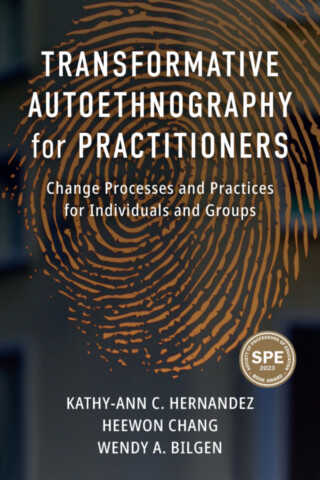
E-books are now distributed via VitalSource
VitalSource offer a more seamless way to access the ebook, and add some great new features including text-to-voice. You own your ebook for life, it is simply hosted on the vendor website, working much like Kindle and Nook. Click here to see more detailed information on this process.
Library E-Books
We are signed up with aggregators who resell networkable e-book editions of our titles to academic libraries. These editions, priced at par with simultaneous hardcover editions of our titles, are not available direct from Stylus.
These aggregators offer a variety of plans to libraries, such as simultaneous access by multiple library patrons, and access to portions of titles at a fraction of list price under what is commonly referred to as a "patron-driven demand" model.
Can transformation be the primary goal of autoethnographic research? In this book, the authors present a compelling case that this is indeed possible. Since autoethnography first appeared as a nascent approach to social inquiry, much has been written about it as a useful addition to the field of qualitative research methods. Over the years, its usage has been extended across various disciplines including the humanities, human services, social sciences, leadership studies, engineering, education, counseling, and even medical education. Notably, the primary function of autoethnography to advance our understanding around sociocultural phenomena has been increasingly paired with a parallel function of the many ways in which this research method can also contribute to practice. However, though its contribution to scholarship is well documented, less has been written about its practical usage as the focal point of inquiry. Yet there is growing evidence that one of the emerging strengths of autoethnography is its transformative capabilities. In Transformative Autoethnography for Practitioners, Hernandez, Chang and Bilgen turn the spotlight on autoethnography as a tool for practitioners where the primary goal is to solve real world problems by facilitating transformational change at the individual, group and/or organizational levels. They draw on existing scholarship as well as their collective work and expertise to provide a Transformative Autoethnographic Model (TAM) for use by practitioners who are intent on effecting such changes in their respective contexts. The book contains seven chapters. Chapters One through Three provide the theoretical grounding for a transformative autoethnography model. Chapter One begins with a broad overview of autoethnographic research and the unique characteristics of this method that makes it especially suited for effecting transformational learning. In chapters Two and Three, the authors provide a quick review of the literature relevant to individual autoethnography and collaborative autoethnography respectively. Each chapter discussion is centered around explicating the transformative elements of the method as well as how it is able to effect change at the individual, group, and organizational level. Chapters Four through Six focus on the praxis of transformative autoethnography. In Chapter Four, the transformative autoethnography model (TAM) is presented in detail and templates are provided for its application. Chapters Five and Six show the application of the TAM in a variety of settings. The book ends with a final chapter discussion on the continuing evolution of autoethnographic explorations, as well as future applications for the TAM model in a fast changing digital landscape. Perfect for courses such as: Research Methods in the Social Sciences | Qualitative Research Methods | Narrative Research | Advanced Qualitative Research Methods | Coaching and Consulting | Leading Change
More
E-books are now distributed via VitalSource
VitalSource offer a more seamless way to access the ebook, and add some great new features including text-to-voice. You own your ebook for life, it is simply hosted on the vendor website, working much like Kindle and Nook. Click here to see more detailed information on this process.
Walking the Doctoral Trail: A Fully Relatable (and Occasionally Humorous) Guide for Successful Completion and Beyond is not a how-to manual—and that is exactly the point. For many prospective and current doctoral students, beginning a doctorate is one of the most meaningful, and most underestimated, undertakings of their lives. This book meets doctoral sojourners where they are: curious, hopeful, anxious, determined, sometimes discouraged, and often more alone than expected. Rather than offering a prescriptive formula for “how to finish,” it invites readers into honest reflection, grounded conversation, and realistic preparation and action for the doctoral journey as it is truly lived. Co-authored by three doctoral completers, the book reflects decades of experience walking alongside doctoral students as educators, advisors, and practitioner-scholars who understand the academic and personal demands of doctoral life. Together, the authors offer diverse perspectives without promoting a single theoretical, methodological, or disciplinary stance. Using the metaphor of a hiking trail, Walking the Doctoral Trail supports doctoral students across disciplines and program structures and acknowledges that journeys differ in terrain and pacing, yet share common challenges and turning points. Organized into seven chapters representing stages of the doctoral journey, each topic includes reflection, guidance, warnings, trail tales, and space for readers’ own notes. Humor—through original cartoons—is woven throughout, reminding readers they are not alone and that completing the hike is achievable. Ideal for doctoral orientation courses and mentoring conversations, this book offers companionship, perspective, wisdom, and steady encouragement for those committed to walking the doctoral trail to the end. It will be a meaningful gift for someone considering—or beginning—a doctorate program as well! Walking the Doctoral Trail is an invaluable tool for every doctoral student, regardless of the stage that they find themselves in in their program.Perfect for courses such as: Introduction to Doctoral Education; Doctoral Research Seminar; Dissertation/Thesis Proposal Writing; Doctoral Dissertation Seminar; Foundations of Social Science Research; Foundations of Behavioral Science Research; Foundations of Organizational and Leadership Research; Introduction to Educational Research; Doctoral Mentoring and Advising; Inquiry as Practice
More
E-books are now distributed via VitalSource
VitalSource offer a more seamless way to access the ebook, and add some great new features including text-to-voice. You own your ebook for life, it is simply hosted on the vendor website, working much like Kindle and Nook. Click here to see more detailed information on this process.
Library E-Books
We are signed up with aggregators who resell networkable e-book editions of our titles to academic libraries. These editions, priced at par with simultaneous hardcover editions of our titles, are not available direct from Stylus.
These aggregators offer a variety of plans to libraries, such as simultaneous access by multiple library patrons, and access to portions of titles at a fraction of list price under what is commonly referred to as a "patron-driven demand" model.
Since the founding of the nation, higher education has helped female faculty and students assert themselves in establishing equality between men and women across the country (Morris, 1984). During the nineteenth century, women had limited access to many sectors of American society because of their inferior status to men. Such differences were visible in both political and academic arenas. This discrimination reflected general societal norms of the time, relegating women to the roles of mothers and homemakers. Women and Gender in Higher Education provides a comprehensive review of the varying concepts that address the development of women in higher education, including how women understand the world around them—making meaning for themselves and their environment—and acknowledging the intersectionality of their identity. It also breaks new ground in the conversation about the roles of women and gender in higher education.
More
E-books are now distributed via VitalSource
VitalSource offer a more seamless way to access the ebook, and add some great new features including text-to-voice. You own your ebook for life, it is simply hosted on the vendor website, working much like Kindle and Nook. Click here to see more detailed information on this process.
Library E-Books
We are signed up with aggregators who resell networkable e-book editions of our titles to academic libraries. These editions, priced at par with simultaneous hardcover editions of our titles, are not available direct from Stylus.
These aggregators offer a variety of plans to libraries, such as simultaneous access by multiple library patrons, and access to portions of titles at a fraction of list price under what is commonly referred to as a "patron-driven demand" model.
Connecting cultures to educational settings is an essential component of critical pedagogy. This book addresses many of the key issues and challenges in decolonizing the African school curriculum. It highlights important philosophical arguments on the challenges and possibilities of achieving these goals in a meaningful manner. Topics covered in the book include: operationalizing the key terms of “inclusion” and “curriculum”strategies for Africanizing the school curriculum, andthe implications of local knowledge for schooling reform This book also raises a variety of key questions: how do we frame an inclusive anti-colonial African future and what is the nature of the work required to collectively arrive at that future?what education are learners of today going to receive and how will they apply it to their schooling and work lives?how do we re-fashion our work as African educators and learners to create more relevant understandings of what it means to be human?how do we challenge colonizing and imperializing relations of the academy? What are the possibilities and limits of counter-visions of education?how do we make school curricula inclusive through teaching, research and graduate training in questions of Indigeneity and multi-centric ways of knowing? The book identifies specific areas of an “inclusive/decolonized curriculum agenda” through educational programming and reform. It is essential reading to any student or teacher concerned about understanding the many facets of an African school curriculum. Perfect for courses such as: Principles of Anti-Racism Education | Anti-Colonial Thought: Pedagogical Implications | Indigenous Knowledge and Decolonization: Pedagogical Implications | Modernization, Development and Education in African Contexts | African Systems of Thought | Introduction to African Studies
More
E-books are now distributed via VitalSource
VitalSource offer a more seamless way to access the ebook, and add some great new features including text-to-voice. You own your ebook for life, it is simply hosted on the vendor website, working much like Kindle and Nook. Click here to see more detailed information on this process.
Muslim families raising children with autism navigate complex intersections of faith, culture, and disability services that remain largely unexamined in special education literature. In a first for that academic literature, Faith, Family, and Neurodiversity: Islamic Approaches to Understanding Autism addresses this critical gap by centering the voices and expertise of Muslim families who have developed sophisticated strategies for supporting their children while maintaining religious identity and cultural values within American educational systems. Drawing on extensive community engagement and research, Dr. Sadia Warsi and Ms. Sophia Memon document how Islamic principles provide conceptual frameworks for understanding autism that align with contemporary special education values while offering additional resources for family resilience. Through composite narratives that protect participant confidentiality, this volume examines how families successfully integrate Islamic wisdom with evidence-based interventions to create comprehensive support programs. The analysis reveals systematic gaps in how educational institutions serve culturally diverse families, while each chapter integrates young adult literature featuring characters with exceptionalities, including autism, as pedagogical tools for building cultural competence. This volume challenges prevailing assumptions about cultural values and evidence-based practice, offering a strengths-based perspective on cultural diversity in special education. Faith, Family, and Neurodiversity provides essential content for special educators, school psychologists, administrators, teacher preparation faculty, and educational researchers committed to creating truly inclusive educational systems. The goal of the book is to become a foundational document in the study of this unique but important phenomenon. It can be adopted in a variety of neurodiversity or cultural studies classes, and it is essential reading for special education teachers, especially those dealing with issues of health in diverse cultures.Perfect for courses such as: Introduction to Special Education; Culturally Responsive Teaching in Special Education; Family Engagement in Special Education; Foundations of Inclusive Education; Autism Spectrum Disorders: Theory and Practice; Multicultural Education; Diversity in Early Childhood Special Education; Critical Perspectives in Disability Studies; Educational Equity and Social Justice; Collaboration with Families and Communities
More
E-books are now distributed via VitalSource
VitalSource offer a more seamless way to access the ebook, and add some great new features including text-to-voice. You own your ebook for life, it is simply hosted on the vendor website, working much like Kindle and Nook. Click here to see more detailed information on this process.
Library E-Books
We are signed up with aggregators who resell networkable e-book editions of our titles to academic libraries. These editions, priced at par with simultaneous hardcover editions of our titles, are not available direct from Stylus.
These aggregators offer a variety of plans to libraries, such as simultaneous access by multiple library patrons, and access to portions of titles at a fraction of list price under what is commonly referred to as a "patron-driven demand" model.
Case studies serve as powerful tools because they bridge theory and practice, enhance decision-making skills, and prepare individuals for real-world challenges. There is a shortage of case study resources specifically focused on the ongoing development of leaders for positions in higher education. Sticky Cases in Higher Education Leadership provides invaluable insights and lessons to help aspiring higher education leaders and experienced administrators navigate the complex landscape of academic leadership. Authored by faculty and administrators in various roles, the cases represent real-world incidents and situations that are faced by higher education leaders. Each case discusses a real-world conflict or challenge presented in an open-ended format to encourage thoughtful, independent, or collaborative analysis. Readers, individually or collaboratively, consider the situation or incident and propose solutions or alternative approaches. The primary purpose of the book is to serve as a valuable teaching tool for universities offering programs in higher education leadership development. It can be used in doctoral and master's degree programs focused on higher education leadership and management. It will also benefit colleges and universities that have or are planning to initiate leadership development programs to prepare faculty for advancement into administrative roles. Additionally, the book will have utility for institutions engaged in succession planning. The cases enrich the experience of program participants and are easily aligned with desired learning outcomes. With a focus on planning and institutional renewal by national accreditors, such as the Middle States Commission on Higher Education, this book fills a critical need for case-based resources to support the development of higher education leaders.Perfect for courses such as: Leading Across Cultures; Leadership in Educational Contexts and Systems; Contemporary Issues in Higher Education; Leadership, Management, and Supervision in Higher Education; Leading Change; and Education Policy and Planning
More
E-books are now distributed via VitalSource
VitalSource offer a more seamless way to access the ebook, and add some great new features including text-to-voice. You own your ebook for life, it is simply hosted on the vendor website, working much like Kindle and Nook. Click here to see more detailed information on this process.
Library E-Books
We are signed up with aggregators who resell networkable e-book editions of our titles to academic libraries. These editions, priced at par with simultaneous hardcover editions of our titles, are not available direct from Stylus.
These aggregators offer a variety of plans to libraries, such as simultaneous access by multiple library patrons, and access to portions of titles at a fraction of list price under what is commonly referred to as a "patron-driven demand" model.
“Who’s Gonna Water My Tomatoes?”: School Gardens, Kitchens, and the Search for Educational Authenticity updates an old concept for our modern age, utilizing school gardens and culinary kitchens where students grow, prepare, and eat their own food. Over a century ago, the educational philosopher John Dewey proposed reforming education around the needs of the whole child, emphasizing academic learning and the child's social needs for effective participation in a democratic society. In Dewey’s view, children would best learn by engaging in authentic experiences that would introduce, complement, and complete their regular classroom experiences. Dewey talked about school gardens and kitchens as two specific laboratories where children could apply what they were learning in school in daily life. Today, the tensions between experiential learning and the more rote learning often found in regular classrooms remain. Educators increasingly find themselves accountable to the narrow performance pressures imposed by standardized testing, pressures that often squeeze out the joys and possibilities for more authentic and engaging learning found in real-world experiences. This book explores Dewey’s philosophy with particular attention given to experiential learning’s relationship to gardens and kitchens. The school garden and kitchen movement itself has ebbed and flowed over the last hundred years in response to changing societal and educational pressures. This history leads to the present day, where the edible schoolyard movement is experiencing a new spring as educators, parents, and school communities find value in edible schoolyard’s possibilities for providing more wholistic education that better meets the academic, social, and emotional needs of students. The book focuses on a network of edible schoolyards by introducing educators, teachers, principals, and staff who are making edible schoolyards happen today. Their vision and motivations form in their favorite lessons and in the connections between garden and kitchen experiences to the more traditional subject matter favored on state tests. Suggestions and resources for starting new edible schoolyards, including suggested recipes, are provided for those who want to get growing with their own edible schoolyards.Perfect for courses such as: Educational Reform; Educational History; Educational Philosophy; Educational Leadership; Curriculum Development and Transformation; Experiential Learning; Project Based Learning; and Educational Policy Environments
More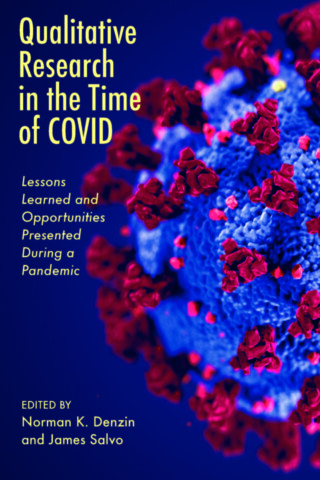
E-books are now distributed via VitalSource
VitalSource offer a more seamless way to access the ebook, and add some great new features including text-to-voice. You own your ebook for life, it is simply hosted on the vendor website, working much like Kindle and Nook. Click here to see more detailed information on this process.
Library E-Books
We are signed up with aggregators who resell networkable e-book editions of our titles to academic libraries. These editions, priced at par with simultaneous hardcover editions of our titles, are not available direct from Stylus.
These aggregators offer a variety of plans to libraries, such as simultaneous access by multiple library patrons, and access to portions of titles at a fraction of list price under what is commonly referred to as a "patron-driven demand" model.
Qualitative Research in the Time of COVID: Lessons Learned and Opportunities Presented During a Pandemic focuses broadly upon educational issues during the COVID-19 pandemic. The chapters make note of how contextual understandings are important for the future of researchers, especially when those contexts involve inequality made more acute since the pandemic. The chapters illustrate the importance of creating a climate of care based upon the principles of care ethics, and also examine projects that could be taken in the context of necessary self-care during challenging times. Chapters address the climate of caring in both in-person and online educational spaces and what it means to support students in an expanded conception of classroom space. In discussions ranging from exemplars of arts-based, personal narrative to completing a dissertation during a pandemic, chapters share both the immensity of the challenges and the rewards of productive and meaningful work both domestically and internationally. In the context of the living taking place after the pandemic’s coming into being as an event, this volume humbly offers writings as documents of remembrance of our historical present, offering with the hope that the historical may continue to move forward with an ethics of care ever in the foreground. Qualitative Research in the Time of COVID is perfect for such courses as Qualitative Research, Qualitative Inquiry, Ethnography, Teacher Education, Action Research, and Educational Research.
More