
Search results for using data

E-books are now distributed via VitalSource
VitalSource offer a more seamless way to access the ebook, and add some great new features including text-to-voice. You own your ebook for life, it is simply hosted on the vendor website, working much like Kindle and Nook. Click here to see more detailed information on this process.
Thanks to Literacy Pedagogy with Whole-Earth Consciousness, teachers of young and older novice readers alike no longer have to separate structured reading instruction from meaningful, engaging, age-appropriate content. In clear language and with multiple examples drawn directly from practice – including case studies, vignettes, discourse analyses, text sets, samples of curriculum, and more – this book shows how literacy pedagogy can be merged with science-based concepts, understandings, and practices relating to caring for ourselves, caring for others, and caring for the earth as a whole. With environmental challenges pressing ever more closely on everyday life – including effects of extreme heat, flooding, tornadoes, hurricanes, and wildfire, among others – Literacy Pedagogy with Whole-Earth Consciousness offers a hopeful path forward for literacy educators, science educators, elementary educators, tutors, university faculty and students, homeschooling families, and childcare providers. Readers will draw inspiration from seeing how earth-conscious literacy pedagogy unfolds in multiple educational contexts: an afterschool program, a virtual literacy tutorial, a 3-week school enrichment program, and a graduate-level literacy course. Rogers and Schaenen showcase how place-based approaches to literacy instruction can empower students and teachers alike as readers while also dramatically deepening their relationships with the environment. Uniquely, Literacy Pedagogy with Whole-Earth Consciousness merges together teacher action research, discourse analysis, literacy teacher education, and eco-justice pedagogies. What results is a timely, conceptually rich guide to an experiential and evidence-based approach to literacy teaching and learning. Experiential approaches to literacy learning can help enrich the understanding young people have about themselves, other people, and their sense of belonging on planet Earth. Literacy Pedagogy with Whole-Earth Consciousness can be a central adopted text in undergraduate and graduate classrooms: with student reading scores seemingly stuck or worsening, what’s urgently needed are innovative, thoughtful, authentic approaches to teaching literacy comprehensively at the earliest and intermediate stages, especially in classes preparing teachers for service or extending the repertoires of in-service teachers at the graduate level. It will also be a useful adopted text in graduate classes that explore discourse analysis and teacher action research. Because the book will include examples of critically oriented discourse analysis within an action research framework, Literacy Pedagogy with Whole-Earth Consciousness will appeal to fellow critical literacy researchers, as well as scholars and practitioners of discourse analysis. The book will extend approaches to critical discourse studies in educational 4 settings by engaging eco-linguistics as a pedagogical and research tool. For this reason, literacy clinic directors and their affiliated faculty will also be interested readers. As a guide to cutting-edge curriculum and instruction with regard to literacy and the environment, college, university, and public libraries will want to include this book in their collections. The authors write with clarity for the ever-growing number of homeschooling families, microschools, and indeed any caregivers of young children who are interested in merging research-based developmental literacy with environmental content in age-appropriate ways. Literacy Pedagogy with Whole-Earth Consciousness is accessible and useful to all participants in an ever-growing and collaborative community of learners. The authors made the decision to jump into the kind of work that would foreground relationships, seek continuities, embrace non-linear patterns of change, and adhere to a basic ecological principle of favoring diversity over monoculture. Through a two-year inquiry across multiple contexts, they have worked to envision and construct a conceptual and practical trellis that will support the fruits of comprehensive literacy development – phonics, comprehension, fluency, writing, spelling, curiosity, and joy – while remaining grounded in place-based content and care. Along the way, they have engaged in reflexive research, documenting, analyzing, synthesizing, and reflecting on their practice across multiple learning ecologies.Perfect for courses such as: Eco-Literacy; Action Research/Teacher Research; Foundations of Teaching Literacy; Teaching Reading and Writing in School and Community Settings; Education and Society Through Service Learning; Climate Change Narratives; Literacy and Social Justice; Discourse Analysis; Theory and Practice of Literacy Tutoring; Teaching and Learning in Environmental Education; Science Communications; Science Literacy
More
E-books are now distributed via VitalSource
VitalSource offer a more seamless way to access the ebook, and add some great new features including text-to-voice. You own your ebook for life, it is simply hosted on the vendor website, working much like Kindle and Nook. Click here to see more detailed information on this process.
Library E-Books
We are signed up with aggregators who resell networkable e-book editions of our titles to academic libraries. These editions, priced at par with simultaneous hardcover editions of our titles, are not available direct from Stylus.
These aggregators offer a variety of plans to libraries, such as simultaneous access by multiple library patrons, and access to portions of titles at a fraction of list price under what is commonly referred to as a "patron-driven demand" model.
For the last few decades, teacher preparation has increasingly aligned itself with “best practices,” standards, and accountability, and such policies became mandatory in P-12 schooling nationwide. Technical skills instruction and methods have become the common practice of teacher preparation and accreditation of programs. Teacher candidates are encouraged to be unquestioning servants of a school system rather than educators who govern the meaning of schooling. The purpose of this book is to present a view of how we got to where we are today and to offer strategies to bring the job of teaching back to its roots. It seeks to identify the conservative influences that treat students as a commodity rather than future citizen scholars. For teacher candidates, this has meant the excision of social foundations of education courses and any further explorations of the philosophy of education or the history of schooling in their curricula. The Commodification of American Education looks at ways to re-establish teachers as professionals rather than mere technicians, and to take back public education to transform schools into places that educate while eliminating inequality and oppression.Perfect for courses such as: Social Foundations of Education | General Methods
More
E-books are now distributed via VitalSource
VitalSource offer a more seamless way to access the ebook, and add some great new features including text-to-voice. You own your ebook for life, it is simply hosted on the vendor website, working much like Kindle and Nook. Click here to see more detailed information on this process.
Translating Words, Creating Worlds: Poetry Inside Out as Critical Literacy and Translanguaging Pedagogy in K-12 Classrooms is a timely and inspiring guide to bringing critical literacy, translanguaging, and student voice into today’s classrooms. Grounded in the innovative Poetry Inside Out (PIO) program developed at the Center for the Art of Translation, this volume demonstrates how poetry translation can transform language learning into a powerful act of collaboration, creativity, and cultural exploration. Across diverse K–12 settings, students engage with poems from around the world—written in languages such as Vietnamese, Spanish, and Albanian—and work together to translate them into English. Specifically, they first work in pairs to create a “Phrase-by-Phrase” translation, akin to a rough draft. Then, in groups of four, students meld and refine their drafts, developing a “Make it Flow” translation that the entire group agrees to. Through discussion, interpretation, performance, and revision, students do far more than learn vocabulary or grammar: they analyze meaning, wrestle with complex social and political themes, and develop sophisticated literacy practices rooted in authentic communication. Written by classroom teachers, school leaders, and literacy practitioners, Translating Words, Creating Worlds offers vivid, real-world examples of PIO in action across elementary, middle, and high school classrooms. The book provides practical, accessible strategies for educators seeking to create culturally sustaining, language-rich learning environments that honor and leverage students’ linguistic and cultural assets. At a moment when educators are searching for meaningful ways to support multilingual learners and foster inclusive classrooms, this volume delivers both inspiration and actionable pedagogy. Readers will discover how collaborative poetry translation can deepen students’ engagement with language, strengthen critical thinking, and cultivate empathy, dialogue, and intellectual curiosity. An essential resource for teachers, teacher educators, and TESOL/ESL professionals, Translating Words, Creating Worlds is ideal for courses in second language acquisition, literacy, multilingual education, and culturally responsive teaching.Perfect for courses such as: Literacy Education; Methods in ELA/Humanities; Educating Multilingual Children and Youth; Foundations of Bilingual Education; Bilingual Education Theory and Practices; Curriculum and Lesson Planning (Middle/Secondary and/or Elementary); Culture, Language, and Education
More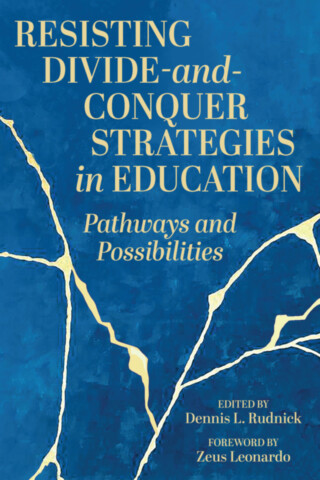
E-books are now distributed via VitalSource
VitalSource offer a more seamless way to access the ebook, and add some great new features including text-to-voice. You own your ebook for life, it is simply hosted on the vendor website, working much like Kindle and Nook. Click here to see more detailed information on this process.
Library E-Books
We are signed up with aggregators who resell networkable e-book editions of our titles to academic libraries. These editions, priced at par with simultaneous hardcover editions of our titles, are not available direct from Stylus.
These aggregators offer a variety of plans to libraries, such as simultaneous access by multiple library patrons, and access to portions of titles at a fraction of list price under what is commonly referred to as a "patron-driven demand" model.
Resisting Divide-and-Conquer Strategies in Education: Pathways and Possibilities examines the ways in which divide-and-conquer strategies operate in the American public education system. In U.S. education, these mechanisms are endemic and enduring, if not always evident. Coordinated, strategic, well-funded, politically-viable campaigns continue to stoke fear, othering, villainization, and dehumanization of minoritized groups, pushing false and problematic narratives that inhibit progress toward social justice. Weaponizing hegemony and leveraging misinformation, reactionary agents and institutions seek to suppress truth, block access to democratic participation, and dismantle education and other sites of emancipatory possibility through the strength of divide-and-conquer mechanisms, pitting relatively disempowered groups against one another to preserve the dominant social order. Readers of this book will encounter conceptual and critical interrogations of divide and conquer. The text will help facilitate inquiry and engagement into how divide and conquer operates and how it can be resisted. It looks at the history of the phenomenon, as well as its current state, especially as it relates to education. What insights and lessons might we learn from a focused examination of divide and conquer, and what strategies of resistance are both possible and necessary for challenging it? This text is designed for undergraduate and graduate classrooms in education and social sciences. Part I, Ideology and Sociopolitical Contexts, dissects how divide-and-conquer mechanisms operate ideologically and sociopolitically. Part II, Policies and Practices, focuses on how divide-and-conquer mechanisms shape exclusionary U.S. educational policies and practices. Part III, Resistance and Liberation, documents efforts of liberatory communicative, curricular, and pedagogical possibilities. Each chapter concludes with a set of critical questions for reflection and engagement.Perfect for courses such as: Foundations of Education; Schools and Society; Schooling in America; History of Education; Philosophy of Education; Sociology of Education; Social Studies; Critical Theory in Education
More
E-books are now distributed via VitalSource
VitalSource offer a more seamless way to access the ebook, and add some great new features including text-to-voice. You own your ebook for life, it is simply hosted on the vendor website, working much like Kindle and Nook. Click here to see more detailed information on this process.
Centering Multilingual Learners in School Curriculum through Community Asset Mapping is written for educators working with culturally and linguistically diverse student populations, particularly those from historically marginalized backgrounds. It presents and explores Community Asset Mapping (CAM) as a transformative pedagogical approach that values students’ lived experiences, cultural wealth, and linguistic repertoires as essential components of learning. It speaks to teachers who seek to integrate students’ strengths and assets into the curriculum while challenging hierarchical structures of knowledge and language within the education system. Written by two multilingual language education professionals who draw upon their own educational journeys and rich, multifaceted experience working with multilingual learners, this book is also grounded in a post-qualitative research approach. It weaves together culturally responsive teaching, translanguaging, and community asset mapping as a co-learning practice, alongside a diverse range of critical theories and pedagogical approaches. This resource extends beyond academic scholarship; it engages with community-based initiatives, social entrepreneurship, and lived experiences to offer both a holistic perspective and a practical, action-oriented approach. Through this lens, the authors aim to equip educators with the tools to transform classrooms into more equitable and justice-driven learning spaces. Throughout the book, numerous examples and practical resources are offered to bring these ideas to life, demonstrating how CAM can be implemented in the classroom as a powerful and enriching teaching strategy. More than just a resource, this book is a call to action—an invitation for educators to embark on a collaborative journey. It embraces vulnerability, emphasizes co-learning, and celebrates the communities that shape the work of language education professionals. Through this shared effort, the authors invite educators to join them in critically reimagining education and advocating for more equitable, asset-based practices that truly honor the voices and experiences of their students.Perfect for courses such as: Multicultural and multilingual Education; Sociolinguistics; Methods and Materials in TESOL Education; Curriculum Design in Education or TESOL; Language, Culture and Society; Urban Education; Family Engagement in Education
More
E-books are now distributed via VitalSource
VitalSource offer a more seamless way to access the ebook, and add some great new features including text-to-voice. You own your ebook for life, it is simply hosted on the vendor website, working much like Kindle and Nook. Click here to see more detailed information on this process.
Library E-Books
We are signed up with aggregators who resell networkable e-book editions of our titles to academic libraries. These editions, priced at par with simultaneous hardcover editions of our titles, are not available direct from Stylus.
These aggregators offer a variety of plans to libraries, such as simultaneous access by multiple library patrons, and access to portions of titles at a fraction of list price under what is commonly referred to as a "patron-driven demand" model.
Supporting Fraternities and Sororities in the Contemporary Era is inspired by sustained and reoccurring professional conversations and scholarship that have suggested that not just change is necessary, but that there ought to be a fundamental shift towards reconceptualizing the construct of fraternities and sororities. The co-editors curate work from scholars and noteworthy practitioners from across higher education to provide an imperative text that reflects the complexity and expansiveness by addressing diversity, programming, and support approaches. This text commences with the understanding that issues will continuously exist, requiring a greater nuanced depth of appreciation to reduce their negative impact. It also summarizes national organizations from authentic, represented voices. Chapters then focus on solutions to support the fraternity and sorority experience, providing strategies and emerging explanations for the issues described in this text. Supporting Fraternities and Sororities seeks to do exactly as the title implies: to inform all stakeholders so that they can make better decisions about the future of these institutions.
More
E-books are now distributed via VitalSource
VitalSource offer a more seamless way to access the ebook, and add some great new features including text-to-voice. You own your ebook for life, it is simply hosted on the vendor website, working much like Kindle and Nook. Click here to see more detailed information on this process.
Library E-Books
We are signed up with aggregators who resell networkable e-book editions of our titles to academic libraries. These editions, priced at par with simultaneous hardcover editions of our titles, are not available direct from Stylus.
These aggregators offer a variety of plans to libraries, such as simultaneous access by multiple library patrons, and access to portions of titles at a fraction of list price under what is commonly referred to as a "patron-driven demand" model.
Making Sense of Race in Education: Practices for Change in Difficult Times takes a fresh look at the perennial issue of race in American schools. How do educators, in all settings, confront the issue of race with students and colleagues, given the contemporary backdrop of social movements for racial justice and change? How do educators affect change within their everyday classroom practices without fostering further alienation and discord? Although much has already been written about race and racism in school, this book addresses racial incidents directly and offers practical insights into how P-20 educators can transform these events alongside students and colleagues. Each chapter provides detailed analysis of curriculum, instruction, practices and pedagogical strategies for addressing race while at the same time wrestling with theoretical conceptions of race, justice, and fairness.
More
E-books are now distributed via VitalSource
VitalSource offer a more seamless way to access the ebook, and add some great new features including text-to-voice. You own your ebook for life, it is simply hosted on the vendor website, working much like Kindle and Nook. Click here to see more detailed information on this process.
Library E-Books
We are signed up with aggregators who resell networkable e-book editions of our titles to academic libraries. These editions, priced at par with simultaneous hardcover editions of our titles, are not available direct from Stylus.
These aggregators offer a variety of plans to libraries, such as simultaneous access by multiple library patrons, and access to portions of titles at a fraction of list price under what is commonly referred to as a "patron-driven demand" model.
Many people believe that “education” has a disproportionately negative effect on them and those close to them. With so much wealth, technological prowess, innovation, and economic development, why do we still have marginalization, social inequalities, conflict, mass incarceration and generational poverty? The connection to democracy, Education for Democracy (EfD) and social justice is, for Carr and Thésée, clear, and this volume interweaves a narrative within these themes based on a Freirian theoretical backdrop. This book presents a vision for transformative education and EfD, seeking to cultivate, stimulate and support political and media literacy, critical engagement and a re-conceptualization of what education is, and, importantly, how it can address entrenched, systemic and institutional problems that plague society. Based on over a decade of empirical research in a range of contexts and jurisdictions, the authors strive to link teaching and learning with agency, solidarity, action and transformative change within the conceptual framework of a critically-engaged EfD. Perfect for courses in: Sociology of Education; Social Justice and Education; Democracy and Civics; Community Engagement; Education Policy; Service Learning; Education Reform; Citizenship Education; Transformative Education; Politics of Education.
More
E-books are now distributed via VitalSource
VitalSource offer a more seamless way to access the ebook, and add some great new features including text-to-voice. You own your ebook for life, it is simply hosted on the vendor website, working much like Kindle and Nook. Click here to see more detailed information on this process.
Library E-Books
We are signed up with aggregators who resell networkable e-book editions of our titles to academic libraries. These editions, priced at par with simultaneous hardcover editions of our titles, are not available direct from Stylus.
These aggregators offer a variety of plans to libraries, such as simultaneous access by multiple library patrons, and access to portions of titles at a fraction of list price under what is commonly referred to as a "patron-driven demand" model.
This collection consists of theoretical discussions, personal reflections, research reports, and policy suggestions sourced in the experiences of our most vulnerable students with an eye to making schools places all students might love rather than hate. The essays take up these issues from the perspectives of poverty, gender, race, ethnicity, ability, language, and religion among others.These essays also provide practical advice for teachers and administrators—both practicing and pre-service—for making classrooms and schools spaces that would encourage our students to say, “I love school.” Perfect for courses in: Introduction to Education, General Methods, Social Foundations of Education, Diversity, Management/Assessment, Philosophy of Education, Sociology of Education, Educational Research, Educational Administration/Leadership, Teacher Leadership, Curriculum Theory, and Curriculum Development.
More
E-books are now distributed via VitalSource
VitalSource offer a more seamless way to access the ebook, and add some great new features including text-to-voice. You own your ebook for life, it is simply hosted on the vendor website, working much like Kindle and Nook. Click here to see more detailed information on this process.
Library E-Books
We are signed up with aggregators who resell networkable e-book editions of our titles to academic libraries. These editions, priced at par with simultaneous hardcover editions of our titles, are not available direct from Stylus.
These aggregators offer a variety of plans to libraries, such as simultaneous access by multiple library patrons, and access to portions of titles at a fraction of list price under what is commonly referred to as a "patron-driven demand" model.
Opening Third Spaces for Research in Education challenges dominant educational research methods. It rejects the reductive binaries normalized in social science research—theory/practice, objective/subjective, quantitative/qualitative. Drawing from multiple fields and eras, the book opens third spaces between these artificial poles to help researchers expand interpretations and possibilities for research. Critiquing the current focus on the measurement of “student learning outcomes” and high-stakes assessment, the book offers conceptual tools and case examples to support educators in reconceptualizing research. The book critiques the modernist notion that learning is an individual mental process of acquiring knowledge or skills. It argues instead that learning is inextricably entangled with social relations and cannot be isolated or controlled no matter how scientifically rigorous researchers try to be in their study designs. This challenges the current goal of educational research instruction to design “valid and reliable” studies that provide evidence for “best practices,” and reimagines it as opening third spaces to expand opportunities and approaches for inquiry.Perfect for courses such as: Foundations of Social and Cultural Analysis of Education | Agency, Resistance, and Identity in Education | Critical and Postmodern Pedagogies | Culture, Cognition, and Power Issues in Education | Modernity and Postmodernity in Social Thought and Education | Integrating Research and Practice in Social Justice Education | Cultural Studies in Education | Science, Technology, and Social Research after Eurocentrism | Critical Pedagogy | Language, Performance, and Power | Sociology of Education | Ideology, Racial Politics, and Public Policy: Sociology of Knowledge | Seminar in Cross National Studies of Educational Problems | Participatory Action Research and Programming
More