
Search results for using data
E-books are now distributed via VitalSource
VitalSource offer a more seamless way to access the ebook, and add some great new features including text-to-voice. You own your ebook for life, it is simply hosted on the vendor website, working much like Kindle and Nook. Click here to see more detailed information on this process.
Library E-Books
We are signed up with aggregators who resell networkable e-book editions of our titles to academic libraries. These editions, priced at par with simultaneous hardcover editions of our titles, are not available direct from Stylus.
These aggregators offer a variety of plans to libraries, such as simultaneous access by multiple library patrons, and access to portions of titles at a fraction of list price under what is commonly referred to as a "patron-driven demand" model.
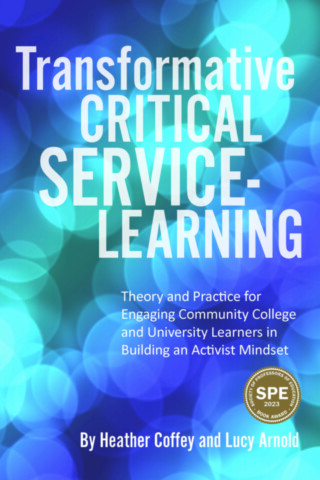
Transformative Critical Service-Learning offers hands-on tools for implementing, reflecting on, and assessing critical service-learning in classrooms and community spaces. Answering a need from practitioners for a practical tool for making sense of critical service-learning, the authors introduce the Critical Service-Learning Implementation Model as a way to encourage conversations among stakeholders. Materials include specific criteria to examine, examples of application and context, and ways to incorporate the model into reflective practices. Valuing partnerships, reflection, and analysis of power dynamics, the research and strategies offered here provide an entry point for faculty new to critical service-learning, while also offering new ideas and tools for long-time practitioners. Chapters offer particular attention to strategies for engaging students, syllabus development, and reflective cycles. Additionally, the authors offer a model for faculty development in the area of critical service-learning at the institutional level, including suggestions for faculty and administrators interested in increasing engagement with social justice and community spaces. As institutions of higher education are focusing more on the ways in which they can meet the needs of the communities surrounding their campuses, The Carnegie Foundation’s Elective Classification for Community Engagement provides a special-purpose designation for higher education institutions with commitments in the area of community engagement. Universities must commit to institutional change in order to improve the outcomes for the communities surrounding the campus. The classification framework represents best practices in the field and encourages continuous improvement through periodic re-classification. Service-learning has been identified as one of the more effective methods for engaging undergraduate and graduate students in community engaged scholarship, which facilitates development of critical inquiry, understanding needs assessment, and deep reflection on inequality. The authors intend this book to benefit university faculty endeavoring to begin or develop service-learning courses, higher education administrators who want to train and engage university faculty in adopting a more community engaged teaching model, and P-12 teachers, who often serve as community partners with higher education institutions to facilitate justice-oriented approaches to teaching their diverse students.Perfect for courses such as: Critical Thinking and Communication/Service-Learning │ Service-Learning Capstone │ Pathways to Effective Community Engagement │ School and Community Collaboration │ Teaching to Transform Society │ Food, Environment, and Sustainability │ Race and the Right to Vote in the US │ Education and Society │ Environmental Education │ Race, Place, and Memory
More
E-books are now distributed via VitalSource
VitalSource offer a more seamless way to access the ebook, and add some great new features including text-to-voice. You own your ebook for life, it is simply hosted on the vendor website, working much like Kindle and Nook. Click here to see more detailed information on this process.
In metropolitan areas across the United States, city and suburban public school students receive grossly unequal funding. Since funding is critical to student success, this means the primarily Black, Latinx, and low-income students attending city schools are being denied an equal education. So entrenched is this system, that it can feel normal, or too big to undo. Yet recent student activism in the form of an innovative, cross-community school partnership offers new hope. The Metropolitan Community: Partnering for Equality Across the Educational Divide tells the story of two Chicago-area schools—one suburban, one urban—whose students come together to examine the disparities between their schools and advocate for change. It follows these students over a year as they meet, tour each other’s schools, wrestle with how to discuss unfairness, and ultimately commit to fighting together for a more equal education. In-depth interviews and detailed observations chronicle the students’ advocacy, which unfolds in conversation with teachers and administrators and eventually brings them to the table with legislators, from whom they demand better policies. Through the examples set by students, readers are invited to develop their own “metro outlook,” to see how our seemingly separate worlds are connected by the educational system we hold in common and must work together to reshape. The first book to depict sustained allyship between city and suburban students, The Metropolitan Community offers an invigorating pedagogical approach, organizational model, and political strategy for achieving educational justice through youth-led partnerships and collaboration.Perfect for courses such as: School and Society; Curriculum and Instruction; Diversity and Equity in Education; Socio-cultural Foundations; Educational Policy; Culturally Relevant Pedagogy; Sociology of Education; Urban Education; Social Studies Methods; Multicultural Education; Anthropology of Education; School Counseling; School Psychology; and School Social WorkAuthor Website: cynthiataines.com Recent Op-Ed: Bringing different school districts together can bridge social divides and inspire change Podcast Appearances: Leading Equity (audio, video), State of Ed (audio, video), and Teachers' Lounge/WNIJ (audio)
More
E-books are now distributed via VitalSource
VitalSource offer a more seamless way to access the ebook, and add some great new features including text-to-voice. You own your ebook for life, it is simply hosted on the vendor website, working much like Kindle and Nook. Click here to see more detailed information on this process.
Over the past three decades, the landscape of educator preparation has changed so that more people can enter the teaching profession than ever before. This welcome expansion of access to the teaching profession has been accomplished both through the creation of new entities bringing new models of preparation online and, even more so, through the multiplication of new program tracks and pathways in the institutions of higher education (IHEs) that have long been and continue to be responsible for preparing the largest proportion of teachers and other professional educators. The preparation landscape has also become more dynamic and more responsive to needs at local and regional levels. In this era of teacher shortage, expanded access is good news, but are all pathways equal with regard to quality of preparation? Locating Quality in the Dynamic Educator Preparation Landscape centers on the experiences of a variety of preparation programs—all accredited by the Association for Advancing Quality in Educator Preparation (AAQEP), each unique in its approach to addressing the needs of its prospective teachers and its local school partners. The featured programs include public and private preparation providers from across the nation, some based in longstanding institutions of higher education, some operating in newer organizational models. They share a common claim to quality through having met the same accreditation standards, yet each excels in its own right in addressing specific needs. The book shows that while qualities can be shared, quality is fundamentally a divergent rather than a convergent characteristic, and that program evaluation and accreditation regimes be framed accordingly. It argues that educational policy needs to be based on an appreciation of the many dimensions of quality program practice that are needed to address the varied and particular needs of schools, communities, and populations that are entering the educator preparation pipeline. So long as we are able to ensure that all pathways into teaching result in the preparation of effective educators who are able to serve students, schools, families, and communities well by promoting student learning and thriving, we will reap the benefits of this new, varied, and dynamic landscape of educator preparation.Perfect for courses such as: Educational Program Evaluation; Teacher Education; Education Policy; Teacher Education Policy; and Human Resources in Education
More
E-books are now distributed via VitalSource
VitalSource offer a more seamless way to access the ebook, and add some great new features including text-to-voice. You own your ebook for life, it is simply hosted on the vendor website, working much like Kindle and Nook. Click here to see more detailed information on this process.
Food, and the context surrounding it, frames much of our lives. Our culinary experiences are imbued with our physical, social, spiritual, and cultural identities. However, for many, food practices are alienating because certain culinary practices are privileged, while others are marginalized, especially in higher education spaces. Simply having access to safe and affirming food, drink, and dining spaces on campus and at off-campus events is a right that every student and faculty member should be able to enjoy. A Culinary Approach to Inclusion and Belonging in Higher Education is a new and innovative book that is unique in that it examines food as a social justice and inclusion issue. For some, religious traditions guide the consumption of only certain foods, accompanied by various periods of fasting and other important contexts around eating. Examples include the Jewish kashrut, a mandate on preparing and eating kosher food, and the Muslim halal and Ramadan, with daytime fasting. This extends off campus as well, to events and conferences that feature alcohol, which excludes those who choose or need to abstain. For those with medical conditions such as celiac disease (gluten-free), the absence of specific ingredients and foods is a medical necessity. For autistic students, or for queer and transgender people, the physical layout and social expectations of dining cause stress and isolation. International students lack a sense of belonging when the culinary decisions on a campus exclude familiar foods or settings, rendering a sense of invisibility for the students. Finally, we can look at Food Philosophy, how we think and what we believe about food, as similar to the field of Ethnic Studies, with an examination of who is included, excluded, and the need for transformation of the culinary system. Through its nine chapters, this book is designed to weave together explanatory material on various culinary needs with stories of challenges and successes in meeting the needs of those who live on, work on, or visit campuses. It highlights the need for identity-affirming culinary experiences that create a sense of inclusion and belonging. A Culinary Approach to Inclusion and Belonging in Higher Education is a great resource for researchers in cultural studies. In addition, it is an effective teaching tool for a variety of curriculum studies classes.Perfect for courses such as: Educational Leadership; Food Studies; Foundations of Education; Higher Education; Multicultural Education; Student Affairs
More
E-books are now distributed via VitalSource
VitalSource offer a more seamless way to access the ebook, and add some great new features including text-to-voice. You own your ebook for life, it is simply hosted on the vendor website, working much like Kindle and Nook. Click here to see more detailed information on this process.
Library E-Books
We are signed up with aggregators who resell networkable e-book editions of our titles to academic libraries. These editions, priced at par with simultaneous hardcover editions of our titles, are not available direct from Stylus.
These aggregators offer a variety of plans to libraries, such as simultaneous access by multiple library patrons, and access to portions of titles at a fraction of list price under what is commonly referred to as a "patron-driven demand" model.
John Dewey's Imaginative Vision of Teaching explores key philosophical topics in John Dewey’s work, including epistemology, ethics, and aesthetics, and relates them to teacher practice and education policy. Each chapter begins with theory and ends with practical implications. While there are numerous books on Dewey, there are relatively few that connect his philosophy of education to actual practice. By linking primary fields of philosophy with classroom teaching and education policy, Boyles suggests that the binary between theory and practice is a false chasm that can and should be bridged if teaching and learning are to change into more dynamic, reflexive, and authentic interactions.Perfect for courses such as: Becoming a Teacher | Applying Theory to Practice | John Dewey and U.S. Schools | Historical and Philosophical Ideas In Practice | Progressive Teaching
More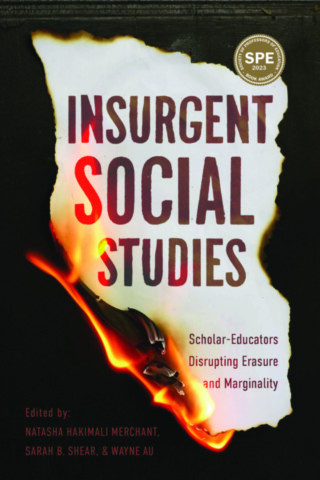
E-books are now distributed via VitalSource
VitalSource offer a more seamless way to access the ebook, and add some great new features including text-to-voice. You own your ebook for life, it is simply hosted on the vendor website, working much like Kindle and Nook. Click here to see more detailed information on this process.
Library E-Books
We are signed up with aggregators who resell networkable e-book editions of our titles to academic libraries. These editions, priced at par with simultaneous hardcover editions of our titles, are not available direct from Stylus.
These aggregators offer a variety of plans to libraries, such as simultaneous access by multiple library patrons, and access to portions of titles at a fraction of list price under what is commonly referred to as a "patron-driven demand" model.
Social studies education over its hundred-year history has often focused on predominantly white and male narratives. This has not only been detrimental to the increasingly diverse population of the U.S., but it has also meant that social studies as a field of scholarship has systematically excluded and marginalized the voices, teaching, and research of women, scholars of color, queer scholars, and scholars whose politics challenge the dominant traditions of history, geography, economics, and civics education. Insurgent Social Studies intervenes in the field of social studies education by highlighting those whose work has often been deemed “too radical.” Insurgent Social Studies is essential reading to all researchers and practitioners in social studies, and is perfect as an adopted text in the social studies curriculum at Colleges of Education.Perfect for courses such as: Foundations of Education │ Social Studies Methods │ Multicultural Education │ Critical Studies of Education │ Culturally Relevant Pedagogy │ Social Education
More
E-books are now distributed via VitalSource
VitalSource offer a more seamless way to access the ebook, and add some great new features including text-to-voice. You own your ebook for life, it is simply hosted on the vendor website, working much like Kindle and Nook. Click here to see more detailed information on this process.
Library E-Books
We are signed up with aggregators who resell networkable e-book editions of our titles to academic libraries. These editions, priced at par with simultaneous hardcover editions of our titles, are not available direct from Stylus.
These aggregators offer a variety of plans to libraries, such as simultaneous access by multiple library patrons, and access to portions of titles at a fraction of list price under what is commonly referred to as a "patron-driven demand" model.
The Activist Academic serves as a guide for merging activism into academia. Following the journey of two academics, the book offers stories, frameworks and methods for how scholars can marry their academic selves, involved in scholarship, teaching and service, with their activist commitments to justice, while navigating the lived realities of raising families and navigating office politics. This volume invites academics across disciplines to enter into a dialogue about how to take knowledge to the streets. Click HERE to listen to the New Books Network podcast with the authors, hosted by Jane Richards. Click HERE to see a video of the book launch. Additional author interviews and podcasts can be found on this book's product detail page.
More
E-books are now distributed via VitalSource
VitalSource offer a more seamless way to access the ebook, and add some great new features including text-to-voice. You own your ebook for life, it is simply hosted on the vendor website, working much like Kindle and Nook. Click here to see more detailed information on this process.
More than a century after William James published his provocative critique The PhD Octopus in 1903, his warnings about the corrupting entanglements between institutions and graduate students remain strikingly relevant. Doctoral Studies as Educational Industrial Complex revisits James’ concerns through a contemporary lens, offering a critical examination of doctoral education in the field of education in what feels like perennial crisis. Throughout the volume, contributors grapple with the tensions James identified: the obsession with credentials over genuine intellectual work, the “tyrannical machine” of institutional demands, and the misalignment between doctoral preparation and actual career paths. These tensions are particularly acute in practitioner-oriented EdD programs designed to produce scholar-practitioners who often remain in their local communities rather than entering the academy. Yet research-oriented PhD programs face their own crisis, as they continue to prepare scholars for a tenure-track job market that has dramatically contracted. With only 32% of faculty holding tenured or tenure-track positions in 2023—down from 53% in 1987—the traditional pathway to academic careers has fundamentally eroded. The book speaks to multiple audiences: faculty who supervise doctoral students and seek to understand the challenges they face; doctoral students navigating alternative program formats and uncertain career prospects; administrators responsible for program design and accreditation; and scholars interested in the future of higher education and professional preparation. By centering faculty expertise and critical analysis rather than external market demands, this volume offers a necessary counter-narrative to prevailing trends in doctoral education reform. Ultimately, this book argues for a reconsideration of what doctoral education should accomplish and for whom, grounding these questions in both historical perspective and contemporary realities.
More
E-books are now distributed via VitalSource
VitalSource offer a more seamless way to access the ebook, and add some great new features including text-to-voice. You own your ebook for life, it is simply hosted on the vendor website, working much like Kindle and Nook. Click here to see more detailed information on this process.
Library E-Books
We are signed up with aggregators who resell networkable e-book editions of our titles to academic libraries. These editions, priced at par with simultaneous hardcover editions of our titles, are not available direct from Stylus.
These aggregators offer a variety of plans to libraries, such as simultaneous access by multiple library patrons, and access to portions of titles at a fraction of list price under what is commonly referred to as a "patron-driven demand" model.
Teacher moonlighting has been studied and documented since at least the early 1960s, and yet, it can be easily argued that the phenomenon is still not understood. Teachers moonlight in higher numbers than other professions, and while most teachers claim that they do it for the money, increases in their compensation have not reduced the practice. By the Light of the Silvery Moon is the first book to provide a thorough review of the research on the topic, looking deeply into the intricate workings of a profession that is at least imperiled or, in the best of scenarios, a profession that is in transition. Teachers play a critical role in society, so teaching needs to be a sustainable profession where teachers may still moonlight, but the opportunities to expand the status as well as the content and context of their work are unlimited. This book fills an important gap in the literature by bringing together the research and situating it within a broader conversation about teachers’ work.Perfect for courses such as: All undergraduate and graduate Foundations of Education courses, Introduction to Education, History and Philosophy of Education, and Teacher Leadership.
More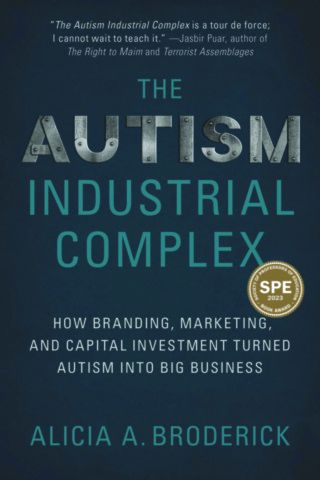
E-books are now distributed via VitalSource
VitalSource offer a more seamless way to access the ebook, and add some great new features including text-to-voice. You own your ebook for life, it is simply hosted on the vendor website, working much like Kindle and Nook. Click here to see more detailed information on this process.
Library E-Books
We are signed up with aggregators who resell networkable e-book editions of our titles to academic libraries. These editions, priced at par with simultaneous hardcover editions of our titles, are not available direct from Stylus.
These aggregators offer a variety of plans to libraries, such as simultaneous access by multiple library patrons, and access to portions of titles at a fraction of list price under what is commonly referred to as a "patron-driven demand" model.
Autism—a concept that barely existed 75 years ago—currently feeds multiple, multi-billion-dollar-a-year, global industries. In The Autism Industrial Complex: How Branding, Marketing, and Capital Investment Turned Autism into Big Business, Alicia A. Broderick analyzes how we got from the 11 children first identified by Leo Kanner in 1943 as “autistic” to the billion-dollar autism industries that are booming today. Broderick argues that, within the Autism Industrial Complex (AIC), almost anyone can capitalize on—and profit from—autism, and she also shows us how. The AIC has not always been there: it was built, conjured, created, manufactured, produced, not out of thin air, but out of ideologies, rhetorics, branding, business plans, policy lobbying, media saturation, capital investment, and the bodies of autistic people. Broderick excavates the 75-year-long history of the concept of autism, and shows us how the AIC—and indeed, autism today—can only be understood within capitalism itself. The Autism Industrial Complex is essential reading for a wide variety of audiences, from autistic activists, to professionals in the autism industries, to educators, to parents, to graduate students in public policy, (special) education, psychology, economics, and rhetoric.Watch the book presentation "Raising Awareness of the AIC" hosted by NJACE and featuring the author, Alicia Broderick at: https://youtu.be/-fxzfuvuek4?t=336Listen to Anne Borden King interview the author on The Noncompliant Podcast: https://noncompliantpodcast.com/2022/06/30/is-there-an-autism-industrial-complex-interview-with-prof...Perfect for courses such as: Introduction to Critical Autism Studies; Disability Studies--Theory, Policy, Practice; Disability & Rhetoric; Disability & Cultural Studies; Doctoral Seminar in Disability Studies; Cultural Foundations of Disability in Education
More