
PRODUCTS

E-books are now distributed via VitalSource
VitalSource offer a more seamless way to access the ebook, and add some great new features including text-to-voice. You own your ebook for life, it is simply hosted on the vendor website, working much like Kindle and Nook. Click here to see more detailed information on this process.
Library E-Books
We are signed up with aggregators who resell networkable e-book editions of our titles to academic libraries. These editions, priced at par with simultaneous hardcover editions of our titles, are not available direct from Stylus.
These aggregators offer a variety of plans to libraries, such as simultaneous access by multiple library patrons, and access to portions of titles at a fraction of list price under what is commonly referred to as a "patron-driven demand" model.
African American males are confronted with formidable barriers in their pursuit of quality education, resulting in stark disparities in academic performance, economic opportunities, and social outcomes. Despite numerous educational initiatives striving for parity, African American males persistently bear the brunt of the highest rates of suspensions, expulsions, and dropout rates, surpassing all other demographic groups. Educational environments often fail to acknowledge and integrate the cultural and social needs of Black males, viewing them as "problems" rather than recognizing their immense potential for academic and leadership success. The prevalence of negative stereotypes in media, particularly in video games, exacerbates societal biases, portraying African American males as inherently violent and criminal. These representations contribute to implicit biases that affect perceptions and treatment in real-life scenarios. The systemic issues within the education system, coupled with socioeconomic factors, result in African American males being underrepresented in advanced placement and gifted education programs. This underrepresentation limits their opportunities for higher education and professional advancement. Confronting these challenges necessitates a comprehensive approach that encompasses the creation of inclusive educational environments, the eradication of systemic racism, and the promotion of positive representations of African American males in media. By acknowledging and fostering the potential of Black males, society can strive to reduce disparities and cultivate a more equitable and just education system that recognizes and celebrates their academic and professional achievements.African American Males and Video Games explores the perspectives of four African American male college students aged 18 to 21 on the impact of video games on their academic growth and development. The participants, all maintaining a GPA of 3.0 or higher, shared their experiences with teachers, video games, and coping mechanisms. This qualitative approach allowed for a rich understanding of the participant's experiences and the role of video games in their academic and mental well-being.Video games emerged as a significant coping tool for the participants, providing a mental escape from academic and social pressures. The games allowed them to engage in competitive and creative activities, fostering a sense of accomplishment and reducing stress. For example, games like NBA 2K21 and Forza Horizon 4 enabled them to explore alter egos and interests in a virtual space, offering entertainment and a sense of community.African American Males and Video Games is a critical text for exploring alternatives in providing a quality education experience for young African American males. It is vital reading for educators in all areas of higher education, and a valuable teaching tool in Colleges of Education.Professor Rudolf Inderst interviewed Kenneth Jones for a New Books Network podcast. Listen at: https://newbooksnetwork.com/african-american-males-and-video-gamesPerfect for courses such as: Educational Psychology; Sociology of Education; African American Studies; Media Studies; Game Design; Youth Development; Digital Literacy; Cultural Studies; Educational Technology; Social Psychology; Gender Studies
More
E-books are now distributed via VitalSource
VitalSource offer a more seamless way to access the ebook, and add some great new features including text-to-voice. You own your ebook for life, it is simply hosted on the vendor website, working much like Kindle and Nook. Click here to see more detailed information on this process.
Library E-Books
We are signed up with aggregators who resell networkable e-book editions of our titles to academic libraries. These editions, priced at par with simultaneous hardcover editions of our titles, are not available direct from Stylus.
These aggregators offer a variety of plans to libraries, such as simultaneous access by multiple library patrons, and access to portions of titles at a fraction of list price under what is commonly referred to as a "patron-driven demand" model.
The How and Why of Laboratory Schools: Innovations and Success Stories in Teacher Preparation and Student Learning is an eagerly anticipated exploration crafted by esteemed researchers and practitioners from some of the foremost Laboratory Schools across the United States and internationally. These institutions, also recognized as demonstration schools or university-affiliated schools, play pivotal roles in the landscape of education, serving as bastions of innovation, research, and professional development. At their core, Laboratory Schools are multifaceted entities, assuming key responsibilities such as teacher training and professional development, serving as hubs for research and innovation, embodying models of best practices, fostering collaboration within university communities, shaping curriculum development and evaluation, and championing inclusion and special education. Their impact reverberates throughout the educational sphere, shaping the future of teaching, learning, and educational policies. The How and Why of Laboratory Schools serves as a beacon in the realm of education literature, offering an array of accessible examples that inspire and enlighten researchers, practitioners, and policymakers alike. With a global perspective, this volume provides a comprehensive snapshot of both the research and practice within Laboratory Schools worldwide, featuring exemplary models not only from the United States but also from various international settings. Spanning an variety of topics including demonstration schools, teacher preparation, innovative pedagogy and curriculum, early childhood education, elementary and primary education, middle and secondary education, STEM-focused initiatives, promotion of democracy, establishment of research laboratories, support for diverse learners, preservice teacher education, collaboration models, and the role of teachers as researchers, this book encompasses the diverse facets of Laboratory Schools' contributions to education. Moreover, the book serves as a blueprint for the development of new Laboratory Schools, offering insights into various models, funding mechanisms, and strategies for integration into university research and teacher training programs. By showcasing successful examples and providing practical guidance, this book empowers educational institutions to embark on the journey of establishing their own school, enriching both their local communities and the broader educational landscape. Beyond the present, this book also articulates a compelling case for the future of Laboratory Schools, highlighting their potential to continually innovate, adapt, and lead educational transformation in the years to come. Through its insightful analyses and compelling narratives, The How and Why of Laboratory Schools heralds a future where Laboratory Schools remain at the forefront of educational excellence and innovation, not only domestically but also on the international stage.Perfect for courses such as: Comparative Education; Education Reform; Professional Development Models; School Improvement; Foundations in Education; Early Childhood Education
More
E-books are now distributed via VitalSource
VitalSource offer a more seamless way to access the ebook, and add some great new features including text-to-voice. You own your ebook for life, it is simply hosted on the vendor website, working much like Kindle and Nook. Click here to see more detailed information on this process.
Library E-Books
We are signed up with aggregators who resell networkable e-book editions of our titles to academic libraries. These editions, priced at par with simultaneous hardcover editions of our titles, are not available direct from Stylus.
These aggregators offer a variety of plans to libraries, such as simultaneous access by multiple library patrons, and access to portions of titles at a fraction of list price under what is commonly referred to as a "patron-driven demand" model.
Food Stories: Navigating the Academy with Cultural Lessons from the Kitchen is the first volume in the series Culinary Canvas: A Series on Integrating the Arts and Food into Higher Education. The purpose of the series is to explore the innovative integration of arts and food into higher education. Each volume aims to inspire a paradigm shift in academia, advocating for a more holistic, creative, and inclusive approach to learning, teaching, researching, serving, and existing in the academy. In the present volume, Food Stories makes the case that food, and the culture surrounding food, is a closely held--and powerful--reality that shapes who we are as individuals, as members of varied communities, and invariably, informs who we are as educators and researchers. This book gives space for the authors to explore not only the impact that food and culture have had, and continue to have, on them as individuals, how that culture and experiences impact them as members of the academy (in teaching, research, and service), but also in providing some guidance to graduate students and junior faculty. In effect, chapters explore navigating academic work (teaching, research, and service) through the lens of food and the transferable lessons that can be gleaned from our grandmothers’, mothers’, fathers’, and our own kitchens. It is often the case that higher education fosters both imposter syndrome and a workaholic disposition that can be detrimental to teaching and research. What this book does, then, is to not only explore the ways in which what may seem as non-academic work such as cooking a meal can have on our work/life balance but, also, how to incorporate the very lessons of food into who we are as educators, how we teach, and how we can approach the work we do more broadly. Through carefully curated chapters, this text presents a wide array of perspectives across food and cultural regions, as well as imparting insights from the academy from authors spanning the spectrum of the career. It is an important book full of valuable lessons for graduate students, faculty and teachers who wish to use its content in their classrooms.Perfect for courses such as: Cultural Studies; Culturally-Responsive Pedagogy
More
E-books are now distributed via VitalSource
VitalSource offer a more seamless way to access the ebook, and add some great new features including text-to-voice. You own your ebook for life, it is simply hosted on the vendor website, working much like Kindle and Nook. Click here to see more detailed information on this process.
Library E-Books
We are signed up with aggregators who resell networkable e-book editions of our titles to academic libraries. These editions, priced at par with simultaneous hardcover editions of our titles, are not available direct from Stylus.
These aggregators offer a variety of plans to libraries, such as simultaneous access by multiple library patrons, and access to portions of titles at a fraction of list price under what is commonly referred to as a "patron-driven demand" model.
As a genre, science fiction is uniquely suited for highlighting and modeling the basic tenets of critical pedagogy, that branch of educational philosophy and theory devoted equally to 1) exposing the hidden power structures embedded in educational practice and 2) articulating equitable and sustainable alternatives. The science fiction novum – that is, the technological or scientific newness found within the text – serves as a catalyst not only within the textual universe but also, potentially, within the universe of the reader. New questions arise. Previously hidden beliefs come to light. Tacit assumptions are exposed. The unfamiliar nova of science-fiction can lead to new interrogations of our own all-too familiar surroundings, causing us to see our previously unquestioned worlds in a new way. These new understandings are at the heart of critical pedagogy. The learning spaces within science fiction texts can expose the fault lines within the educational structures of the real world. Questions about what it means to be human, about the proper limits of technological power, or about the relationships and obligations of one species to another have profound implications for 21st century educators and learners, particularly those who are interested in creating just and equitable learning spaces. Learning Space: Exploring Critical Pedagogy through Science Fiction draws on popular science fiction stories to provide current and future educators with the language, concepts, vocabulary, and practices to cast a critical lens upon their own learning spaces and their own pedagogical practices. For example, a critical examination of the way that Yoda trains Luke Skywalker in The Empire Strikes Back reveals a great deal about the insidious nature of deficit thinking, assuming that students learn best when they “empty their minds” and remain “passive.” The assumed hierarchical power structure between teacher and student, and the assumed relationship between learners and the knowledge with which they are supposed to be filled – all of these are called into question when viewed through a critical lens. The more we recognize the injustice in Yoda’s pedagogy, the more we might begin to see it in our own. Similarly, Isaac Asimov’s classic Foundation trilogy imagines a world in which mathematical modeling and statistical computation are used not only to predict what people might do but instead to determine what they should do. This kind of algorithmic determinism is unfortunately common in contemporary education, and yet far too few educators and learners recognize just how much of their own agency has been given over to the machines. By highlighting the algorithmic inequities in the world of Asimov’s text, we begin to recognize similar inequities at play in our own world. Ultimately, this book uses science fiction to highlight educational inequities in such wide-ranging topics as standard English, literary canons, machine learning, notions of academic dishonesty, epistemicide, inequitable school discipline, and more. More importantly, however, it provides a framework for moving forward, giving current and future educators the critical knowledge and skills both to recognize pedagogical injustice and to create viable, just, and sustainable alternatives.
More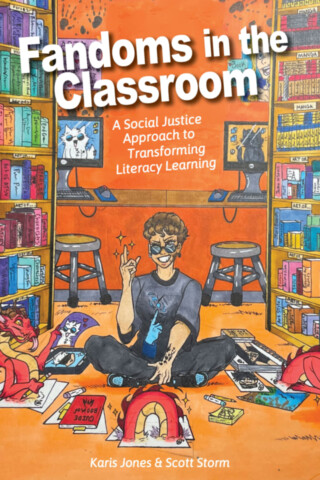
E-books are now distributed via VitalSource
VitalSource offer a more seamless way to access the ebook, and add some great new features including text-to-voice. You own your ebook for life, it is simply hosted on the vendor website, working much like Kindle and Nook. Click here to see more detailed information on this process.
Library E-Books
We are signed up with aggregators who resell networkable e-book editions of our titles to academic libraries. These editions, priced at par with simultaneous hardcover editions of our titles, are not available direct from Stylus.
These aggregators offer a variety of plans to libraries, such as simultaneous access by multiple library patrons, and access to portions of titles at a fraction of list price under what is commonly referred to as a "patron-driven demand" model.
What is a fandom, and why do fandoms matter for school? Fandoms are passionate communities dedicated to appreciating and engaging with texts of interest (movies, TV shows, books, bands, brands, sports teams, etc.) via personally and communally meaningful literacy practices. It is increasingly obvious that scripted literacy curricula and standardized tests fall short of meeting meaningful literacy goals and create culturally destructive learning spaces. Fandoms in the Classroom provides an alternative for educators looking to center passion in their classrooms, individualizing their literacy curricula by building from youth’s interests. The book describes how educators in a wide range of secondary learning contexts can build curricula around students’ already-present fandom interests to support literacy growth. This text supports educators in a range of learning contexts with step-by-step processes for building learning spaces that support navigation of fandom and disciplinary literacies, with a particular focus on common obstacles and roadblocks that teachers have shared with us. It addresses how classrooms doing critical fandom work can address social justice issues across both fandom and disciplinary communities. This book covers relevant topics such as:Why Fandoms? We introduce readers to the concept of fandoms and how engaging students’ experiences in fandoms is not an extra or add-on but instead crucial to flipping the script on literacy learning.Bring Your Fandom to Class: Critically Putting Communities in Conversation. The book discusses how to shift ideas of literacy learning contexts from teacher-centric instruction to a community learning model.Fostering Engagement & Choosing Texts Together: Teachers are often nervous about teaching what they don’t know. The text provides strategies for making learning ecologies and having kids fill it with their own interests, describing specific step-by-step discussion routines that can support youth’s engagement with critical tools on texts of their choice.Building Culturally Responsive Assessments Engaging Youth-Centric Audiences: the book describes how educators can design more expansive literacy assessments with examples of culturally responsive objectives and tasks. The authors include a range of fandom genres and audiences that they have seen in their own work.Transforming Your Current Curriculum in Conversation with Fandoms: Supporting educators interested in expanding literature units in conversation with fandom texts, the text describes how to design units that put various discourse communities in conversation without deadening or co-opting youth interests.Interdisciplinary Applications: there is a discussion about specific examples of how educators the authors have supported in various contexts have applied this kind of work. It includes a focus on cross-disciplinary literacy, with cases highlighting applications for math, science, social studies and music disciplinary learning.Fandoms in the Classroom is a step-by-step guide for literacy instructors struggling to engage their students in meaningful learning. It is essential reading.Perfect for courses such as: Foundations of Literacy; Disciplinary Literacy; Literacy Across the Curriculum; Children's or Young Adult Literature; Writing in the Classroom; Digital Media Literacy; New and Digital Literacies; Teaching Diverse Learners; Theory to Practice; Language, Literacy and Culture; Literacy Policy and Practice; Foundations of Literacy Education; Popular Culture in Literacy Classrooms; History of Literacy Practices; Reading and Language Arts; Critical Theory
More
E-books are now distributed via VitalSource
VitalSource offer a more seamless way to access the ebook, and add some great new features including text-to-voice. You own your ebook for life, it is simply hosted on the vendor website, working much like Kindle and Nook. Click here to see more detailed information on this process.
Library E-Books
We are signed up with aggregators who resell networkable e-book editions of our titles to academic libraries. These editions, priced at par with simultaneous hardcover editions of our titles, are not available direct from Stylus.
These aggregators offer a variety of plans to libraries, such as simultaneous access by multiple library patrons, and access to portions of titles at a fraction of list price under what is commonly referred to as a "patron-driven demand" model.
Scaffolding the Language of Power: An Apprenticeship in Writing at the Doctoral Level offers an accessible, practical, hands-on guide to developing the skills needed to successfully write a doctoral dissertation or thesis. This textbook-workbook hybrid can be used both as a program/course text and as a supplement for individual doctoral students in education and related social science and humanities fields.The book is built on three main ideas. First, writing is fundamentally connected to issues of social justice. Doctoral-level writing is part of the “language of power” in academia, which builds on the linguistic patterns of the dominant culture and serves as a gatekeeping mechanism. Second, writing is genre-based. This means that doctoral level writing is a particular way of using language, or a specific genre, with distinct rules and structures that can be taught. And third, writing can be scaffolded. Approaching writing as a pedagogical act that supports readers’ understanding through purposeful scaffolding is not just a way to successfully complete a doctoral dissertation—it is a way to make academic writing more accessible in general.In its first chapter, Scaffolding the Language of Power provides a general framework for the rules of the doctoral “language of power.” Chapter two offers an in-depth look at organization and scaffolding as key features of academic writing at the doctoral level, with discussions and activities to practice drafting supportive headings, chunking text, creating road maps and topic sentences, and strategically linking sections, paragraphs, and sentences through transitions and connector phrases. Chapter three provides lessons and exercises to develop argumentation, evidence use, synthesis skills, and academic voice. The remaining six chapters address each major task of the dissertation, including the problem statement, literature review, theoretical framework, methodology, findings, and discussion. Each of these chapters explicitly teaches the purposes and elements of its specific dissertation task, guiding students through warm-ups, annotated examples with elaborated explanations of writing moves, and carefully sequenced activities. Ultimately, these pedagogical features support students to build out the pieces of their doctoral dissertations or theses, chapter by chapter.This book is appropriate for any course on academic writing in EdD or PhD programs. It is also useful for courses that teach how to write a problem statement, literature review, and/or theoretical framework. Additional courses include: Qualitative Research; Qualitative Practicum/pilot study courses; and Dissertation seminar and support courses.CLICK HERE TO BUY THE BOOK/WORKBOOK BUNDLE AND SAVE!CPED Webinar Series--Scaffolding the Language of Power: https://vimeo.com/1029693697
More
E-books are now distributed via VitalSource
VitalSource offer a more seamless way to access the ebook, and add some great new features including text-to-voice. You own your ebook for life, it is simply hosted on the vendor website, working much like Kindle and Nook. Click here to see more detailed information on this process.
Library E-Books
We are signed up with aggregators who resell networkable e-book editions of our titles to academic libraries. These editions, priced at par with simultaneous hardcover editions of our titles, are not available direct from Stylus.
These aggregators offer a variety of plans to libraries, such as simultaneous access by multiple library patrons, and access to portions of titles at a fraction of list price under what is commonly referred to as a "patron-driven demand" model.
Letters to the Field: Curriculum Scholars’ Stories for Future Generations encapsulates a generation of scholars who revitalized the field of Curriculum Studies across North America in the mid-1970s, as well as the generations of scholars who immediately followed, all of whom are now themselves senior scholars. Rather than another edited work of reprints or new monographs, this volume seeks to do something special by providing an opportunity for this group of scholars to speak to their field about understandings they believe to be of significance. The strength of this book generally resides in two overarching factors. First, there is the depth and strength of this well-rounded, highly regarded group of scholars whose work speaks to the heart of the interdisciplinary nature of curriculum studies and curriculum theorizing. Second, as you might imagine, this is a significant moment in the United States when the very foundation of curriculum theory–critical inquiry and often an engagement with questions of race, queerness, disability, and the like–continues to be under attack in K-12 schools and universities across the United States. Contributors speak to the foundations of the field and the contemporary challenges that the field and schools of education more broadly must survive. Contributions to this important work are five to seven handwritten or, in the case of scholars who are unable to write, typed pages. There are also chapters that have accompanying photos and drawings. The reproduction of actual letters in the book lend authenticity and will appeal to readers by giving an intimate view into the thoughts and wishes of these scholars. We also understand that, similar to the challenge folks might face when handwriting a document, some writing might not be legible to all readers. Therefore, stable QR codes and/or hyperlinks to typed versions of handwritten chapters are included so that readers can easily look at typed versions alongside the handwritten work online. Letters to the Field makes an invaluable contribution to Curriculum Studies. By providing a history of the rationale used to revitalize the field, it will prove a valuable addition to the libraries of educators in a variety of disciplines.Perfect for courses such as: Introduction to Curriculum Theory; Introduction to College Teaching; Social Foundations of Education; History of American Higher Education; Traditions of Inquiry; and Introduction to Scholarship
More
E-books are now distributed via VitalSource
VitalSource offer a more seamless way to access the ebook, and add some great new features including text-to-voice. You own your ebook for life, it is simply hosted on the vendor website, working much like Kindle and Nook. Click here to see more detailed information on this process.
Library E-Books
We are signed up with aggregators who resell networkable e-book editions of our titles to academic libraries. These editions, priced at par with simultaneous hardcover editions of our titles, are not available direct from Stylus.
These aggregators offer a variety of plans to libraries, such as simultaneous access by multiple library patrons, and access to portions of titles at a fraction of list price under what is commonly referred to as a "patron-driven demand" model.
Researchers working to clearly identify a research topic and theme have difficulty deciding how to focus their work. Using a potential-based learning focus, detailed in this text, readers are challenged to consider their role as researcher, scholar, and leader to guide their reflective work. Transformative Potential Based Research: A Guide to Successfully Finding One's Place in Research provides both the theoretical support and the guiding activities to help readers decide on an area of potential-based research. The result will prove to be transformational. To guide this work, Karen Moroz and Trish Harvey have developed a suitable framework. They invite readers to review the mountain metaphor shared within the framework and to keep the visual present at all times as they progress through the book. It is addressed often and readers will be invited to use, extend, and discuss it numerous times throughout their journey. Transformative Potential Based Research supports instructors and students through all stages of research, including: identifying and embracing relevant and essential topics, crafting research questions that accurately and concisely convey the purpose(s), exploring one’s own connection to the issue, developing and employing individual processes that lead to success, and determining a potential-based frame that motivates the writer and frames the workPerfect for courses such as: Dissertation; Research Methods; Educational Methods; Intro to Research Design; Academic Writing; Capstone Practicum; Educational Research; Understanding Research
More
E-books are now distributed via VitalSource
VitalSource offer a more seamless way to access the ebook, and add some great new features including text-to-voice. You own your ebook for life, it is simply hosted on the vendor website, working much like Kindle and Nook. Click here to see more detailed information on this process.
Library E-Books
We are signed up with aggregators who resell networkable e-book editions of our titles to academic libraries. These editions, priced at par with simultaneous hardcover editions of our titles, are not available direct from Stylus.
These aggregators offer a variety of plans to libraries, such as simultaneous access by multiple library patrons, and access to portions of titles at a fraction of list price under what is commonly referred to as a "patron-driven demand" model.
Case studies serve as powerful tools because they bridge theory and practice, enhance decision-making skills, and prepare individuals for real-world challenges. There is a shortage of case study resources specifically focused on the ongoing development of leaders for positions in higher education. Sticky Cases in Higher Education Leadership provides invaluable insights and lessons to help aspiring higher education leaders and experienced administrators navigate the complex landscape of academic leadership. Authored by faculty and administrators in various roles, the cases represent real-world incidents and situations that are faced by higher education leaders. Each case discusses a real-world conflict or challenge presented in an open-ended format to encourage thoughtful, independent, or collaborative analysis. Readers, individually or collaboratively, consider the situation or incident and propose solutions or alternative approaches. The primary purpose of the book is to serve as a valuable teaching tool for universities offering programs in higher education leadership development. It can be used in doctoral and master's degree programs focused on higher education leadership and management. It will also benefit colleges and universities that have or are planning to initiate leadership development programs to prepare faculty for advancement into administrative roles. Additionally, the book will have utility for institutions engaged in succession planning. The cases enrich the experience of program participants and are easily aligned with desired learning outcomes. With a focus on planning and institutional renewal by national accreditors, such as the Middle States Commission on Higher Education, this book fills a critical need for case-based resources to support the development of higher education leaders.Perfect for courses such as: Leading Across Cultures; Leadership in Educational Contexts and Systems; Contemporary Issues in Higher Education; Leadership, Management, and Supervision in Higher Education; Leading Change; and Education Policy and Planning
More
E-books are now distributed via VitalSource
VitalSource offer a more seamless way to access the ebook, and add some great new features including text-to-voice. You own your ebook for life, it is simply hosted on the vendor website, working much like Kindle and Nook. Click here to see more detailed information on this process.
Library E-Books
We are signed up with aggregators who resell networkable e-book editions of our titles to academic libraries. These editions, priced at par with simultaneous hardcover editions of our titles, are not available direct from Stylus.
These aggregators offer a variety of plans to libraries, such as simultaneous access by multiple library patrons, and access to portions of titles at a fraction of list price under what is commonly referred to as a "patron-driven demand" model.
Repertories of Racial Resistance: Pedagogical Dreaming in Transborder Educational Spaces explores the integral role of dreaming and imagination in pursuing educational justice. The illuminating case studies in this book highlight how youth and adults utilize Transformative Methodologies not only to generate knowledge, but also promote social change. Transformative Methodologies are approaches to research and knowledge production that explicitly: center the perspectives, experiences, and expertise of BIPOC youth and communities as essential to research challenge conventional social science frameworks that relegate communities as “objects” of inquiry, and facilitate ethnically and racially minoritized young people to leverage their educational opportunities to express their agency, imagine emancipatory futures, and embody social change. Chapters in the book demonstrate how researchers, practitioners, and youth utilize methodologies such as participatory action research, testimonials, counter narratives and critical storytelling to make sense of social inequalities and envision futures rooted in justice. This text considers the intimate relationship between youth leadership and empowerment with dreaming and imagination. The book includes case studies based in diverse contexts such as K-12 schools, community-based settings, and higher education. Moreover, the text specifically highlights how BIPOC young people leverage their imaginations as part of their efforts to advocate for justice in their communities, families, and schools. This book emphasizes the importance for researchers and practitioners to leverage youth imagination and freedom dreams in creating culturally sustaining educational settings and promoting transformative youth leadership. This volume will be of interest to graduate, postgraduate students, researchers and academics in fields such as multicultural education, critical pedagogy, youth development and qualitative and participatory methodologies. Pre-service teachers, practitioners, and libraries will also find this book useful. Perfect for courses such as: Multicultural Education, Foundations of Education, Critical Pedagogy and Education, Youth Development, Out of School Time Education, Research Methodology, Anthropology and Education, Sociology and Education, and Youth Resistance
More