
Search results for Case for Kindness

E-books are now distributed via VitalSource
VitalSource offer a more seamless way to access the ebook, and add some great new features including text-to-voice. You own your ebook for life, it is simply hosted on the vendor website, working much like Kindle and Nook. Click here to see more detailed information on this process.
Library E-Books
We are signed up with aggregators who resell networkable e-book editions of our titles to academic libraries. These editions, priced at par with simultaneous hardcover editions of our titles, are not available direct from Stylus.
These aggregators offer a variety of plans to libraries, such as simultaneous access by multiple library patrons, and access to portions of titles at a fraction of list price under what is commonly referred to as a "patron-driven demand" model.
What are the elements of culturally responsive and sustaining instruction? How can these elements be implemented in classrooms? One of the most effective methods of addressing these issues is the Culturally Responsive Instruction Observation Protocol (CRIOP), which is being used in school districts nationwide to guide teacher professional development. A Framework for Culturally Responsive Practices presents scholarship in second language acquisition, sociolinguistics, culturally appropriate assessment, educational anthropology, educational psychology, instruction, and critical pedagogy to provide guidance to those who strive to teach in ways that meet the needs of a diverse student population. The book is a culmination of the authors’ many years of experience as both researchers and instructional coaches in schools, presenting a comprehensive portrait of the research and practices associated with culturally responsive teaching. Each chapter showcases a different element of the CRIOP, providing supporting research as well as ways to implement the element in K-8 classrooms. The book also includes several specific examples written by teachers in the field and a comprehensive bibliography. This is a practical guide that can be used in a variety of courses for pre-service teachers as well as by teachers and administrators in school districts across the country.Perfect for courses such as: Teaching in a Diverse Society, Multicultural Education, Effective Teaching Practices in Elementary/Middle School, Cultural and Social Foundations of Education, Teaching Diverse Populations, Sociocultural Perspectives in Education, Educational Perspectives in a Global Society, Educational Inequality, Urban Studies
More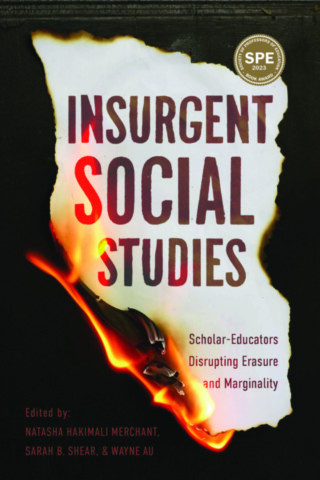
E-books are now distributed via VitalSource
VitalSource offer a more seamless way to access the ebook, and add some great new features including text-to-voice. You own your ebook for life, it is simply hosted on the vendor website, working much like Kindle and Nook. Click here to see more detailed information on this process.
Library E-Books
We are signed up with aggregators who resell networkable e-book editions of our titles to academic libraries. These editions, priced at par with simultaneous hardcover editions of our titles, are not available direct from Stylus.
These aggregators offer a variety of plans to libraries, such as simultaneous access by multiple library patrons, and access to portions of titles at a fraction of list price under what is commonly referred to as a "patron-driven demand" model.
Social studies education over its hundred-year history has often focused on predominantly white and male narratives. This has not only been detrimental to the increasingly diverse population of the U.S., but it has also meant that social studies as a field of scholarship has systematically excluded and marginalized the voices, teaching, and research of women, scholars of color, queer scholars, and scholars whose politics challenge the dominant traditions of history, geography, economics, and civics education. Insurgent Social Studies intervenes in the field of social studies education by highlighting those whose work has often been deemed “too radical.” Insurgent Social Studies is essential reading to all researchers and practitioners in social studies, and is perfect as an adopted text in the social studies curriculum at Colleges of Education.Perfect for courses such as: Foundations of Education │ Social Studies Methods │ Multicultural Education │ Critical Studies of Education │ Culturally Relevant Pedagogy │ Social Education
More
E-books are now distributed via VitalSource
VitalSource offer a more seamless way to access the ebook, and add some great new features including text-to-voice. You own your ebook for life, it is simply hosted on the vendor website, working much like Kindle and Nook. Click here to see more detailed information on this process.
Hauntings, Remembering, and Aesthetics offers an intimate, artful exploration of what is lost—and what remains—when schools are closed. Grounded in the stories of two shuttered public schools in Chicago, it weaves together research, narrative, memory, and visual art to honor the communities shaped by these institutions and reckon with the systemic forces that led to their closure. Drawing from archival research, local records, personal memories, and conversations with former students, educators, and community members, the author—who has a personal connection to each school—reconstructs the histories left behind by braiding their voices with collages and photographs. The book makes visible the deep ties between school communities and the neighborhoods they served. This powerful storytelling serves as a prompt for reflection and reconsideration of school closures.The portraits that emerge tell of schools that operated under immense financial strain but built strong, nurturing environments through resourcefulness and relationships. Participants recall staff who shaped their lives, naming teachers and leaders as transformative figures in their youth. They speak openly about the racism, classism, and broken promises surrounding public education in gentrifying neighborhoods—where public housing was demolished and communities were displaced. In their words, school closures were not isolated policy decisions but outcomes of a broader inequality and disinvestment. Far from passive witnesses, these community members critically examine the past, theorizing their experiences and naming the systemic failures that framed them. They express a desire to pause, reflect, and remember—to reclaim the memory of their schools as spaces of resilience, joy, and collective resistance. As one participant shared, “There’s so much history in us.” That history, the book argues, is too often erased in mainstream narratives about school closures. By presenting these stories through both visual and literary forms, the book creates a new kind of archive—one grounded in lived experiences and presented through aesthetics. It invites educators, parents, policymakers, journalists, and anyone invested in public education to listen differently: to hear what was lost when the schools closed, and to recognize what still echoes in the voices of those who remember.This is not just a story of the past—it is a call to action in the present through stories that have always been here. These acts of remembering resist the dominant, data-driven narratives that often justify school closures. It reveals the human cost of policies disconnected from community realities and asks us to imagine more just futures for public education in our cities. This book asks us to see and hear stories anew, through the haunting beauty of memory, artwork, and collective reflection.Perfect for courses such as: Social Foundations of Education; Educational Policy Studies; History of Urban Education; Sociology of Education; Teacher Education in Urban Education; Historical and Cultural Contexts of Urban Education; Qualitative Research Methods; Arts-based Research Methods; Visual Research Methods
More
E-books are now distributed via VitalSource
VitalSource offer a more seamless way to access the ebook, and add some great new features including text-to-voice. You own your ebook for life, it is simply hosted on the vendor website, working much like Kindle and Nook. Click here to see more detailed information on this process.
Library E-Books
We are signed up with aggregators who resell networkable e-book editions of our titles to academic libraries. These editions, priced at par with simultaneous hardcover editions of our titles, are not available direct from Stylus.
These aggregators offer a variety of plans to libraries, such as simultaneous access by multiple library patrons, and access to portions of titles at a fraction of list price under what is commonly referred to as a "patron-driven demand" model.
As a genre, science fiction is uniquely suited for highlighting and modeling the basic tenets of critical pedagogy, that branch of educational philosophy and theory devoted equally to 1) exposing the hidden power structures embedded in educational practice and 2) articulating equitable and sustainable alternatives. The science fiction novum – that is, the technological or scientific newness found within the text – serves as a catalyst not only within the textual universe but also, potentially, within the universe of the reader. New questions arise. Previously hidden beliefs come to light. Tacit assumptions are exposed. The unfamiliar nova of science-fiction can lead to new interrogations of our own all-too familiar surroundings, causing us to see our previously unquestioned worlds in a new way. These new understandings are at the heart of critical pedagogy. The learning spaces within science fiction texts can expose the fault lines within the educational structures of the real world. Questions about what it means to be human, about the proper limits of technological power, or about the relationships and obligations of one species to another have profound implications for 21st century educators and learners, particularly those who are interested in creating just and equitable learning spaces. Learning Space: Exploring Critical Pedagogy through Science Fiction draws on popular science fiction stories to provide current and future educators with the language, concepts, vocabulary, and practices to cast a critical lens upon their own learning spaces and their own pedagogical practices. For example, a critical examination of the way that Yoda trains Luke Skywalker in The Empire Strikes Back reveals a great deal about the insidious nature of deficit thinking, assuming that students learn best when they “empty their minds” and remain “passive.” The assumed hierarchical power structure between teacher and student, and the assumed relationship between learners and the knowledge with which they are supposed to be filled – all of these are called into question when viewed through a critical lens. The more we recognize the injustice in Yoda’s pedagogy, the more we might begin to see it in our own. Similarly, Isaac Asimov’s classic Foundation trilogy imagines a world in which mathematical modeling and statistical computation are used not only to predict what people might do but instead to determine what they should do. This kind of algorithmic determinism is unfortunately common in contemporary education, and yet far too few educators and learners recognize just how much of their own agency has been given over to the machines. By highlighting the algorithmic inequities in the world of Asimov’s text, we begin to recognize similar inequities at play in our own world. Ultimately, this book uses science fiction to highlight educational inequities in such wide-ranging topics as standard English, literary canons, machine learning, notions of academic dishonesty, epistemicide, inequitable school discipline, and more. More importantly, however, it provides a framework for moving forward, giving current and future educators the critical knowledge and skills both to recognize pedagogical injustice and to create viable, just, and sustainable alternatives.
More
E-books are now distributed via VitalSource
VitalSource offer a more seamless way to access the ebook, and add some great new features including text-to-voice. You own your ebook for life, it is simply hosted on the vendor website, working much like Kindle and Nook. Click here to see more detailed information on this process.
From Getting Started to Graduation: A Student Guide to the EdD, a volume in The Coming of Age of the Education Doctorate Series book series, pulls back the curtain on the hidden curriculum of the EdD experience for students, fully supporting their journeys by making what is too often anxious and abstract more clear and concrete. Drawing from years of experience from designing and directing an EdD program, the authors provide an end-to-end playbook for students to draw from as they navigate their own EdD program of choice.Part I focuses on getting started. The book begins with an establishment of the why behind getting an EdD and how this is a distinct and unique experience unlike other graduate degrees. It pushes readers to think beyond the title, encouraging them to drill down into their core motivation for pursuing not just a degree but a transformative experience. Readers will then learn about finding the match quality between their goals and aspirations and the myriad program choices available to them. Once students have winnowed down their choices and found their fit, they will be coached on how to build survival systems that will help them thrive from the onset to the finish line. This includes learning how to pace themselves, how to lean on friends and family, how to create contingency plans, and how to create helpful constraints that make room for work-life balance. The book closes Part I with helpful tips for time and resource management, as well as how to build routines and habits that allow them to be kind of their future selves.Part II explicitly explores how to navigate this years-long quest and stay the course. Readers will learn how to get curious and keep that door open across coursework in order to allow for innovative and creative ideas to flourish and eventually lead to fusion—the key to creative thinking. With the door opened to ideas and exploration, the book sets the stage for how to become a scholar-practitioner through key habits of mind such as the what-if and maybe mindset and tackling the tough task of synthesis. Part II ends with the call to team up and to take this winding road together. The EdD experience can be lonely if students go it alone, and the volume explains how and why teaming up is not just nice but necessary to persevere as the way to reach the finish line.Finally, Part III pivots to helping students survive the intensive thinking, researching, and writing demands of the dissertation. Readers will tap into years of tips and tricks on how to break this mystifying and monstrous project into sizable and achievable small steps that fuel motivation for the long haul so that students avoid burnout during the final push as they near defending their projects and crushing their comps. When finished, EdD students will be able to leverage what is too often hidden from students and draw from the concrete examples, strategies, stories, and templates therein in order to start strong and finish strong.Perfect for courses such as: Introduction to Research; Research Methodology; Introduction to the EdD; The Scholar-Practitioner; Exploring Problems of Practice; Becoming a Change Agent
More
E-books are now distributed via VitalSource
VitalSource offer a more seamless way to access the ebook, and add some great new features including text-to-voice. You own your ebook for life, it is simply hosted on the vendor website, working much like Kindle and Nook. Click here to see more detailed information on this process.
Curriculum and pedagogy are the heartbeat of our schools. They encompass what we do and do not teach–what content and approaches we either choose or are mandated to choose, or leave out or are mandated to leave out. Curriculum entails the overall educational experience of schooling, while pedagogy is the art and craft of teaching–or the translation of curriculum into student knowledge and growth. Hence, curriculum and pedagogy are sociocultural phenomena that impact and are impacted by context (e.g., students, community, colleagues, geography, etc.). Once upon a time, curriculum and pedagogy were the spaces in which educators could exercise creativity and exploration, reflecting the individual needs of their students and communities. However, as political structures shifted and the standards movement took hold in the late 20th century, freedoms around curriculum and pedagogy began to fade with increased oversight over and standardization of “best practices” with greater emphasis placed on performance and efficiency. Pedagogical practices were soon framed around producing results (test scores, graduation rates, measurable learning objectives derived from prescribed state standards), while curriculum became a prescribed structure formatted to reflect state standards with an eye toward test performance. Curriculum and pedagogy were further impeded by hegemonic forces calling for censorship of teaching and curriculum, such as the ban on Ethnic Studies in Tucson, Arizona, and continued attacks on Critical Race Theory nationwide. Further, curriculum became a tool for concealing and/or silencing the experiences and voices of our diverse students, educators, and communities. The results of these phenomena are teachers feeling uninspired and deprofessionalized and students feeling devalued and unheard–especially marginalized students. Since curriculum and pedagogy directly impact the experiences of teachers and students, they must be transformed. However, how do we do that within today’s tenuous PreK-12 environment? How do we transform curriculum and pedagogy so that they reflect, liberate, and ensure justice for students and educators in preschools, elementary schools, middle schools, high schools and the content areas taught within them? Moving from Traditional to Transformative Curriculum and Pedagogy addresses these challenges by providing clear and direct guidance for current and aspiring educators committed to transforming the status quo in their classrooms and schools. Innovative and creative methodologies and practices that aspiring and practicing educators can use right away are the primary focus of this book. Because the editors and contributors are former or current PreK-12 practitioners and/or education scholars, this book is written for a broad educational audience. The editors and contributors provide preservice and practicing teachers entry points for transforming the educational landscape in favor of liberatory, transformative practices in PreK-12 schools across grade levels, content areas, school types, and geographic regions. Additionally, this book is ideal for teacher preparation programs as well as PreK-12 professional development, as this book guides readers through theoretical and empirical discussions, supported by hands-on applications that enable real-time application, and concludes with interactive features, like case studies, extension activities, and discussion prompts.
More
E-books are now distributed via VitalSource
VitalSource offer a more seamless way to access the ebook, and add some great new features including text-to-voice. You own your ebook for life, it is simply hosted on the vendor website, working much like Kindle and Nook. Click here to see more detailed information on this process.
Library E-Books
We are signed up with aggregators who resell networkable e-book editions of our titles to academic libraries. These editions, priced at par with simultaneous hardcover editions of our titles, are not available direct from Stylus.
These aggregators offer a variety of plans to libraries, such as simultaneous access by multiple library patrons, and access to portions of titles at a fraction of list price under what is commonly referred to as a "patron-driven demand" model.
Teaching Improvement Science in Educational Leadership: A Pedagogical Guide presents the reader with a range of pedagogies from a variety of viewpoints and approaches. The book provides a holistic picture for how one might develop stakeholder competency and capacity with improvement science as a signature problem-solving methodology for educational leaders. And while there are books that provide foundational knowledge on the field of improvement science (including the list of titles from Myers Education Press), this book differs in that it presents varying approaches for teaching others about improvement science. For those who want to develop the methodology but who need resources, the book provides the illustrations, examples, and other concrete applications so that those involved in teaching the subject matter can connect foundational knowledge of improvement to the applied context. This book serves as the guide for education leaders who wish to have the know-how for developing the knowledge, skills and dispositions relative to the field of improvement science—the education leader’s signature problem-solving methodology.To learn more about Improvement Science and see our full list of books in this area, please click through to the Myers Education Press Improvement Science website.Perfect for courses such as: Introduction to Improvement Science | Educational Research for Administrators | Introduction to Program Evaluation | Action Research for School
More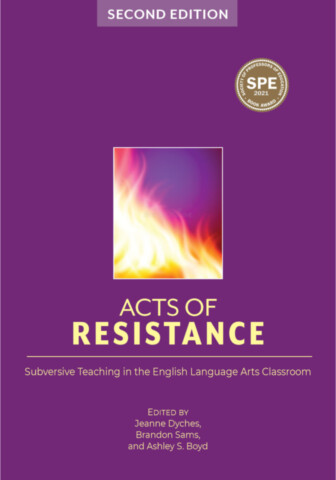
E-books are now distributed via VitalSource
VitalSource offer a more seamless way to access the ebook, and add some great new features including text-to-voice. You own your ebook for life, it is simply hosted on the vendor website, working much like Kindle and Nook. Click here to see more detailed information on this process.
Library E-Books
We are signed up with aggregators who resell networkable e-book editions of our titles to academic libraries. These editions, priced at par with simultaneous hardcover editions of our titles, are not available direct from Stylus.
These aggregators offer a variety of plans to libraries, such as simultaneous access by multiple library patrons, and access to portions of titles at a fraction of list price under what is commonly referred to as a "patron-driven demand" model.
The first edition of Acts of Resistance: Subversive Teaching in the English Language Arts (ELA) Classroom won the 2021 Society of Professors of Education's Outstanding Book Award and garnered other nominations. The second edition includes a foreword by Ashley Hope Pérez, author of the young adult literature novel Out of Darkness, one of the most frequently banned books across U.S. classrooms. Four new chapters reflect sociopolitical changes since the book's publication, including a widespread, coordinated uptick in the banning of books centering authors and characters from marginalized communities; the COVID-19 pandemic and with it, increased acts of violence against folks identifying as Asian, Asian American, and Pacific Islander; the murders of George Floyd, Breonna Taylor, and countless other victims of police brutality; the January 6th insurrection; the closing of the Trump era; the passing of anti-CRT and anti-LGBTQIA+ legislation; and a "school choice" movement that defunds public schools, deprofessionalizes educators, and places democracy in peril. Chapters specifically illustrate the storied practices of subversive teachers across the 6-12 ELA context. They provide educators with instructional ideas on how to do anti-oppressive work while also meeting traditional ELA disciplinary elements.
More
E-books are now distributed via VitalSource
VitalSource offer a more seamless way to access the ebook, and add some great new features including text-to-voice. You own your ebook for life, it is simply hosted on the vendor website, working much like Kindle and Nook. Click here to see more detailed information on this process.
Recipes of Motherhood: Families, Communities, and the Power of Food Narratives delves into the powerful connections between food, culture, and motherhood within the demanding context of higher education. This thought-provoking volume, edited by Mila Zhu and Sarah Morrison, brings together diverse voices of academic mothers who share how food practices shape, sustain, and empower their lives as they navigate the complex terrain of career, family, and cultural identity. Drawing from personal narratives, case studies, and interdisciplinary research, Recipes of Motherhood illuminates the ways in which food serves as more than sustenance; it becomes a source of resilience, a tool for community-building, and a means of preserving cultural heritage. The academic mothers in this volume reveal how food acts as a metaphor and medium for navigating life’s challenges, allowing them to bridge their personal and professional identities. From adapting family recipes to sharing meals that create community, each story uncovers the unique strategies academic mothers use to sustain themselves and those around them in an environment that can often feel isolating. Grounded in feminist theory, food studies, and cultural memory, this book highlights how food stories are deeply intertwined with questions of gender, tradition, and self-identity. Chapters explore themes such as the symbolic role of food in cultural heritage, food as a form of resistance to institutional expectations, and culinary traditions as a way to build solidarity among women in academia. Through these narratives, Recipes of Motherhood provides a nuanced understanding of how food can act as both a grounding force and a form of empowerment in academic mothers’ lives. With its interdisciplinary approach, the book appeals not only to scholars in cultural studies, food studies, and gender studies but also to students, educators, and anyone interested in the transformative power of food. Readers will find in these pages a rich tapestry of stories that inspire, educate, and challenge traditional ideas about motherhood and academia. Perfect for academic courses and personal reading alike, the volume offers insight into how food serves as a vital element in the journey of academic mothers, helping them navigate the intersections of personal identity, professional resilience, and cultural expression. This volume invites readers to savor the complexities of academic motherhood through the lens of food and to consider how everyday acts of cooking and sharing meals can hold deep significance in our lives and our communities. Whether you are a mother, an educator, or simply someone interested in the stories that food can tell, Recipes of Motherhood is a captivating exploration of how culinary practices shape our relationships, our work, and our sense of self. Join us in celebrating the resilience, creativity, and heritage of academic mothers whose food stories nourish not only their families but also the broader academic community.Perfect for courses such as: Gender Studies / Women’s Studies – Motherhood and Identity; Food Studies – Cultural Narratives in Food Practices; Education Studies – Women in Academia: Challenges and Resilience; Sociology – Family and Society: Gender Roles and Cultural Heritage; Anthropology – Food, Culture, and Identity; Cultural Studies – Folklore, Tradition, and Modern Identities; Parenting and Family Studies – Motherhood and Work-Life Balance; Interdisciplinary Studies – Food as Narrative and Social Practice; Feminist Theory – Intersectionality of Motherhood, Career, and Culture; Psychology of Women – Resilience and Identity in Motherhood
More
E-books are now distributed via VitalSource
VitalSource offer a more seamless way to access the ebook, and add some great new features including text-to-voice. You own your ebook for life, it is simply hosted on the vendor website, working much like Kindle and Nook. Click here to see more detailed information on this process.
Promoting a growth mindset in PreK-12 schools is a valuable educational trend, based on the idea that students who believe they can grow and improve will succeed more easily. However, when students struggle academically, there’s often an undergirded assumption that they—and sometimes their families—are not trying hard enough or they just need to fit into a standardized mold. This deficit thinking places blame on students’ perceived limitations and can lead to lower expectations or biases toward students who come from diversified backgrounds, encompassing ability, socioeconomic status, race, language, gender, or culture. As an alternative approach, this book promotes the universal adoption of Asset-Based Practices (ABPs). ABPs encourage educators to see and honor the strengths in each student’s identity. ABPs shift our focus to the assets that students and families bring into the classroom, viewing differences as resources rather than obstacles. This means recognizing and building on students’ cultural, linguistic, and community-based knowledge to make learning richer and more inclusive for everyone.Implementing an asset-based approach can transform our classrooms. Research shows that students perform better and feel more motivated when they’re recognized and valued for who they are. Bringing students’ lived experiences into the curriculum can help them develop positive identities and a stronger sense of belonging, which boosts their academic and social growth. Instead of focusing on “fixing” students, ABPs ask us to adapt our teaching to connect with students’ cultural backgrounds and experiences, coupled with recognizing the wealth of knowledge that students bring from their families and communities.Switching to an asset-based approach helps us move away from simply encouraging perseverance or grit in students. Instead, it invites us to take responsibility for creating an environment where every student feels they belong and can succeed. With ABPs, we’re able to create more inclusive and affirming classrooms for all students, where their identities are seen as strengths, not obstacles, and where their cultural, linguistic, and community knowledge is a foundation for learning.Innovative and creative methodologies and practices that aspiring and practicing educators can use right away are the primary focus of this book. Because the editors and contributors are former or current PreK-12 practitioners, and many are also educational scholars, this book is written for a broad educational audience. Moving from Growth to Asset-Based Mindsets is for both preservice and practicing teachers across PreK-12 grade levels, school types, and geographic regions looking to improve their practice. To accomplish this, the editors and contributors provide entry points for transforming the educational landscape in favor of liberatory, asset-based practices in PreK-12 schools.Additionally, this book is ideal for teacher and administrator preparation programs, as well as PreK-12 professional development, because it guides readers through theoretical and empirical discussions, supported by hands-on applications that enable real-time application, and concludes with interactive features, like case studies, extension activities, and discussion prompts.Perfect for courses such as: Introduction to Educating For Equity And Social Justice; Introduction to Cultivating Culturally Responsive Classrooms; Foundations Of Culturally And Linguistically Responsive Practice; Introduction to Diversity, Equity, and Inclusion in Schools; Introduction To School Improvement, Introduction to Teacher Leadership And School Improvement; Introduction to Curriculum, Instruction, and Assessment; Principles of Teaching Diverse Learners; Introduction to Multiculturalism in Education
More